
- Delivery Protocol: Speak to your manager first (In-person or video), then send the resignation letter as the official record.
- Timing and Routing: Resign early-week mornings when possible, send the original to your manager, HR gets a copy the same day, you keep a copy.
- Letter Essentials: Keep it one page (About 150–250 words), state resignation, last working day with date, brief thanks, transition help, contact info.
- Content Boundaries: Include only the basics, exclude detailed reasons, criticism, new job info, ultimatums, or emotional writing.
- Reputation Protection: Follow your notice rules, document handover, avoid anger resignations, counteroffers after resigning, oversharing, leverage threats, and checking out, adjust for culture and industry norms.
The difference between a graceful exit and burning bridges often comes down to how you handle the paperwork. Mastering resignation letter etiquette ensures you leave every position with your professional reputation intact and future opportunities open.
Your resignation letter becomes part of your permanent employment record. It’s reviewed by HR during reference checks, retrieved during rehire considerations, and occasionally resurfaces years later when you least expect it. What you write – and how you deliver it – matters far more than most people realize.
This guide covers everything from the moment you decide to resign through your final handshake, with specific guidance for 25 different resignation scenarios you might face throughout your career.
Delivery Method: In-Person First, Letter Second
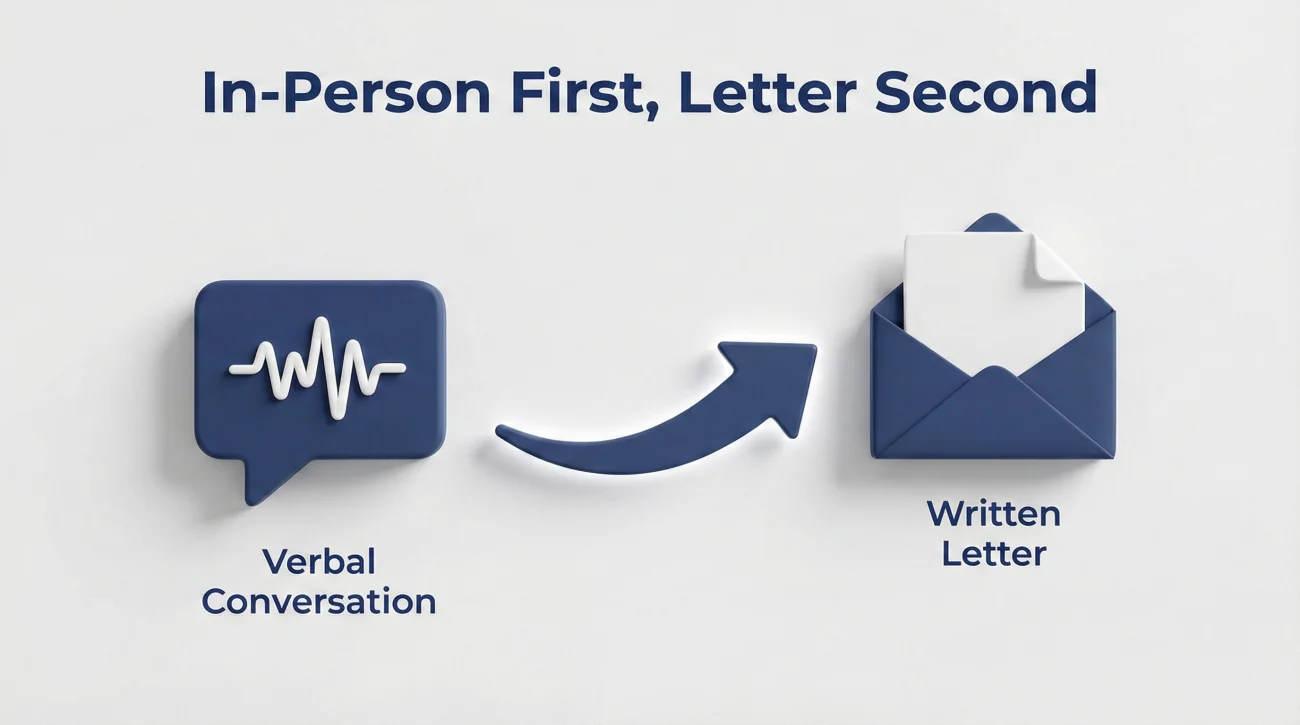
The cardinal rule of proper resignation etiquette is simple: your manager should never learn about your resignation by reading an email or finding a letter on their desk. Schedule a private conversation first.
Call or message your manager to request a brief meeting without revealing the agenda. Use neutral language: “Do you have 15 minutes today to discuss something important?” Once you’re face-to-face (or on a video call for remote positions), deliver the news directly and professionally.
After this conversation concludes, send your formal resignation letter. This creates a paper trail for HR while respecting the human relationship with your direct supervisor. According to research from Harvard Business Review, employees who follow this sequence report significantly smoother transitions and stronger professional relationships post-departure.
Remote Work Exception
If you work remotely and have never met your manager in person, a video call serves the same purpose. Schedule the call for a time when both parties can focus without interruptions. Turn your camera on to maintain the personal connection that makes this conversation feel respectful rather than transactional.
When to Submit: Morning vs. Afternoon
The timing of delivering resignation letter affects how your manager processes the information and responds. Early week mornings (Monday through Wednesday, between 9-11 AM) typically work best.
This timing allows your manager the remainder of the week to begin planning your departure, schedule discussions with HR, and process their reaction privately before the workday ends. Avoid Friday resignations unless absolutely necessary – they force your manager to spend the weekend processing the news without access to HR support or the ability to take immediate action.
Never resign during crisis periods unless you’re part of the problem being resolved. If your company is in the middle of a major product launch, fiscal year-end closing, or dealing with an emergency, delay your resignation by a week or two if possible. You’ll be remembered for your consideration rather than for adding stress during an already difficult time.
Format Fundamentals Every Letter Needs
Standard resignation letter rules call for a brief, professional document that serves as your official notice. Keep the entire letter to one page, ideally three to four short paragraphs totaling 150-250 words.
Essential Components
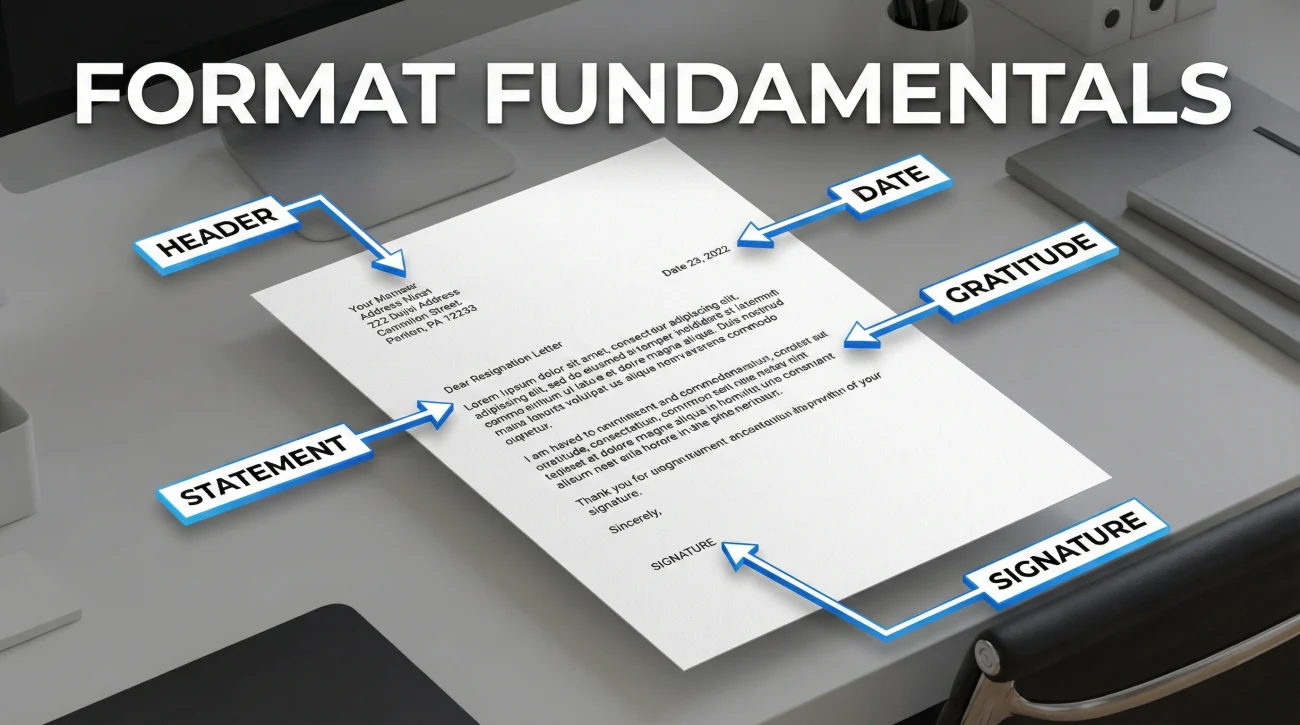
Your letter must include five elements: a clear statement of resignation, your last working day with a specific date, a brief expression of gratitude (two sentences maximum), an offer to assist with the transition, and your contact information for post-departure communication.
Format the letter as a business document with your name and contact information at the top, the date, your manager’s name and title, and a professional salutation. Close with “Sincerely” or “Best regards” followed by your signature and typed name.
Standard Resignation Letter Template
Sarah Johnson
456 Oak Avenue
Portland, OR 97201
sarah.johnson@email.com
(503) 555-0123
March 15, 2024
Michael Chen
Director of Operations
TechCorp Solutions
Dear Michael,
I am writing to formally resign from my position as Senior Project Manager at TechCorp Solutions, effective March 29, 2024. This provides the two weeks’ notice outlined in my employment agreement.
I appreciate the opportunities I’ve had to develop my skills and contribute to meaningful projects during my three years with the company. Working with you and the team has been a valuable experience that has shaped my professional growth.
During my remaining time, I’m committed to ensuring a smooth transition. I’ll complete documentation for my current projects and am available to train my replacement or assist however would be most helpful.
Thank you for your support and guidance. I wish TechCorp continued success.
Sincerely,
[Signature]
Sarah Johnson
Brief Resignation Letter (Minimal Detail)
David Martinez
david.martinez@email.com | (415) 555-0198
April 8, 2024
Jennifer Adams
HR Director
Riverside Manufacturing
Dear Jennifer,
Please accept this letter as formal notice of my resignation from Riverside Manufacturing, effective April 22, 2024.
Thank you for the opportunities provided during my employment. I’m available to assist with transition activities over the next two weeks.
Best regards,
[Signature]
David Martinez
For detailed formatting guidance and additional templates, refer to our comprehensive resignation letter template guide which covers various professional scenarios.
The Complete Do’s and Don’ts List
Understanding what belongs in your resignation letter – and what doesn’t – prevents career-damaging mistakes. These do and donts of resignation letter practices come from HR professionals who review hundreds of resignations annually.
What to Include
- ✓ Specific last working day that accounts for your notice period
- ✓ Brief, genuine appreciation for opportunities provided
- ✓ Offer to train your replacement or document your processes
- ✓ Professional tone throughout, regardless of circumstances
- ✓ Your personal contact information for future correspondence
What to Exclude
- ✗ Detailed explanations of why you’re leaving
- ✗ Criticism of management, colleagues, or company policies
- ✗ Information about your new employer or salary
- ✗ Demands or ultimatums regarding your departure terms
- ✗ Excessive emotion, whether positive or negative
Save substantive feedback for your exit interview, where you can have a nuanced conversation. Your resignation letter is not the place for a performance review of your employer. For guidance on crafting professional resignation emails, visit our resignation email writing guide.
Specialized Resignation Letter Scenarios
Different situations demand different approaches to submitting resignation letter documents. This comprehensive directory covers 24 specialized resignation scenarios, organized by the unique etiquette considerations each requires.
Each category above addresses specific etiquette challenges that situation presents, from proper language choices to optimal timing strategies. Understanding which scenario matches your circumstances ensures your resignation letter serves its purpose without creating unnecessary complications.
For profession-specific templates that account for industry norms, explore our resignation letter samples organized by profession.
Who Gets a Copy and When
Send your resignation letter to three parties in this specific order: your direct manager receives the original copy immediately after your verbal conversation, Human Resources gets a copy within the same business day, and you retain a copy for your personal records.
Never copy senior leadership, colleagues, or your manager’s manager on your initial resignation unless your direct supervisor is unavailable or is the source of a serious workplace issue requiring escalation. Violating the chain of command with your resignation creates unnecessary tension during your remaining time at the company.
According to Indeed’s Career Guide, employees who follow proper distribution protocol report fewer complications during their notice period and receive stronger references.
Notice Period Calculation and Flexibility
Two weeks represents the standard minimum notice period in most industries, but your specific obligation depends on three factors: your employment contract terms, your company’s written policies, and professional norms in your field.
Executive and specialized positions typically require four weeks to three months notice. Check your employment agreement carefully for any contractual notice requirements. Violating these terms can result in forfeited benefits, negative references, or legal complications in some jurisdictions.
If you need to leave before your notice period ends, request an early release in writing. Explain your circumstances professionally and offer to compress the transition into a shorter timeframe. Some employers will accommodate shorter notice if you propose concrete handover plans.
Transition Assistance: Actions Speak Louder

Your offer to help with the transition means little if you don’t follow through with specific, documented assistance. Create a comprehensive handover document within your first week of notice that includes project status, key contacts with context, pending deadlines, passwords and access information, and process documentation for recurring tasks.
Schedule specific knowledge transfer sessions rather than offering vague availability. Block calendar time for training your replacement or colleagues absorbing your duties. Record video walkthroughs of complex processes that are difficult to explain in writing.
This assistance serves your interests as much as your employer’s. Former colleagues become valuable network connections, potential business partners, or sources for future job opportunities. The impression you leave during your final weeks determines whether people remember you as reliable or as someone who checked out the moment they resigned.
Digital Resignation in Modern Workplaces
Fully remote positions present unique etiquette considerations. Schedule a video call for your resignation conversation rather than sending an unexpected email. Turn your camera on and choose a time when both you and your manager can speak privately without interruptions.
After the video conversation, send your formal resignation letter via email to both your manager and HR. Follow up with any digital signature requirements your company uses for official documentation. Request confirmation that your letter was received and filed appropriately.
Email Resignation Format
Subject: Resignation – Alex Thompson – IT Specialist
Dear Rachel,
Following our conversation this morning, I’m writing to formally confirm my resignation from my position as IT Specialist at CloudTech Systems, effective May 10, 2024.
Thank you for the support and opportunities over the past two years. I’ve valued working with the team and appreciate the skills I’ve developed here.
I’ll complete my current projects and prepare comprehensive handover documentation before my last day. Please let me know how I can best support the transition.
Best regards,
Alex Thompson
alex.thompson@email.com
(206) 555-0147
If your company uses Slack, Teams, or similar platforms for primary communication, send your formal letter through official email channels regardless. Chat platforms are too informal for legal documentation of your employment termination.
Protecting Your References During Resignation
Your resignation letter becomes reference material for future employers who contact your company. HR departments typically only confirm employment dates and job title, but they retrieve your resignation letter to verify your notice period and check for any documented issues with your departure.
This is why neutral, professional language matters so much. Anything negative you write can be quoted back to future employers. Anything overly positive might raise questions about why you left if you claimed to love the company.
Wait until after your official last day to request recommendation letters from your manager or senior colleagues. Making this request during your resignation conversation or notice period puts unnecessary pressure on relationships that are already in transition. Send a separate, thoughtful request one to two weeks after your departure when emotions have settled and perspective has developed.
Five Career-Damaging Resignation Mistakes
These five resignation mistakes damage more careers than all other etiquette violations combined. Avoid them regardless of your circumstances or feelings about your employer.

Resigning in Anger
Anger-driven resignations almost always get expressed in your letter or conversation, and you can never retrieve those words once they’re documented. If something triggers your decision to resign, wait 48 hours before submitting your letter. The cooling-off period lets you express yourself professionally even if your emotions run hot.
Accepting a Counteroffer After Submission
Once you resign, you’ve communicated that you’ve been job searching and evaluating other opportunities. Even if you accept a counteroffer, your employer now knows you have one foot out the door. Most employees who accept counteroffers leave within twelve months anyway, but with damaged trust that affects assignments, promotions, and references.
Oversharing Your Departure Reasons
Your resignation letter requires no explanation beyond “I’ve accepted another opportunity” or “I’ve decided to pursue a different career direction.” Additional details create opportunities for arguments, counteroffers you don’t want, or documented statements that constrain your future options. Save detailed explanations for your exit interview where they can’t become part of your permanent file.
Using Resignation as Leverage
Never submit a resignation letter you don’t intend to execute. Threatening to resign unless conditions change destroys your credibility and accelerates your employer’s timeline for replacing you. If you have legitimate workplace concerns, address them through appropriate channels without resignation threats.
Ghosting After Resignation
Submitting your letter and then becoming disengaged for your notice period burns bridges just as effectively as a hostile resignation. Continue performing your job responsibilities professionally until your final day. Your colleagues and manager will remember your last two weeks more vividly than your previous two years.
International and Cultural Considerations
Resignation etiquette varies significantly across cultures. Japan expects three to six months notice for professional positions. European Union countries often have longer statutory notice periods based on tenure. Middle Eastern organizations frequently expect personal meetings with senior leadership regardless of position level.
If you work for a multinational company or are resigning outside your home country, research location-specific expectations. Consult HR about local requirements before submitting your letter. What feels professional in New York might be considered disrespectful in Singapore or overly formal in Australia.
Industry-Specific Etiquette Variations
Certain industries maintain resignation customs that differ from general practice. Financial services and legal firms often place employees on garden leave during notice periods. Healthcare providers must ensure patient care continuity, potentially extending notice requirements.
Academia operates on semester systems making mid-term resignations extremely disruptive. Government positions frequently require longer notice due to security clearances. Understanding your industry’s unwritten rules matters as much as following company policy.
❓ FAQ
⏰ Do I need to give two weeks notice if my employment is at-will?
At-will employment means either party can end the relationship anytime, but professional norms still expect reasonable notice. Two weeks is standard courtesy that protects your references and reputation. Check your employee handbook for any contractual notice requirements that supersede at-will status.
📧 Can I resign via email or does it need to be a physical letter?
Email resignation is acceptable after your initial conversation with your manager, particularly for remote positions. Some companies require physical signatures for official documentation. Ask HR about their specific requirements. Always keep a copy of your resignation email with timestamp verification.
💼 Should I tell coworkers I’m leaving before submitting my letter?
No. Your manager deserves to hear the news first and control the announcement timing to the broader team. Telling colleagues first can damage your relationship with your supervisor and create awkward situations. Wait until your manager announces your departure to discuss your resignation with coworkers.
🎯 What if my manager asks me to reconsider my resignation?
Listen respectfully to their concerns and any counteroffer, then request 24 hours to consider your response. Once you’ve submitted your resignation, accept that your decision to search for other opportunities is now documented. Most career advisors recommend declining counteroffers as trust has already been compromised.
✨ How specific should I be about my reasons for leaving?
Keep your resignation letter vague: “pursuing a new opportunity” or “career growth” suffices. Save detailed explanations for your exit interview where you can provide constructive feedback in conversation rather than in a permanent written document. Never put criticism or negative reasons in writing.
Final Thoughts
Every resignation represents a transition that shapes your professional reputation far beyond your final day at the office. The care you take with resignation letter etiquette determines whether former colleagues become valuable network connections or sources of neutral (or negative) references.
Your resignation letter takes fifteen minutes to write but influences relationships that last for decades. Former managers become industry contacts. Past colleagues refer candidates for open positions. Companies you’ve left sometimes recruit you back at senior levels with better terms.
Professional bridges are expensive to rebuild once burned and impossible to replace once destroyed. The small effort you invest in proper resignation etiquette – thoughtful timing, careful language, genuine assistance during transition – pays returns throughout your entire career.
Treat every resignation as an opportunity to demonstrate the professionalism that defines your entire career, not just the job you’re leaving behind.
⚠️ Legal Disclaimer: ResignSmartly provides general informational guidance about resignation, workplace communication, notice periods, handovers, and career transitions. Content does not constitute individualized legal advice. Employment laws, contracts, workplace policies, and individual circumstances vary, so review the requirements that apply to your situation and consult an appropriate qualified professional when needed.