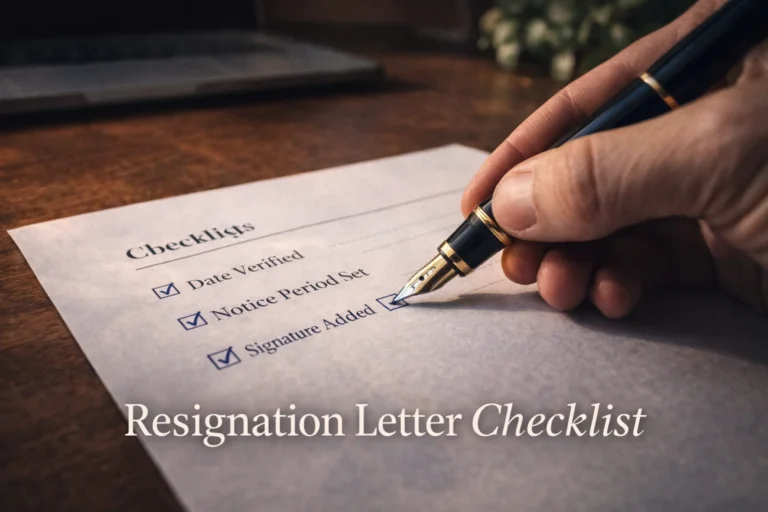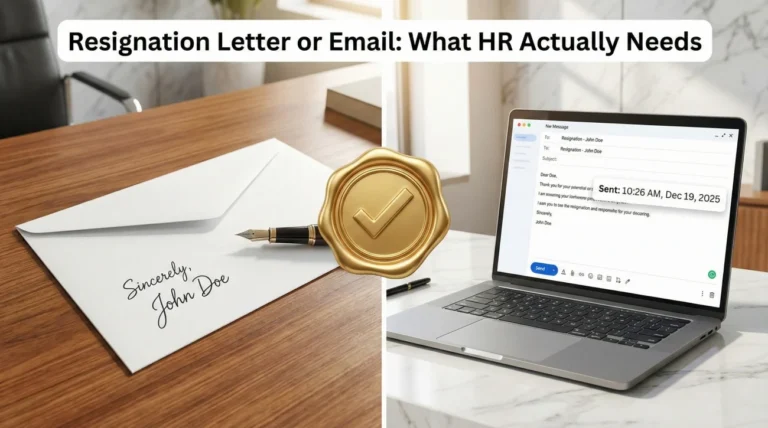

- Situation: An internal promotion can require a formal resignation from your current role so HR can process the transfer cleanly.
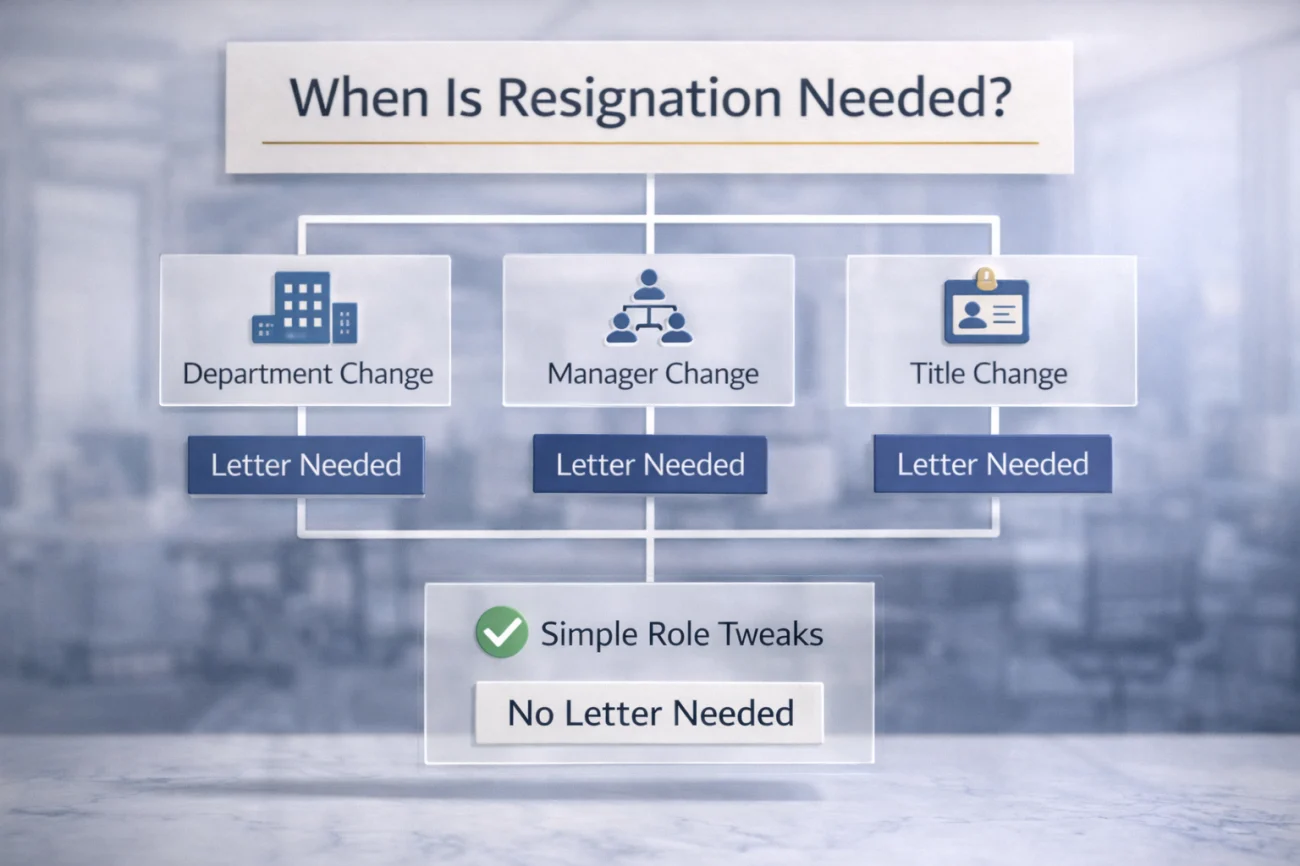
- When needed: Department moves, major title changes, or big reporting shifts often require a letter, while small same-team promotions often do not.
- Tone: Stay positive and diplomatic, credit your current team for helping you grow, and signal you will keep collaborating after the move.
- Handover: Set a clear cutoff for old duties, document projects thoroughly, and define boundaries so you are not the permanent fallback.
- People risk: If colleagues also wanted the role, stay grounded, avoid celebrating “escaping,” and keep relationships intact for cross-team work.
When Promotion Requires Formal Departure
A resignation letter for promotion addresses the unique situation where you’re leaving your current position for advancement within the same organization. While you’re not leaving the company, you are terminating your current role and reporting structure – requiring formal resignation documentation your HR needs for internal transfer processing.
This internal promotion resignation letter differs significantly from external departures. You’re not burning bridges – you’re building new ones while carefully maintaining relationships with colleagues you’ll continue working alongside in different capacities. The letter must balance professional formality with warmth appropriate for ongoing organizational relationships.
This guide explains when internal promotion requires resignation letters, how to structure them diplomatically, and strategies for managing the delicate transition from one department to another without creating resentment. For complete resignation guidance, see our resignation letter etiquette guide.
When Internal Promotion Requires Resignation Letter
Not all internal moves require formal resignation letters. Understanding when your HR department needs this documentation prevents confusion and ensures proper processing.
Department or Division Changes
Moving to different departments – marketing to sales, operations to finance, one regional office to another – typically requires formal resignation from your current position. Each department maintains separate budgets, reporting structures, and headcount allocations. Your “resignation” allows current department to backfill your position while new department officially adds you to their roster.
Significant Reporting Structure Changes
Promotions that change who you report to, even within the same department, may require resignation letters for HR documentation. When you move from reporting to a manager to reporting to a director or VP, organizational hierarchy shifts necessitate formal position termination and new position creation.
Major Title or Role Changes
Substantial title changes – Analyst to Manager, Specialist to Director – often require resignation from old role with new job offer for promoted position. This documentation trail maintains accurate employment history for benefits, retirement calculations, and personnel records.
When Resignation Letter Isn’t Needed
Simple promotions within same team reporting to same manager (Junior Analyst to Analyst, Coordinator to Senior Coordinator) typically don’t require resignation letters. HR processes these as title/salary adjustments rather than position changes. Ask your HR contact whether formal resignation is needed or whether internal paperwork suffices.
Internal vs External Resignation Letters
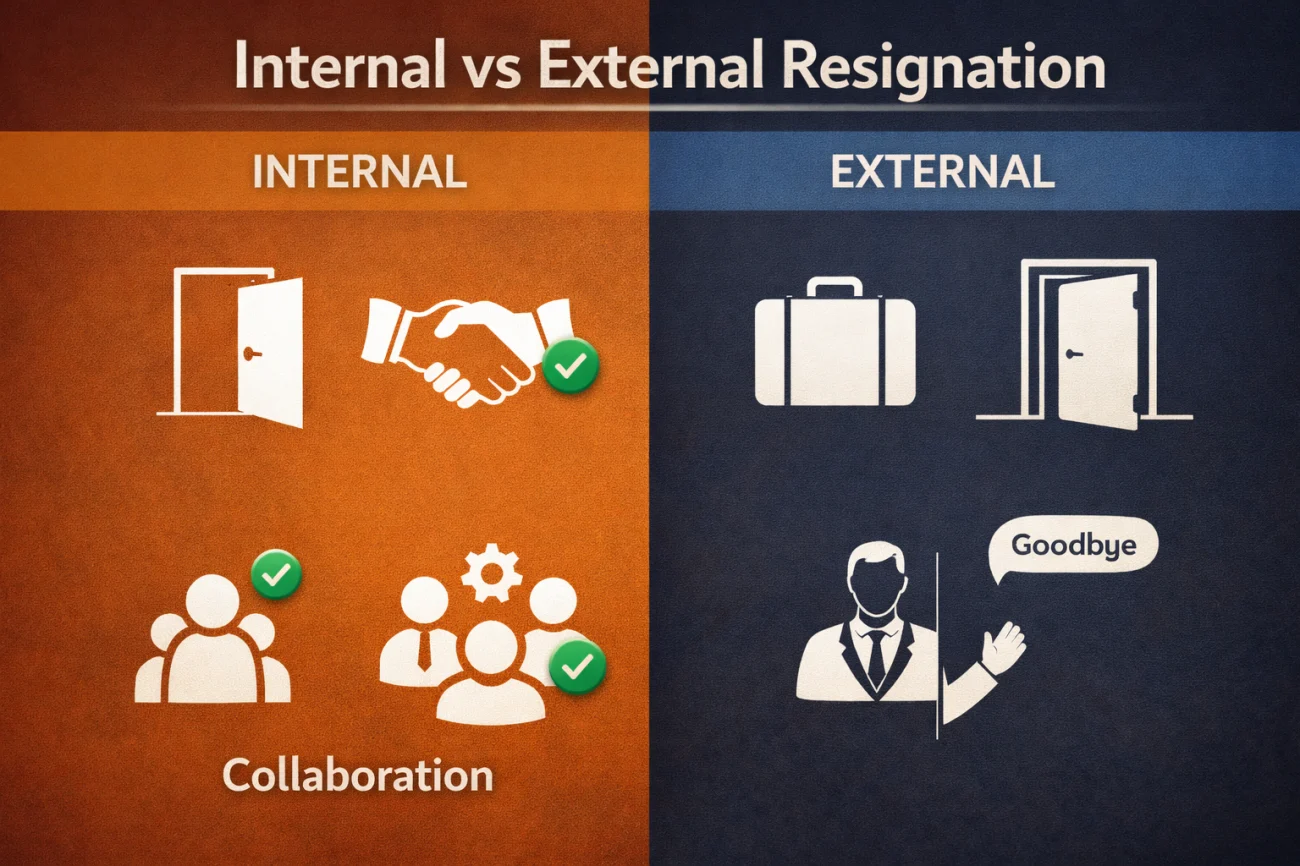
The resignation letter for internal transfer requires different approach than external departure letters. Key distinctions shape how you write and deliver these documents.
| Internal Promotion Resignation | External Departure Resignation |
|---|---|
| ✓ Emphasize excitement about new role within company | ✓ Keep new employer details minimal or private |
| ✓ Promise continued collaboration across departments | ✓ Offer transition assistance with clear boundaries |
| ✓ Thank specific team members you’ll still work with | ✓ General appreciation for organization |
| ✓ Address ongoing projects and cross-department impact | ✓ Focus only on direct responsibilities |
| ✓ Shorter notice period acceptable (internal coordination) | ✓ Full standard notice period expected |
| ✓ Maintain very positive, enthusiastic tone | ✓ Professional but can be more neutral |
| ✗ Never express relief at leaving current role | ✗ Avoid negative comments about employer |
Writing Diplomatically for Internal Moves
Internal promotion resignation letters require extra diplomatic care since you’ll continue working with people who read them. These letters become part of department history your former colleagues remember.
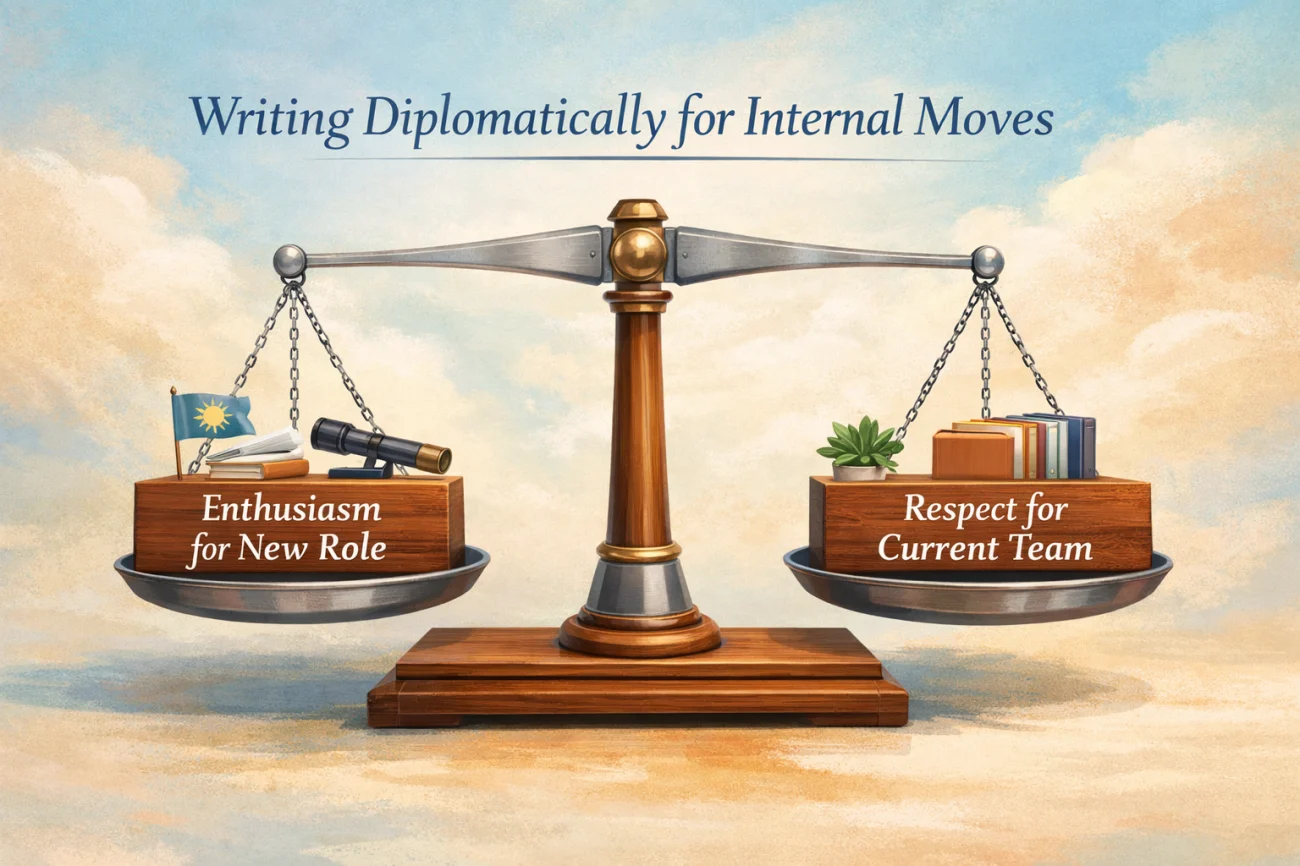
Balance Enthusiasm With Sensitivity
Express excitement about your promotion without suggesting your current role was beneath you or that you couldn’t wait to escape. “I’m thrilled about this opportunity to contribute to the organization in new ways” works better than “I’m so glad to finally move beyond this entry-level work.”
Your former team may feel disappointed or even abandoned by your departure. Excessive celebration of leaving them can create lasting resentment that affects cross-department collaboration after your promotion.
Acknowledge Current Team Contributions
Recognize how your current team prepared you for promotion: “The skills and experience I’ve gained working with this team directly enabled this opportunity.” This framing makes your departure feel less like rejection of current colleagues and more like natural career progression.
Promise Future Collaboration
Emphasize ongoing professional relationships: “I look forward to collaborating with this team from my new role” or “I’m excited to support department initiatives from my new perspective.” These statements signal you’re not severing relationships – just changing your organizational position.
Managing Internal Handover Process
Internal promotions create unique handover challenges since you’ll likely continue influencing projects from your new role. Clear transition boundaries prevent confusion about responsibilities.

Creating Clean Responsibility Breaks
Define exactly when you stop handling current role tasks: “My last day managing social media will be June 10. After that, please direct all requests to [successor].” This clarity prevents colleagues from approaching you about old responsibilities.
Comprehensive Knowledge Transfer
Document everything more thoroughly than external departures. You’ll remain available as informal resource, but comprehensive documentation prevents becoming permanent go-to person for old role’s tribal knowledge. Your successor needs independent competence.
Setting Post-Promotion Boundaries
Communicate boundaries: “While I’m happy to answer occasional questions, I’ll need to focus on new responsibilities. Please reach out to [successor] first.” This sets expectations that you’re truly moving into your new role.
Internal Promotion Resignation Templates
These leaving department letter templates show appropriate tone and content for internal transfers and promotions.
Department Transfer Resignation
Rachel Morrison
rachel.morrison@company.com
(415) 555-0173
May 8, 2024
Michael Thompson
Operations Director
Cascade Manufacturing
Dear Michael,
I am writing to formally resign from my position as Operations Analyst in the Manufacturing Operations Department, effective May 22, 2024. I have accepted a position as Supply Chain Manager in the Logistics Department, beginning May 23, 2024.
This opportunity represents exciting professional growth that leverages the operational expertise I’ve developed over the past three years working with your team. The analytical skills and process improvement experience I’ve gained here directly prepared me for this supply chain management role.
During my remaining two weeks, I will complete comprehensive handover documentation for my current projects and ensure seamless transition to my successor. I’m particularly focused on finishing the Q2 efficiency analysis and transferring all vendor relationship knowledge.
While I’m transitioning to a new department, I look forward to continued collaboration on cross-functional initiatives. The strong working relationships I’ve built with this team will remain valuable as we coordinate between operations and logistics.
Thank you for your mentorship and the professional development opportunities you’ve provided. I’m grateful for everything I’ve learned under your leadership.
Best regards,
[Signature]
Rachel Morrison
Promotion Within Company
David Chen
david.chen@company.com
(206) 555-0198
June 5, 2024
Sarah Rodriguez
Marketing Director
TechFlow Systems
Dear Sarah,
I am writing to formally resign from my position as Senior Marketing Specialist, effective June 19, 2024, as I will be transitioning to the newly created role of Regional Marketing Manager for our West Coast operations, effective June 20, 2024.
I’m incredibly excited about this opportunity to contribute to TechFlow’s expansion while continuing to work with the talented marketing team we’ve built. The campaign management and analytics expertise I’ve developed in this role will serve me well in the regional leadership position.
Over the next two weeks, I will ensure thorough transition of my current client accounts and campaign management responsibilities. I’ve prepared detailed documentation for ongoing projects and will work closely with the team to address any questions during this transition.
I want to express sincere gratitude for your mentorship and trust in my abilities. Your leadership has been instrumental in my professional development, and I’m honored to have this opportunity to take on greater responsibilities within the organization.
I look forward to our continued collaboration as I work to build the West Coast marketing presence while staying connected to the core marketing team.
Best regards,
[Signature]
David Chen
Timing Considerations for Internal Moves
Internal promotion transitions often move faster than external departures since both departments exist within same HR system.
Shorter Notice Periods
Many organizations accept one week notice for internal transfers versus two weeks external. Your new department may need you to start quickly, and coordination between managers facilitates faster transitions. Always ask your current manager about their preference rather than assuming shorter notice works.
Cross-Department Coordination
Your current and new managers should coordinate transition timing together. Let them work directly with each other and HR to determine optimal timing. Your role is executing the transition they agree upon, not negotiating between departments.
Avoiding Colleague Resentment
Internal promotions can create awkward dynamics with former peers, especially if multiple team members applied for the same opportunity. Managing these relationships requires sensitivity and humility.

When Colleagues Also Applied
If team members competed for your promotion, acknowledge their accomplishments genuinely: “I know several talented people applied for this role. I’m fortunate to have been selected.” Avoid false modesty but don’t gloat about being chosen over colleagues you’ll continue working with.
Staying Grounded Post-Promotion
After promotion, resist urge to distance yourself from former peers or emphasize new status. Continue treating former colleagues with respect. Yesterday’s peers are today’s potential collaborators or even future managers in different parts of the organization.
❓ FAQ
📝 Do I need a resignation letter for internal promotion?
Depends on the move. Department changes, significant reporting structure shifts, or major title changes typically require formal resignation from current role. Simple promotions within same team may not need resignation letters – ask your HR contact whether formal resignation is needed or internal paperwork suffices.
⏰ How much notice should I give for internal transfer?
Many organizations accept one week notice for internal moves versus two weeks external. However, always discuss timing with your current manager rather than assuming shorter notice works. Let your current and new managers coordinate transition timing together with HR.
💼 How does internal promotion resignation differ from external departure?
Internal letters emphasize continued collaboration, thank specific people you’ll keep working with, and maintain very positive enthusiastic tone. External letters can be more neutral and formal. Internal letters require extra diplomatic care since recipients remain colleagues in different capacities.
🤝 How do I handle colleagues who also wanted my promotion?
Acknowledge their accomplishments genuinely without false modesty. Stay humble about selection. Continue treating former colleagues with respect and equality – avoid distancing yourself or emphasizing new status. Yesterday’s peers are today’s potential collaborators across the organization.
📋 Should I stop helping my old team after promotion?
Set clear boundaries about post-promotion involvement. Be available for occasional questions but direct routine matters to your successor. Creating comprehensive transition documentation prevents becoming permanent go-to person for old role while you need to focus on new responsibilities.
Final Thoughts
A resignation letter for promotion navigates the delicate situation where you’re advancing your career within the organization while formally departing from your current role and relationships. These letters require diplomatic balance – expressing enthusiasm for new opportunities without devaluing current work or alienating colleagues you’ll continue collaborating with.
The internal promotion resignation letter differs substantially from external departures because your relationships continue even as your organizational position changes. Extra care in tone, acknowledgment of team contributions, and promises of future collaboration protect cross-department relationships that remain valuable throughout your career.
Remember that internal moves make your resignation letter part of department history rather than final goodbye. The professionalism, gratitude, and respect you demonstrate in this letter shape how former colleagues view you long after you’ve settled into your promoted position across the organization.
⚠️ Legal Disclaimer: The resignation templates, email samples, and professional guidance provided in this guide are for informational purposes only and do not constitute legal advice. Employment laws and contract requirements vary by jurisdiction and individual circumstances. Please review your employment agreement and consult your HR department and/or a qualified attorney to ensure compliance with applicable laws and policies.