- Core point: A precise last day in writing is the anchor that drives payroll, benefits, and offboarding actions.
- Money protection: Exact dates reduce final paycheck errors, PTO payout disputes, and coverage cut-off surprises.
- Dispute prevention: Clear “calendar vs business days” alignment avoids notice conflicts and protects clean voluntary-exit status.
- Operational ripple: IT access, security badges, asset returns, and team handover all depend on one confirmed end date.
- Change control: If the date moves, document the new date immediately by email so pay, liability, and records stay correct.
The Importance of Precision: Your Resignation Letter Last Day
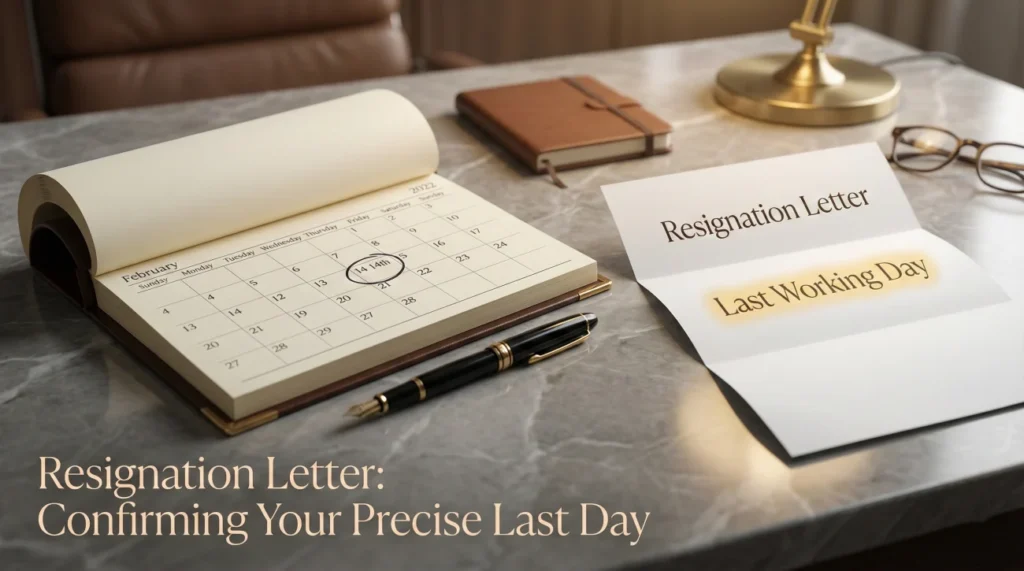
When you decide to move on from a company, the most critical piece of data you communicate is not “why” you are leaving, but exactly “when” you are leaving. A resignation letter last day serves as the official anchor for your entire offboarding process. It is the definitive marker that triggers payroll calculations, benefit terminations, and the start of your successor’s journey. Without a clear, written confirmation of this date, you leave your exit open to interpretation, which can lead to administrative headaches and financial discrepancies.
In the professional world, ambiguity is the enemy of a smooth transition. Managers and HR departments operate on schedules and budgets; they need to know precisely when your seat will be empty to manage workloads and recruitment cycles. By providing a resignation letter confirming last day details, you are providing the company with the clarity it needs to maintain operational continuity. This isn’t just a formality – it is a protective measure for your own career interests, ensuring that there is no confusion about your availability or your final compensation.
Establishing this date in writing also sets a boundary. It prevents “scope creep” during your final weeks, where projects might be assigned to you that extend beyond your actual tenure. In this comprehensive guide, we will explore the strategic importance of channelling your departure through a clearly defined end date. We will look at how to calculate your notice period correctly, how to handle disputes over “work days” versus “calendar days,” and how to ensure your final paycheck reflects every hour you’ve worked.
Financial Integrity: Locking in Your Final Paycheck
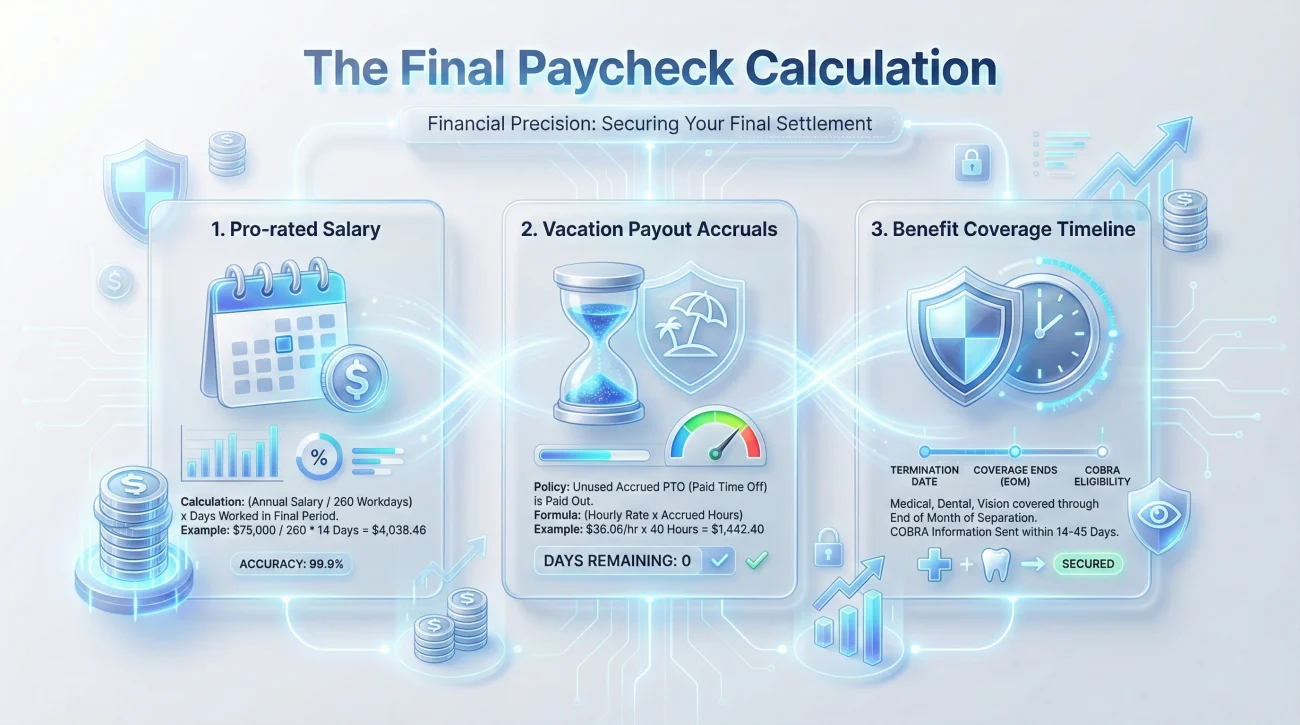
One of the primary reasons to be hyper-specific about your end date is to ensure payroll accuracy. Most payroll systems are automated and rely on the exact date entered by HR to calculate pro-rated salaries, accrued vacation time, and final bonuses. A last working day resignation letter that clearly states “My last day will be Friday, December 19, 2025,” removes any guesswork for the finance department. This precision is essential for avoiding the common “missing day” dispute that plagues many professional exits.
When calculating your final pay, consider the following factors that depend on your end date:
- 💰 Pro-rated Salary: If you leave mid-month, your pay is calculated based on the number of working days completed versus the total work days in that cycle.
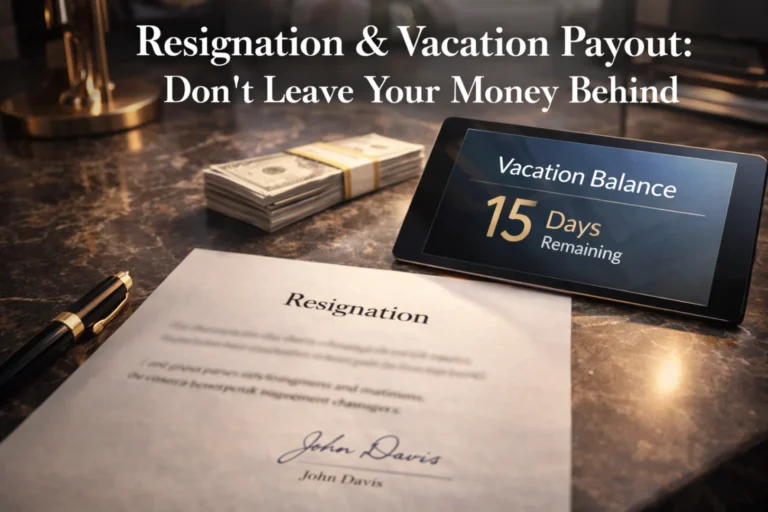
- 🏖️ Vacation Payouts: Many companies pay out unused PTO, but the “accrual” often continues right up until your official last day. One day can make a difference in your final balance.
- 🏥 Benefit Coverage: Health insurance often expires at the end of the month in which you leave, but some policies terminate exactly on your last day of employment.
By documenting your end date clearly, you create a paper trail that can be used if there is ever a discrepancy in your final settlement. It is much easier to point to a signed letter than to recall a verbal conversation from three weeks prior. This financial due diligence is a core component of resignation letter etiquette and reflects your maturity as a professional who understands the business side of employment.
Conflict Mitigation: Avoiding Post-Employment Disputes

Disputes regarding the “last day” often arise when there is a disagreement about the notice period required by the employment contract. For instance, if your contract requires a “30-day notice,” does that mean 30 calendar days or 30 business days? Without a written confirmation, your manager might assume one while you assume the other. This can lead to accusations of “breach of contract” or “abandoning the post,” both of which can damage your professional reputation and future background checks.
Using a formal letter to confirm your date forces this conversation to happen immediately upon resignation. If the company disagrees with your proposed date, they must bring it up then, rather than on your supposed last day. This early alignment allows you to negotiate or adjust your plans without the stress of an impending deadline. It also protects you from being coerced into staying longer than your legal or contractual obligation requires.
Furthermore, clear date confirmation protects your “rehire” status. Most companies categorize exits as either “voluntary” or “involuntary.” If you stop showing up on a date the company didn’t agree to, they might mark you as “terminated for cause” or “job abandonment.” A documented agreement on your final day ensures that your file reflects a clean, voluntary resignation, which is vital for your long-term career prospects and any future reference checks.
Strategic Timing: Negotiating the Ideal Exit Date
The choice of your last day is often a strategic decision. Many professionals choose a Friday to allow for a clean break before starting a new role on Monday. Others might choose the last day of a month to maximize benefit coverage. Whatever your choice, the timing should be presented as a benefit to the transition process. For example, leaving after a specific project milestone or after completing a quarterly report shows that you are being mindful of the team’s workload.
When selecting your date, consider the “handover window.” Is two weeks truly enough to train your replacement or document your processes? If you have a complex role, offering a slightly longer notice period can be a powerful gesture of goodwill. Conversely, if the environment is toxic, sticking strictly to your contractual minimum is perfectly acceptable. The goal is to choose a date that balances your personal needs with your professional obligations, and then to stand by that date firmly in your documentation.
The Administrative Ripple Effect of Your End Date
Your last day triggers a series of administrative actions that involve multiple departments. IT needs to know when to revoke your system access; Security needs to know when to deactivate your badge; and Facilities needs to know when your office or desk will be vacated. When you provide a clear end date, you allow these departments to schedule their tasks efficiently, preventing the chaos of a “surprise” exit.
| Department | Action Triggered by Last Day | Importance |
|---|---|---|
| IT / Security | Access Revocation | Protects company data and intellectual property. |
| Finance / Payroll | Final Settlement | Ensures you receive your full and accurate compensation. |
| Operations | Asset Recovery | Coordinates the return of laptops, keys, and company cars. |
| Human Resources | Benefit Termination | Sets the timeline for COBRA or insurance transitions. |
By being the one to define this date, you stay in the driver’s seat of your own exit. You aren’t waiting for the company to tell you when to leave; you are informing them of your final day of availability. This proactive approach is highly respected in professional circles and ensures that your departure is handled with the same level of organization as your arrival was.
Date Confirmation Templates for Every Situation
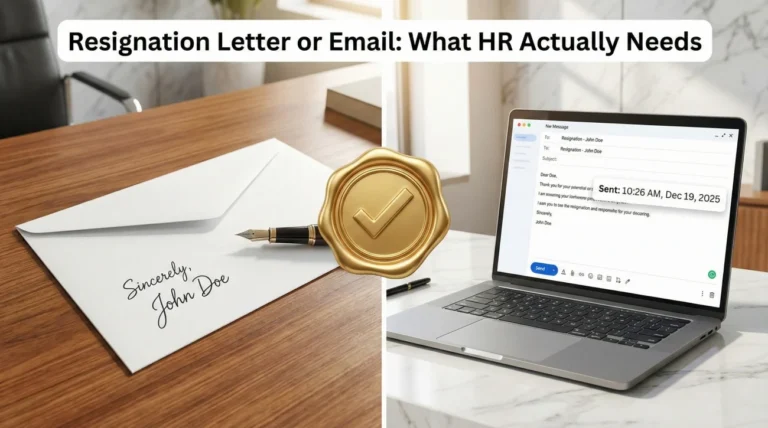
Whether you are sending a traditional paper letter or a modern resignation email, the way you state your date should be unmistakable. Use the following templates as a guide to ensure your end date is clearly documented and understood by all parties.
Formal Letter: Precise Date Confirmation
[Your Name]
[Your Address]
[City, State ZIP]
[Date]
[Recipient Name]
[Title]
[Company]
Dear [Name],
Please accept this letter as formal notification that I am resigning from my position as [Job Title]. As per the notice period requirements in my employment contract, my last working day will be [Month, Day, Year].
I am committed to making this transition as smooth as possible. Between now and [Last Day Date], I will focus on completing my current projects and providing a detailed handover for my successor. Please let me know the specific procedures for returning my company equipment and finalizing my exit paperwork on that day.
Thank you for the opportunity to have been a part of the [Company] team.
Sincerely,
[Your Signature]
[Your Name]
Email Confirmation for Payroll and IT
Subject: Resignation & Confirmation of Last Working Day – [Your Name]
Dear [Manager’s Name],
I am writing to formally resign from my role at [Company]. After careful consideration, I have decided to pursue a new opportunity.
To ensure total clarity for our payroll and transition planning, I am confirming that my final day of employment will be [Day of week], [Date]. I have already begun drafting a handover document to ensure that all my responsibilities are clearly transitioned before this date.
Please let me know if there are any specific exit interviews or administrative tasks you would like me to prioritize during my final weeks. I look forward to a productive and positive final chapter here.
Best regards,
[Your Name]
Logistics: Coordinating Equipment and Assets

The confirmation of your last day is also the deadline for the return of company property. Laptops, monitors, company credit cards, and badges must all be surrendered by the time you walk out the door. When your date is clearly defined, you can schedule an “asset handover” meeting with IT or your manager. This meeting should conclude with a signed receipt or an email confirmation that all items were returned in good condition.
Failing to coordinate this can lead to delays in your final paycheck or even invoices for “missing” equipment. By being proactive, you ensure that there are no lingering ties or potential liabilities once you leave the building. Treat the return of company assets with the same level of care as you treat your handover notes; it is the final act of a professional tenure.
Last Day Etiquette: Ending on a High Note
Once the date is set and the paperwork is filed, the focus shifts to how you spend those final hours. A professional exit involves more than just packing your desk. It involves saying goodbye to colleagues, thanking mentors, and ensuring that your digital files are organized for the person taking over your role. Your last day should be a day of “closure,” not a day of frantic work.
Plan your final week so that your actual last day is relatively light. This gives you time to handle the inevitable “last-minute” HR questions and to leave your workspace in a condition that you can be proud of. Leaving a clean desk and a positive final impression is the best way to ensure that your time at the company is remembered for your excellence, not for a disorganized exit.
Handling Unplanned Changes to Your End Date
Sometimes, despite the best-laid plans, things change. A company might ask you to leave earlier (early release) or request that you stay a few days longer to finish a critical launch. If this happens, it is vital to document the change immediately. If you agree to a new date, send a follow-up email: “As per our discussion today, we have mutually agreed to move my last day from [Original Date] to [New Date].”
This protects you in terms of both pay and liability. If you leave earlier than planned, you want to ensure you are not marked as “resigned without notice.” If you stay longer, you want to ensure you are paid for those additional days. Never rely on verbal agreements for changes to your termination date; always get it in writing to maintain the integrity of your exit process.
❓ FAQ
📅 Does my last day have to be a Friday?
No, your last day can be any day of the week. However, Fridays are common because they provide a natural transition point before a weekend and often align better with new job start dates on Mondays.
🛑 Can my employer force me to leave earlier than my confirmed date?
Yes, in many “at-will” jurisdictions, an employer can choose to end your employment immediately upon receiving your resignation. In some cases, they may still be required to pay you for the notice period you offered.
🏝️ Can I use vacation days as my last day of work?
This depends on company policy. Some companies allow “terminal leave,” where you are technically employed but not in the office. However, many require you to be physically present on your final official day of employment.
💰 What happens if my final paycheck doesn’t match my confirmed last day?
Contact HR immediately and provide a copy of your resignation letter confirming last day. Most discrepancies are honest clerical errors that can be fixed once you provide the documented evidence of your agreed end date.
📋 Do I need to confirm my last day with HR or just my manager?
Both. While your manager handles your workload, HR handles your pay and benefits. It is always safest to CC HR on your resignation email or provide them with a physical copy of your letter.
Final Thoughts

The end of your tenure at a company is defined by the clarity you provide in your final weeks. A precise and well-documented resignation letter last day is more than just a date on a calendar; it is a declaration of your professionalism and your commitment to a fair and organized transition. By locking in this date, you protect your finances, your reputation, and your peace of mind as you move toward your next career milestone.
Remember that a clean exit is the foundation of a strong future. When you leave a company with all administrative threads tied neatly, you preserve the value of the relationships you’ve built and the work you’ve accomplished. Clarity regarding your end date ensures that your final impression is one of reliability and integrity.
As you prepare to sign off for the final time, take pride in the thoroughness of your departure. You have done the work, you have served your time, and now you are confirming your exit with the same excellence that defined your performance. Good luck in your new chapter, knowing that your past is securely documented and your future is bright.
⚠️ Legal Disclaimer: The resignation templates, email samples, and professional guidance provided in this guide are for informational purposes only and do not constitute legal advice. Employment laws and contract requirements vary by jurisdiction and individual circumstances. Please review your employment agreement and consult your HR department and/or a qualified attorney to ensure compliance with applicable laws and policies.