- Core Idea: Job handover is the “Red Zone” where your exit can either protect or damage your reputation.
- Why It Works: People remember the ending more than the peak, so a clean finish overrides years of good performance.
- 4-Week Plan: Audit and announce, Document the “bus factor”, Train and shadow, Then finalize logistics and handoff.
- Handover Report: Build one master doc with processes, project status, key contacts, file paths, and access instructions to stop follow-up calls after you leave.
- Communication and Closure: Use clear handover emails, return equipment with a paper trail, set a professional OOO, and handle exit interviews without venting.
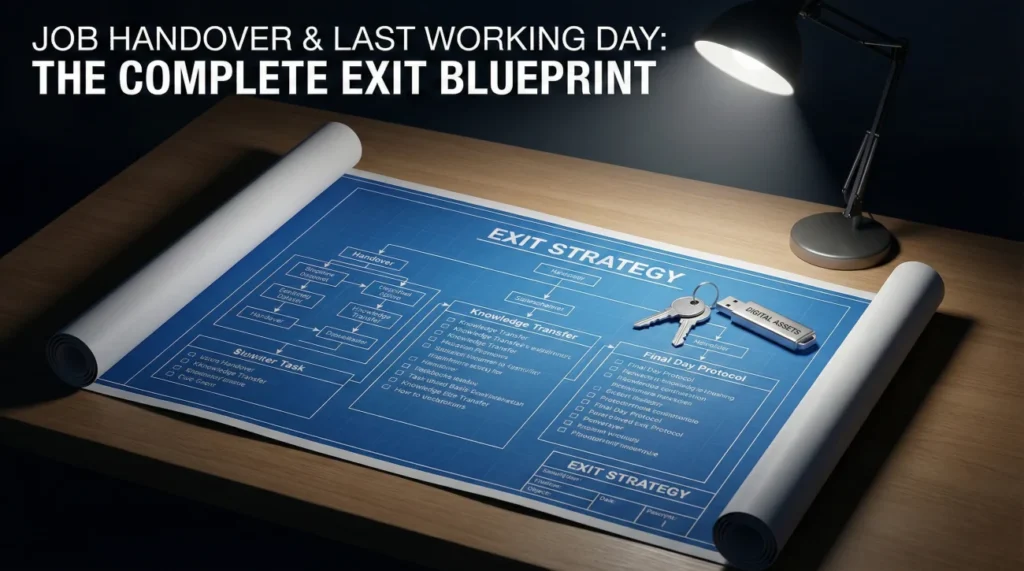
You have resigned. The hard part is over, right? Not exactly. In fact, the most dangerous phase of your employment has just begun. Your final weeks are the “Red Zone” of your professional reputation. A messy exit can undo years of hard work in a single afternoon, while a strategic, well-executed job handover ensures you leave as a legend, not a liability. This isn’t just about cleaning your desk; it’s about engineering your legacy.
There is a psychological concept known as the “Peak-End Rule.” It states that people judge an experience largely based on how they felt at its peak and at its end. You might have been a high performer for five years, but if your departure is chaotic, confusing, or bitter, that is what your manager and colleagues will remember. The “End” overrides the “Peak.”
The reality is that most people check out mentally the moment they sign their new contract. They leave cryptic files, unresolved threads, and a confused successor. Don’t be that person. This guide is your strategic blueprint for the entire employee exit process, designed to protect your reputation and keep your network intact.
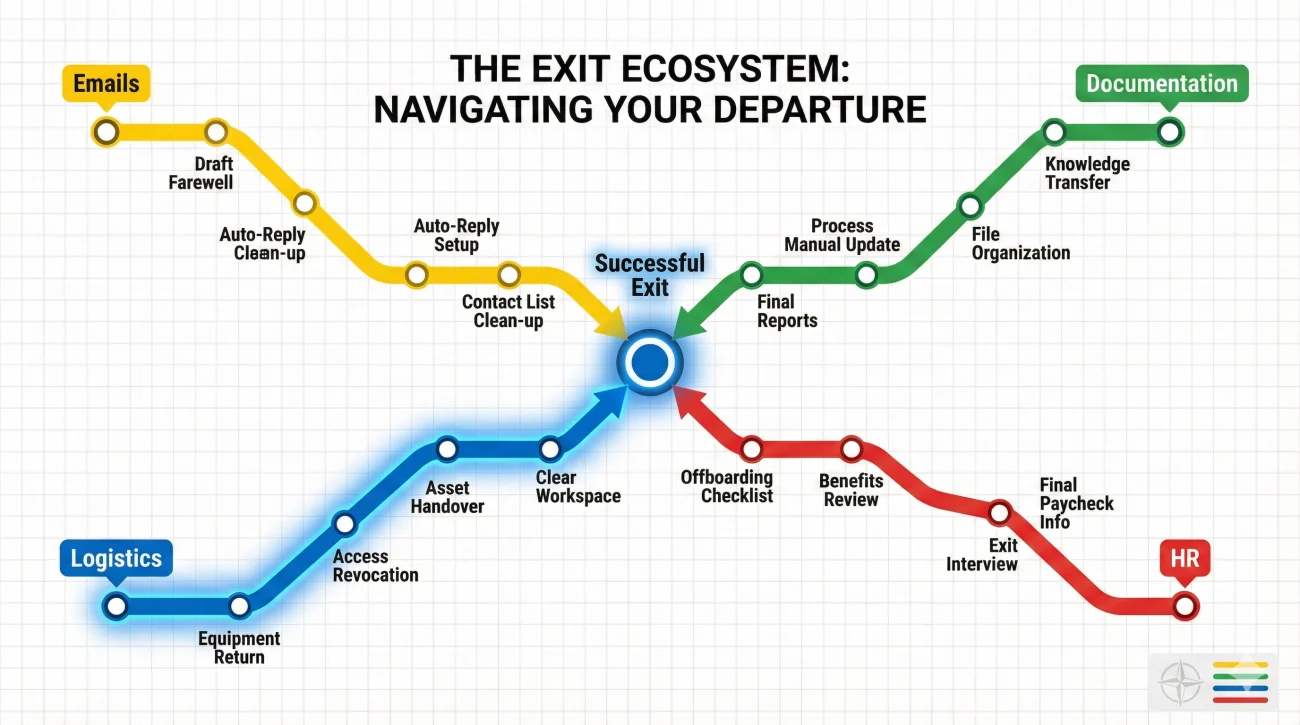
The Complete Exit Ecosystem (Resource Library)
A successful exit involves multiple moving parts. We have broken down the entire job handover process into specific, deep-dive guides. Use this list to navigate every single scenario you might face.
📧 Handover Emails (Core Transition)
- 📩 Handover Email to Colleague: Scripts for transferring daily tasks.
- 🧭 Handover Email to Boss: Formal status updates for leadership.
- 🤝 Handover Email to Client: Managing external relationships.
- 📦 Project Handover Email: Specific scripts for handing off ongoing projects.
- 🔐 Login Details Handover: How to securely share credentials.
🗓️ Special Scenarios (Temporary vs Permanent)
- 🤰 Maternity Leave Handover: Preparing for a long-term temporary absence.
- 🏖️ Vacation Handover Email: Short-term coverage templates.
👋 The Last Working Day (Farewells & OOO)
- 👥 Last Working Day Email to Team: The broad farewell message.
- 👨💼 Last Working Day Email to Boss: The private thank-you note.
- 📨 Last Day Email Subject Line: Catchy headers to ensure your goodbye is read.
- ✉️ Resignation Auto Reply: Setting up your professional OOO.
- ✅ Last Day at Work Checklist: The final 24-hour countdown.
📝 Documentation (Templates)
- 📄 Handover Report Template: The structure of your master document.
- 📋 Job Handover Checklist: A comprehensive tracking sheet.
💻 Logistics & Assets (Physical & Digital)
- 💻 Returning Work Laptop: Protocol for IT assets.
- 📧 Equipment Handover Email: Confirming asset return in writing.
- 🧹 Clean Desk Policy When Leaving: Etiquette for your physical workspace.
🤝 HR & Etiquette (Soft Skills)
- 🧾 Exit Interview Preparation: Strategic answers for HR.
- ⏰ Leaving Early on Last Day: Rules for the “early exit.”
- 📌 Working on Last Day: Productivity expectations.
The 4-Week Exit Countdown Strategy
A flawless transition is a project management challenge. You cannot cram it all into the last 48 hours. Depending on your notice period, your timeline might vary, but the phases remain constant.
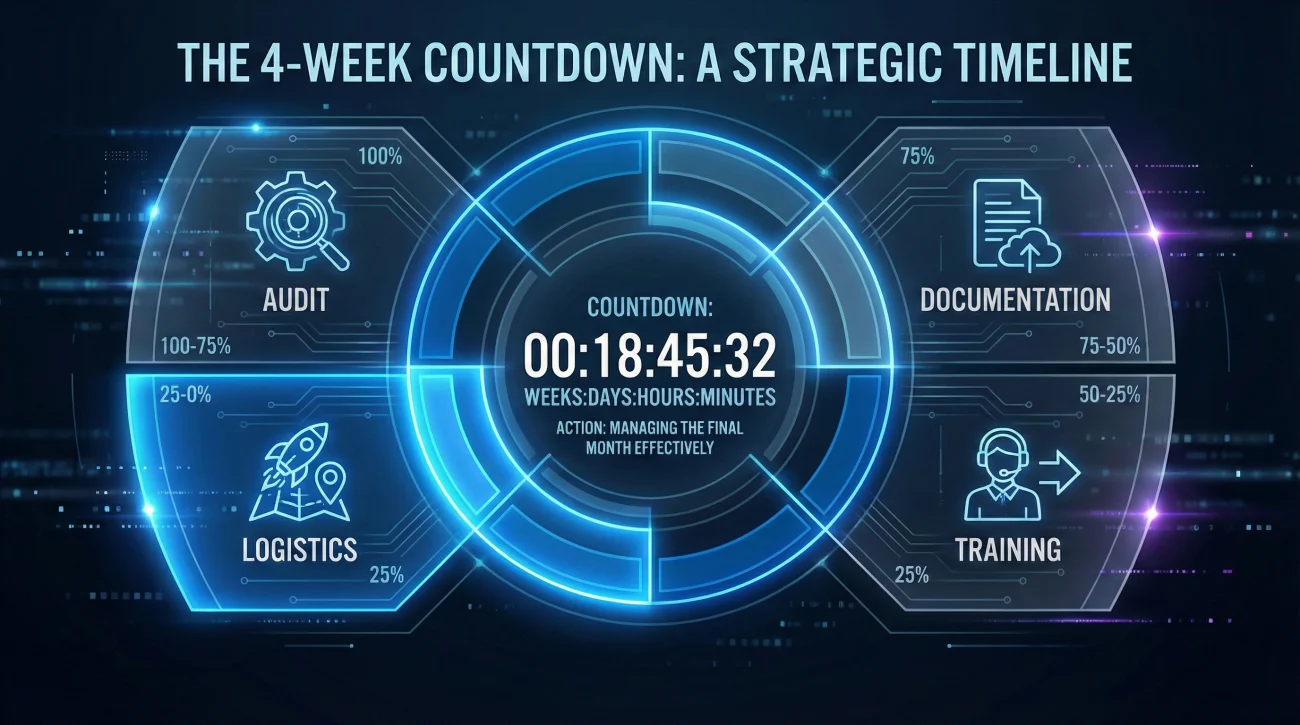
Week 1: The Audit & Announcement
Before you write a single document, you need to audit what you actually do. Most job descriptions are outdated. Spend this week logging your daily tasks, access permissions, and ongoing projects. This is also when you break the news to your immediate team.
Week 2: The Documentation (The “Bus Factor”)
This week is dedicated to creating your master document. If you got hit by a bus tomorrow, could someone do your job? If the answer is no, you have work to do. Focus on the handover report – your instruction manual for the role.
Week 3: Training & Shadowing
Documentation is theory; training is practice. This is the time to focus on how to train your replacement. Don’t just show them what to do; watch them do it. If you don’t have a replacement, train your manager or a peer on the critical systems.
Week 4: The Final Handoff
The final week is for logistics. This is when you focus on returning company equipment, finalizing the exit interview, and sending your farewells.
Phase 1: The Handover Report (The “Holy Grail”)
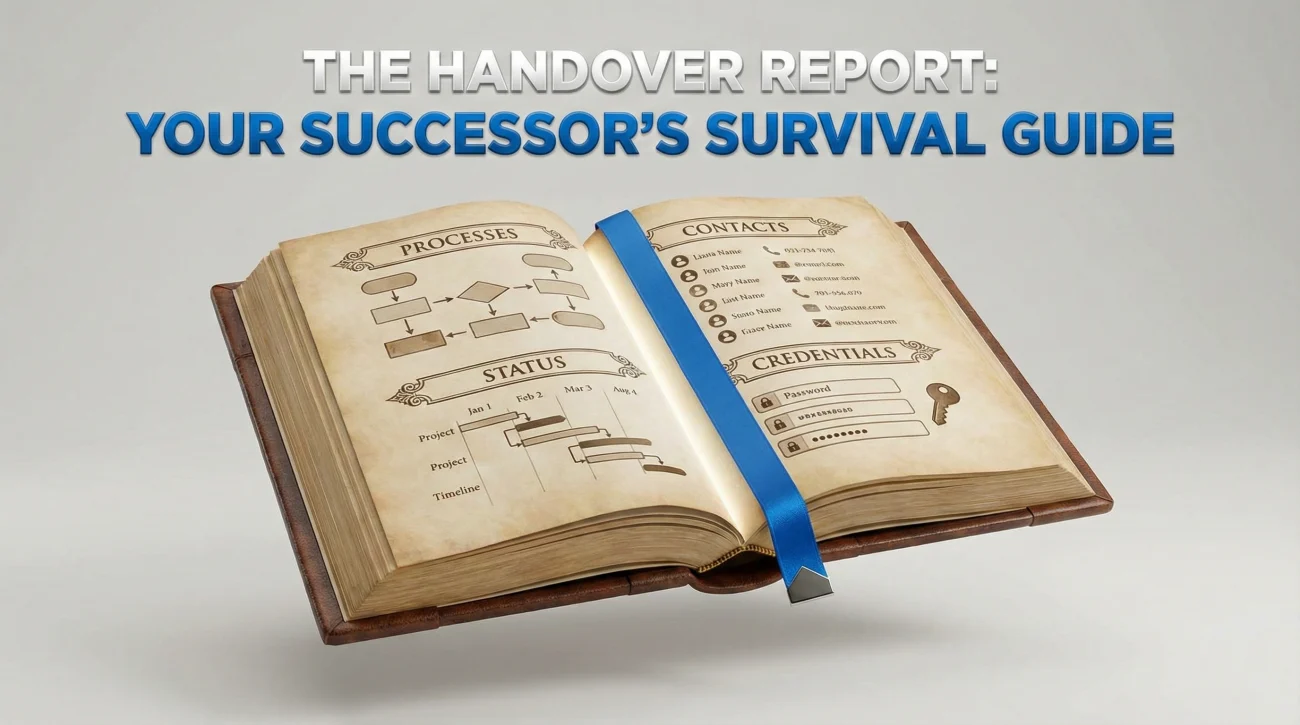
Your handover report is the most tangible asset you leave behind. It must be foolproof. A great report prevents your phone from ringing two weeks after you’ve left.
A comprehensive report should include:
- Daily/Weekly Processes: Step-by-step guides for recurring tasks.
- Project Status: Green/Yellow/Red status for every open project.
- Key Contacts: Who holds the keys? Who approves the budget? (e.g., “John in Finance approves invoices, but only on Tuesdays.”)
- File Paths: Don’t say “It’s on the drive.” Say “Server X > Marketing > 2024 > Q3 Reports.”
- Credentials: (If allowed by security policy) or instructions on how to request access.
Phase 2: Masterful Communication (With Templates)
Communication during your exit is a delicate art. You are managing anxiety – your boss’s anxiety about the gap you’re leaving, and your client’s anxiety about service disruption. Here is how to handle the critical emails.
1. The Handover Email to Colleague
This email formally transfers ownership. It should be tactical, detailed, and reassuring.
Subject: Handover Notes & Ownership Transfer – [Project Name]
Hi [Name],
As we discussed, I’m wrapping up my final tasks this week. I’m writing to formally hand over the [Project Name] to you.
Status: The project is currently in the design phase. The client is waiting for the revised mockups due this Friday.
Resources:
- Master Handover Doc: [Link]
- Asset Folder: [Link]
I’ve scheduled a 30-minute walkthrough for us tomorrow at 2 PM to answer any questions.
Thanks,
[Your Name]
2. The Client Handover (External)
This is high stakes. A Handover Email to Clients must introduce your replacement immediately to prevent any fear of abandonment. Never announce you are leaving without providing the solution.
Subject: Introducing your new account manager – [Company Name]
Hi [Client Name],
I’m writing to let you know that I’ll be moving on from [Company] next week. It has been a pleasure working with you on [Project].
I’m thrilled to introduce you to [Colleague’s Name], who will be taking over your account. I’ve already briefed them on your goals for Q4, and they are fully up to speed.
[Colleague’s Name] is copied on this email – I’ll let them take it from here!
Best regards,
[Your Name]
3. The Final Goodbye (The “Mic Drop”)
Your goodbye email to coworkers is your final bow. Keep it positive. Do not include complaints. Do not be overly emotional. Include your LinkedIn so people can find you.
Subject: So long, and thanks for the fish! (My last day)
Hi Team,
As many of you know, today is my last day at [Company].
I’m incredibly proud of what we’ve built over the last [Number] years. I’m moving on to a new adventure, but I’ll always cherish the time we spent in the trenches together.
Let’s stay in touch:
- LinkedIn: [Link]
- Personal Email: [Email]
Wishing you all the best,
[Your Name]
Phase 3: Logistics & Equipment Return
Leaving a job involves untangling your digital and physical life. This is often where disputes arise regarding final paychecks or security breaches.
Returning company equipment requires a paper trail. Do not just leave your laptop on a desk. Hand it to IT or HR and ask for an email confirmation receipt. This protects you if the device goes missing later.
Furthermore, respect the clean desk policy. Remove all personal stickers, clear out your drawers, and wipe down the surfaces. Leaving a dirty desk is a passive-aggressive move that people notice.
Digital Hygiene Checklist:
- Clear browser history and saved passwords.
- Delete personal files (tax returns, family photos) from the local drive.
- Unsync your personal iCloud/Google accounts.
- Transfer ownership of Google Drive folders/Calendars to your manager.
Phase 4: The Last Working Day Checklist
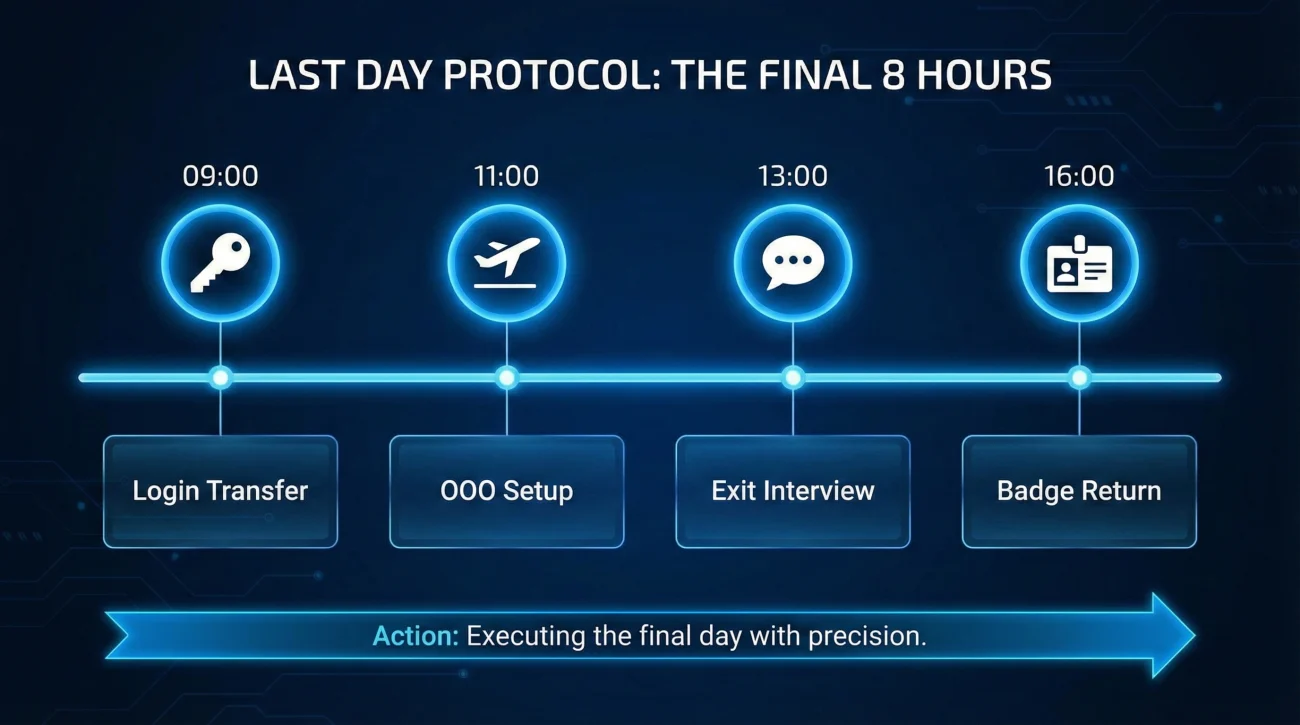
Your final 24 hours should not be spent doing “deep work.” You are effectively a consultant now. Your goal is closure. Use this last working day checklist to ensure a smooth exit.
| Time | Action Item |
|---|---|
| 09:00 AM | Send your final login details/passwords to your manager via a secure channel (e.g., LastPass or encrypted email). |
| 11:00 AM | Set up your Out-of-Office (OOO) reply. |
| 01:00 PM | Complete the exit interview with HR. |
| 03:00 PM | Send your farewell emails. |
| 04:00 PM | Hand over your badge/keys and say personal goodbyes. |
Bonus: Last Day OOO Template
Don’t just leave your email silent. Redirect traffic effectively.
Subject: OOO – Please contact [Successor]
Hi,
I am no longer with [Company] as of [Date].
For all matters regarding [Project], please contact [Name] at [Email].
For urgent inquiries, reach out to [Manager’s Name].
Best,
[Your Name]
Etiquette: Can You Leave Early?
A common question: Can I leave early on my last day? The answer is yes, but with a caveat. Once your checklist is complete, your desk is clean, and you’ve done your rounds, it is acceptable to leave around 3 or 4 PM. Asking to leave at noon, however, can look like you are slacking off. Read the room.
HR will likely request an exit interview. Many employees view this as a therapy session to vent about toxic managers. This is a trap.
Exit interview tips generally suggest remaining diplomatic. The exit interview goes into your permanent file. If you ever want to return to the company (boomerang employee), or if your company is acquired by them in the future, these notes will resurface.
What to say: “I’m looking for new challenges” or “I’ve learned a lot here.”
What NOT to say: “My boss is incompetent” or ” The culture is toxic.” (Unless you have a legal/ethical obligation to report serious misconduct).
⚠️ Note: This guide focuses on communication and professional reputation. It is not legal advice. Always follow your company policies and, if needed, speak with an employment lawyer in your jurisdiction.
❓ FAQ
📝 Is a handover note mandatory?
While not always legally required (unless specified in your employment contract), refusing to provide a handover report is unprofessional. It burns bridges immediately. It is the standard expectation for any white-collar role.
💻 Can I keep my work samples?
Be extremely careful. IP (Intellectual Property) clauses usually state that everything you create belongs to the company. Taking confidential data, code, or client lists can be treated as theft or serious misconduct. Ask for written permission if you want to keep non-confidential samples for your portfolio.
⏳ How long should a handover take?
Ideally, the employee exit process spans your entire notice period (2-4 weeks). However, the intensive knowledge transfer usually happens in the final week.
🤐 What if I don’t have a replacement yet?
This is common. If no successor is hired, hand over your duties to your direct manager. Create a detailed guide on how to train your replacement so the manager can use it to onboard the new person later.
👷 Should I work on my last day?
You should be “present” but not “producing.” Do not start new tasks. Your last day is for wrapping up, handing over keys, and saying goodbye. Doing deep work on your last day is a sign of poor planning.
Final Thoughts
The way you walk out the door tells the world more about your character than how you walked in. By executing a flawless job handover, you protect the reputation you have built and ensure your former colleagues remember you as a professional class act.
Treat your exit with the same care you treat a project launch. Document everything, communicate clearly, and leave the campsite cleaner than you found it. Your future self – and your future reference checks – will thank you.
For more specific templates and deep dives into each stage of this process, explore our detailed guides listed in the Resource Library above, or visit our homepage for broader career advice.
⚠️ Legal Disclaimer: ResignSmartly provides general informational guidance about resignation, workplace communication, notice periods, handovers, and career transitions. Content does not constitute individualized legal advice. Employment laws, contracts, workplace policies, and individual circumstances vary, so review the requirements that apply to your situation and consult an appropriate qualified professional when needed.