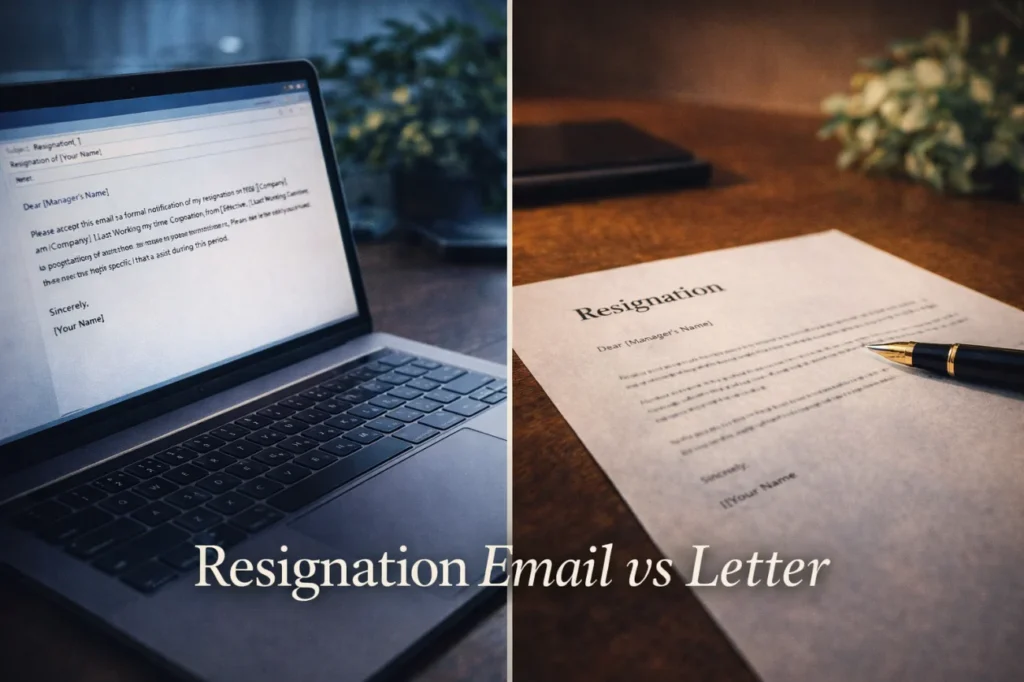
- Core dilemma: Email and printed letters are both common now, but the wrong choice can slow processing or create disputes.
- Legal validity: Yes, email resignations are usually legally valid when intent, last day, and identification are clear.
- When email fits: Remote work, tech or startup culture, urgent timelines, and workplaces where email resignations are already normal.
- When a letter is safer: Conservative industries, executive roles, and any contract that specifies a required format or delivery method.
- Best protection: Use a hybrid approach and keep proof of submission with timestamps, receipts, and copies in personal files.
The Modern Resignation Format Dilemma
The email vs resignation letter debate reflects changing workplace communication standards. Twenty years ago, formal printed letters were non-negotiable for resignation. Today, many organizations accept email resignations as standard practice, while others still require traditional paper documentation.
Understanding when resignation email vs letter matters affects your resignation’s legal validity and processing speed. The wrong format choice can delay your departure, complicate final paycheck processing, or create disputes about whether you provided proper notice.
This guide compares both formats, explains legal validity, identifies when each is required, and provides strategies for ensuring your resignation receives appropriate recognition regardless of delivery method. For complete resignation guidance, see our resignation letter etiquette guide.
Legal Validity: Email vs Traditional Letter
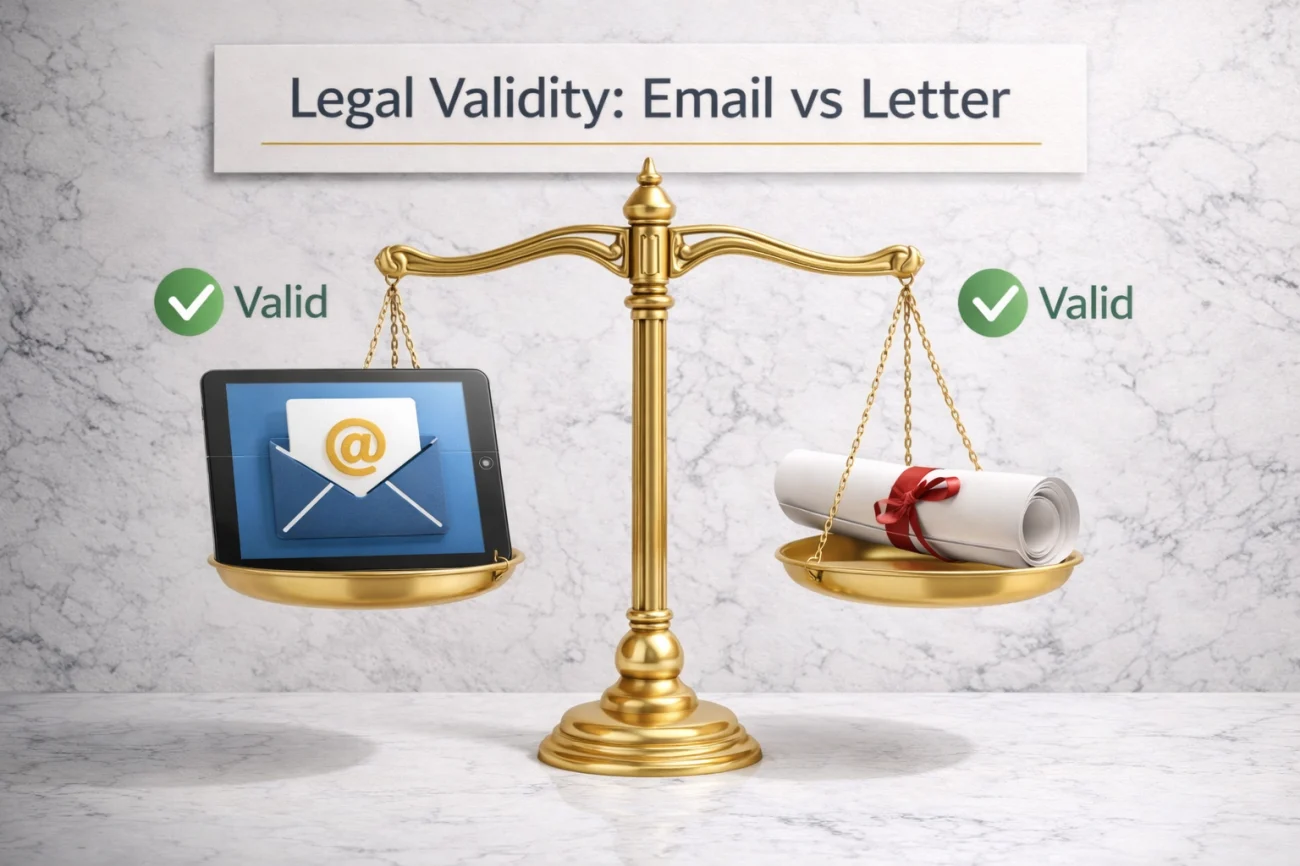
The critical question is email resignation legal has a straightforward answer: yes, in most situations. Email resignations carry the same legal weight as traditional letters when they contain required elements and demonstrate clear resignation intent.
What Makes Any Resignation Legally Valid
Regardless of format, legally valid resignations require: clear statement of resignation intent, specific last working day, employee identification (name and position), and voluntary submission without coercion. Both email and traditional letters can satisfy these requirements equally.
Courts and arbitrators evaluate resignation validity based on content and intent, not delivery format. An email stating “I resign effective June 30” carries the same legal weight as identical language on formal letterhead.
When Employment Contracts Specify Format
Your employment agreement may explicitly require written resignation in specific format. Some contracts state “resignation must be submitted in writing on company letterhead” or “resignation requires formal letter delivery to Human Resources.” These contractual terms supersede general practice – violating them can affect severance eligibility or notice period validity.
Review your employment contract before choosing resignation format. Contract language takes precedence over workplace norms or industry standards.
Format Comparison: Email vs Letter
Each format offers distinct advantages and limitations depending on your circumstances, industry, and employer expectations.
| Email Resignation | Traditional Letter |
|---|---|
| ✓ Immediate delivery regardless of location | ✓ Maximum formality and professionalism |
| ✓ Automatic timestamp documenting submission | ✓ Physical signature provides legal authenticity |
| ✓ Easy to request and verify read receipts | ✓ Demonstrates extra effort and respect |
| ✓ Convenient for remote workers | ✓ Preferred in conservative industries |
| ✓ Simple to copy HR and management simultaneously | ✓ Creates tangible documentation for files |
| ❌ May appear less formal or serious | ❌ Requires physical presence or mail delivery |
| ❌ Digital signature verification issues | ❌ Slower delivery and processing |
| ❌ Can be accidentally deleted or lost | ❌ Can be lost or damaged physically |
When Email Resignation Works Best
Certain situations make email resignation not just acceptable but preferable to traditional letters. These contexts leverage email’s strengths while minimizing formality concerns.
Remote Work Situations
If you work remotely full-time, email resignation makes practical sense. Mailing a physical letter creates unnecessary delays when you and your manager already conduct all business communication digitally. Remote-first companies typically expect and accept email resignations as standard practice.
The geographic distance makes in-person letter delivery impossible, while mail delivery takes days that could affect your notice period timing. Email ensures immediate receipt regardless of whether you’re working from home across town or internationally.
Technology and Startup Industries
Tech companies, startups, and digital agencies conduct most communication via email and Slack. Formal paper letters feel anachronistic in environments where even contracts get signed digitally. Email resignation aligns with these organizations’ communication culture.
These workplaces often lack traditional office infrastructure for receiving physical mail. Your resignation letter arriving via postal service might sit in a mail room for days before reaching HR, while email ensures instant delivery to correct recipients.
Urgent Resignation Timing
When circumstances require immediate resignation – you’ve been offered a job starting in days, not weeks – email provides speed that traditional letter delivery cannot match. The urgent timeline justifies the informal format when waiting for mail delivery would create professional complications.
Emergency situations like family crises, health issues, or unexpected relocation sometimes necessitate immediate departure. Email resignation acknowledges the urgency while still providing written documentation your employer needs.
Company Precedent and Culture
If colleagues routinely resign via email and you’ve witnessed management accepting this format without issue, email resignation poses minimal risk. Organizational norms supersede general best practices when you have clear evidence of accepted procedure.
Pay attention to how recent resignations were handled in your organization. If your predecessor resigned via email six months ago and no one questioned the format, you can reasonably follow the same approach.
When Traditional Letters Are Required
Despite digital transformation, certain contexts demand traditional resignation letters. These situations require formality that email cannot adequately convey.

Conservative Industries
Legal, financial services, healthcare, government, and insurance industries maintain formal documentation standards. Resignation via email in these contexts can appear disrespectful of professional protocols. Traditional letters signal appropriate understanding of industry communication expectations.
Executive and C-Suite Resignations
Senior leadership departures carry significant organizational implications. Board notifications, regulatory filings, and succession planning require formal documentation that traditional letters provide. Email resignation from executive positions appears inappropriately casual given the strategic importance.
Contractual Obligations
When your employment contract explicitly requires “written resignation letter” or specifies delivery format, honor those terms precisely. Contract violations can forfeit severance pay, unvested equity, or other departure benefits worth potentially thousands of dollars.
The Hybrid Approach: Email Plus Letter
Many professionals use both formats strategically, combining email’s immediacy with traditional letter’s formality. This hybrid approach provides maximum protection and demonstrates thoroughness.

How the Hybrid Method Works
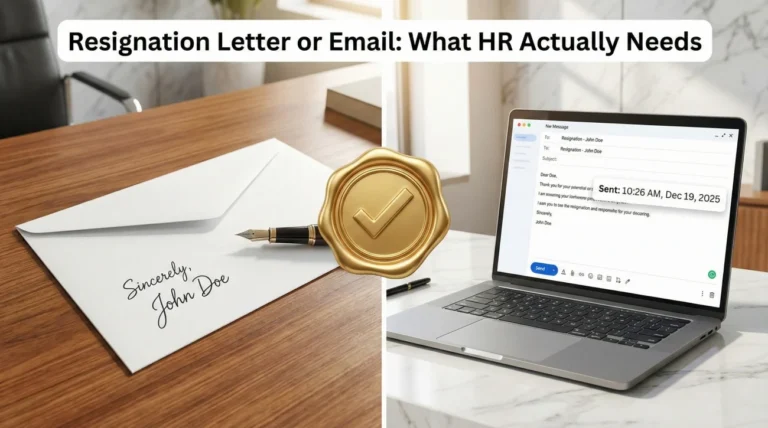
Submit initial resignation via email to ensure immediate documentation and receipt confirmation. Follow within 24-48 hours with formal printed letter delivered in person or by mail. The email creates timestamp record while the traditional letter satisfies formality expectations.
Structure your email to reference the forthcoming letter: “I am submitting formal written resignation today via email and will provide signed letter by [date] as discussed.” This language acknowledges both formats and clarifies your intention to satisfy all documentation requirements.
Hybrid Resignation Example
Subject: Resignation – Jennifer Martinez – Marketing Specialist
Dear Sarah,
Following our conversation this morning, I am writing to formally confirm my resignation from the position of Marketing Specialist at Cascade Solutions, effective June 14, 2024.
I will deliver a signed formal letter of resignation to your office by end of day tomorrow for your records and HR filing. This email serves as immediate written notice to begin the two-week notice period as discussed.
Thank you for the professional development opportunities I’ve had during my time with the team. I’m committed to ensuring smooth transition of my responsibilities.
Best regards,
Jennifer Martinez
Marketing Specialist
jennifer.martinez@email.com
(415) 555-0189
This approach satisfies both modern communication expectations and traditional formality requirements simultaneously, eliminating any ambiguity about proper resignation submission.
Do I Need to Send a Letter If I Sent an Email?
The question do i need to send a letter if i sent an email depends on three factors: your employment contract terms, your industry standards, and your employer’s stated preferences.
Assessing Letter Necessity
Check your employment contract first. If it specifies resignation format requirements, follow those terms regardless of what seems reasonable. Contract language overrides general practice.
If your contract is silent on format, consider industry norms. Conservative industries (law, finance, government) expect traditional letters even when contracts don’t mandate them. Modern industries (tech, creative, retail) typically accept email as sufficient.
When uncertain, ask HR directly: “I submitted resignation via email. Do you also need formal letter for your files?” This straightforward question prevents guessing and demonstrates professionalism through thoroughness.
Documentation and Proof of Submission
Regardless of format choice, maintaining proof of resignation submission protects you if disputes arise about notice timing or resignation validity.
Documenting Email Resignations
Request read receipt when sending resignation email. Save sent email with timestamp in personal email account separate from work email. Forward copy to personal address creating backup record. Screenshot the sent email showing recipient, subject, date, and time.
These documentation steps prove exactly when you submitted resignation if employer later claims delayed receipt or missing notification.
Documenting Traditional Letters
For hand-delivered letters, request signed receipt acknowledging delivery date. Photograph or scan the signed letter before submission. If mailing, use certified mail with return receipt requested creating postal service documentation of delivery.
Keep copies of all resignation documentation permanently in personal files. These records become valuable if future background checks or unemployment claims require proof of resignation circumstances.
❓ FAQ
⚖️ Is email resignation legally valid?
Yes, email resignations carry legal validity equal to traditional letters when they contain clear resignation statement, specific last day, and employee identification. Courts evaluate resignation based on content and intent, not delivery format. However, check your employment contract – some specifically require traditional letters.
📧 Should I send both email and formal letter?
Hybrid approach works well in uncertain situations. Send email for immediate documentation, follow with signed letter within 24-48 hours for maximum formality. This satisfies both modern communication expectations and traditional documentation requirements simultaneously.
🏢 Which industries require traditional resignation letters?
Conservative industries – legal, financial services, healthcare, government, insurance – typically expect traditional letters. Executive positions across all industries usually require formal letters. Tech companies, startups, and creative agencies generally accept email resignations. When uncertain, provide both formats.
📝 Do I need a letter if I already sent an email?
Check your employment contract first for specified requirements. If contract is silent, assess industry norms and ask HR directly whether they need formal letter for files. When uncertain, provide letter anyway – extra documentation never hurts, while omitting required documentation can delay processing.
💾 How do I prove I submitted my resignation?
For email: request read receipt, save sent email with timestamp, forward copy to personal email, screenshot submission. For letters: request signed receipt when hand-delivering, use certified mail with return receipt if mailing, keep copies of all documentation permanently in personal files.
Final Thoughts
The email vs resignation letter debate reflects evolving workplace communication standards where both formats carry legal validity but different professional implications. Email resignations offer immediacy and convenience ideal for modern work environments, while traditional letters provide formality that certain industries and positions require.
Understanding when resignation email vs letter matters protects your departure timeline and ensures appropriate processing. The wrong format choice doesn’t invalidate your resignation legally, but it can delay administrative processing or create impressions of insufficient professionalism during critical final weeks of employment.
When uncertain about which format your situation requires, the hybrid approach – email for immediate documentation followed by formal letter for traditional filing – provides comprehensive protection. This thoroughness demonstrates professional judgment that serves your reputation regardless of whether both formats were strictly necessary.
⚠️ Legal Disclaimer: The resignation templates, email samples, and professional guidance provided in this guide are for informational purposes only and do not constitute legal advice. Employment laws and contract requirements vary by jurisdiction and individual circumstances. Please review your employment agreement and consult your HR department and/or a qualified attorney to ensure compliance with applicable laws and policies.