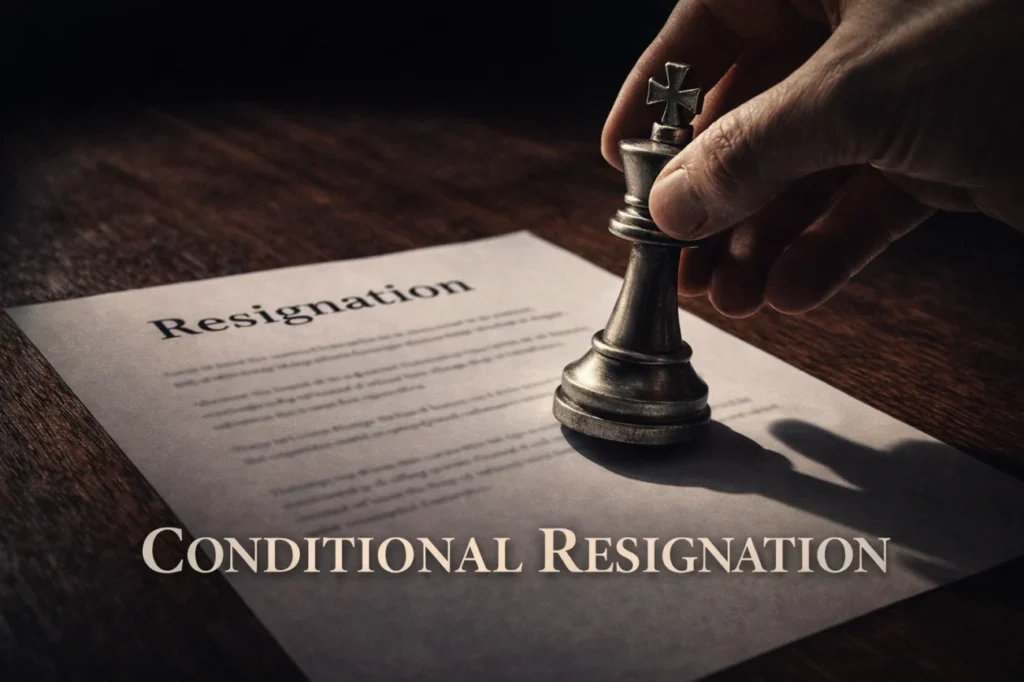
- What it is: A conditional resignation is an ultimatum that says you will leave unless specific terms are met.
- Main risk: Even if you stay, trust damage is permanent and you can get sidelined from long-term work.
- Acceptance risk: They may accept immediately, and walking it back makes you look indecisive or manipulative.
- When it can work: Critical timing plus rare skills, or a real competing offer that you can document.
- Better move first: Negotiate directly with market data and a decision timeline, without resignation threats.
Using Resignation as Negotiation Leverage
A conditional resignation letter attempts to leverage your departure threat to extract better terms from your current employer. This high-stakes negotiation tactic essentially says “I will resign unless you meet these conditions” – a move that can either dramatically improve your situation or permanently damage your professional standing.
Unlike straightforward resignations with clear departure dates, conditional letters introduce uncertainty that most employers find manipulative. The approach works occasionally when you possess rare skills during critical projects, but more often backfires by destroying trust even when employers meet your demands.
This guide explains when conditional resignations might work, how to structure them to minimize relationship damage, and why this strategy usually proves less effective than direct negotiation without resignation threats. For standard resignation protocols, see our resignation letter etiquette guide.
The Strategic Risks of Conditional Resignation
Before writing a negotiating resignation letter, understand that most career advisors discourage this approach. The immediate negotiation leverage comes at significant long-term cost to your professional reputation and relationship quality.

Permanent Trust Damage
Once you threaten resignation, your employer knows you’ve been job searching and contemplating departure. Even if they meet your conditions and you stay, management will view you as a retention risk. You’ll be excluded from long-term projects, passed over for promotions requiring sustained commitment, and replaced at the first convenient opportunity.
The employer-employee relationship operates on mutual trust. Conditional resignations weaponize that relationship, transforming it from collaboration into hostage negotiation. Few professional relationships survive this transformation intact.
Acceptance Risk: They Might Say Yes
Your conditional resignation might get accepted immediately without negotiation. If you’re not genuinely prepared to leave, you’ve backed yourself into an impossible position. Withdrawing a resignation after it’s been accepted makes you look indecisive and manipulative – career suicide in most industries.
Only use conditional resignation if you’re truly willing to depart if conditions aren’t met. Bluffing destroys credibility when employers call that bluff.
Weighing Conditional Resignation Strategies
Understanding both advantages and serious drawbacks helps you make informed decisions about whether this approach suits your specific situation.
| Pros | Cons |
|---|---|
| ✅ Creates immediate urgency for employer response | ❌ Permanently damages trust even if demands are met |
| ✅ May secure significant salary increases or promotions | ❌ Marks you as retention risk for future layoffs |
| ✅ Tests employer’s true valuation of your contributions | ❌ Employer may accept resignation immediately without negotiation |
| ✅ Provides clear deadline forcing decision rather than delays | ❌ Burns bridges if you need to withdraw or return later |
| ✅ Can work when you have competing job offer as backup | ❌ Makes you look manipulative to colleagues who learn of tactics |
The risks typically outweigh benefits unless you possess truly irreplaceable expertise during business-critical periods and have genuine alternative employment secured.
Rare Situations Where Conditional Resignation Works
Conditional resignation occasionally succeeds in very specific circumstances where power dynamics heavily favor employees. These situations share common characteristics that make ultimatums less risky than normal.

Business-Critical Timing With Specialized Skills
If you’re the sole person who can complete an urgent project – a product launch, major client implementation, or regulatory compliance deadline – your departure threat carries real weight. Employers facing six-figure losses or regulatory penalties from your absence might negotiate rather than accept resignation.
This leverage disappears once the crisis passes. Conditional resignations work temporarily but create lasting resentment once employers no longer need your specialized knowledge desperately.
Genuine Competing Job Offer
A resignation letter counter offer request works best when you have documented alternative employment. Showing your employer a competing offer letter transforms your resignation from empty threat into business decision they must address seriously.
Frame this as “I’ve received this offer and prefer to stay if we can match compensation” rather than “Give me a raise or I quit.” The first approach shows respect while providing concrete market data. The second sounds purely mercenary.
Extreme Talent Market Leverage
Certain roles in high-demand fields – senior developers, specialized healthcare providers, experienced tradespeople – can sometimes use conditional resignation effectively because replacement costs exceed retention costs dramatically.
Even here, direct salary negotiation without resignation threats usually works better. Leading with resignation makes the conversation adversarial when straightforward requests often succeed through normal compensation discussions.
Conditional Resignation for Salary Increases
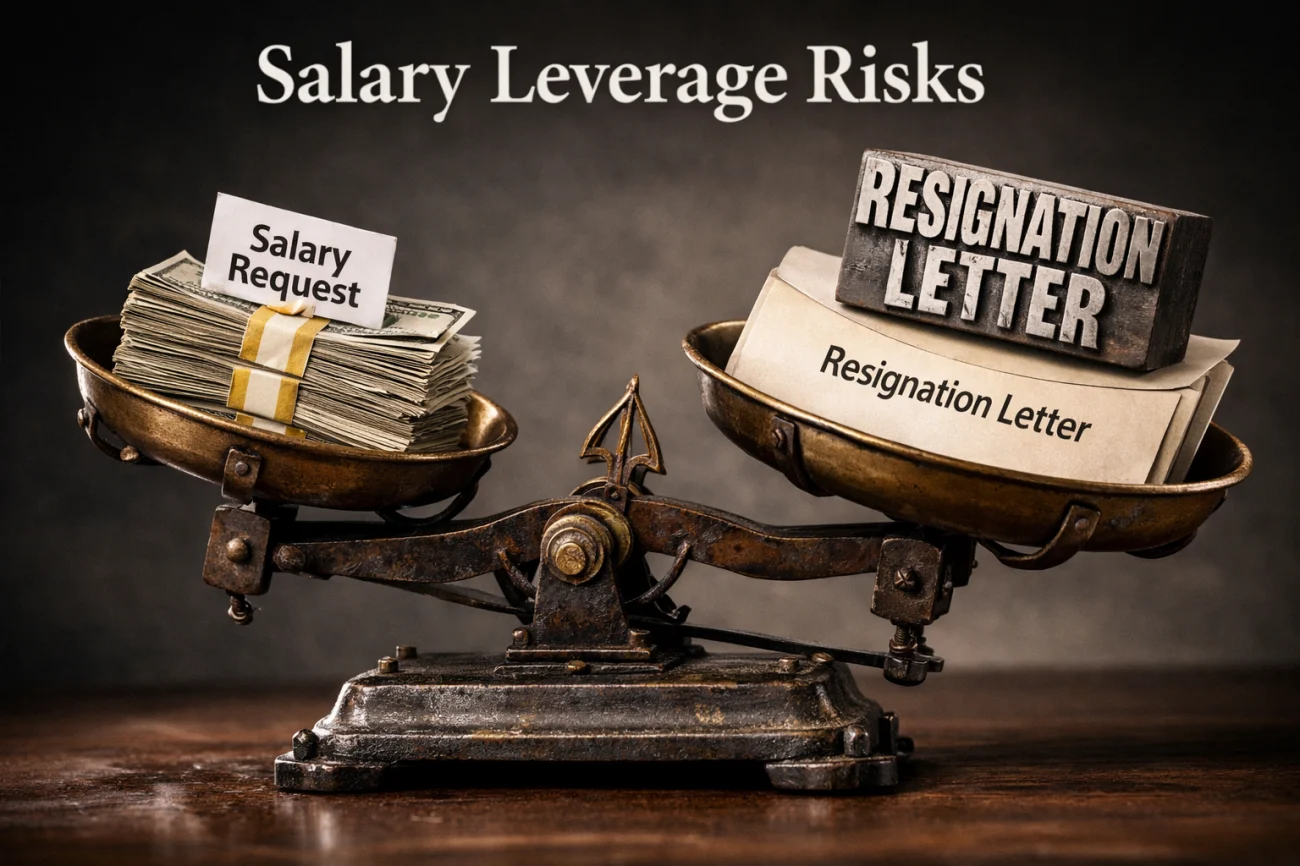
Using a conditional resignation letter salary increase strategy represents the most common conditional resignation scenario. Employees frustrated by stagnant compensation threaten departure to force raises they couldn’t secure through normal channels.
Why This Usually Fails
Employers interpret salary-motivated conditional resignations as proof you’re motivated purely by money with no loyalty. Even if they grant increases, they’ll search for cheaper replacements. You’ve signaled that another offer will make you leave again.
Granting raises under resignation threat creates precedent. Other employees learn threatening departure works, encouraging similar tactics. Most employers refuse on principle to prevent this dynamic.
Conditional Resignation Letter Templates
If you’ve carefully considered the risks and decided conditional resignation suits your situation, these templates show how to structure the communication. Remember: use these only if genuinely prepared to follow through with departure.
Conditional Resignation with Competing Offer
David Chen
david.chen@email.com
(206) 555-0198
April 10, 2024
Sarah Rodriguez
Engineering Director
TechFlow Systems
Dear Sarah,
I’m writing to inform you that I’ve received a job offer from another company for a Senior Software Engineer position at $145,000 annually – significantly above my current $115,000 compensation.
I’ve valued my three years at TechFlow and genuinely prefer to continue contributing to our team. However, the compensation difference represents a 26% increase that I cannot responsibly decline without exploring whether TechFlow can match or approach this offer.
I need to respond to the competing offer by April 17, 2024. If TechFlow can increase my compensation to at least $140,000, I would be pleased to withdraw from consideration elsewhere and remain with our team.
If matching this offer isn’t feasible given budget constraints, I understand completely and will submit my formal resignation by April 18 to provide standard two-week notice before transitioning to the new position.
I appreciate your consideration and understanding as I work through this career decision.
Best regards,
[Signature]
David Chen
Conditional Resignation with Multiple Conditions
Rachel Morrison
rachel.morrison@email.com
(415) 555-0173
May 5, 2024
Michael Thompson
Operations Director
Cascade Manufacturing
Dear Michael,
After considerable reflection about my role and career progression at Cascade, I need to discuss changes that would enable me to continue contributing effectively to our operations team.
Over the past 18 months, my responsibilities have expanded significantly to include supply chain management, vendor negotiations, and quality control oversight – far beyond my original Quality Specialist role. However, my title and compensation haven’t reflected this expanded scope.
I’m requesting the following adjustments to remain with Cascade:
1. Title change to Quality Control Manager reflecting my actual responsibilities
2. Salary adjustment to $78,000 (from current $65,000) aligning with market rates for this role scope
3. Formal addition of two quality specialists reporting to me to distribute the workload sustainably
These changes would formalize the role I’m already performing while providing resources to maintain quality standards as we scale production.
If these adjustments aren’t feasible within Cascade’s current structure, I will need to submit my resignation by May 15, 2024, to pursue opportunities better aligned with my career progression and compensation expectations.
I’m available to discuss these requests at your convenience this week.
Sincerely,
[Signature]
Rachel Morrison
Better Alternatives to Conditional Resignation
Before resorting to conditional resignation, exhaust these approaches that achieve similar goals without relationship damage.

Direct Compensation Negotiation
Request a meeting about compensation review. Present market data showing comparable roles pay 15-20% more. Ask directly: “Can we discuss bringing my compensation in line with market rates?” No resignation threat needed.
Sharing Market Information Without Ultimatums
Mention recruiter interest without threats: “I’m getting contacted frequently by recruiters offering higher compensation. I’m happy here, but concerned about the market gap.” This provides information your manager can act on without forcing ultimatums.
Setting Personal Decision Timeline
Rather than conditional resignation, announce you’re evaluating options with a specific decision date: “I’m assessing whether my current role aligns with my career goals. I’ll make a decision within 60 days.” This creates urgency without explicit threats.
The Aftermath: Staying After Conditional Resignation
If your employer meets your conditions and you stay, the relationship has permanently changed. Managing this new dynamic requires deliberate effort to rebuild trust.
Rebuilding Damaged Trust
Demonstrate renewed commitment by volunteering for challenging projects, mentoring newer employees, and showing investment in company success. Your actions must prove you’re not just staying for the raise while job searching. Expect several months of scrutiny assessing your true commitment.
Planning for Eventual Exit
Many conditional resignation situations eventually end in departure within 6-18 months. The underlying issues that prompted your ultimatum often resurface. Plan for this likelihood rather than assuming your conditions permanently solved everything.
❓ FAQ
💰 Should I use conditional resignation to negotiate salary increases?
Generally no. Conditional resignation damages trust even when successful. Direct salary negotiation based on market data and performance works better without relationship destruction. Only consider conditional resignation if you have competing offers and genuinely prefer to stay if compensation matches.
📝 What happens if my employer accepts my conditional resignation immediately?
You must follow through with resignation. Withdrawing after acceptance makes you look indecisive and manipulative, destroying credibility. Only write conditional resignation letters when truly prepared to leave if conditions aren’t met.
🤝 Can I rebuild trust after using conditional resignation successfully?
Possible but difficult. Expect months of proving renewed commitment through actions, not words. Volunteer for challenging projects, mentor others, and demonstrate long-term investment. Even then, management will likely view you as retention risk going forward.
⏰ How much time should I give my employer to respond to conditions?
One to two weeks maximum. Longer deadlines allow employers to start replacement searches while stringing you along. Shorter deadlines feel unreasonable and increase rejection likelihood. Seven to ten business days provides fair response time without excessive waiting.
🔄 What if I don’t actually have another job offer but want to use this strategy?
Don’t. Bluffing with fictional offers is unethical and backfires when employers request offer letter verification. If you can’t produce documentation, you’ve destroyed credibility permanently. Only reference competing offers you actually have in writing.
Final Thoughts
A conditional resignation letter represents high-stakes negotiation that can dramatically improve your situation or permanently damage professional relationships. The strategy works occasionally when you possess rare expertise during critical periods and have genuine alternative employment secured.
Most career situations don’t warrant conditional resignation risks. Direct negotiation, market data presentation, and straightforward requests achieve salary increases and better terms without relationship destruction. Save resignation threats for rare moments when you’ve exhausted normal channels and possess extraordinary leverage.
If you choose conditional resignation despite the risks, ensure you’re genuinely prepared to depart if conditions aren’t met. Half-hearted ultimatums destroy credibility faster than honest straightforward resignations. Your professional reputation survives clarity and directness better than manipulation and empty threats.
⚠️ Legal Disclaimer: The resignation templates, email samples, and professional guidance provided in this guide are for informational purposes only and do not constitute legal advice. Employment laws and contract requirements vary by jurisdiction and individual circumstances. Please review your employment agreement and consult your HR department and/or a qualified attorney to ensure compliance with applicable laws and policies.