
- Core purpose: Mention unused vacation so final compensation includes earned PTO payout.
- Know your rights: Payout rules depend on state law and company policy, so check both before resigning.
- Do the math first: Verify your current balance, include accrual through your last day, and account for caps or rollover limits.
- Write it diplomatically: Use a short factual or inquiry line, and keep money details out of the main resignation narrative.
- If payout is denied: Confirm entitlement, submit a written request citing policy or law, then escalate if necessary.
Ensuring You Receive Earned Vacation Compensation
A resignation letter vacation payout references unused vacation time to ensure final compensation includes earned paid time off. Many employees forfeit hundreds or thousands of dollars in accrued vacation simply by failing to mention it explicitly during resignation, assuming HR will automatically process payout.
Understanding how to write resignation letter requesting vacation pay means knowing your legal rights, state-specific payout requirements, and diplomatic language for claiming compensation without appearing mercenary. Unused vacation represents earned compensation you’re entitled to – not a favor you’re requesting.
This guide covers vacation payout laws, when and how to reference unused PTO in resignation letters, and strategies for ensuring you receive full compensation owed. For complete resignation guidance, see our resignation letter etiquette guide.
Understanding Vacation Payout Legal Rights
The unused vacation days resignation letter references rights that vary significantly by state and employer policy. Understanding your legal position informs how assertively to claim payout.
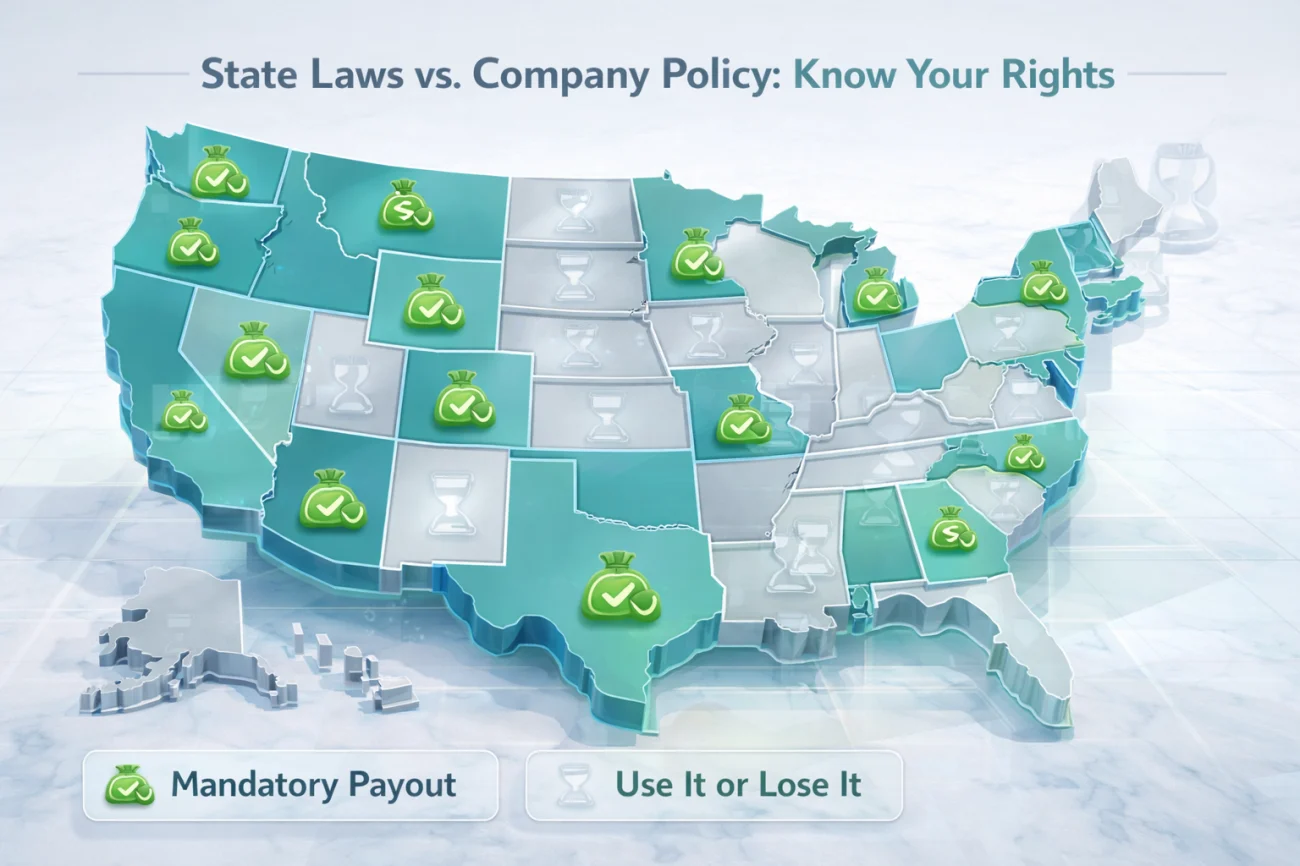
State Law Variations
Some states mandate vacation payout upon termination, treating accrued PTO as earned wages employers must pay. California, Massachusetts, Nebraska, Montana, and several others require payout regardless of resignation circumstances. Other states allow “use it or lose it” policies where vacation expires upon departure.
Check your state’s vacation payout laws before resigning. State labor department websites provide this information, or consult employment attorneys for complex situations. Knowing whether payout is legally required versus policy-dependent shapes how you reference vacation in resignation letters.
Company Policy Controls
In states without mandatory payout laws, employer policies determine vacation compensation. Review your employee handbook, offer letter, or benefits documentation for vacation payout terms. Policies typically state whether unused vacation: pays out fully, pays out partially, or expires upon termination.
Accrued vs Granted Vacation
Vacation that accrues gradually (earning days monthly or per pay period) generally has stronger payout protections than vacation granted in lump sums annually. Courts often view accrued vacation as earned wages, while granted vacation may be considered unearned future benefit subject to forfeiture conditions.
Calculating Unused Vacation Owed
Before writing pto payout resignation requests, calculate exactly how much vacation you’ve earned to reference specific amounts in resignation documentation.

Verify Current Balance
Check recent pay stubs, HR portal, or time tracking system for current vacation balance. Verify this number matches your records – payroll errors happen frequently. Document your balance before resignation to prevent disputes about amounts owed.
Account for Pending Accrual
If you accrue vacation continuously, calculate days earned through your last working day. For example, if you earn 1.67 days monthly and your last day is mid-month, you’re entitled to partial month accrual. These partial amounts add up – don’t forfeit earned compensation through imprecise calculation.
Cap and Rollover Considerations
Some policies cap maximum accrued vacation or limit rollovers from year to year. If you’re at the cap, additional accrual stops until you use vacation reducing the balance. Understand these limits when calculating amounts you can claim at resignation.
When to Mention Vacation in Resignation Letters
Not every resignation letter requires explicit vacation payout language. Strategic decisions about including payout references depend on specific circumstances.

Always Mention When:
- You have significant unused vacation (10+ days)
- Company has history of “forgetting” vacation payouts
- State law mandates payout but enforcement isn’t automatic
- Your employment contract or handbook mentions resignation procedures requiring notification
- You want paper trail documenting your claim from resignation date
Can Omit When:
- You have minimal vacation balance (1-2 days)
- State law mandates automatic payout with strong enforcement
- Company consistently processes vacation payouts without prompting
- You’ll follow up directly with payroll separately
Separate Communication Option
Consider addressing vacation payout in separate communication to HR/payroll rather than resignation letter to manager. This approach keeps resignation letter focused on departure while ensuring proper documentation of compensation claim goes to appropriate department.
Diplomatic Language for Payout References
Mentioning vacation payout requires balance – assertive enough to document your claim without appearing primarily motivated by final paycheck rather than professional transition.

Factual Reference Approach
“I have [X] days of accrued vacation. Please include payout for unused vacation in my final compensation per [state law/company policy].” This straightforward language documents your entitlement without apologizing or requesting what you’ve already earned.
Inquiry Approach
“Please confirm the process for unused vacation payout. My records show [X] days accrued.” This framing asks for procedural clarification while documenting your balance, working well when you’re uncertain about payout terms.
Avoid Excessive Emphasis
Don’t make vacation payout the resignation letter’s primary focus. Brief professional reference suffices – extensive discussion of money matters makes resignation appear financially motivated rather than career-focused. Save detailed payout discussions for separate HR communications if necessary.
Resignation Letter Templates with Vacation References
These templates show appropriate ways to incorporate vacation payout references into resignation letters.
Standard Vacation Reference
Jennifer Martinez
jennifer.martinez@email.com
(415) 555-0189
May 15, 2024
Sarah Rodriguez
Operations Director
Cascade Solutions Inc.
Dear Sarah,
I am writing to resign from my position as Project Coordinator, effective May 29, 2024, providing two weeks’ notice.
I’ve appreciated the opportunities for professional growth during my time at Cascade Solutions. I’m committed to ensuring smooth transition of my current projects during the notice period.
According to my records, I have 12 days of accrued vacation time. Please include payout for unused vacation days in my final compensation per California state law.
Thank you for your support and understanding.
Best regards,
[Signature]
Jennifer Martinez
With Company Policy Reference
Marcus Thompson
marcus.thompson@email.com
(312) 555-0145
June 8, 2024
Michael Chen
HR Director
Midwest Analytics
Dear Michael,
I am resigning from my position as Data Analyst, effective June 22, 2024.
I will complete comprehensive handover documentation for my current analyses and remain available to answer questions during the transition period.
Per the employee handbook section 4.2, I am requesting payout for my 15 days of unused vacation time. My most recent pay stub confirms this balance. Please ensure this payout is included in my final paycheck.
Thank you for the professional development opportunities I’ve had at Midwest Analytics.
Sincerely,
[Signature]
Marcus Thompson
Inquiry Version
Rachel Morrison
rachel.morrison@email.com
(503) 555-0167
April 12, 2024
David Torres
Department Manager
Pacific Enterprises
Dear David,
I am writing to resign from my position as Marketing Specialist, effective April 26, 2024.
I’ve valued working with the marketing team and appreciate the collaborative environment you’ve fostered. I’m committed to thorough transition of my campaign responsibilities.
Could you please confirm the process for unused vacation payout? My records indicate 8.5 days of accrued PTO. I want to ensure proper handling of final compensation.
Thank you for your leadership and support.
Best regards,
[Signature]
Rachel Morrison
Timing Vacation Around Resignation
Strategic vacation usage before or during notice period affects final payout amounts and transition dynamics.
Using Vacation Before Resignation
If uncertain about payout entitlement, using vacation before resigning guarantees you receive its value. However, this approach shortens actual working notice period if you return from vacation and immediately resign. Most employers view this unfavorably – appears you planned resignation during paid vacation time.
Using Vacation During Notice Period
Some employees attempt using vacation during notice period, effectively reducing working days while maintaining paid status. Most employers prohibit this, requiring you either: work the notice period and receive vacation payout, or resign effective immediately forfeiting notice period pay. Check company policy before attempting to combine vacation use with notice period.
Payout Usually Safer
In states with mandatory payout laws, receiving vacation payout at resignation typically works better than attempting strategic vacation use beforehand. You get compensation value while avoiding appearance of gaming the system through convenient vacation timing.
If Vacation Payout Is Denied
Employers sometimes refuse vacation payout despite legal or policy requirements. Understanding recourse options protects your rights.
Verify Policy and Law First
Before challenging denied payout, confirm you’re actually entitled. Review employee handbook, state labor laws, and your employment contract. If policy clearly states “vacation expires upon termination,” you may not have legal grounds for payout regardless of state law in non-mandatory states.
Make Written Request
If denied payout you believe you’re owed, submit written request to HR citing specific policy language or state law: “Per [employee handbook section X / state labor code Y], I am entitled to payout for unused vacation. Please reconsider denial and process payment.” Written requests create documentation trail for potential legal action.
Escalation Options
If written request fails, escalation options include: filing wage claim with state labor board (free), consulting employment attorney (may work on contingency if amount is substantial), or accepting loss if amount is small relative to legal effort required. State labor boards handle vacation payout disputes regularly and can compel payment plus penalties when employers violate payout laws.
❓ FAQ
💰 Am I always entitled to vacation payout when I resign?
Depends on state law and company policy. Some states mandate vacation payout upon termination. Others allow “use it or lose it” policies where vacation expires at departure. Review your state’s laws and employee handbook for specific requirements. When in doubt, reference unused vacation in resignation letter to document your claim.
📝 Should I mention vacation payout in resignation letter?
Mention when: you have significant unused vacation (10+ days), company has history of forgetting payouts, or you want documentation trail. Can omit when: minimal balance, state has strong mandatory payout enforcement, or company consistently processes payouts automatically. Brief factual reference suffices – don’t make it primary focus.
⏰ Can I use vacation during my notice period?
Most employers prohibit vacation use during notice period, requiring you either: work the notice period and receive vacation payout, or resign immediately forfeiting notice period pay. Check company policy before attempting to combine vacation with notice. In mandatory payout states, receiving payout works better than strategic vacation use.
🔍 How do I calculate vacation payout owed?
Check recent pay stubs or HR portal for current balance. If vacation accrues continuously, calculate days earned through last working day including partial month accrual. Account for any caps or rollover limits. Document your calculation before resignation to prevent disputes about amounts owed.
⚖️ What if employer refuses to pay unused vacation?
First verify you’re entitled per policy and state law. Make written request to HR citing specific policy language or state law. If denied, escalation options include: filing wage claim with state labor board (free), consulting employment attorney, or accepting loss if amount is small. State labor boards handle vacation payout disputes regularly.
Final Thoughts
A resignation letter vacation payout reference ensures you receive earned compensation that employees frequently forfeit through oversight or assumption that HR will automatically process payments. Unused vacation represents wages you’ve earned – not discretionary bonuses employers may or may not provide.
Writing resignation letter requesting vacation pay effectively means understanding your legal rights under state law and company policy, calculating exact amounts owed, and using diplomatic language documenting your claim without appearing mercenary. Brief factual reference to unused vacation days and payout expectations suffices – extensive money discussions belong in separate HR communications.
Remember that vacation payout laws vary significantly by state and situation. Research your specific entitlements before resignation, reference unused time appropriately in departure documentation, and don’t hesitate to pursue denied payouts through formal channels when you’re clearly entitled to compensation under applicable laws or policies.
⚠️ Legal Disclaimer: ResignSmartly provides general informational guidance about resignation, workplace communication, notice periods, handovers, and career transitions. Content does not constitute individualized legal advice. Employment laws, contracts, workplace policies, and individual circumstances vary, so review the requirements that apply to your situation and consult an appropriate qualified professional when needed.