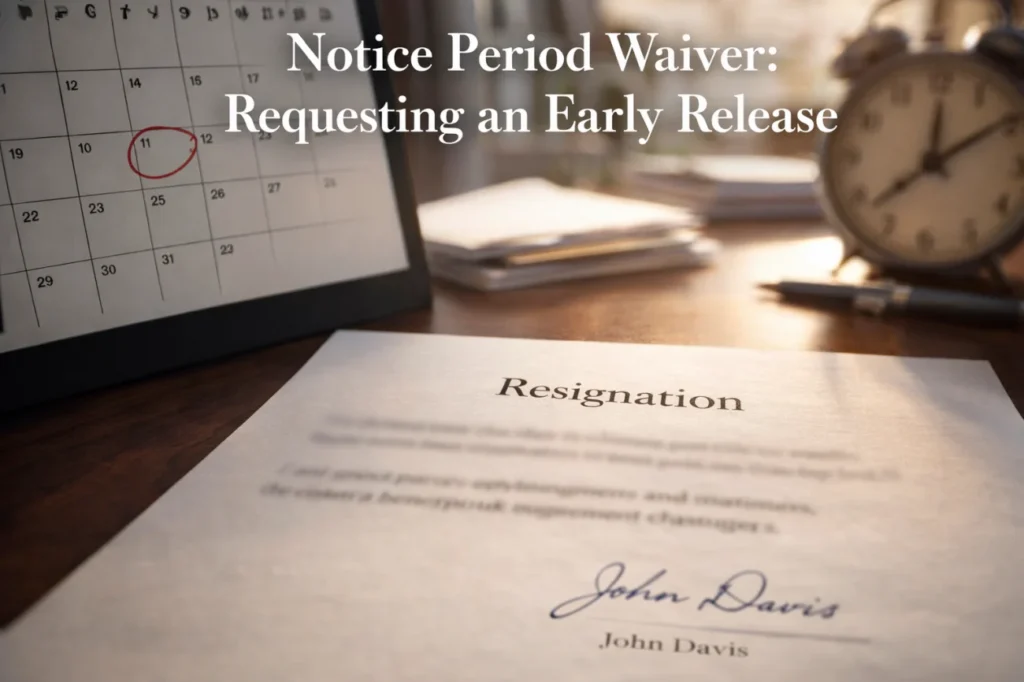
- Core idea: A notice period waiver is a polite request to leave early because timing no longer fits, not a complaint about the job.
- When to ask: Use it for hard constraints like a new start date, family or medical emergency, urgent relocation, or a clear mutual benefit.
- How to frame: Acknowledge the standard notice first, explain the constraint briefly, then ask as a favor rather than a demand.
- What to offer: Reduce disruption with priority documentation, concentrated handover sessions, and short post-departure availability for urgent questions.
- If denied: Accept professionally, negotiate your new start date instead, and avoid leaving early because it can create pay, verification, and contract risks.
When Circumstances Demand Faster Departure
A resignation letter notice period waiver requests employer permission to leave before completing standard notice requirements. Life circumstances – urgent new job start dates, family emergencies, relocation needs, or personal crises – sometimes make fulfilling traditional two-week notice impossible or inadvisable.
Understanding how to write resignation letter requesting early release means balancing honest explanation of circumstances with professional respect for employer needs. You’re asking a favor – reducing transition time – that creates genuine inconvenience requiring legitimate justification and diplomatic approach.
This guide covers when waiver requests might succeed, how to structure persuasive arguments, and templates for negotiating shortened notice without burning bridges. For complete resignation guidance, see our resignation letter etiquette guide.
When Notice Period Waiver Is Reasonable
Employers accept waiving notice period letter requests more readily when circumstances clearly justify shortened timelines and employee demonstrates good faith about transition impact.
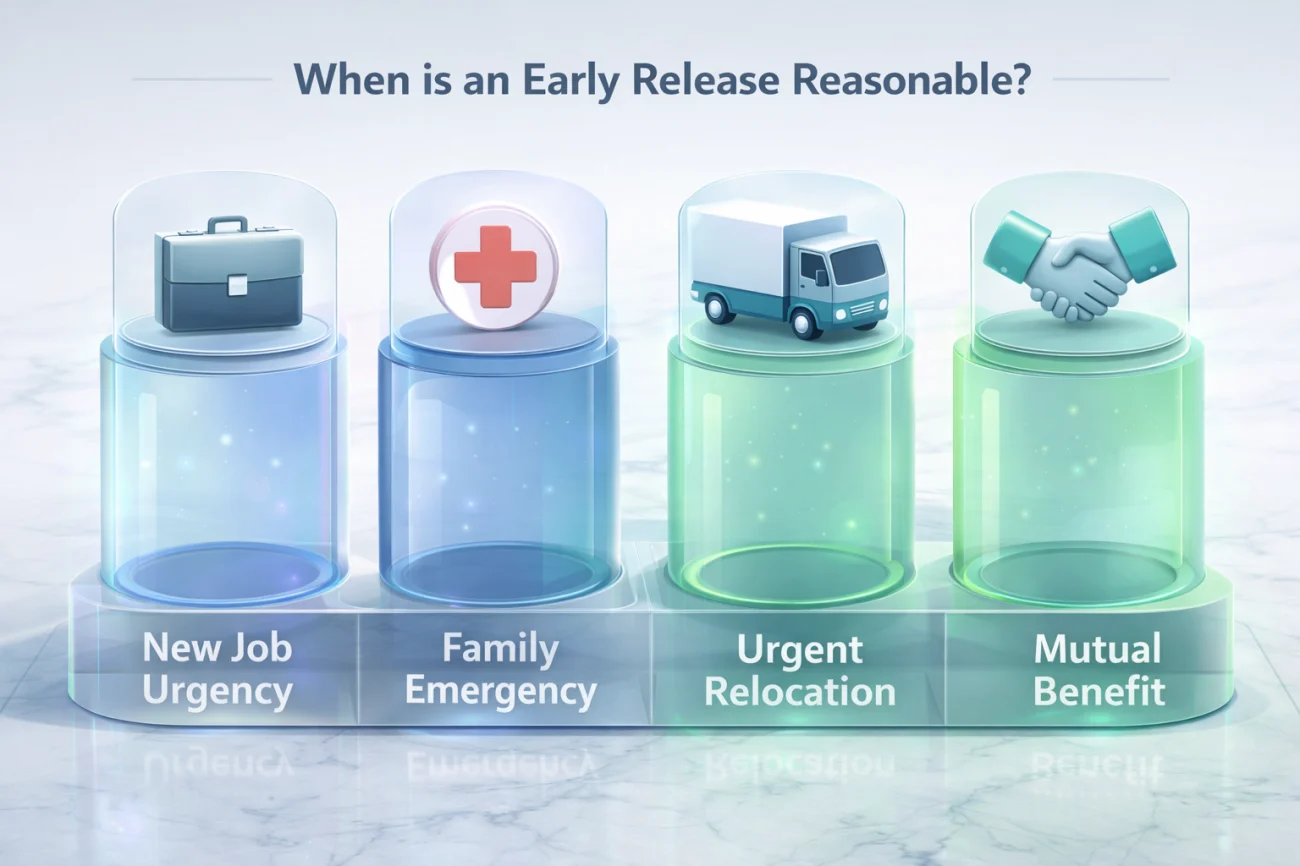
New Employment Start Date Conflicts
New employers occasionally demand start dates conflicting with notice periods at current positions. “My new employer requires I start within one week due to urgent project needs” provides concrete justification for waiver requests. This conflict between obligations often persuades current employers to release employees early rather than create hostile final weeks.
Family or Personal Emergencies
Medical emergencies, family crises requiring immediate caregiving, or urgent personal situations justify waiver requests. “A family medical emergency requires my immediate full-time attention” explains circumstances where work obligations become impossible to fulfill responsibly.
Urgent Relocation Needs
Spouse job transfers, housing situations, or family relocations with fixed timelines create legitimate waiver justifications. “My spouse’s military transfer requires relocation within 10 days” demonstrates circumstances beyond your control that make standard notice infeasible.
Mutually Beneficial Early Departure
Sometimes early release benefits both parties. If your resignation creates awkward dynamics or your replacement can start immediately, proposing early departure might appeal to employers: “If you’ve identified a replacement who can start sooner, I’m happy to coordinate earlier transition to minimize disruption.”
Approaching Notice Period Negotiation
The shorten notice request requires diplomatic framing that acknowledges inconvenience while explaining compelling circumstances.

Acknowledge Standard Expectations First
Begin by recognizing normal notice periods: “I understand standard notice is two weeks and appreciate this creates transition challenges.” This acknowledgment shows you understand you’re asking a favor, not demanding entitlement to shortened departure.
Explain Circumstances Clearly
Provide specific concrete reasons necessitating waiver without excessive personal detail. “My new position requires immediate start to replace someone who departed unexpectedly” gives employers enough context to evaluate reasonableness without inappropriate disclosure.
Offer Transition Assistance
Propose specific actions minimizing disruption: “I’ve prepared comprehensive documentation” or “I’m available for phone consultation after departure” or “I can work extended hours during shortened notice to complete critical tasks.” These offers demonstrate good faith about transition despite reduced timeline.
Request, Don’t Demand
Frame waiver as request, not ultimatum: “If possible, I would greatly appreciate…” rather than “I need you to…” Your employer can refuse shortened notice – approaching request humbly improves acceptance likelihood.
Understanding Employer Perspective
Anticipating employer concerns about shortened notice helps structure persuasive waiver arguments addressing objections proactively.
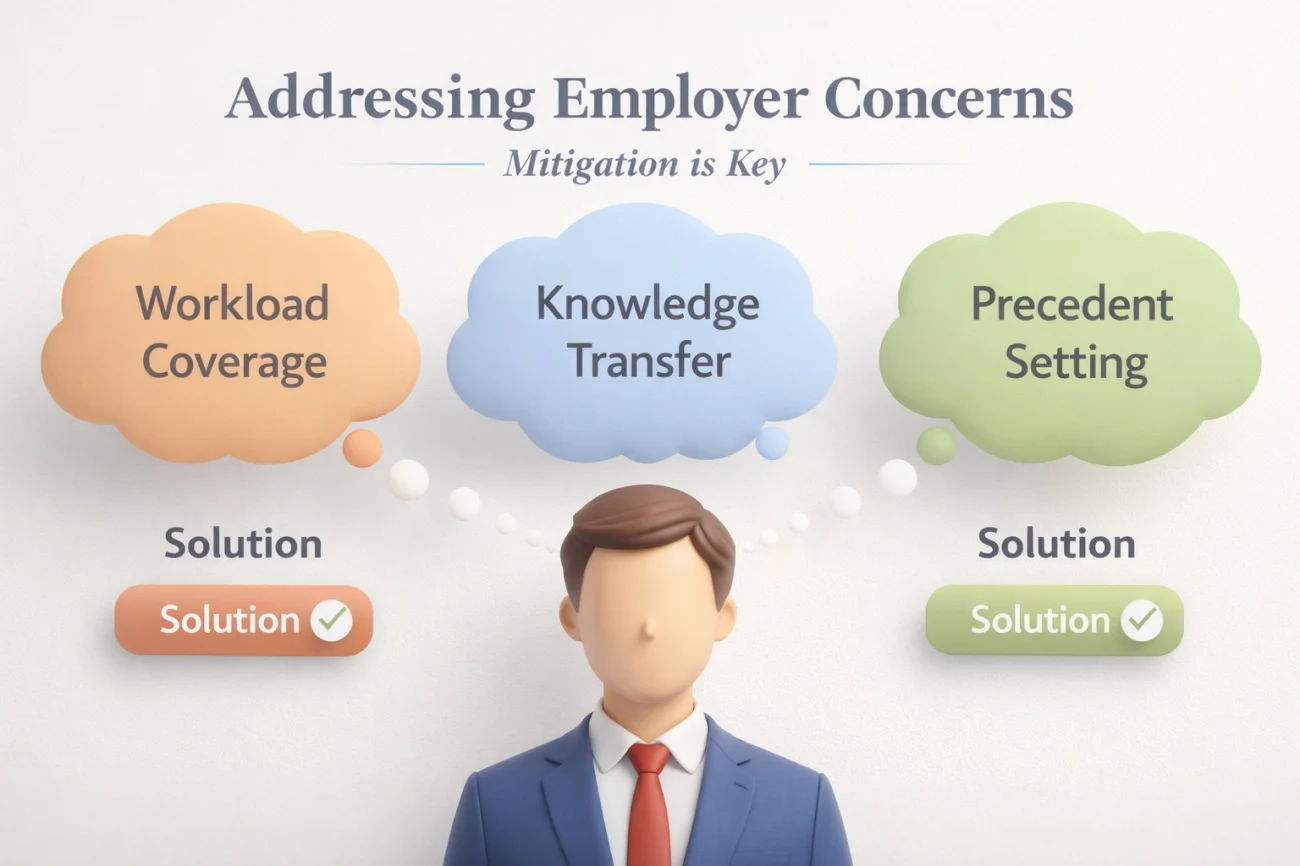
Immediate Workload Coverage Concerns
Employers worry about who handles your responsibilities during shortened transition. Address this directly: “I’ve identified colleagues who can cover urgent matters” or “Most critical projects are at pause points allowing smooth handover.” Demonstrating you’ve considered coverage reduces resistance.
Knowledge Transfer Anxiety
Shortened notice compresses knowledge transfer that normally occurs gradually over weeks. Offer concentrated documentation: “I’ll create detailed written procedures and schedule intensive handover sessions with my replacement” shows commitment to thorough transition despite time constraints.
Precedent Setting Worries
Employers fear granting one waiver creates expectation others receive similar treatment. Emphasize unusual nature of circumstances: “I recognize this situation is unique and don’t expect special treatment” acknowledges you understand this exception shouldn’t become pattern.
Notice Period Waiver Request Templates
These templates demonstrate diplomatic approaches to requesting shortened notice for various circumstances.
New Employment Urgency
Marcus Thompson
marcus.thompson@email.com
(312) 555-0145
June 8, 2024
Sarah Rodriguez
Operations Director
Midwest Solutions Inc.
Dear Sarah,
I am writing to resign from my position as Operations Analyst, ideally effective June 15, 2024, rather than the standard two-week notice ending June 22.
I’ve accepted a position that requires an earlier start date due to urgent project demands at the new organization. While I understand standard notice is two weeks, I’m requesting consideration for one-week notice given these circumstances.
To minimize disruption, I’ve prepared comprehensive documentation of all current projects and workflows. I’m available for extended hours this week to complete critical tasks and can provide phone consultation after departure if questions arise during transition.
I sincerely appreciate your consideration of this request. If the full two-week notice is necessary for business continuity, I will work with the new employer to adjust their expectations.
Thank you for your understanding.
Best regards,
[Signature]
Marcus Thompson
Personal Emergency
Jennifer Martinez
jennifer.martinez@email.com
(415) 555-0189
May 15, 2024
Michael Chen
Regional Manager
Pacific Enterprises
Dear Michael,
I am writing to resign from my position as Sales Coordinator, effective immediately due to urgent family circumstances requiring my full attention.
A family medical emergency has occurred that requires me to assume immediate caregiving responsibilities out of state. While I understand this creates transition challenges, the circumstances are beyond my control and require immediate action.
I’ve compiled notes on all active accounts and current project status. My colleague Sarah Mitchell has agreed to serve as point of contact for urgent matters, and I’ve briefed her on critical pending items. I’m available via email and phone for questions as the team works through immediate transition needs.
I apologize for the abbreviated notice and appreciate your understanding given these difficult circumstances.
Sincerely,
[Signature]
Jennifer Martinez
Relocation Requirement
Rachel Morrison
rachel.morrison@email.com
(503) 555-0167
April 12, 2024
David Torres
Department Director
Northwest Technologies
Dear David,
I am resigning from my position as Technical Writer, requesting last working day of April 19, 2024, rather than standard two-week notice ending April 26.
My spouse’s military transfer orders require we relocate to Virginia by April 22. This timeline is non-negotiable and makes fulfilling complete two-week notice impossible. I apologize for shortened transition period and appreciate your understanding of circumstances beyond our control.
I’ve updated all documentation repositories and created detailed transition guides for ongoing projects. I can be reached via email and phone after relocation to answer questions during the handover period.
Thank you for considering this request given the military transfer constraints.
Respectfully,
[Signature]
Rachel Morrison
If Waiver Request Is Denied
Employers can legally refuse notice period waivers, requiring you to fulfill contractual obligations or face potential consequences.
Honor the Denial Professionally
If your employer insists on full notice period, accept gracefully: “I understand and will fulfill the complete two-week notice as required.” Fighting after denial damages relationships more than shortened notice ever would. Your professional response to rejection matters more than the waiver request itself.
Negotiate with New Employer Instead
If current employer refuses early release, work with new employer to accommodate delayed start: “My current employer requires full notice period. Can we adjust my start date to [date] to fulfill this obligation?” Most new employers respect commitment to professional notice periods.
Understanding Consequences of Leaving Anyway
Departing before approved notice period can result in: forfeited final pay, negative employment verification, voided references, and breach of contract claims. These consequences rarely justify shortened departure unless circumstances are truly emergent. Weigh immediate convenience against long-term professional costs carefully.
Maximizing Shortened Notice Period
When waiver is granted, make the most of limited transition time through focused efficient handover activities.
Priority Documentation
Focus documentation on critical processes only – don’t attempt comprehensive guides impossible to complete in shortened timeframe. Prioritize: passwords/access, active project status, critical contacts, and immediate deadlines. Detailed process documentation can wait for phone consultations after departure.
Concentrated Handover Sessions
Schedule intensive handover meetings with replacement or colleagues covering your work. Two-hour focused sessions accomplish more than scattered brief conversations. Create agenda ensuring critical topics receive adequate coverage despite time constraints.
Post-Departure Availability
Genuine offer of post-departure consultation – “I’m available via phone or email for two weeks after departure for urgent questions” – demonstrates good faith about transition despite shortened notice. This availability reassures employers granting waivers that they’re not completely losing access to institutional knowledge.
❓ FAQ
⏰ Can my employer legally refuse notice period waiver?
Yes. Employers can require full contractual notice period. Waiver requests are favors, not entitlements. If denied, you must fulfill complete notice or face potential consequences: forfeited final pay, negative verification, voided references, or breach of contract claims. Accept denials professionally.
💼 What reasons justify notice period waiver requests?
Strong justifications include: new job urgent start dates, family/medical emergencies, mandatory relocation with fixed timelines, or situations where early departure benefits both parties. Weak justifications: vacation plans, general impatience, or personal convenience. Employers evaluate reasonableness of circumstances when deciding waiver requests.
📝 How should I phrase waiver request to maximize approval?
Acknowledge standard notice expectations, explain circumstances clearly with specific details, offer concrete transition assistance (documentation, extended hours, post-departure availability), and frame as humble request not demand. Demonstrate good faith about transition impact despite reduced timeline.
🤝 What if new employer demands immediate start?
Request waiver from current employer first. If denied, negotiate delayed start with new employer: “My current employer requires full notice period. Can we adjust start date to fulfill this obligation?” Most new employers respect commitment to professional notice. Burning bridges at current job damages long-term reputation.
📋 Should I offer to forfeit final pay for early release?
Generally no – this sets dangerous precedent and undervalues your work. Instead, offer increased transition assistance: comprehensive documentation, extended availability, or intensive handover sessions. These professional offerings demonstrate commitment without financial sacrifice that employers shouldn’t expect.
Final Thoughts

A resignation letter notice period waiver requests employer flexibility when circumstances make standard notice impossible or inadvisable. These requests acknowledge you’re asking favors that create genuine inconvenience requiring legitimate justification and diplomatic approach respecting employer needs.
Successfully writing resignation letter requesting early release means balancing honest explanation of compelling circumstances with professional respect for transition challenges shortened notice creates. Your willingness to offer concrete mitigation – documentation, extended availability, intensive handover – demonstrates good faith that improves approval likelihood.
Remember that waiver requests can be denied – employers retain right to require full contractual notice. Professional acceptance of denials, whether negotiating with new employers or honoring obligations, matters more for long-term reputation than shortened departure ever could. Your response to rejection demonstrates character that shapes how colleagues remember you regardless of actual departure timing.
⚠️ Legal Disclaimer: The resignation templates, email samples, and professional guidance provided in this guide are for informational purposes only and do not constitute legal advice. Employment laws and contract requirements vary by jurisdiction and individual circumstances. Please review your employment agreement and consult your HR department and/or a qualified attorney to ensure compliance with applicable laws and policies.