- What this guide is for: A final quality check that prevents avoidable resignation letter mistakes from hurting your reputation.
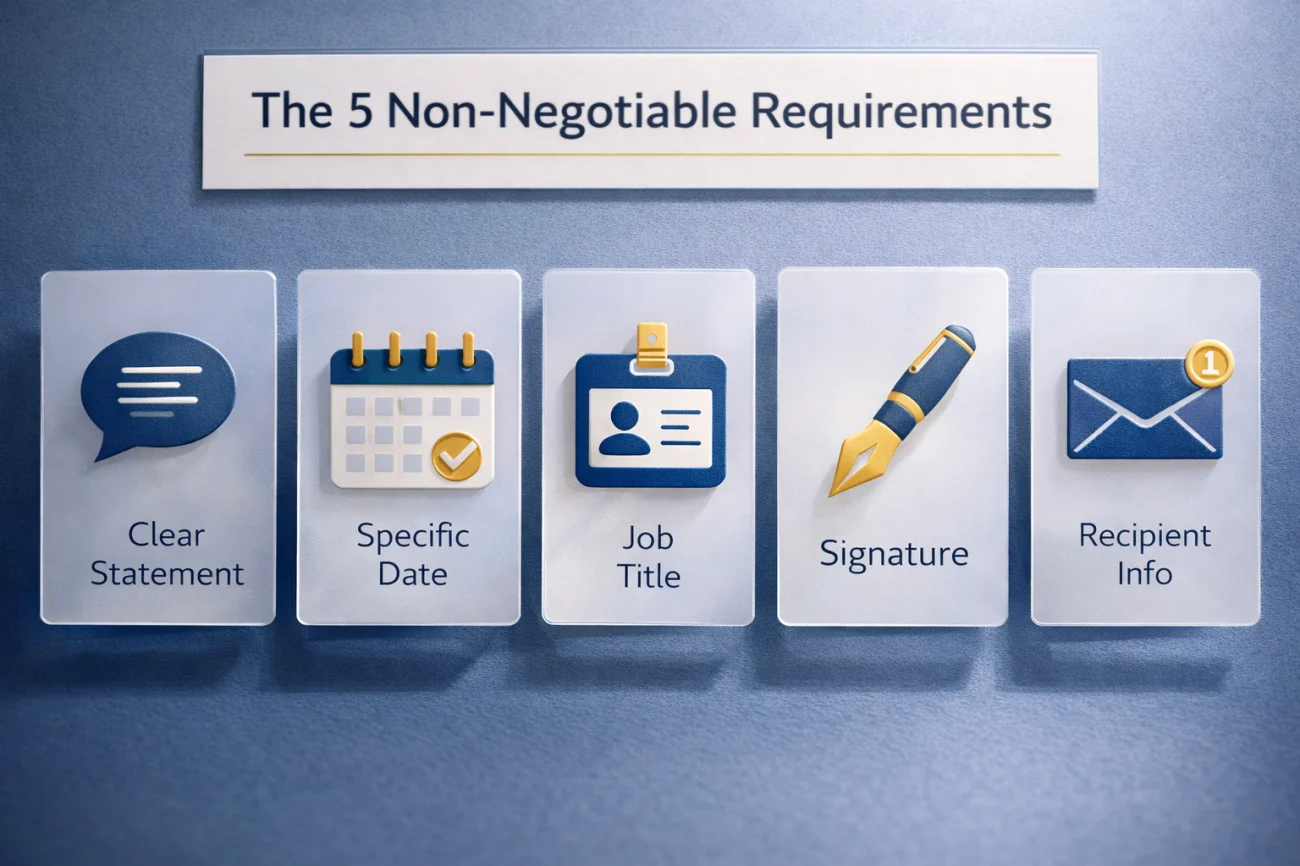
- 5 non-negotiables: Clear resignation statement, exact last working day, official job title, proper signature, correct recipient details.
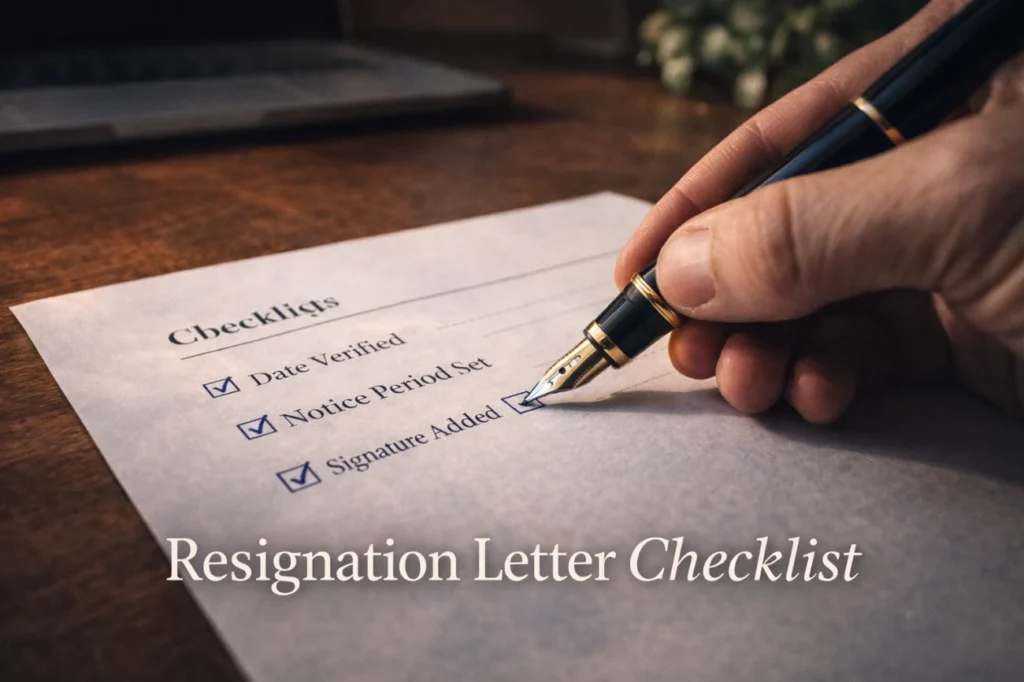
- Pre-submission checklist: Verify content, tone, formatting, contact info, and proofreading before you send anything.
- Proofread like it matters: Read aloud, review backwards, print a copy, and use fresh eyes after a short break.
- Technical + follow-up steps: Submit as PDF, confirm the attachment and recipients, then get receipt confirmation and HR processing clarity.
The Final Review That Prevents Career Mistakes
Your resignation letter checklist represents the final barrier between a professional departure and embarrassing mistakes that undermine months of careful career building. A single typo in your resignation date, misspelled manager name, or missing signature transforms otherwise excellent resignation into documentation that questions your attention to detail.
Most resignation letter errors are preventable through systematic review before submission. Understanding resignation letter requirements and methodically verifying each element ensures your resignation receives immediate processing without administrative confusion or follow-up requests for clarification.
This guide provides a comprehensive pre-submission checklist covering content accuracy, formatting standards, legal requirements, and presentation quality. For complete resignation guidance, see our resignation letter etiquette guide.
The 5 Non-Negotiable Requirements
Every resignation letter, regardless of industry or circumstances, must include these five essential elements. Missing any of these components creates processing delays or legal ambiguity about your resignation.
1. Clear Resignation Statement
Your letter must explicitly state you are resigning. Phrases like “I am writing to resign” or “Please accept this letter as formal notice of my resignation” leave no ambiguity about your intention. Vague language like “I’m considering my options” or “I need to discuss my future here” fails to constitute official resignation.
Place your resignation statement in the first paragraph, ideally the first sentence. HR needs immediate clarity about document purpose without reading through context or background information.
2. Specific Last Working Day
State your exact final day of employment using complete date format: “My last working day will be Friday, June 14, 2024.” Never use relative references like “two weeks from today” or “end of the month” – these create confusion when HR reviews your letter days or weeks after submission.
Verify your last day doesn’t fall on a weekend or holiday. If your two-week notice period ends on Saturday, specify whether Friday or the following Monday serves as your official last day. This precision prevents payroll and benefits termination errors.
3. Your Complete Job Title
Include your official job title exactly as it appears in employment records and your offer letter. Large organizations employ multiple people with similar names – your job title helps HR route your resignation to the correct department and position file.
If you’ve held multiple positions during your tenure, state your current title only. Don’t list your complete job history within the organization unless relevant to resignation circumstances.
4. Proper Signature
Sign your resignation letter with either wet signature (pen and ink) or verified digital signature. Unsigned letters constitute drafts, not official resignation documentation. Your signature transforms the letter into legally binding notice of employment termination.
Leave adequate space (3-4 blank lines) between your closing phrase and typed name for handwritten signature. Type your full legal name below the signature space – don’t rely solely on handwritten signatures that may be illegible.
5. Correct Recipient Information
Address your resignation to your direct manager by name and title. Verify spelling of their name – “Sara” versus “Sarah,” “Jon” versus “John” matter. If submitting through formal HR channels, include both your manager and HR department as recipients.
Include recipient’s title and department for proper routing: “Sarah Rodriguez, Director of Marketing” rather than just “Sarah Rodriguez.” This information ensures mail room staff and administrative assistants deliver your resignation to the correct person.
Comprehensive Pre-Submission Checklist
Use this systematic what to include in resignation letter checklist to verify every aspect of your resignation before submitting. Review each item methodically rather than skimming quickly.
| Category | Checklist Items |
|---|---|
| Essential Content | □ Clear resignation statement in first paragraph □ Specific last working day with complete date □ Current job title matches employment records □ Proper notice period (typically 2 weeks) □ Brief reason for leaving (optional but recommended) |
| Professional Courtesy | □ Expression of gratitude (1-2 sentences) □ Offer to assist with transition □ Positive tone throughout letter □ No negative comments about company or colleagues |
| Formatting & Presentation | □ Professional font (Times New Roman, Calibri, Arial) □ Appropriate font size (11-12pt) □ Single spacing with blank lines between paragraphs □ One-inch margins on all sides □ Clean, uncreased paper (if printed) |
| Contact Information | □ Your full name and contact details □ Current date at top of letter □ Recipient’s name spelled correctly □ Recipient’s title and department □ Company name and address (if mailing) |
| Signature & Closing | □ Professional closing phrase (Sincerely, Best regards) □ Adequate space for handwritten signature □ Typed name below signature □ Date matches letter date (if included in signature block) □ Actual signature present (not just typed name) |
| Proofreading | □ No spelling errors anywhere in document □ Grammar checked and corrected □ Punctuation appropriate throughout □ Consistent verb tenses □ All dates verified for accuracy |
Advanced Proofreading Techniques
Resignation letter proofreading requires more than spell-check software. These systematic review techniques catch errors automated tools miss.
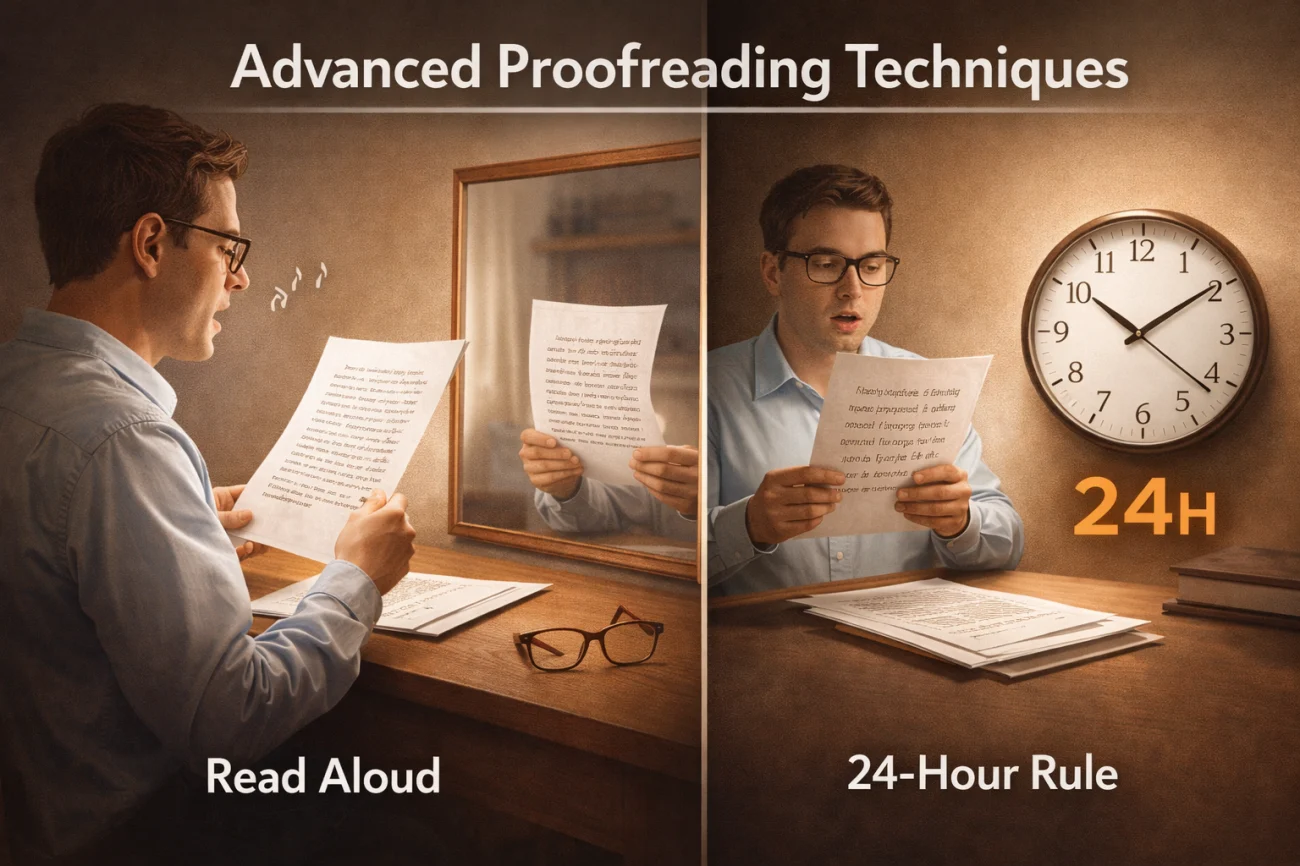
Read Aloud Method
Read your resignation letter aloud slowly, word by word. Your ears catch awkward phrasing, missing words, and grammar errors your eyes skip when reading silently. This technique forces deliberate attention to each sentence rather than scanning for general meaning.
If possible, have someone else read your letter aloud to you. Hearing another person’s voice reading your words reveals problems you’ve become blind to through repeated reviews.
Backwards Review Technique
Proofread your letter backwards, starting with the last sentence and working toward the first. This disrupts your brain’s tendency to see what you expect rather than what’s actually written. Backwards reading isolates each sentence from context, making errors more visible.
Print for Final Review
Print your resignation letter even if submitting digitally. Errors appear more clearly on paper than on screens. The physical act of holding a document engages different cognitive processes that catch mistakes digital review misses.
Review the printed version in a different location than where you wrote it – move to a different room, go to a coffee shop, or simply change your physical orientation. Environmental change resets your perspective, making errors more noticeable.
24-Hour Fresh Eyes Review
Draft your resignation letter, then wait 24 hours before final review. Time away from the document lets you approach it with fresh perspective. Errors that were invisible during initial writing become obvious after a day’s separation.
If urgent circumstances require same-day submission, take a minimum two-hour break between drafting and final review. Even brief separation improves proofreading effectiveness.
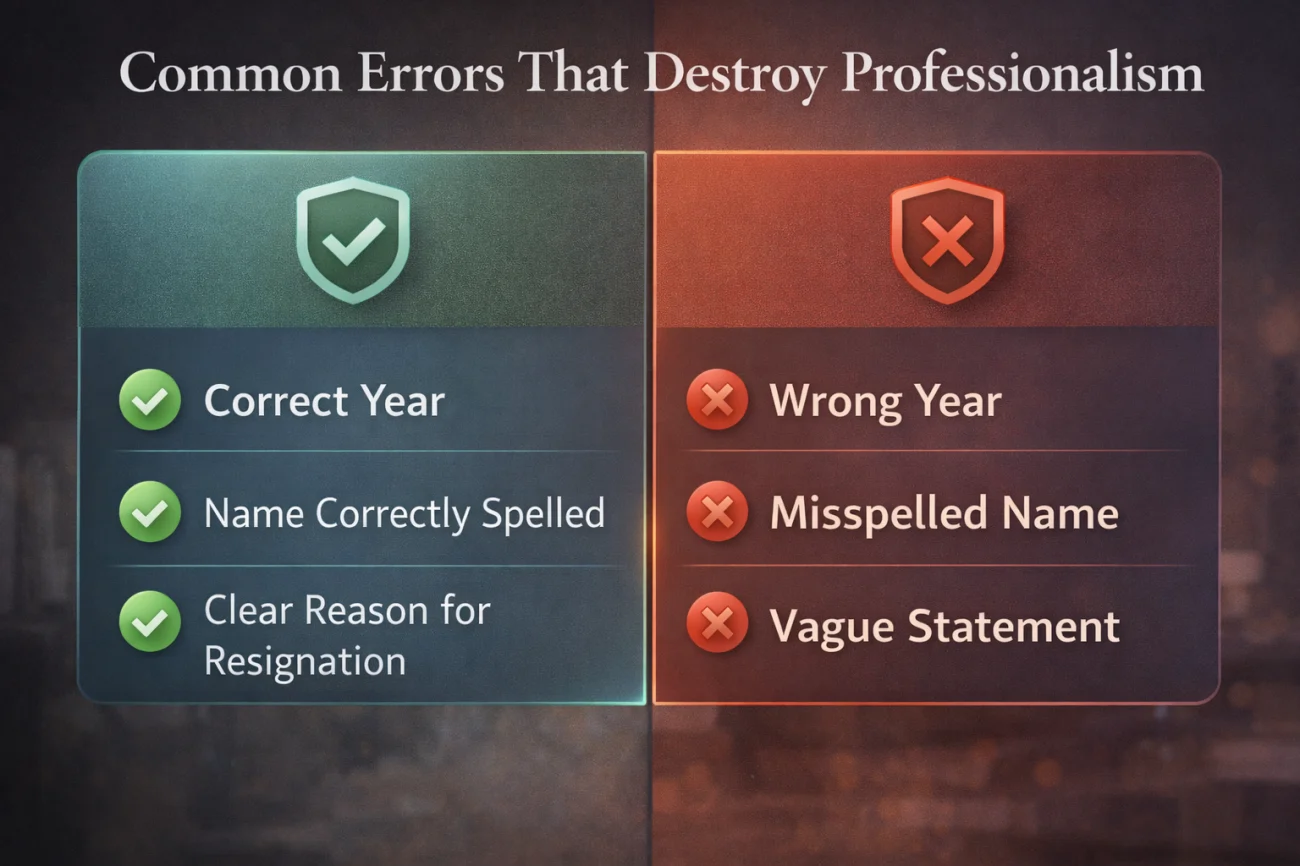
Common Errors That Destroy Professionalism
These frequent mistakes undermine otherwise excellent resignation letters. Check specifically for each error category before submitting.
Date and Timeline Errors
- ✗ Wrong year (writing 2023 instead of 2024)
- ✗ Impossible dates (June 31st doesn’t exist)
- ✗ Last day falls on weekend/holiday without clarification
- ✗ Notice period miscalculated (saying “two weeks” but dating only 10 days)
- ✗ Letter date doesn’t match submission date
Name and Title Errors
- ✗ Manager’s name misspelled
- ✗ Wrong title (Director vs Manager)
- ✗ Outdated title (person was promoted)
- ✗ Your own name inconsistent with employment records
- ✗ Company name abbreviated incorrectly
Content and Tone Errors
- ✗ Vague resignation statement (not clearly stating you’re resigning)
- ✗ Excessive detail about new job or departure reasons
- ✗ Negative comments about colleagues or management
- ✗ Demands rather than requests for transition support
- ✗ Overly emotional or dramatic language
Technical Verification Steps
Beyond content review, verify these technical elements that affect how your resignation processes through HR systems.
File Format Verification
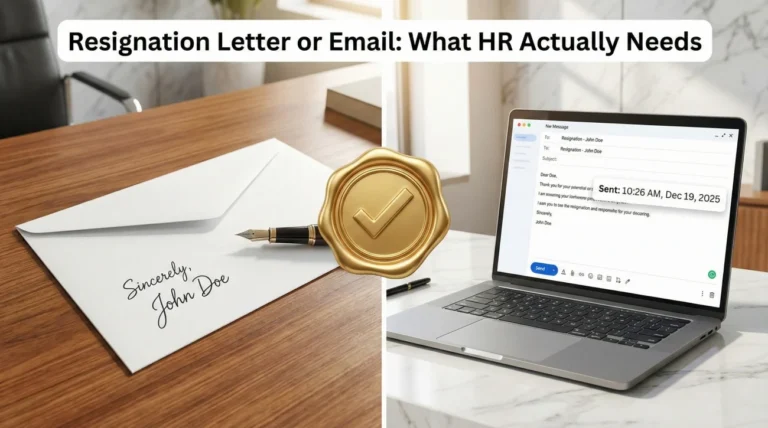
If submitting digitally, save as PDF to prevent formatting changes and ensure consistent appearance across devices. Name file professionally: “Resignation_Letter_YourName_Date.pdf”.
Email Attachment Confirmation
When emailing resignation, verify attachment uploaded before clicking send. Open attached file from your sent email to confirm it displays correctly.
Recipient List Verification
Double-check “To:” and “CC:” fields before sending. Ensure your manager appears in “To:” and HR in “CC:” – never reverse these. Remove unintended recipients from auto-complete suggestions.
Final Pre-Submission Review Protocol
Execute this five-step protocol immediately before submitting your resignation letter. Each step takes less than two minutes but prevents costly errors.
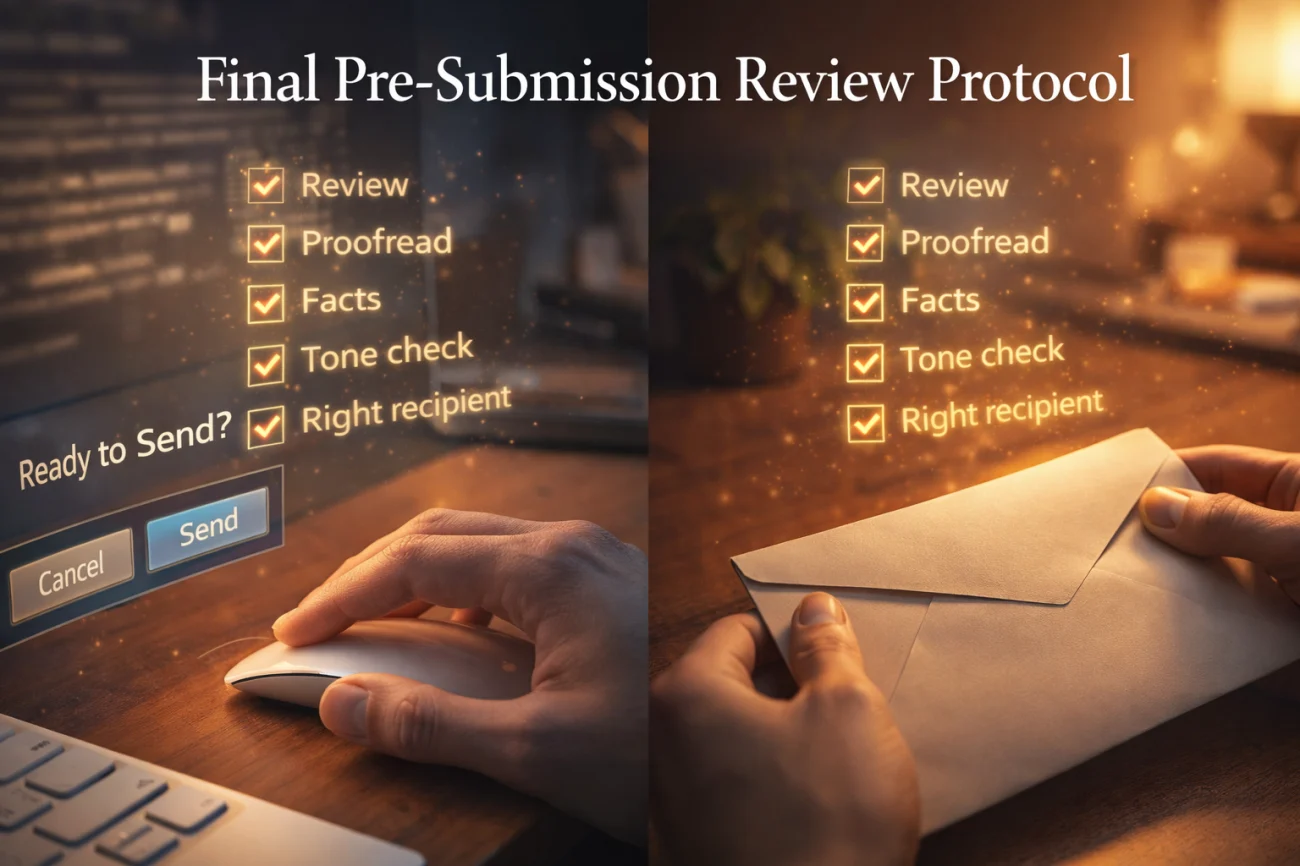
The Five-Step Final Check
- Verify all dates: Letter date, last working day, notice period calculation
- Confirm all names: Your name, manager’s name, company name – check spelling
- Read aloud once: Catch awkward phrasing or missing words
- Check signature: Ensure physical or digital signature is present
- Review recipient info: Correct person, correct contact method, correct address
This five-minute investment prevents weeks of regret over preventable mistakes that undermine your professional reputation.
Optional: Trusted Reviewer
If possible, have someone you trust review your resignation letter before submission. Choose someone who understands professional communication standards – a mentor, career counselor, or colleague from outside your current organization.
Don’t ask current coworkers to review unless you’re certain about confidentiality. Your resignation should remain private until official submission to your manager.
Post-Submission Verification
Your checklist continues after submission. These post-submission steps confirm your resignation was received and processed correctly.
Request Confirmation
If submitting via email, request read receipt or brief reply confirming receipt. If hand-delivering, ask your manager to acknowledge they received your letter. This confirmation documents submission date, protecting you if disputes arise about notice timing.
HR Follow-Up
Within 2-3 business days, confirm HR received your resignation and initiated processing. Ask about benefits continuation, final paycheck timing, and exit paperwork. Proactive follow-up prevents administrative oversights.
❓ FAQ
✅ What are the absolute must-haves in every resignation letter?
Five non-negotiables: (1) clear resignation statement, (2) specific last working day with complete date, (3) your official job title, (4) proper signature, and (5) correct recipient information. Missing any of these creates processing delays or legal ambiguity about your resignation.
📝 How should I proofread my resignation letter effectively?
Use multiple techniques: read aloud slowly, review backwards from last sentence to first, print for physical review, and wait 24 hours for fresh eyes perspective. Each method catches different error types that automated spell-check misses.
📅 What’s the most common date error in resignation letters?
Wrong year at top of letter (writing 2023 when it’s 2024) or miscalculating notice period (stating “two weeks” but dating last day only 10 days later). Always verify dates match actual calendar and fulfill notice requirements.
💾 Should I submit resignation as PDF or Word document?
PDF prevents formatting changes and ensures consistent appearance across all devices. Name file professionally: “Resignation_Letter_YourName_Date.pdf”. Open attached file from your sent email to verify it displays correctly before celebrating submission.
🔍 Is it necessary to have someone else review my resignation letter?
Not required but helpful if you have trusted mentor, career counselor, or colleague outside your organization who understands professional standards. Avoid asking current coworkers unless absolutely certain about confidentiality – your resignation should remain private until official submission.
Final Thoughts
Your resignation letter checklist serves as final quality control barrier between professional departure and embarrassing mistakes that undermine your career reputation. Systematic review of every element – from resignation statement clarity to signature presence – ensures your letter receives immediate processing without administrative confusion.
Understanding resignation letter requirements and methodically verifying each component takes fifteen minutes that prevent months of regret. A single proofreading pass catches typos in dates, misspelled names, or missing signatures that transform otherwise excellent resignations into documents questioning your attention to detail.
Professional resignation letter preparation demonstrates the same thoroughness that characterized your work throughout employment. The care you invest in this final document leaves positive lasting impressions that benefit future references, industry reputation, and career advancement long after you’ve moved to new opportunities.
⚠️ Legal Disclaimer: The resignation templates, email samples, and professional guidance provided in this guide are for informational purposes only and do not constitute legal advice. Employment laws and contract requirements vary by jurisdiction and individual circumstances. Please review your employment agreement and consult your HR department and/or a qualified attorney to ensure compliance with applicable laws and policies.