- What it means: Formally withdrawing your resignation and asking to stay, but acceptance is entirely your employer’s choice.
- Legal reality: Employers have no obligation to accept, and your best odds are inside the notice period, ideally within 24 to 48 hours.
- When it might work: Early request, no replacement process started, strong relationship, rare skills, or critical timing that makes your exit costly.
- How to do it: Talk to your manager first, gauge receptivity, then send a short written retraction only if the verbal response is positive.
- Tradeoffs to weigh: Trust can be permanently damaged, leverage drops, and if rejected you should exit cleanly and protect references.
When Second Thoughts Strike After Resignation
Rescinding a resignation letter means formally withdrawing your notice and requesting to remain in your current position. This situation arises when circumstances change after resignation – counteroffers materialize, personal situations resolve, or new job opportunities fall through unexpectedly.
Understanding how to rescind resignation letter effectively requires recognizing that employers face no legal obligation to accept withdrawal. Unlike submitting resignation (which you control unilaterally), rescinding resignation depends entirely on your employer’s willingness to retain you after learning you were prepared to leave.
This guide explains when resignation withdrawal might succeed, how to approach retraction professionally, and realistic expectations about employer responses. For standard resignation guidance, see our resignation letter etiquette guide.
The Legal Reality of Resignation Withdrawal
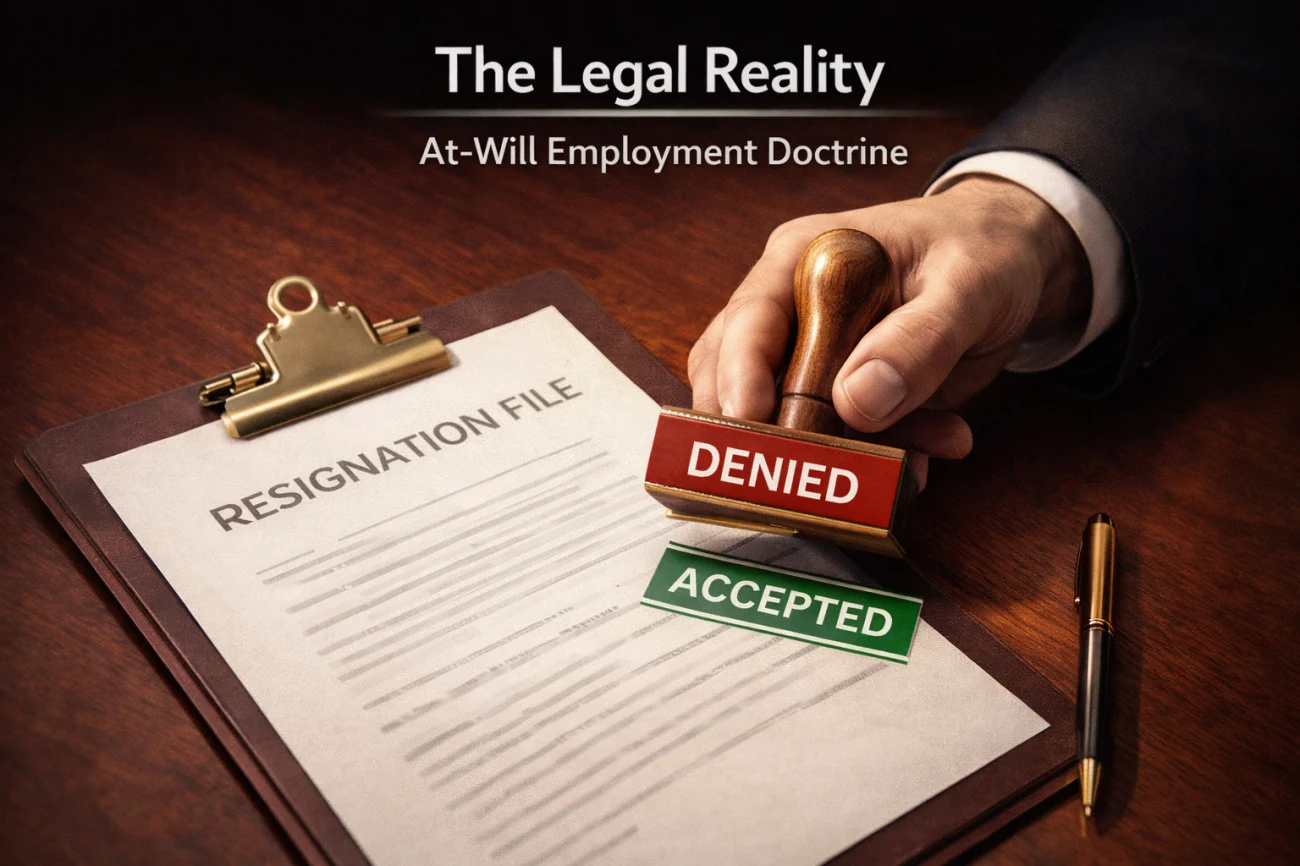
Once you submit resignation, employment law treats your departure as voluntary termination. Your employer can accept your resignation immediately and refuse any withdrawal attempts – you’ve already given them legal notice of employment termination.
Employers Have No Obligation to Accept
Employment-at-will doctrine means both parties can terminate employment at any time. You exercised this right by resigning. Your employer can exercise their parallel right by accepting your resignation and declining withdrawal requests. No law requires them to let you stay after you’ve announced departure.
This legal framework means retracting resignation letter success depends on business considerations, not legal rights. Employers who’ve already started replacement searches, reassigned your responsibilities, or lost trust in your commitment have legitimate reasons to deny withdrawal.
Notice Period Window
Your best chance for successful withdrawal occurs within the notice period before your last working day. Once that final date passes and employment officially terminates, reversing resignation becomes new hiring rather than simple withdrawal. HR systems process you as terminated employee – “un-terminating” you creates administrative complications many employers prefer avoiding.
When Resignation Withdrawal Might Succeed
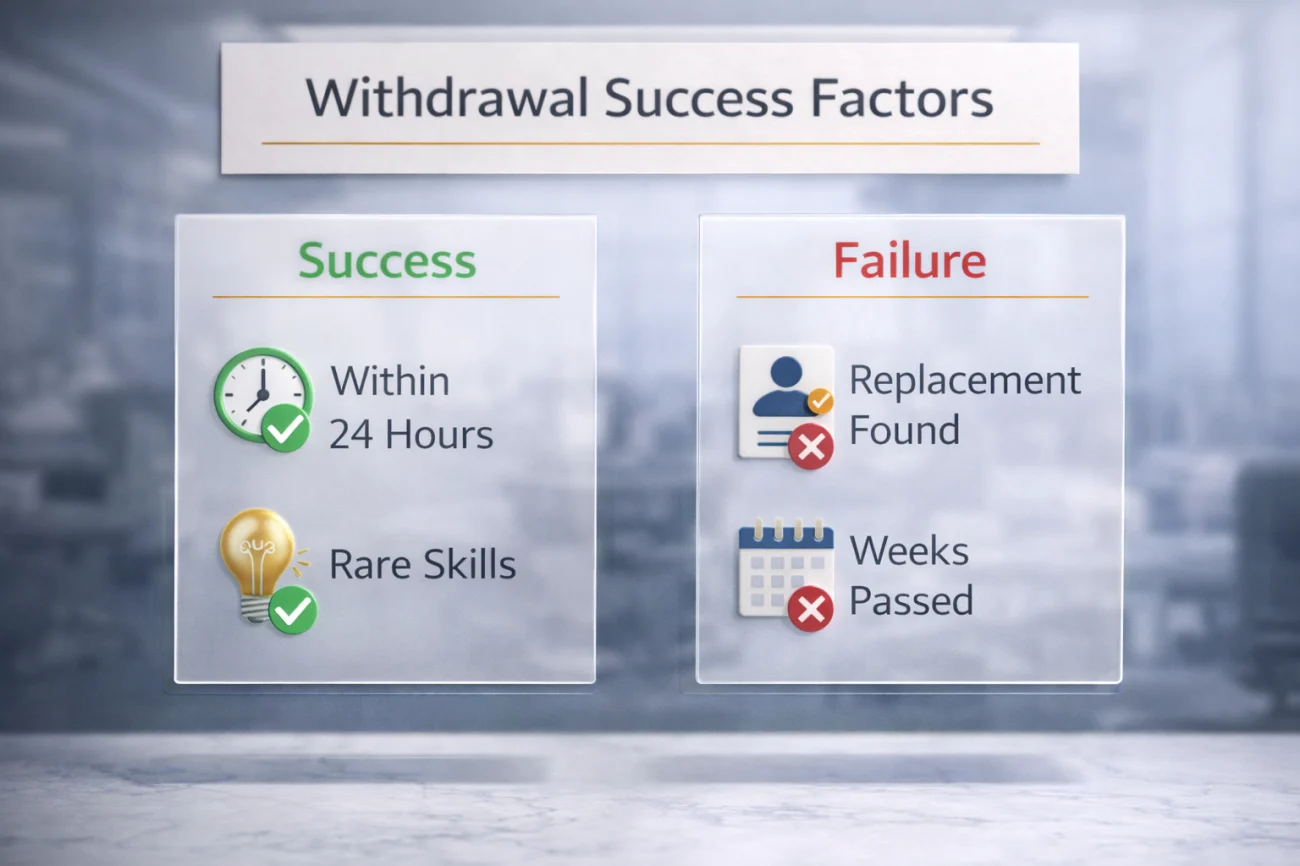
Certain circumstances make employers more receptive to accepting resignation withdrawals. These factors don’t guarantee success but significantly improve your chances.
| Factors Favoring Withdrawal Acceptance | Factors Making Withdrawal Unlikely |
|---|---|
| ✓ Requested within 24-48 hours of resignation | ✗ Weeks have passed since resignation |
| ✓ Employer hasn’t started replacement search | ✗ Replacement candidates already interviewed |
| ✓ You possess rare skills or specialized knowledge | ✗ Your position is easily filled |
| ✓ Strong working relationship with management | ✗ Resignation damaged trust or relationships |
| ✓ Critical project timing makes your departure disruptive | ✗ Responsibilities already reassigned successfully |
| ✓ Employer had been trying to retain you | ✗ Employer seemed relieved by your resignation |
| ✓ Valid reasons for changing mind (personal crisis resolved) | ✗ Frivolous reasons (just got cold feet) |
Timing Is Critical
Act immediately if you want to withdraw resignation. Each passing day reduces acceptance likelihood as your employer invests more resources in replacement planning. Withdrawal requests submitted within 24 hours receive much better reception than requests made days or weeks later.
How to Approach Resignation Withdrawal
Request withdrawal through direct conversation before submitting written retraction. This personal approach gives you immediate feedback about whether formal written withdrawal will receive consideration.

Start with Verbal Request
Schedule private meeting with your manager: “I need to discuss my resignation. I’ve had a significant change in circumstances and would like to talk about the possibility of withdrawing my notice and staying with the company.”
Explain your situation honestly without excessive detail. “My wife’s job relocation fell through, so the original reason for my resignation no longer applies” works better than elaborate stories. Be direct about wanting to stay if possible.
Gauge Receptivity Before Formal Request
Your manager’s initial reaction tells you whether formal written withdrawal has any chance. If they respond positively – “Let me talk to HR about this” – proceed with formal retraction letter. If they respond negatively – “We’ve already started interviewing replacements” – formal letter won’t change their minds.
Don’t push if initial response is clearly negative. Accepting rejection gracefully preserves better relationship for future references than arguing about withdrawal they’ve already declined.
Resignation Withdrawal Letter Templates
Use these withdrawing resignation letter sample templates only after positive verbal response to withdrawal discussion. Submit formal retraction letter via same method you used for original resignation.
Standard Resignation Withdrawal
Marcus Thompson
marcus.thompson@email.com
(312) 555-0145
April 15, 2024
Sarah Rodriguez
Project Director
Midwest Solutions Inc.
Dear Sarah,
Following our conversation earlier today, I am writing to formally request withdrawal of my resignation letter dated April 8, 2024.
Since submitting my resignation, the circumstances that prompted my decision have changed significantly. The family situation that necessitated my departure has resolved, making it possible for me to continue my career here at Midwest Solutions.
I sincerely apologize for any disruption my resignation caused. I remain deeply committed to contributing to our team’s success and completing the projects I’ve been leading. I would be grateful for the opportunity to continue in my role as Marketing Specialist.
I understand this request may cause administrative complications and appreciate your consideration. Please let me know if you need any additional information or if there are conditions attached to withdrawing my resignation.
Thank you for your understanding.
Best regards,
[Signature]
Marcus Thompson
Withdrawal After Competing Offer Falls Through
Jennifer Martinez
jennifer.martinez@email.com
(415) 555-0189
May 5, 2024
Michael Chen
Operations Manager
DataCorp Solutions
Dear Michael,
I am writing to formally request withdrawal of my resignation submitted on April 28, 2024.
The position I had accepted with another organization has been eliminated due to unexpected budget constraints. This development has prompted me to reconsider my career plans and recognize the value of remaining with DataCorp.
I apologize for the inconvenience my resignation created and understand you may have already begun planning for my replacement. If you’re willing to consider this withdrawal, I commit to continuing my contributions to our operations team with renewed focus and dedication.
I would appreciate the opportunity to discuss this situation at your convenience. Please let me know whether withdrawal remains possible given the current circumstances.
Sincerely,
[Signature]
Jennifer Martinez
Consequences of Attempted Withdrawal
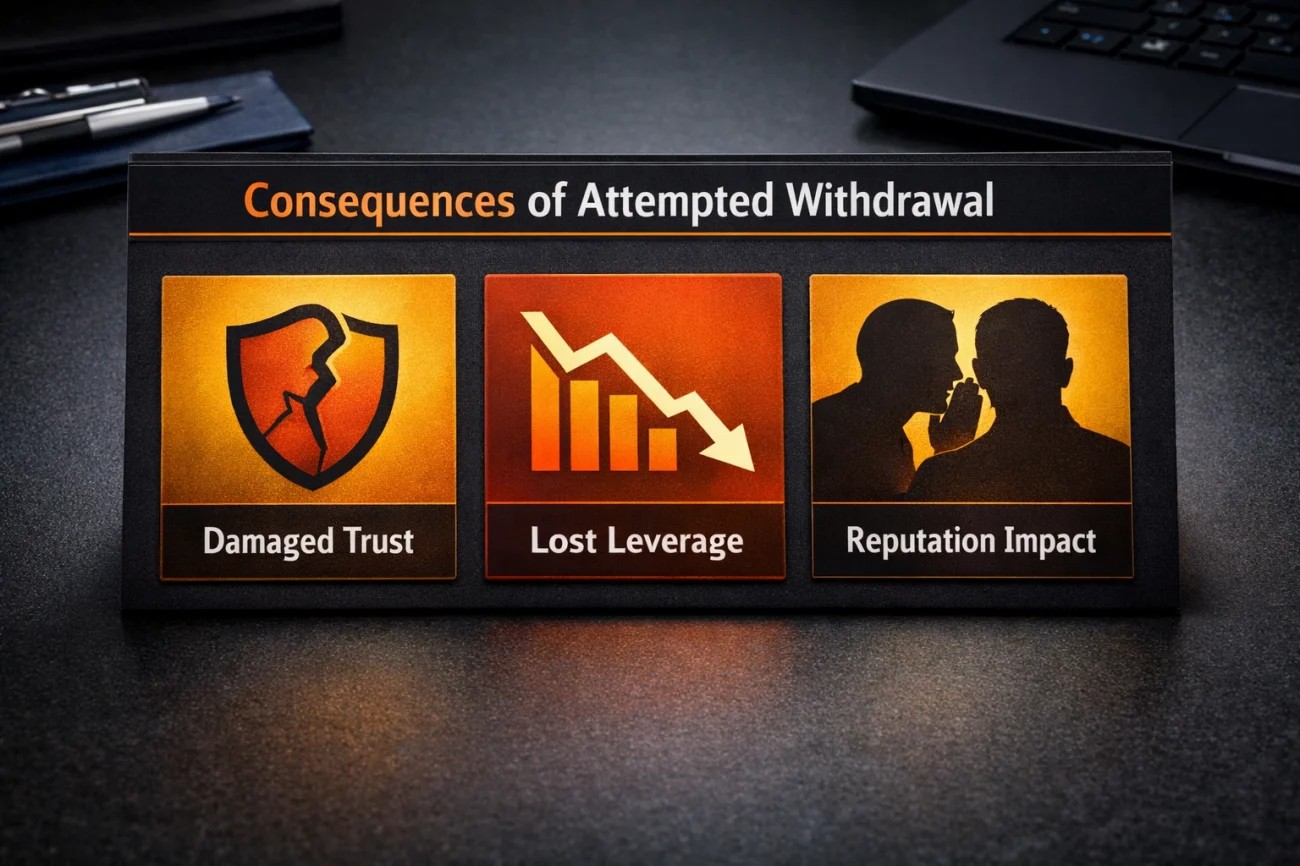
Even when employers accept resignation withdrawal, the relationship often changes permanently. Understanding these consequences helps you decide whether withdrawal serves your long-term interests.
Damaged Trust and Credibility
Your employer now knows you were actively job searching and prepared to leave. This knowledge affects how management views your long-term commitment. You may find yourself excluded from major projects, passed over for promotions, or quietly replaced at their convenience.
Colleagues and management remember employees who tried to leave. That history colors future interactions regardless of how graciously your employer accepted withdrawal.
Lost Negotiation Leverage
If you withdrew resignation because counteroffer negotiations fell through or external opportunities didn’t materialize, you’ve revealed your market value assessment without securing better terms. Future compensation discussions occur with management knowing you already tried and failed to leave.
Professional Reputation Impact
Word spreads quickly in tight professional communities. Colleagues who learned about your resignation then witnessed your withdrawal may question your judgment or commitment. This reputation effect particularly impacts small industries where everyone knows everyone.
Alternatives to Formal Withdrawal
Sometimes addressing the underlying concerns works better than attempting full resignation withdrawal.
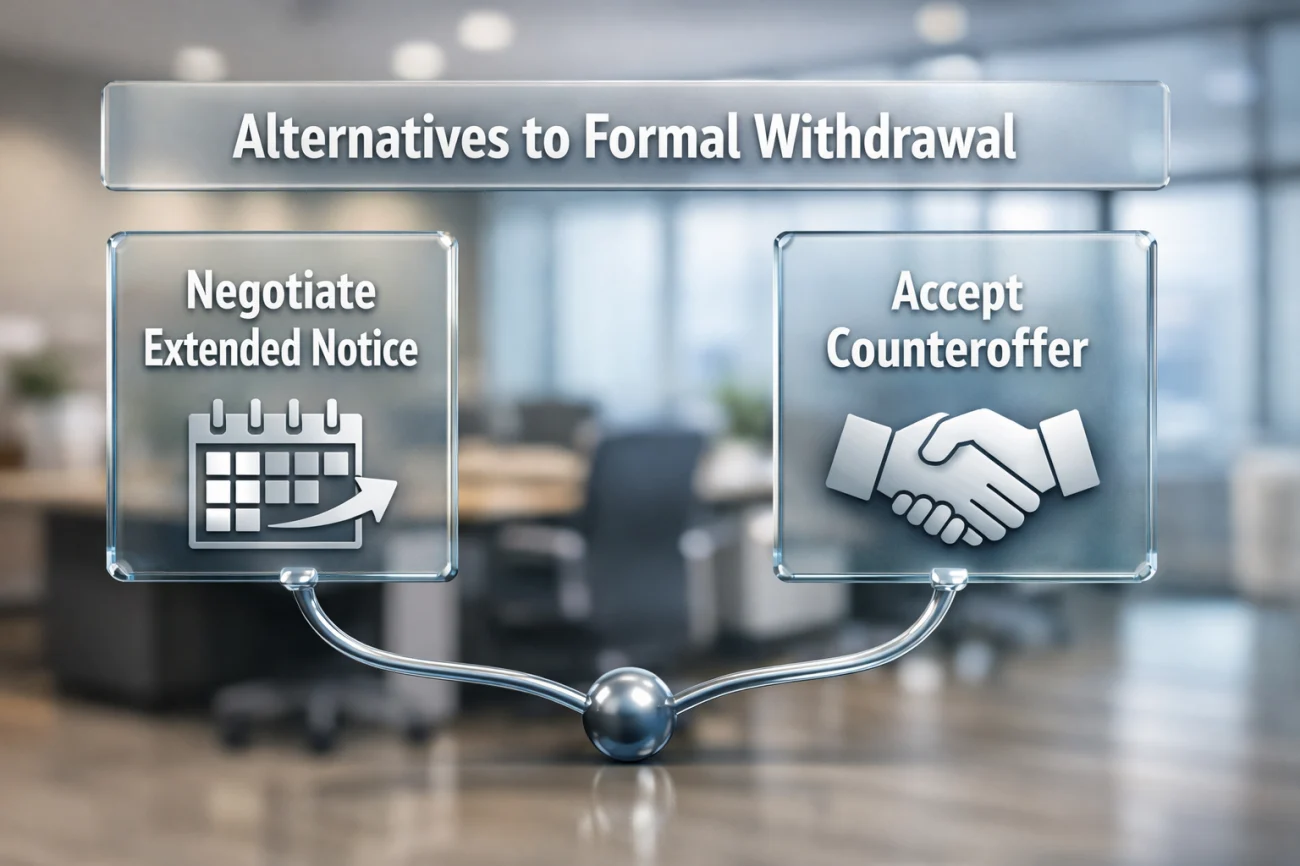
Negotiate Extended Notice Period
If your reason for withdrawal involves needing more transition time, request extended notice period rather than full withdrawal: “Rather than withdrawing resignation entirely, could I extend my notice period from two weeks to six weeks?” This gives you more time while acknowledging your eventual departure.
Accept Counteroffer Explicitly
If your employer makes counteroffer addressing your resignation reasons, frame acceptance as response to their offer rather than withdrawal of your resignation: “Thank you for the proposed changes to my compensation and responsibilities. Based on these adjustments, I’m pleased to continue with the company.”
This approach reframes the situation as employer retention effort rather than you backing out of resignation, creating less awkward dynamic.
When Withdrawal Gets Rejected
Most resignation withdrawal attempts fail. Your employer has already mentally adjusted to your departure and may prefer proceeding with replacement rather than retaining someone who tried to leave.
Accept Rejection Gracefully
If your employer declines withdrawal request, accept their decision professionally: “I understand and respect your decision. I’ll focus on ensuring the smoothest possible transition during my remaining time.” Fighting or arguing damages relationships you may need for future references.
Focus on Professional Exit
Once withdrawal is rejected, shift focus to maintaining positive relationships through professional departure. Your attempt to stay demonstrates you valued the position – now show you can exit gracefully even when circumstances didn’t work as hoped.
This professionalism matters more than the withdrawal attempt itself when former employers receive reference calls years later.
❓ FAQ
⚖️ Can my employer legally refuse my resignation withdrawal?
Yes. Employers have no legal obligation to accept resignation withdrawal. Once you voluntarily resign, employment-at-will doctrine allows employers to proceed with your termination even if you change your mind. Withdrawal success depends on employer willingness, not legal requirements.
⏰ How quickly should I request resignation withdrawal?
Immediately – within 24-48 hours of resignation if possible. Each passing day reduces acceptance likelihood as employers invest more resources in replacement planning. Withdrawal requests submitted days or weeks after resignation face steep odds of rejection.
📝 Should I submit written withdrawal before talking to my manager?
No. Start with verbal discussion to gauge receptivity. Your manager’s initial reaction tells you whether formal written withdrawal has any chance. Only submit formal retraction letter after receiving positive response to verbal request. Written letter won’t change negative decisions.
💼 What happens to my relationship with employer after withdrawal?
Even when accepted, withdrawal often damages trust permanently. Management knows you were job searching and prepared to leave. Expect possible exclusion from major projects, reduced promotion opportunities, or quiet replacement planning. The resignation attempt becomes part of your permanent reputation.
🔄 Can I try to withdraw resignation multiple times?
Absolutely not. One withdrawal attempt per resignation. Multiple attempts destroy all remaining credibility and professional reputation. If first withdrawal gets rejected, accept the decision gracefully and focus on professional exit. Continued pushing creates permanent damage.
Final Thoughts
Rescinding a resignation letter requires recognizing that withdrawal success depends entirely on employer willingness rather than employee rights. You control the resignation submission, but your employer controls whether to accept withdrawal attempts after you’ve voluntarily announced departure.
Understanding how to rescind resignation letter effectively means timing requests immediately, approaching conversations honestly, and accepting rejection gracefully if your employer declines. The professional manner in which you handle withdrawal – successful or not – matters more for long-term reputation than the attempt itself.
Even when employers accept withdrawal, the relationship often changes permanently. Management remembers employees who tried to leave, affecting future trust and opportunities. Consider these long-term consequences carefully before attempting withdrawal, as staying with damaged credibility sometimes proves worse than proceeding with departure as originally planned.
⚠️ Legal Disclaimer: The resignation templates, email samples, and professional guidance provided in this guide are for informational purposes only and do not constitute legal advice. Employment laws and contract requirements vary by jurisdiction and individual circumstances. Please review your employment agreement and consult your HR department and/or a qualified attorney to ensure compliance with applicable laws and policies.