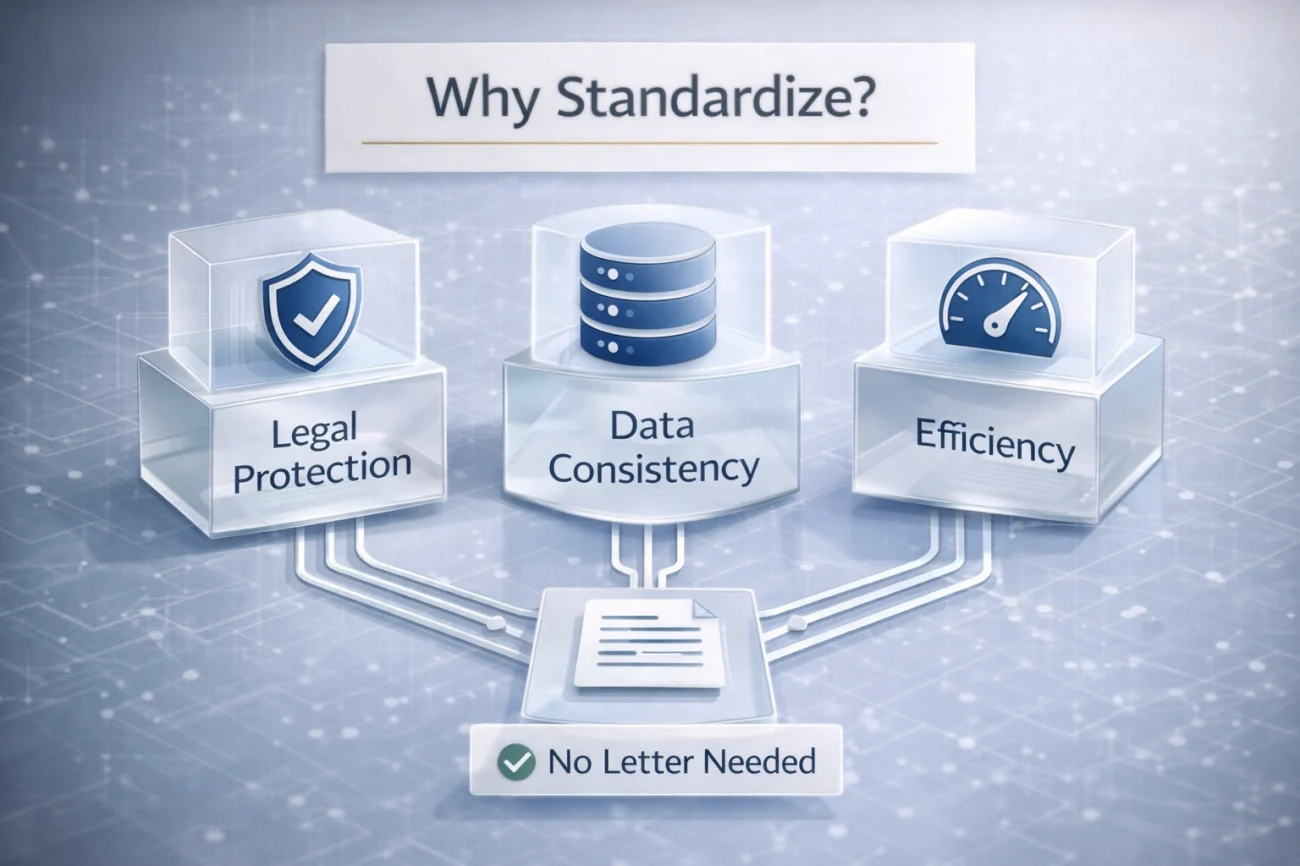
- Employer goal: Consistent resignation records that support compliance, benefits processing, and clean HR files.
- Why forms win: Required fields prevent missing details like last day, forwarding contact, and property return.
- Legal protection: Voluntary resignation and confidentiality acknowledgments reduce disputes and documentation gaps.
- Best practice: Hybrid approach using a form for data and a letter for context when needed.
- Implementation basics: Easy access, manager training, digital options, quick verification, and long-term records retention.
The Employer’s Perspective on Resignation Documentation
Resignation letter sample for company records differs from employee-focused templates. These standardized forms that HR departments provide ensure consistent documentation across all departures, capturing information necessary for legal compliance, benefits processing, and organizational records.
Understanding resignation letter form for employees from the employer perspective helps both HR professionals designing forms and employees completing them. These templates balance employee freedom to express resignation circumstances with organizational need for standardized, complete information that administrative systems require.
This guide covers why companies provide resignation templates, what information these forms should capture, and sample templates HR can adapt for organizational use. For employee resignation guidance, see our resignation letter etiquette guide.
Why Companies Standardize Resignation Documentation
Organizations that provide employer resignation template forms to departing employees gain significant administrative advantages over accepting free-form resignation letters.
Ensuring Information Consistency
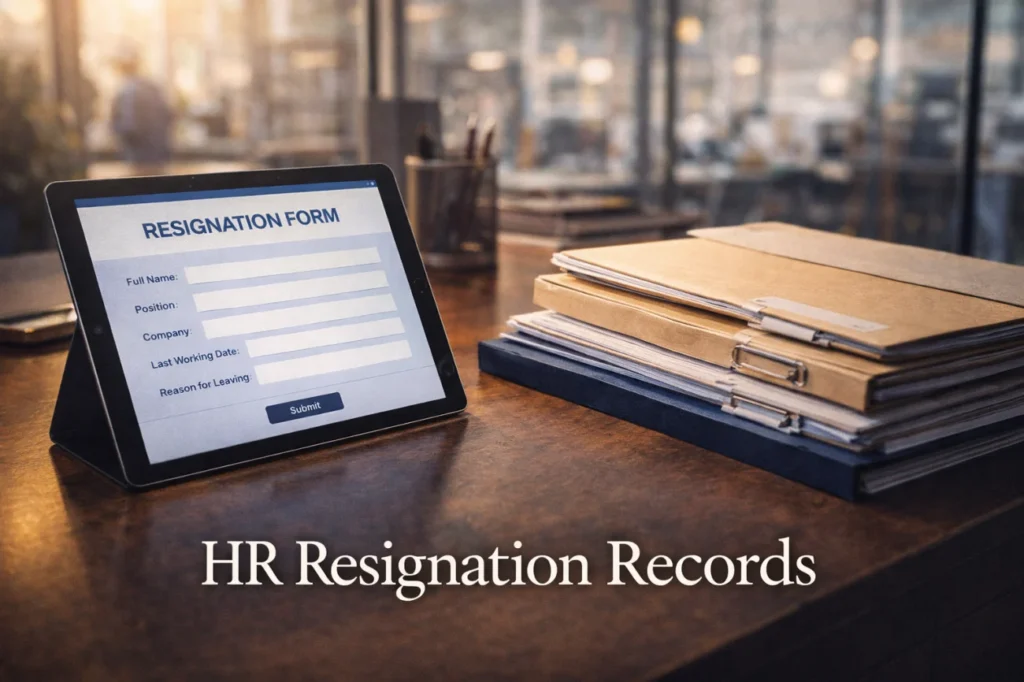
Standardized forms guarantee HR captures essential information from every resignation. Employee-written letters may omit critical details like exact last working day, forwarding address for final documents, or acknowledgment of company property return. Forms with required fields prevent these omissions that complicate processing.
Legal Protection and Compliance
Resignation forms can include acknowledgments that protect employers legally. Statements like “I certify this resignation is voluntary” or “I acknowledge receipt of final pay information” create documentation that defends against wrongful termination claims or disputes about resignation circumstances.
These acknowledgments embedded in resignation forms become harder for employees to dispute later compared to free-form letters where such statements may be absent.
Structured Data Capture for HR Systems
Standardized forms integrate cleanly with HR information systems. Resignation date, reason code, and forwarding information flow directly into databases when captured through structured forms. Manual entry from varied letter formats increases errors and processing time.
Exit Interview Coordination
Resignation forms can incorporate exit interview scheduling, equipment return checklists, and final payment elections directly into resignation documentation. This consolidation reduces follow-up communications and ensures complete departure processing.
Standardized Forms vs Free-Form Letters
Both approaches to resignation documentation offer distinct advantages depending on organizational culture and administrative needs.
| Company-Provided Forms | Employee-Written Letters |
|---|---|
| ✓ Guarantees all required information captured | ✓ Allows personalized expression of circumstances |
| ✓ Integrates directly with HR systems | ✓ Demonstrates employee communication skills |
| ✓ Includes legal acknowledgments and protections | ✓ More flexible for unusual situations |
| ✓ Reduces processing time and errors | ✓ Feels less bureaucratic to employees |
| ✓ Ensures consistent documentation across organization | ✓ Provides insight into resignation reasons through tone |
| ❌ May feel impersonal or bureaucratic | ❌ Often missing critical administrative details |
| ❌ Less flexibility for complex situations | ❌ Requires manual data entry into HR systems |
Hybrid Approach: Form Plus Letter
Many organizations request both standardized form completion and traditional resignation letter. The form captures administrative essentials while the letter provides personalized context and maintains traditional professional documentation standards.
Essential Fields for Resignation Forms
Effective company resignation form templates should capture these critical data points systematically.
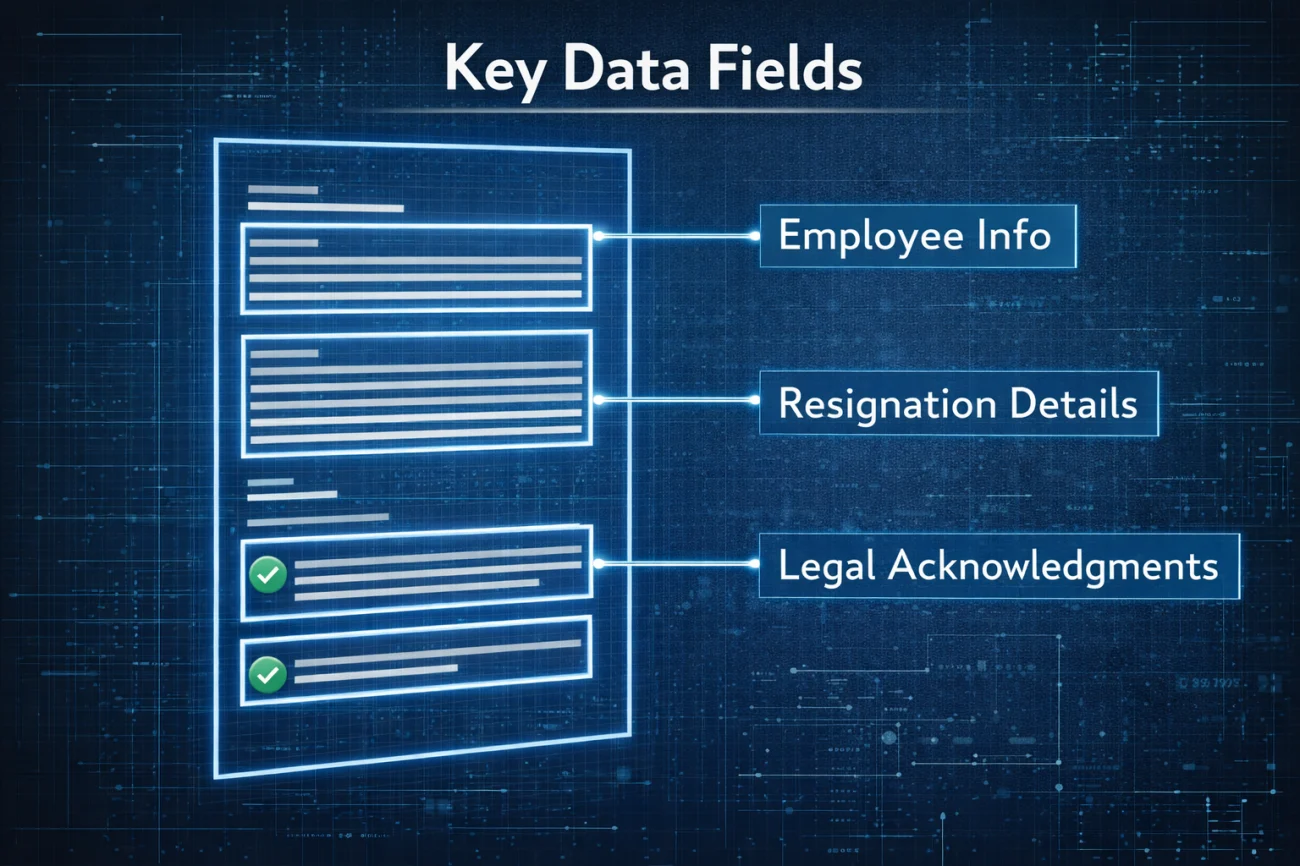
Basic Employee Information
- Full legal name
- Employee ID number
- Current job title
- Department/Division
- Hire date
- Manager name
Resignation Specifics
- Resignation submission date
- Last working day (specific date)
- Notice period provided (automatically calculated or stated)
- Resignation reason (optional or dropdown menu)
- Voluntary/Involuntary designation
Administrative Requirements
- Forwarding address for final documents
- Personal email for post-employment communication
- Phone number for follow-up
- Company property acknowledgment checklist
- Final paycheck delivery preference
- Benefits continuation election (COBRA information acknowledgment)
Legal Acknowledgments
- ☐ I certify this resignation is voluntary
- ☐ I acknowledge receipt of final pay information
- ☐ I understand I must return all company property
- ☐ I agree to maintain confidentiality of proprietary information
- ☐ I acknowledge any non-compete/non-solicitation agreements remain in effect
Company Resignation Form Templates
These resignation letter form for employees templates provide starting points HR departments can customize for organizational needs.
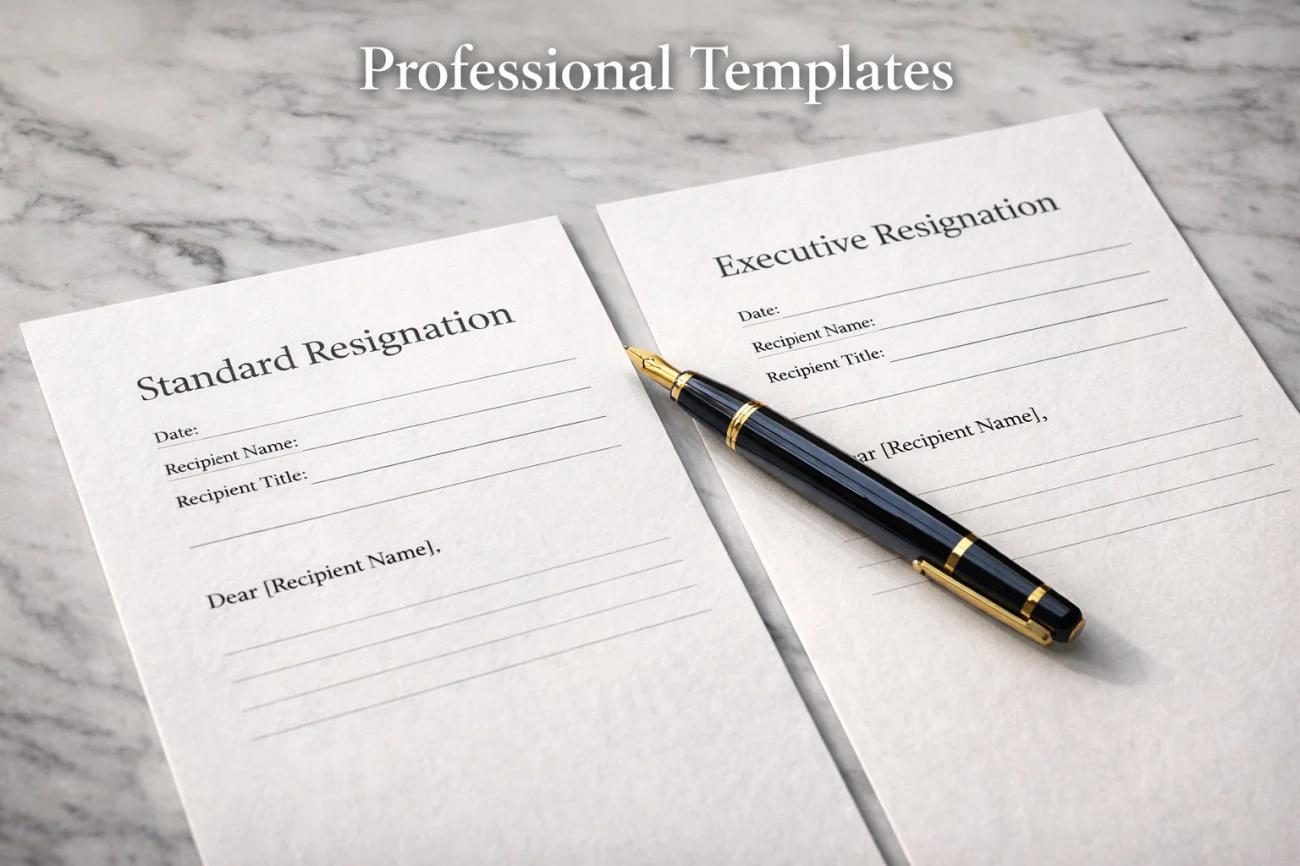
Standard Company Resignation Form
EMPLOYEE INFORMATION
Full Name: _______________________________
Employee ID: _______________________________
Job Title: _______________________________
Department: _______________________________
Manager: _______________________________
RESIGNATION DETAILS
Today’s Date: _______________________________
Last Working Day: _______________________________
Notice Period: _______ weeks
REASON FOR RESIGNATION (Optional):
☐ New Employment Opportunity
☐ Relocation
☐ Returning to School
☐ Personal/Family Reasons
☐ Retirement
☐ Other: _______________________________
FORWARDING INFORMATION
Mailing Address: _______________________________
_______________________________
Personal Email: _______________________________
Phone: _______________________________
COMPANY PROPERTY
I will return the following by my last working day:
☐ Laptop/Computer Equipment
☐ Mobile Phone
☐ Access Cards/Keys
☐ Company Credit Card
☐ Other: _______________________________
ACKNOWLEDGMENTS
☐ I certify this resignation is voluntary
☐ I acknowledge receipt of information about final pay and benefits
☐ I understand my obligations regarding confidential information
☐ I will complete exit interview if requested
Employee Signature: _______________________ Date: _______
Manager Signature: _______________________ Date: _______
HR Signature: _______________________ Date: _______
Executive/Senior Leadership Resignation Form
EXECUTIVE INFORMATION
Name: _______________________________
Title: _______________________________
Reports to: _______________________________
Effective Date: _______________________________
TRANSITION PLANNING
Proposed Interim Coverage: _______________________________
Key Projects Requiring Transition:
1. _______________________________
2. _______________________________
3. _______________________________
BOARD NOTIFICATION
Board notification scheduled for: _______________________________
Public announcement date: _______________________________
EQUITY AND COMPENSATION
Unvested equity holdings: Yes ☐ No ☐
Deferred compensation: Yes ☐ No ☐
Executive benefits requiring action: _______________________________
CONFIDENTIALITY AND NON-COMPETE
☐ I acknowledge continuing obligations under executive agreement
☐ I will cooperate with transition and succession planning
☐ I understand restrictions on post-employment activities
Executive Signature: _______________________ Date: _______
CEO/Board Chair Signature: _______________________ Date: _______
Implementing Standardized Resignation Forms
Rolling out resignation forms across organizations requires thoughtful change management and clear communication to ensure adoption and compliance.

Policy Communication
Update employee handbooks and resignation policies to reference standardized forms. Communicate changes through multiple channels – email announcements, manager briefings, intranet updates, and new employee orientation materials. Explain that forms supplement rather than replace traditional resignation letters if using hybrid approach.
Provide clear rationale for the change. Employees accept new processes more readily when they understand that standardized forms protect their interests through documentation of voluntary departure, proper final pay processing, and benefits continuation information.
Manager Training
Train managers to provide resignation forms immediately when employees give verbal notice. Forms should be readily accessible – stored in shared drives, printed in HR offices, or available through employee self-service portals. Delayed form provision creates confusion and processing delays.
Educate managers that their role is providing the form and ensuring completion, not pressuring employees about resignation decisions. The form documents a decision already made, not a tool for retention negotiation.
Digital Form Options
Consider digital resignation forms integrated with HR systems. Electronic signatures, automated field validation, and direct database integration reduce manual processing time significantly. Digital forms can trigger automated workflows immediately upon submission – IT access termination, equipment return scheduling, and exit interview coordination.
However, maintain PDF or paper alternatives for situations where digital access isn’t practical. Remote workers, employees without regular computer access, or those preferring traditional documentation should have non-digital options available.
Ensuring Form Accessibility
Make resignation forms available 24/7 through employee self-service portals. Employees shouldn’t need to request forms from HR or managers – this creates barriers during already stressful resignation situations. Easy access encourages timely, complete submissions.
Processing Completed Resignation Forms
Standardized forms enable systematic resignation processing workflows that reduce errors and ensure nothing falls through cracks.
Initial Verification
HR should verify completed forms within 24 hours of receipt. Check that all required fields are filled, dates are logical (last day after submission date), and signatures are present. Contact employees immediately about incomplete forms rather than letting issues compound.
Automated Workflow Triggers
Use resignation forms to trigger standardized workflows: IT access termination scheduling, benefits termination processing, exit interview scheduling, and replacement requisition creation. Automated workflows reduce administrative burden and ensure consistent treatment across all resignations.
Records Retention
Maintain resignation forms in employee personnel files according to legal requirements – typically seven years after separation. Digital storage with backup redundancy prevents document loss that can create problems with unemployment claims or reference verification requests years later.
Customizing Forms for Your Organization
Generic resignation forms require adaptation to specific organizational needs, industry requirements, and legal contexts.
Industry-Specific Requirements
Healthcare organizations need attestations about patient information access. Financial services require acknowledgments about regulatory obligations. Government agencies have specific clearance and security protocols. Customize forms to capture industry-specific requirements relevant to your organization.
Legal Counsel Review
Have employment attorneys review resignation forms before implementation. Legal language around voluntary separation, final pay acknowledgments, and continuing obligations varies by state and situation. Attorney review prevents forms that inadvertently create liability or fail to provide intended protections.
❓ FAQ
📋 Can companies require employees to use standardized resignation forms?
Generally yes. Employers can require specific resignation documentation formats as part of termination procedures. However, cannot refuse to accept resignation if employee submits traditional letter – employer can request form completion as additional documentation, but resignation remains effective regardless of format.
⚖️ What legal acknowledgments should resignation forms include?
Common acknowledgments: resignation is voluntary, receipt of final pay information, obligation to return company property, understanding of confidentiality requirements, and awareness that non-compete agreements remain in effect. Have employment attorney review before implementation as requirements vary by jurisdiction.
🔄 Should companies accept resignation letters instead of forms?
Best practice uses hybrid approach – accept traditional resignation letters while also requesting standardized form completion. Forms capture administrative essentials and legal acknowledgments while letters maintain professional documentation traditions. Never refuse resignation because employee didn’t use specific form.
💻 Are digital resignation forms legally valid?
Yes, with proper electronic signature verification. Digital forms integrated with HR systems offer advantages including automated workflows, field validation, and database integration. Maintain PDF or paper alternatives for situations where digital access isn’t practical or employee prefers traditional format.
📁 How long should companies retain resignation forms?
Typically seven years after separation per employment law requirements, though varies by state and industry. Store in employee personnel files with backup redundancy. These documents become critical for unemployment claims, reference verification, or employment disputes years after departure.
Final Thoughts
Resignation letter sample for company records reflects the employer perspective on departure documentation – focusing on administrative efficiency, legal protection, and data consistency rather than employee expression. Standardized forms that HR provides capture essential information systematically while integrating smoothly with organizational systems.
Effective resignation letter form for employees balances organizational needs for consistent documentation with employee desire for reasonable resignation processes. Forms with required fields ensure HR captures critical information while optional sections allow employees to provide context about departure circumstances when appropriate.
Organizations implementing standardized resignation forms gain significant administrative advantages – reduced processing errors, better legal protection, and streamlined workflows. However, maintaining flexibility through hybrid approaches that accept both forms and traditional letters demonstrates respect for professional communication traditions while achieving documentation objectives.
⚠️ Legal Disclaimer: The resignation templates, email samples, and professional guidance provided in this guide are for informational purposes only and do not constitute legal advice. Employment laws and contract requirements vary by jurisdiction and individual circumstances. Please review your employment agreement and consult your HR department and/or a qualified attorney to ensure compliance with applicable laws and policies.