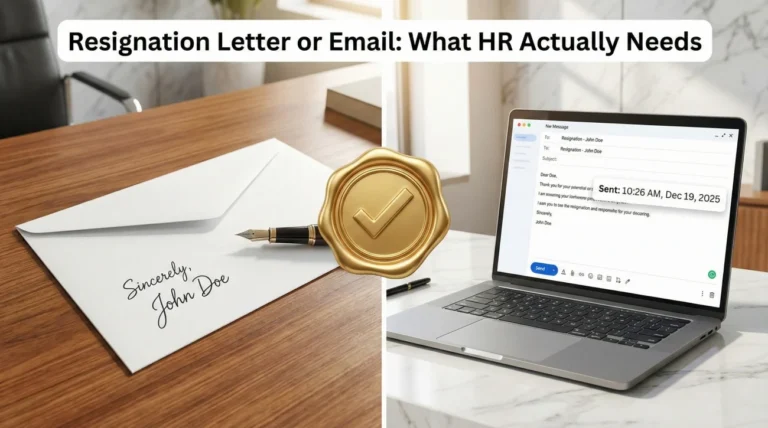

- Write it for your manager, not HR: This letter closes a relationship and protects long-term goodwill.
- Talk first, then hand the letter: Your manager should hear it from you before they see paperwork.
- Appreciation must be specific: Name one concrete moment of trust, mentorship, or growth instead of generic thanks.
- Make the exit easy to manage: Propose a clear handover with documentation, training time, and key contacts.
- If the manager is the reason you’re leaving: Stay brief, factual, and neutral, then save feedback for the exit process.
Your Manager Deserves More Than HR Paperwork
Your resignation letter to manager carries emotional weight that HR documentation never will. This letter goes to the person who fought for your raises, covered for you during emergencies, and invested time developing your skills. The relationship demands more thoughtfulness than the standard resignation template.
While your HR resignation serves administrative purposes, your manager’s copy should acknowledge the working relationship you’ve built. This doesn’t mean writing pages of sentiment – just recognizing that this person shaped your professional growth in ways that deserve specific acknowledgment.
This guide shows you how to resign to your direct supervisor in a way that preserves the relationship while handling practical transition needs. For complete resignation protocols including HR requirements, see our resignation letter etiquette guide.
The Verbal Conversation Comes First
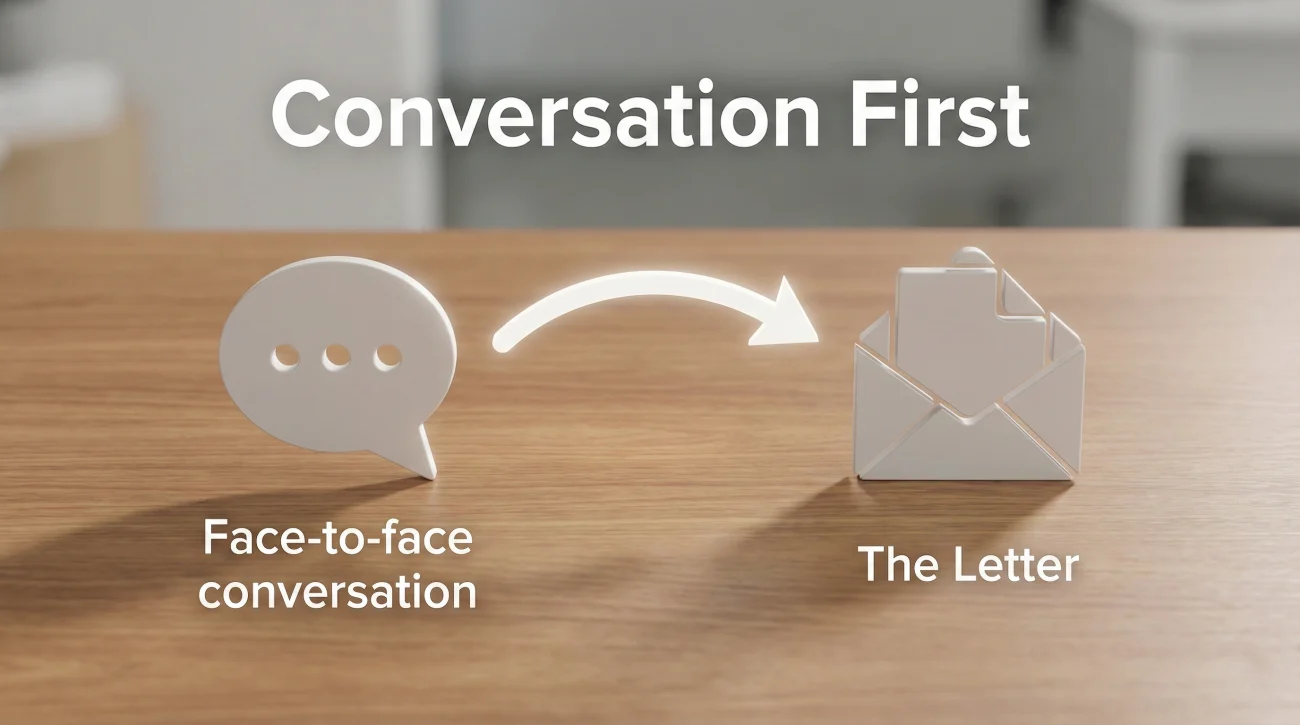
Your resignation letter to boss should never be the first time your manager learns you’re leaving. Schedule a private meeting using neutral language – “Can we talk for 15 minutes today about something important?” – without revealing the agenda in advance.
During this face-to-face conversation, deliver the news directly: “I wanted to let you know that I’ve accepted another position and will be resigning.” Give your manager time to process this information and ask questions before you hand over the written letter that makes it official.
Timing the Letter Delivery
Bring your written resignation letter to the meeting, but don’t lead with it. Have the conversation first, then present the letter at the end: “I’ve prepared a formal letter for our records.” This sequence shows respect for the human relationship before moving to administrative formality.
If your manager seems emotional or needs time to process the news, you can say: “I’ll leave this letter with you and we can discuss next steps whenever you’re ready.” This small gesture of consideration often determines whether your departure strains or strengthens the long-term relationship.
Adding Genuine Personal Appreciation

Generic gratitude – “thank you for the opportunity” – reads like template language your manager has seen dozens of times. Your resignation letter to supervisor should reference specific ways this person impacted your career development.
Mention the project where they trusted you with leadership, the skill they helped you develop, or the difficult situation where their support made the difference. One concrete example carries more meaning than three paragraphs of general praise.
What to Acknowledge Specifically
- ✓ Skills or expertise they helped you develop
- ✓ Opportunities they created that shaped your career direction
- ✓ Support during challenging projects or personal circumstances
- ✓ Mentorship that influenced your professional growth
- ✓ Trust they showed by delegating important responsibilities
Keep this acknowledgment to two or three sentences maximum. Excessive praise feels manipulative, especially when you’re simultaneously announcing you found something better elsewhere.
Proposing a Knowledge Transfer Plan

Your manager’s biggest immediate concern after your resignation is how your departure affects team deliverables. Address this directly in your letter to manager quitting by proposing specific handover actions rather than vague offers to help.
Suggest a transition meeting within the first few days of your notice period: “I’d like to schedule time this week to walk through my current projects and discuss how we can best distribute responsibilities during the transition.” This proactive approach turns your resignation from a problem your manager must solve into a process you’re actively managing together.
Transition Elements to Propose
- Comprehensive documentation of ongoing projects with current status
- Training sessions for whoever inherits your key responsibilities
- Introduction emails connecting your replacement to important contacts
- Process documentation for recurring tasks and workflows
- Calendar of upcoming deadlines and commitments
Frame these as things you want to complete rather than obligations you’re begrudgingly fulfilling. Your manager can tell the difference, and willingness to help often determines whether they provide strong future references.
Manager-Focused Resignation Letters
These direct resignation letter sample templates balance professional requirements with personal relationship acknowledgment.
Standard Manager Resignation Letter
Rachel Thompson
rachel.thompson@email.com
(617) 555-0142
April 15, 2024
James Rodriguez
Marketing Director
Cascade Technologies
Dear James,
I’m writing to formally resign from my position as Senior Marketing Specialist, with my last day being April 29, 2024. This provides the two-week notice period outlined in my employment agreement.
Working under your leadership over the past three years has significantly shaped my approach to digital marketing strategy. Your willingness to let me lead the product launch campaign last year gave me confidence in capabilities I didn’t know I had. I’m genuinely grateful for that trust and the skills I’ve developed through your mentorship.
I’d like to schedule time this week to discuss the best way to transition my current projects, particularly the Q2 campaign planning. I’ll prepare comprehensive documentation of all active initiatives and would be happy to train whoever takes over my responsibilities.
I hope we can stay in touch as my career progresses. Your guidance has been invaluable, and I look forward to maintaining our professional relationship.
Thank you for everything.
Best regards,
[Signature]
Rachel Thompson
Resignation Letter Requesting Transition Meeting
David Kim
david.kim@email.com | (415) 555-0198
May 3, 2024
Sarah Chen
Engineering Manager
DataFlow Systems
Dear Sarah,
Following our conversation this morning, I’m formally confirming my resignation from DataFlow Systems. My last working day will be May 17, 2024.
Your technical guidance during the API redesign project fundamentally changed how I approach system architecture. The weekly code review sessions we established helped me develop skills that will serve my entire career. I appreciate the time you invested in my development.
I’d like to propose a structured handover plan:
• Tuesday, May 7: Meeting to review all active projects and priorities
• Wednesday-Friday: Documentation creation and knowledge transfer sessions
• Week of May 13: Training for team members taking over my responsibilities
• Final week: Availability for questions and final project wrap-up
I’ve already started compiling documentation for the microservices I’ve been maintaining. I want to make sure the transition is as smooth as possible for you and the team.
Let’s schedule that initial meeting at your earliest convenience.
Sincerely,
[Signature]
David Kim
When Your Manager Is Why You’re Leaving

Resigning because of your manager creates uncomfortable tension. You still need a professional letter that doesn’t burn bridges, even when the relationship drove your departure decision.
Keep your letter brief and neutral. Acknowledge your time at the company without specifically praising your manager. Focus on facts: your resignation, your last day, your availability for transition support. Save honest feedback for HR exit interviews where it can potentially create positive change.
Neutral Language That Doesn’t Lie
Instead of false praise, use acknowledgment: “Thank you for supervising my work during my time here” rather than “Thank you for your excellent leadership.” The first statement is factually true without endorsing behavior you disagreed with.
You can also focus on team or company-level appreciation: “I’ve valued working with this team and contributing to company goals” shifts gratitude away from the individual manager relationship while remaining professional.
Setting Up Future Reference Requests
Your resignation letter isn’t the place to ask for recommendation letters, but it can lay groundwork for future requests. Expressing genuine appreciation for your manager’s development investment creates goodwill you can draw on later.
Wait until after your last day – ideally one to two weeks after – to request formal references. This timing lets emotions settle and gives your manager perspective on your contributions now that they’re dealing with your absence.
Maintaining Professional Connections
Mention your interest in staying connected: “I hope we can keep in touch as both our careers progress.” This signals that you value the relationship beyond your current employment, making future networking or reference requests feel natural rather than transactional.
Connect on LinkedIn during your notice period if you haven’t already. This professional platform provides a natural way to maintain contact without the awkwardness of exchanging personal contact information.
Let Your Manager Control the Team Announcement
Never tell colleagues you’re leaving before your manager announces it. Doing so undermines their authority during the exact period when you need their cooperation for smooth departure.
Ask directly: “When would you like to tell the team?” This shows respect for their leadership. Some managers announce immediately, others wait a few days to develop transition plans first. Follow their lead rather than forcing the timeline.
Notice Period Considerations
Standard two-week notice works for most situations, but complex roles might warrant longer transition time. If you manage specialized projects, consider offering three to four weeks when possible. This gesture demonstrates professionalism that influences future reference quality.
When You Need Compressed Notice
If your new employer requires a quick start, be honest: “My new position requires a start date of [date], giving me [timeframe] to transition. I understand this is shorter than ideal. How can I make this timeline as manageable as possible?” This acknowledges the inconvenience while showing commitment to minimizing disruption.
❓ FAQ
💬 Should I tell my manager in person or via email first?
Always resign in person if possible, or via video call for remote positions. Your written letter should come after the verbal conversation, not instead of it. This respects the personal relationship and gives your manager time to process the news before documentation makes it official.
📝 How detailed should my resignation letter to my manager be?
Keep it to one page maximum. Include your resignation statement, last day, brief appreciation with one specific example, and transition support offer. Your manager doesn’t need your life story or detailed reasons for leaving – save those for a separate conversation if they ask.
🤝 What if my manager asks me to stay or makes a counteroffer?
Thank them for the offer and request 24 hours to consider it seriously. Most career advisors recommend declining counteroffers – once you’ve resigned, your manager knows you were job searching, which changes the trust dynamic permanently regardless of whether you stay.
😤 How do I write a professional letter when my manager is the reason I’m leaving?
Keep it brief and factual. State your resignation, last day, and availability for transition without personal commentary. You don’t need to lie with false praise – neutral acknowledgment like “Thank you for supervising my work” is sufficient. Save honest feedback for HR exit interviews.
⏰ When should I ask my manager for a reference letter?
Wait until one to two weeks after your last day. This timing lets emotions settle and gives your manager perspective on your contributions. Asking during your resignation or notice period puts pressure on a relationship already in transition.
Final Thoughts
Your resignation letter to manager represents more than administrative paperwork – it’s the final impression you leave on someone who shaped your professional development. The care you take with this letter often determines whether your former supervisor becomes a valuable career connection or simply a name on your resume.
Managers remember how employees handled departure far more than they remember the work itself. Professional transitions that acknowledge the relationship, offer genuine transition support, and maintain respectful communication create advocates who enthusiastically recommend you for years after you leave.
Your manager invested time developing your skills and defending your career interests. A thoughtful resignation letter that recognizes this investment while handling practical transition needs honors that relationship even as you move on to new opportunities.
⚠️ Legal Disclaimer: ResignSmartly provides general informational guidance about resignation, workplace communication, notice periods, handovers, and career transitions. Content does not constitute individualized legal advice. Employment laws, contracts, workplace policies, and individual circumstances vary, so review the requirements that apply to your situation and consult an appropriate qualified professional when needed.