- Reality: Exit interviews are usually optional unless your contract clearly makes them a condition for specific benefits.
- Risk: Verbal feedback can be misquoted, get emotional fast, and quietly affect future references, so saying less can be smarter.
- Boundary: Decline early with a firm, polite line and keep repeating one reason like focusing on handover and closing work cleanly.
- Script: Acknowledge the process, refuse the meeting, then offer transition help and documentation so HR has nothing to push back on.
- Alternative: If you want to help, offer brief written feedback focused on process, not people, and keep a copy for your records.
Deciding to leave a company is a significant milestone that often comes with a complex mix of paperwork and final procedures. One of the most common requests from Human Resources during this time is the exit interview. While these meetings are designed to help companies understand why employees leave, they are not always a mandatory part of the departure process. Knowing how to handle the resignation letter exit interview phase requires a balance of professional courtesy and firm personal boundaries.
The exit interview is often framed as a “casual chat” or a “feedback session,” but for many employees, it can feel like an interrogation or a platform for unnecessary conflict. If your experience at a company has been challenging, or if you simply prefer to move forward without a formal debrief, you have the right to decline. Understanding that the exit interview is generally a voluntary process is the first step in taking control of your professional narrative.
Many professionals worry that refusing to participate will burn bridges or make them appear uncooperative. However, when handled with the right approach, a polite refusal can actually reinforce your professionalism. It shows that you are focused on a clean transition and that you prioritize efficiency over potentially unproductive conversations. In the following sections, we will explore why you might choose to skip this meeting and how to communicate that decision effectively.
The Voluntary Nature of Final Feedback Sessions
Most corporate policies present the exit interview as a standard step, but in the vast majority of cases, it is entirely optional. Unless your employment contract explicitly states that participation is a condition for receiving certain benefits – which is rare and often legally questionable – you are under no obligation to attend. Recognizing this allows you to evaluate whether the meeting serves your best interests or merely those of the employer.
When you prepare your resignation letter declining exit interview requests, you are exercising your right to privacy. There are numerous reasons why a professional might choose to decline. Perhaps the reasons for leaving are highly personal, or perhaps the culture was so toxic that you feel your feedback would fall on deaf ears. In some cases, employees feel that they have already shared their concerns through proper channels during their tenure, making a final meeting redundant.
Regardless of your motivation, the key is to remain consistent. If you decide to decline, do so clearly and early in the resignation process. This prevents HR from scheduling multiple follow-ups and allows both parties to focus on the technical aspects of the handover. Professionalism at this stage ensures that your final impression is one of decisiveness and clarity, rather than hesitation.
Evaluating the Risks of Exit Interview Compliance
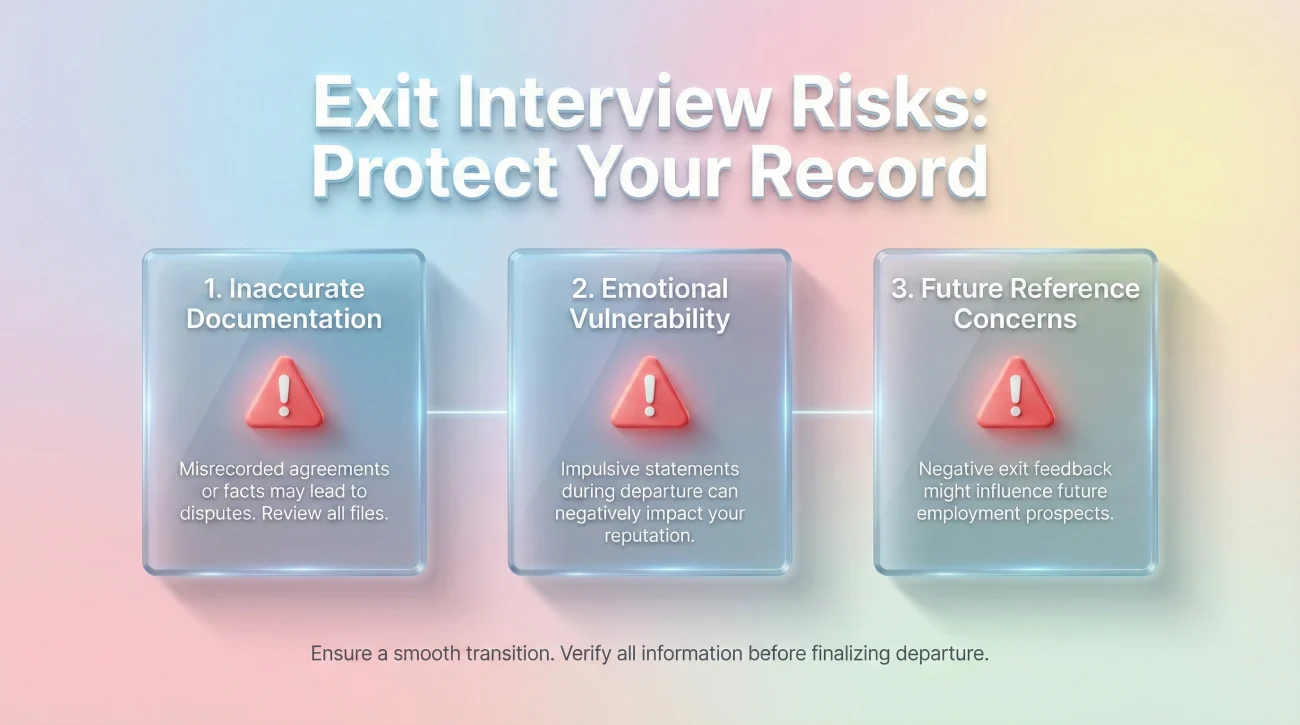
While HR often claims that exit interviews are meant for organizational improvement, the data collected can sometimes be used in ways that do not benefit the departing employee. Verbal feedback can be misconstrued, or emotional responses during a stressful time might be recorded as “difficulty with management.” For many, the risks of saying too much outweigh the benefits of providing honest feedback.
- 🚩 Inaccurate Documentation: Spoken feedback is subject to the interpretation of the HR representative taking notes.
- 🚩 Emotional Vulnerability: Discussing sensitive issues in person can lead to unplanned emotional outbursts that look unprofessional.
- 🚩 Future Reference Concerns: Negative feedback, even if constructive, can sometimes influence how a manager views you for future reference requests.
By opting for a refusing exit interview letter instead of an in-person meeting, you maintain a written record of your professional stance. This approach minimizes the chance of your words being taken out of context. It also allows you to focus your energy on ensuring a smooth transition for your colleagues, which is often a much more valuable contribution to the company than a thirty-minute feedback session.
Setting Professional Boundaries with HR
Human Resources departments are trained to be persistent. They may follow up your resignation with several emails or calendar invites. Setting a boundary early is essential for your peace of mind. You do not need to provide a deep psychological reason for your refusal; “I prefer to focus my final days on the handover” is a complete and professional answer.
Establishing these boundaries is a core part of resignation letter etiquette. It demonstrates that you understand the value of your time and theirs. If you feel pressured, remember that your primary responsibility during your notice period is to complete your assigned tasks and document your processes. Anything beyond that is a courtesy, not a requirement.
A Strategic Approach to Declining
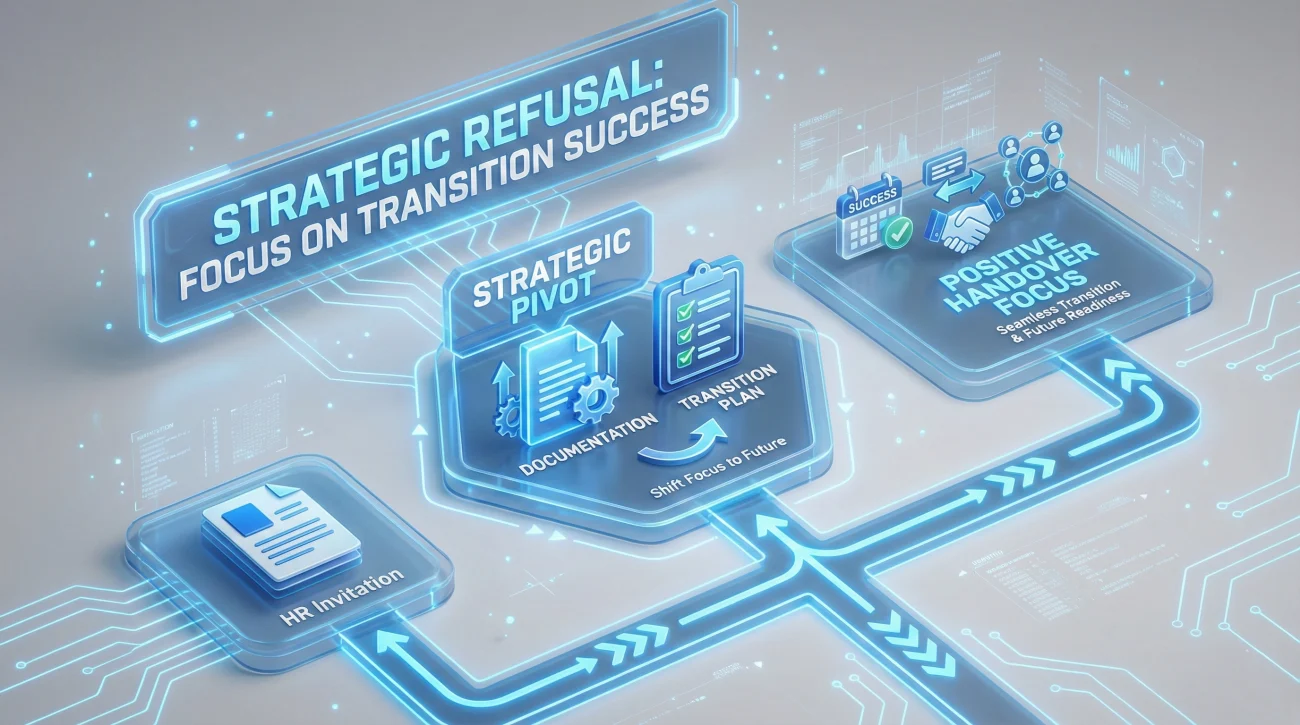
When you decide to decline, the goal is to be firm but polite. You want to acknowledge the company’s process without necessarily participating in it. This can be done by including a short paragraph in your initial resignation letter or by sending a separate follow-up once the request is made. The language should be neutral and devoid of any lingering resentment.
Avoid using phrases like “I don’t see the point” or “It won’t change anything.” Instead, pivot to positive productivity. Phrases such as “to ensure a seamless transition of my duties” or “to prioritize the completion of my current projects” frame your refusal as a commitment to the company’s success rather than a rejection of its policies. This subtle shift in language makes it very difficult for HR to argue against your decision.
Sample Templates for Declining the Interview
Choosing the right format for your refusal depends on your relationship with the company and the specific circumstances of your departure. Here are two distinct approaches that maintain a high level of professionalism.
Direct Resignation Letter with Refusal Clause
[Your Name]
[Your Address]
[City, State ZIP]
[Date]
[Recipient Name]
[Title]
[Company]
Dear [Name],
Please accept this letter as formal notification that I am resigning from my position as [Job Title], effective [Your Last Day].
I would like to take this opportunity to thank you for the professional experiences I have gained at [Company]. Regarding the standard exit interview process, I would like to respectfully decline participation at this time. My priority during my remaining tenure is to ensure that all my projects are fully documented and that the transition for my successor is as smooth as possible.
I wish the team and the company nothing but the best for the future.
Sincerely,
[Your Signature]
[Your Name]
Email Response for a Refusing Exit Interview Letter
Subject: Regarding Exit Interview Request – [Your Name]
Dear [HR Contact Name],
Thank you for reaching out regarding the exit interview process. While I appreciate the opportunity to provide feedback, I would like to decline the invitation for a formal meeting.
I have enjoyed my time with [Company] and prefer to spend my final weeks focusing exclusively on the transition of my current responsibilities and the handover of my pending files. I want to ensure the team is well-positioned for success after my departure.
Thank you for your understanding and for your support during this transition.
Best regards,
[Your Name]
Making the Handover Your Primary Focus

The most effective way to deflect pressure for an exit interview is to be exceptionally helpful in other areas. If you provide a comprehensive handover document, organize your digital files, and train your temporary replacement, HR and management will be much less likely to insist on a feedback session. Your actions speak louder than any verbal debrief ever could.
A well-organized departure is the best defense against any potential criticism. When you leave a trail of organized data and clear instructions, you prove your value and your professionalism. This makes the “missing” exit interview a non-issue in the eyes of the company. It shifts the focus from “why you are leaving” to “how well you prepared the company for your absence.”
Understanding the Legal and Contractual Landscape
In most jurisdictions, employment is “at-will,” meaning either party can end the relationship for any reason. This at-will status generally extends to the exit interview. However, it is always wise to double-check your employee handbook or initial offer letter. Some companies try to tie “bonus eligibility” or “accrued leave payouts” to the completion of exit paperwork.
If you find yourself in a situation where the company is attempting to withhold earned compensation based on your refusal, you may need to consult a legal professional. In many regions, withholding earned wages is illegal, regardless of whether you attend a meeting. Knowing your local labor laws provides you with the confidence to stand your ground if HR becomes overly aggressive during the transition phase.
Long-Term Impact on Your Professional Reputation
Your reputation is built over years but can be impacted by how you handle your final two weeks. Declining an exit interview does not damage your reputation if it is done with grace. In fact, many senior executives skip exit interviews because their time is considered too valuable for standard HR intake forms. Viewing yourself with that same level of professional respect can change your perspective on the process.
Focus on leaving on a high note. Your colleagues will remember the help you gave them in your final days, not whether you sat in a room with an HR representative for an hour. By prioritizing these peer-to-peer relationships, you ensure that your professional network remains strong and supportive, which is far more important for your long-term career growth than any corporate feedback loop.
Offering Written Feedback as an Alternative
If you genuinely want to help the company but simply do not want the stress of an in-person meeting, you can offer a middle ground. Inform HR that while you are declining the interview, you are happy to provide a brief written summary of your experience or complete a digital survey if one is available. This often satisfies the “data collection” requirement of HR without requiring a face-to-face interaction.
Written feedback is often safer because it allows you to edit your thoughts and ensure your tone is constructive. It also creates a permanent record that you can keep for your own files. If you choose this path, keep your comments high-level and focused on processes rather than personalities. This ensures that your feedback is viewed as professional and helpful rather than personal or petty.
❓ FAQ
🛑 Can my employer withhold my final paycheck if I refuse the exit interview?
In almost all cases, no. Your final paycheck is for work already performed, and labor laws generally prohibit employers from withholding wages for failing to participate in optional administrative tasks like an exit interview.
📧 Should I mention the exit interview refusal in my initial resignation email?
It is not strictly necessary, but doing so can save time. If you already know you want to decline, including a brief, polite sentence about focusing on the transition can prevent unnecessary scheduling requests later.
🤝 What if my boss asks for a private feedback meeting instead of HR?
The choice is yours. If you have a good relationship with your manager, a private chat might be beneficial. However, if that manager is part of the reason you are leaving, you can use the same “focusing on handover” excuse to decline politely.
💼 Does skipping the interview look bad on my personnel file?
Most HR files simply note “declined” or “did not participate.” As long as you followed resignation letter etiquette and completed your work duties, it rarely has a negative impact on future background checks or internal rehire eligibility.
📝 Can I change my mind and decide to do it later?
Once you have left the company, your obligation ends entirely. While you could technically reach out later, most companies want the data while you are still an employee. It is usually best to make a final decision before your last day and stick to it.
Final Thoughts
Exiting a company is as much about how you leave as it is about where you are going. Choosing to decline an exit interview is a valid professional choice that allows you to maintain your privacy and focus your energy where it matters most: on your future and the colleagues you are leaving behind. By handling the situation with clarity and grace, you ensure that your departure is defined by your contributions and your professionalism.
The resignation letter exit interview phase doesn’t have to be a source of stress. When you approach it with a plan and a clear understanding of your rights, you can navigate the process with total confidence. Remember that your time is your most valuable asset, and how you choose to spend your final days at a company is ultimately up to you.
Stay focused on your goals, keep your final interactions positive, and walk away knowing that you have handled your departure with the utmost integrity. A clean break is often the best foundation for a successful new beginning in your next professional chapter.
⚠️ Legal Disclaimer: ResignSmartly provides general informational guidance about resignation, workplace communication, notice periods, handovers, and career transitions. Content does not constitute individualized legal advice. Employment laws, contracts, workplace policies, and individual circumstances vary, so review the requirements that apply to your situation and consult an appropriate qualified professional when needed.