- Why it matters: Your envelope is the first impression, and sloppy addressing can undermine an otherwise solid resignation.
- Delivery choice: Hand delivery stays simple (Name, Title, Optional Confidential), while mailing needs full business addressing plus return address and postage.
- Confidential markings: Use them when assistants or mailrooms handle delivery, and skip them when you hand it directly in a private meeting.
- Addressing style: Typed looks most formal and legible, handwritten can fit smaller or casual workplaces if your writing is clean.
- Execution details: Deliver at calm times, coordinate with the resignation conversation, and avoid common mistakes like wrong names, unsealed envelopes, or damaged stationery.
The Overlooked Detail That Signals Professionalism
A resignation letter envelope might seem like a trivial detail when you’re navigating the emotional weight of leaving your job. But the envelope’s addressing and presentation create your resignation’s first impression before anyone reads the actual letter inside.
Professional envelope formatting signals that you take your resignation seriously and respect formal business communication protocols. Conversely, a crumpled envelope with recipient’s name scribbled in pen suggests carelessness that colors how your manager interprets your resignation letter’s content.
This guide covers addressing resignation letter envelope standards for both hand delivery and mailed submissions, including when and how to mark envelopes as confidential. For complete resignation guidance, see our resignation letter etiquette guide.
Hand Delivery vs Mailed Envelopes
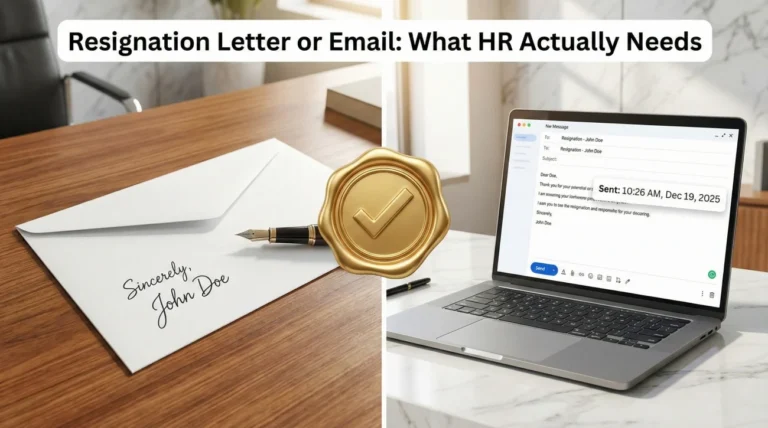
The distinction between hand delivered resignation letter envelope and mailed submissions determines your addressing format and formality requirements.
| Hand Delivery | Mailed Delivery |
|---|---|
| ✓ Simpler addressing (name and title only) | ✓ Complete formal addressing (full business letter format) |
| ✓ No postage required | ✓ Requires proper postage and return address |
| ✓ Can use “Confidential” marking freely | ✓ “Confidential” marking required if using company mail |
| ✓ Delivered during business hours personally | ✓ Arrives through mail system on postal schedule |
| ✓ Enables verbal conversation alongside written notice | ✓ Written notice arrives independently of conversation |
When to Hand Deliver
Hand delivery works best when you’re resigning in person during a scheduled meeting with your manager. You have the verbal conversation, then present the sealed envelope containing formal written documentation. This approach combines personal touch with professional documentation.
Hand delivery also ensures immediate receipt without relying on postal timing or internal mail systems. You control exactly when your manager receives the letter, preventing situations where HR learns of your resignation before your direct supervisor.
When to Mail
Mail delivery suits situations where you work remotely, your manager travels frequently, or you’re providing resignation notice from a distance. Certified mail with return receipt provides proof of delivery timing that matters when notice periods begin on specific dates.
Some employment contracts specify mailed resignation requirements. Review your employment agreement before deciding delivery method – contract terms supersede standard practices.
Hand Delivery Envelope Format
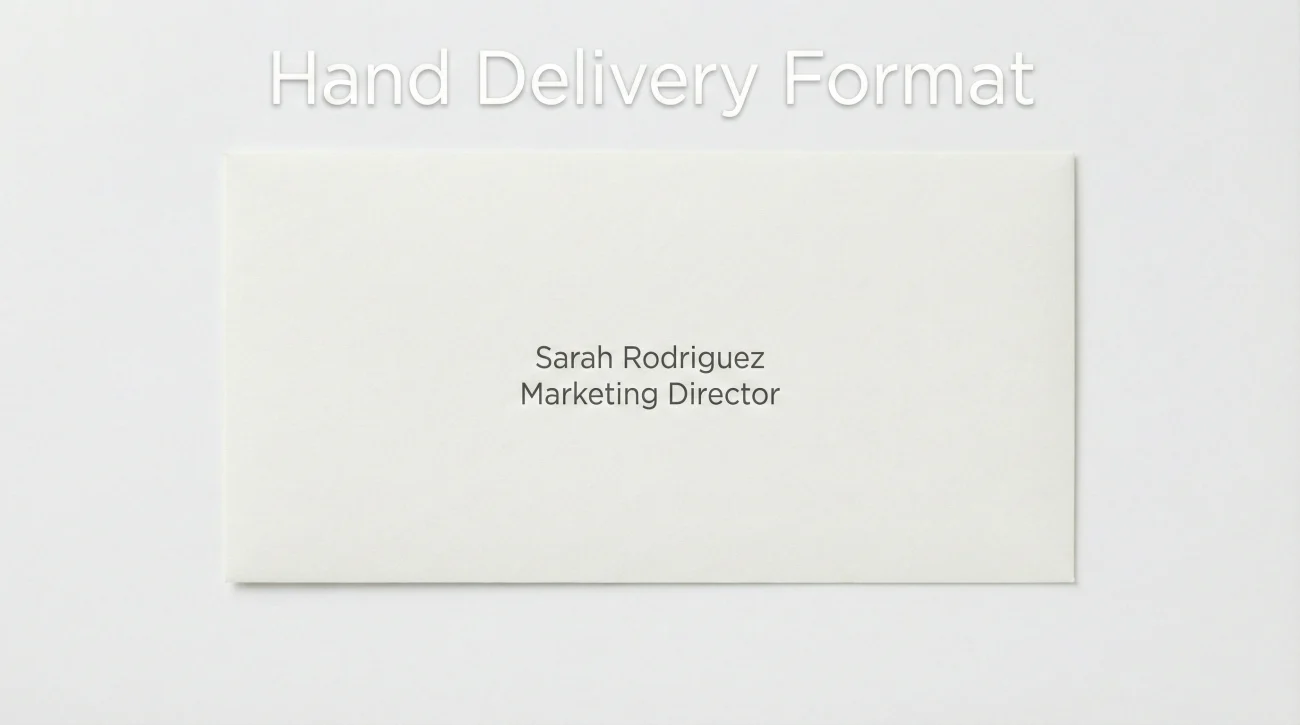
For what to write on resignation envelope when hand delivering, simplicity and clarity take priority over extensive formal addressing.
Basic Hand Delivery Format
CONFIDENTIAL
Sarah Rodriguez
Marketing Director
This minimal format includes the recipient’s name, title, and optional confidential marking. No return address or company address needed since you’re physically handing the envelope directly to the recipient.
Enhanced Format (More Formal)
PERSONAL AND CONFIDENTIAL
Ms. Sarah Rodriguez
Director of Marketing
Cascade Solutions, Inc.
This version adds courtesy title (Ms., Mr., Dr.) and full company name. Use this format for senior executives, formal corporate environments, or when your relationship with the recipient is purely professional rather than personal.
Envelope Selection
Use standard business envelopes – white or off-white, #10 size (4 1/8″ x 9 1/2″). Avoid colored envelopes, decorative patterns, or casual stationery. Your resignation envelope should match professional correspondence standards your company uses for important documents.
Ensure the envelope is clean, uncreased, and properly sealed. A wrinkled envelope pulled from your bag after two days of carrying it around undermines the professional impression your carefully written resignation letter creates.
Mailed Envelope Format
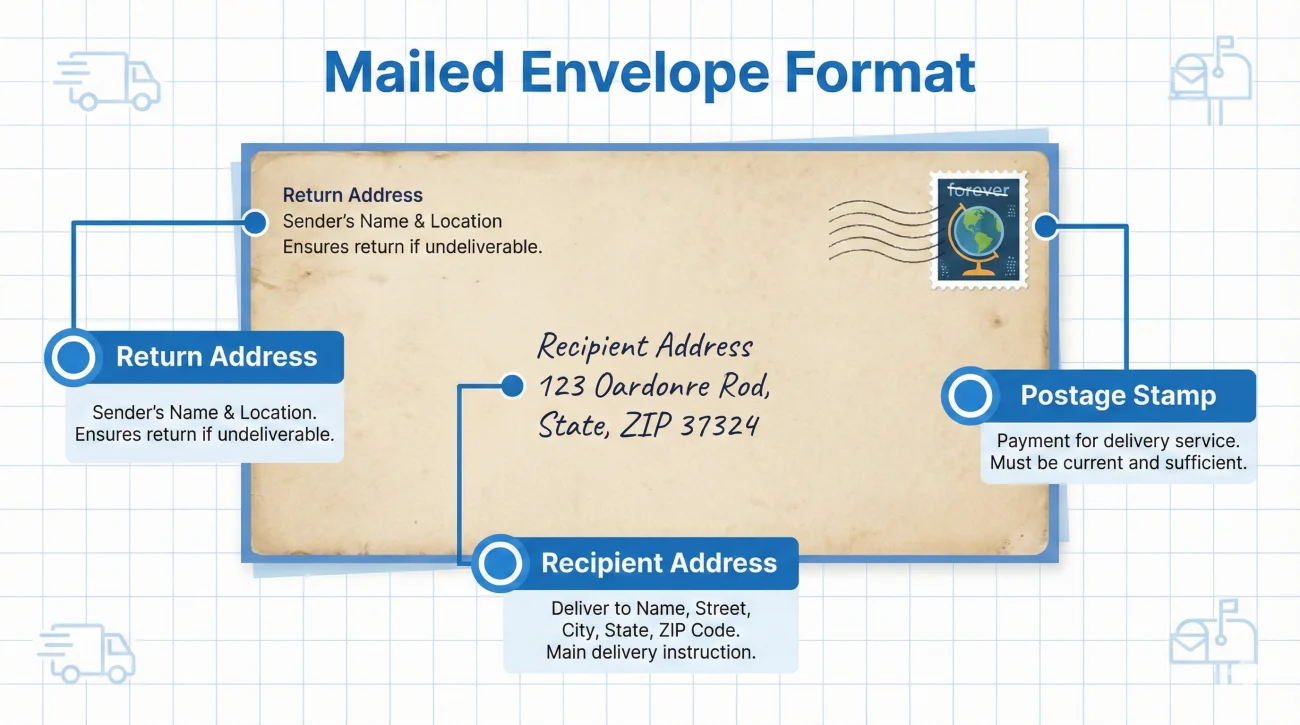
Mailed resignations require complete business letter addressing that postal services and company mail rooms use for routing.
Standard Mailed Format
Your Name
Your Street Address
City, State ZIPCONFIDENTIAL – PERSONAL
Ms. Sarah Rodriguez
Director of Marketing
Cascade Solutions, Inc.
1200 Business Park Drive
Portland, OR 97201
Return address appears in top left corner. Recipient’s address appears in center of envelope. “CONFIDENTIAL – PERSONAL” marking appears between addresses or above recipient’s name to alert mail room staff this requires special handling.
Certified Mail Format
Use certified mail with return receipt requested when you need proof of delivery date. This documentation becomes critical if notice periods in your employment contract trigger on receipt date rather than resignation date.
The certified mail receipt provides legal evidence of exactly when your employer received your resignation. Courts accept postal service documentation as reliable proof in disputes about notice period compliance or resignation timing.
International Mailing Considerations
If mailing resignation internationally – resigning from overseas position or sending to company’s international headquarters – include country names in both return and recipient addresses. Use airmail service and expect 7-14 day delivery depending on destination.
Some countries require customs declarations even for personal correspondence. Check destination country requirements to avoid mail delays that could affect your resignation timing.
Using “Confidential” Markings Appropriately
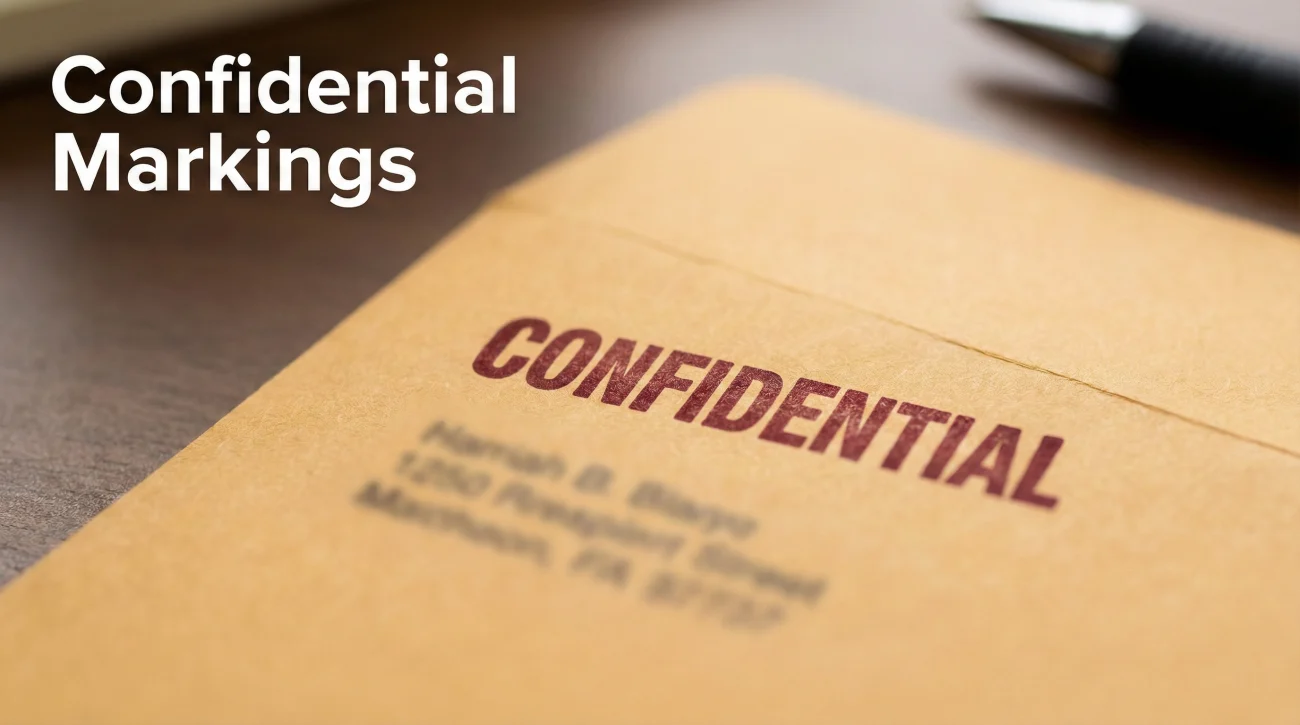
The “CONFIDENTIAL” notation on your resignation envelope serves specific purposes beyond appearing official. Understanding when and why to use confidential markings helps you protect your resignation’s privacy appropriately.
Why Mark Envelopes Confidential
Confidential markings alert assistants, mail room staff, and office managers that the envelope should go directly to the named recipient unopened. This prevents your resignation news from spreading through the organization before your manager receives official notice.
In companies where assistants routinely open executive mail, confidential markings signal that this particular envelope requires different handling. Most administrative professionals understand and respect confidential markings, delivering such envelopes sealed directly to the intended recipient.
Confidential Marking Variations
- ✓ CONFIDENTIAL – Standard marking, appropriate for all situations
- ✓ PERSONAL AND CONFIDENTIAL – Emphasizes personal nature, signals higher urgency
- ✓ PRIVATE – Less formal alternative, same effect
- ✓ FOR ADDRESSEE ONLY – Explicit instruction for mail handlers
Place confidential markings on the front of the envelope, either centered above the recipient’s address or in the top left corner near the return address. Use all capital letters and consider underlining for emphasis.
When to Skip Confidential Markings
If you’re handing your envelope directly to your manager during a private meeting, confidential markings become unnecessary. The envelope passes from your hand to theirs – no intermediaries exist who might breach confidentiality.
Similarly, if your workplace culture is extremely casual and everyone knows everyone’s business regardless of markings, confidential notations might seem performative rather than functional. Assess your specific workplace before deciding whether formality serves purpose or appears excessive.
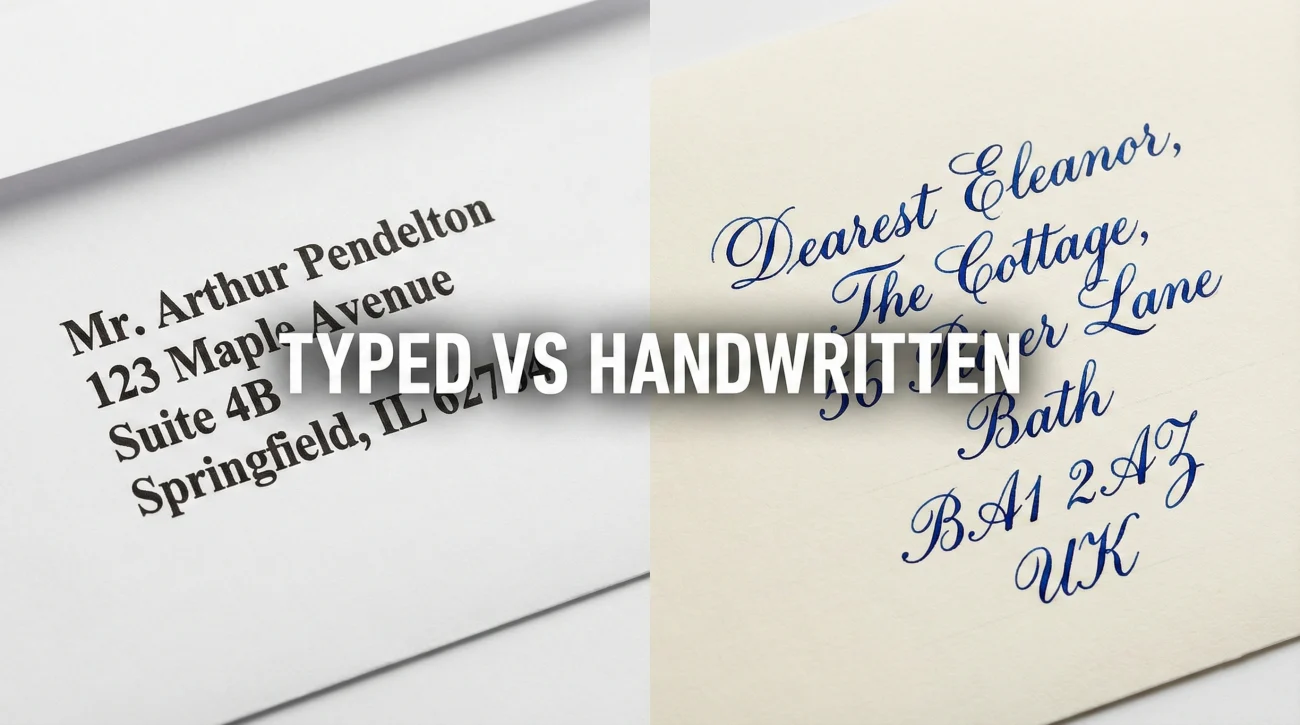
Typed vs Handwritten Addressing
The debate between computer-printed and handwritten envelope addressing depends on formality level, relationship quality, and your handwriting legibility.
Computer-Printed Addressing
Typed addressing looks cleaner, ensures perfect legibility, and signals maximum formality. Use computer printing for:
- Mailed resignations where postal workers need clear addresses
- Large corporations with formal business cultures
- Resignations to executives you don’t know well personally
- Situations where your handwriting is difficult to read
Print addresses using professional fonts – Times New Roman, Arial, or Calibri in 11-12 point size. Avoid decorative fonts that look unprofessional or reduce legibility.
Handwritten Addressing
Handwritten addressing adds personal touch appropriate for smaller companies, casual work environments, or managers you’ve worked with closely for years. The human element shows thoughtfulness and care.
Use blue or black ink only – never red, green, or other colors that appear unprofessional in business correspondence. Write carefully and legibly. If you make errors, start with a new envelope rather than using correction tape or crossing out mistakes.
Hybrid Approach
Some professionals use printed mailing addresses (for postal accuracy) while handwriting the recipient’s name for personal touch. This combination balances legibility with personalization effectively.
Timing Your Envelope Delivery
When you deliver your resignation envelope matters as much as how you format it. Strategic timing ensures your resignation receives appropriate attention rather than getting lost in daily chaos.
Optimal Delivery Times
For hand delivery, mid-morning (10-11 AM) or mid-afternoon (2-3 PM) works best. Avoid first thing Monday morning when managers face overwhelming email backlogs, and skip late Friday afternoon when attention shifts to weekend plans.
If mailing, send Monday or Tuesday to ensure weekday delivery. Friday deliveries risk envelopes sitting unopened through the weekend, delaying your notice period start date.
Coordinating with Resignation Meeting
Schedule your resignation meeting first, then bring the sealed envelope to that meeting. Have the verbal conversation, then present the envelope: “I’ve prepared formal written notice for your records.” This sequence respects the personal relationship while providing necessary documentation.
Never send the envelope before having the conversation. Your manager should learn about your resignation from you directly, not by opening an envelope delivered by mail room staff.
Common Envelope Mistakes to Avoid
These addressing and presentation errors create unprofessional impressions that undermine otherwise excellent resignation letters.
Mistakes That Damage Presentation
- ✗ Using damaged, wrinkled, or stained envelopes
- ✗ Addressing to wrong person or misspelling recipient’s name
- ✗ Forgetting to seal envelope before delivery
- ✗ Using office supplies (company envelopes) for personal resignation
- ✗ Overly casual addressing (first name only without title)
- ✗ Including emoticons, decorative stickers, or unprofessional elements
- ✗ Writing “URGENT” or other attention-grabbing language unnecessarily
Pre-Delivery Quality Check
Before delivering your resignation envelope, verify: recipient name spelled correctly, title accurate, envelope clean and properly sealed, addressing clearly legible, and appropriate confidential marking if needed. These simple checks prevent embarrassing mistakes that distract from your resignation’s substance.
❓ FAQ
✉️ Should I always put “Confidential” on my resignation envelope?
Use confidential markings when delivering through mail systems or office assistants who might open mail. Skip it when handing directly to your manager in private meeting. The marking protects privacy by signaling the envelope should go unopened to the named recipient only.
🖨️ Is computer-printed or handwritten addressing more professional?
Computer printing ensures perfect legibility and looks more formal, making it ideal for mailed resignations and corporate environments. Handwritten addressing adds personal touch appropriate for smaller companies or close working relationships. Both are acceptable – choose based on your workplace culture.
📬 Should I mail my resignation or deliver it in person?
Hand delivery is preferred when possible because it enables having the resignation conversation while presenting written documentation. Mail resignation only if working remotely, your manager is unavailable for meetings, or your employment contract specifically requires mailed notice.
📋 What information must appear on a resignation envelope?
Minimum: recipient’s name and title. For hand delivery, this suffices. For mailed delivery, add your return address, recipient’s complete business address, and optional confidential marking. Ensure recipient name spelling and title are accurate.
⏰ When should I deliver my resignation envelope?
Mid-morning (10-11 AM) or mid-afternoon (2-3 PM) on Tuesday through Thursday. Avoid Monday mornings (overwhelming email backlogs) and Friday afternoons (weekend focus). Coordinate envelope delivery with scheduled resignation meeting – have conversation first, then present sealed envelope.
Final Thoughts
Your resignation letter envelope creates the first physical impression of your departure professionalism. Clean presentation, proper addressing, and appropriate confidential markings signal that you take your resignation seriously and respect formal business communication standards.
While the envelope might seem like a minor detail compared to your resignation letter’s content, these small formatting choices accumulate to create overall impressions of your judgment and professionalism. The manager who receives a perfectly addressed envelope in pristine condition starts reading your resignation letter with positive expectations about your character.
Whether hand delivering or mailing, typed or handwritten, marked confidential or plain – choose addressing resignation letter envelope approaches that match your workplace culture and relationship with your manager. Professional envelope presentation demonstrates the same attention to detail that made you valuable as an employee throughout your tenure.
⚠️ Legal Disclaimer: The resignation templates, email samples, and professional guidance provided in this guide are for informational purposes only and do not constitute legal advice. Employment laws and contract requirements vary by jurisdiction and individual circumstances. Please review your employment agreement and consult your HR department and/or a qualified attorney to ensure compliance with applicable laws and policies.