- Why the last two weeks matter: Peak-End Rule means people remember how you leave, so your notice period is reputation-building time, not coasting time.
- Adopt the Alumni mindset: Treat resigning like “graduating” and convert bosses, peers, and clients into long-term advocates instead of burning bridges.
- Run a simple 2-week protocol: Week 1 controls the narrative with 1:1 stakeholder chats and a transition plan, Week 2 builds legacy through clean handover and a clear final send.
- Use strategic gratitude, not generic goodbyes: Write specific thank-you messages to your manager, mentors, and team so your exit anchors positive memory.
- Protect future upside on the way out: Ask for references and LinkedIn recommendations while goodwill is fresh, keep exit interview feedback safe, and maintain relationships with a light 3-6-12 touchpoint rhythm.
We obsess over the “First 90 Days.” We agonize over the interview outfit, the handshake, the onboarding energy. Yet, behavioral psychology teaches us a counter-intuitive truth: humans judge an experience largely by how it ends. This is the Nobel Prize-winning concept known as the “Peak-End Rule.” How you navigate your exit defines your professional narrative far more than your tenure. Mastering resignation etiquette is not merely about politeness; it is a cold, calculated career strategy that transforms a vulnerability into a lifelong asset.
Most professionals treat the resignation notice period as a “lame duck” session. It becomes a time to coast, to disconnect mentally, and to watch the clock tick down. This is a strategic error of massive proportions. The final two weeks are, paradoxically, the most critical period of your entire employment. Why? Because this is when your reputation solidifies into concrete memory.
Think of your career not as a ladder, but as a complex, interconnected web. The manager you leave today might be the Vice President at your dream company in five years. The junior colleague you train during your handover might refer you for a massive contract a decade from now. Relationships don’t end when payroll stops; they evolve. If you burn bridges, you isolate yourself on an island. If you build them, you create a safety net that spans the entire industry.
This comprehensive guide is your playbook for the graceful exit. We will move far beyond basic courtesies (“Don’t steal the stapler”) to explore advanced strategies: securing ironclad references, navigating the treacherous waters of the exit interview, crafting impact-heavy gratitude messages, and turning former colleagues into a powerful “Alumni Network” that works for you while you sleep.
The Strategic Mindset: From “Quitter” to “Alumni”
In the modern corporate ecosystem, the world is incredibly small. Industries are tight circles where people circulate constantly. A “scorched earth” exit doesn’t just hurt you at Company A; it whispers your name to Company B, C, and D. Professional reputation is a currency that takes years to earn and exactly five minutes of venting to spend.
When you submit your resignation, you trigger a transition phase that requires a radical shift in mindset – from “Employee” to “Alumni.”
The “Alumni” Mental Model
Top-tier universities and elite consulting firms like McKinsey or BCG thrive on their alumni networks. They don’t view ex-employees as “traitors”; they view them as “ambassadors.” You need to adopt this mindset for yourself immediately. You are not “quitting”; you are “graduating” to a new phase while retaining your emotional and professional stock in the alma mater.
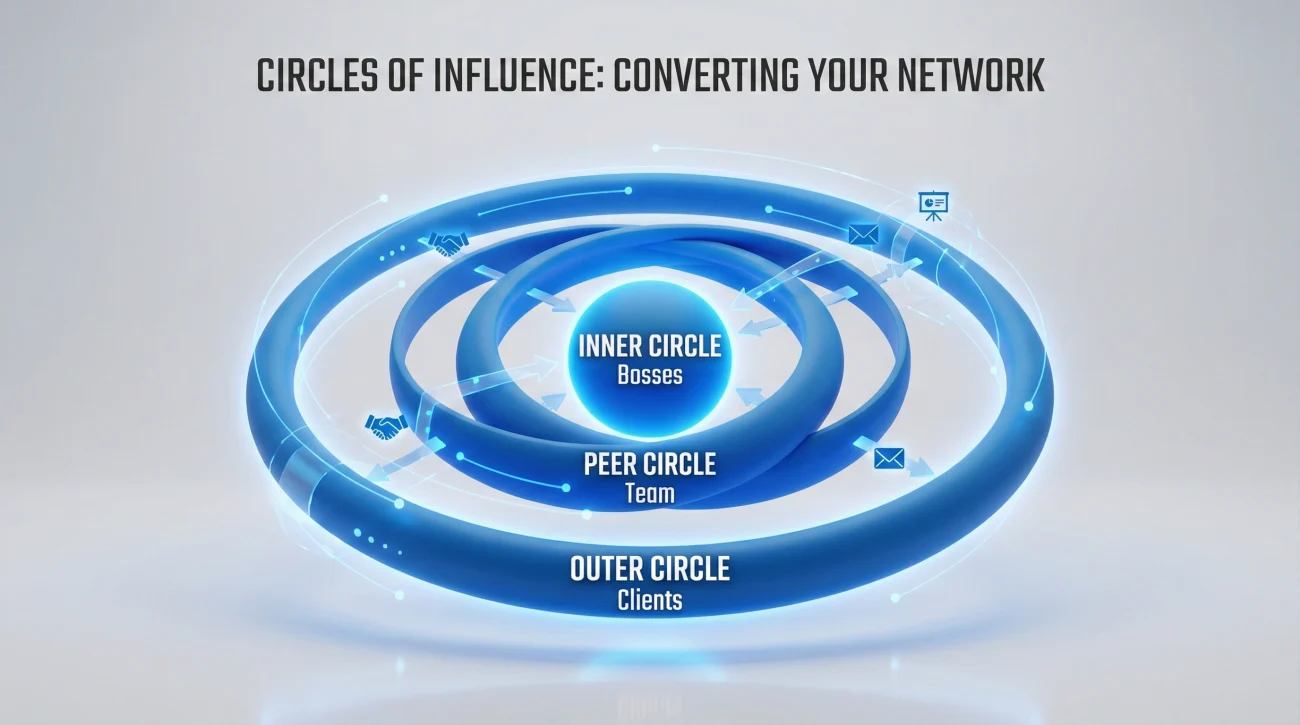
Your strategic goal during this transition is to convert three distinct circles of influence:
- The Inner Circle (Bosses & Mentors): These are your power brokers. You must convert them from supervisors into lifelong advocates who will vouch for your character when you aren’t in the room.
- The Peer Circle (Teammates): These are your future collaborators. You must convert them from co-workers into industry contacts who will tip you off about unlisted job openings.
- The Outer Circle (Clients & Vendors): These are your market value. You must convert them from company assets into your personal professional network.
This shift begins the moment you click send on your resignation letter. For a foundational understanding of how to initiate this process formally without triggering panic, you can review our step-by-step guide on how to write a resignation email that sets the right tone from day one.
The 2-Week Countdown: A Day-by-Day Etiquette Protocol
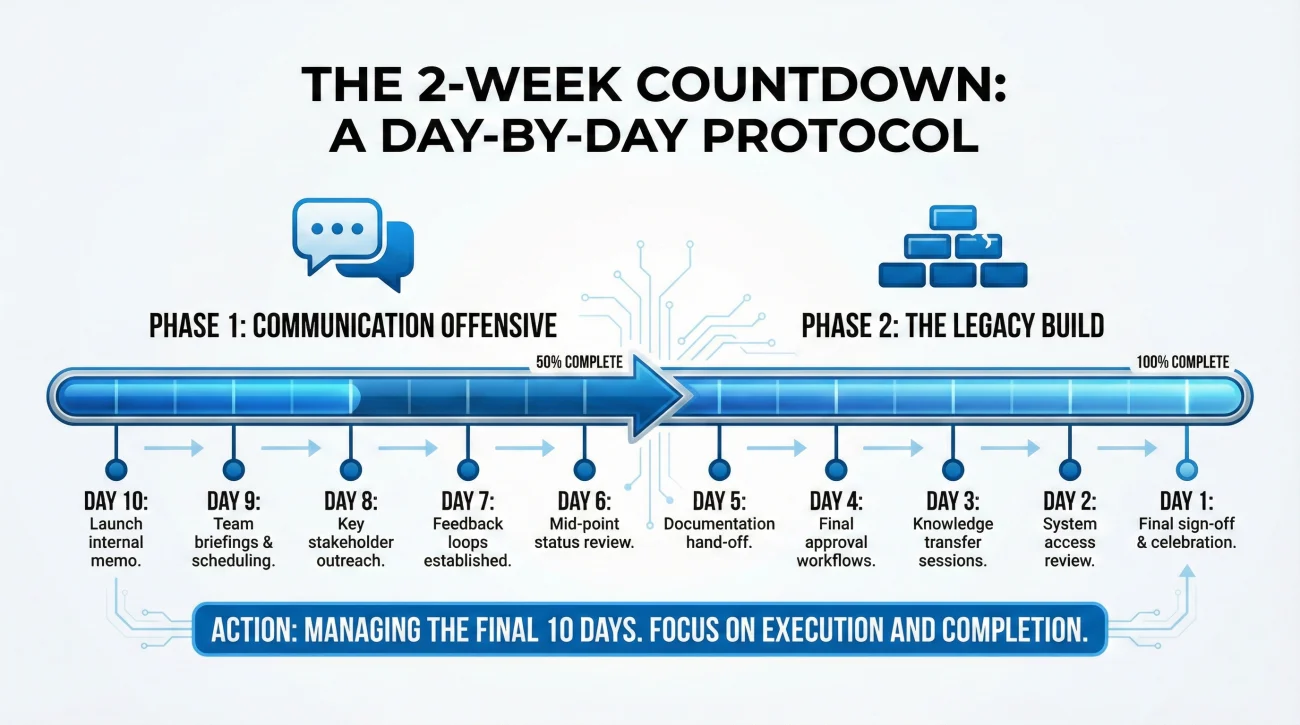
Etiquette is not a feeling; it is a series of actions. The ambiguity of “what should I be doing?” often leads to anxiety. Here is a structured protocol to manage your reputation during the notice period.
Week 1: The Communication Offensive
The first week is about controlling the narrative. Silence breeds rumors. If you don’t tell your story, the office gossip mill will invent one for you (“Did she get fired?”, “Is she going to a competitor?”).
- Day 1-2: Inform key stakeholders personally. Do not let your work wife or your mentor find out via a mass email. Schedule 15-minute coffee chats.
- Day 3: Draft your transition plan. This is the ultimate etiquette flex. Presenting a plan before being asked shows you care about the team’s continuity, not just your new paycheck.
- Day 4-5: Begin the “Thank You” tour. Start drafting your personalized notes now. Do not wait until the last day when you are overwhelmed with returning equipment and HR forms.
Week 2: The Legacy Build
The second week is about the handover. A messy handover is a stain on your reputation that lasts for months after you leave. Every time your successor can’t find a file, they curse your name.
- Day 6-8: Execute the knowledge transfer. Record Loom videos of your processes. Organize your Google Drive. Make yourself obsolete.
- Day 9: The “Clean Break.” Clear your personal data from the laptop. Unsubscribe from newsletters.
- Day 10: The Final Send. This is when your goodbye emails go out.
The Art of the Thank You: Strategic Gratitude
Gratitude is the most underutilized tool in the professional toolkit. Most people send a generic “Thanks for everything, keep in touch!” email that is forgotten instantly. To make an impact, your appreciation must be specific, timely, and genuine. A well-crafted thank you email after resignation serves as the final emotional anchor point for your colleagues.
Navigating the Manager Relationship
Your direct manager holds the keys to your future references. Even if the relationship was rocky, you must find the gold. Did they teach you resilience? Did they give you autonomy on a project? Focus on that. A thank you email to boss should validate their leadership. Everyone wants to feel like they made a difference in their employee’s growth.
💡 Why this template works: It cites a specific crisis (Q3 outage) and a specific soft skill (calmness). It feels written by a human, not a template.
Subject: My sincere thanks for your mentorship
Dear Sarah,
As I wrap up my final week, I wanted to send a personal note of gratitude. Working under your leadership for the past two years has been a masterclass in crisis management. I specifically remember how you handled the Q3 client outage – your calmness under pressure is something I will carry with me into my next role.
Thank you for advocating for me during the promotion cycle and for challenging me to improve my public speaking. I am a better professional today because of your guidance.
I hope we can stay in touch. I’d love to grab coffee in a few months to hear how the team is doing.
Best regards,
Michael
Honoring Your Mentors
Mentors often invest time in you without any formal obligation. A thank you email to mentor should be deeply personal. It acknowledges a debt of gratitude that goes beyond job duties. This relationship is often the most valuable one you will take with you.
Subject: Thank you for believing in me
Hi Robert,
Looking back at my time here, our coffee chats were the highlight of my weeks. You didn’t have to take me under your wing, but you did.
Your advice on navigating office politics saved me more than once, and your perspective on career longevity changed how I view my path. Thank you for being such a generous mentor. I hope to make you proud in my new chapter.
Let’s please keep the monthly check-ins going if your schedule allows.
Warmly,
Jessica
The “Morale Boost” for the Team
Your departure creates a vacuum. Your teammates are likely worried about their increased workload. A thank you email to team should be less formal but equally sincere. It should acknowledge shared struggles (“the trenches”) and validate their hard work. This is networking after leaving job in its purest form – maintaining bonds with peers who will rise through the ranks alongside you.
For more specific scenarios, such as writing to subordinates or specific departments, you can explore our comprehensive collection of goodbye email templates.
Securing Social Proof: The Reference Strategy
A common mistake is waiting until you are job hunting again (years later) to ask for references. By then, memories have faded, and the emotional connection is cold. The best time to send a request for reference letter is right now – during your notice period or immediately after you leave.
Why now? Because of the “Guilt/Gratitude” window. Your colleagues are sad to see you go and feel a subconscious obligation to help you on your way out. Strike while the iron is hot.
The Public Endorsement
In the digital age, a LinkedIn recommendation is often more visible – and valuable – than a private reference letter stored in a drawer. However, asking for LinkedIn recommendation requires a tactical approach. Do not just send the default LinkedIn request (“I’d like to add you to my professional network”).
The “Drafting” Tactic: People are busy. If you ask for a recommendation, you give them homework. Instead, write the draft for them. Say: “I know you’re busy, so to make this easy, I’ve drafted a few bullet points about our work on the Alpha Launch. Feel free to edit or use as is.” You make their life easy, and you control the narrative.
Building a Reference Portfolio
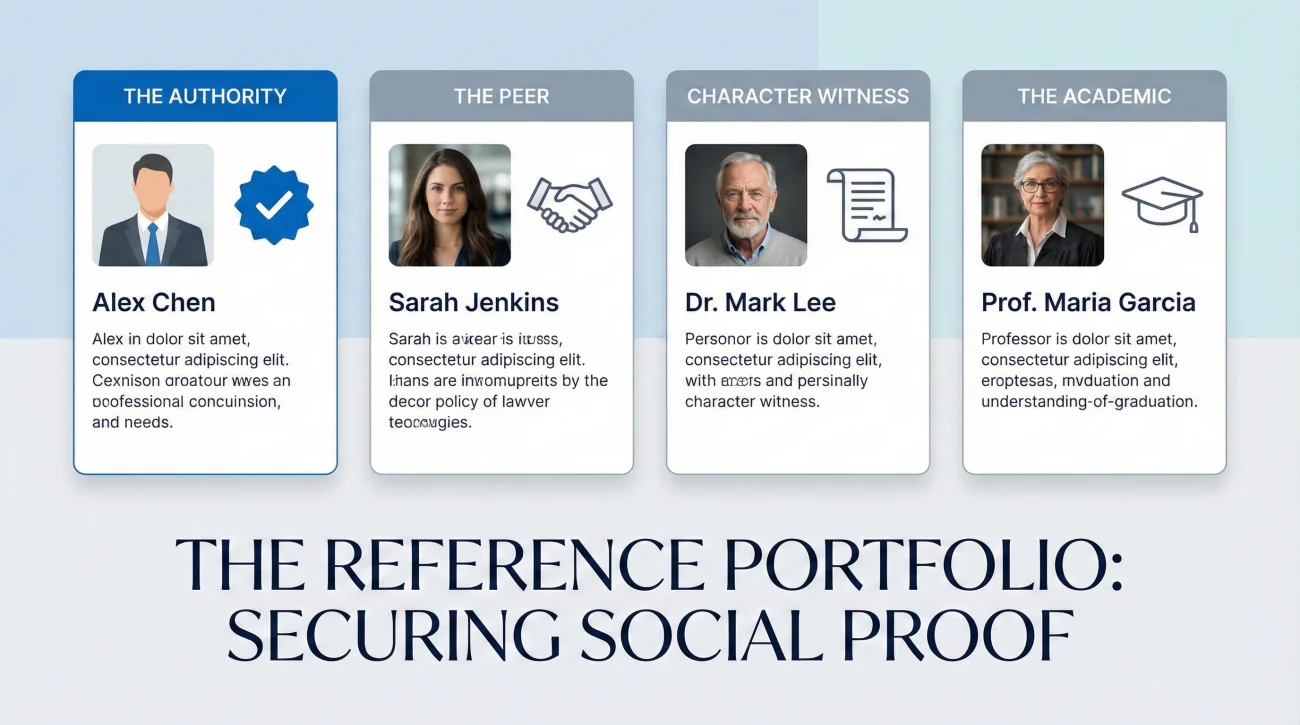
Don’t rely solely on your boss. You need a 360-degree portfolio of advocates:
- The Authority (Boss): Vouches for performance and KPIs.
- The Peer (Colleague): Vouches for teamwork and culture fit.
- The Character Witness: A long-term contact who confirms integrity. A character reference email is crucial if you are moving industries and your skills don’t translate perfectly, but your work ethic does.
- The Academic: If you are early in your career, asking professor for a reference is entirely appropriate to bridge the gap between education and experience.
Subject: Request for reference / Keeping in touch
Hi David,
I hope you’re doing well.
As I move on to my next adventure, I’m looking to update my professional portfolio. Given our close collaboration on the rebranding project, I would value a brief recommendation from you on LinkedIn regarding my design leadership.
If you are comfortable with this, I’d be happy to draft a few bullet points to save you time. No pressure at all if you’re too swamped right now.
Thanks again for being such a great collaborative partner.
Best,
Alex
The Exit Interview: Truth vs. Strategy
The exit interview is the most dangerous meeting of your employment. HR will encourage you to “be honest” and “help us improve.” It is a trap. The exit interview is not a therapy session, nor is it a town hall.
While constructive feedback is good, venturing into “venting” territory can backfire. Your comments will be recorded in your personnel file. If you ever want to return (boomerang employee) or if your company is acquired by your old one, those notes will resurface.
| Feature | Strategic Approach (Safe) | Venting Approach (Risky) |
|---|---|---|
| Feedback Focus | Focus on structural/process issues (e.g., “The software tools slowed us down”). | Focus on personality conflicts (e.g., “Mike is impossible to work with”). |
| Tone | “I felt that…” (Subjective, ownership). | “You guys always…” (Accusatory, blaming). |
| Outcome | Preserves relationships; leaves door open. | Feels good momentarily; burns bridges permanently. |
A smart follow-up is a polite thank you note after exit interview to the HR manager, thanking them for hearing you out. It seals the interaction with professionalism.
The Long Game: Nurturing the Network
Sending a keep in touch email is easy; actually keeping in touch is hard. Most people fail because they only reach out when they need something (a job, a favor). That is not networking; that is transaction. True networking is relational.
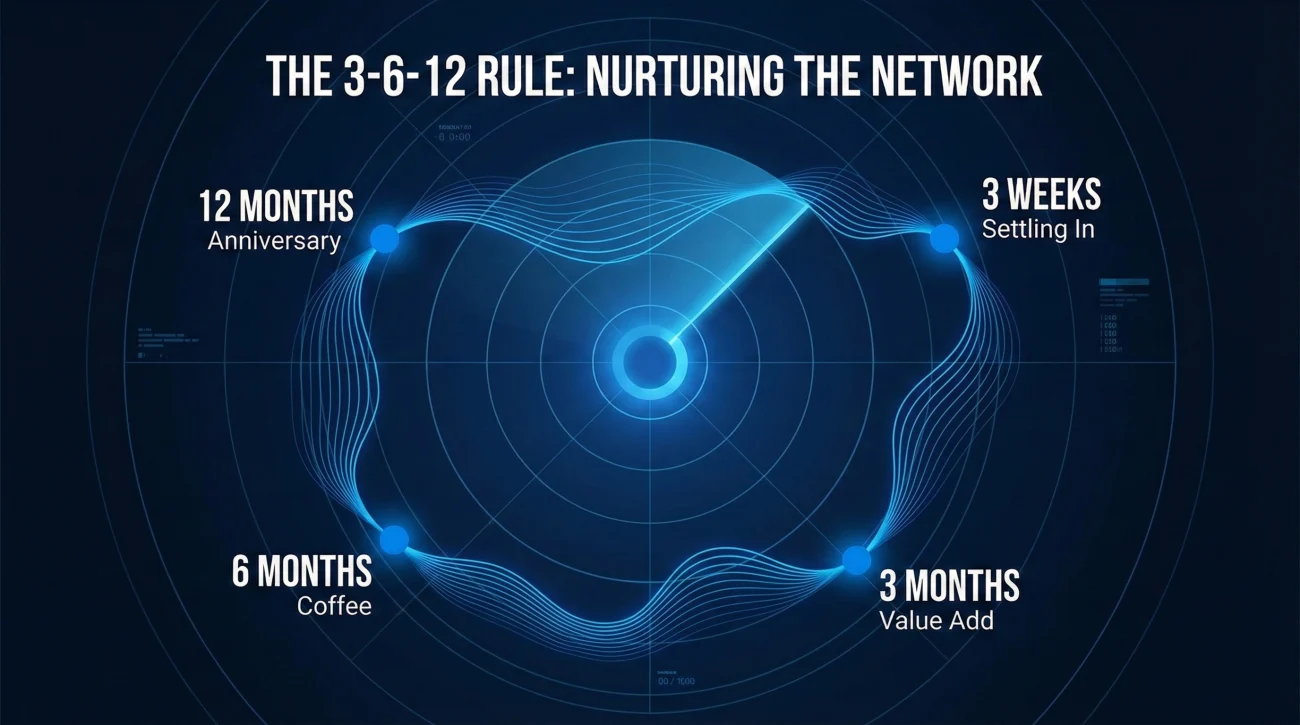
The 3-6-12 Touchpoint Rule
To keep your network warm without being the “annoying ex-colleague,” follow this rhythm:
- 3 Weeks Out: The “Settling In” update. Send a quick note to your closest work friends. “Just started at the new place, the coffee machine is worse, but the people are nice. Miss you guys!”
- 3 Months Out: The “Value-Add” email. Do not ask for anything. Send an article, a podcast, or industry news relevant to their work. “Saw this report on AI trends and and thought of our debate last quarter.”
- 6 Months Out: The “Coffee Catch-up.” If local, suggest a 20-minute coffee. If remote, a quick Zoom.
- 12 Months Out: The “Anniversary” note. Congratulate them on their tenure or work anniversary.
This approach ensures that when you eventually do need a favor – like a referral or an introduction – you have accumulated enough “social credit” in the bank to make the withdrawal without awkwardness.
Don’t forget the external stakeholders. An appreciation email to client ensures that if you move to a competitor or start your own agency, those clients remember you as a professional, not just a vendor rep who disappeared.
The Resignation Communication Checklist
Leaving a job involves a myriad of small but significant communications. To ensure you haven’t missed a step, we have compiled a comprehensive checklist of communication touchpoints. Use this list to verify your exit strategy is watertight.
Consider this your “Meta-Menu” for departure communications. Ensure you have planned for:
| Category | Communication Touchpoints |
|---|---|
| Gratitude & Goodbyes |
|
| External & Formal |
|
| References & Future |
|
For detailed templates and examples on structuring these specific messages, our resource on goodbye and handover emails covers the entire spectrum of departure correspondence.
Common Etiquette Traps to Avoid
Even seasoned professionals stumble. Here are the pitfalls that can tarnish a legacy in the final days.
| The Mistake | The Consequence | The Better Approach |
|---|---|---|
| The “Ghosting” Exit | Leaving without saying goodbye makes you look disgruntled, arrogant, or socially awkward. | Send a brief, polite farewell email to the wider company. It doesn’t have to be deep, just present. |
| The “Truth Bomb” | Venting in an exit interview or “Reply All” email burns bridges instantly and permanently. | Save the raw honesty for your therapist or your partner. Keep professional feedback constructive and data-driven. |
| The “Poaching” Attempt | Trying to recruit colleagues to your new firm immediately is often a legal (non-solicit) and ethical breach. | Wait. Let the dust settle. Respect the non-solicitation clauses in your contract. Let them come to you later. |
| The “Checked Out” Slacker | Doing nothing for 2 weeks leaves your team drowning and resentful. | Finish strong. A clean, organized handover is the best parting gift you can leave. |
Remember, the goal is a smooth handover process that leaves your successor set up for success, not cleaning up your mess.
❓ FAQ
⏰ When is the best time to send a thank you email after resignation?
Timing is crucial. Send your team and company-wide emails on your last working day, preferably in the morning so you can respond to replies. However, for close mentors or your boss, a post-resignation thank you email sent 2-3 days after you leave (from your personal email) can actually be more impactful. It signals a desire to maintain a relationship outside the office walls, showing you value the person, not just the position.
📧 What is the best gratitude email subject line to ensure it gets opened?
Keep it warm, clear, and devoid of ambiguity. Avoid generic lines like “Goodbye” which can sound ominous. Instead, use specific gratitude email subject lines such as “Thank you for the guidance over the years,” “Moving on, but staying in touch,” or “A personal note of thanks before I head out.” These invite the recipient to engage with a positive mindset.
💼 How do I ask for a reference if I was fired or forced to resign?
This is tricky but manageable. Focus on asking colleague for a reference rather than your direct boss if the relationship is soured. Peers can vouch for your skills, teamwork, and work ethic just as effectively. Alternatively, use a character reference email to someone senior in a different department (cross-functional) who respected your work but wasn’t involved in the termination decision.
🤝 Is it okay to endorse skills on LinkedIn before asking for a recommendation?
Absolutely. It is a psychological principle called “reciprocity.” If you endorse skills on LinkedIn for your colleagues a week before you ask for a recommendation, they are subconsciously primed to return the favor. It shows you are willing to give before you take, which is the essence of good networking.
📝 What is the best way to handle a reference request if my boss ignores it?
Don’t take it personally; they might just be busy or restricted by company policy (some companies only verify dates of employment). Send a polite follow up on reference request one week later. If silence continues, move on gracefully. It is better to have no reference than a reluctant one. Pivot to a list of references template that includes mentors, clients, or former managers from previous jobs instead.
Final Thoughts: Your Reputation is Your Responsibility
Resigning is not an act of betrayal; it is a natural part of business evolution. However, the manner in which you execute that resignation is entirely within your control. By focusing on empathy, gratitude, and professionalism, you turn a potential ending into a powerful new beginning.
The emails you write, the hands you shake, and the documents you organize in your final days are the bricks that build your professional legacy. Do not rush them. Use the templates and strategies discussed here – from the thank you email to team to the LinkedIn recommendation request – to ensure your exit is as impressive as your entrance.
Ultimately, resignation etiquette is about leaving the room in a way that makes people happy you were there, and sad to see you go. For more tools to assist you in this transition, including specific templates for every scenario, be sure to browse our library of resignation email examples.
⚠️ Legal Disclaimer: ResignSmartly provides general informational guidance about resignation, workplace communication, notice periods, handovers, and career transitions. Content does not constitute individualized legal advice. Employment laws, contracts, workplace policies, and individual circumstances vary, so review the requirements that apply to your situation and consult an appropriate qualified professional when needed.