
- Scope: A resignation letter for a second job should be brief, clear, and professional even if the role is part-time.
- When to write: Use a letter for formal payroll roles or when you may want future references, skip it for truly casual arrangements.
- What to include: Resignation statement, Last working day, Optional short reason, One appreciation line, Optional quick transition offer.
- Notice: Two weeks is the standard when possible, one week can fit very limited shifts, urgent exits should cite primary job demands.
- Protect value: Keep discretion with your primary employer, leave clean bridges for seasonal returns, networks, and character references.
Leaving Secondary Employment Professionally
A resignation letter for second job requires different approach than primary employment resignations. Whether you’re leaving evening retail work, weekend restaurant shifts, or freelance contracts, these secondary positions deserve professional resignation documentation despite their part-time nature.
Understanding how to write a resignation letter for part time job means balancing formality appropriate for business documentation with the typically casual nature of secondary employment relationships. These letters should be brief, appreciative, and clear without the extensive detail full-time positions require.
This guide covers when second job resignations need formal letters, how to keep them appropriately concise, and strategies for maintaining positive relationships with secondary employers who might provide future references. For complete resignation guidance, see our resignation letter etiquette guide.
When Second Job Resignations Need Letters
Not all secondary employment requires formal resignation letters. Understanding when documentation matters prevents unnecessary effort while ensuring proper exits when letters serve important purposes.
Formal Part-Time Employment
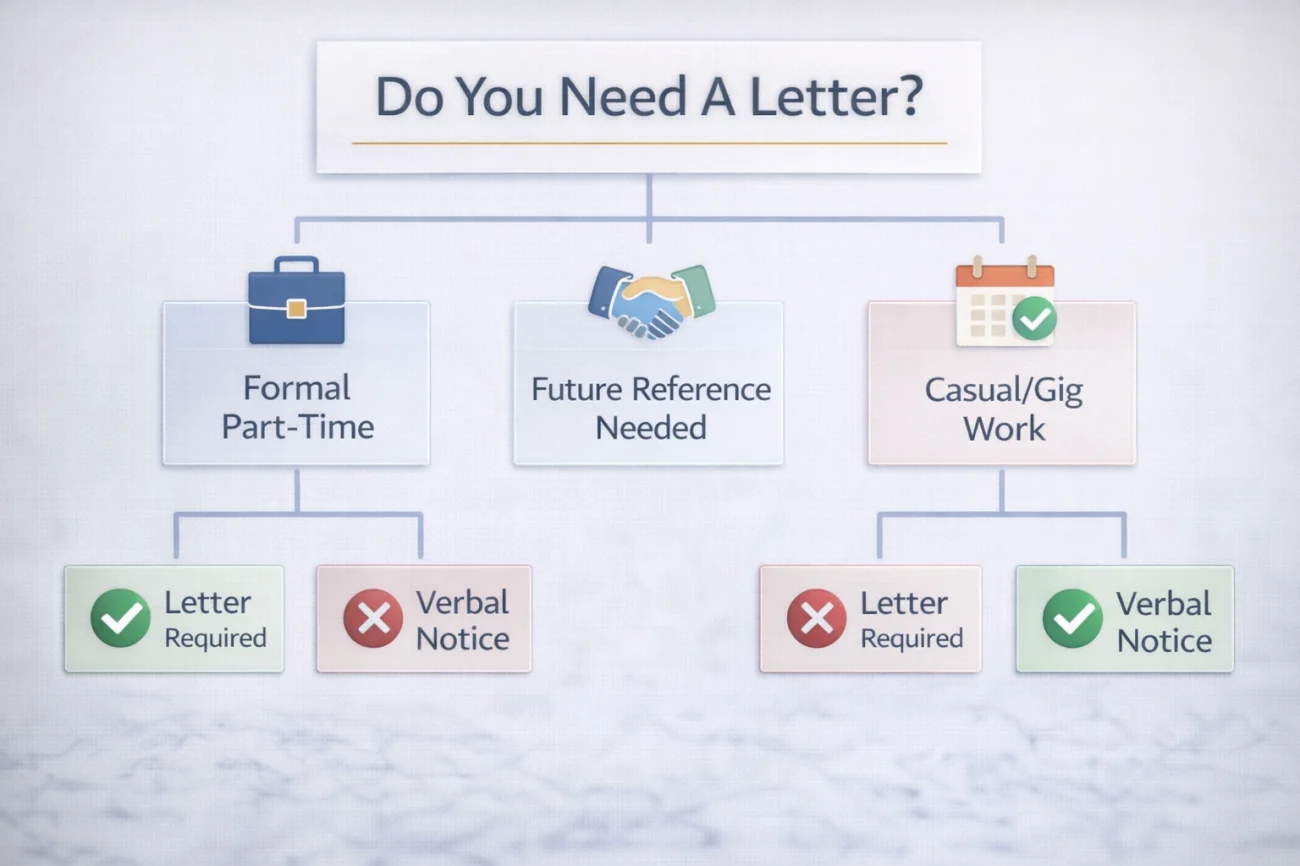
Part-time positions with structured payroll, benefits eligibility, or official employee status warrant resignation letters. Retail store associates, restaurant servers with regular schedules, tutoring center instructors, or weekend healthcare workers should provide written resignation even though hours are limited.
When You’ll Need References
If your second job relates to your career field – freelance work in your industry, consulting projects, or professional development roles – formal resignation letters create documentation for future reference requests. These letters demonstrate professionalism that employers remember when contacted years later.
When Letters Aren’t Necessary
Extremely casual arrangements – babysitting for neighbors, occasional gig economy tasks, or informal cash work – rarely require formal resignation letters. Verbal notification with reasonable notice suffices for arrangements without official employment documentation or tax reporting.
Keeping Second Job Resignations Brief
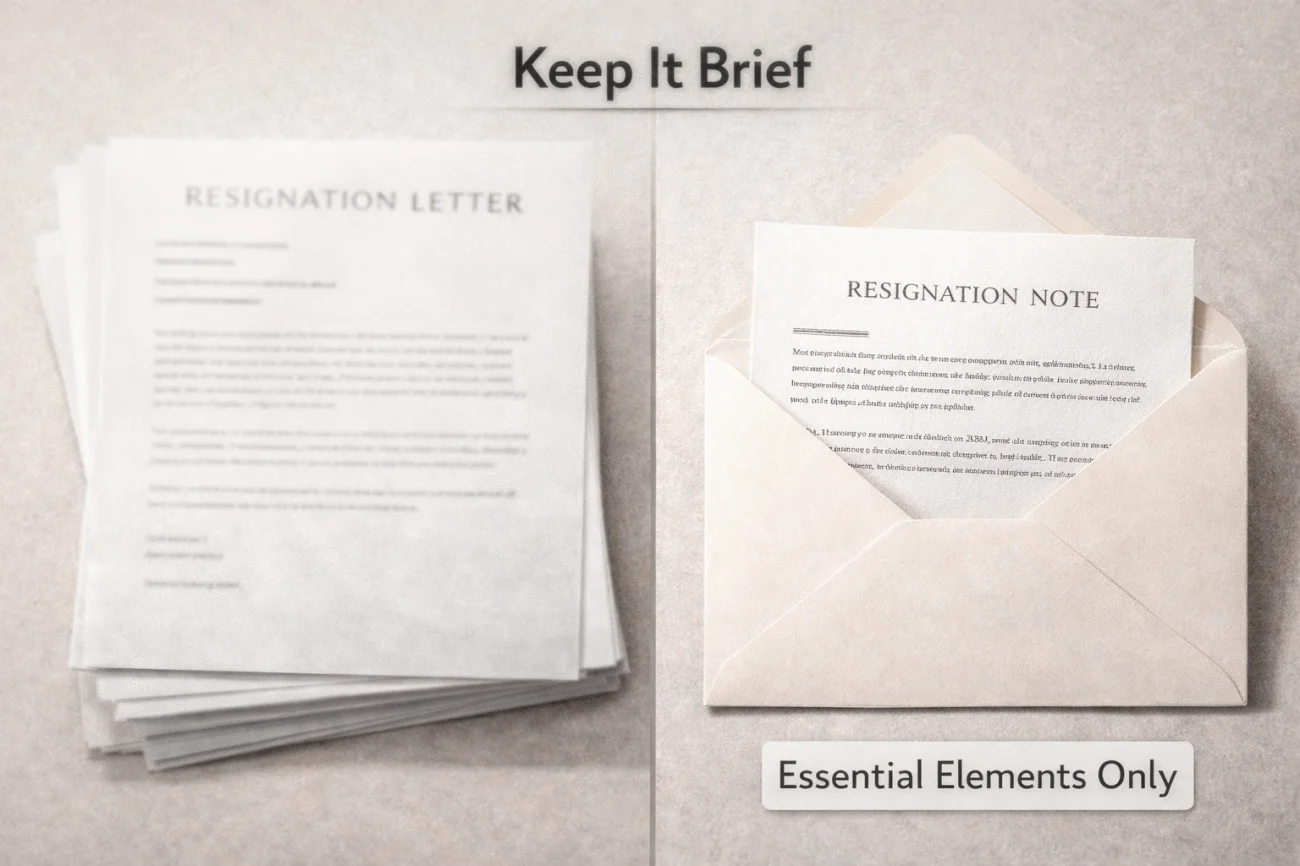
The quitting second job letter should be significantly shorter than primary employment resignations. Three to four paragraphs covering essentials suffice – no need for extensive gratitude expressions or detailed transition planning.
Essential Elements Only
- Clear resignation statement
- Last working day
- Brief reason (optional but courteous)
- One sentence of appreciation
- Offer to help with immediate transition if relevant
What to Skip
Omit extensive career reflection, detailed future plans discussion, or elaborate transition documentation. Secondary employers understand these positions are transitional – they don’t expect or need lengthy explanations about your departure.
Common Reasons for Leaving Second Jobs
Explaining why you’re leaving secondary employment helps employers understand your situation without requiring extensive justification.

Primary Job Demands Increasing
“My primary employment responsibilities have expanded, requiring full attention” provides honest explanation most secondary employers immediately understand and respect. They know second jobs serve supplemental purposes – when primary work needs more time, secondary positions naturally take lower priority.
Schedule Conflicts
Life circumstances create scheduling impossibilities: “My class schedule has changed” or “Family commitments now conflict with evening availability” explain departures without suggesting problems with the employer or position.
Financial Situation Improved
“I’m fortunate that my financial situation has stabilized” acknowledges you took the second job for economic reasons that no longer apply. Most secondary employers appreciate this honesty – they understand people work multiple jobs out of necessity, not preference.
Second Job Resignation Letter Templates
These resignation letter for side hustle examples show appropriate brevity and tone for secondary employment resignations.
Part-Time Retail Resignation
Sarah Mitchell
sarah.mitchell@email.com
(503) 555-0142
June 8, 2024
David Torres
Store Manager
Riverside Bookstore
Dear David,
I am writing to resign from my position as Weekend Sales Associate at Riverside Bookstore, effective June 22, 2024.
My primary employment responsibilities have increased significantly, requiring full-time attention that makes continuing weekend work unsustainable. I’ve appreciated the flexibility you’ve provided over the past year and enjoyed working with the team.
Thank you for the opportunity to be part of Riverside Bookstore. I’m happy to help train my replacement during my final two weekends if helpful.
Best regards,
[Signature]
Sarah Mitchell
Evening Job Resignation
Marcus Thompson
marcus.thompson@email.com
(312) 555-0145
May 12, 2024
Jennifer Martinez
Operations Manager
City Fitness Center
Dear Jennifer,
I am resigning from my position as Evening Front Desk Associate, effective May 26, 2024, providing two weeks’ notice.
I’ve accepted additional responsibilities at my primary job that require evening availability. I’m grateful for the experience working at City Fitness and appreciate the accommodating schedule you’ve maintained.
Thank you for the opportunity to be part of the team over the past eight months.
Sincerely,
[Signature]
Marcus Thompson
Freelance/Contract Resignation
Rachel Morrison
rachel.morrison@email.com
(415) 555-0173
April 15, 2024
Michael Chen
Creative Director
Digital Design Solutions
Dear Michael,
I am writing to conclude my freelance graphic design contract with Digital Design Solutions, with my last available project date being May 15, 2024.
My full-time position has expanded into areas requiring evening work that previously accommodated freelance projects. I’ve valued the opportunity to contribute to your client campaigns and appreciate the creative challenges these projects provided.
I’m committed to completing the current brand refresh project before my departure and am happy to provide transition documentation for any ongoing work.
Thank you for the collaboration over the past year.
Best regards,
[Signature]
Rachel Morrison
Notice Period for Second Jobs
Secondary employment often requires less notice than primary positions, but providing adequate warning demonstrates professionalism that benefits future reference potential.

Standard Two Weeks When Possible
If circumstances allow, provide standard two-week notice even for part-time positions. This courtesy gives employers reasonable time to adjust schedules or begin replacement searches. Two weeks feels professional without being excessive for limited-hour positions.
One Week for Very Part-Time Roles
Positions with minimal hours – one shift weekly, occasional on-call work, or very flexible arrangements – may accept one week notice as reasonable. These roles typically have easier coverage options that don’t require extensive notice periods.
When Immediate Departure Is Necessary
Primary job demands sometimes require immediate attention: “I need to resign effective immediately due to urgent primary employment obligations” explains sudden departures without suggesting dissatisfaction. Offer to work out current week if feasible as compromise.
Protecting Your Primary Employment
Resigning from second jobs should never negatively impact your primary employment relationship or opportunities.
Maintain Discretion
Some primary employers prefer employees not work second jobs. If you never disclosed secondary employment, keep resignation equally private. No need to announce to primary employer that you’re leaving work they didn’t know about – creates unnecessary questions about divided attention during your tenure.
Reference Requests
When secondary employers become references, ensure they understand your primary employment took priority. Brief them: “Please feel free to discuss my evening work, but note my full-time position was always my primary focus.” This framing prevents confusion about your commitment level to either role.
Preserving Bridges Despite Brief Tenure
Secondary jobs often involve short tenures – months rather than years. Brief employment doesn’t diminish importance of maintaining positive relationships through professional departures.
Seasonal Return Possibilities
Life circumstances that require leaving second jobs often reverse: primary job demands decrease, financial needs change, or schedule conflicts resolve. Professional departures keep doors open for potential return during future availability windows. Many seasonal operations welcome back reliable former employees who left on good terms.
Retail stores during holiday seasons, restaurants during summer tourist periods, or tax preparation services during filing season often rehire former part-time employees. Your professional resignation today becomes your application advantage tomorrow when circumstances allow return.
Industry Network Value
Secondary employment often connects you with professionals outside your primary career path. Retail managers, restaurant owners, or fitness center directors have broad professional networks spanning multiple industries and career levels.
Maintaining positive relationships through professional resignations preserves these valuable connections that might benefit your primary career unexpectedly. The restaurant owner you worked weekends for might know the regional sales director at your target company. The bookstore manager could be married to someone in your industry. Professional networks extend beyond obvious career paths.
Character References Beyond Career Field
Secondary employers provide character references distinct from professional career references. Future opportunities sometimes require references outside your primary field – volunteer board positions, community leadership roles, or career pivots where character matters more than technical expertise.
Your weekend retail manager or evening shift supervisor can speak to work ethic, reliability, and interpersonal skills in ways primary career references cannot. Professional resignation letters help these contacts remember you positively when contacted years later for such references.
❓ FAQ
📝 Do I need a formal resignation letter for part-time jobs?
Depends on employment formality. Structured part-time positions with payroll and official employee status warrant brief resignation letters. Extremely casual arrangements – babysitting, occasional gig work – need only verbal notification. When uncertain, err toward providing written notice.
⏰ How much notice should I give for second job resignation?
Two weeks when possible, demonstrating professionalism without being excessive. Very part-time roles with minimal hours may accept one week. If primary job demands require immediate attention, explain urgent obligations honestly – most secondary employers understand primary work takes priority.
💼 Should I tell my primary employer about resigning from second job?
Not necessary if they didn’t know about secondary employment. Announcing resignation from undisclosed work creates unnecessary questions about divided attention. Maintain discretion – secondary job resignation doesn’t require primary employer notification unless they were already aware.
📄 How long should second job resignation letters be?
Three to four brief paragraphs covering essentials: resignation statement, last day, brief reason (optional), one sentence appreciation, and transition offer if relevant. Skip extensive career reflection or detailed future plans – secondary employers understand these positions are transitional.
🔄 Can I return to second jobs after resigning?
Often yes, especially seasonal operations or flexible positions. Professional departures keep doors open for future return when circumstances change. Many retail, restaurant, and service employers welcome back reliable former employees during later availability windows.
Final Thoughts
A resignation letter for second job balances professional documentation standards with the typically casual nature of secondary employment. These brief letters acknowledge the position’s part-time status while maintaining respect for business relationships that deserve formal closure.
Writing an effective resignation letter for part time job means keeping content concise – three to four paragraphs covering resignation essentials without extensive detail primary positions require. Secondary employers understand these roles serve supplemental purposes and appreciate straightforward resignation communication.
Professional resignation from secondary employment preserves relationships that offer unexpected value – future reference possibilities, seasonal return options, and professional network connections beyond your primary career path. Brief tenure doesn’t diminish importance of maintaining positive bridges through thoughtful resignation documentation.
⚠️ Legal Disclaimer: ResignSmartly provides general informational guidance about resignation, workplace communication, notice periods, handovers, and career transitions. Content does not constitute individualized legal advice. Employment laws, contracts, workplace policies, and individual circumstances vary, so review the requirements that apply to your situation and consult an appropriate qualified professional when needed.