- Why it matters: Your signature turns notice into official documentation, and unsigned letters can delay processing and timelines.
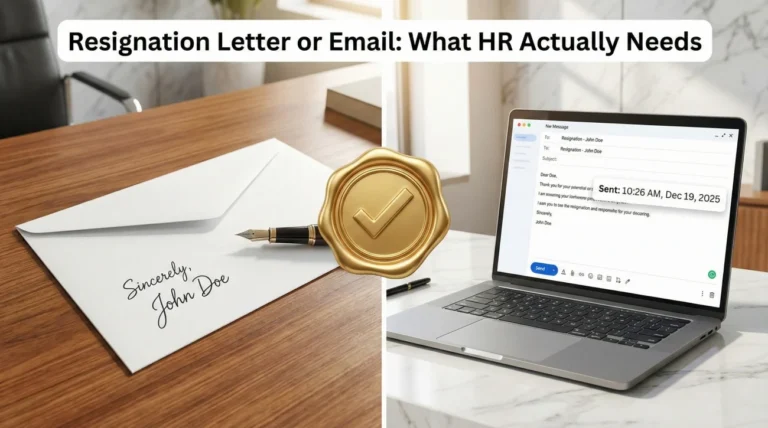
- Wet vs digital: Wet signatures are universally accepted, digital signatures work when your employer supports verified e-sign platforms.
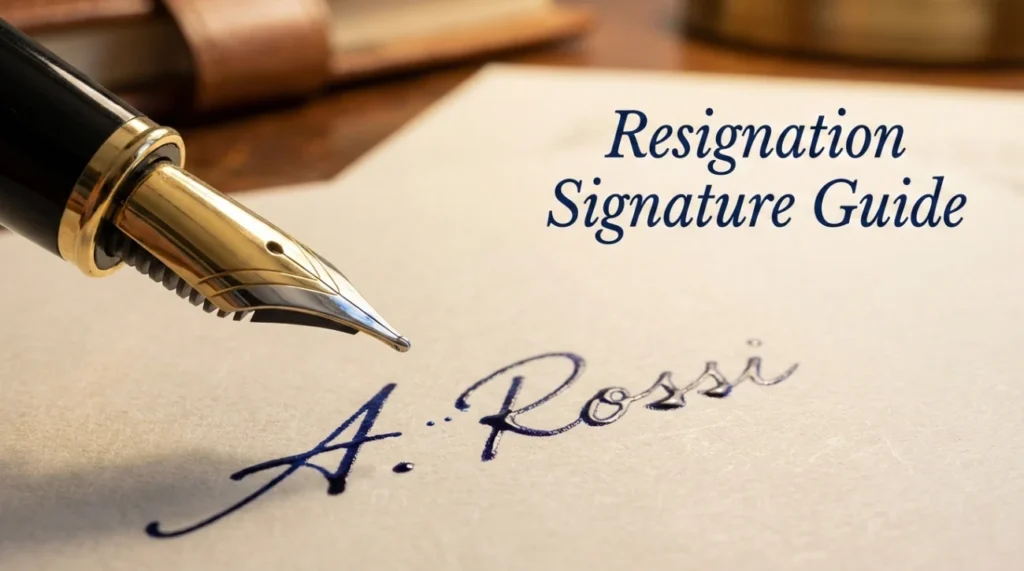
- How to sign correctly: Use your legal name, blue or black ink for wet signatures, and avoid typed-name-only tricks unless policy allows.
- Close and format cleanly: Choose a professional sign-off, leave proper signature space, and add ID or contact info if it helps HR match records.
- Protect yourself: Keep copies, confirm receipt, avoid common mistakes, and use print-sign-scan or certified mail if you work remote.
Why Your Signature Matters More Than You Think
Your resignation letter signature transforms an informal notice into legally binding documentation of your employment termination. Without proper signature, your resignation letter lacks the legal weight necessary for HR to process your departure, potentially delaying final paychecks or benefits termination.
Employers treat unsigned resignation letters as drafts rather than official notice. Your notice period doesn’t begin until you’ve submitted properly signed documentation. Understanding how to sign resignation letter correctly prevents administrative complications that can extend your departure timeline.
This guide covers signature types, closing phrases, formatting standards, and the legal implications of different signing methods. For complete resignation protocols, see our resignation letter etiquette guide.
Wet Signature vs Digital Signature
The debate between wet signature vs digital signature for resignation letters centers on legal validity, practical convenience, and employer preferences. Both methods carry legal weight when executed properly, but specific situations favor one approach over the other.
| Wet Signature (Ink on Paper) | Digital Signature (Electronic) |
|---|---|
| ✓ Universally accepted without question | ✓ Convenient for remote work situations |
| ✓ Provides tangible physical documentation | ✓ Faster delivery via email |
| ✓ Familiar to all generations and industries | ✓ Creates digital timestamp for records |
| ✓ No technology barriers or software requirements | ✓ Eliminates printing, scanning, or mailing |
| ✓ Preferred for executive resignations and legal positions | ✓ Acceptable in tech companies and modern workplaces |
| ❌ Requires physical presence or mail delivery | ❌ Some employers don’t accept digital signatures |
| ❌ Can be lost or damaged | ❌ May require specific software or verification |
Wet Signature Best Practices
A wet signature means physically signing your printed resignation letter with pen and ink. Use blue or black ink only – never red, green, or other colors that appear unprofessional in legal documents. Blue ink actually offers slight advantage over black because it proves the signature isn’t a photocopy.
Sign your full legal name as it appears in employment records. If you use a middle initial in professional contexts, include it in your signature. Consistency between your signature and your typed name below it matters for HR filing and legal documentation.
Digital Signature Options
True digital signatures use cryptographic verification (DocuSign, Adobe Sign) that provides legal authentication. These differ from simply typing your name or scanning a signature image into a document – methods that lack legal verification most employers require.
If your employer accepts digital signatures, use established platforms they already recognize. Don’t invent creative workarounds like photographing your handwritten signature and inserting images into Word documents. Such approaches create authentication concerns that undermine your resignation’s legal validity.
Professional Sign-Off Phrases
Your resignation letter sign off appears immediately before your signature and sets the final tone for your departure. Traditional business closing phrases range from formal to warm, each carrying subtle implications about your relationship and resignation circumstances.
Most Common Professional Closings
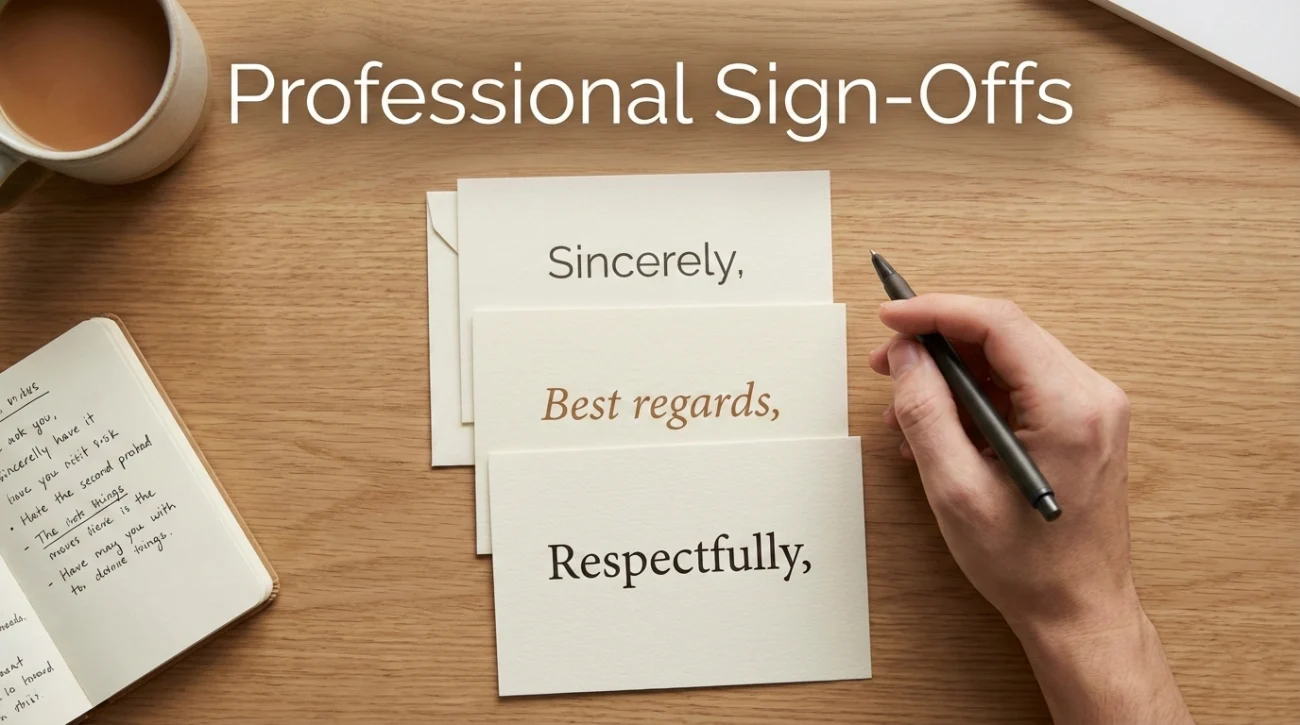
- Sincerely, – Standard professional closing, appropriate for all situations
- Best regards, – Slightly warmer while maintaining professionalism
- Respectfully, – Formal tone, shows deference to authority
- Yours truly, – Traditional business closing, somewhat dated
- Kind regards, – Friendly professional tone
Matching Closings to Situations
“Sincerely” works universally – safe for any resignation regardless of circumstances. Use it when unsure which closing fits best. The neutral professionalism offends no one and suits both positive departures and difficult situations.
“Best regards” adds warmth appropriate when you’ve had positive working relationships. It signals respect and appreciation without excessive sentimentality. Good choice for resignations where you genuinely wish the company and colleagues well.
“Respectfully” works for military, government, or highly hierarchical organizations where deference to authority matters. Also appropriate when resigning from positions reporting to executives or board members you don’t know personally.
Closings to Avoid
- ✗ “Cheers” – Too casual for formal resignation
- ✗ “Thanks” – Incomplete and unprofessional
- ✗ “Warmly” – Overly familiar for business context
- ✗ “XOXO” or “Love” – Wildly inappropriate
- ✗ “Peace out” – Casual slang has no place here
- ✗ No closing at all – Appears abrupt and disrespectful
Your closing phrase becomes part of your permanent employment file. What seems funny or casual in the moment reads as unprofessional when reviewed during background checks years later.
Signature Block Formatting
The signature block includes your closing phrase, handwritten signature, and typed name. Proper formatting ensures clarity and professionalism while providing all information HR needs for filing.
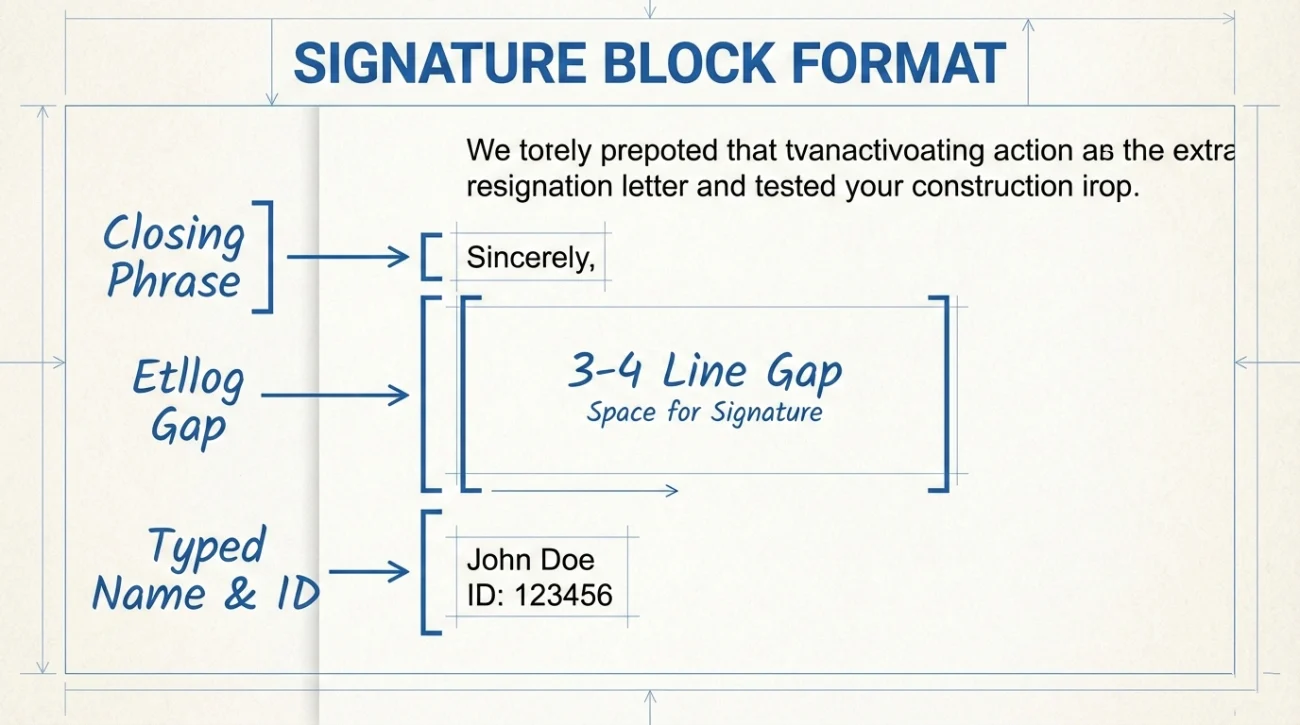
Standard Signature Block Format
Sincerely,
[Handwritten signature space – approximately 3-4 line spaces]
Jennifer Martinez
Marketing Specialist
Leave three to four blank lines between your closing phrase and typed name for handwritten signature. This white space ensures your signature doesn’t overlap with typed text or appear cramped.
Enhanced Format with Contact Information
Best regards,
[Handwritten signature space]
David Chen
Senior Software Engineer
Employee ID: 45821
david.chen@email.com
(206) 555-0198
Including employee ID, email, and phone number in your signature block helps HR process your resignation efficiently. This enhanced format particularly benefits large organizations where multiple employees share similar names.
Email Resignation Signature Format
When submitting resignation via email, your signature block follows the same structure as printed letters. For digital-only submissions without wet signatures, type your full name where the handwritten signature would appear:
Sincerely,
Michael Thompson
Operations Manager
michael.thompson@email.com
Some people type their name in a script-style font to simulate signature appearance, but standard formatting works equally well and avoids appearing like you’re trying to fake a handwritten signature.
When Multiple Signatures Are Required
Certain resignation situations require signatures from multiple parties – joint resignations, partnership departures, or contracts with cosignatories. Understanding multi-party signature protocols prevents processing delays.
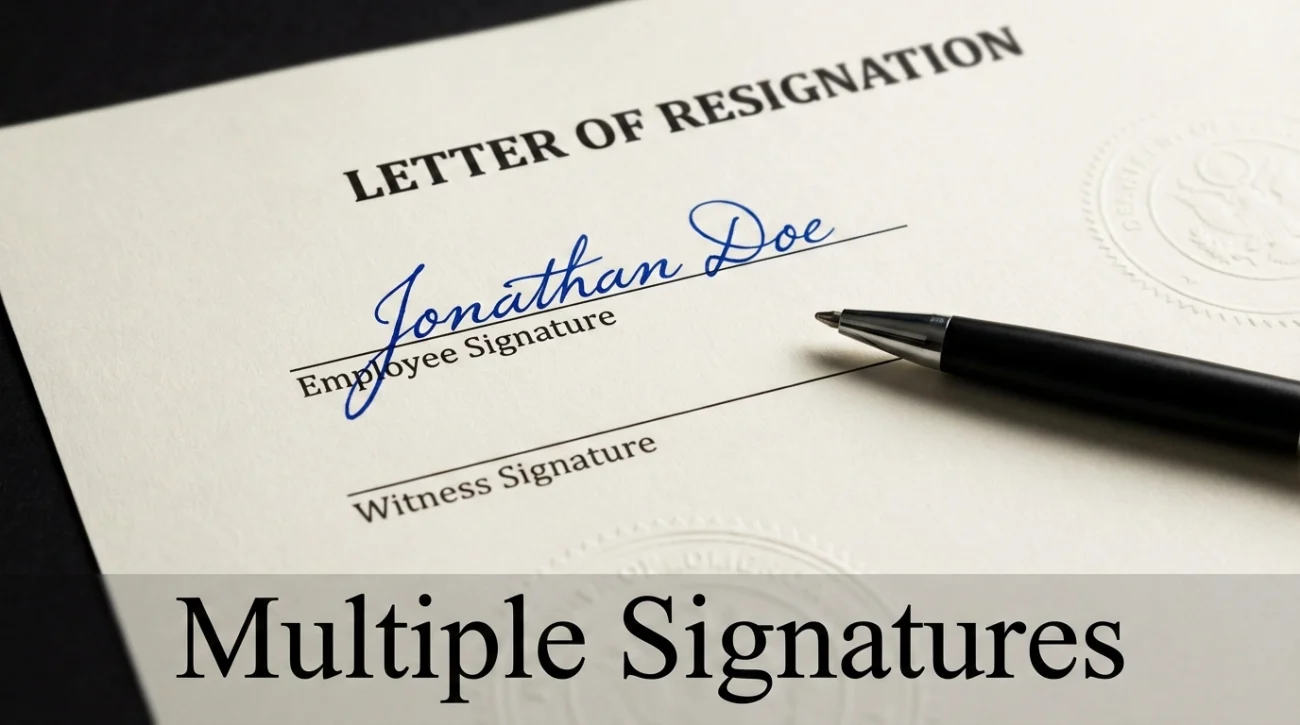
Joint Resignation Format
When couples resigning together or team members departing simultaneously, each person signs separately with their own signature block:
Sincerely,
[Signature 1]
Sarah Mitchell
Senior Designer[Signature 2]
James Mitchell
Creative Director
Witness Signatures and Notarization
Executive resignations or positions with fiduciary duties sometimes require witness signatures or notarization. Your signature appears first, followed by witness signatures below. Each signature needs a corresponding typed name and date for legal verification.
Never sign on behalf of others or allow others to sign your resignation. Each party must personally execute their own signature for legal validity.
Legal Validity and Authentication
Your resignation signature creates binding legal documentation of employment termination. Understanding what makes signatures legally valid protects both your interests and your employer’s compliance requirements.
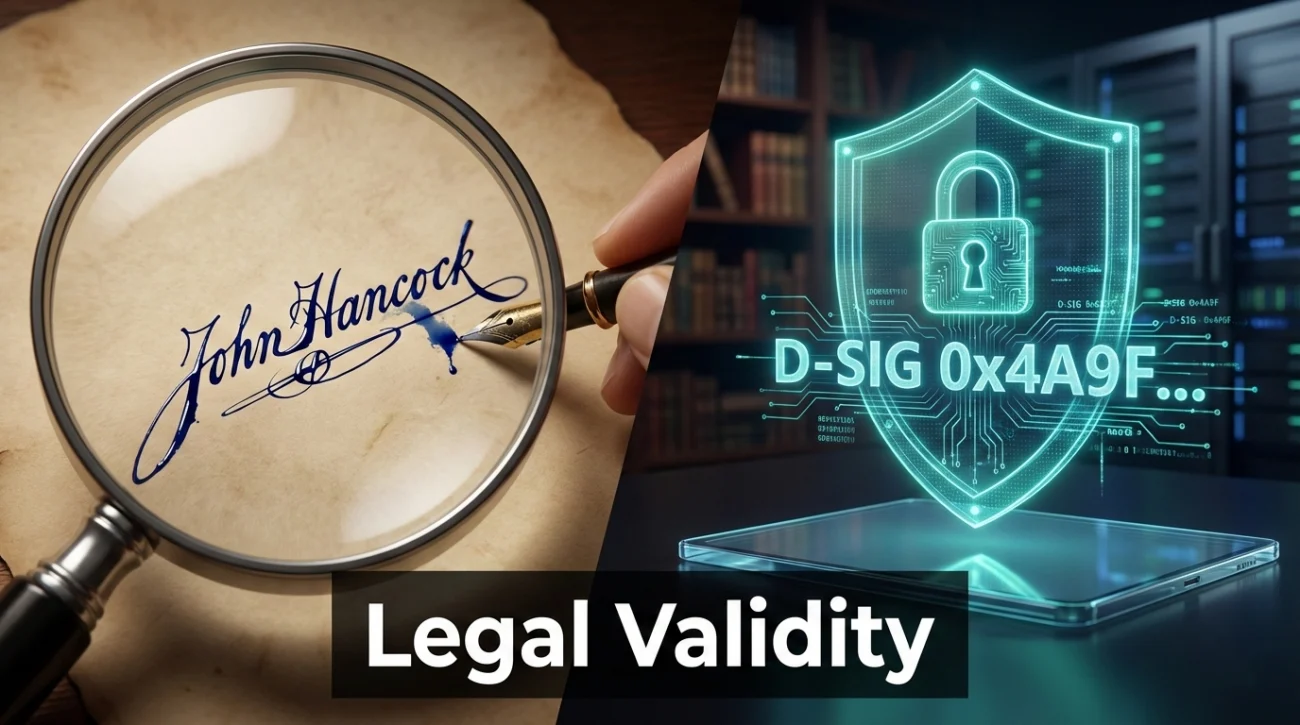
Elements of Valid Signature
- Written by the resigning employee personally
- Appears on document dated with resignation submission date
- Matches employee’s legal name in employment records
- Demonstrates clear intent to resign from employment
- Cannot be forged or signed under duress
Electronic Signature Legal Standards
The E-SIGN Act (Electronic Signatures in Global and National Commerce Act) provides legal framework for digital signatures in the United States. Electronic signatures carry same legal weight as wet signatures when created through systems that verify identity and maintain records.
However, individual employers maintain discretion to require wet signatures for resignation documentation. Federal law permits electronic signatures but doesn’t force employers to accept them. Always check your company’s resignation policy before submitting digitally signed documents.
Preventing Signature Disputes
Keep copies of your signed resignation letter for personal records. Photograph or scan the signed document before submitting it. Request email confirmation from HR acknowledging receipt of your signed resignation.
These precautions prevent disputes about whether you properly signed and submitted resignation notice. Documentation protects you if employers later claim they never received formal resignation or question signature authenticity.
Common Signature Mistakes
These signature errors create administrative headaches that can delay final paycheck processing or complicate benefits termination.
Mistakes to Avoid
- ✗ Forgetting to sign the letter entirely
- ✗ Signing with nickname instead of legal name
- ✗ Using initials only rather than full signature
- ✗ Signing in pencil instead of ink
- ✗ Placing signature in wrong location on page
- ✗ Dating signature incorrectly (wrong date or no date)
- ✗ Messy signature that’s completely illegible
Handling Illegible Signatures
If your natural signature is difficult to read – common among doctors, executives, and people who sign documents frequently – the typed name below your handwritten signature provides necessary clarity. HR needs to match signatures to employee records; your typed name ensures accurate filing even when handwriting is rushed or stylized.
Signature Solutions for Remote Workers
Remote employees face practical challenges obtaining and submitting wet signatures. Several approaches maintain legal validity while accommodating geographic distance.
Print-Sign-Scan Method
Print resignation letter, sign with pen, scan or photograph the signed document, and email as PDF attachment. This creates wet signature documentation in digital format – different from purely electronic signatures because actual ink signature was created physically then digitized.
Most employers accept scanned wet signatures as equivalent to hand-delivered originals. The PDF provides documentation trail while your wet signature supplies legal authenticity.
Mailing Wet Signature Originals
Mail signed resignation letter via certified mail with return receipt requested. This method takes longer but provides postal service verification of delivery timing. Use when employers specifically request original wet signatures for compliance or legal reasons.
❓ FAQ
✍️ Is wet signature or digital signature better for resignation letters?
Wet signatures (ink on paper) are universally accepted without question and preferred for executive positions or legal roles. Digital signatures work well for remote workers and tech companies that use electronic document systems. Check your employer’s policy – some organizations require wet signatures regardless of convenience.
📝 What’s the most professional closing phrase for resignation letters?
“Sincerely” works universally for all resignation situations – formal enough for serious contexts, appropriate for positive departures. “Best regards” adds warmth when you’ve had good relationships. “Respectfully” suits hierarchical organizations. Avoid casual closings like “Cheers” or “Thanks” that appear unprofessional in formal documentation.
🖊️ What color ink should I use to sign my resignation letter?
Blue or black ink only. Blue ink actually provides slight advantage because it proves the signature isn’t a photocopy. Never use red, green, or other colors that appear unprofessional in legal business documents. Avoid pencil entirely – it’s not permanent and suggests uncertainty.
📋 Do I need to include my employee ID in the signature block?
Not required but helpful in large organizations where multiple employees share similar names. Including employee ID, email, and phone number in your signature block helps HR process your resignation efficiently and ensures accurate filing in personnel systems.
🏠 How do remote workers sign resignation letters with wet signatures?
Print the letter, sign with pen, then scan or photograph the signed document and email as PDF. This creates wet signature documentation in digital format. Alternatively, mail signed original via certified mail with return receipt for postal verification of delivery timing.
Final Thoughts
Your resignation letter signature transforms informal notice into legally binding documentation that HR uses to process your departure. Without proper signature, your resignation lacks the legal weight necessary for official employment termination, potentially delaying final paychecks and benefits processing.
Understanding how to sign resignation letter correctly – whether wet signature or digital, with appropriate closing phrases and proper formatting – ensures your resignation receives immediate processing without administrative complications. These signature details might seem minor compared to your letter’s content, but they carry legal implications that affect departure timing and documentation validity.
Choose signature methods and closing phrases that match your workplace culture, position level, and relationship with your employer. Professional execution of these final details demonstrates the same attention to standards that characterized your work throughout employment, leaving positive final impressions that benefit future references and career reputation.
⚠️ Legal Disclaimer: The resignation templates, email samples, and professional guidance provided in this guide are for informational purposes only and do not constitute legal advice. Employment laws and contract requirements vary by jurisdiction and individual circumstances. Please review your employment agreement and consult your HR department and/or a qualified attorney to ensure compliance with applicable laws and policies.