- Core Dilemma: Leaving early on your last day is a judgment call, not an automatic perk, because people read it as respect or avoidance.
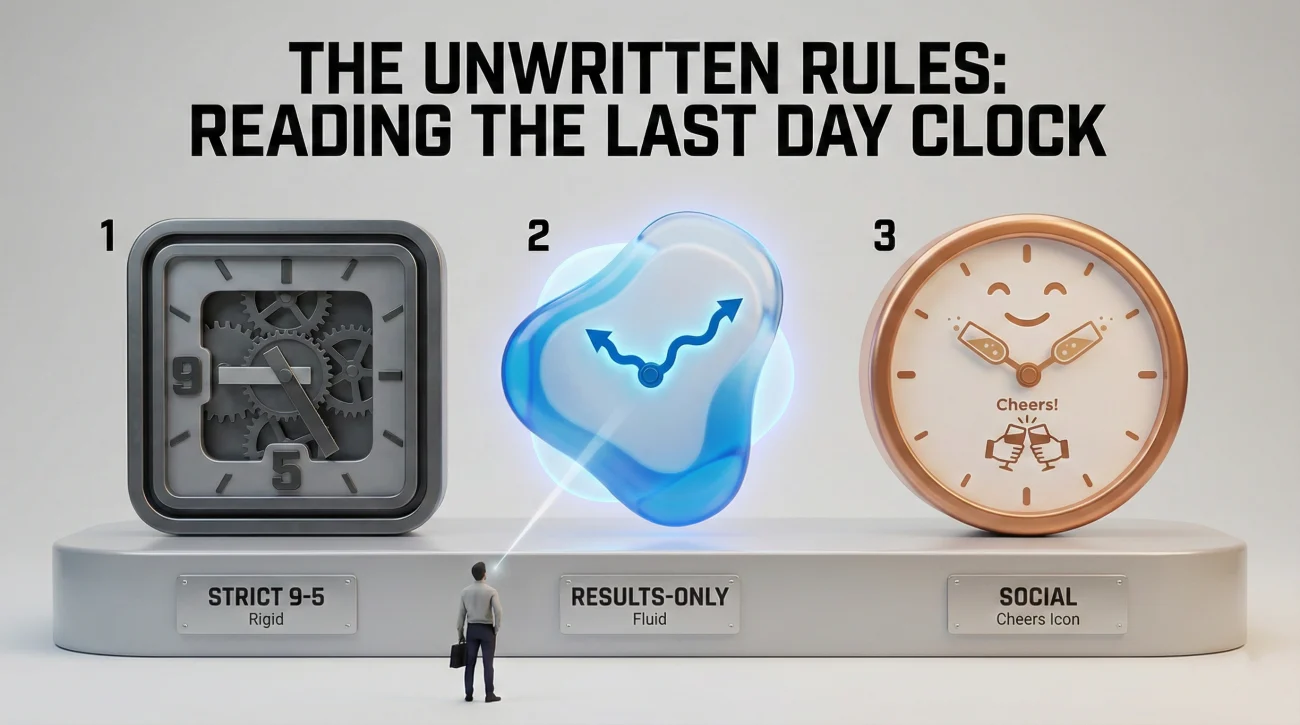
- Read The Room: Match the culture and your tenure, strict clock-watching teams expect a full day, social teams expect goodbyes, results-only teams care that handover is done.
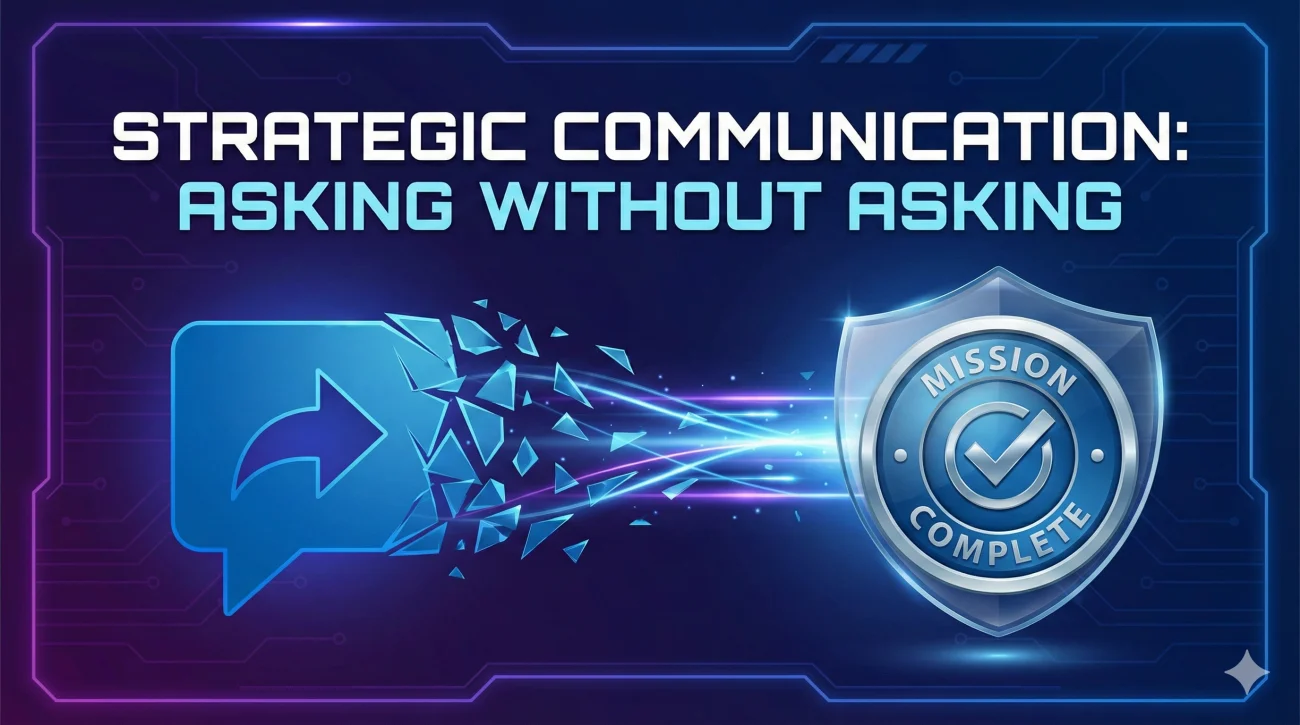
- Ask The Right Way: Frame it as mission complete logistics 1 to 2 days ahead, confirm handover, equipment return, and whether you should stay online after lunch.
- Exit Etiquette: Do a calm “lap of honor,” do not ghost your manager, and say goodbye before you put your bag on so you do not look like you are fleeing.
- Safe Default: If approval is unclear, do not take a half day, a soft exit around 3:30 to 4:00 PM is usually safest once everything is signed off.
The Final Exit: Mastering the Art of the Early Departure
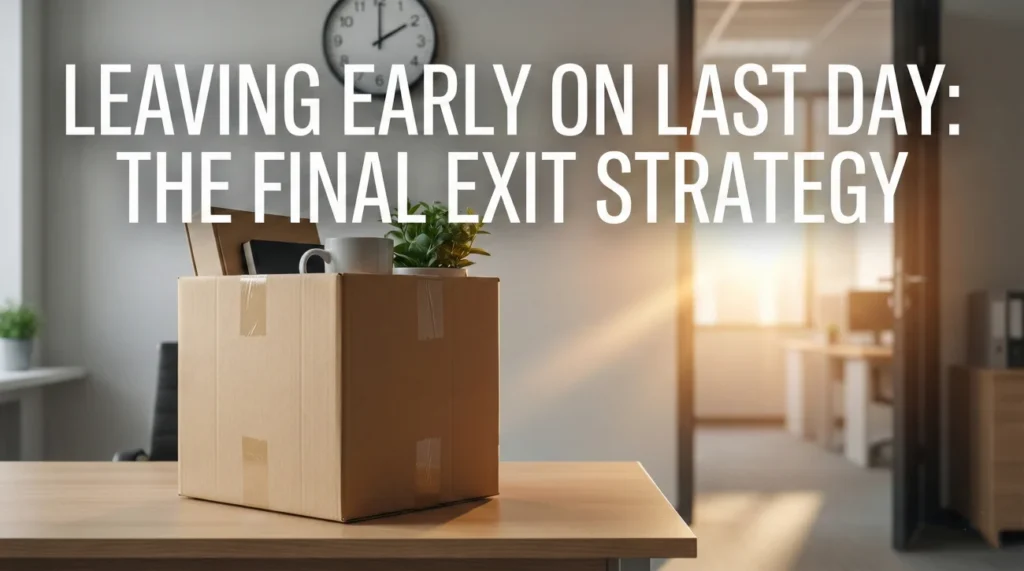
There is a peculiar, almost suffocating tension that hangs in the air on your final day of work. The adrenaline of the resignation is gone. Your tasks are done, your handover is signed off, and your laptop is wiped clean of personal data. Yet, the clock on the wall reads 2:00 PM. You are physically present, but professionally, you have already crossed the Rubicon. Do you sit there for three more hours, staring at a blank desktop, awkwardly avoiding eye contact with colleagues who are deep in their own deadlines? Or do you pack up and leave?
This dilemma of leaving early on last day is one of the most common, yet least discussed, aspects of professional exits. It is a psychological gray area where unspoken office rules collide with personal freedom. It triggers a specific type of anxiety: the fear of being judged as “checking out” too soon versus the fear of lingering like an unwanted guest.
I remember advising a senior manager who, on his last day, decided to “ghost” the office at noon without telling a soul. He convinced himself he was being humble and unobtrusive. Instead, when his boss came looking for him at 3:30 PM to hand him a parting gift and say a few kind words in front of the team, the empty desk spoke volumes. That single act of vanishing turned a celebratory exit into a confusing, slightly sour memory. Conversely, I’ve seen employees sit rigidly until 5:01 PM, twiddling their thumbs, creating an uncomfortable atmosphere for everyone around them who felt obligated to entertain the “lame duck” employee while trying to finish their own work.
The truth is, asking can i leave early on my last day is not a simple yes or no question. It is a matter of reading the room, managing expectations, and executing a “soft exit” that feels earned rather than stolen. This comprehensive guide will walk you through the nuances of timing, the scripts to ask for permission without sounding checked out, and the etiquette that ensures your final impression is one of professionalism, not avoidance.
The Unwritten Rules of the Last Day Clock
Corporate culture dictates time more than any employee handbook. The reality is that “5:00 PM” is rarely a hard boundary on the last day, but treating it casually can be dangerous. To navigate this safely, you need to act like an anthropologist observing a tribe. What are the norms here?
Reading Your Room: The Cultural Audit
Before you make your move, look at the precedents. How did the last respected employee leave? Did they slide out after a team lunch, or did they work until the lights went off?
- The “Strict 9-to-5” Culture: In industries like law, finance, or customer support, presence is often equated with performance. If your boss watches the clock daily, assume you are staying until 5 PM unless explicitly told otherwise. Leaving early here can be seen as a dereliction of duty.
- The “Results-Only” Culture: In modern tech companies or consultancies, if people come and go based on workload, your departure time is likely tied to the completion of your handover. Hanging around with nothing to do is viewed as inefficient, not dedicated.
- The “Social” Culture: In tight-knit teams, the last day is often less about work and more about the social ritual of goodbyes. Leaving too early here can be seen as rejecting that social bond. The expectation is often a 4 PM drink or a collective farewell.
The Tenure Equation: Have You Earned It?
There is a direct, unwritten correlation between how long you have served and how early you can leave without raising eyebrows.
Junior / Short Tenure (< 1 year): You haven’t built enough political capital to set your own terms. If you leave at 2 PM, it looks like you never cared. Plan for a full day unless told otherwise.
Mid-Level / Medium Tenure (2-5 years): You have earned some flexibility. A 3 PM or 4 PM departure is often acceptable, provided your work is impeccable.
Senior / Long Tenure (5+ years): You are the institution. Ironically, you might want to stay longer to say goodbye, but if you choose to leave after a farewell lunch, no one will question your dedication. Your legacy allows you to write your own schedule.
Strategic Communication: How to Ask Without Asking
The mistake most people make is asking, “Can I go home?” This sounds like a schoolchild asking a teacher for a hall pass. It puts the manager in a position of having to “grant” you freedom, which feels awkward. Instead, you want to frame your request around the completion of objectives. This shifts the conversation from “permission to slack off” to “confirmation of mission success.”
The “Mission Complete” Scripts
Timing is everything. Send these emails 1-2 days before your last day. Do not spring this on your manager at 10 AM on the final morning, as they might have planned a surprise meeting or task for you.
Scenario A: The Casual Inquiry (Best for most situations)
Subject: Last Day Logistics & Handover Completion
Hi [Manager Name],
I’m wrapping up my final tasks this week. My goal is to have the full handover document finalized and all files transferred by [Day] morning to ensure [Colleague Name] has everything they need.
Once I’ve completed the equipment return to IT and said my goodbyes to the team around lunchtime, do you need me to stay online for the rest of the afternoon, or is it okay to sign off early once everything is secure?
Happy to stick around if there are loose ends to tie up.
Best,
[Your Name]
💡 Why this works: It prioritizes the handover. The early departure is presented as a logical conclusion to the work being done, not a request for a favor.
Scenario B: The “Soft Close” (For formal environments)
Subject: Final Day Schedule – [Your Name]
Hi [Manager Name],
I wanted to confirm the plan for my last day on [Date].
I have scheduled my exit interview for 11:00 AM and plan to hand in my badge and laptop immediately after. Since all my projects have been transitioned, would it be appropriate for me to conclude my day around 3:00 PM?
Please let me know if you’d prefer a different schedule.
Regards,
[Your Name]
These asking to leave early last day email templates are effective because they are proactive. They force the manager to give you a clear boundary, preventing that awkward 2 PM stare-down.
The Etiquette of the Early Exit: How to Execute
Even with permission, leaving work early etiquette requires finesse. You don’t want to sneak out the back door like a thief in the night. The way you walk out the door is the final image people will have of you.
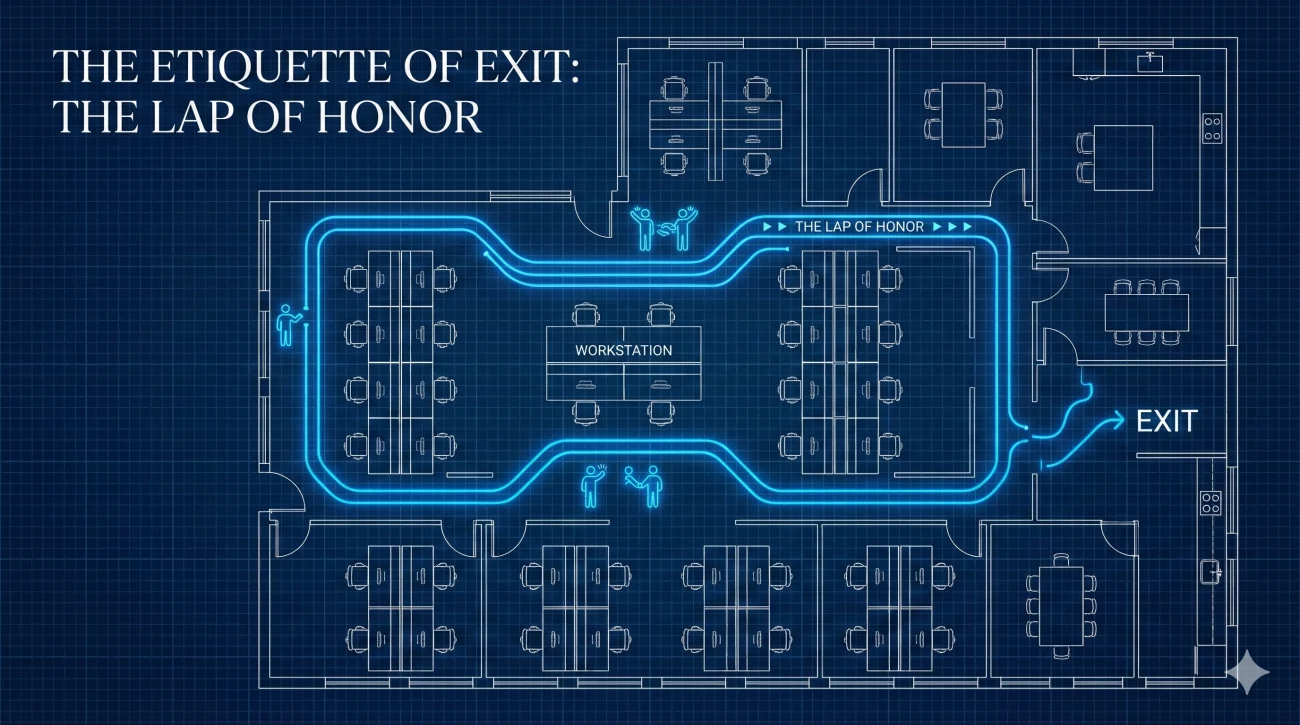
The “Lap of Honor”
This is a crucial ritual. Before you leave – whether it is 2 PM or 5 PM – do a final lap of the office. Walk over to the desks of the people you worked with, even those you didn’t talk to every day. Look them in the eye, shake their hand, and say, “It was a pleasure working with you.”
The Golden Rule of Packing: If you are leaving early, do your “Lap of Honor” before you put on your coat or backpack. If you stand at someone’s desk fully packed, ready to bolt, it looks like you are fleeing the scene of a crime. Say your goodbyes while still looking like an employee, then go back to your desk, pack calmly, and leave.
The “Ghosting” Danger
I cannot stress this enough: Never leave without saying goodbye to your direct manager. Even if they are busy, wait for a moment or send a quick IM if they are in a closed-door meeting: “I’m heading out now. Thanks again for everything.” Leaving without this final acknowledgement is a major burn-the-bridge moment. It signals a lack of respect that can undo years of hard work.
The “Half Day” Myth vs. Reality
Many employees operate under the assumption that a half day on last day is a given right. It is not. Unless it is explicitly written in your handbook (it rarely is) or verbally agreed upon, you are paid for a full day. Taking a half-day without approval is technically time theft, though rarely prosecuted. However, the reputational damage is real.
| Scenario | Verdict: Leave Early? |
|---|---|
| Handover is 100% done & Manager Approved | ✅ Yes (2-3 PM is standard) |
| Manager is out of office / unreachable | ❌ No (Stay until at least 4 PM) |
| Team is in “Crisis Mode” / Heavy Deadline | ❌ No (Offer to help, even on last day) |
| You are leaving for a competitor | ⚠️ CAUTION (They might walk you out at 9 AM anyway) |
If you are in doubt, the safest bet is the “Soft Exit” around 3:30 PM or 4:00 PM. It is early enough to beat traffic, but late enough to count as a full day in the eyes of most reasonable employers.
❓ FAQ
🚗 What if I have a flight or moving truck scheduled?
This is a valid, logistical reason for a hard stop that most managers will respect. Communicate this well in advance, not on the day of. Frame it politely: “I have a flight to catch at 4 PM, so I will need to head out by 1 PM to make it through security.” Most managers are human and will accommodate life logistics if the work is done.
🤐 My manager ignored my email about leaving early. What do I do?
Silence is not consent. If they didn’t reply, assume you are working a full day. Do not just leave. You can try one casual verbal check-in on the morning of: “Hey, just checking on the plan for today – should I stick around till 5 or head out once the desk is cleared?” If they still don’t give a clear yes, stay put until standard closing time.
🍻 Can I leave early to go to the pub with colleagues?
This is a common “gray area” sanctioned exit. If the team is taking you out for a farewell drink at 3 PM, and the manager joins or approves the outing, then your work day effectively ends when you enter the bar. Just make sure you don’t come back to the office afterwards – take your bag with you!
💻 How does this work for remote employees?
For remote workers, “leaving” is symbolic. Send a final farewell email to the team or a Slack message to your channel. Once that message is sent, log off. Do not stay “green” on Slack for hours after your goodbye message – it sends mixed signals. Sign off decisively.
Final Thoughts: The Last Impression Lasts Forever
Your last day is the period at the end of the sentence of your tenure. It defines how the story closes. Leaving early on last day is a privilege that reflects a job well done, not a right to be demanded. It is the final test of your professional judgment.
When you handle your departure with grace – asking for guidance rather than permission, ensuring every task is finished, and treating your colleagues with respect during your “Lap of Honor” – you leave as a professional. You want your colleagues to look at your empty desk at 3 PM and think, “I’m going to miss them,” not “Finally, they’re gone.”
For more advice on navigating the delicate social dynamics of leaving, read our guide on goodbye emails. And if you are still finalizing the details of your transfer, ensure nothing is missed with our handover email templates. For all other career transition needs, ResignSmartly is here to help.
⚠️ Legal Disclaimer: The resignation templates, email samples, and professional guidance provided in this guide are for informational purposes only and do not constitute legal advice. Employment laws and contract requirements vary by jurisdiction and individual circumstances. Please review your employment agreement and consult your HR department and/or a qualified attorney to ensure compliance with applicable laws and policies.