
- Core Idea: A client handover email is a trust transfer moment, not an admin update, and it can protect the relationship after you leave.
- Client Psychology: Address their 3 fears directly: Stability, Knowledge, Connection.
- Two Streams: Keep internal handover tactical and detailed, keep the client message warm, confident, and controlled.
- Trust Transfer Mechanics: Actively endorse the successor, confirm they are already briefed, and give a clear transition window with dates.
- Templates: Use one of 3 setups: Standard cc intro, High touch call-based handoff for strategic accounts, Interim manager coverage when no replacement exists.
For the full transition process, use our job handover guide and checklist.
The Art of the “Soft Landing”: Mastering the Client Handover
In the delicate ecosystem of client management, trust is the currency. It takes months, sometimes years, to build up a balance of trust, yet it can be depleted in a single afternoon with a poorly handled departure. Your handover email to client is not merely an administrative notification; it is a critical “moment of truth” that determines whether the relationship survives your exit or fractures under the uncertainty.
Most professionals underestimate the anxiety a departure creates for a client. To them, your leaving isn’t just a personnel change; it is a risk event. They immediately wonder: “Will the new person understand the nuances of my business?” “Will I have to explain everything from scratch?” “Will the quality of work drop?” These are valid fears. If you treat your exit as a transactional “goodbye,” you validate those fears. But if you treat it as a strategic “transfer of trust,” you can actually strengthen the bond between the client and your company.
This guide moves beyond simple templates. We will explore the psychology of a seamless transition, the strategic difference between internal and external handovers, and how to craft a transition email to client that positions your successor not just as a replacement, but as an upgrade. We are going to dismantle the process of exiting with grace, ensuring your professional legacy remains intact long after you have logged off for the last time.
The Psychology of Separation: Why Clients Panic
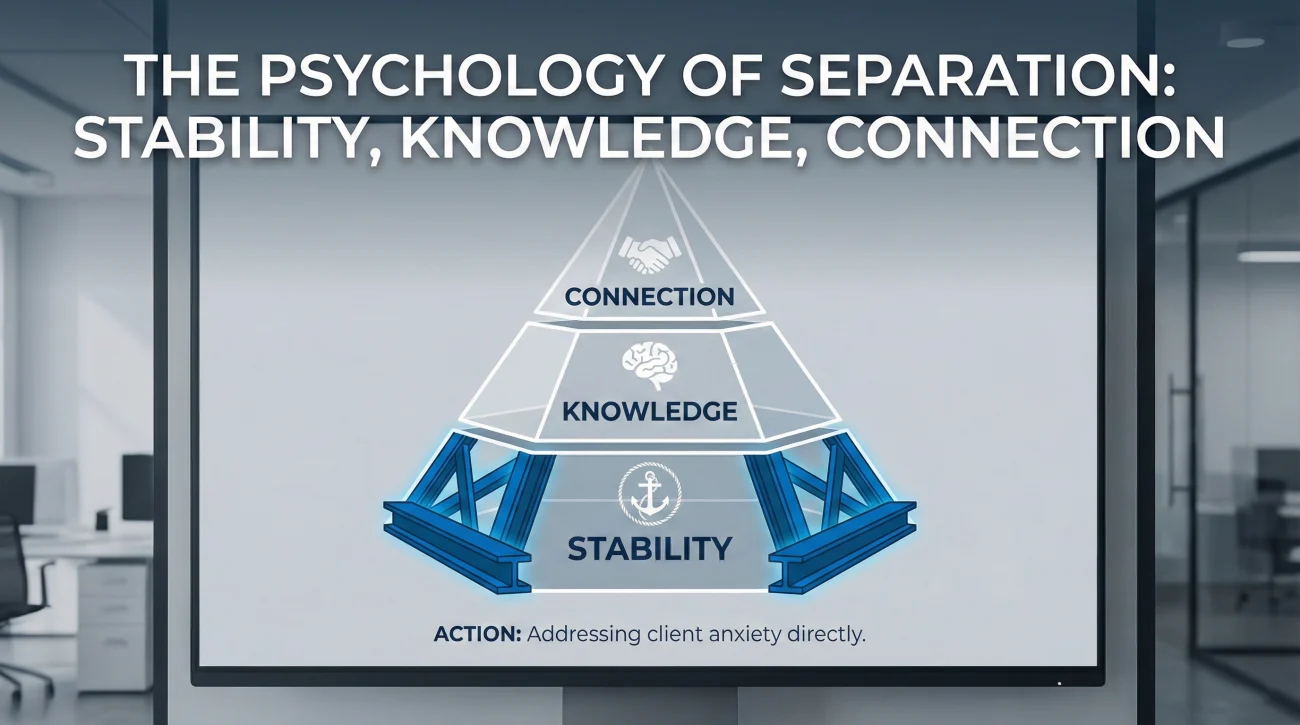
To write an effective email, you must first understand the emotional landscape of your recipient. In business relationships, clients often conflate the service with the person providing it. When you leave, they feel a loss of institutional memory. They fear they are losing their advocate inside the building.
Your communication needs to address three subconscious needs:
- 🛑 Stability: They need to know that the machinery of their account will not stop grinding.
- 🧠 Knowledge: They need assurance that they won’t have to pay for the new person’s learning curve.
- 🤝 Connection: They need to feel that the new contact is “vetted” by you, the person they trust.
If your email fails to hit these three notes, the client will instinctively pull back, delay renewals, or start looking at competitors. Your job is to engineer a “Soft Landing” where the transition feels like a natural evolution rather than a disruption.
The Strategic Pivot: Internal vs. External Communication
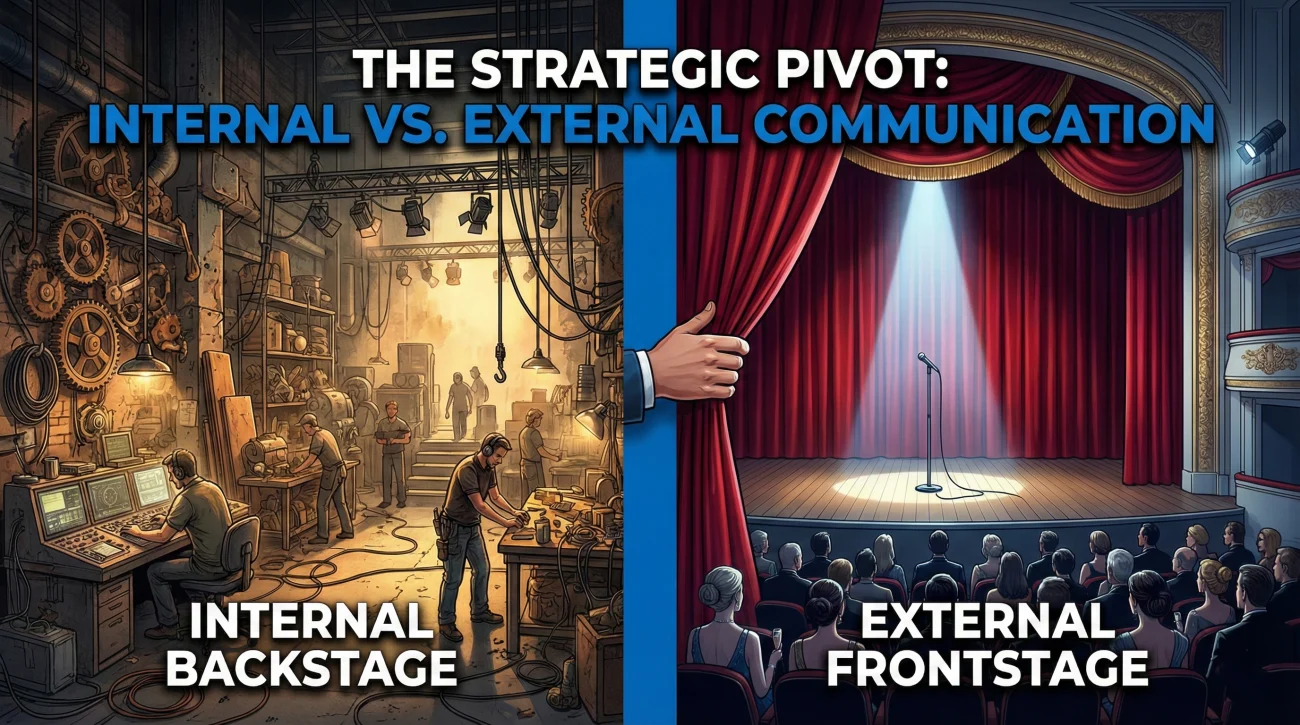
Before drafting your email, it is vital to distinguish between the two distinct audiences you are addressing during an exit. Confusing these two streams is a rookie mistake that can damage your professional reputation. What you tell your team is radically different from what you tell your customer.
| Communication Type | The Internal Handover (To Colleague) | The External Handover (To Client) |
|---|---|---|
| Primary Goal | Operational continuity and knowledge transfer. | Relationship preservation and reassurance. |
| Tone | Frank, detailed, and tactical. | Warm, confident, and strategic. |
| Key Content | “Client X is difficult on Mondays. Here is the folder path.” | “My colleague is an expert in your industry and ready to help.” |
Your handing over client to colleague email is the “backstage” view – messy, honest, and detailed. The email to the client is the “front stage” performance – polished, rehearsed, and reassuring. Never let the backstage chaos spill onto the main stage. Clients do not need to know about internal restructuring or workload balancing; they only need to know that their needs are being met.
The Anatomy of Trust Transfer
You cannot simply “assign” trust to a new account manager; you must transfer it. This psychological process relies on your endorsement. Since the client trusts you, your enthusiastic validation of the new contact acts as a bridge. This is the core mechanism of a successful introducing new account manager email.
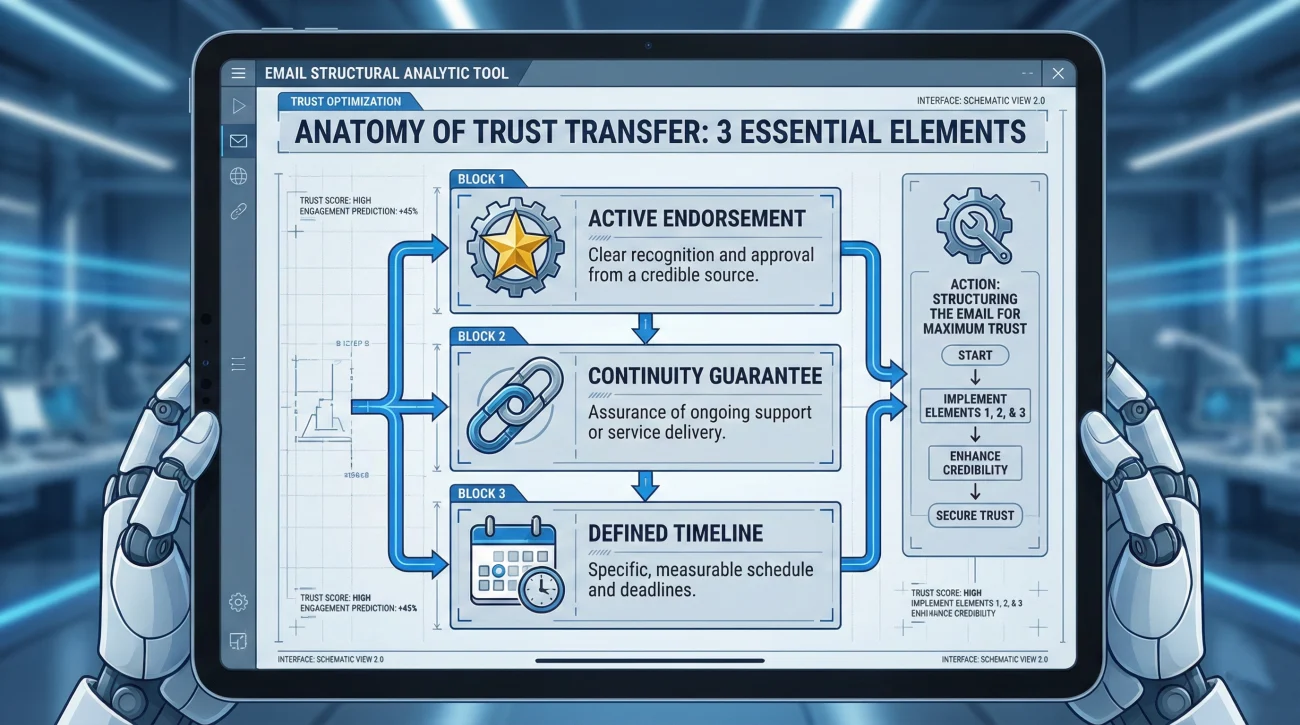
1. The “Active” Endorsement
Don’t just write, “Meet John, he is taking over.” That is passive and creates doubt. Instead, actively sell their competence. Highlight a specific skill of theirs that directly benefits the client. If your client cares about data, mention your successor’s analytical skills. If they care about creativity, mention their design background.
Example:
“I am thrilled to introduce Sarah. Her background in data analytics is going to be a massive asset for your upcoming Q4 review, and I know she has some great ideas for optimizing your spend.”
2. The Continuity Guarantee
Address the “Service Dip” fear head-on. Clients worry that a new person means starting over. You must explicitly state that the homework has already been done.
Phrase to use:
“We have spent the last two weeks reviewing your account history together, so [Name] is already fully up to speed on the [Project Name] status and your preferences regarding [Specific Detail].”
3. The Defined Transition Window
Uncertainty breeds anxiety. Ambiguity is the enemy. Give them a concrete timeline. When is your last day? When does the new person take the wheel? Is there an overlap period? Precision signals control.
Client Handover Email Templates
One size does not fit all. The tone you use for a vendor relationship is vastly different from the tone you use for a strategic partner you have worked with for five years. Below are three distinct frameworks.

Option 1: The “Warm Introduction” (Standard)
Use this client handover email sample for steady-state accounts where the relationship is positive but not overly complex. Ideally, you copy your successor on this email so the thread becomes a shared space.
Subject: Important Update regarding your account / Introducing [Successor Name]
Hi [Client Name],
I am writing to share some news. I will be moving on to a new chapter in my career, and my last day with [Company Name] will be [Date].
Working with you on [Project/Account] has been a highlight of my time here. I am particularly proud of [mention one specific achievement/milestone – e.g., launching the Q3 campaign].
The Good News: You are in excellent hands.
I am pleased to introduce you to [Successor Name] (cc’d here), who will be taking over as your dedicated Account Manager. [Successor Name] has been with us for [Number] years and specializes in [Relevant Skill], which I know will be valuable as you move into the next phase of your growth.
Next Steps for a Seamless Transition:
- I have fully briefed [Successor Name] on your current status, your preferences, and the upcoming Q3 goals.
- [Successor Name] will reach out later this week to schedule a brief intro call to say hello personally.
- I will remain available until [Date] to ensure nothing falls through the cracks.
Thank you for your partnership and trust over the past [Time Period]. It has been a pleasure growing this account with you.
Best regards,
[Your Name]
Option 2: The “High Touch” (Strategic Accounts)
For your top-tier clients (the “VIPs”), an email is simply the invitation to a conversation. You need to orchestrate a meeting. This template sets the stage for a “passing of the torch” video call, which is the gold standard for high-value relationships.
Subject: Transition Plan & Introduction: [Client Name] + [Company Name]
Hi [Client Name],
I hope you are having a great week.
I am writing to let you know that I will be transitioning out of my role at [Company Name] effective [Date]. As one of my most valued clients, I wanted to ensure you heard this from me directly and explain our comprehensive plan for your continued success.
We have assigned [Successor Name], one of our Senior Strategists, to lead your account moving forward. I have worked closely with [Successor Name] over the last week to transfer all context regarding the [Specific Project], specifically the nuances around [Specific Detail].
Would you be open to a 15-minute call on Tuesday or Thursday?
I would love to personally introduce you to [Successor Name] and have [him/her] walk you through the next steps. This ensures you don’t have to repeat yourself or worry about any momentum being lost during this changeover.
Let me know what time works best for you, and I will set it up.
Warmly,
[Your Name]
Option 3: The “Interim” Solution (No Replacement Yet)
Sometimes you leave before a replacement is hired. This is risky and requires careful handling. You must reassure the client that they aren’t falling into a black hole. You lean heavily on your manager in this scenario.
Subject: Update on your account support
Hi [Client Name],
I wanted to inform you that my last day with [Company Name] will be [Date]. It has been a sincere pleasure working with you.
While we finalize the permanent lead for your account, my manager, [Manager Name] (cc’d), will be personally overseeing your needs to ensure zero disruption to your service. [Manager Name] is already fully up to speed on your account history and the status of [Active Project].
Please direct any new requests to [Manager Name] starting [Date]. We are committed to making this transition as smooth as possible for you, and I have left detailed documentation to ensure the team doesn’t miss a beat.
Thank you for everything.
Best,
[Your Name]
Common Pitfalls: How to Burn Bridges (And How to Avoid It)
The difference between a retained client and a churned client often lies in the details of the exit. It is easy to get lazy in the final weeks, but this is when your reputation is most vulnerable. Here are the fatal errors to avoid.
| The Mistake | Why It Destroys Trust |
|---|---|
| 🚫 The “Ghost” Exit Leaving without saying goodbye or notifying clients until the email bounces. | This is professional suicide. Clients will feel personally disrespected and will likely cut ties with the company (and you, in the future). |
| 🚫 The “Over-Sharing” Email “I am leaving because I hate the management here.” | Never, ever vent to a client. It makes you look unstable and unprofessional. Keep it classy: “I am pursuing a new opportunity.” |
| 🚫 The “Cold” Handoff Copying a stranger on an email and simply saying “Good luck.” | You must synthesize the trust you built and consciously pass it to the new person. A cold handoff signals that you don’t care about their future success. |
| 🚫 The “Mass Blast” BCCing all 50 clients on one generic “I’m leaving” email. | This commoditizes your relationships. If a client is important enough to have your direct email, they are important enough for a personalized note. |
Final Thoughts: Leaving a Legacy of Professionalism
Ultimately, how you leave says more about your character than how you arrived. A thoughtful, reassuring handover email to client cements your reputation as a professional who cares about results, not just a paycheck. It ensures that even though you are leaving the building, the relationships you built remain intact.
Remember, your industry is likely smaller than you think. The client you say goodbye to today could be the partner, boss, or reference you need five years from now. By executing a “soft landing,” you protect your company, empower your successor, and preserve your own network for the future.
For more insights on navigating your career moves, explore our handover strategy pillar or browse specific templates in our categories. Start your journey to a smarter resignation at our homepage.
⚠️ Legal Disclaimer: ResignSmartly provides general informational guidance about resignation, workplace communication, notice periods, handovers, and career transitions. Content does not constitute individualized legal advice. Employment laws, contracts, workplace policies, and individual circumstances vary, so review the requirements that apply to your situation and consult an appropriate qualified professional when needed.