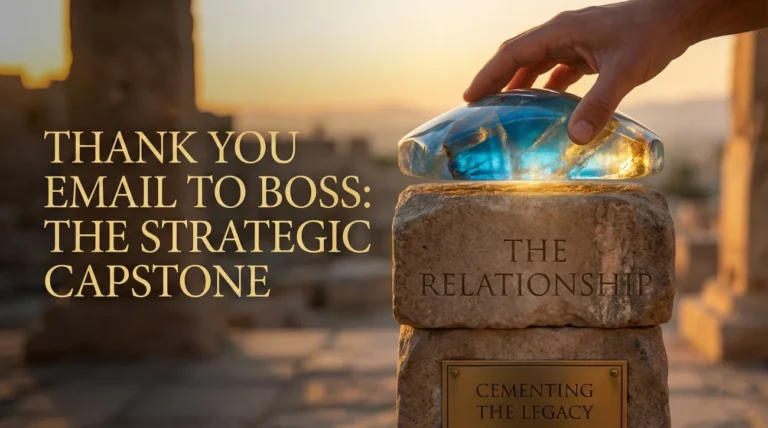

- Core idea: A thank you email to a mentor is a career investment, it turns an exit into a long-term alliance.
- Psychology: Mentors are driven by generativity, your message should validate their time by showing you were listening and growing.
- What to say: Use specific impact, name one moment, one lesson, and one “before vs after” change instead of generic praise.
- How to send: Choose a timing strategy, pre-departure 1:1 plus email on last day, or a reflective note two weeks after leaving.
- After you leave: Keep the bond alive with quarterly updates, reverse mentoring value, and public support when they win.
The Architecture of Gratitude
In the corporate world, transactional relationships are the norm. You trade your time for a salary; you trade your output for a promotion. But mentorship is different. It is an anomaly. A true mentor gives you the most valuable asset they possess – their hard-earned wisdom and political capital – often with zero expectation of immediate return.
When you decide to leave a company, writing a thank you email to mentor is not just a box to check on your exit checklist. It is a sacred duty of your professional life. It is the moment you acknowledge that while you built your career, they provided the blueprints.
Most people struggle with this email because they fear sounding overly sentimental or, conversely, too stiff. They default to generic phrases like “Thanks for the advice,” which minimizes the impact the mentor actually had. This guide is designed to help you bridge that gap. We will explore the psychology of gratitude, how to articulate deep appreciation without awkwardness, and how to transition a workplace mentorship into a lifelong alliance.
The Psychology of the Mentor-Mentee Bond
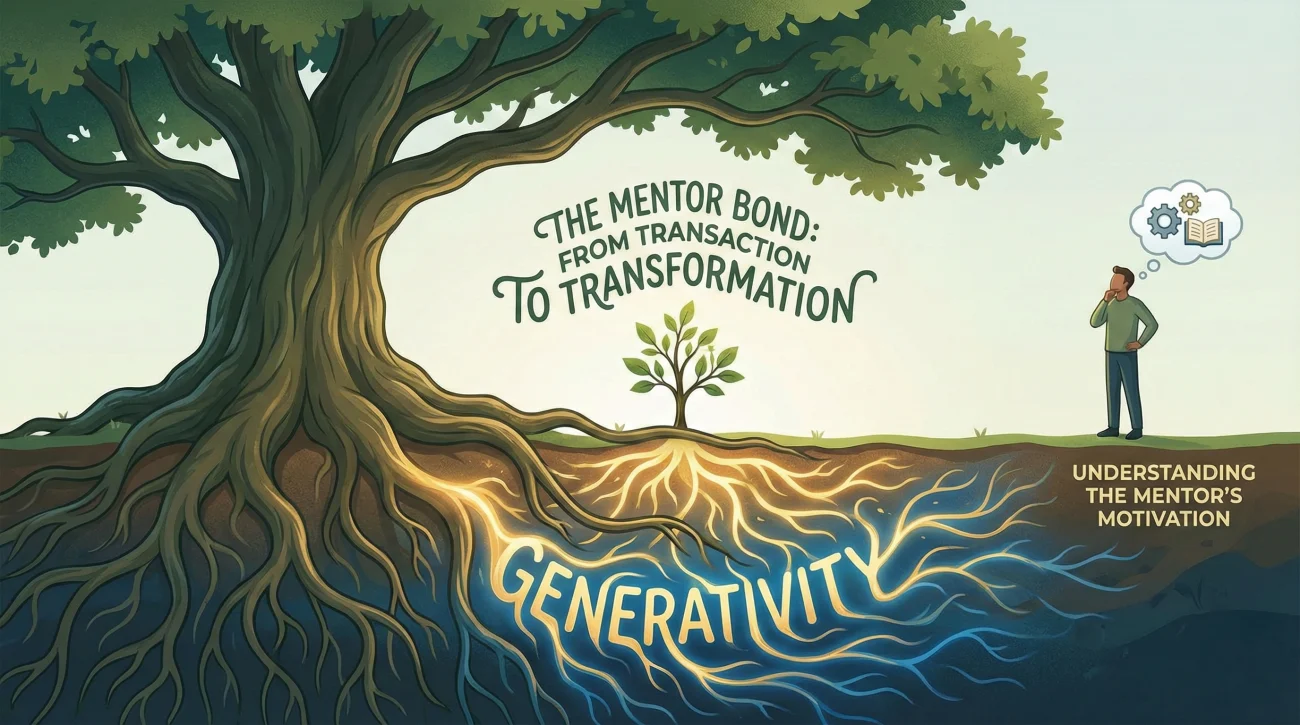
To write a great letter, you must first understand the relationship dynamics. Unlike a manager who is paid to oversee your work, a mentor volunteers to oversee your growth. They are “Sensei” figures who see potential in you that you often don’t see in yourself.
Psychologically, mentors are driven by “Generativity” – a concern for guiding the next generation. When you leave, they aren’t just losing an employee; they are watching a protege fly the nest. Your exit email validates their investment. It tells them: “You didn’t waste your time. I was listening.”
Therefore, your appreciation message to career mentor figures must pivot from “transactional gratitude” (thanks for helping me with Project X) to “transformational gratitude” (thanks for changing how I view leadership). This distinction is crucial because it speaks to the core motivation of why they mentored you in the first place.
The Fear of “Awkwardness”
Many professionals avoid sending deep thank-you notes because they fear being perceived as “too emotional” or “unprofessional.” This is a misconception. In a sterile corporate environment, genuine emotion stands out as a marker of high emotional intelligence (EQ). A heartfelt letter is rarely seen as weakness; it is seen as class.
Distinguishing the Boss from the Mentor
While a boss can be a mentor, the roles are distinct. Confusing them in your farewell note can dilute your message. Here is how to differentiate your approach:
| Role | Primary Focus | Tone of the Email |
|---|---|---|
| The Boss 👔 | Performance, Deliverables, Team Metrics. | Professional, focused on opportunities provided and shared successes. |
| The Mentor 💡 | Potential, Wisdom, Career Trajectory. | Personal, vulnerable, focused on lessons learned and doors opened. |
If your boss was also your mentor, your email needs to weave these two threads together, acknowledging their dual impact on your daily output and your long-term future. You might start the email addressing the professional side (thanking them for the opportunity) and transition into the personal side (thanking them for the wisdom).
The Anatomy of a Heartfelt Tribute
A generic email fades from memory in minutes. A specific tribute lasts a lifetime. To craft a thank you letter to mentor when leaving that resonates, you need to use the “Specific Impact” framework.
Avoid broad strokes. Zoom in on the pixels of your relationship.
| ❌ Generic (Forgettable) | ✅ Specific (Unforgettable) |
|---|---|
| “Thanks for all your advice over the years.” | “I still use the negotiation framework you taught me before the Acme deal. It completely changed how I approach conflict.” |
| “You opened a lot of doors for me.” | “I know you put your reputation on the line to get me into the Leadership Program. I will never forget that advocacy.” |
| “You are a great leader.” | “Watching you handle the crisis last Q3 taught me that integrity matters more than speed. That is the kind of leader I want to become.” |
The “Before and After” Technique: Another powerful way to structure your gratitude is to describe who you were before their mentorship and who you are now. For example: “Before I met you, I struggled to speak up in meetings. Today, thanks to your coaching, I lead them.”
Curated Templates for Every Mentorship Style
Mentorship comes in many flavors. Below are tailored scripts designed to match the specific “texture” of your relationship. Remember, these are starting points – customize them with your own memories.
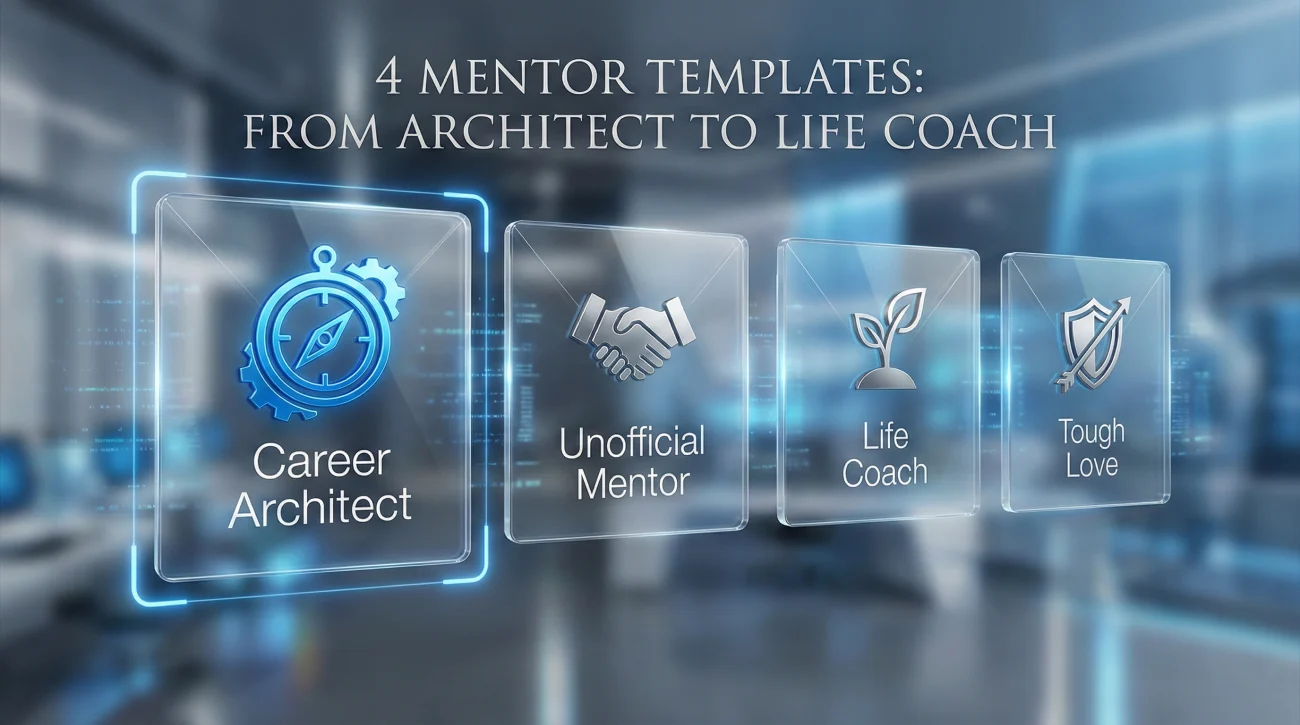
1. The “Career Architect” (Formal & Long-Term)
This is for the person who deliberately sat down with you to map out your future, critique your skills, and mold you into a leader. This relationship was likely structured, consistent, and deeply impactful.
Subject: Honoring your impact on my journey
Dear Robert,
As I prepare to move on to my new role at Apex, I’ve been reflecting on the path that brought me here. At every critical junction, I see your fingerprints.
When we started our mentorship two years ago, I was an ambitious but unfocused analyst. You didn’t just teach me strategy; you taught me patience. I vividly remember our coffee chat after I missed the promotion. Instead of letting me wallow, you drew a diagram of “Career Capital” on a napkin and showed me where I needed to build leverage. That napkin is still in my desk drawer.
Thank you for seeing potential in me when I was struggling to see it myself. Thank you for the “tough love” feedback that stung in the moment but accelerated my growth by years.
I am leaving this company, but I am not leaving your orbit. I hope to continue making you proud as I take these lessons into my next chapter.
With deep gratitude,
Elena
2. The “Unofficial” Mentor (The Senior Peer)
They never had the title, but they had the wisdom. This is for the senior colleague who took you under their wing organically. The tone here should be warmer, less formal, but equally respectful.
Subject: Thank you for showing me the ropes
Hi Sarah,
I’m writing this not to a “senior manager,” but to the person who actually taught me how to survive and thrive here.
You didn’t have to help me. It wasn’t in your job description to review my decks before I sent them to the VP, or to debrief with me after tough client calls. You chose to do that out of kindness, and it made all the difference. You showed me the unwritten rules of corporate success that no HR manual covers.
I’m going to miss our hallway chats, but I’m taking your “client-first” philosophy with me to my new gig. You’ve set the standard for what a generous colleague looks like.
Let’s definitely grab lunch next month once the dust settles.
Best,
Mike
3. The “Life & Wisdom” Mentor
Sometimes a mentor helps you navigate life, not just Excel sheets. If they helped you with work-life balance, confidence, or personal crises, acknowledge that depth. This email acknowledges the human connection.
Subject: More than just professional thanks
Dear Mr. Henderson,
Leaving this job is bittersweet, largely because it means I won’t have our Friday afternoon check-ins.
I learned a lot about marketing from you, but I learned even more about character. Watching how you balance your high-pressure role with your dedication to your family has been a revelation for me. You taught me that burnout isn’t a badge of honor and that true success includes well-being.
Thank you for helping me navigate the impostor syndrome I battled last year. Your simple reminder that “everyone is figuring it out as they go” gave me the courage to speak up in meetings.
You have shaped not just my career, but the person I am becoming.
Warmly,
Jessica
4. The “Tough Love” Challenger
They pushed you hard. They were critical. They didn’t accept mediocrity. Looking back, you realize they were the catalyst for your excellence. This email is about respect for high standards.
Subject: Appreciation for raising the bar
David,
I wanted to send a note before I depart. Looking back at my tenure, I realize that the periods of my steepest growth coincided with the times you pushed me the hardest.
I’ll admit, your red-lining of my initial proposals was frustrating at the time! But you refused to let me settle for “good enough.” Because of your rigorous standards, I learned how to build business cases that are bulletproof. You taught me that excellence is in the details.
Thank you for not going easy on me. I am a sharper, stronger professional because of it.
Sincerely,
Alex
Timing and Delivery: The “Long Tail” Effect
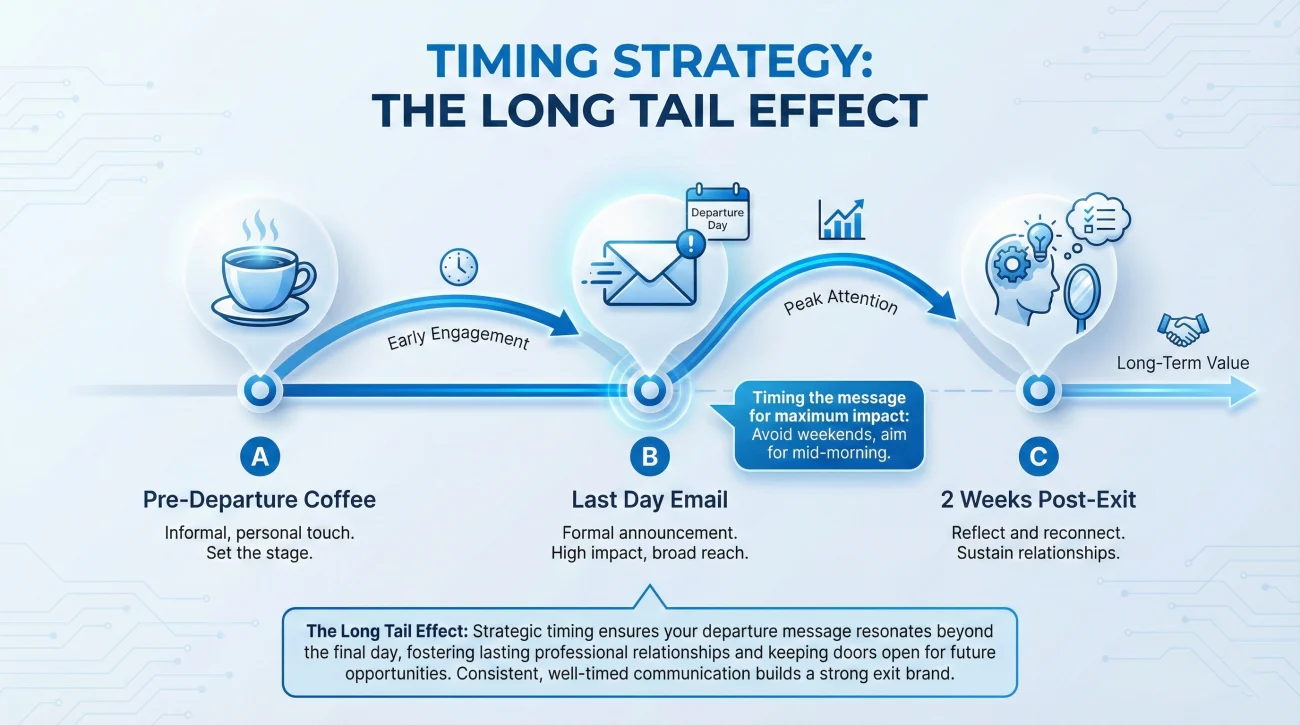
When should you send this farewell thank you to mentor? Unlike the standard resignation email which goes out on your last day, the mentor email has its own timeline rules. The impact of the message is heavily influenced by when it is received.
Option A: The “Pre-Departure” Coffee (Best)
Schedule a 1:1 meeting 3-4 days before you leave. Tell them the news personally. Express your gratitude verbally. Then, follow up with the email on your last day. The email serves as the permanent record of the sentiment. This prevents the “hit and run” feeling of dropping a bombshell email and leaving.
Option B: The “Post-Departure” Reflection (High Impact)
Interestingly, sending this email 2 weeks after you leave can be incredibly powerful. It signals: “I’m not just writing this because I have to; I’m writing this because I’m out in the world using your lessons and thinking of you.” It removes any feeling of obligation and frames the gratitude as a spontaneous act of reflection.
From Mentorship to Alliance: Maintaining the Bond
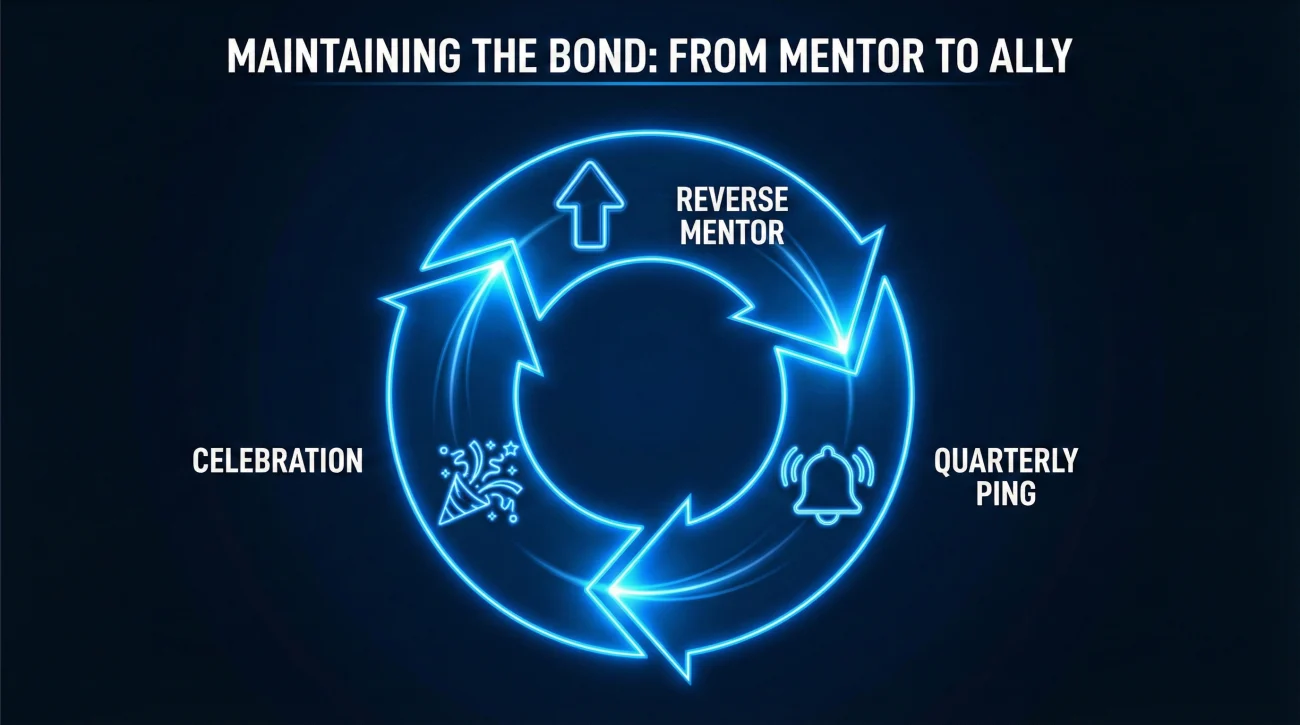
The biggest mistake mentees make is “ghosting” their mentor after getting a new job. This burns the bridge of emotional capital you built. To transition to a peer relationship, you need a strategy.
- 🔄 The Reverse Mentor: You are entering a new environment. Send them updates on industry trends or tools you are seeing in your new role. Add value back to them. This shifts the dynamic from student-teacher to peer-peer.
- 📅 The Quarterly Ping: Set a calendar reminder to email them every 3 months. “Saw this article and thought of you” is enough to keep the line open. It shows you are still intellectually engaged with them.
- 🥂 The Celebration: Congratulate them on their wins (promotions, work anniversaries) on LinkedIn. Be their cheerleader as they were yours. Public acknowledgment (like a LinkedIn recommendation) is also a powerful way to give back.
❓ FAQ
🎁 Should I give my mentor a gift?
Yes, if appropriate. A small, thoughtful token is a classy move. It shouldn’t be expensive (avoid lavish gifts that create awkwardness). A handwritten card, a book relevant to a topic you discussed, or a bag of the coffee beans they love shows deep attention to detail. The handwritten note is often the most treasured part of the gift. Avoid cash or generic gift cards.
📧 How long should the email be?
Quality over quantity. While it should be longer than a standard “goodbye team” email, it doesn’t need to be a novel. 3-5 substantial paragraphs are the sweet spot. Enough space to tell a specific story, but concise enough to be respectful of their time. If you find yourself writing pages, consider a handwritten letter instead.
🤝 Can I ask for a reference in this email?
It is better to separate them. The thank you email should be pure gratitude. If you need a reference, ask for it in the conversation before sending this email, or send a separate request later. Mixing a “favor ask” with a “heartfelt thank you” can make the gratitude feel transactional, like you are buttering them up for a favor.
😢 Is it okay to be emotional?
Absolutely. Mentorship is a human bond. It is perfectly acceptable to say you will miss them or that their guidance meant the world to you. Authenticity is key. If you feel emotional, let that show in your words – it will likely mean a great deal to them. Vulnerability creates connection.
Final Thoughts
A career is not built in isolation. It is a collaborative project, built on the shoulders of those who stopped to help us climb. Your thank you email to mentor is more than just good etiquette; it is an act of legacy.
By taking the time to write a deep, specific, and human note, you ensure that the relationship survives the transition. You turn a former “boss” or “senior” into a lifelong ally, advocate, and friend. In the long game of a career, these relationships are your most valuable currency.
For more guidance on navigating your professional exit, explore our comprehensive resignation etiquette guide. If you are still drafting your other farewells, check our templates for goodbye and handover emails to ensure you leave every part of your organization on a high note. Start your professional transition right at ResignSmartly.
⚠️ Legal Disclaimer: The resignation templates, email samples, and professional guidance provided in this guide are for informational purposes only and do not constitute legal advice. Employment laws and contract requirements vary by jurisdiction and individual circumstances. Please review your employment agreement and consult your HR department and/or a qualified attorney to ensure compliance with applicable laws and policies.