
- Core goal: Protect your relationship with your manager and lock in a strong final impression for future references and opportunities.
- Psychology: Your exit anchors memory, so a specific thank-you reframes leaving as professional growth, not a loss or resentment.
- Write it right: Use radical specificity, name the impact they had on you, and leave an open door with a concrete way to stay connected.
- Choose the format: Email is standard, handwritten is high-impact, and the best default is hybrid, thank them live then follow with email.
- Avoid landmines: No backhanded feedback, no asks for favors, no copy-paste, keep it short, include contact info, and send 24 to 48 hours before you go.
The Strategic Value of a Proper Goodbye
We often spend more waking hours with our managers than we do with our families. They are the architects of our daily reality – shaping our projects, our stress levels, and ultimately, our career trajectory. As you pack your desk and hand over your badge, a well-crafted thank you email to boss is not just polite; it is a strategic capstone to that relationship, ensuring you leave behind a legacy of professionalism and grace.
There is a peculiar psychology to resignations. In the rush of final handovers, exit interviews, and farewell drinks, the relationship with the direct manager often gets shortchanged. We tend to focus on the “goodbye” to the team, assuming the boss knows we appreciate them. But silence is often misinterpreted as indifference or, worse, resentment.
I have seen brilliant careers stumble not on technical skills, but on burnt bridges. Your manager holds the keys to your future in ways that aren’t immediately obvious. They are the ones who will receive the reference call five years from now. They are the ones who might move to your dream company next year and remember – or forget – your name. Writing a thoughtful note isn’t about sycophancy; it’s about acknowledging the human investment they made in you.
In this deep dive, we will move beyond generic pleasantries. We will explore the nuances of expressing gratitude to every type of boss – from the mentor who changed your life to the difficult manager who taught you resilience. We will dissect the anatomy of a perfect exit note and ensure your final impression is your best one.
The Psychology of the Exit: Why “Thank You” Matters
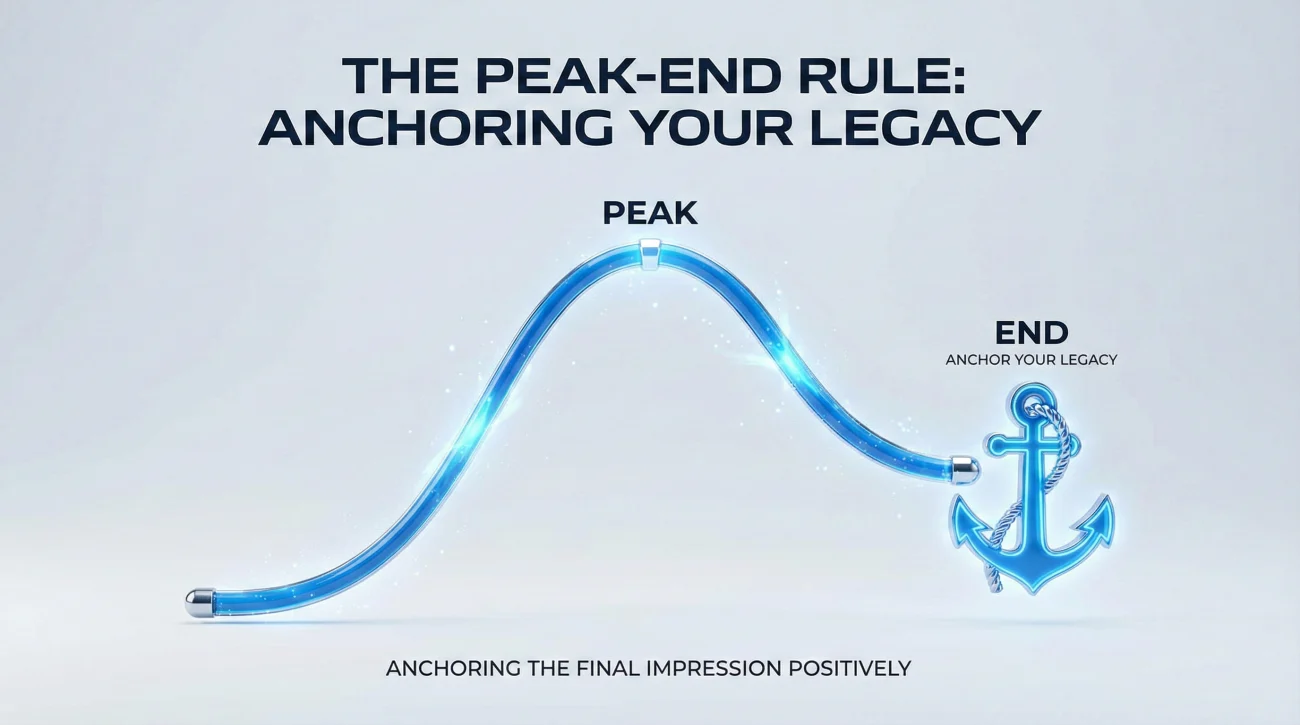
Human memory is heavily influenced by the “Peak-End Rule.” Psychologists have long established that people judge an experience largely based on how they felt at its peak (the most intense point) and at its end. Your tenure might have been a mix of highs and lows, but your exit is the “End.” It anchors how your boss will remember the entire narrative of your employment.
When you send a specific, thoughtful appreciation email to manager, you are effectively curating that final memory. You are reframing your departure from “a loss of a resource” to “the graduation of a professional.”
Think about it from their perspective. Management is often a thankless job. Leaders absorb pressure from above and shield their teams from below. When an employee leaves, a manager’s first thought is often logistical panic: “How will we cover the workload?” A genuine note of thanks cuts through that stress, validating their effort and closing the loop on a human level. It transforms a transaction into a relationship.
The “Boomerang” Effect
The modern career path is rarely linear. “Boomerang employees” – those who leave a company only to return years later in a more senior role – are becoming increasingly common. Your exit email is effectively the first step in that potential return. By leaving the door wide open with warmth and gratitude, you preserve your “rehire eligibility” not just in the HR system, but in the hearts and minds of the leadership team.
The Anatomy of a Perfect Farewell Note
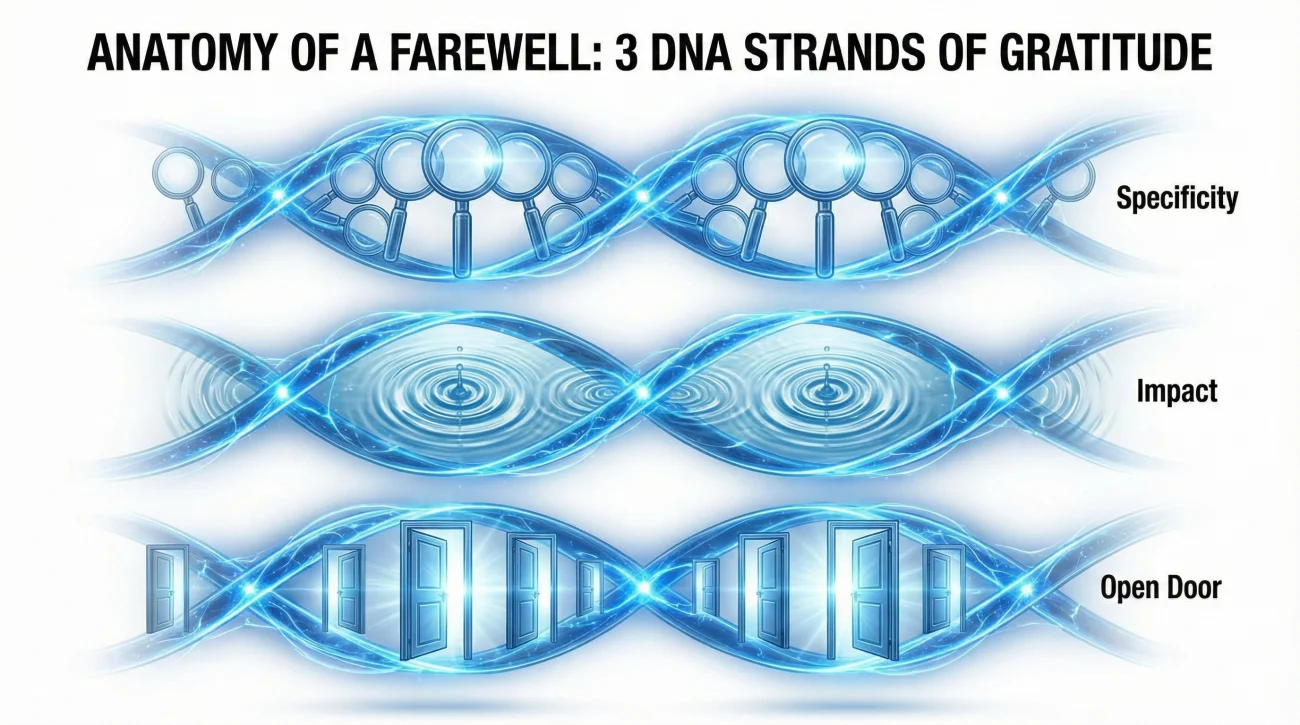
A generic “Thanks for everything” is almost worse than saying nothing. It feels like a copy-paste job. To resonate, your message needs to have texture and depth. Every impactful thank you note shares three DNA strands:
1. Radical Specificity
The brain glosses over generalities but latches onto details. Don’t say, “I learned a lot.” Say, “I still use the negotiation framework you taught me during the Q3 vendor renewal.” Specificity proves sincerity. It shows you were paying attention. This detail anchors the memory and proves that their mentorship didn’t go in one ear and out the other.
2. Acknowledgment of Impact
Connect their action to your result. How did their mentorship change you? Did you become more confident? More strategic? More patient? This validation is the greatest gift you can give a leader. It tells them that their management style works and encourages them to continue investing in others.
3. The Open Door
Resignation shouldn’t mean the death of the relationship. A good note pivots to the future, expressing a desire to stay in that professional orbit. It signals that you value them as part of your long-term network, not just a temporary supervisor. Phrases like “I’d love to stay in touch” are cliché; be specific about how you want to stay in touch (e.g., “I hope to see you at the annual industry summit”).
Choosing Your Medium: Email vs. Handwritten vs. In-Person
In the digital age, the medium is part of the message. While email is the standard, it’s not the only tool in your arsenal. Deciding between a digital message and a physical thank you letter to boss when leaving depends entirely on the depth of your bond and the culture of your workplace.
Here is a breakdown to help you decide the best approach for your specific situation:
| Method | Pros | Cons |
|---|---|---|
|
| |
| ✍️ Handwritten Note |
|
|
| 🤝 In-Person/Video |
|
|
The Expert Recommendation: For most managers, the “Hybrid Approach” wins. Deliver your heartfelt thanks verbally during your final 1:1 meeting, then follow up with a detailed email. This ensures the emotion is felt in the moment, but the record is preserved for the future.
Curated Templates for Every Manager Archetype
One size never fits all. The note you write to a mentor who shaped your worldview should look nothing like the note you write to a distant administrator. Below are tailored scripts designed to hit the right emotional notes for specific relationships.
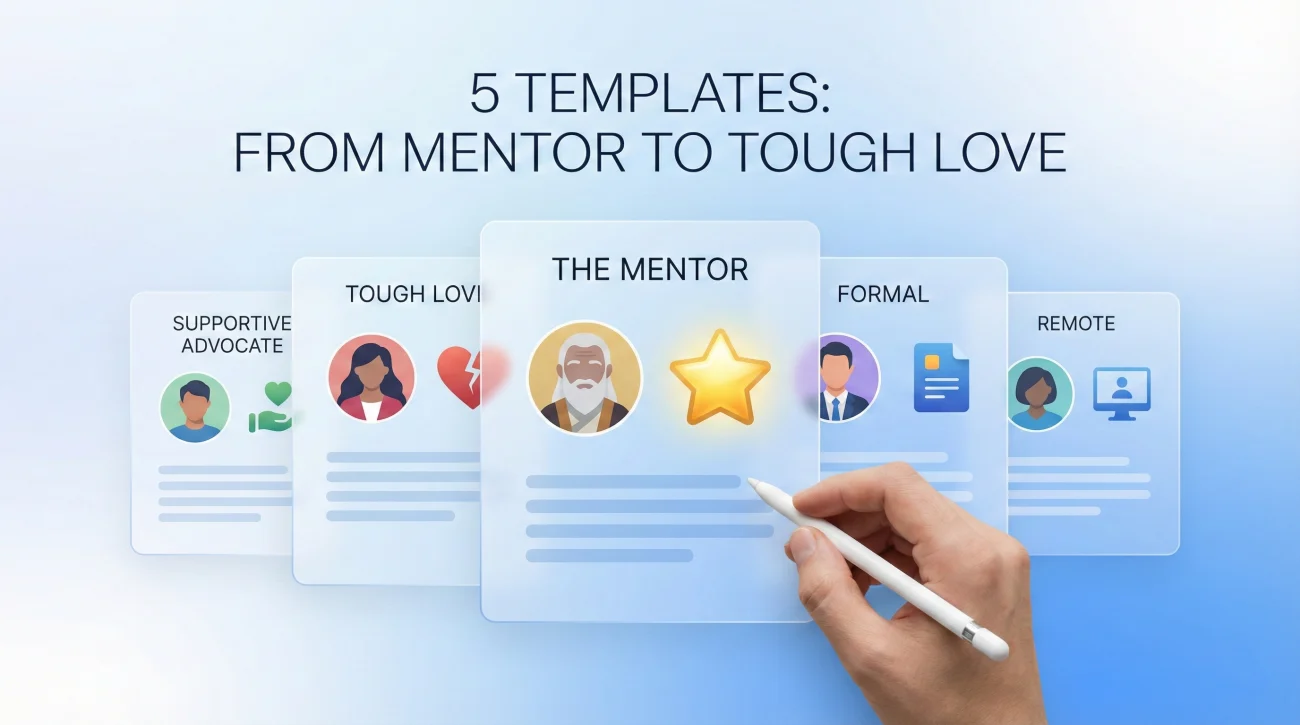
The “True Mentor” Relationship
This is the rarest and most valuable relationship. This person didn’t just approve your timesheets; they invested in your potential. A thank you note to mentor figures needs to go deep. It should acknowledge the extra miles they walked for you – the advice given off the clock, the advocacy behind closed doors, and the wisdom shared.
Subject: More than just a thank you
Dear Sarah,
As I pack up my desk, I find myself thinking about where I was three years ago versus where I am today. The difference is largely due to you.
I still remember my first month, when I completely fumbled the client presentation for the Delta account. Most managers would have taken me off the project or micromanaged my next step. You didn’t. You sat me down, role-played the scenario until I was comfortable, and sent me right back in. That vote of confidence didn’t just save the account; it rebuilt my self-belief.
Thank you for teaching me that leadership isn’t about being the loudest voice in the room, but about asking the right questions. It’s a philosophy I intend to carry into this new role.
I would love to keep you updated on my journey, and I hope our paths cross often. You’ve set a high bar for what I look for in a leader.
With deep gratitude,
Michael
The Supportive Advocate
Perhaps they weren’t a life-changing mentor, but they were a solid, good boss. They removed obstacles, treated you with respect, and made work enjoyable. Drafting an appreciation email to manager like this should focus on the specific opportunities they created for you.
Subject: Thank you for your leadership
Hi David,
Before I log off for the last time, I wanted to send a note of sincere thanks for your support over the last two years.
I’ve truly appreciated the autonomy you gave me to run with the Q4 marketing initiative. It’s rare to find a manager who trusts their team so implicitly, and that freedom allowed me to do some of my best work. Your door was always open when I needed guidance, but you never hovered when I needed space. That balance is a rare skill.
Thank you for creating an environment where it was safe to innovate. I’m leaving with a toolkit of skills that I wouldn’t have acquired without your advocacy.
I wish you and the team nothing but the best for the upcoming fiscal year.
Best regards,
Jennifer
The “Tough Love” Boss
Some bosses are demanding. They push hard, critique often, and rarely praise. Yet, looking back, you realize their high standards made you sharper. You don’t have to fake warmth, but you should acknowledge the professional growth. This is about respecting the rigor.
Subject: Appreciation for your guidance
Robert,
As I move on to my next chapter, I wanted to thank you for pushing me to elevate my work during my time here.
I’ll admit, your feedback on my initial coding structure was tough to hear at the time, but you were right. That level of attention to detail and insistence on scalable architecture is something I now pride myself on. You taught me that “good enough” usually isn’t, and that excellence requires rigor.
Thank you for holding me to a high standard. It made me a better engineer.
Sincerely,
Alex
The Strictly Professional Supervisor
In a strictly corporate structure, or perhaps a large bureaucracy where you had little face time, a gratitude email to supervisor should focus on the stability and clarity they provided. Keep it polished, brief, and professional.
Subject: Thank you – [Your Name]
Dear Ms. Chen,
I am writing to express my appreciation for the opportunity to work within the Operations Division under your supervision.
Thank you for the clear direction and resources you provided, which allowed our team to meet our targets consistently. I particularly appreciated the clarity of your strategic vision during the merger transition; it provided much-needed stability for all of us.
I am grateful for the experience gained here and wish you continued success.
Best regards,
Thomas
The Boss Who Was There During Crisis
Life happens. Sometimes, the most meaningful thing a boss does is simply be human when your world falls apart. Writing a thank you message to boss for support during personal crises – be it health issues, family loss, or mental health struggles – requires vulnerability and grace.
Subject: A personal thank you
Hi Amanda,
Leaving a job is always bittersweet, but leaving this team is particularly hard because of how you treated me as a person, not just an employee.
I will never forget the kindness you showed me last year when my father fell ill. You didn’t just approve my leave; you actively took work off my plate and checked in on me without pressuring me to return. In a corporate world that often prioritizes output over people, your empathy stood out.
That support allowed me to focus on my family when it mattered most. I will remain loyal to you and this organization for that reason alone.
Thank you for leading with such heart.
Warmly,
Jessica
The Fully Remote Boss
In the era of distributed teams, you may have never met your boss in person. This lack of physical presence makes the written word even more critical. When thanking a remote manager, focus on their ability to connect across the digital divide and their responsiveness.
Subject: Thank you for your support
Hi Mark,
Working remotely can sometimes feel isolating, but your leadership made sure I never felt disconnected from the team’s mission. I truly appreciate how you prioritized our weekly video check-ins – not just to track tasks, but to see how I was actually doing.
Thank you for building a culture of trust where output mattered more than hours logged. It allowed me to balance my life while still delivering my best work. I’ll carry that lesson on remote leadership with me.
Hope to cross paths IRL someday!
Best,
Sam
The Minefield: Common Mistakes to Avoid
Even with the best intentions, a farewell email can go wrong. I’ve seen goodbye notes that burned bridges instantly or left a sour aftertaste. Here is what to scrub from your draft:
- 🛑 The Backhanded Compliment: “Thanks for finally listening to my ideas in the last few months.” This is not gratitude; it’s resentment disguised as a thank you. Leave the baggage at the door.
- 🛑 The “Ask” disguised as “Thanks”: Do not ask for a LinkedIn recommendation or a reference in this email. Let the gratitude stand alone. Asking for a favor in the same breath cheapens the sentiment. Wait at least two weeks after leaving before making that request.
- 🛑 The Novel: Keep it to 3-4 paragraphs. Your boss is likely busy planning for your replacement. A wall of text might get skimmed or saved for “later” (which means never).
- 🛑 The Copy-Paste: If you are sending emails to multiple managers or senior leaders, customize them. People talk. If they realize they all received the exact same generic paragraph, your sincerity evaporates.
- 🛑 The Premature Send: Sending this note while you still have two weeks of work left can create an “already checked out” vibe. It signals you are emotionally done before you are physically done.
Your Pre-Send Checklist
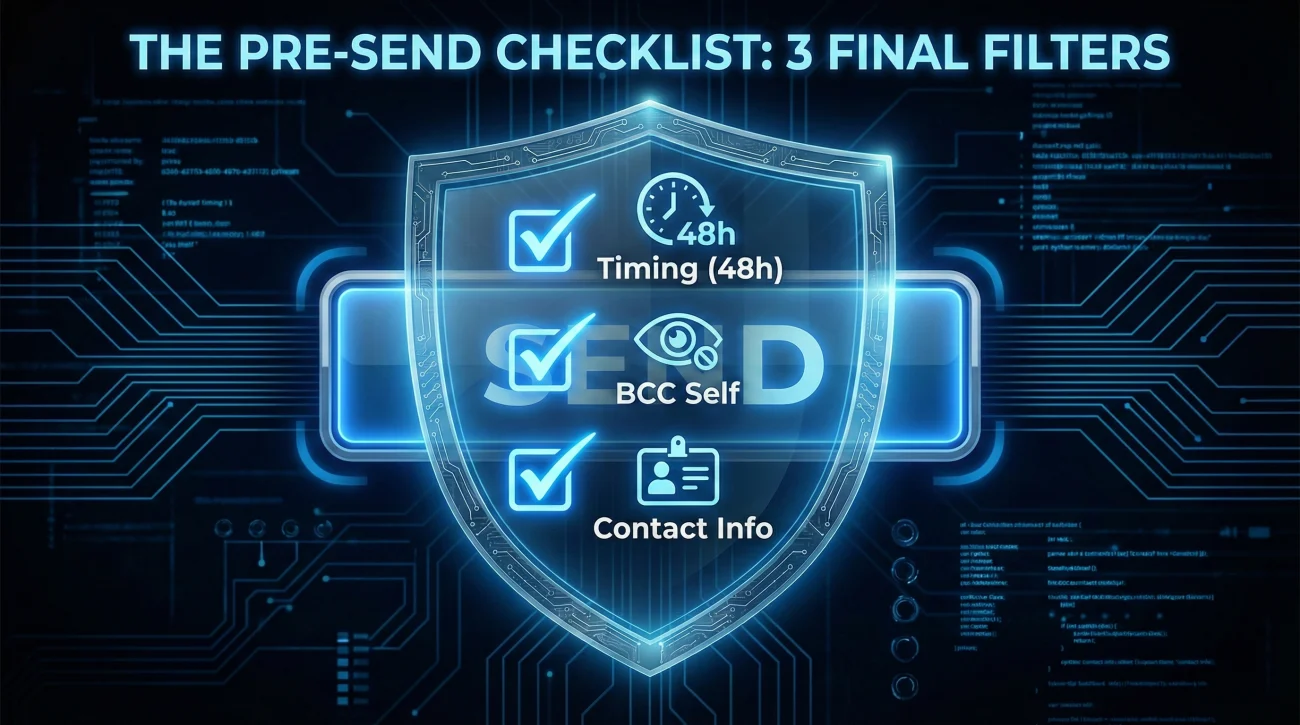
Before you hit send on that final afternoon, pause. Take a deep breath. Run your email through this mental filter to ensure it lands exactly as intended:
Timing is Key: Don’t send it on your very last day at 4:55 PM. Send it 1-2 days before you leave. This gives your boss time to read, digest, and potentially reply or come over to your desk for a chat. If you send it as you walk out the door, it feels like a hit-and-run.
Check Your Bcc: If you are sending a copy to your personal email (which you should, for your records), make sure you BCC yourself, don’t CC. It looks cleaner.
Contact Info: Ensure your personal contact details (LinkedIn, personal email, phone number) are included beneath your signature. Make it frictionless for them to find you in six months.
For more detailed advice on the logistics of leaving, you can refer to our guide on how to resign professionally.
❓ FAQ
⏰ When is the absolute best time to send the thank you email?
The “Goldilocks” zone is 24 to 48 hours before your final exit. Sending it too early (like during your notice period) can feel premature as you are still working. Sending it after you’ve left risks it getting lost in the shuffle. A day or two before creates a window for a warm final in-person conversation sparked by the email.
📧 Should I write a thank you note if I was fired or laid off?
This is tough, but generally, yes, if you want to preserve the relationship. Keep it very brief and high-level. Focus on the gratitude for the opportunity and the colleagues you met. It shows immense class and professionalism to exit with grace even under difficult circumstances, which can protect your reputation in the industry.
💼 Can I include constructive feedback in my thank you email?
Absolutely not. The thank you email is for gratitude only. Constructive feedback belongs in the formal HR exit interview or a specific private conversation if you have a high-trust relationship. Mixing criticism with gratitude dilutes both messages and often leaves a negative final impression.
📝 What if I have multiple bosses (matrix structure)?
Send a separate, personalized email to each direct supervisor. Do not group them into one thread. Acknowledge the unique role each played in your work. For example, thank your functional manager for technical guidance and your project manager for daily operational support. Individual emails show you value each relationship distinctively.
🤝 How do I thank a boss who I didn’t get along with?
Focus on the professional learnings rather than the personal relationship. You can thank them for the “opportunity to manage complex projects” or “the rigorous standards of the department.” You don’t need to lie about missing them; just find the truth in the professional value gained during your tenure.
Final Thoughts
As you close this chapter, remember that the professional world is smaller than it seems. The manager you say goodbye to today could be the client you pitch tomorrow, or the partner you collaborate with a decade from now. Bridges are difficult to build but easy to burn.
A sincere thank you email to boss is an act of professional maturity. It costs you nothing but a few minutes of reflection, yet it cements your reputation as a class act. It ensures that when your name comes up in boardrooms or casual coffees in the future, the association is one of respect and positivity.
So, take a moment. Reflect on the journey. And send that email. It’s the perfect final signature on your work.
For more templates and guidance on navigating your exit strategy, explore our collection of goodbye and handover emails or read our comprehensive pillar on resignation etiquette to ensure every step of your departure is flawless.
⚠️ Legal Disclaimer: The resignation templates, email samples, and professional guidance provided in this guide are for informational purposes only and do not constitute legal advice. Employment laws and contract requirements vary by jurisdiction and individual circumstances. Please review your employment agreement and consult your HR department and/or a qualified attorney to ensure compliance with applicable laws and policies.