- Core idea: A thank you note after an exit interview is reputation management, it controls the final snapshot people remember.
- Why it matters: The recency effect means your last interaction can outweigh years of strong work in future reference checks.
- HR reality: HR documents tone and context, and their internal network can shape your long-tail reputation.
- Timing rule: Send within 24 hours, next morning is best after a tense interview, do not wait a week.
- Write it right: Specific acknowledgment, professional compliment, optional constructive reframe, open-door close, avoid venting and admin favors.
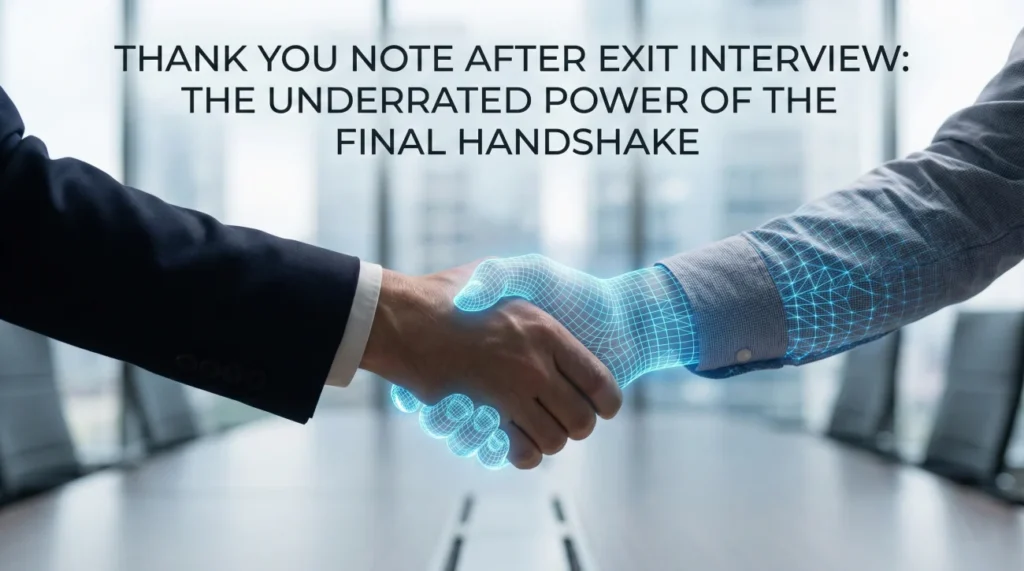
The Underrated Power of the Final Handshake
Picture this: You just walked out of the conference room – or clicked “Leave Meeting” on Zoom. The exit interview is finally over. You feel a massive weight lift off your shoulders. You’ve handed in your badge, you’ve spoken your truth, and you are mentally checking out. But before you completely disconnect, there is one final, crucial step that most professionals neglect. It’s a simple thank you note after exit interview.
I know what you are thinking: “Why bother? I’m leaving. The transaction is done.”
That reaction is normal. It can feel weird to thank someone for an administrative formality – especially if you are leaving because of burnout, better pay elsewhere, or management issues. But treating the exit interview as a checkbox is a strategic misstep.
Here’s the truth: your resignation announcement was the headline. Your final interactions are the “fine print” people remember. A short, well-timed follow-up isn’t about being sentimental. It’s reputation management. It helps you leave with a clean record, clean energy, and a clean story.
In this guide, you’ll learn (1) why the final touchpoint matters more than most people realize, (2) why HR can influence your long-tail reputation through documentation and reference checks, and (3) exactly how to write a follow-up that sounds professional even if your exit was complicated.
The “Recency Effect”: Why the Last Interaction Matters Most
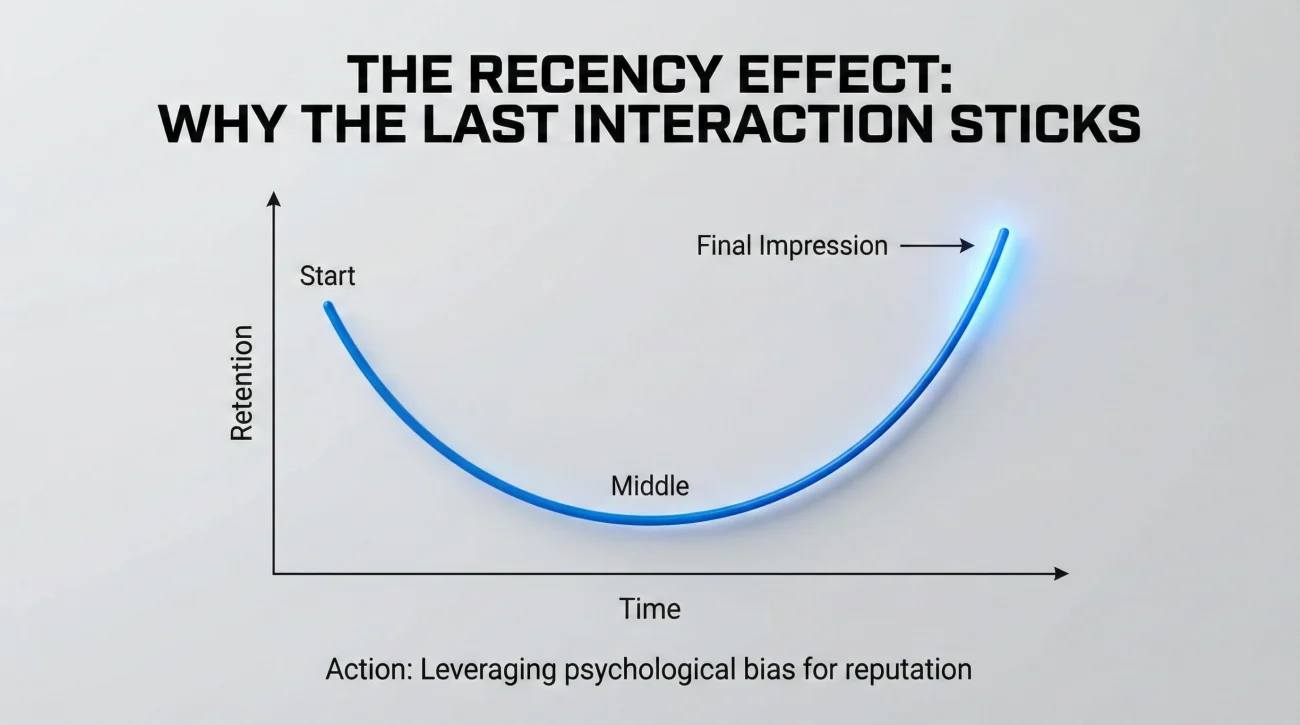
Human memory is not a perfect database. We don’t store your entire career as a balanced timeline. We store “snapshots” and “endings.” In practice, people often overweight what happened recently – especially how things concluded.
You could have been a stellar employee for five years: hitting goals, saving projects, being dependable. But if your final week is marked by silence, apathy, or a tense exit interview, that “ending” can become the dominant impression for people who stayed behind.
Now zoom out. A future employer calls for a reference check three years from now. They won’t remember the project you rescued in Q3 of 2021. They’ll open your file, scan notes, and form a quick “vibe” about how you left.
Sending a follow up email after exit interview is how you influence that final snapshot. Even if your feedback was critical, your follow-up can say: “I was honest, but I was professional.” That is a powerful combination.
⚠️ Important nuance: This is not about pretending everything was amazing. It’s about leaving in a way that protects your credibility. The best professionals can deliver hard feedback and close the loop with calm respect.
The HR Perspective: It’s Not Just Admin to Them

To write an effective note, you need to step into the shoes of the person receiving it. For you, the exit interview is rare (and often emotional). For HR, it can be repetitive – and draining.
HR professionals sit through conversations about salary frustrations, manager conflict, and cultural issues. Even when the feedback is valid, taking that in all day is not light work. They’re also the people tracking risk, compliance, and process – meaning they care a lot about tone, clarity, and documentation.
When you take 3 minutes to write a message thanking HR for exit interview time and professionalism, you break the pattern. You stand out because:
- 🦄 You are the exception: Most people don’t send a follow-up at all.
- 🤝 You validate their role: You acknowledge their work (process, listening, coordination).
- 🛡️ You reduce friction: If the interview was tense, you signal: “It’s business, not personal.”
Also, HR teams are connected. Even in large companies, recruiters, HR business partners, and HR ops talk. Your name might pop up later – when you apply again, when you ask for paperwork, or when someone informally asks, “How did that person leave?”
A good follow-up doesn’t guarantee anything. But it’s one of the few low-effort moves that consistently improves how you’re remembered.
Strategic Timing: The 24-Hour Rule
Timing matters as much as wording. For an exit interview follow-up, the window is short because HR “closes the loop” quickly. The best time to send your note is within 24 hours of the conversation. If your interview happens on your last day, send it before you hand in your laptop.
| Timing Scenario | Strategic Impact | Recommended Action |
|---|---|---|
| Immediate (1–2 hours after) | High. Shows responsiveness and professionalism. | Best for standard or positive exits. |
| Next Morning | Very High. Signals reflection and emotional maturity. | Best after a difficult or intense interview. |
| 4–5 business days later | Low. Can feel like an afterthought. | Only send if you have a real reason. Otherwise, skip the formal note and reconnect later on LinkedIn. |
Navigating the Last Day Chaos
If your exit interview happens right before you leave forever, don’t wait until you get home and “reset.” Draft the email while it’s still fresh. Even a short note sent from your phone is better than silence.
Pro tip: If you’re worried about sounding emotional, write it, save it as a draft, re-read once, then send. You’re aiming for calm, not cold.
The Masterclass: Exit Interview Thank You Templates
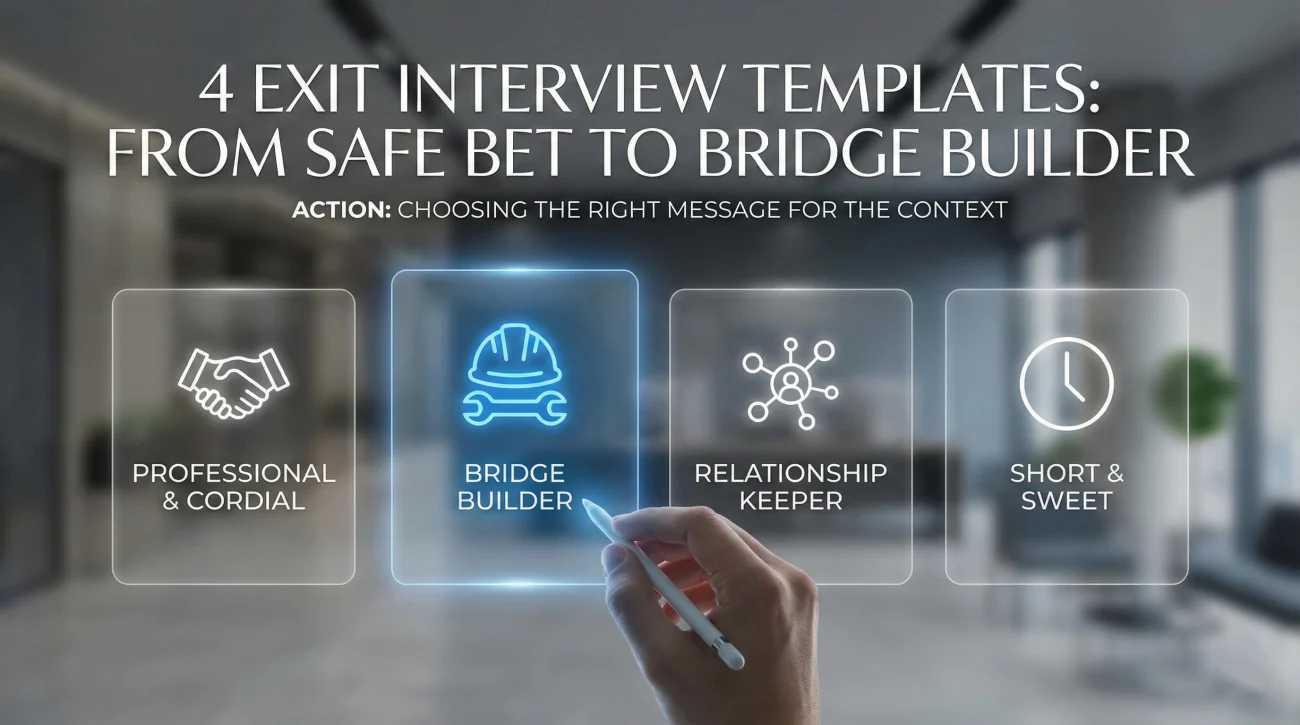
These are not just fill-in-the-blank scripts. Each template is built for a specific emotional situation. Pick the one that matches your exit reality, then personalize lightly so it sounds like you.
Subject line options (rotate as needed): “Thank you – Exit Interview | [Your Name]”, “Following up on our conversation”, “Thank you, [Name]”, “Appreciate your time today”.
1. The “Professional & Cordial” (The Safe Bet)
Use this when your departure is standard – no drama, just moving on. Your goal: lock in a positive final impression.
Subject: Thank you – Exit Interview | [Your Name]
Hi [Name],
Thank you for your time today to conduct my exit interview. I appreciated the opportunity to reflect on my time at [Company Name] and to share feedback before my departure.
I also want to thank you and the HR team for handling the transition process smoothly and professionally. I’m grateful for the support and clarity during my final weeks.
I wish you and the company continued success.
Best regards,
[Your Name]
Why this works: It’s clean, specific (mentions the interview and the process), and it leaves zero emotional mess for HR to interpret later.
2. The “Bridge Builder” (After Critical Feedback)
If you delivered tough feedback – management issues, pay concerns, process failures – this follow-up helps you avoid the “was that a complaint or a professional insight?” problem. It reframes your criticism as constructive.
Subject: Following up on our conversation
Dear [Name],
Thank you for facilitating such an open conversation today. I appreciate the opportunity to share candid feedback as part of the exit process.
Please know my comments came from a genuine desire to see the team and organization improve. I hope my perspective is useful as you continue strengthening the culture and employee experience.
Thank you again for your professionalism and for listening.
Sincerely,
[Your Name]
Why this works: You’re not “taking back” your feedback. You’re simply putting it in a mature frame: improvement, not revenge.
3. The “Relationship Keeper” (For the Networker)
If you have a solid relationship with HR and expect to cross paths again, use a warmer tone. This is the easiest way to keep an open door without sounding like you want something.
Subject: Thank you, [Name]!
Hi [Name],
Just a quick note to say thank you for the conversation today. It was helpful to reflect on my time at [Company Name] with you.
I’ve always appreciated how approachable and supportive you’ve been during my time here – especially when I had questions about process or next steps.
Let’s stay connected on LinkedIn. Wishing you and the team all the best.
Warmly,
[Your Name]
Optional personalization line: add one specific moment: “Thanks again for helping me navigate [leave process / paperwork / transition timeline].”
4. The “Short & Sweet” (For the Busy Executive)
If HR is overloaded – or you’re senior and prefer brevity – keep it tight. Brevity can still be warm.
Subject: Thank you / Exit Interview
Hi [Name],
Thank you for your time today conducting my exit interview. I appreciate you listening to my feedback and handling my transition logistics so efficiently.
Best of luck to you and the team.
Regards,
[Your Name]
5. The “Survey Follow-Up” (When the Exit Interview Was a Form)
If you completed an exit survey instead of a live interview, send a simple acknowledgement. This still creates a professional “ending” in your file.
Subject: Exit survey completed – thank you
Hi [Name],
Just confirming I’ve completed the exit survey today. Thank you for coordinating the process and for your support during my transition.
Best,
[Your Name]
The Anatomy of a Perfect Follow-Up Note
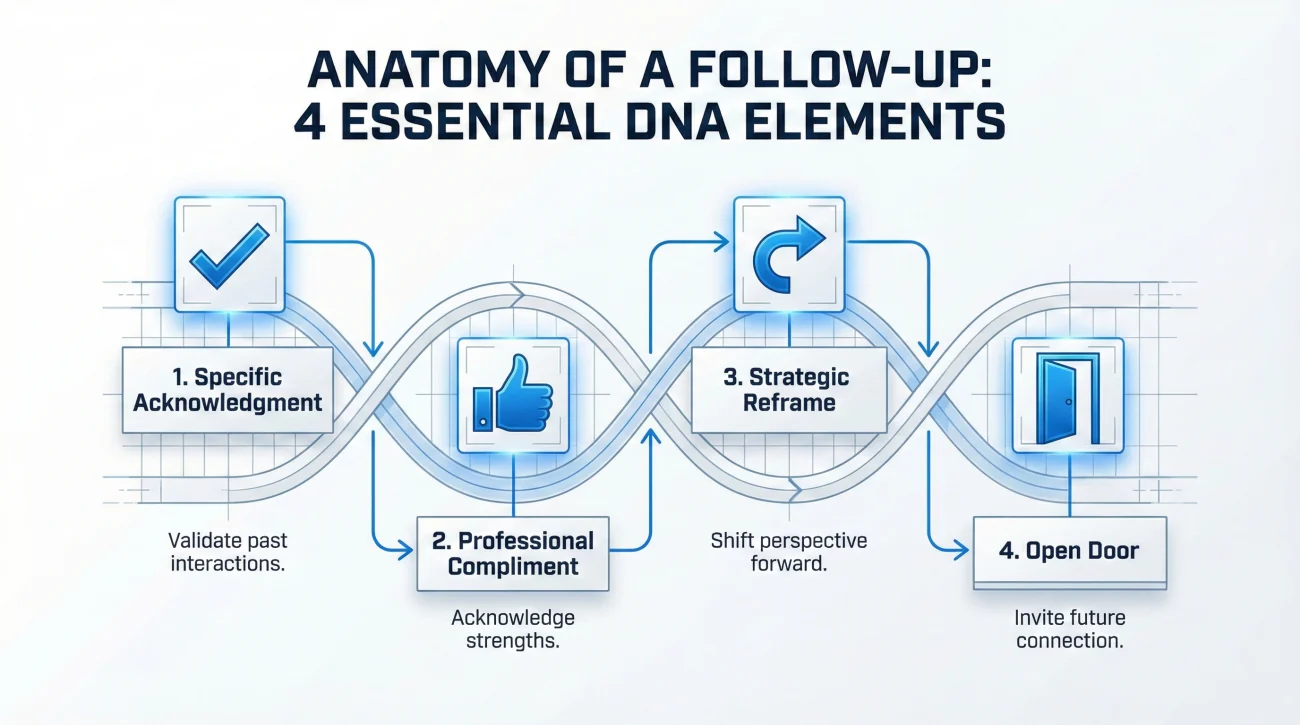
You don’t need to copy templates word-for-word. But the best notes usually include these four elements. Think of it like a checklist that prevents you from sounding robotic or emotional.
1. The Specific Acknowledgment
Don’t just say “Thanks.” Say “Thanks for your time today,” or “Thanks for facilitating the exit interview,” or “Thanks for hearing my feedback.” One concrete reference proves it’s real.
2. The Professional Compliment
Compliment how they did their job: listening well, keeping the process clear, handling logistics, being respectful, being organized. Avoid flattery. Keep it professional.
3. The Strategic Reframe (Optional but powerful)
If your exit was tense, add a single line that reframes your feedback as constructive. You are not apologizing for honesty – you’re presenting it like an adult.
4. The Open Door
Close with a forward-looking line: “Wishing you the best,” “Hope our paths cross again,” or “Let’s stay connected.” It signals you’re leaving without bitterness.
Mini checklist before you send: (1) No new complaints, (2) no admin questions, (3) no CC’ing your manager, (4) no emotional over-explaining.
For more scripts for the wider exit process, explore goodbye and handover emails.
Fatal Errors: What to Exclude
I’ve seen strong exit strategies ruined by one bad follow-up. These mistakes are common because people treat the thank you note as “one more chance” to vent. Don’t.
- 🚫 The “P.S.” Complaint: Never use this note to add “one more issue” you forgot to mention.
- 🚫 Apologizing for Leaving: You’re allowed to leave. Skip “Sorry for the inconvenience.”
- 🚫 Asking for Favors Immediately: Don’t tack on “When will my final check arrive?” Keep admin questions separate.
- 🚫 CC’ing Your Boss: Don’t do it – especially if your feedback touched management or culture.
- 🚫 Over-sharing emotion: A brief, respectful note is stronger than a long emotional explanation.
If you must ask an admin question (final paycheck, equipment return, benefits), send it as a separate email with a clear subject. Don’t mix it into the thank you note.
The Boomerang Phenomenon: Playing the Long Game
Employees leave, gain skills elsewhere, then return later – often at a higher level. Even if you never plan to boomerang, industries are small. People move companies. Recruiters rotate. Managers show up again in unexpected places.
Your “exit brand” is part of your long-term professional identity. You want your name to trigger: “class act,” “handled it well,” “professional under pressure.”
A thank you note after exit interview is one of the simplest ways to protect that identity. It’s not magic. It’s just consistent professionalism – and that’s rare enough to matter.
❓ FAQ
⏰ Is it too late to send a thank you note if a week has passed?
Usually, yes. A week later can feel like an afterthought. If more than 4–5 business days have passed, it’s often better to skip the formal note and instead reconnect later on LinkedIn with a short message like: “Great working with you – thank you again for your help during my transition.”
📧 What if my exit interview was done via an online survey?
Send a simple confirmation email to the HR rep who coordinated the process: “I’ve completed the exit survey – thank you for the opportunity to provide input and for your help with my transition.” It’s quick and still creates a professional “closing” record.
💼 Should I send a thank you note if I was fired or laid off?
If you were laid off (redundancy), a short note can help maintain relationships and keep your file professional. If you were fired for cause, it depends on tone and risk: if the situation was hostile, a follow-up may not be worth it; if it was calm and procedural, a short “high road” message can still reflect maturity.
📝 Can I send a handwritten note instead of an email?
You can handwrite a note, but only if you’re confident it will reach them quickly. In remote/hybrid setups, email is usually safer and faster for this specific touchpoint. If you want the “handwritten” feel, keep the email warm, personal, and short.
🤐 I cried in the interview. Is it weird to email now?
Not weird – often helpful. A calm, professional follow-up lets you close the interaction on a steady note and ensures the last documented touchpoint reflects composure and respect.
🔗 Should I include LinkedIn in the thank you note?
If you genuinely want to keep the relationship, yes – especially for neutral/positive exits. Keep it light: “Let’s stay connected on LinkedIn.” If the exit was tense, you can skip LinkedIn and simply close professionally.
Final Thoughts: Your Reputation is Your Asset
We spend hours preparing resumes and interviews, but we often neglect the exit process – the final chapter of our story at a company.
Writing a thank you note after exit interview is a low-effort, high-reward move. It takes minutes, costs nothing, and helps you leave a final impression that is calm, credible, and professional – even if your reasons for leaving were messy.
Draft the email. Hit send. Then move forward without loose ends. For more guidance on graceful exits, explore resignation etiquette and our farewell email templates.
⚠️ Legal Disclaimer: ResignSmartly provides general informational guidance about resignation, workplace communication, notice periods, handovers, and career transitions. Content does not constitute individualized legal advice. Employment laws, contracts, workplace policies, and individual circumstances vary, so review the requirements that apply to your situation and consult an appropriate qualified professional when needed.