- Core idea: A reference letter is a reputation loan, so your thank-you note is how you “close the loop” and keep the alliance warm.
- Why updates matter: Writing a strong reference costs real time and emotional labor, and silence makes them feel used instead of valued.
- Two-stage protocol: Send a receipt within 24 hours, then send an outcome update as soon as you get a yes or no.
- Use the right script: Keep it specific with one concrete impact or memory, and choose the template that matches the scenario (win, rejection, academic).
- Avoid the three killers: No copy-paste blast, no disappearing after rejection, and no transactional vibe that treats them like a vending machine.
The Reputation Loan: Why “Thanks” Is Only the Beginning
Think about what actually happens when someone writes you a reference letter. They aren’t just typing words on a page. They are putting their professional reputation on the line for you. They are essentially saying to a stranger: “I trust this person, and you should too.” It is a loan of credibility.
Yet, most professionals treat this transaction like a vending machine: Request letter, receive letter, move on. This is a strategic error of massive proportions. It reduces a potentially lifelong professional alliance into a one-time transaction.
A well-crafted thank you for the reference message is not just about manners. It is about “Closing the Loop.” It transforms a favor into a strengthening bond. Whether you got the job, got rejected, or are still waiting, the way you acknowledge their effort determines whether they will ever help you again. In this comprehensive guide, we will move beyond the generic “Thanks for your help” and explore how to write thank-you notes that cement professional alliances for life.
The Psychology of Investment: Why They Need to Hear Back
To understand why a thank you email for recommendation letter is so critical, you have to understand the psychology of the person who wrote it. Writing a good reference takes 30-60 minutes of deep focus. It requires emotional labor. Why did they do it?
Usually for one of three reasons:
- Altruism: They genuinely want to see you succeed and find fulfillment in helping.
- Mentorship: They view your success as a reflection of their guidance and legacy.
- Professional Courtesy: They believe in paying it forward, remembering who helped them.
When you ghost a reference writer (i.e., never tell them the outcome), you deny them the “ROI” (Return on Investment) of their time. They are left wondering, “Did my letter help? Did they get the job? Was Ite my time?” By failing to close the loop, you inadvertently signal that you view them as a utility, not a partner. A thoughtful update validates their investment in you and triggers a dopamine hit of satisfaction that they contributed to your journey.
The Two-Stage Strategy: The Professional Standard
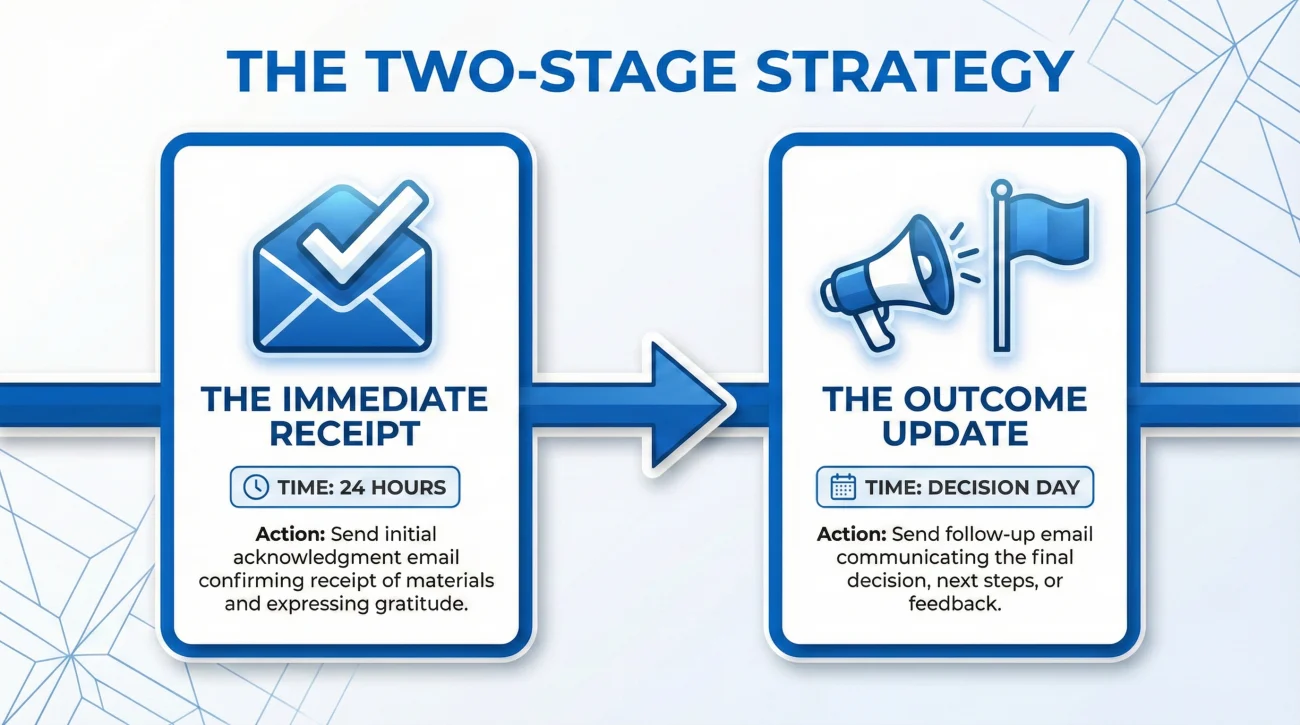
One thank you email is good. Two is strategic. Sending a single email often feels incomplete because the story isn’t over yet. We recommend a “Two-Stage Protocol” to maximize the impact.
Stage 1: The Immediate Acknowledgment (The “Receipt”)
Timing: Within 24 hours of them submitting the letter.
Goal: To confirm the task is done and express immediate relief/gratitude.
The Vibe: “I see you, I appreciate you.”
Why this matters: It relieves them of the mental load. They know you know it’s done.
Stage 2: The Outcome Update (The “Closure”)
Timing: As soon as you get a hiring decision (Yes or No).
Goal: To share the result of their effort.
The Vibe: “Here is what we achieved together.”
Why this matters: This is the payoff. Even a rejection is “data” that they want to know.
The Master Scripts: Meaningful Gratitude for Every Scenario
Avoid generic platitudes like “Thanks for the help.” Use these templates to show you understand the specific value of their time and reputation.
1. The Immediate Acknowledgment (Stage 1)
Send this the moment the portal notifies you that the letter is uploaded. Keep it short and sweet.
Subject: Reference submitted – Thank you so much!
Hi Sarah,
I just received the notification that your reference letter for Meridian was submitted. I wanted to send a quick note to say thank you for prioritizing this.
I know how busy your week is with the Q4 closing, and I genuinely appreciate you taking the time to write such a thoughtful endorsement. It gives me a lot more confidence going into the final review process.
I will keep you posted as soon as I hear any news!
Best,
Marcus
2. The “Victory” Email (You Got the Job)
This is the email everyone wants to receive. Share the win! This is the perfect appreciation for reference email. Make them feel like a hero.
Subject: Good news! I got the job!
Dear David,
I am thrilled to let you know that I was offered the Senior Analyst position at Meridian yesterday!
The hiring manager specifically mentioned that the reference letters played a huge role in their decision. They noted that your comments on my project management skills and ability to handle crisis situations helped tip the scales. I cannot thank you enough for vouching for me; it clearly made a difference.
I start on February 1st. I would love to treat you to coffee/lunch before then to say thank you properly and catch up.
With deep appreciation,
Marcus
3. The “Pivot” Email (You Didn’t Get It)
Most people hide when they get rejected. They feel ashamed. Do not do this. Sharing bad news shows maturity and resilience. It keeps the relationship warm for the next opportunity.
Subject: Update on my application to Meridian
Hi Sarah,
I wanted to close the loop on my application to Meridian. Unfortunately, I wasn’t selected for the role this time. While it is disappointing, I learned a lot from the interview process and am already looking at other opportunities in the fintech space.
I wanted to say thank you for being a reference regardless of the outcome. Knowing I had your support meant the world to me and gave me the confidence to aim for this level of role. I am going to keep searching, and I hope I can count on your support again if the right door opens.
I’ll keep you updated on my next move!
Best,
Marcus
4. The Academic/Professor (The Mentorship Angle)
Professors invest deeply in students. Acknowledge their long-term impact on your intellectual growth, not just the administrative task of the letter.
Subject: Accepted to Stanford! / Thank You
Dear Professor Martinez,
I am writing with wonderful news: I was accepted to Stanford’s PhD program in Economics! I am absolutely thrilled.
Thank you for writing such a detailed and supportive letter of recommendation. I know that your endorsement carries significant weight in this field, and I am certain it was a crucial factor in their decision to admit me.
Beyond this letter, I want to thank you for your mentorship over the last two years. Your guidance on my thesis and your challenging questions in seminar are what inspired me to pursue this path in the first place.
I will let you know how my first semester goes!
Sincerely,
Alex Chen
The “Gift” Dilemma: To Buy or Not to Buy?
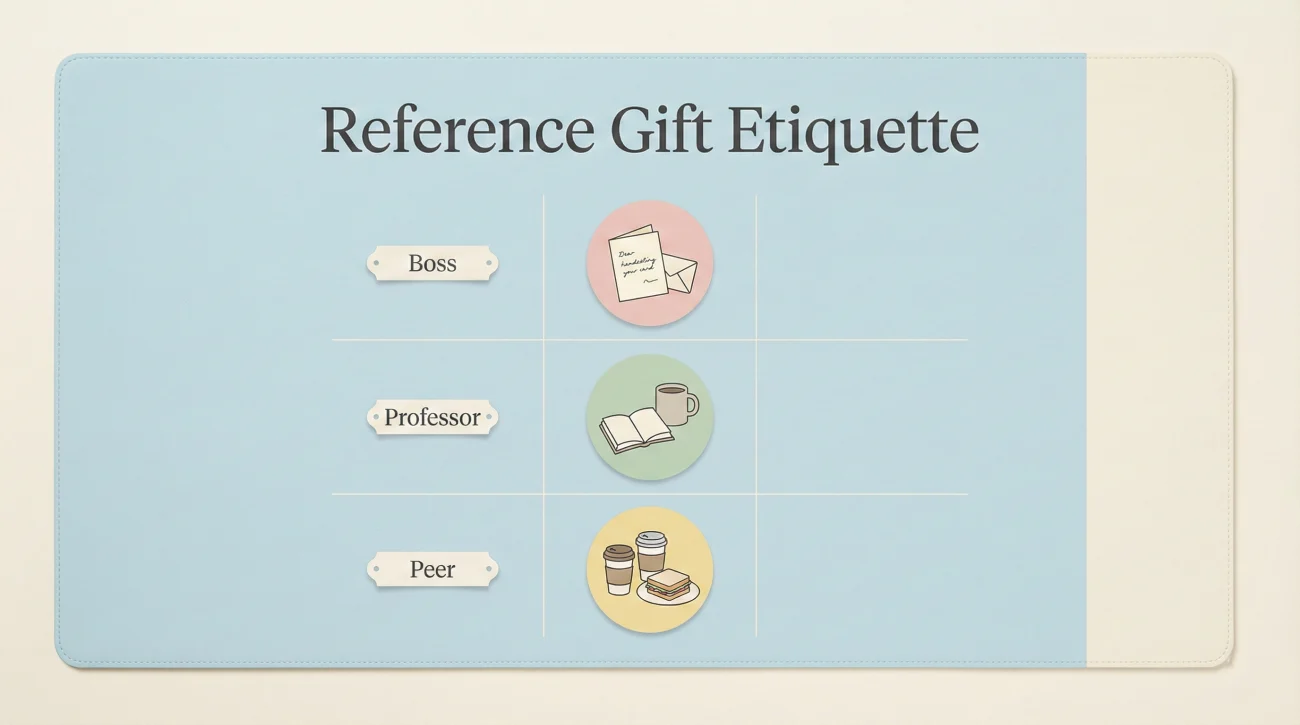
This is a common source of anxiety. Should you send a gift card? A bottle of wine? Nothing? The answer depends entirely on the relationship.
| Relationship | Gift Etiquette | Suggested Item |
|---|---|---|
| Current Boss | 🚫 No Gifts | A heartfelt handwritten card is best. Gifts “up” the hierarchy can feel like bribery or trying to curry favor. |
| Professor | ✅ Yes (Modest) | A handwritten card + a small token (Book, nice coffee mug, $20 gift card). Avoid anything expensive. |
| Peer/Colleague | ✅ Yes (Reciprocal) | Buy them lunch or drinks. Offer to write them a LinkedIn recommendation in return immediately. |
| Mentor (Long-term) | ✅ Yes (Thoughtful) | Something specific to their interests (e.g., a rare tea if they love tea). It shows you know them personally. |
The Golden Rule: Never send a gift before they write the letter (that’s a bribe). Send it after the outcome is decided (that’s gratitude).
3 Ways to Ruin a Good “Thank You”
1. The “Copy-Paste” Blast
If three people wrote letters for you, do not cc them all on one email saying “Thanks guys!” That is insulting. It devalues their individual contribution. Write three separate emails. Reference specific things they know about you (e.g., mention a specific project to your boss, a specific paper to your professor). Make each person feel like the “key” to your success.
2. The “Shame Silence”
If you didn’t get the job, you might feel too embarrassed to email your reference. Fight that urge. They don’t judge you for not getting hired; they judge you for disappearing. Showing resilience in the face of rejection impresses senior leaders often more than the success itself. It shows character.
3. The “Transaction” Vibe
Don’t just say “Thanks for the letter.” Say “Thanks for your mentorship/support/guidance.” Frame the letter as part of a larger relationship, not a one-off administrative task. Don’t act like they owed you this.
Final Thoughts: Playing the Long Game

Your career is long. The person who wrote you a reference for an entry-level job today might be the person you want to partner with on a business venture in ten years. Or they might be the person you hire when you become a Director. Or they might be the person who introduces you to your future spouse.
By sending a thoughtful thank you for the reference, you are doing more than being polite. You are watering the garden of your professional network. You are signaling that you are a person of gratitude, class, and follow-through. And in a world of transactional interactions, being the person who remembers to say “Thank you” is a competitive advantage.
For more strategies on building and maintaining your professional network, check out our guide on career etiquette.
⚠️ Legal Disclaimer: ResignSmartly provides general informational guidance about resignation, workplace communication, notice periods, handovers, and career transitions. Content does not constitute individualized legal advice. Employment laws, contracts, workplace policies, and individual circumstances vary, so review the requirements that apply to your situation and consult an appropriate qualified professional when needed.