- Core Point: A thank you email to team is your last relationship move, it turns “I’m leaving” into long-term network goodwill.
- Emotional Logic: People feel disruption and workload anxiety, so write for them, validate effort, reassure capability, and keep the tone human.
- Specificity Rule: Replace generic praise with one or two real moments, specific memories make gratitude believable and memorable.
- Segmentation: Use a team-wide email for groups over 8, and individual notes for your 3 to 5 closest people, do not force one format for everyone.
- Timing And Pitfalls: Send Wednesday of your last week, keep it under 300 words, avoid inside jokes that exclude, passive-aggressive lines, and disappearing without a goodbye.
The Art of the Final Team Email
They are the people who saw you stress-eating before the quarterly review. They covered for you when you had the flu. They are the ones who turned a sterile office (or a Slack channel) into a community. While resigning is a business decision, leaving your colleagues is personal. A carefully crafted thank you email to team members is your final act of camaraderie – a way to honor the shared “trenches” you survived together.
There is a distinct difference between the email you send to your boss and the one you send to your peers. The former is about legacy and professionalism; the latter is about connection and heart. Yet, most people default to the “Safe Generic”: “Thanks everyone, it’s been great, keep in touch!”
That approach is a wasted opportunity. In a career that spans decades, your former peers are your future network. Today’s junior developer is tomorrow’s CTO. The marketing coordinator you sit next to might found a startup next year. When you write a memorable, specific farewell, you aren’t just being nice; you are cementing alliances that can last a lifetime.
This guide isn’t about writing polite emails. It’s about capturing the essence of your shared experience. We will explore how to balance humor with sincerity, how to thank a team of 5 versus a department of 50, and how to exit without leaving anyone feeling slighted.
The Psychology of the “Team Goodbye”

Why do some goodbye emails make people tear up, while others are deleted before they’re even finished? The difference lies in emotional resonance. Psychologically, your departure disrupts the “tribe.” Your team members are processing a mix of emotions: anxiety about their increased workload, sadness about losing a friend, and perhaps even a twinge of jealousy that you’re moving on to something new.
A great thank you email to team addresses these unspoken feelings directly. It validates the team’s effort (“I know you’ll crush Q4”), reassures them of their value (“This team is the best in the industry”), and normalizes the transition. By focusing on them rather than just your own excitement, you turn a moment of disruption into a moment of appreciation.
The Antidote to Cliché: Radical Specificity
The human brain is wired to filter out noise. Phrases like “great team player” or “enjoyed working with you” are noise. They are the elevator music of corporate communication – pleasant but forgettable. To make your thank you message to coworkers stick, you need to anchor it in reality.
Specificity is the currency of gratitude. It proves you were paying attention. It transforms a template into a tribute.
The “Show, Don’t Tell” Framework
Instead of telling them they were “hardworking,” remind them of the specific moment that proved it. Here is the shift in mindset:
| ❌ Generic (Avoid) | ✅ Specific (Use This) |
|---|---|
| “Thanks for working hard on the project.” | “I’ll never forget the Tuesday night we ordered pizza and rebuilt the entire slide deck three hours before the client pitch.” |
| “You guys are funny.” | “I’m going to miss our Monday morning debates about the best coffee spots in the city.” |
| “Thanks for the support.” | “Thank you for covering my shifts when I was out sick last November; that peace of mind meant everything to me.” |
The Strategy of Segmentation: Group vs. Individual
One of the biggest anxieties about leaving is: “Do I send one big email? Or do I write to everyone individually?” The answer depends on the size of your team and the depth of your relationships. Trying to write a heartfelt personal email to 50 people is impossible; sending a blast to your 3 closest work besties feels cold.
Here is a strategic breakdown of how to choose your medium:
| Channel | Best Used For | Key Characteristic |
|---|---|---|
| 📢 Team-Wide Email | The broader department, cross-functional teams, or groups > 8 people. | Focuses on collective wins, shared culture, and general contact info. Inclusive but broad. |
| 💌 Individual Email | Your core team (3-5 people), mentors, and close collaborators. | Highly personal, references specific shared memories, vulnerable. |
| 💬 Slack/Teams Channel | Casual goodbyes to wider circles or social groups (e.g., “The Lunch Crew”). | Informal, can use emojis/GIFs, good for “last day” reminders. |
Master Templates for Every Team Dynamic
Context is king. A startup team of six has a different vibe than a corporate division of sixty. Below are curated templates designed to hit the right note for your specific environment.
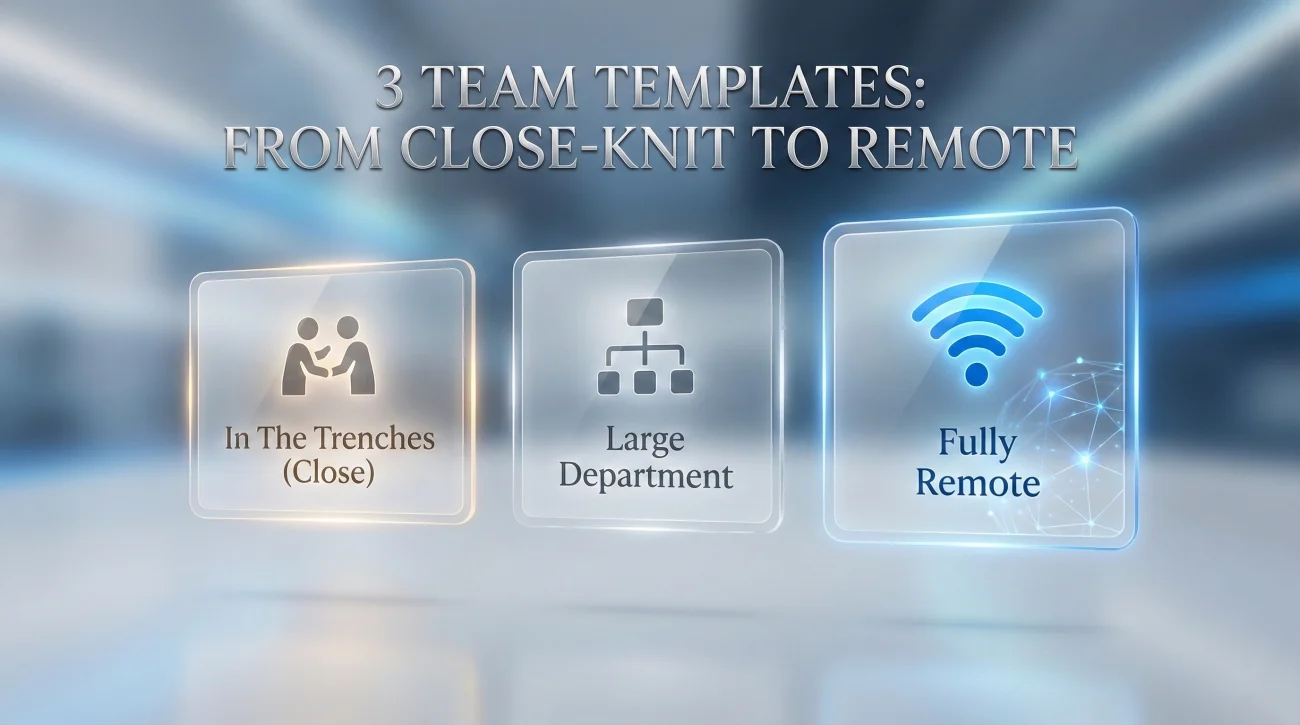
The “In the Trenches” Team (Small & Close)
This is for the team you talked to every single day. You know their coffee orders and their kids’ names. This appreciation letter to team needs warmth and a touch of nostalgia.
Subject: Not a goodbye, just a “see you later”
Hi Team,
Writing this is harder than I thought it would be.
When I joined three years ago, I thought I was just taking a job as a Product Manager. I didn’t expect to find a group of people who would make even the stressful Q4 crunch times feel like an adventure. I’ll honestly miss our Friday afternoon retrospectives (even the ones that went off the rails) and the collective groan whenever the server crashed.
Sarah: Thank you for being the calm in the storm. Your patience during the migration project saved my sanity.
Mike: Your attention to detail is terrifying in the best way possible. I’ve learned so much just by watching you work.
Jen: Thanks for always bringing the energy (and the donuts) when morale was low.
I’m heading to a new role at TechFlow, but I’m taking the standards of collaboration and trust we built here with me. You’ve set a high bar for what a “team” should look like.
Let’s grab one last happy hour on Thursday? My treat.
With real love,
Alex
The Large Department / Cross-Functional Team
When addressing a group of 20+, naming individuals risks leaving someone out. Instead, focus on the collective identity and the “culture” of the group.
Subject: Thank you to the Marketing Team
Hi everyone,
As my final week wraps up, I wanted to send a note of gratitude to this incredible department.
It has been a privilege to watch how this group operates. I’ve worked at several companies, but I’ve rarely seen a team that collaborates across Design, Content, and Strategy as seamlessly as you all do. The way you rallied around the rebrand launch last summer – turning a 6-month project into a 3-month win – was a masterclass in teamwork.
Thank you for welcoming me, challenging my ideas, and pushing our work to be better every day. I am proud of what we built together.
I’m staying in the industry, so I hope our paths cross again. You can find me on LinkedIn [Link] or reach me at [Personal Email].
Keep crushing it.
Best,
Jordan
The Fully Remote / Distributed Team
For teams that live on Zoom and Slack, physical memories are scarce. Acknowledge the unique bond of connecting digitally. This is a crucial thank you email to colleagues on last day variation for the modern era.
Subject: Signing off (but staying connected)
Team,
It’s a strange feeling to say goodbye to people I’ve rarely met in person, yet feel so close to.
Thank you for making “remote” feel “connected.” I appreciate how we prioritized our video check-ins not just for status updates, but to actually check in on each other as humans. Whether it was troubleshooting code over screen-share or sharing pet photos in the #random channel, you made my home office feel a lot less lonely.
I’m going to miss our asynchronous brainstorming jams. You taught me that great culture doesn’t require a physical office.
Hope to see you IRL someday!
Cheers,
Sam
The “Support During Hard Times” Message
If the team carried you during a personal crisis, a leave of absence, or a health scare, it is classy to acknowledge that grace specifically.
Subject: A special thank you
Team,
Before I go, I need to say something important.
I enjoyed the work we did, but what I will value most is how you treated me as a person. When I had to step back last year to care for my family, you didn’t just cover my workload – you did it without making me feel guilty. You gave me the space I needed to handle life, and I will never forget that kindness.
It’s easy to be a good team when numbers are up. It takes character to be a good team when life gets hard. You have that character in spades.
Thank you for having my back.
Gratefully,
Taylor
The Chronology of Departure: When to Hit Send
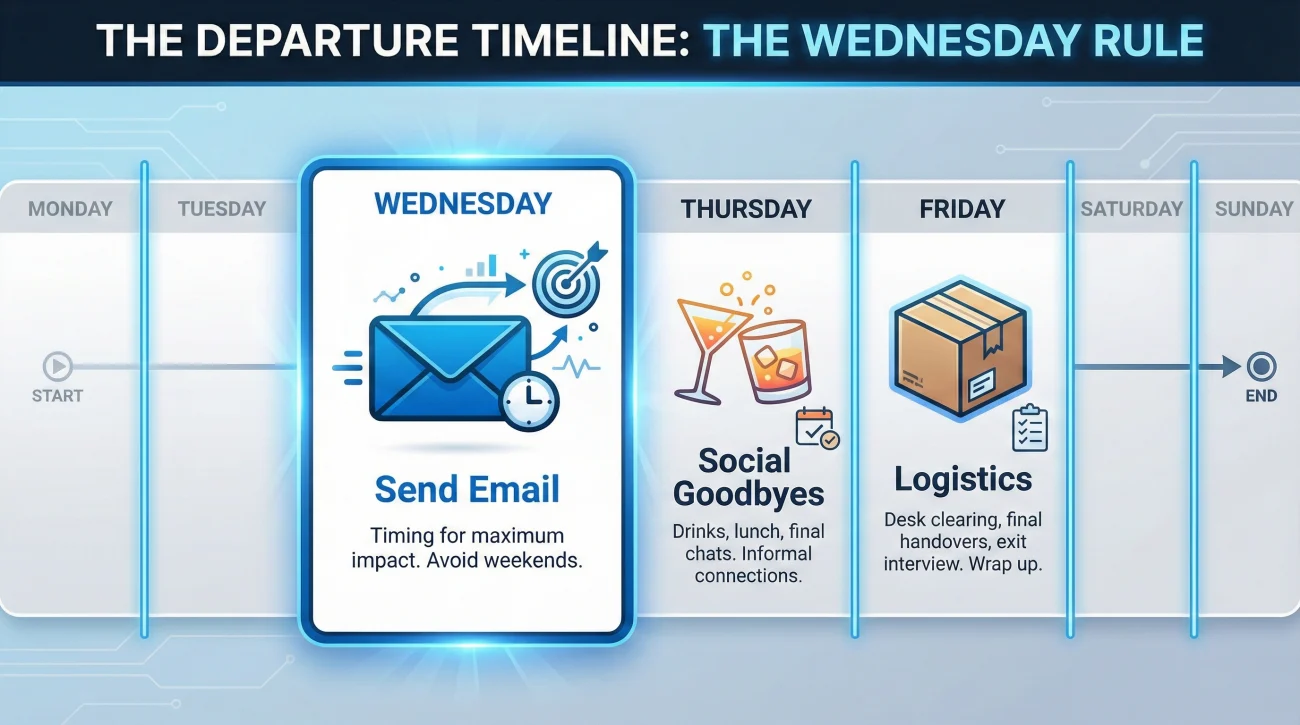
Timing is as important as the text itself. Send your gratitude email to team members too early, and you risk “lame duck” awkwardness. Send it too late, and you miss the chance for replies.
🗝️ The Golden Rule: Wednesday of your last week (if leaving Friday).
Here is why:
- Wednesday: You send the team email. This gives people Thursday to stop by your desk (or ping you) to say a personal goodbye.
- Thursday: You have your goodbye drinks or lunch. The email has already broken the ice.
- Friday Morning: You focus on logistics (handover, returning equipment).
- Friday Afternoon: You send a very brief “Signing off now” final ping on Slack.
Common Pitfalls to Avoid
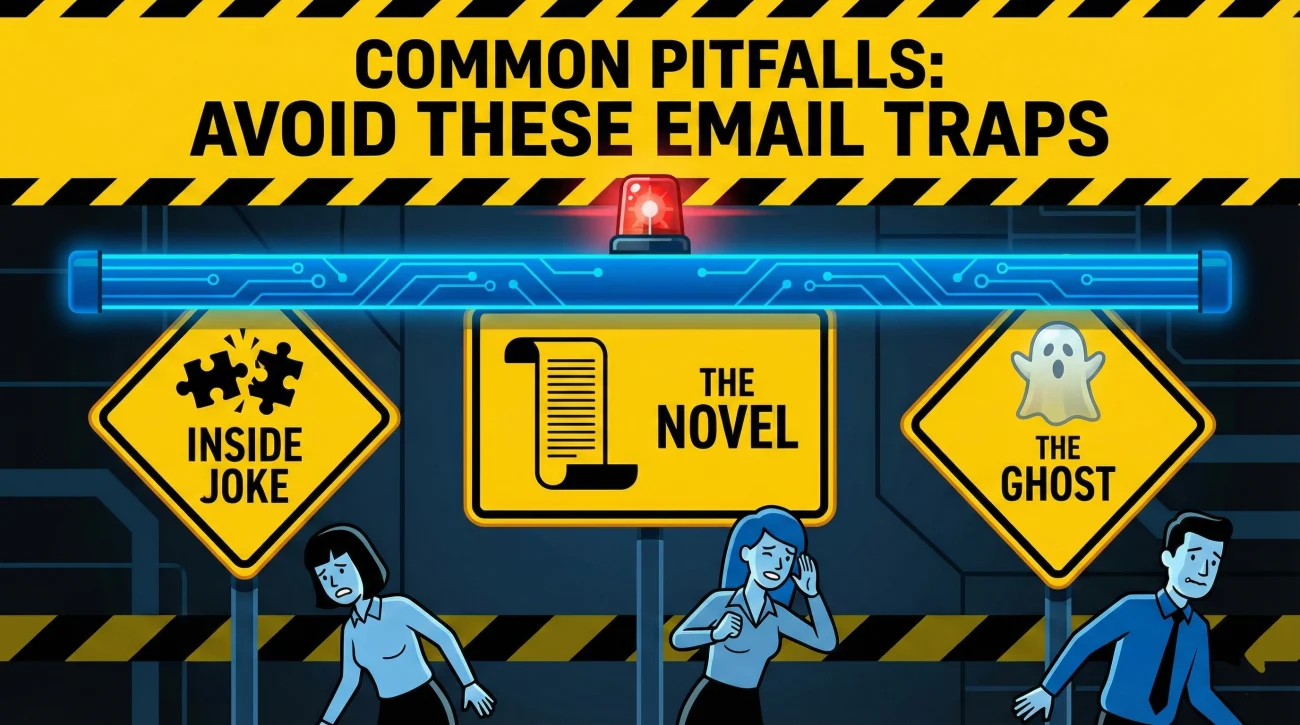
Even well-meaning emails can land wrong. Avoid these traps:
- 🛑 The “Inside Joke” Alienator: Don’t reference a joke that only 3 people get in an email to 20 people. It makes the others feel like outsiders. Save that for the small group chat.
- 🛑 The Passive-Aggressive Compliment: “Thanks to most of you for being great” implies some were not. Keep it positive or keep it generic. Leaving is not the time to settle scores.
- 🛑 The Novel: Keep it under 300 words. People have work to do. If you have to scroll twice to read it, it’s too long.
- 🛑 The “Ghost”: Leaving without saying anything at all. Even if you are introverted, “ghosting” a team you worked with for years damages your reputation. A simple email is mandatory professional etiquette.
❓ FAQ
⏰ What if I was only with the team for a few months?
Keep it short and sweet. You don’t need to feign deep emotional connection. A simple “Thank you for welcoming me and for the opportunity to work together, brief as it was” is sufficient. Authenticity matters more than length.
💌 Should I include my personal phone number?
In a team-wide email? Generally, no. Stick to LinkedIn or a personal email address. Phone numbers are intimate and best reserved for the 3-5 colleagues you are genuinely friends with. You can share your number in those individual notes instead.
💼 Is it okay to mention where I am going next?
Yes, but be humble. “I’m moving on to a new challenge at [Company Name]” is fine. Avoid over-hyping the new role (e.g., “I’m going to an amazing opportunity with double the pay”). It can come across as bragging to the people you are leaving behind.
🤐 What if the team culture was toxic?
Take the high road. You never know who you will work with again. Send a polite, brief, and professional note. “Thank you for the opportunity to work together. I wish you all the best.” You don’t need to lie about missing them, but you must remain professional on the record.
Final Thoughts
Your thank you email to team is the period at the end of the sentence of your tenure. Make it a good one. It is the final artifact of your professional brand that remains after your account is deactivated.
People may forget the slides you made or the code you wrote, but they will remember how you made them feel when you left. Leave with grace, leave with gratitude, and keep those bridges standing strong.
For more guidance on navigating your departure, check out our resources on goodbye and handover emails or read our comprehensive guide to resignation etiquette. And if you are still figuring out the logistics, start with our homepage at ResignSmartly.
⚠️ Legal Disclaimer: The resignation templates, email samples, and professional guidance provided in this guide are for informational purposes only and do not constitute legal advice. Employment laws and contract requirements vary by jurisdiction and individual circumstances. Please review your employment agreement and consult your HR department and/or a qualified attorney to ensure compliance with applicable laws and policies.