- Core move: Send a post-resignation thank you email 2-4 weeks after leaving to turn former coworkers into lasting connections.
- Why timing works: Distance makes the note feel intentional, not transactional, and people read it in a calmer moment.
- Golden window: Aim for about 3 weeks, treat 3 months as a life-update, and avoid 6 months unless you have a clear reconnection trigger.
- Templates by relationship: Use a perspective-shift note for close peers, a mentor check-in that shows you used their advice, and a network-builder for looser connections.
- Pitfalls: Avoid humble-bragging, opening with a favor request, writing a long email, or sounding like you are pitching a competitor.
The Strategic Power of the “Late” Goodbye
The office party is over. You have handed in your badge. You are settled into your new desk (or home office) at the new job. The chapter seems closed. But there is one final move that separates the average networker from the master relationship builder: the post-resignation thank you email.
Most professionals treat their departure like a cliff edge – once they jump, communication stops. They send a frantic “Goodbye All” email on their last Friday and disappear. This is a missed opportunity. The chaos of your final week is the worst time to build deep connections. People are stressed about the handover, you are distracted by logistics, and emotions are high.
Sending a thoughtful note 2-3 weeks after you have left changes the dynamic entirely. It is no longer an obligation; it is a choice. It signals that you value the relationship enough to maintain it when you no longer share a payroll. This guide will show you how to use delayed gratitude to turn former colleagues into lifelong allies.
Why “Late” is Actually Better: The Psychology of Timing

There is a psychological phenomenon known as the “Recency Effect,” but in networking, distance can actually provide clarity. When you write a thank you email after leaving job duties behind, the message lands differently because the context has shifted from “colleague” to “connection.”
| Standard Exit Email (Last Day) | Post-Exit Email (2-3 Weeks Later) |
|---|---|
| Context: Chaotic, obligatory, often skimmed amidst handover emails. | Context: Calm, intentional, read thoughtfully in a quiet moment. |
| Tone: “Goodbye / Good luck / Here are the files.” | Tone: “Let’s stay connected / Here is what I learned / Thinking of you.” |
| Impact: Closes the door on a chapter. | Impact: Opens a new window for a relationship. |
By waiting, you remove the “transactional” feel. You aren’t being nice because you have to be to get your exit paperwork signed; you are being nice because you want to be. That authenticity resonates deeply. It also allows you to share early insights from your new role (“You were right about X tool being better than Y”), which adds immediate value to your former team.
The Golden Window: Timing Your Outreach
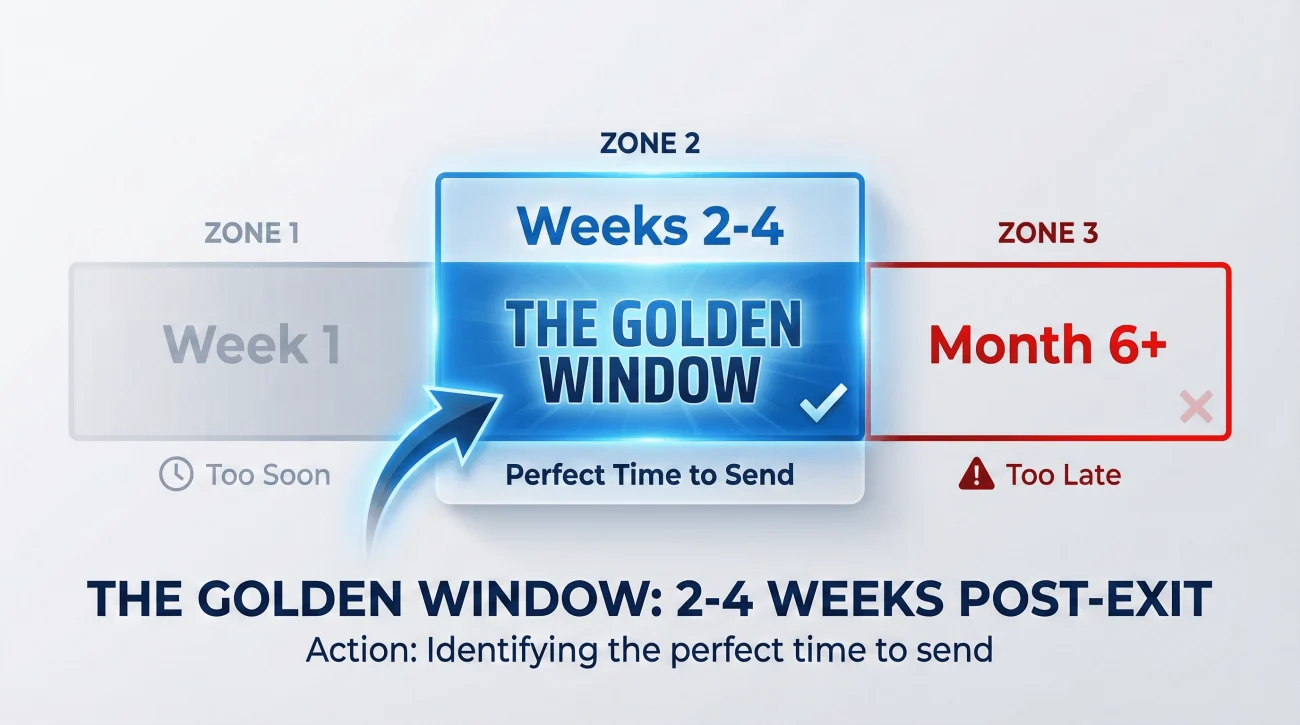
Timing is everything. Send it too soon, and it feels like you forgot to say something. Send it too late, and it feels awkward or like you want something. The “Goldilocks Zone” is typically 2 to 4 weeks after your last day.
- ✅ The 3-Week Mark: Ideal. You have settled into your new role, and the dust has settled at your old firm. You have just enough distance to be objective but are still fresh in their minds.
- ⚠️ The 3-Month Mark: Acceptable for a “Life Update” email, but less about gratitude and more about reconnecting. This is better suited for a “quarterly check-in.”
- 🚫 The 6-Month Mark: Too late for a thank you. At this point, it needs to be a “reconnection” email driven by a specific trigger (news, article, event).
Strategic Templates for Post-Exit Connection
Do not use a generic template. The value of this email lies in its personal touch. Use these scripts as a foundation, but inject your own voice and specific memories.
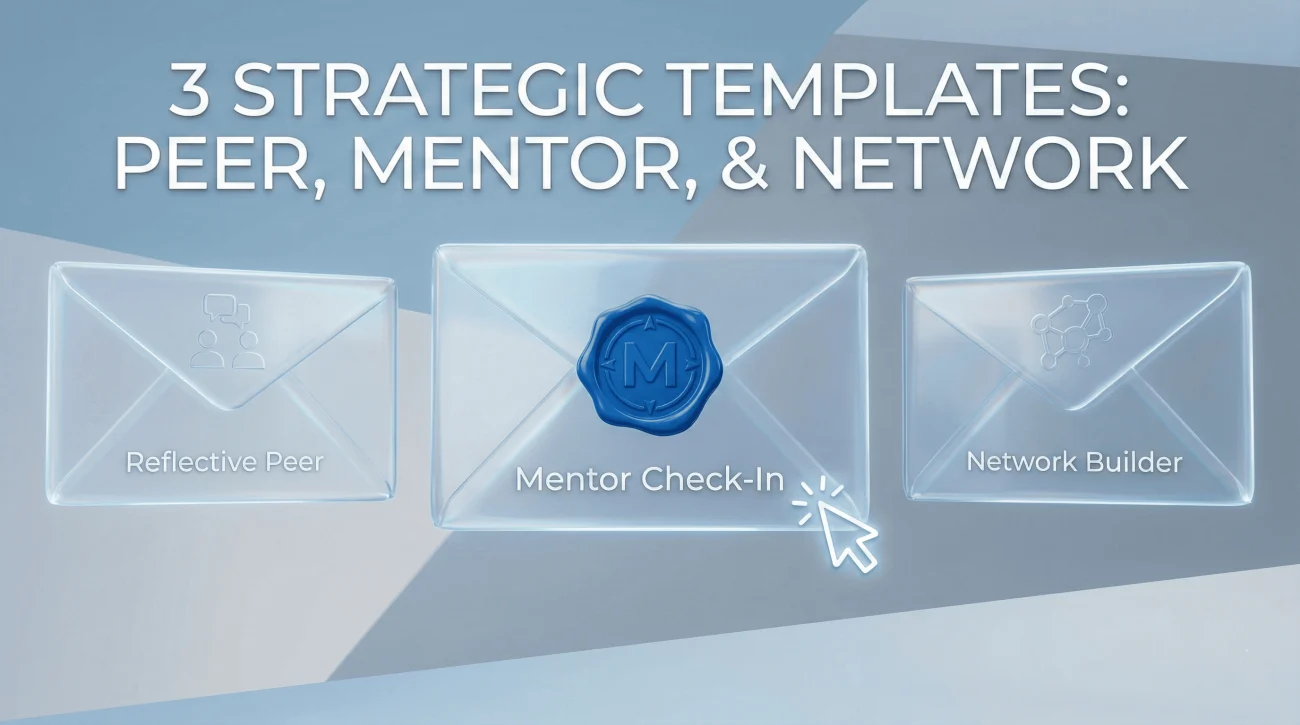
1. The “Perspective Shift” (To Close Peers)
Use this for colleagues you worked closely with. Share a realization you’ve had since leaving. This vulnerability builds trust.
Subject: Thinking of you / A quick update
Hi Sarah,
I’ve been at [New Company] for about three weeks now, and I wanted to send a quick note.
Stepping into a new environment has actually given me a lot of perspective on what made our team at [Old Company] special. I honestly didn’t realize how rare our collaborative dynamic was until I saw a different way of working. I really miss our morning brainstorms – the way you could turn a half-baked idea into a strategy was something I took for granted.
I just wanted to say a proper thank you for being such a solid partner during my time there. Your support made the stressful days manageable.
I’d love to hear how the Q4 launch is going. Let’s grab coffee in a couple of weeks once the dust settles on both our ends?
Best,
Alex
2. The “Mentor Check-In” (To Former Bosses/Mentors)
This is a high-value follow up thank you email. It proves you are applying their lessons, which is the highest compliment you can pay a mentor. It validates their investment in you.
Subject: Update: Using your advice at [New Company]
Dear Marcus,
I hope you are doing well.
I am settling into the new role, and I found myself channeling you in a meeting yesterday. We were discussing project timelines, and I used the “buffer framework” you taught me last year. It immediately calmed the room down. I just wanted to reach out and say thank you again – your mentorship is still paying dividends for me every day.
I’m loving the challenge here, but I definitely miss your candor. I’d love to buy you lunch next month to catch up and hear how the team is doing.
Warmly,
Elena
3. The “Network Builder” (To Loose Connections)
For people you didn’t work with daily but want to keep in your orbit (e.g., clients, cross-functional partners). This acts as a keeping in touch email after resignation and keeps the door open for future collaboration.
Subject: Staying in touch / Update from David
Hi Jennifer,
I hope things are going well over in Marketing.
Now that I’ve transitioned out of [Old Company] and settled into my new role at [New Company], I wanted to make sure we stayed connected. I always appreciated your perspective on our cross-functional projects.
I am working on some interesting initiatives in the fintech space now. If there is ever anything I can do to be a resource for you – whether it’s industry insights or introductions to my new network – please don’t hesitate to reach out.
Let’s stay in touch on LinkedIn.
Cheers,
David
Common Pitfalls to Avoid
Even with good intentions, you can misstep. Here is what to avoid when sending a thank you note sent from personal email.
| 🚫 The Mistake | 💡 Why it Fails |
|---|---|
| The “Humble Brag” “My new job is amazing and pays so much better…” | It alienates your former colleagues who are still in the “old” situation. Keep updates positive but humble. |
| The “Ghost” Request “Hi, long time no see. Can you give me a reference?” | Don’t reach out only when you need something. Build the relationship first, ask for favors later. |
| The Novel (5 paragraphs of text) | They are busy working. Keep it concise. Respect their time even though you are no longer on the clock. |
| The “Competitor” Pitch “We do it better here…” | If you moved to a competitor, never disparage your old firm. It looks unprofessional and untrustworthy. |
❓ FAQ
📧 Is it weird to email them from my personal address?
Not at all. In fact, it is preferred. Using your personal email signals that this is a personal relationship, not a company one. It also ensures they have your permanent contact info saved, so they can reach you even if you change jobs again. Just make sure your personal email address is professional (e.g., firstname.lastname@gmail.com, not partyboy2000@gmail.com).
🤐 What if I left on bad terms?
Be selective. You don’t need to email everyone. If you had a toxic boss but a supportive peer, email the peer. Ignore the toxic elements. Focus on salvaging the relationships that were actually positive. Success is the best revenge, and grace is the best legacy. Sending a note to the “good ones” reinforces that you weren’t the problem.
🤝 Should I suggest meeting up?
Yes, but keep it low pressure. “Let’s grab coffee sometime” is better than “Can we meet next Tuesday at 10 AM?” Give them an out. They are still in the thick of work; you are the one with the new schedule. Let them dictate the pace of the reunion.
💼 Can I promote my new company?
Tread carefully. If you moved to a partner or vendor, a soft sell (“We should explore how our firms can work together”) is okay. If you moved to a competitor, avoid talking shop entirely. Focus on the personal connection, not the business potential, to avoid looking like you are poaching.
Final Thoughts: Your Network is Your Net Worth

The people you worked with yesterday are the people who will hire you, partner with you, or recommend you tomorrow. A post-resignation thank you email is a small investment of time that pays massive compound interest over your career.
It closes the loop with elegance. It transforms a “former colleague” into a “current connection.” So, take a moment this week to look back at the job you left, identify the people who mattered, and send that note. You will be surprised at how warmly it is received.
For more advice on navigating your career transitions, explore our guide on resignation etiquette. If you are looking for templates for other scenarios, check our collection of goodbye and handover emails.
⚠️ Legal Disclaimer: The resignation templates, email samples, and professional guidance provided in this guide are for informational purposes only and do not constitute legal advice. Employment laws and contract requirements vary by jurisdiction and individual circumstances. Please review your employment agreement and consult your HR department and/or a qualified attorney to ensure compliance with applicable laws and policies.