
- Core idea: Reference letters are easy to get when you make “Yes” the lowest-effort option for a busy manager or professor.
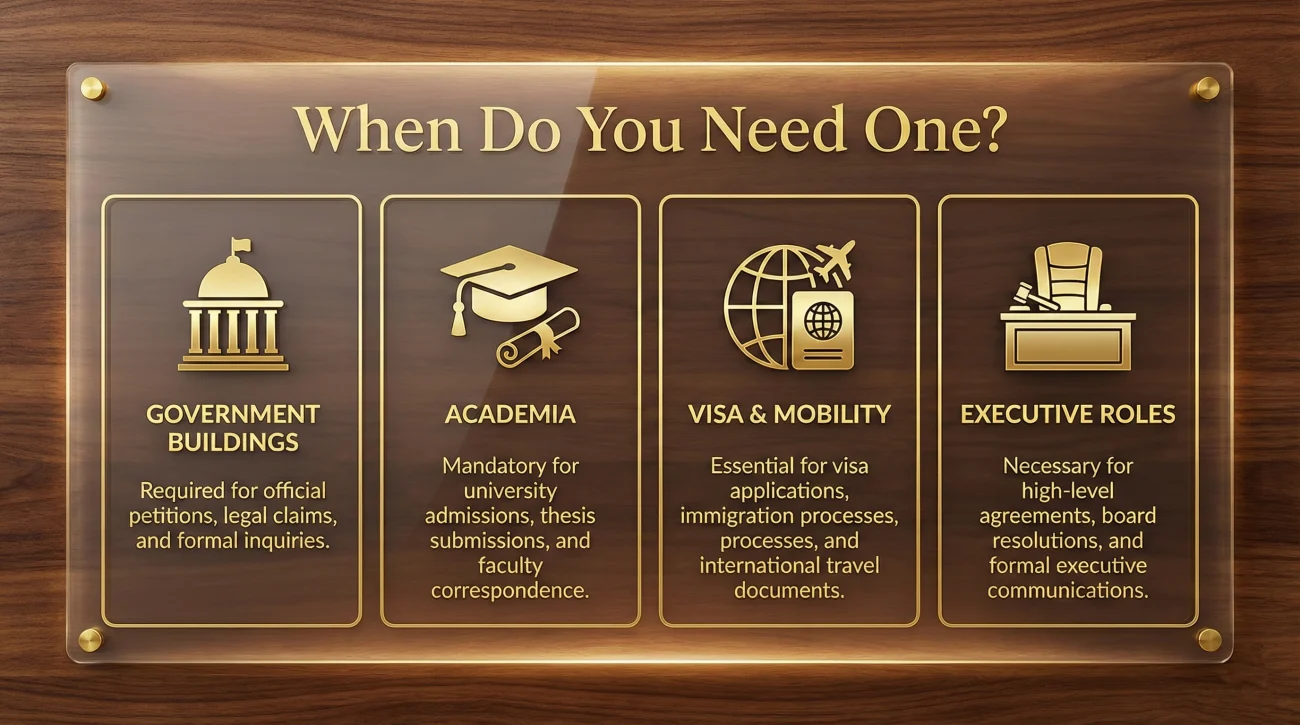
- When you actually need a formal letter: Government or security clearance, Academia and fellowships, Visas and global mobility, Executive and board roles.
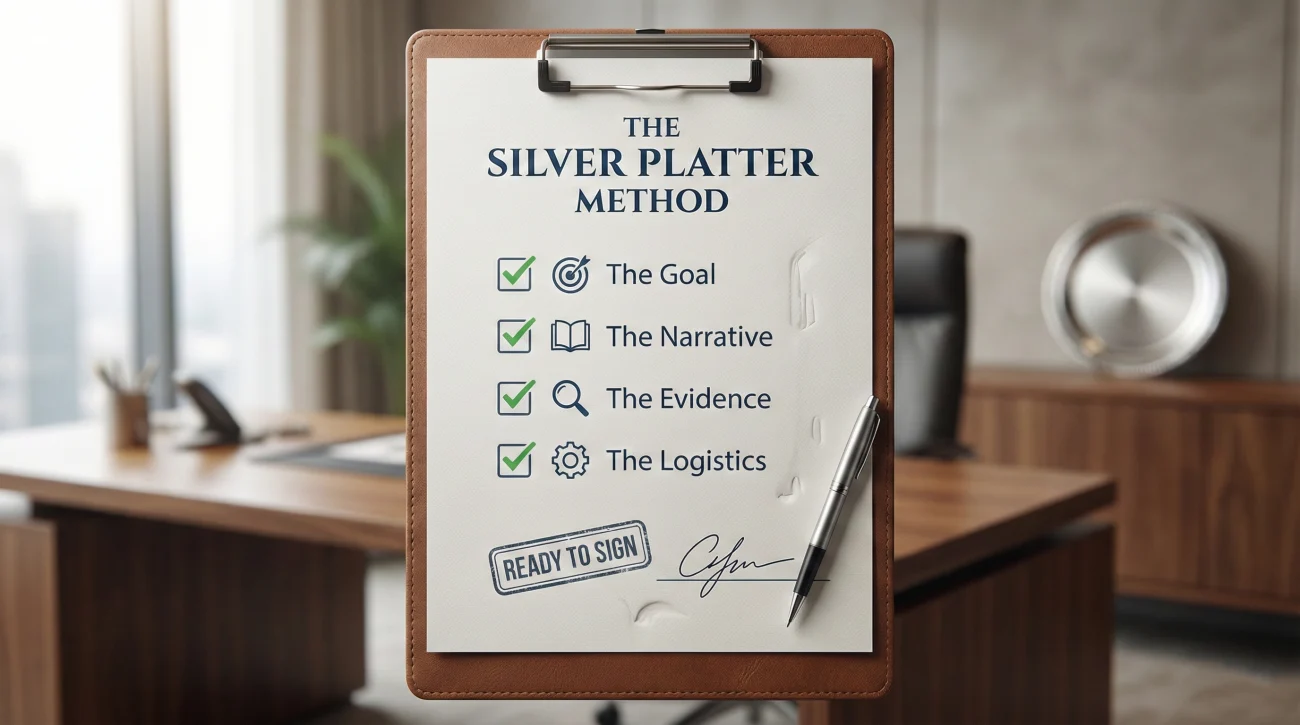
- Silver Platter method: Attach a briefing doc with Goal, Narrative, Evidence, Logistics so they can approve instead of starting from scratch.
- Timing and follow-up: Ask in the warm window after you leave, avoid asking on resignation day, and send one gentle nudge with a LinkedIn recommendation fallback.
- Templates and drafting: Use scenario-specific emails, and if they ask you to draft it, mirror their voice and focus on factual impact using a simple STAR flow.
The Art of the Ask: Securing Your Career’s Golden Ticket
There is a specific kind of anxiety that comes with asking for a favor. It sits right in the pit of your stomach. You know you need a formal reference letter to land that graduate program, visa, or executive role. But the thought of emailing your busy ex-boss or that intimidating professor makes you want to close your laptop and procrastinate for another week.
You worry about imposing. You worry they won’t remember you. Or worst of all, you worry they might say “no.” This fear is a career-limiter. In my years of coaching high-performing professionals, I have seen brilliant candidates miss out on scholarships and C-suite roles simply because they were too afraid to ask for the endorsement they deserved.
I am here to tell you that this anxiety is usually misplaced. Most professionals are happy to help – if, and only if, you make it easy for them. A request for a reference letter fails not because the person dislikes you, but because the request is vague, ill-timed, or feels like a massive homework assignment.
In this comprehensive guide, we are going to flip the script. Instead of begging for a favor, we are going to treat this as a professional project management task. You will learn how to “ghostwrite” your own success, how to time your ask perfectly, and how to craft emails that make saying “yes” the path of least resistance for even the busiest CEO. We will cover every angle, from the psychology of the “ask” to handling rejection with grace.
The Psychology of the “Ask”: Why People Say Yes (or No)

To master the art of asking, you first need to understand what is happening in the brain of the person you are emailing. When a former manager sees a request pop up in their inbox, their brain instantly runs a cost-benefit analysis.
The Cost: Time, mental energy, and reputation risk. Writing a letter takes 30-60 minutes of deep focus. They have to recall your specific achievements, structure a narrative, and put their professional stamp of approval on it.
The Benefit: The feeling of being helpful (altruism), maintaining a network connection with you, and the ego boost of being seen as an authority figure whose opinion matters.
Your goal is to drive the “Cost” down to near zero while maximizing the “Benefit.” If you send a generic email saying, “Can you write me a reference?”, the Cost is high (they have to figure out everything themselves). If you send a “Silver Platter” request (which we will discuss shortly), the Cost is low. Understanding this dynamic is the key to unlocking a “Yes.”
The Paper Trail: When Do You Actually Need One?
First, let’s clear up a common confusion. In the modern corporate world, a “reference check” is usually a quick phone call or a digital survey sent by a recruiter. You don’t need a formal PDF letter for every job application. In fact, sending one unprompted can sometimes look outdated or desperate.
However, there are specific high-stakes arenas where a formal, written document is non-negotiable:
- 🏛️ Government & Security Clearances: If you are applying for federal jobs, defense contracting, or intelligence roles, the paperwork is rigid. They need signatures on letterhead to verify your background and character.
- 🎓 Academia & Fellowships: Grad schools, MBA programs, and Ph.D. committees live and die by the “Letter of Rec.” They want detailed narratives about your intellectual curiosity and potential, not just checkboxes on a form.
- 🌍 Global Mobility (Visas): Applying for a work visa in the UK (Global Talent Visa), Canada, or the EU? Immigration officers require specific evidence of your skills. A letter confirming you led a “critical project” can be the difference between approval and a denial or refusal – sometimes with serious downstream consequences for your timeline and plans.
- 💼 Executive & Board Roles: At the C-Suite level, resumes matter less. Reputation matters more. A glowing narrative letter from a board member or former CEO carries immense weight in validating your leadership style.
Understanding this distinction saves you from wasting your social capital. Don’t burn a favor asking for a letter when a simple phone number or LinkedIn recommendation would have sufficed.
The “Ghostwriting” Strategy: How to Get a Yes
Here is the secret that nobody tells you: The person you are asking likely does not want to write this letter.
Not because they don’t like you. But because writing is hard. Staring at a blank page is painful. Trying to remember exactly what project you crushed in Q3 of 2021 takes mental energy they don’t have. They are busy running companies, managing teams, or teaching classes.
The solution? Do the work for them. When asking boss for recommendation letter, you should always offer a “cheat sheet” or even a full draft.
I call this the “Silver Platter Method.” You serve them the completed work on a silver platter, and all they have to do is lift the lid and sign. This shifts the dynamic from “Can you do this huge task for me?” to “Can you approve this thing I prepared for you?”
What Goes on the Silver Platter?
When you send your request, you must attach a “Briefing Document.” This document should include:
- The Goal: Exactly what this letter is for (e.g., “Application to Harvard Business School”).
- The Narrative: The specific story you want them to tell (e.g., “Please highlight my leadership during the crisis management project”).
- The Evidence: 3-4 bullet points of concrete wins, with metrics (e.g., “Increased sales by 20%,” “Managed a budget of $500k”).
- The Logistics: The deadline, the submission link, and the format requirements.
Master Templates for Every Scenario
These templates are designed to be respectful of time while providing all the necessary context. Note how we subtly weave in the “Silver Platter” elements. Do not copy these blindly; adapt them to your voice.
1. The “Current Boss” (The Delicate Ask)
Asking your current employer can be tricky. Use this only if you have a transparent relationship or if you are leaving on excellent terms during your notice period. Asking before you resign is dangerous and signals you are looking to leave.
Subject: Reference Letter Request – [Your Name]
Hi Sarah,
As we wrap up my transition and I prepare to hand over my projects next week, I have one final request. Would you be open to writing a formal reference letter for my file? I have loved my time here, and having a written endorsement of my work on the [Project Name] would mean a lot to me for the future.
I know it is a busy week with the quarter closing, so to make this as easy as possible, I have listed a few key wins we achieved together below that you could potentially mention:
• The Q3 Product Launch: Delivered 2 weeks ahead of schedule under budget.
• Team Growth: Mentoring the two new junior analysts to promotion.
• Client Retention: The turnaround strategy we built for the Delta account.
If you prefer, I am happy to draft a few bullet points or even a full draft letter for you to edit. No pressure at all if you don’t have the bandwidth right now.
Thanks,
Marcus
2. The “Old Boss” (The Memory Jogger)
It’s been two years. They might not remember the details. Your reference request email sample needs to bridge that gap. Start with warmth, not just the ask.
Subject: Hope you’re well / Reference Request
Hi Jennifer,
I hope things are going well at [Company]. I saw on LinkedIn that the team just hit the Q4 targets – congrats! It reminded me of the push we did back in 2021.
I am reaching out because I am currently applying for a Senior Director role at [New Company]. Given our close work together on the Supply Chain Optimization project back in 2022, you are the best person to speak to my operational skills and leadership style.
Would you be willing to write a brief letter of recommendation? To refresh your memory and save you time, I’ve attached a one-pager summarizing our key projects and results from that time.
The deadline is [Date]. If you are willing, I can send over a draft for you to tweak so it doesn’t take up your weekend.
Best regards,
David
3. The Academic Ask (The Professor)
Professors get hundreds of these requests during application season. Stand out by being the most organized student they hear from. Remind them of your specific contribution to their class.
Subject: Recommendation Request: Alex Chen (Econ 301, Fall 2023)
Dear Professor Martinez,
I hope you are having a great semester. I was a student in your Advanced Economics course last Fall, where I wrote my final paper on “Market Dynamics in Emerging Tech” (which you graciously graded an A).
I am applying to the MBA program at [University], and I would be honored if you could write a letter of recommendation in support of my application. Your class was pivotal in my decision to pursue this analytical path.
I have attached my resume, my transcript, and a copy of that final paper for your reference. I also included a brief summary of what the MBA program is specifically looking for (analytical rigor and leadership).
Please let me know if you would be open to this. I would be happy to stop by during office hours if you prefer.
Sincerely,
Alex Chen
The “Draft” Option: A Power Move
In many cases, especially when email asking for reference for new job contexts involve busy executives, they might say: “Sure, just write it and I’ll sign it.”
Do not be offended. This is a gift. It allows you to control the narrative 100%. You can highlight exactly the skills the new job is looking for. If you find yourself in this position, follow these rules:
- Be Modest but Factual: Don’t say “I was a genius.” Say “Marcus consistently demonstrated strategic foresight…”
- Mimic Their Voice: If your boss is formal, write formally. If they are casual, use simpler language.
- Focus on Impact: Use the “STAR” method (Situation, Task, Action, Result) in the paragraphs.
By writing the first draft, you ensure the letter says exactly what you need it to say, and you save them an hour of work. It is a win-win.
Timing is Everything: The “When” of the Ask

The “When” is just as important as the “How.” A poorly timed request can result in a “No” simply because of bad logistics.
- ✅ The Golden Window: The best time to ask is 1-2 weeks after you leave. You have handed over your work, the emotion of the resignation has settled, but your memory is still fresh. The relationship is still warm.
- ❌ The Danger Zone: Do not ask the day you resign. Your boss is processing the loss. They might be stressed about replacing you. It feels transactional and tone-deaf to ask for a favor while you are quitting. Wait until the dust settles.
- ⚠️ The Cold Ask: If you are asking someone from 5 years ago, you need to “warm up” the relationship first. Don’t just lead with the ask. Offer a life update, ask about them, share an article they might like. Then, in the second or third email, pivot to the request.
The Gentle Nudge (Follow-Up Strategy)
People are busy. If they don’t reply in a week, they aren’t ignoring you; they are just drowning in emails. A polite bump is helpful, not annoying.
The Script:
“Hi [Name], just floating this to the top of your inbox. I know it’s a busy time. If you don’t have the bandwidth for a formal letter, would you be open to just a quick LinkedIn recommendation instead? No worries either way.”
This gives them a “downgrade” option. A LinkedIn recommendation takes 2 minutes, whereas a letter takes 60. By offering the easier option, you often get a “Yes” to the LinkedIn rec, which is still very valuable.
❓ FAQ: Troubleshooting Your Reference Requests
⏰ How much notice should I give for a reference letter?
Ideally, give them at least 3-4 weeks before the deadline. Asking for a letter due “tomorrow” is professional suicide. It shows a lack of planning and disrespect for their time. If you are in a rush (e.g., a sudden job opportunity), acknowledge it immediately: “I know this is a tight turnaround and I apologize, but…” and definitely offer the “Silver Platter” draft to speed things up.
📧 What if they say no or ghost me?
If they say no, accept it with grace. Reply with: “I completely understand. Thank you for considering it!” Do not burn the bridge. They might be declining because of company policy (many HR depts forbid formal letters) rather than personal feelings. If they ghost you after one follow-up, take the hint and move on to your backup reference. Do not harass them.
📝 Should I ask via phone or email?
Email is significantly better for the formal ask. It gives them time to think and check their schedule without being put on the spot. It also allows you to attach the “Silver Platter” documents (resume, cheat sheet) right away. You can mention it on a call (“I’ll be sending you an email about a reference…”), but the formal process should be written to create a paper trail.
💼 Can I ask a colleague instead of a boss?
Yes, but know the hierarchy of value. A boss carries “authority” weight (can speak to performance, promotions). A peer carries “collaboration” weight (can speak to soft skills, daily work ethic). For most applications, a boss is preferred, but a senior peer is better than nothing. If you can’t ask your current boss, a former boss or a current senior colleague is the standard workaround.
🤝 How do I thank them properly?
After they submit the letter, send a heartfelt thank you email immediately. But more importantly, close the loop. If you get the job or the scholarship, let them know! “I got the job! Thank you for playing a part in this.” People love to know their effort led to a win. It makes them much more likely to help you again in the future.
Final Thoughts: Your Career is a Long Game
Every interaction is a vote for your future reputation. By handling the request for a reference letter with empathy, organization, and professionalism, you aren’t just getting a piece of paper. You are cementing a relationship that could serve you for decades.
Remember: People generally want to help you succeed. It validates their own mentorship of you. Your job is simply to remove the friction so their natural desire to help can turn into action. Send that email, attach that draft, and walk confidently toward your next chapter.
For more templates on navigating career exits, check out our guide to goodbye emails and overall resignation etiquette at ResignSmartly.
⚠️ Legal Disclaimer: ResignSmartly provides general informational guidance about resignation, workplace communication, notice periods, handovers, and career transitions. Content does not constitute individualized legal advice. Employment laws, contracts, workplace policies, and individual circumstances vary, so review the requirements that apply to your situation and consult an appropriate qualified professional when needed.