
- Psychology: Employees fear losing your protection and guidance, so the email must transfer confidence back to them.
- Power Shift: Move from authority to appreciation, and write a transformational exit that validates the team’s capability with specifics.
- Core Structure: Do three jobs: Validate competence, normalize change, and leave an open door with a clear way to stay in touch.
- Templates: Match the scenario (Department wide, direct reports, post crisis, remote) and make the message tailored, not one size fits all.
- Timing: Send before the final hour during the lame duck window, and avoid ego, oversharing, or any hint of drama.
The Final Act of Leadership
Leadership is often defined by how you start – the vision you set, the first hires you make, the culture you build. But in reality, your legacy is defined by how you finish. When a manager resigns, it sends a shockwave through the team. It creates a “leadership vacuum” that can either lead to anxiety and attrition or to empowerment and resilience. Your thank you email to subordinates is the tool that determines which path your team takes.
Unlike a peer departure, a manager’s exit is structural. Your team isn’t just losing a colleague; they are losing their advocate, their mentor, and their shield against organizational chaos. They are wondering: “Who will fight for my promotion now?” or “Will the new boss understand my workflow?”
Therefore, your farewell message cannot simply be a “Thanks for the hard work.” It must be a strategic communication piece that provides psychological safety, reinforces the team’s competence, and elegantly passes the torch. This guide will help you craft a message that ensures you leave as a leader worth remembering, consistent with the best practices of resignation etiquette.
The Psychology of the Leadership Vacuum
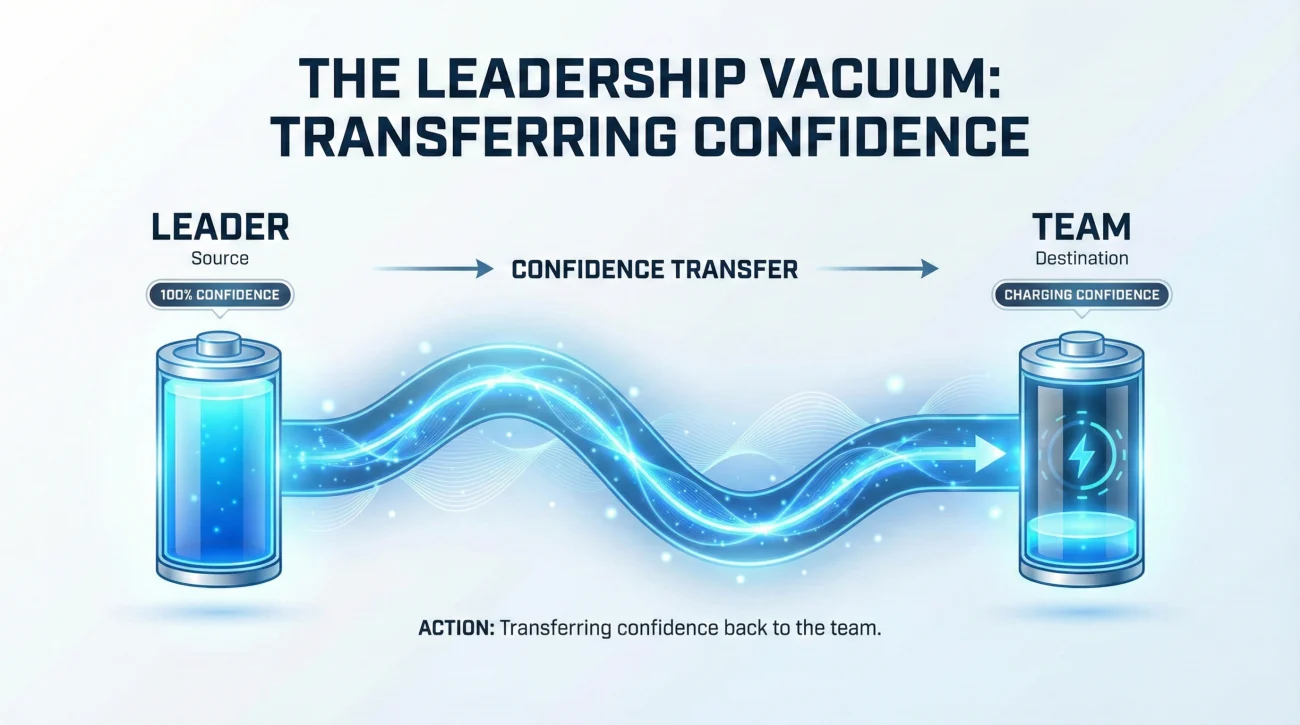
To write an effective exit email, you must understand what is happening in your employees’ minds. Psychologists call this “anticipated loss of resources.” Employees fear that the resources you provided – protection, guidance, political capital – are disappearing.
Your email needs to function as a “Transfer of Confidence.” You are not just saying goodbye; you are transferring the confidence you have in them back to them. You are telling them that their success was not dependent on you, but on their own intrinsic capabilities.
This approach shifts the narrative from “We are losing our leader” to “We are ready for the next chapter.” It is a subtle but powerful reframing that distinguishes a manager who just managed people from a leader who built leaders.
The Power Dynamics of a Manager’s Exit
To write an effective letter, you must strip away the ego and look at the situation from your employee’s perspective. The dynamic has shifted. You are no longer the person who writes their performance reviews; you are now a former boss who might one day be their employee (the world is small) or a peer in another organization.
Effective exit communication pivots from “Authority” to “Appreciation.” It acknowledges that while you held the title, they did the heavy lifting.
Transactional vs. Transformational Exits
Most managers write transactional emails. Great leaders write transformational ones. Here is the difference:
| Transactional Exit (Average Manager) | Transformational Exit (True Leader) |
|---|---|
| Focuses on their own next step (“I am moving to Google”). | Focuses on the team’s future capability (“You are ready for what’s next”). |
| Takes credit (“We achieved X under my leadership”). | Gives credit (“You achieved X through your dedication”). |
| Vague reassurance (“You’ll be fine”). | Specific validation (“Your systems for Q4 are bulletproof”). |
The Anatomy of a Reassuring Farewell
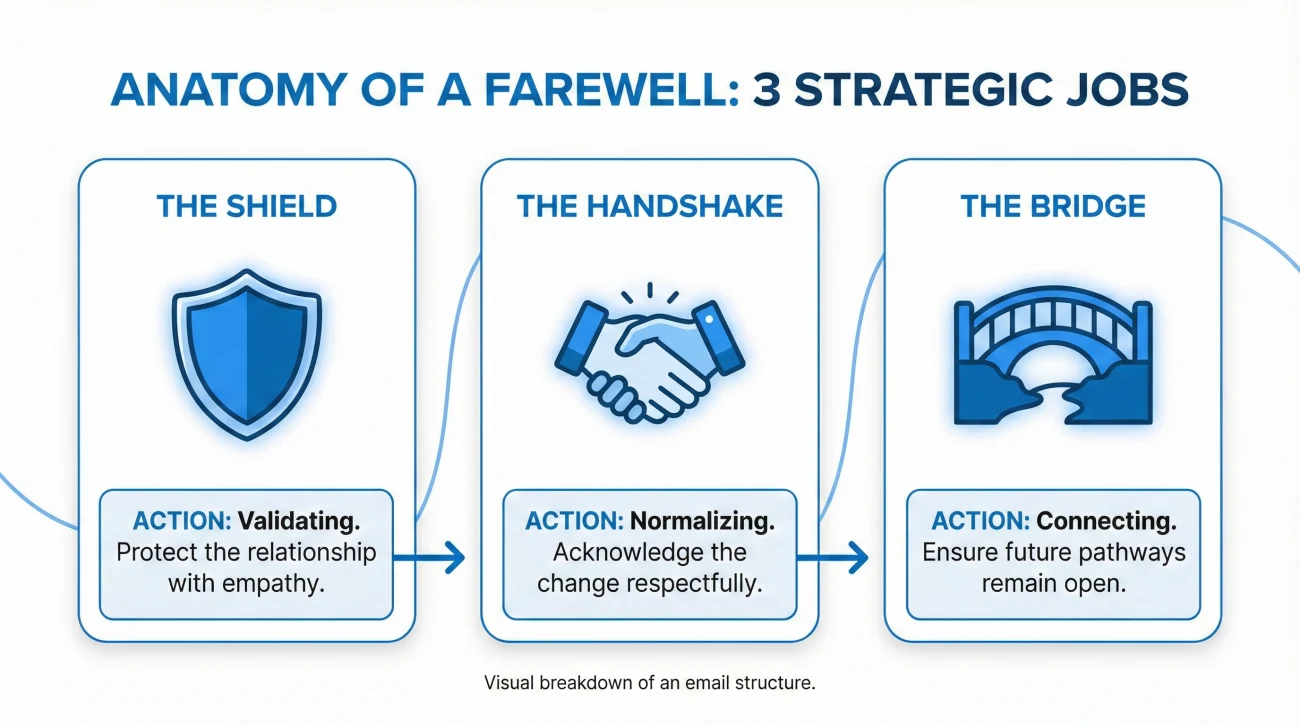
A manager thank you letter to employees needs to do three specific jobs. If it misses one, it fails.
- 🛡️ Job 1: Validating Competence (The Shield). You must explicitly state that the team is successful because of their skills, not just your management. This proves to them (and to upper management reading the note) that the department is stable.
- 🤝 Job 2: Normalizing Change (The Handshake). Acknowledge that change is scary but inevitable. Frame your departure not as an abandonment, but as a natural evolution of their growth.
- 🚪 Job 3: The Open Door (The Bridge). Offer a specific way to stay in touch that implies you are willing to help them in the future (e.g., references, career advice).
Strategic Templates for Every Leadership Scenario
One size does not fit all. A director leaving a department of 50 requires a different tone than a team lead leaving a squad of 4. Below are tailored templates for common scenarios.
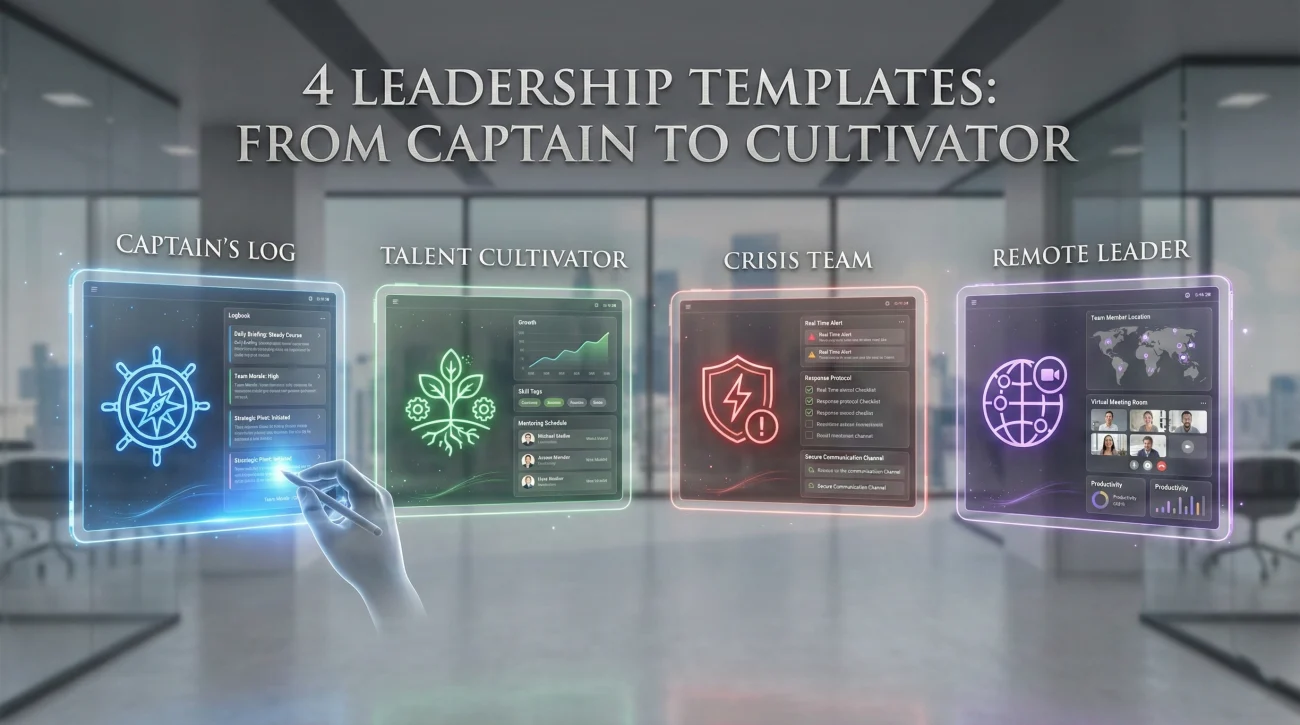
1. The “Captain’s Log” (Department-Wide)
Use this when addressing a large group where individual shout-outs are impossible. Focus on the collective culture and systems built.
Subject: Thank you for the privilege of leading this team
Team,
As many of you know, my time as Director of Operations comes to a close this Friday.
Leading this department has been the highlight of my career – not because of the metrics we hit, but because of the culture you built. When I look at how this team handles pressure, specifically during the merger last year, I don’t see employees; I see leaders at every level. You have built an operational engine that is resilient, efficient, and frankly, the envy of the company.
I want to leave you with one thought: You are ready. The systems you’ve put in place do not rely on me. Your success is intrinsic to your talent, not my title. I have full confidence that you will crush the Q3 goals we mapped out.
Change brings uncertainty, but it also brings fresh perspective. I know you will offer the new director the same incredible support you gave me.
I am moving on to a new role, but I remain your biggest fan. Please find me on LinkedIn [Link] – I am always happy to provide a reference or career advice.
With gratitude,
Sarah
2. The “Talent Cultivator” (To Direct Reports)
This is for the core people you managed directly. This appreciation email to direct reports should be personal, acknowledging their specific growth arcs.
Subject: A personal thank you before I go
Hi [Name],
I sent the team-wide note, but I wanted to write to you personally.
Watching you grow from [Junior Role] to [Current Role] has been one of my favorite parts of this job. I still remember when you handled the [Specific Crisis] – that was the moment I knew you were ready for bigger things. Your ability to [Specific Skill, e.g., remain calm under pressure] is a rare asset.
I know leadership changes can be unsettling. But trust me when I say: you are invaluable to this organization. Your work stands on its own merits. Don’t let my departure slow down your momentum.
Please keep my personal email ([Email Address]). If you ever need to brainstorm your next career move or need a letter of recommendation, just ask. I’m in your corner.
Keep pushing,
David
3. The “In the Trenches” (Post-Crisis/Startup)
If you led the team through layoffs, a grueling launch, or a turnaround, acknowledge the bond forged in fire. This is a powerful farewell thank you to team from manager.
Subject: We did the impossible
Team,
They say you don’t really know a team until things go wrong. Well, we’ve seen our share of storms, and I’ve never seen a group stand taller.
Thank you for trusting me when the roadmap was unclear. Thank you for the late nights during the [Project Name] launch. You didn’t just do your jobs; you carried each other. That level of camaraderie is rare in this industry, and I hope you protect it fiercely even after I’m gone.
I am leaving with a heavy heart but immense pride. You are the strongest team I have ever had the honor to serve.
Stay in touch,
Elena
4. The “Remote Leader” (Distributed Teams)
Leading remotely relies on trust. Acknowledge how they delivered without needing to be micromanaged.
Subject: Signing off (but staying connected)
Hi Team,
Leading a remote team requires a special kind of trust. Over the last two years, you have proven that excellence doesn’t need an office.
Thank you for your autonomy and your communication. You made my job easy by being proactive and owning your outcomes. I appreciated every Zoom check-in and Slack banter that kept us connected across time zones.
I’m eager to see where you take the product next. Keep building, keep communicating, and keep looking out for each other.
Cheers,
Mark
Timing: The Art of the “Lame Duck” Period
The period between your resignation and your last day is known as the “Lame Duck” session. Your influence is waning, but your presence is still felt. Timing your thank you email to staff when leaving is crucial to managing this transition.
Do not send it on your very last hour. That feels like a “hit and run.”
The Ideal Timeline:
- 📅 2 Days Before Departure: Send the team-wide email. This gives people 48 hours to process, stop by your office (or Slack you), and say their personal goodbyes without panic.
- 📅 The Last Day: Use this for logistics and short “signing off” pings. The emotional work should already be done.
Handing Over the Baton: Supporting the New Leader
One of the classiest things a departing manager can do is to tee up success for their successor. In your farewell email, you set the stage. If you express confidence in the incoming manager (even if you don’t know them well), you reduce friction for your team.
However, avoid over-promising. Phrases like “The new boss is going to solve everything” set up unrealistic expectations. Stick to “I know the leadership team is committed to your success.”
Leadership Pitfalls to Avoid
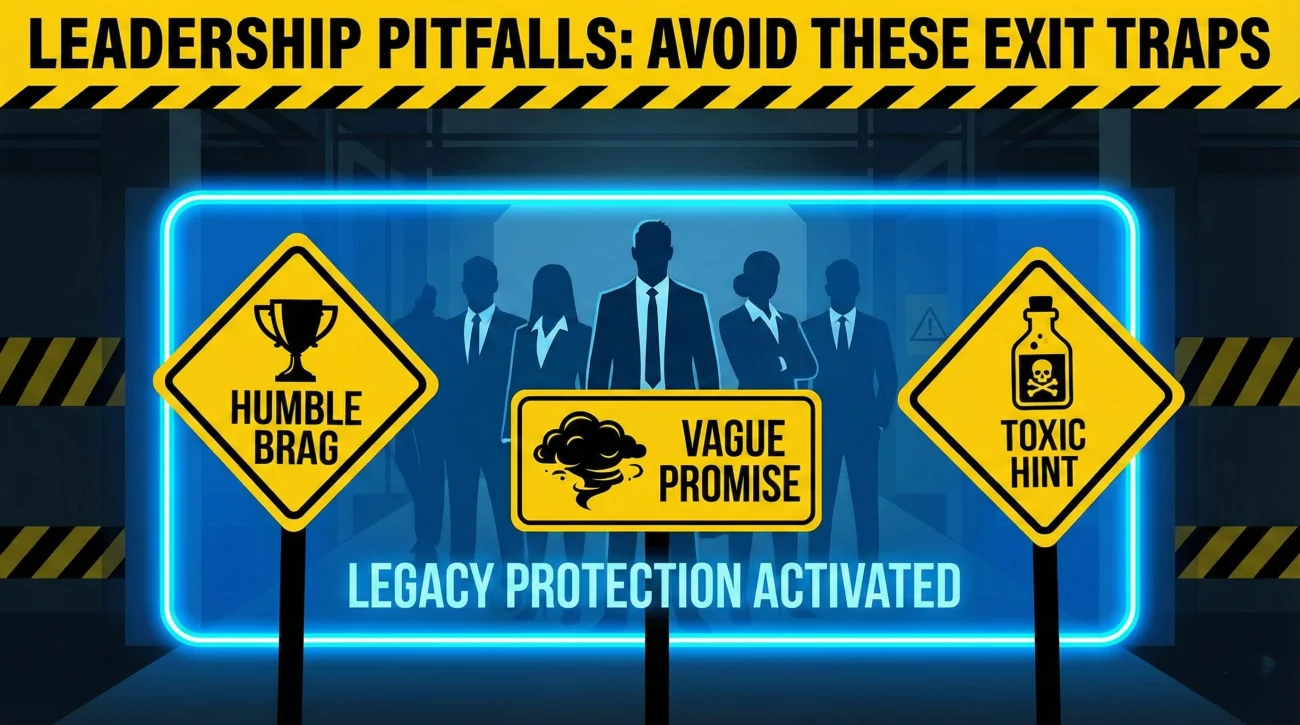
Even seasoned executives make mistakes on their way out. Avoid these common errors that can taint your legacy:
- 🛑 The “Humble Brag”: “I’m so proud of what we achieved (but mostly me).” Avoid listing your own accomplishments. List the team’s.
- 🛑 The Vague Promise: “Let me know if you need anything.” Be specific. “I can help with intro to [Industry] networks.”
- 🛑 The Toxic Hint: “Good luck with the new management.” Even if you are leaving on bad terms with the company, never poison the well for your team. It makes you look petty, not protective.
For more details on what not to do, refer to our comprehensive guide on ResignSmartly.
❓ FAQ
⏰ Should I announce where I am going next?
It depends. If you are going to a direct competitor, consult HR first; often it is better to keep it vague (“a new opportunity in the fintech space”). If it is non-competitive, sharing your destination can be inspiring for the team and helps them know where to find you later.
📧 How do I handle high performers who are upset I’m leaving?
Schedule a 1:1. Do not rely on email. High performers often view your exit as a betrayal or a sign of instability. Sit down with them, explain your reasoning (as much as you can), and explicitly connect them with other mentors or leaders in the company to ensure they feel secure.
💼 Can I recruit my team to join me later?
Tread carefully. Most employment contracts have non-solicitation clauses. In your farewell email, do not hint at recruiting them. Keep it professional. Once you have left and the non-solicit period is over, the dynamics change, but on your way out, strict ethics are required.
📝 Should I write recommendations before I go?
Yes, this is a power move. Writing LinkedIn recommendations for your direct reports before they even ask is the ultimate sign of a supportive leader. It shows you are invested in their future even when it no longer benefits you.
Final Thoughts: Your Legacy is Your People
In the end, you won’t be remembered for the Q4 spreadsheets or the budget reconciliations. You will be remembered for how you made people feel about themselves. Did you make them feel capable? Did you make them feel seen?
A thoughtful thank you email to subordinates is the final stamp on your leadership passport. It is your opportunity to define the narrative of your departure – not as a loss, but as a graduation for both you and the team you built. Write it with care, send it with grace, and walk out the door knowing you left the place better than you found it.
If you need more templates for different scenarios, check our collection of goodbye and handover emails to ensure every aspect of your transition is covered.
⚠️ Legal Disclaimer: The resignation templates, email samples, and professional guidance provided in this guide are for informational purposes only and do not constitute legal advice. Employment laws and contract requirements vary by jurisdiction and individual circumstances. Please review your employment agreement and consult your HR department and/or a qualified attorney to ensure compliance with applicable laws and policies.