- Core Point: The subject line is the gatekeeper, a generic “Thank you” gets ignored and can sabotage a strong message.
- Why Specificity Wins: A concrete detail triggers recognition, curiosity, and signals effort so people actually open and remember you.
- Upgrade Method: Turn a flat label into a headline by adding context like timeframe, project name, or outcome.
- Open Rate Boosters: Pair the subject with preview text, front-load meaning for mobile cutoffs, and keep it short enough to scan.
- What To Avoid: No fake urgency, no “Re:” tricks, no ALL CAPS, no vague “Update,” and no emoji overload.
The 6-Word Gatekeeper to Your Professional Reputation
Here is a painful scenario I see all the time in my coaching practice: A professional spends 30 minutes agonizing over the perfect thank you note. They draft, delete, edit, and polish the body text until it strikes the perfect balance of warmth and professionalism. They ensure the tone is just right – not too desperate, not too aloof. They check for typos three times. Then, right before hitting send, they hurriedly type “Thanks” or “Thank you” into the subject line field and click send.
They just sabotaged their own message.
It is a tragedy of digital communication. In a crowded inbox, the subject line is the gatekeeper. It is the only thing standing between your heartfelt message and the “Delete” button (or worse, the “I’ll read this later” purgatory that inevitably leads to the trash folder). A compelling gratitude email subject line does more than just announce the content; it signals the value of the relationship inside.
Think about your own inbox. You likely receive dozens, perhaps hundreds, of emails a day. You do not read them all. You scan them. You triage them. Your eyes dart down the left-hand column, filtering based on two criteria: “Do I know this person?” and “Is this urgent/valuable?” A generic subject line fails both tests. It blends into the background noise of spam, newsletters, and automated notifications.
Whether you are thanking a mentor for years of guidance, a client for a difficult project, or a colleague after your resignation, your subject line sets the emotional stage before the curtain even rises. It is the handshake before the conversation. In this comprehensive guide, we are going to move beyond generic headers. We will dissect the anatomy of high-performing subject lines, explore the psychology of open rates, and provide you with a master list of subject lines that get opened, read, and remembered.
The Psychology of the Inbox: Why Specificity Wins
To understand why most subject lines fail, you have to understand the cognitive load of a modern professional. Your recipient is likely scanning their inbox in a state of “continuous partial attention.” They are looking for reasons not to open an email. They are looking for quick wins. They are looking for things they can delete to feel productive.
A subject line like “Thank you” is dangerous because it is ambiguous. It looks like spam. It looks like a receipt. It looks like a low-priority pleasantry that can wait until next week. It gives the brain zero hooks to latch onto. Conversely, a thank you email subject line that is specific – like “Thank you for the advice on the Q3 Strategy” – immediately triggers a different neural pathway: Recognition and Curiosity.
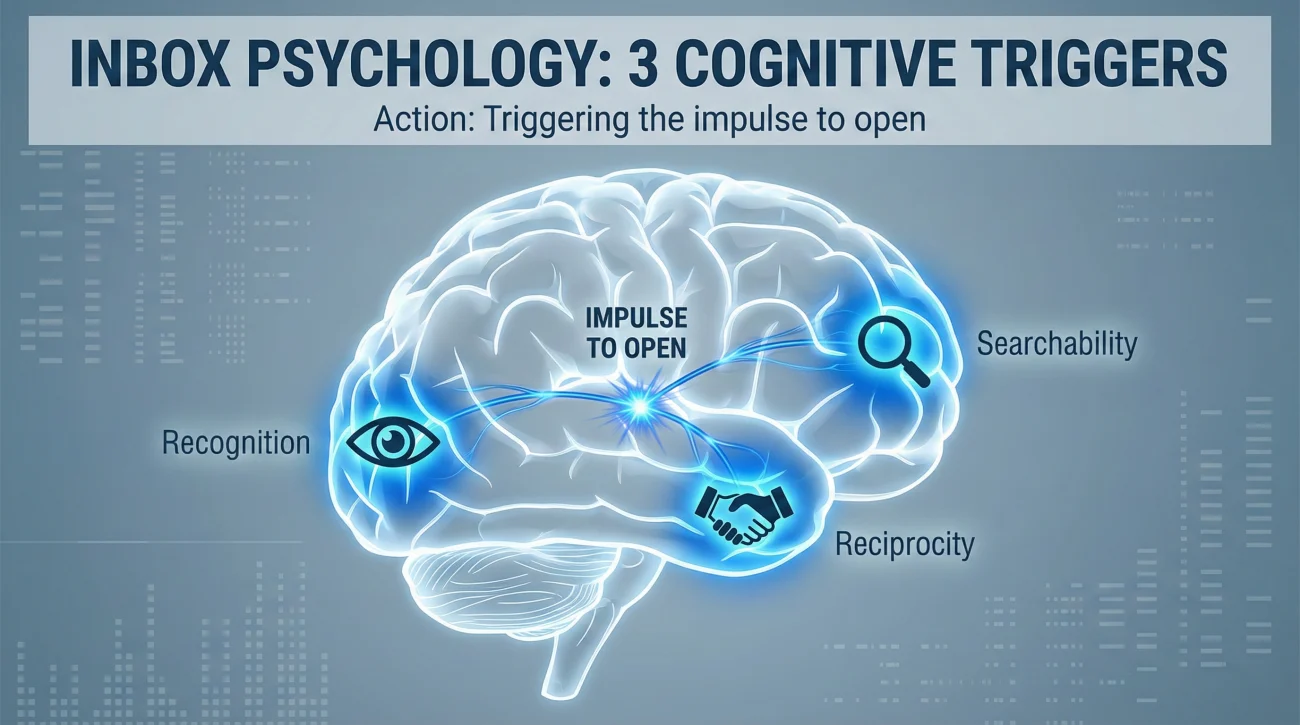
The Three Cognitive Triggers
Specific subject lines leverage three powerful psychological triggers that force the recipient to pause and click:
- 🧠 1. Priming the Memory (The Recognition Trigger): When you include specific details in the subject line (e.g., “The Delta Project,” “Your advice on Tuesday”), you instantly transport the recipient back to that moment. You are not just a random name in the inbox; you are the person associated with that specific, tangible event. This reduces the mental effort required to figure out who you are.
- 🔍 2. Future Utility (The Searchability Trigger): This is often overlooked. Professionals use their inbox as a database. Six months from now, your boss might think, “Who sent me that great note about the merger?” If your subject line is “Thanks,” that email is gone forever. If it is “Reflections on the Merger & Gratitude,” it appears at the top of the search results. You are optimizing your reputation for the long term.
- ❤️ 3. Perceived Effort (The Reciprocity Trigger): Specificity signals care. It proves you aren’t just copy-pasting a template to 50 people. When a recipient sees a detailed subject line, they subconsciously recognize that you took the time to craft it. This triggers the law of reciprocity – they feel compelled to open it and read it because you put effort into sending it.
The “Before & After” Framework: Upgrading Your Headlines

Writing great subject lines is not an art; it is a science. Before we dive into the list of 30+ examples, let’s look at the mechanics of upgrading a catchy thank you subject. It usually involves moving from a “Label” (describing what the email is) to a “Headline” (describing what the email means).
We call this the “Value-Add Transformation.” You are taking a flat, descriptive label and injecting it with context and emotion.
| The “Lazy” Version (Avoid) | The High-Impact Version (Use) | Why It Works |
|---|---|---|
| Thank you | Gratitude for your mentorship this year | Adds Timeframe + Value: It frames the email as a summary of a significant period, not just a quick note. |
| Great meeting | Follow-up & Appreciation: Q3 Planning Session | Combines Action + Gratitude: It tells the recipient this email contains both a thank you and relevant work details. |
| Thanks for help | Thank you for stepping in on the Delta Project | Highlights Crisis Resolution: It specifically references the difficult situation they helped solve, reinforcing their value. |
| Checking in | Thinking of our conversation last month / Update | Adds Personal Context: “Checking in” is one of the most ignored subject lines because it gives the reader no context. Referencing a past conversation bridges the gap. |
30+ Subject Lines for Every Professional Scenario (Deep Dive)
Context is king. The subject line that works for a peer you grab lunch with will flop with a VP you met once. Below is a categorized master list, with notes on why they work and when to use them.
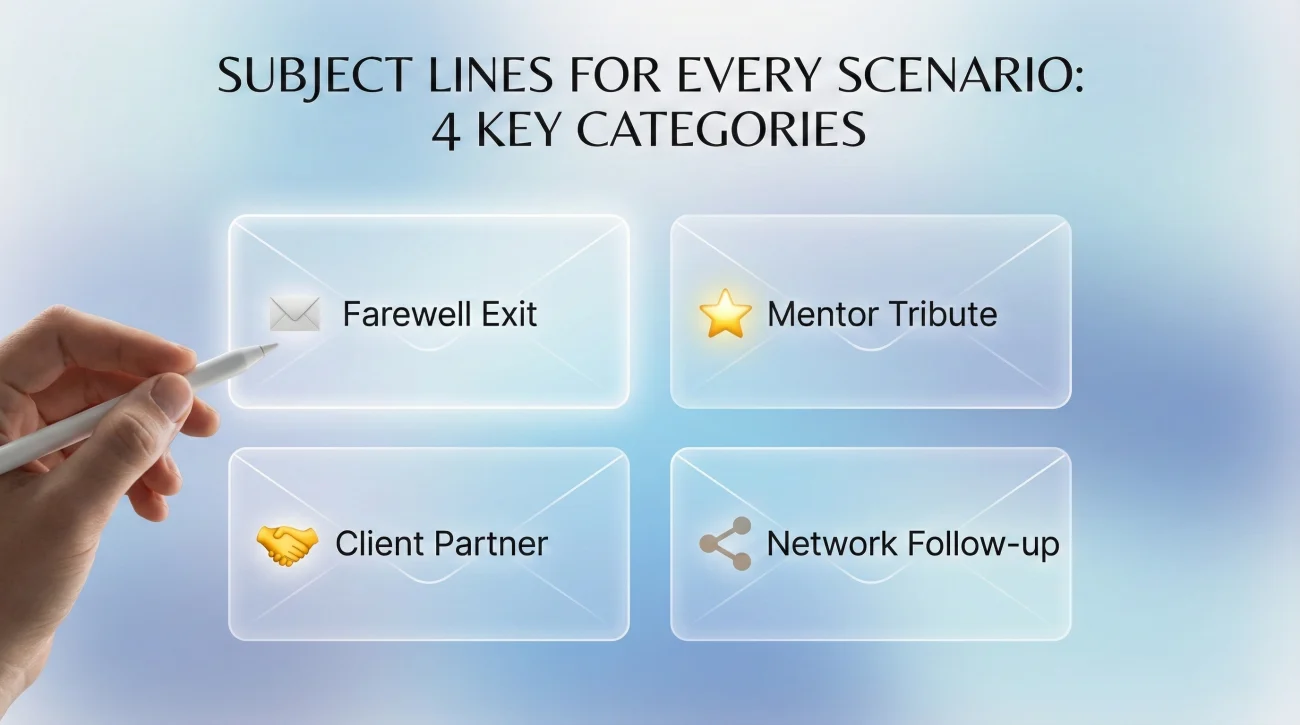
1. The “Goodbye & Handover” Exit
Leaving a job is a delicate dance. You want to be remembered fondly, not as the person who just disappeared. These subject lines ensure your final impression is one of class, gratitude, and professionalism. (For the full body text of these emails, check our templates for goodbye and handover emails).
- 👋 “Thank You for an Incredible 3 Years”
Why it works: It frames your tenure positively right away. Even if you are leaving because you hated it, this subject line takes the high road. - 👋 “Moving on with Gratitude: [Your Name]”
Why it works: Including your name in the subject line is crucial for company-wide farewells where not everyone might have your personal email saved. - 👋 “Appreciation for the Partnership & Support”
Why it works: Great for clients or external partners. It emphasizes the “partnership” aspect, making them feel like equals. - 👋 “Farewell and a Huge Thank You to the Marketing Team”
Why it works: Specificity to a department makes the team feel seen. It’s better than a blast “Goodbye All.” - 👋 “Reflecting on My Time at [Company] – Thank You”
Why it works: This sounds thoughtful and substantial. It signals that the email contains meaningful reflection, not just logistics. - 👋 “Staying in Touch / Thank You”
Why it works: Simple and functional. It signals that the email contains your personal contact info (the “staying in touch” part).
2. The Mentor & Manager Tribute
Mentors invest emotional energy and political capital in you. A generic “thanks” feels transactional and insulting. Your subject line for gratitude message needs to reflect the depth of that investment.
- 🌟 “Deep Appreciation for Your Guidance”
Why it works: The word “Deep” adds emotional weight. It signals this isn’t a casual note. - 🌟 “Thank You for Shaping My Career Path”
Why it works: This is a huge compliment. It tells the mentor that their impact wasn’t just on a project, but on your entire trajectory. - 🌟 “Gratitude for Believing in Me When I Didn’t”
Why it works: High vulnerability. This subject line is almost guaranteed to be opened because it touches on a human emotional cord. - 🌟 “A Note of Thanks for Your Mentorship”
Why it works: Formal and respectful. “A Note of Thanks” sounds like a handwritten letter, implying care. - 🌟 “The Advice That Changed Everything – Thank You”
Why it works: It creates a “Curiosity Gap.” The mentor will open it immediately to find out which piece of advice you are referring to.
3. The Client & Partner Connection
With clients, you must balance warmth with commercial professionalism. You want to say “I value you” without sounding overly intimate or crossing boundaries.
- 🤝 “Thank You for a Successful Launch”
Why it works: It celebrates a win. Clients love hearing about success. It frames the relationship around victory. - 🤝 “Appreciation for Your Trust in [Your Company]”
Why it works: It reinforces the core of the business relationship: Trust. It validates their decision to hire you. - 🤝 “Celebrating Our 5th Year of Partnership”
Why it works: Milestones are powerful. Reminding a client of longevity makes it harder for them to switch vendors. - 🤝 “Wrap-up & Gratitude: [Project Name]”
Why it works: Functional and polite. It tells them this email closes the loop on a specific project. - 🤝 “Thank You for Being an Exceptional Partner”
Why it works: Flattery works when it is sincere. Calling a client “exceptional” makes them feel good about their own working style.
4. The “Post-Interview” or Networking Follow-up
This is the most competitive environment. Your email is sitting next to 5 other candidates. Standing out is critical for survival.
- 🚀 “Thank you / [Job Title] Interview – [Your Name]”
Why it works: The “Formula 1” of subject lines. It gives the recruiter exactly what they need to file your email: Role + Name. Efficiency is appreciated here. - 🚀 “Inspired by Our Conversation Today”
Why it works: It suggests you are not just looking for a job, but you are intellectually engaged with the company’s mission. - 🚀 “Appreciation for Your Time & Insights on [Topic]”
Why it works: Mentioning a specific topic discussed (e.g., “Insights on AI trends”) proves you were listening and adds value. - 🚀 “Great Meeting You at [Event Name] – Follow Up”
Why it works: It anchors the connection to a physical place/event, helping them place your face.
The Mobile Test: Front-Loading is King
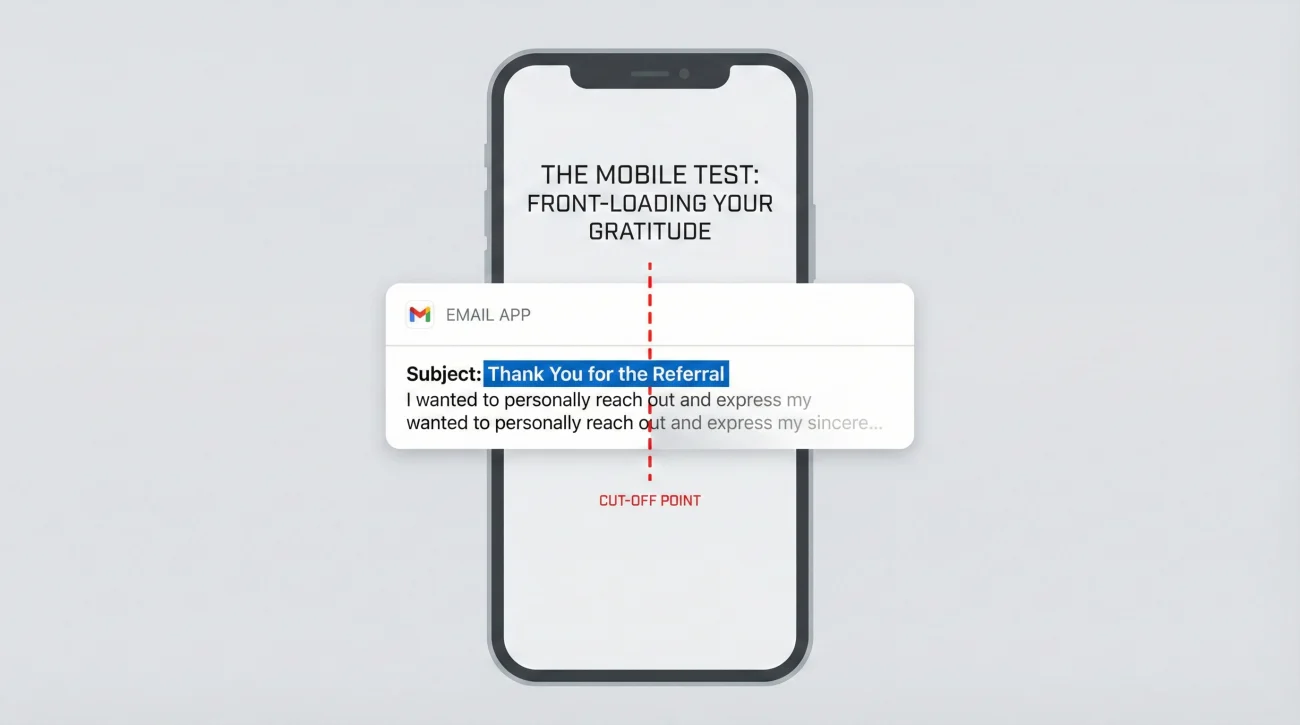
Here is a technical constraint you cannot ignore: a significant portion of emails are opened on mobile devices. Most phone screens cut off subject lines after 35-40 characters.
If your subject line is “I just wanted to take a moment to say thank you for…”, the recipient sees: “I just wanted to take a moment to…”
They have no idea what the email is about. It could be a complaint, a resignation, or a spam bot. This is why “Front-Loading” is the golden rule of modern email etiquette. Put the “meat” of the message at the very start.
❌Bad (Back-loaded): “Just reaching out to send a quick note of thanks for the referral”
✅Good (Front-loaded): “Thank You for the Referral (Quick Note)”
By front-loading the gratitude, you ensure the message is clear even on the smallest screen. You respect the recipient’s time by allowing them to triage the message instantly.
7 Subject Line Sins to Avoid
Even well-meaning professionals fall into these traps. I have seen relationships sour simply because the subject line set the wrong tone.
- 🚫 1. The “Urgent” Bait: Never use “Urgent” or “Important” for a thank you note. It creates anxiety. When the recipient opens it and realizes it’s just a thank you, they feel tricked. You have traded their trust for an open.
- 🚫 2. The “Re:” Fake-out: Don’t reply to an old, unrelated thread about “Q4 Budget” just to say thank you for a referral. It messes up their search, confuses the context, and looks lazy. Start a fresh thread with a fresh subject.
- 🚫 3. The ALL CAPS Shout: “THANK YOU SO MUCH” feels manic, not grateful. It reads as aggressive shouting. Use sentence case or title case.
- 🚫 4. The Clickbait: “You won’t believe this…” or “One more thing…” might get an open, but it kills professional credibility. Professionalism relies on predictability and clarity.
- 🚫 5. The Apology: “Sorry to bother you but thank you…” Stop apologizing for your existence. Gratitude is a gift, not a burden. Present it confidently.
- 🚫 6. The Vague “Update”: Just writing “Update” is meaningless. Update on what? Your life? The project? The weather? Be specific.
- 🚫 7. The Emoji Overload: One emoji can be tasteful (👋 or 🙏). Five emojis (👋🙏😊🚀❤️) looks like a spam bot or a multi-level marketing pitch.
For more on maintaining professional boundaries during sensitive communications, explore our detailed guide on resignation etiquette.
❓ FAQ: Troubleshooting Your Subject Lines
📧 How long should a thank you email subject line be?
Ideally, aim for 6 to 10 words (or under 50 characters). This length is the “sweet spot” that provides enough context to be specific but is short enough to avoid getting truncated on mobile devices. If you find yourself writing a sentence longer than that, try to move the details into the first line of the email body instead. Think of it like a newspaper headline: Punchy, informative, and short.
💭 Is it okay to use emojis in a professional subject line?
It depends entirely on your industry and the depth of your relationship. In creative fields (Marketing, Design) or with close peers, a single emoji (like 🙏, 👋, or 🌟) can add warmth and personality to a catchy thank you subject. It helps the email stand out visually. However, for formal corporate environments (Law, Finance), government settings, or when emailing senior leadership you don’t know well, stick to plain text to ensure you are taken seriously and to avoid spam filters.
🤝 Should I put the recipient’s name in the subject line?
Yes, this is a powerful psychological tactic for high-value contacts. A subject like “Thank You, Sarah – Great Insights Today” stops the scrolling thumb because our brains are wired to recognize our own names (the “Cocktail Party Effect”). However, use this sparingly. Doing it for every single email can start to feel salesy or manipulative, like a cold-outreach bot. Save it for genuine, high-stakes gratitude.
⏰ Can I send a thank you email “too late”? How do I handle it?
Better late than never, but you must acknowledge the delay in the subject line to diffuse the awkwardness. Using a phrase like “Belated Thank You,” “Thinking of your help last month,” or “Long overdue thanks for [Project]” manages the expectations immediately. It shows you haven’t forgotten them, even if life got in the way. It turns a potential negative (tardiness) into a positive (persistence in gratitude). For broader advice on timing your communications, check out our homepage at ResignSmartly.
💼 What if I am thanking a group of people?
For group emails, call out the collective identity in the subject line. Use “Thank You to the Q3 Strategy Team,” “Gratitude for the Marketing Dept,” or “Appreciation for Everyone’s Hard Work.” This signals that the email is relevant to everyone included, reducing the “Bystander Effect” where everyone assumes the email is meant for someone else.
Final Thoughts: It’s Not Just a Subject Line, It’s a Signal
We often treat subject lines as the packaging – something to be torn open and discarded to get to the “real gift” inside (the message). But in digital communication, the packaging is part of the gift. A thoughtful, specific gratitude email subject line tells the recipient: “I value your time enough to be clear, and I value your contribution enough to be specific.”
When you write “Thank you for the advice on the merger,” you are doing more than saying thanks. You are validating their expertise. You are proving you listened. You are organizing their digital life for them. You are presenting yourself as a professional who pays attention to details.
Don’t let your beautifully written appreciation die in the inbox because of a lazy header. Take the extra thirty seconds. Craft a headline that honors the relationship. Because when you close your professional chapters with grace and precision, you ensure the door remains open for the sequel.
⚠️ Legal Disclaimer: ResignSmartly provides general informational guidance about resignation, workplace communication, notice periods, handovers, and career transitions. Content does not constitute individualized legal advice. Employment laws, contracts, workplace policies, and individual circumstances vary, so review the requirements that apply to your situation and consult an appropriate qualified professional when needed.