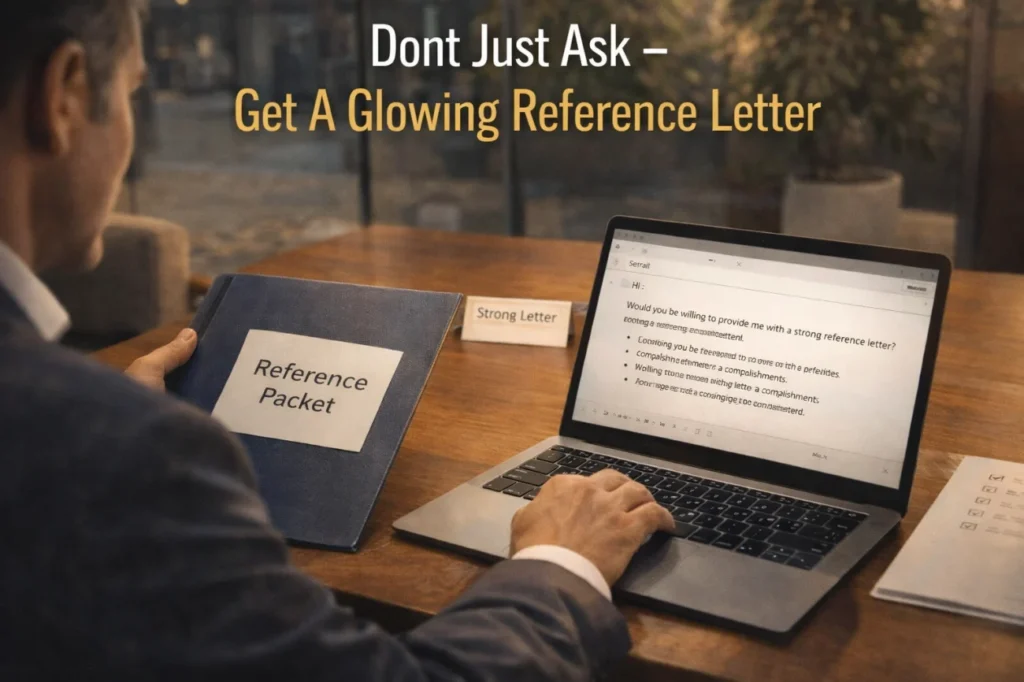
- Core idea: Treat a reference letter request as a small project, ask for a strong letter, and make it easy to write.
- Timing: Ask right after visible wins or before you leave, while details are still fresh in their mind.
- Who to ask: Choose people who directly observed your work and can describe outcomes, avoid anyone vague, distant, or overly emotional.
- Reference packet: Send the target role, top 3 achievements, 1 to 2 strengths, one concrete project example, and a clear deadline.
- Wording and follow-up: Give an easy out, offer bullet points or an outline they can edit, and send one polite nudge 48 to 72 hours before the deadline.
A Great Reference Letter Is Not a Favor. It’s a Project.
Most people treat a reference letter request like a quick ask: “Hey, can you write me something?” Then they wonder why the result feels generic, short, or quietly reluctant. A glowing letter isn’t about begging harder. It’s about timing, clarity, and making the person writing it feel confident they’re telling the truth in a way that helps you.
The secret is simple: don’t just ask for a letter. Ask for a strong letter, and give them everything they need to write it quickly. When you do that, you’re not adding work to their life – you’re removing friction. That’s why some people collect powerful recommendations for years, while others get one lukewarm paragraph that does nothing.
Timing: Ask While Your Work Is Still Fresh in Their Mind
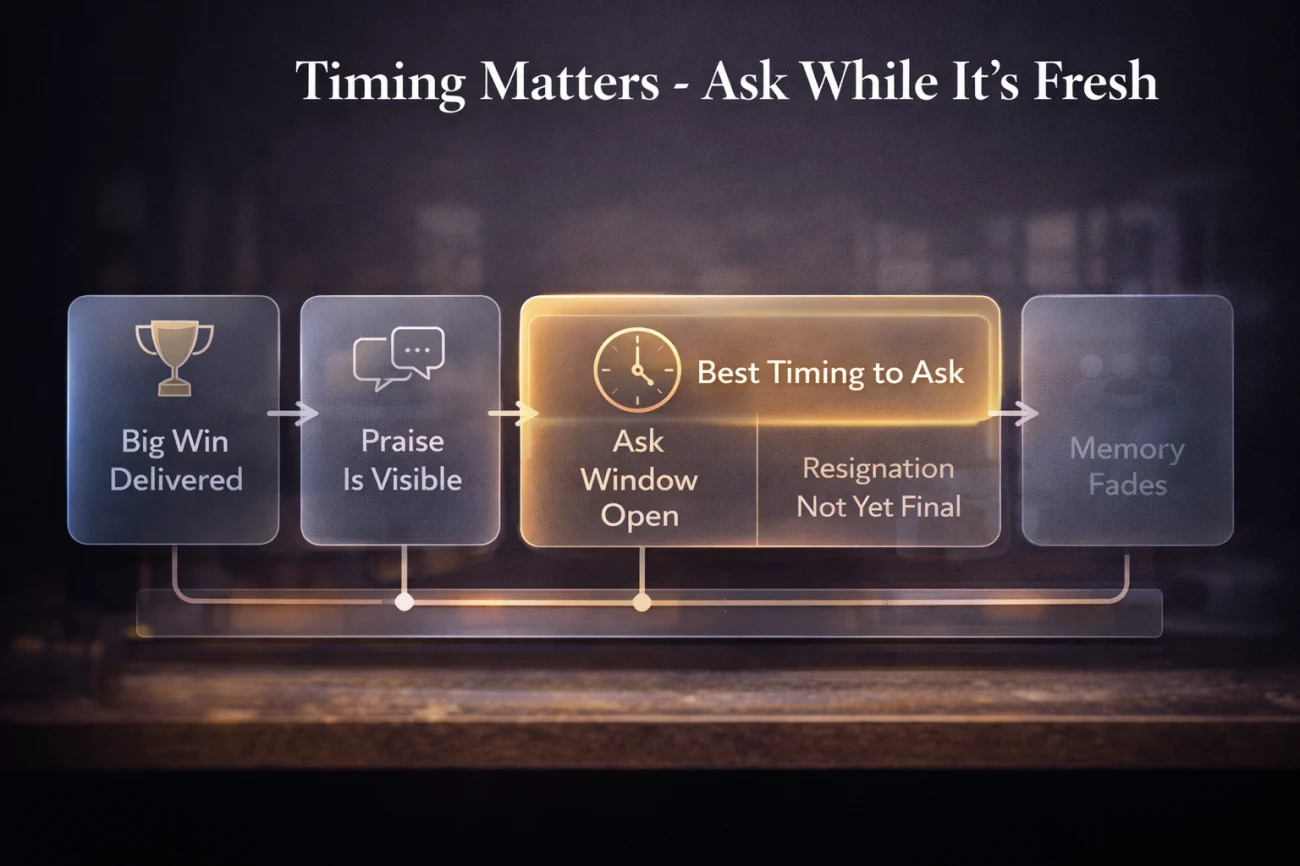
The best time to ask is when your impact is visible and recent. Not six months later when everyone has moved on and your manager is juggling a new fire. If you just finished a major project, delivered a clean quarter, or received positive feedback, that’s your window. The person writing the letter will have specifics ready, and specifics are what make a reference feel real.
If you’re leaving a job, ask before you disappear. It’s not about panic – it’s about access and memory. Once you’re gone, people change roles, inboxes get messy, and your achievements become “that thing we did a while back.” Asking early is professional, not desperate.
Who You Should Ask (And Who You Should Avoid)
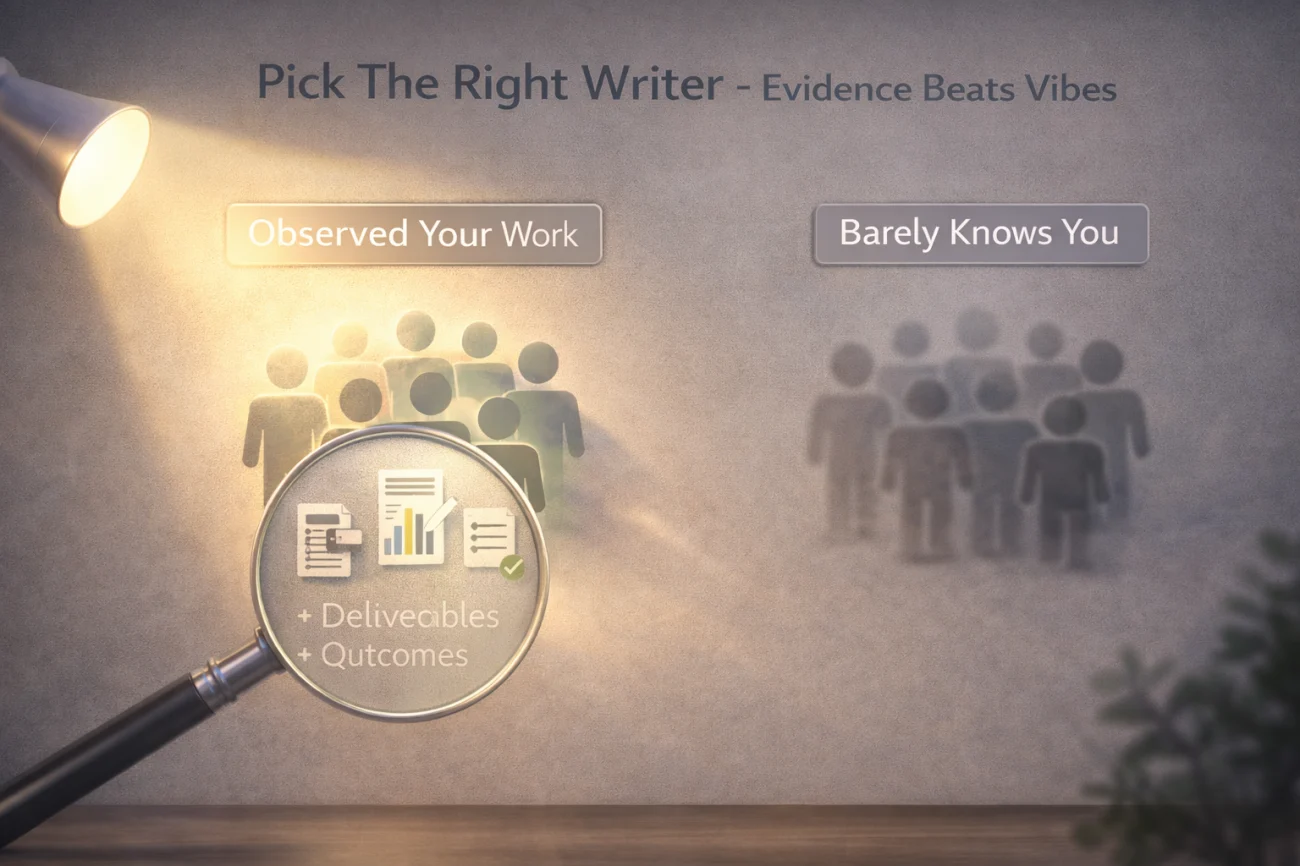
The strongest letters come from people who can describe your work with evidence, not just your personality. You want someone who can say what you did, how you did it, and what changed because of it. A sweet letter that only says you’re “hardworking” is basically invisible.
Best options
- Your direct manager (if the relationship is stable and they actually observed your work)
- A dotted-line leader who relied on your deliverables
- A project sponsor or stakeholder (especially if you improved outcomes for them)
- A senior peer who collaborated closely and can speak to execution and judgment
Risky options
- Someone senior who barely knows your work (they’ll write vague praise)
- A friend at work who can’t speak credibly about results
- Anyone who sounds emotional, bitter, or likely to overshare your exit story
What to Give Them So the Letter Becomes “Glowing” Instead of “Generic”
A strong letter is built from details: scope, outcomes, and moments that show how you operate under pressure. If you don’t provide those ingredients, the writer has to invent structure from scratch. Most people won’t. They’ll write something safe, short, and bland.
Make it easy. Send a mini “reference packet” that’s short enough to read in two minutes but rich enough to write from. Think of it as helping them remember you accurately.
| What you provide | Why it helps | Keep it short |
|---|---|---|
| Role you’re applying for | They can tailor language to the job | Job title + 2–3 responsibilities |
| Top 3 achievements | Creates “proof” instead of adjectives | One line each with outcomes |
| 1–2 strengths to emphasize | Gives the letter a clear theme | Pick strengths relevant to the role |
| Specific project example | Produces credibility and texture | Project + what you owned + impact |
| Deadline | Prevents awkward chasing | A real date, not “whenever” |
How to Ask Without Sounding Needy (The Exact Wording That Works)
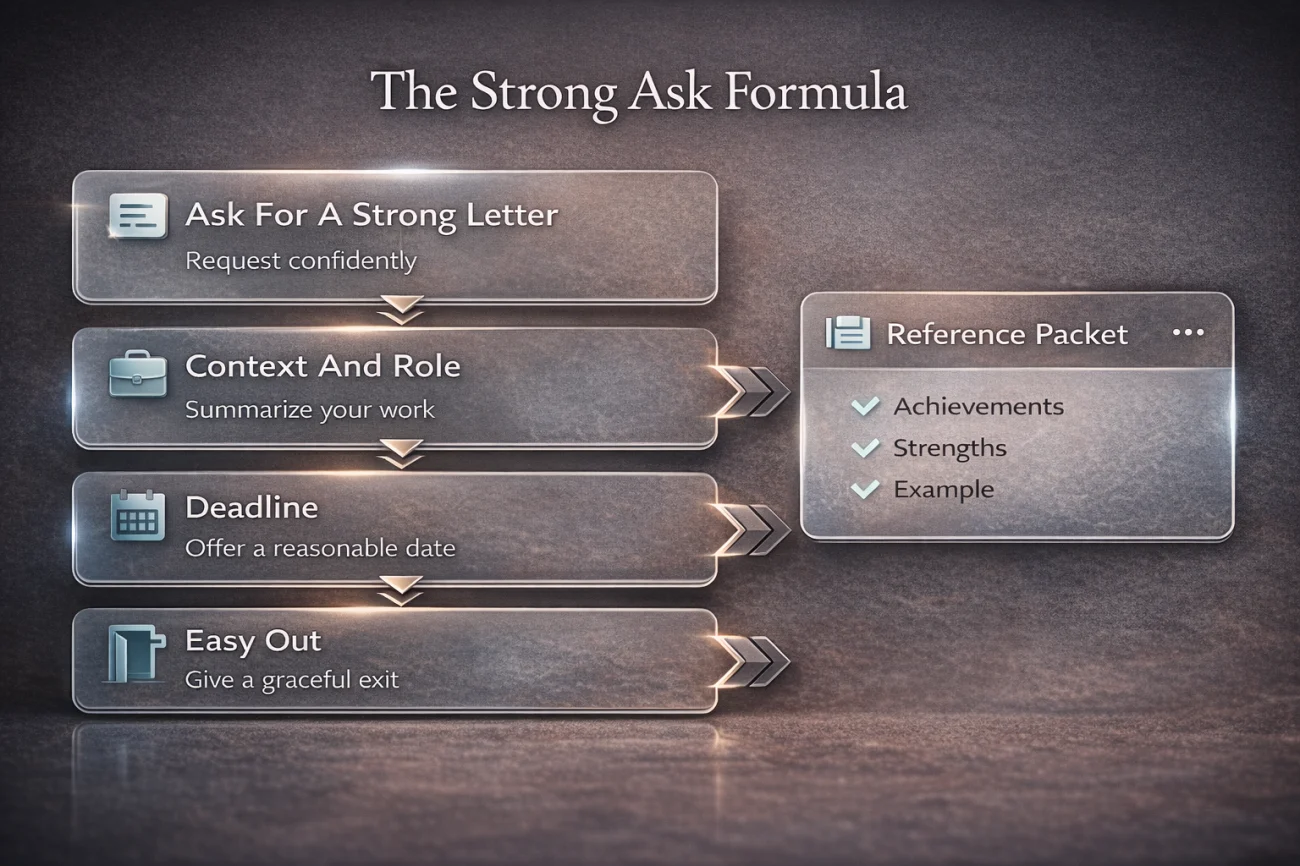
The best requests are clear and respectful. They give the person an easy “yes,” and an easy “no” if they’re not comfortable. That “easy out” matters more than people think – it removes pressure, which makes the yes more genuine.
Also: ask for a strong letter, not “a letter.” It’s a tiny wording change that prevents weak recommendations. If someone hesitates, you’d rather know now than carry a lukewarm endorsement into a competitive process.
Copy-Paste Templates You Can Use
These are designed to be short, professional, and easy to reply to. Pick the one that matches your situation and customize the brackets. Don’t over-explain. Your goal is to make the ask feel normal and structured.
Template 1: Direct Ask (Email)
Subject: Reference letter request
Hi [Name],
I’m applying for [role/title] and I’m hoping you’d be willing to write a strong reference letter for me. You worked closely with me on [project/team], so I think you’d be able to speak to my work in a specific way.
If you’re open to it, I can send a short summary of the role and a few bullet points on projects and outcomes to make it easy. The deadline is [date]. If you don’t have the time or don’t feel comfortable, no worries at all.
Thank you,
[Your Name]
Template 2: Requesting Recommendation Email (Short + Polite)
Subject: Quick recommendation request
Hi [Name],
Would you be comfortable writing a brief recommendation for me for [role/company]? I’d really value a note that highlights [strength 1] and [strength 2], especially based on our work on [project].
I can send a 5-bullet summary to make it quick to write. Deadline is [date]. Totally okay if timing doesn’t work.
Best,
[Your Name]
Template 3: LinkedIn Recommendation Request
Hey [Name] – quick ask: would you be open to writing a LinkedIn recommendation for me? If it helps, you could focus on [specific project] and how I handled [strength]. I’m happy to write one for you as well if you’d like.
Template 4: “I’ll Draft Bullet Points” Offer (High Success Rate)
Subject: Reference letter – I can make this easy
Hi [Name],
If you’re willing to write a strong reference letter for me, I can send a short draft outline with bullet points (projects, outcomes, and key strengths) so you can edit rather than start from zero. Deadline is [date].
Please feel free to say no if it’s not a good time – I’ll completely understand.
Thank you,
[Your Name]
The “Give First” Move That Makes People Happier to Help
Reciprocity works because it feels fair. If you can genuinely help them too, offer it. Write a LinkedIn recommendation for them first. Offer to be a reference. Offer to review their resume. Don’t make it transactional or awkward – just make it available.
The clean line is: “I’m happy to return the favor.” That’s enough. The goal is to make the exchange feel human, not like paperwork.
Follow-Up Without Being Annoying

Most people don’t say no. They say yes… and then forget. A polite follow-up isn’t rude; it’s normal. The trick is to keep it short and assume goodwill.
Follow-up message (48–72 hours before deadline)
Hi [Name] – quick nudge in case it got buried. The deadline is [date]. Thank you again for doing this, and please tell me if it’s not workable with timing.
Checklist: The Strong Reference Letter Request Workflow
If you want a simple system that works every time, use this checklist. It prevents the two failure modes: asking the wrong person and asking in a way that forces them to write something vague.
| Step | What you do | Why it matters |
|---|---|---|
| 1 | Pick someone who saw your work | Specifics create credibility |
| 2 | Ask at the right time | Fresh memory = stronger detail |
| 3 | Ask for a strong letter | Prevents lukewarm endorsements |
| 4 | Provide a mini reference packet | Removes friction and saves time |
| 5 | Give an easy out | Yes feels genuine, not pressured |
| 6 | Follow up once, politely | Deadlines don’t manage themselves |
The Best Reference Letters Are Built, Not Hoped For
A strong reference letter isn’t about having perfect relationships. It’s about choosing the right person, asking at the right time, and making it easy for them to describe your impact accurately. When you treat it like a small project, you get a result that actually helps you.
If you remember one thing, remember this: a reference letter request becomes powerful when you stop asking for “a letter” and start asking for a strong letter with clear ingredients and a clean deadline.
❓ FAQ
✅ What’s the best way to ask for a reference letter?
Ask someone who actually observed your work, ask while the work is still fresh, and ask for a strong letter specifically. Then provide a short bullet-point packet so they can write quickly with real details.
📅 When should I ask for a reference letter if I’m resigning?
Ideally before you fully exit the company, while you still have access and the projects are recent. If you wait too long, people change roles, forget specifics, or simply become harder to reach.
💬 Should I offer to draft it for them?
Offering bullet points or an outline is often welcome because it saves time. Keep it honest and factual, and position it as “edit-friendly” support rather than trying to script their voice.
🧾 How long should a reference letter be?
It depends on context, but strong letters are usually concise and specific. A short letter with real examples beats a long letter full of generic praise.
🔒 What if they say yes but write something generic?
That’s usually a “missing ingredients” problem. Provide specific achievements, outcomes, and strengths aligned to the role, and politely ask if they’d be comfortable emphasizing those points. Specific prompts often turn a generic letter into a strong one.
⚠️ Legal Disclaimer: ResignSmartly provides general informational guidance about resignation, workplace communication, notice periods, handovers, and career transitions. Content does not constitute individualized legal advice. Employment laws, contracts, workplace policies, and individual circumstances vary, so review the requirements that apply to your situation and consult an appropriate qualified professional when needed.