- Problem to solve: You need to acknowledge “acquaintance zone” coworkers without sounding fake or self-absorbed.
- Why it is worth doing: Weak ties often unlock future opportunities, so a brief mass goodbye protects your network.
- Who gets what: Send personal notes to close circles, and a short BCC email to distant colleagues.
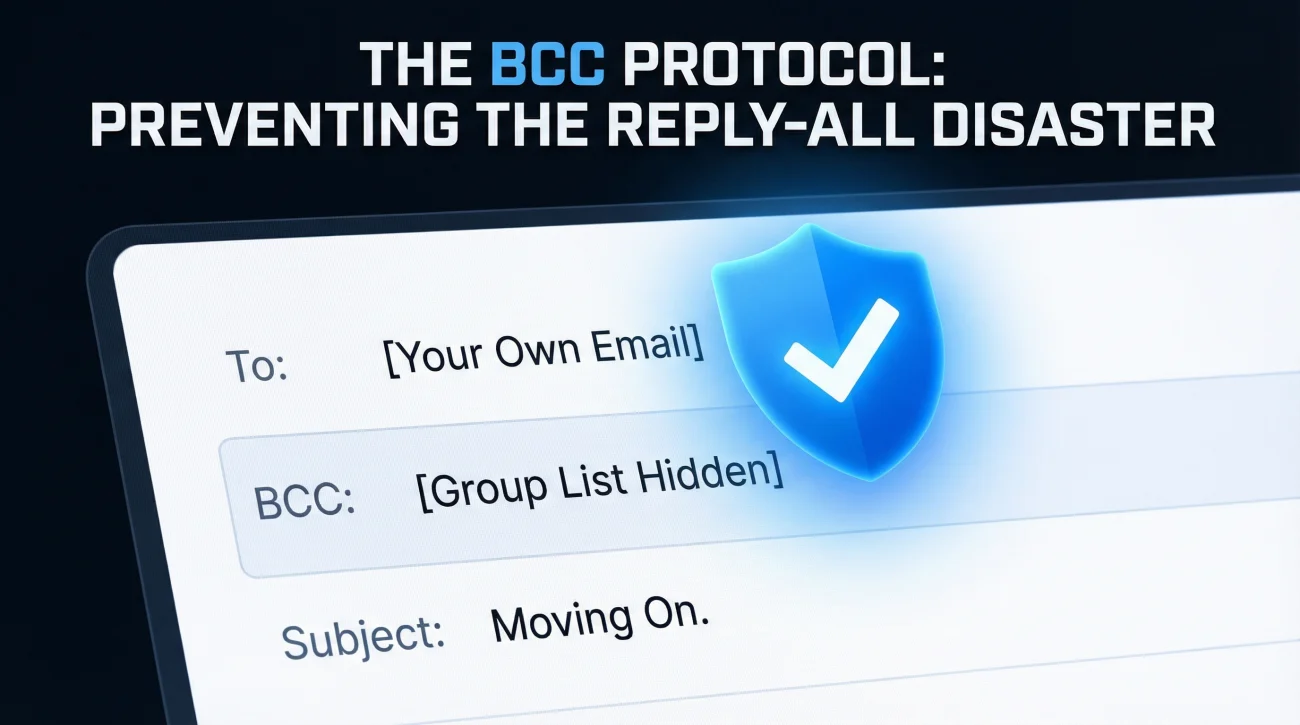
- BCC protocol: Put your own email in “To,” use BCC for the list, keep the subject plain, and avoid CC to prevent reply-all chaos.
- What to write and when: Keep it under 150 words, focus on the organization, include a LinkedIn CTA, and send on your last day in a reasonable window.
The Challenge of the “Peripheral” Farewell
I still remember the anxiety of my first major exit from a Fortune 500 company. I had drafted my heartfelt notes to my immediate team, but then I stared at a spreadsheet of 200+ other names. People I had sat next to in town halls, people who had approved my budget requests once a year, and colleagues I exchanged polite nods with in the elevator. I was paralyzed. Do I ignore them? Do I spam them? Eventually, I crafted a goodbye email to distant colleagues that struck a delicate balance – professional, brief, and open-ended. That single email didn’t just close a chapter; it planted seeds for networking opportunities that bore fruit years later.
Leaving a job is an emotional rollercoaster, but often the most confusing part isn’t saying goodbye to your work best friend – it’s navigating the murky waters of the “acquaintance zone.” In large organizations, you accumulate a massive orbit of peripheral connections. These are the people who know your face but might not know your last name. They are the cross-functional partners, the vendors, and the colleagues from other departments.
The strategic challenge here is nuanced: How do you acknowledge these professional ties without sounding presumptuous or overly familiar? If you write too much, you look self-absorbed. If you write nothing, you risk burning bridges you didn’t even know you needed. This guide is your blueprint for mastering the art of the farewell to organization email – ensuring you leave with your reputation polished and your network intact.
The Strategic Value of the “Peripheral Goodbye”
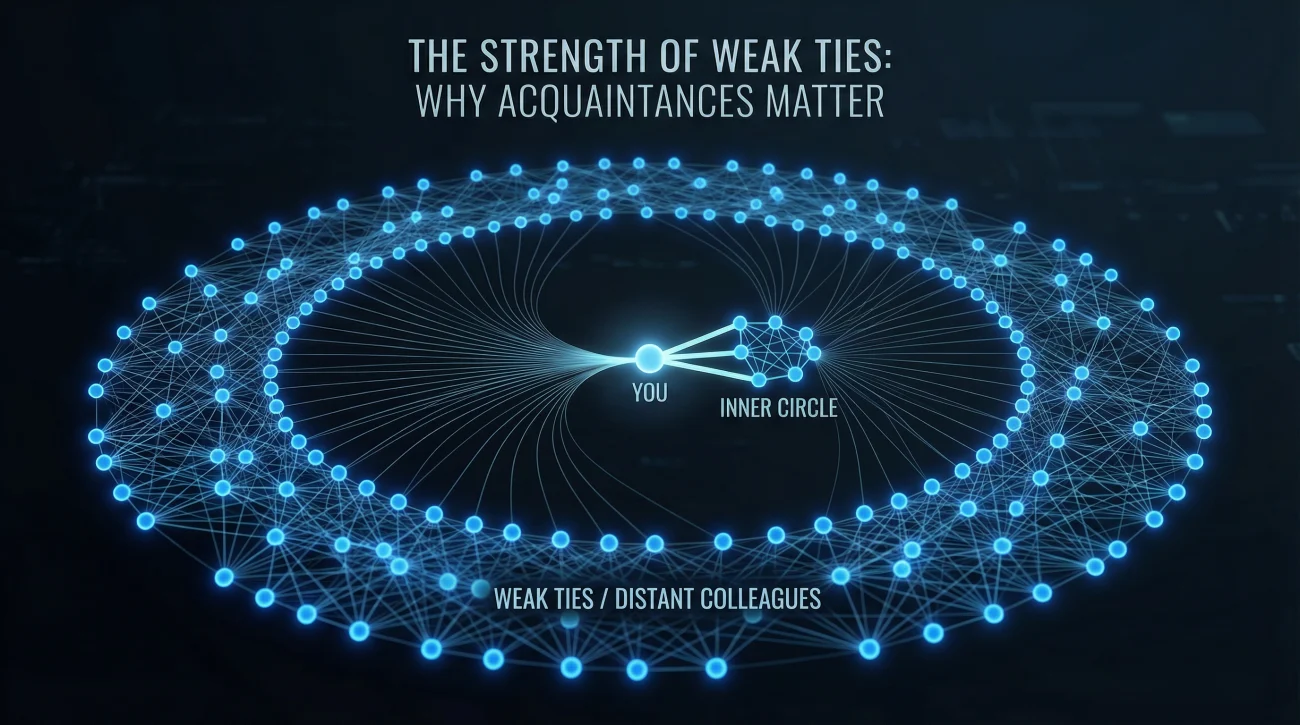
Many professionals skip the mass email entirely, thinking, “They barely know me, they won’t care.” While there is a grain of truth to that – no one will cry over your departure if they only met you twice – you are missing the bigger picture. In the world of career strategy, weak ties are often more powerful than strong ones.
Sociologist Mark Granovetter’s famous theory on “the strength of weak ties” applies perfectly here. Your close friends likely have the same network as you. Your distant colleagues, however, occupy different worlds. They are the ones who will move to companies you haven’t heard of, or have access to opportunities you don’t see.
Sending a well-crafted mass goodbye email isn’t vanity; it is a low-effort, high-reward networking activation. It signals three things:
- 👋 Professionalism: You close loops and don’t just “ghost” the organization.
- 🤝 Openness: You are signaling that you are still active in the industry.
- 🌐 Clarity: You control the narrative of your departure (leaving for growth, rather than disappearing mysteriously).
The Segmentation Strategy: Who Gets What?
Before you even open your email client, you need to segment your audience. Treating everyone the same is a rookie mistake. A blanket approach will either offend your close allies (because it’s too impersonal) or annoy your distant contacts (because it’s too intimate).
I always advise clients to visualize their organization as a series of concentric circles. The center is your direct team. The next ring is your regular collaborators. The outer ring – the vast majority – is where the goodbye email to acquaintances comes into play.
Comparing Farewell Strategies
Here is how you should technically and tonally differentiate your approach:
| Feature | Close Connections (Inner Circle) | Distant Colleagues (Outer Ring) |
|---|---|---|
| Email Mechanism | Direct, Individual Emails | BCC (Blind Carbon Copy) Mass Email |
| Tone & Length | Emotional, Personalized, Detailed | Professional, Brief (Under 150 words) |
| Content Focus | Shared memories, inside jokes, future coffee dates | Gratitude for the ecosystem, LinkedIn CTA |
| Goal | Friendship maintenance | Network preservation |
The Sacred Protocol of BCC (Blind Carbon Copy)
If you take only one thing away from this guide, let it be this: Never, under any circumstances, use the CC field for a mass goodbye.
I have witnessed career-damaging disasters caused by a simple “Reply All” error. Imagine you send a heartfelt farewell to 200 people using CC. One well-meaning colleague hits “Reply All” to say “Good luck!” Then another does. Then a grumpy executive replies all to say, “Please stop replying all.” Suddenly, your departure is associated with a company-wide inbox clog. It is unprofessional and chaotic.
The Technical Execution
To execute a mass goodbye email flawlessly, follow this strict protocol:
- 📧 The “To” Field: Enter your own personal email address here. This ensures you have a copy and prevents the email from looking like spam to corporate filters.
- 🔒 The “BCC” Field: Paste the email addresses of all your distant colleagues here. This respects their privacy (no one sees who else received it) and prevents the “Reply All” nightmare.
- 📝 The Subject Line: Keep it clear and functional. “Moving On,” “Farewell,” or “Staying in Touch” are safe bets. Avoid overly dramatic subjects like “End of an Era” for this audience.
💡 Pro Tip: Before hitting send on a list of 500+ people, check your company’s IT policy. Some servers block mass emails to prevent spam. If the list is huge, break it down into batches of 50 to ensure deliverability.
Master Templates for Every “Distant” Scenario
One size rarely fits all. The tone of your goodbye email to distant colleagues should shift slightly depending on your role, your tenure, and the company culture. Below are refined templates designed to sound human, not robotic.

1. The “Standard Professional” (Safe & Effective)
This is your go-to template. It works for 90% of corporate exits. It is polite, gratitude-focused, and devoid of drama.
Subject: Moving On – Thank you and keep in touch
Hi everyone,
I’m writing to let you know that today is my last day with [Company Name].
While we may not have worked together directly on a daily basis, I have truly appreciated being part of this wider organization and witnessing the incredible work that happens here. It has been a privilege to share this professional space with you.
I am moving on to a new chapter, but I would love to stay connected as our careers progress.
You can find me on LinkedIn here: [Link to Profile]
Wishing you and the company all the best for the future.
Best regards,
[Your Name]
2. The “Cross-Functional” Collaborator
Use this if you were in a role like HR, IT, Project Management, or Operations – where you touched many lives briefly but intensely. This acknowledges that transactional nature without being cold.
Subject: Farewell from [Your Name] – [Department]
Hi team,
As I wrap up my time as [Your Job Title] at [Company] today, I wanted to send a brief note of thanks to the many colleagues I’ve crossed paths with.
One of the best parts of my role was the opportunity to collaborate across so many different departments. Whether we solved a ticket together, sat in a planning meeting, or just passed in the hallway, I’ve appreciated your professionalism and support.
I’m excited for my next step, but I will miss the energy of this place. Let’s keep the network alive – feel free to connect with me on LinkedIn.
[Link to LinkedIn Profile]
Cheers,
[Your Name]
3. The “Short Tenure” (Brief & Graceful)
Leaving after less than a year? It happens. A long email here feels awkward. Keep it ultra-tight to avoid the “Why is she leaving so soon?” gossip.
Subject: A brief goodbye
Hi everyone,
I am writing to share that I will be moving on from [Company] effective [Date].
Although my time here was shorter than expected, I have met some wonderful people and learned a great deal. I wanted to thank you for the welcome you gave me during my tenure.
I wish you all continued success in the coming quarters.
Best,
[Your Name]
[LinkedIn Link]
4. The “Specific Service” Acknowledgement
Sometimes, your role provided a specific service to the organization (e.g., Legal Counsel, Creative Services). You need to reassure them about continuity while saying goodbye.
Subject: Signing off / Handover update
Hi colleagues,
Today marks my final day with [Company].
It has been a pleasure supporting your projects over the last [Number] years. For any future requests regarding [Your Function], please reach out to [Successor Name/Generic Email], who is fully up to speed and ready to help.
Thank you for being such great partners. I hope our paths cross again in the industry.
Let’s stay connected on LinkedIn: [Link]
Warmly,
[Your Name]
The “Unspoken Rules” of Mass Farewells
Writing a goodbye email to acquaintances is a test of emotional intelligence. You are trying to bridge the gap between “stranger” and “connection.” Here is what you need to filter out of your draft to maintain high status.
✅ The “Do” List
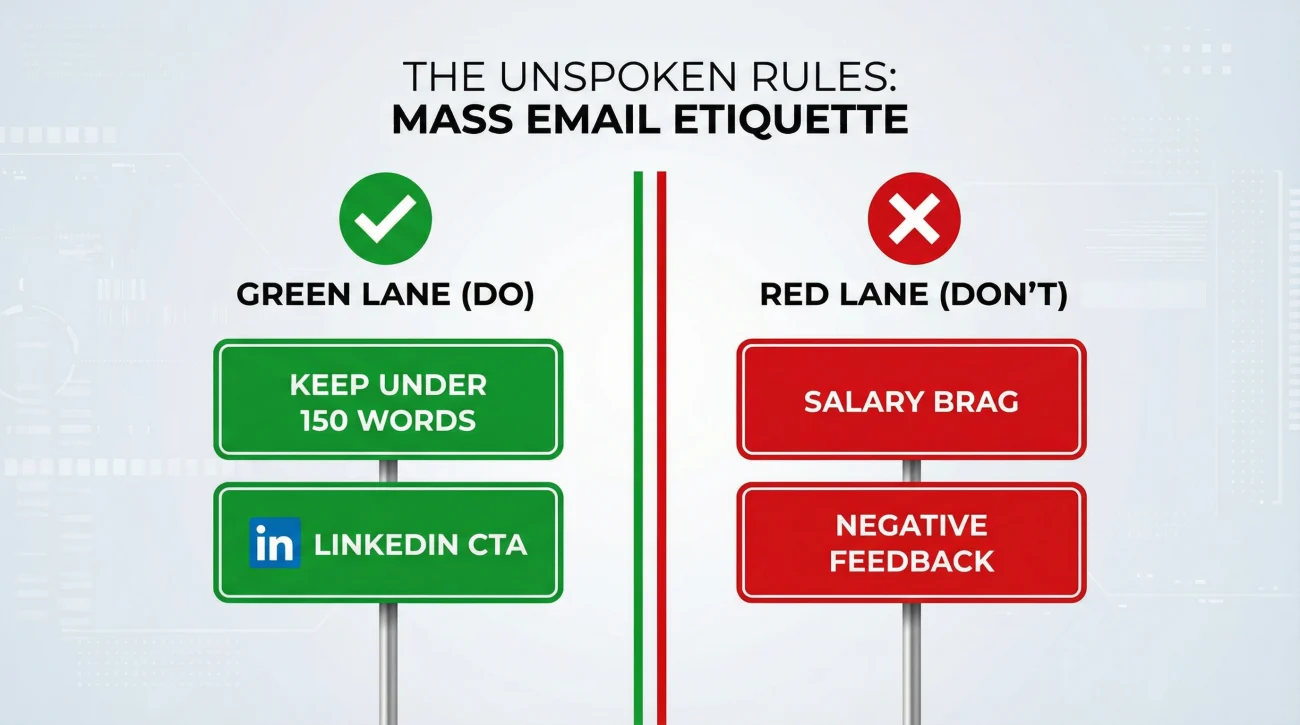
- ✔️ Keep it under 150 words: Distant colleagues are busy. They won’t read a novel.
- ✔️ Focus on “The Group”: Use phrases like “this organization,” “this community,” or “talented team” rather than naming individuals (unless you name everyone, which is impossible).
- ✔️ Include a Call to Action (CTA): The only goal of this email is to move the contact info from the corporate server to your personal LinkedIn network. Make the link clickable and obvious.
❌ The “Don’t” List
| Avoid This | Why? |
|---|---|
| ❌ Mentioning your new salary or title | It looks arrogant and leaves a bad taste. Be humble. |
| ❌ Negative feedback or “advice” | This is not the place for a manifesto on how the company should change. Save that for the exit interview (or nowhere). |
| ❌ “I’ll miss you all so much” | It sounds fake. You barely know them. Stick to “I’ve appreciated working with you.” |
| ❌ Detailed reasons for leaving | Distant colleagues don’t need the backstory. “Moving to a new opportunity” is sufficient. |
Timing Your Departure Signal
When you send your farewell to organization email is almost as important as what you say. Timing affects open rates and the general “vibe” of your exit.
The Golden Window: The morning of your last day (around 10:00 AM – 11:00 AM).
Why? It gives people time to see it, reply if they want to, and perhaps stop by your desk (or ping you on Slack) before you log off. Sending it at 4:55 PM feels like you are fleeing the scene of a crime.
The “Soft” Exit: If you want to avoid a barrage of replies or awkward small talk, send it just after lunch on your last day. You have acknowledged everyone, but you are clearly wrapping up operations.
❓ Frequently Asked Questions
📧 Should I mention where I am going in a mass email?
🤔 What if someone replies asking “Do I know you?”
📱 Is it okay to include my personal cell phone number?
⏰ Can I send this email after I have already left?
Final Thoughts: Leave the Door Open
The transition from “colleague” to “alumni” is a significant shift in identity. While your close team provides the emotional support during this time, your goodbye email to distant colleagues provides the professional continuity.
Don’t view this task as a chore or a spammy obligation. View it as the final architectural touch on the reputation you have built over your tenure. By sending a gracious, well-timed, and professionally distant note, you ensure that even the people you barely knew remember you as a class act. In the long game of careers, being remembered fondly – even vaguely – is a powerful asset.
If you are struggling with the specific wording for your inner circle, we have resources for that too. Check out our detailed guide on the complete goodbye email guide for close teams, or browse our comprehensive farewell resources to ensure every aspect of your exit is covered. For more advice on leaving on good terms, visit our homepage.
⚠️ Legal Disclaimer: ResignSmartly provides general informational guidance about resignation, workplace communication, notice periods, handovers, and career transitions. Content does not constitute individualized legal advice. Employment laws, contracts, workplace policies, and individual circumstances vary, so review the requirements that apply to your situation and consult an appropriate qualified professional when needed.