
- What “short notice” really is: A strategic risk because you turn your departure into an immediate workload crisis for your manager and team.
- Reason litmus test: Unavoidable constraints and external pressure read as legitimate, poor planning reads as disrespectful and fuels resentment.
- Make-amends trade: Replace time with transition quality using hyper-documentation, a limited post-exit bridge, and a sprint-finish commitment.
- What can happen: Immediate dismissal, “ineligible for rehire” flags, and financial clawbacks tied to contracts, bonuses, or vacation policies.
- Damage control: Keep the narrative positive, do personal outreach, leave the house in order, and use a short notice letter that is apologetic about timing but firm about the decision.
The Diplomacy of the Early Exit: Mastering the Short Notice Resignation
In the idealized corporate playbook, every departure follows a predictable, professional script: you secure a new role, you draft a polite two-week notice, and you spend your final ten business days shaking hands, transferring files, and enjoying a farewell cake. But reality rarely adheres to such a tidy script. Life is messy. Sometimes, a dream opportunity arrives with a “take it or leave it” start date next Monday. Sometimes, a family crisis demands an immediate relocation across the country. In these high-pressure moments, you are forced to break the cardinal unwritten rule of the workplace: the two-week notice.
Drafting a resignation letter with short notice is arguably one of the most delicate communication challenges you will face in your career. It is not just an administrative act; it is a breach of social contract. Unlike an immediate resignation, which is often a “hard stop” driven by emergency, a short notice resignation is a complex negotiation. You are effectively saying, “I am leaving, and I cannot give you the time you expect, but I desperately want to make this right.”
This guide is not merely about writing a letter; it is a masterclass in professional damage control. We will explore the psychology of the “insufficient notice” conversation, dissect the legal implications of cutting your time short, and provide you with a strategic framework to offer value that outweighs the missing days. You will learn how to craft a short notice resignation letter that preserves your reputation and keeps your professional network intact, even when you are sprinting toward the exit.
The Gray Zone: Why “Short Notice” is a Strategic Risk
To navigate this minefield effectively, you must first understand the position you are putting your manager in. When you give the standard two weeks’ notice, you are giving them the gift of time – time to breathe, to plan, to reassign tasks, and perhaps even to post a job opening. When you hand them a less than 2 weeks notice letter – whether it is five days, three days, or one week – you are handing them a crisis. You are removing a resource without providing a buffer. They have to scramble to cover your workload immediately, often while managing their own emotional reaction to your departure.
Valid Reasons vs. Poor Planning: The Litmus Test
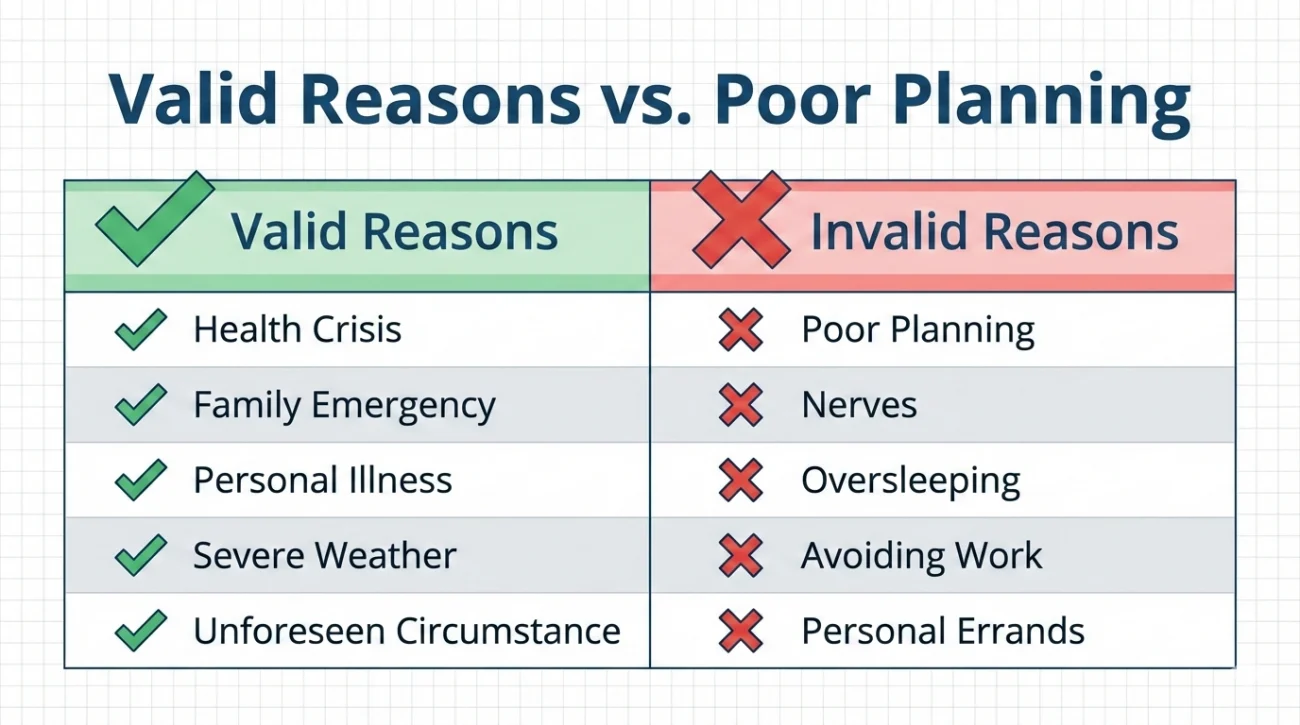
Not all short notices are judged equally. Employers generally distinguish between “unavoidable constraints” (which generate sympathy) and “lack of consideration” (which generates resentment). Before you resign, identify which category your reason falls into:
- ✅ The Unavoidable Constraint: These are life events beyond your control. A sudden childcare gap due to a school closure, a spouse’s unexpected military deployment, or a health issue that requires immediate attention (though not an emergency room visit). Employers understand that family comes first.
- ✅ The External Pressure: This is the most common professional reason. You received a “now or never” job offer where the new company has a rigid training cohort starting on a specific date. If you miss it, you lose the offer. This is a valid business reason.
- ❌ The Poor Planning: You knew you were leaving a month ago but procrastinated telling anyone until today because you were “nervous.” This is unprofessionalism disguised as anxiety.
If your reason falls into the “Unavoidable” or “External Pressure” category, your communication goal is to frame the timeline as an external constraint, not a personal choice. You are not asking for permission to leave early; you are informing them of a limitation while offering a solution.
The “Make Amends” Framework: Trading Quality for Quantity
Since you cannot give your employer the quantity of time (10 business days), you must compensate with the quality of your transition. This is the core strategy of an effective insufficient notice resignation. You need to condense two weeks’ worth of value into whatever time you have left.

1. The “Hyper-Documentation” Strategy
Do not wait to be asked. Before you even schedule the meeting to resign, spend your weekend creating a “Master Handoff” document. This should be comprehensive. List every login credential, every pending deadline for the next 30 days, every client quirk (“John prefers emails, not calls”), and the file path of every critical document. When you resign, attaching this document changes the narrative immediately. It shifts the manager’s mindset from “I am leaving you in the lurch” to “I have already solved the immediate problems.”
2. The “Bridge” Offer
This is your strongest bargaining chip for maintaining a relationship. Offer limited availability after you leave. This doesn’t mean working two jobs. It means saying: “I know this is short. To make up for it, I am happy to answer quick questions via email or hop on a 15-minute call for the next two weeks to help the team find files.” Most managers will rarely use this – they want to move on too – but the offer itself acts as an emotional safety net, reducing their anxiety significantly.
3. The Sprint Finish Commitment
Acknowledge the crunch time. Explicitly state: “I know I am only giving five days. I plan to work late every night this week to ensure we hit the Alpha deadline before I go.” This shows you are willing to sweat to protect the team. It demonstrates that you are still “one of them” until the very last second, which buys you immense goodwill and protects your reference.
Templates for the Short Goodbye: Scripts for Every Scenario
The tone of these letters must be apologetic but firm. You are apologizing for the timing, not for the resignation itself. Do not over-explain or write a novel about your guilt. A long, defensive explanation often makes things worse. Use these templates as your foundation.
The “One Week” Compromise (The most common scenario)
Use this when you have exactly five business days. It allows for a condensed but functional handover.
[Your Name]
[Your Email]
[Your Phone]
[Date]
[Manager’s Name]
[Title]
[Company Name]
Dear [Manager’s Name],
Please accept this letter as formal notification that I am resigning from my position as [Job Title]. My final day of employment will be [Day of Week, Date], providing one week of notice.
I sincerely apologize that I cannot provide the standard two-week notice period. An unexpected professional opportunity has arisen that requires a firm start date of [Date], making a longer transition impossible. I understand this puts pressure on the team, and I want to do everything in my power to mitigate that impact.
My plan for this final week is to prioritize the handover of the [Key Project]. I have already drafted a transition document outlining the status of all my pending tasks and have organized all relevant files in the shared drive.
Additionally, I am happy to remain available via email for limited consultation for two weeks after my departure to ensure no critical knowledge is lost during the gap.
Thank you for your understanding and for the support you have shown me during my time here. I have truly valued my time with [Company Name].
Sincerely,
[Your Signature]
The Ultra-Short (3 Days or Less)
This is effectively an immediate resignation with a tiny grace period. Use this when you are leaving almost instantly due to a crisis or strict deadline.
Dear [Manager’s Name],
I am writing to formally resign from my role as [Job Title], effective [Date, e.g., Wednesday, the 14th].
I recognize that providing only a few days of notice is a significant deviation from professional standards, and for that, I offer my sincere apologies. Due to [brief reason: urgent personal family matters / a rigid relocation timeline], I am unable to extend my employment beyond this date.
I will dedicate every working hour between now and my departure to organizing my files and training [Colleague Name] on my daily workflows. I want to leave the team in the best possible position despite this abbreviated timeline.
Thank you for the opportunity to be part of [Company Name].
Respectfully,
[Your Name]
The “Contractual Breach” Acknowledgement
If you have a contract stating “4 weeks notice” and you are giving 1 week, you must address the legal elephant in the room directly. Ignoring it is dangerous.
Dear [HR/Manager],
Please accept my resignation as [Job Title]. My last day will be [Date].
I am aware that my employment contract stipulates a notice period of [X weeks]. However, due to unforeseen circumstances regarding [reason], I am requesting that the company accept a shortened notice period of [X days].
I understand this is a request for an exception. To facilitate this, I have prepared a complete handover package and am willing to forfeit any pro-rated vacation pay if necessary to resolve the contractual obligation amicably.
I hope we can come to a mutual agreement regarding this transition.
Sincerely,
[Your Name]
The Consequences: What to Expect When You Short the Clock
When you submit a short notice resignation, you essentially lose control of the reaction. While many managers will be understanding (especially if you have been a high performer), you must be mentally and financially prepared for three potential outcomes.

1. The “Just Go Now” Response
It is very common for companies to reject a short notice and simply terminate you immediately. The logic is: “If you aren’t staying for the full two weeks, you are already checked out, and having you here for 3 days is more distracting than helpful.” If you say, “I can stay for 3 days,” they might say, “Don’t bother, today is your last day.”
Strategic Advice: Before you resign, ensure you have removed personal files from your laptop. Be financially prepared to lose those few days of pay you were counting on.
2. The “Ineligible for Rehire” Tag
Some HR policies are rigid and binary. Leaving without the full notice period may automatically flag you as “Ineligible for Rehire” in their internal system. This is a permanent black mark at that specific company (and potentially its subsidiaries).
Strategic Advice: If you think you might want to return to this company one day, try to negotiate. Ask if you can use accrued vacation days to “bridge” the notice period on paper, so the records show you gave the full two weeks.
3. The Financial Clawback
Check your contract for “Liquidated Damages” or bonus clauses. Many retention bonuses or quarterly commissions require you to be “employed and in good standing” to receive payout. Giving short notice might violate the “good standing” clause, costing you thousands of dollars. Always read the fine print of your compensation package before deciding on your date.
Damage Control: Protecting Your Legacy in 72 Hours

You have dropped the ball on timing; make sure you don’t drop the ball on class. The way you behave during those final few days is critical. You are being watched closely.
- 🤝 The Personal Call: Don’t let your close colleagues find out via a mass email. Call them. “I’m so sorry I have to leave quickly, it wasn’t my plan.” Personal warmth diffuses professional frustration.
- 🎁 The Gratitude Tour: Send handwritten notes or thoughtful emails to mentors. Acknowledge that you are leaving abruptly but emphasize how much you value them. Flattery is a powerful antidote to resentment.
- 🤐 Control the Narrative: When people ask why you are leaving so fast, do not complain about the current company. Say: “The new opportunity is amazing, but unfortunately they needed me to start immediately.” Blame the pull of the new, not the push of the old. This keeps you looking professional and in demand.
For more detailed strategies on navigating complex exit scenarios, review our comprehensive guide on resignation letter with notice period.
❓ FAQ
📅 Is giving one week notice unprofessional?
It is considered less than ideal, but not strictly unprofessional if handled correctly. “Unprofessional” is ghosting or leaving without a handover. If you give one week’s notice but work twice as hard to transition your tasks, most reasonable employers will respect the effort, even if they are annoyed by the timing. Context is king.
💼 Can a company refuse my short notice resignation?
In the US (at-will employment), no. You are not a prisoner. They cannot force you to work against your will. However, they can penalize you financially (withholding discretionary bonuses) or professionally (bad references) for not adhering to company policy. You have the right to leave, and they have the right to be unhappy about it.
🗣️ What do I tell my new employer if I can’t start immediately?
Actually, you should use your notice period as a selling point. Tell the new employer: “I have a professional obligation to my current team to ensure a smooth handover. I need two weeks to close out my projects properly.” High-quality employers will respect this integrity. If they pressure you to screw over your current employer, that is a red flag about their own culture.
💸 Will I lose my vacation pay if I don’t give two weeks?
This depends entirely on state law and company policy. In states like California, accrued vacation is considered earned wages and must be paid out regardless of notice. In other states, companies can have a policy that says “vacation payout is forfeited if proper notice is not given.” Read your employee handbook carefully before you act.
📩 Should I put the reason for short notice in the letter?
Keep it vague and high-level in the written letter (“Due to an unexpected timeline…”). You can explain the details verbally to your manager if you have a good relationship. The letter goes into your permanent file; you don’t want your personal family drama recorded there forever.
Final Thoughts: Leaving on Your Own Terms
A resignation letter with short notice is an imperfection in your career, but it doesn’t have to be a scar. Most managers will forget the inconvenience of a short notice within a month, provided you leave the house in order and the work accessible.
Focus on the transition. Be helpful, be humble, and be hardworking in your final days. If you can turn a chaotic departure into a clean handoff, you will demonstrate a level of professionalism that speaks louder than the missing days on the calendar. Remember, how you leave is how you will be remembered.
⚠️ Legal Disclaimer: The resignation templates, email samples, and professional guidance provided in this guide are for informational purposes only and do not constitute legal advice. Employment laws and contract requirements vary by jurisdiction and individual circumstances. Please review your employment agreement and consult your HR department and/or a qualified attorney to ensure compliance with applicable laws and policies.