

- Accounting exits are high-trust: You must protect the audit trail, deadlines, and sensitive financial data.
- Avoid peak periods: Tax season, Year-end close, Quarter-end reporting, Audit season.
- Choose smart timing and notice: Post-tax season, Summer, Early fall, Post-audit; Extend to 6-8 weeks if leaving during critical windows.
- Hand over the essentials: Systems access, Password inventory, Reconciliations and workpapers, Tax files, Audit contacts, Vendor and banking portals.
- Keep integrity intact: Confidentiality continues indefinitely, Don’t keep copies on personal devices, Get legal advice if irregularities are involved.
The Financial Custodian’s Departure Dilemma
Leaving an accounting position involves more than ending employment – you hold financial records requiring meticulous handover, tax documentation with compliance deadlines, and proprietary financial information demanding careful stewardship. A professional accountant resignation letter addresses audit trail continuity, secure password and access transfer, and the financial integrity obligations that define accounting practice and professional credibility.
Accounting resignations carry unique complexities because you’re the custodian of financial accuracy and compliance. Your departure requires closing books properly, transferring critical access credentials, and ensuring tax obligations continue without gaps. The timing of your exit – particularly around year-end or tax season – can affect organizational operations and your professional reputation significantly.
This guide provides templates for various accounting scenarios – from CPAs to bookkeepers, covering essential financial handover procedures, critical timing considerations around fiscal calendars, and how to resign while maintaining professional standards and financial integrity.
The Fiscal Calendar Rules Your Exit
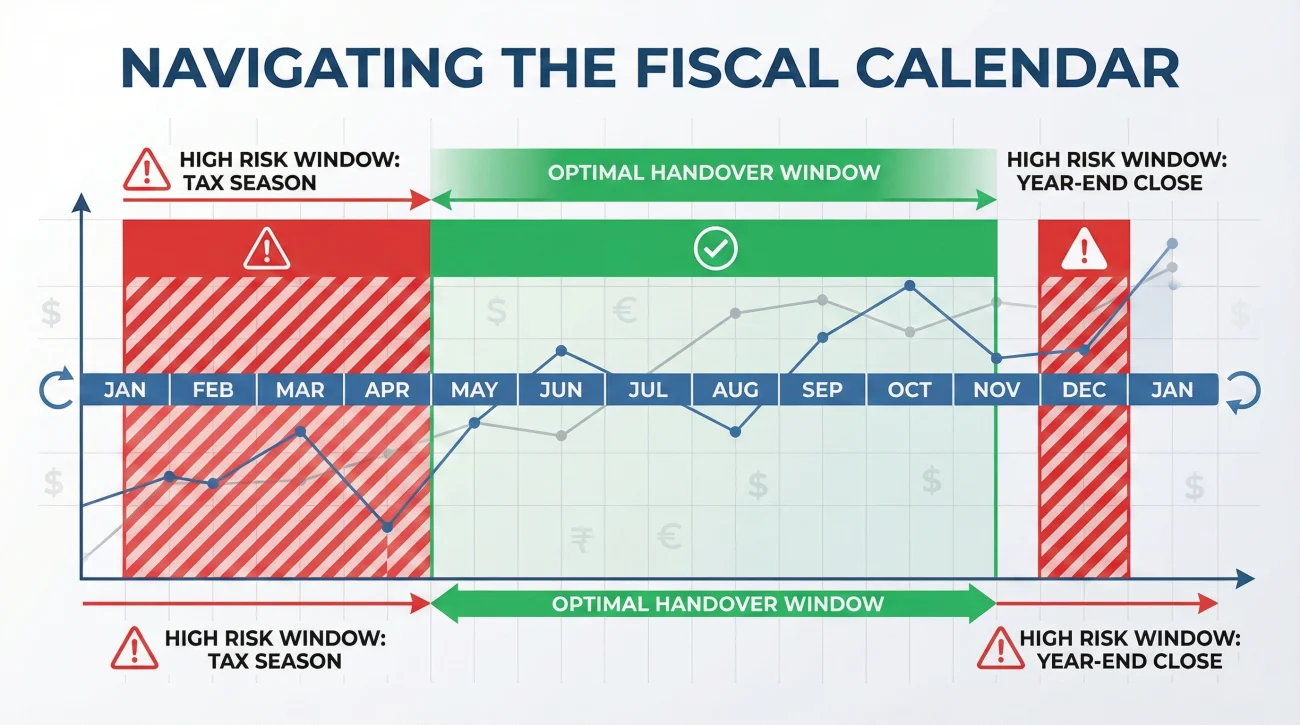
When Accountants Should Never Resign
Times when your finance resignation letter creates maximum disruption:
- 🚫 Tax season (Jan-April): Critical filing deadlines, maximum workload, replacement hiring nearly impossible
- 🚫 Year-end close (Nov-Jan): Annual financial statement preparation, audit prep, regulatory reporting
- 🚫 Quarter-end periods: Financial reporting deadlines, reconciliations, management reporting
- 🚫 Audit season: External auditor presence, substantiation requests, deadline-driven processes
Strategic Windows for Accounting Departures
| Resignation Period | Why It Works | Notice Recommendation |
|---|---|---|
| Post-tax season (May-June) | Major deadlines complete, hiring market active | 2-4 weeks standard |
| Summer months (July-Aug) | Slower period, time to train replacement | 3-4 weeks recommended |
| Early fall (Sept-Oct) | Before year-end close, allows Q4 transition | 4 weeks recommended |
| Post-audit (varies) | Major compliance completed | 3-4 weeks |
If circumstances require resigning during critical periods, extend notice significantly (4-6 weeks), offer remote support through critical deadlines, document procedures exhaustively, and dedicate extra time to training replacement.
Staff Accountant and Bookkeeper Letters
Staff Accountant Professional Exit
[Your Name]
[Your Address]
[City, State ZIP]
[Your Email]
[Your Phone]
[Date]
[Controller/Accounting Manager Name]
[Title]
[Company Name]
[Address]
Dear [Name],
I am writing to formally resign from my position as Staff Accountant at [Company Name], effective [Date].
This decision follows careful consideration of my career development. I have accepted an accounting position at another organization that offers opportunities to expand my technical expertise.
During my notice period, I will ensure comprehensive transition of my accounting responsibilities including:
- Documentation of monthly close procedures and reconciliation processes
- Transfer of account assignments and general ledger responsibilities
- Training replacement accountant on workpapers, schedules, and reporting requirements
- Completion of [current month] close and reconciliations
- Transfer of system access credentials and vendor relationships
- Organization of working papers and supporting documentation for audit trail
Thank you for the accounting experience and professional development opportunity at [Company Name].
Sincerely,
[Your Signature]
[Your Name]
Small Business Bookkeeper
[Your Name]
[Your Email]
[Your Phone]
[Date]
[Owner/Manager Name]
[Company Name]
Dear [Name],
I am writing to resign from my position as Bookkeeper at [Company Name], with my last day being [Date].
I will ensure proper transition of bookkeeping responsibilities:
- Completion of current payroll cycle and tax deposits
- Documentation of accounts payable/receivable procedures
- Training on QuickBooks/accounting software workflows
- Transfer of bank account access and online banking credentials
- Organization of financial records and vendor files
- Briefing on monthly reconciliation procedures and reporting schedules
Thank you for the opportunity to manage [Company Name]’s bookkeeping.
Best regards,
[Your Signature]
[Your Name]
For additional guidance on professional transitions, see our comprehensive resignation letter samples for different positions.
Senior-Level Accounting Resignations
Senior Accountant Transition
[Your Name]
Senior Accountant
[Your Email]
[Your Phone]
[Date]
[Controller/CFO Name]
[Title]
[Company Name]
Dear [Name],
I am writing to resign from my position as Senior Accountant at [Company Name], effective [Date].
To ensure comprehensive transition, I will focus my remaining time on:
- Documentation of complex accounting treatments and technical positions
- Transfer of financial reporting responsibilities and SEC filing involvement
- Training on month-end close leadership and team coordination
- Completion of [current quarter] close through financial statement issuance
- Handoff of external auditor relationships and technical accounting coordination
- Organization of technical memos, accounting policy documentation, and workpapers
Thank you for the senior-level accounting experience and technical development opportunity.
Respectfully,
[Your Signature]
[Your Name]
Controller Leadership Exit
[Your Name]
Controller
[Your Email]
[Your Phone]
[Date]
[CFO/President Name]
[Title]
[Company Name]
Dear [Name],
I am writing to formally resign from my position as Controller at [Company Name], effective [Date].
This extended notice period allows proper transition of accounting leadership and ensures continuity through [upcoming close/audit/tax filing]. I will prioritize:
- Comprehensive documentation of accounting policies, procedures, and internal controls
- Strategic briefing on accounting team structure, talent development, and succession planning
- Transfer of banking relationships, credit facilities, and treasury management
- Transition of external relationships (auditors, tax advisors, legal counsel)
- Completion of [current period] financial reporting and management briefings
- Documentation of system access, passwords, and financial systems administration
Thank you for the opportunity to lead accounting operations at [Company Name].
Sincerely,
[Your Signature]
[Your Name]
Controller
CPA and Specialized Accounting Roles
Public Accounting Firm Departure
[Your Name], CPA
[Your Email]
[Your Phone]
[Date]
[Partner Name]
[Partner Title]
[CPA Firm Name]
Dear [Partner Name],
I am writing to resign from my position as [Staff/Senior] Accountant at [Firm Name], effective [Date].
This timing allows me to complete [current engagements/busy season] and ensure proper client transition. During my remaining time, I will:
- Complete assigned audit engagements through issuance
- Transfer client relationships and engagement context to assigned staff
- Document client-specific procedures and technical issues
- Organize workpapers and engagement files per firm standards
- Return firm equipment, software licenses, and client materials
I understand my continuing obligations regarding client confidentiality and professional standards.
Thank you for the public accounting experience and CPA development opportunity.
Respectfully,
[Your Signature]
[Your Name], CPA
Tax Accountant Position
[Your Name]
Tax Accountant
[Your Email]
[Date]
[Tax Manager/Director Name]
[Company Name]
Dear [Name],
I am resigning from my position as Tax Accountant, effective [Date].
I will ensure proper tax compliance transition including:
- Completion of [current quarter/year] tax provision calculations
- Documentation of tax positions, uncertain tax positions, and technical research
- Transfer of tax authority correspondence and audit defense materials
- Handoff of tax software access and return preparation procedures
- Briefing on state/local tax obligations and filing requirements
Thank you for the tax accounting experience.
Best regards,
[Your Name]
Accounts Payable Management
[Your Name]
Accounts Payable Manager
[Your Email]
[Date]
[Controller Name]
[Company Name]
Dear [Name],
I am writing to resign from my position as Accounts Payable Manager, effective [Date].
I will coordinate comprehensive AP transition:
- Documentation of payment schedules, approval workflows, and vendor terms
- Transfer of vendor relationships and payment portals/credentials
- Training on AP software, check printing procedures, and wire transfer protocols
- Completion of current payment cycle and month-end accruals
Thank you for the opportunity to manage accounts payable operations.
Sincerely,
[Your Name]
High-Stakes Accounting Exits

Unavoidable Tax Season Departure
If unavoidable circumstances require resigning during tax season, your bookkeeper resignation letter should acknowledge timing challenges and offer extended notice or remote support. Provide 6-8 weeks notice if possible, offer to complete critical returns remotely, document tax positions exhaustively, and prepare successor for April deadlines. Tax season abandonment severely damages accounting reputation – only genuine emergencies justify this timing.
Year-End Close Complications
Year-end close resignations create audit complications and financial reporting delays. If circumstances require November-January departure, extend notice to 6 weeks, commit to completing year-end close, coordinate with external auditors about transition, and document accounting policies and estimates thoroughly. Consider delaying resignation until post-audit completion if financially feasible.
Discovering Financial Irregularities
If discovering financial fraud or irregularities, consult attorney before resigning. Document evidence separately from resignation letter, report to appropriate authorities (audit committee, external auditors, regulators), and understand whistleblower protections. Your CPA resignation letter should be brief without detailing fraud – legal counsel guides proper reporting procedures to protect your professional interests and legal obligations.
Moving to Competitor or Client
When joining competitor or former client, review non-compete and confidentiality agreements carefully. Never take client lists, proprietary accounting systems, or financial models. Protect former employer’s financial information and competitive intelligence permanently. Public accounting professionals face strict client confidentiality obligations that continue indefinitely regardless of employment changes.
❓ Accounting Resignation Questions
⏰ When should accountants absolutely not resign?
The worst times are tax season (January-April), year-end close (November-January), and during external audits. Resigning during these periods creates maximum disruption, makes replacement hiring nearly impossible, and damages professional reputation. If circumstances require poor timing, provide extended notice (6+ weeks), offer remote support through deadlines, and document procedures exhaustively to minimize impact on organization and your accounting reputation.
📋 What financial records require special handover?
Transfer: (1) System access – accounting software, ERP, banking portals, (2) Passwords and credentials for all financial systems, (3) Account reconciliations and working papers, (4) Vendor relationships and payment terms documentation, (5) Tax records and compliance documentation, (6) Audit files and external auditor contacts. Create comprehensive access inventory with passwords documented securely for successor. Never retain financial data on personal devices after departure.
💼 How much notice should accountants provide?
Standard notice is 3-4 weeks for staff accountants, 4-6 weeks for senior accountants and controllers. During critical periods (tax season, year-end, audit), extend to 6-8 weeks if possible. Controllers should provide minimum 4 weeks to allow proper accounting leadership transition. Public accounting firm departures should align with engagement completion to avoid client disruption and maintain professional relationships.
🔒 What confidentiality obligations continue after leaving?
All financial confidentiality obligations continue indefinitely. Never disclose: former employer’s financial results, cost structures, pricing models, customer financial information, tax strategies, or accounting treatments. CPAs face professional standards requiring permanent client confidentiality. Violating financial confidentiality damages professional reputation and can result in legal liability, CPA license sanctions, or criminal charges for disclosing insider information.
📊 Should accountants complete month-end close before leaving?
Yes, time resignation to complete month-end close when possible. Departing mid-close creates reconciliation gaps and reporting delays. Plan final day for early/mid-month rather than month-end periods. If timing prevents completing close, document procedures exhaustively, brief replacement on status of all reconciliations, and offer limited remote support for technical questions during transition period to maintain financial reporting quality.
Financial Integrity Through Departure

Accountant resignations require exceptional attention to financial record continuity, compliance deadline management, and the audit trail integrity that defines accounting practice. Your departure affects organizational financial reporting accuracy, tax compliance, and the regulatory obligations that extend far beyond typical employment transitions. How you handle accounting resignation directly impacts financial statement reliability, audit efficiency, and your professional reputation in the accounting community.
The accounting profession operates on credentials, references, and the surprisingly interconnected networks of CPAs, controllers, and finance professionals who move between firms and industries. Word travels about accountants who abandoned tax season, left year-end close incomplete, or mishandled confidential financial information during departure. Your approach to financial transition, documentation thoroughness, and compliance continuity becomes part of your accounting career legacy.
Time resignation around fiscal calendars thoughtfully, transfer financial systems access securely, document accounting procedures comprehensively, and complete your financial responsibilities with the same accuracy and integrity that characterized your accounting service. The financial records you maintained and the compliance obligations you honored define your accounting reputation long after your final close.
⚠️ Legal Disclaimer: ResignSmartly provides general informational guidance about resignation, workplace communication, notice periods, handovers, and career transitions. Content does not constitute individualized legal advice. Employment laws, contracts, workplace policies, and individual circumstances vary, so review the requirements that apply to your situation and consult an appropriate qualified professional when needed.