
- Core idea: A schedule conflict resignation is about timing incompatibility, not job dissatisfaction or pay.
- Framing: Present the conflict as a hard constraint (School, childcare, care duties, medical schedules), not a preference.
- If the employer changed hours: State that the new shift terms are incompatible with your obligations, and note the short notice if it was sudden.
- Before you resign: Propose specific alternatives (Shift swap, different start time, split days) to show good faith and make the decision clean.
- What the letter must include: Last working day, simple reason, appreciation, and a clear handoff plan so references stay intact.
When Work Timing Defeats Employment
A resignation letter due to schedule conflict addresses a fundamental employment incompatibility: your ability to work no longer aligns with when your employer needs you to work. Whether your availability changed due to school enrollment, childcare obligations, eldercare responsibilities, or other commitments, or whether your employer changed schedules without accommodating your constraints, timing mismatches eventually force resignations when accommodation proves impossible.
Schedule-related resignations differ from other departures because they typically don’t reflect dissatisfaction with work itself, employers, or compensation. You might value your job highly but simply cannot work the hours required. How you communicate this timing impossibility determines whether employers understand the constraint as legitimate or view you as inflexible or uncommitted.
When Work Hours Clash With Life Obligations
Life circumstances that create schedule conflicts represent legitimate constraints, not negotiable preferences. Understanding this distinction helps you frame your resignation appropriately.

Hard Constraints vs Preferences
Some schedule conflicts represent hard constraints – obligations you cannot adjust regardless of how much you value your job. Children’s school hours, classes you’re enrolled in, medical treatment schedules, or care obligations for dependents create fixed availability windows. Your schedule change resignation letter should establish these as constraints, not preferences.
Effective framing: “My coursework requires class attendance during times that conflict with my work schedule” clearly establishes a hard constraint. Contrast this with “I prefer not to work evenings,” which sounds like preference. When your schedule conflict is truly unavoidable, communicate that reality directly.
When Your Circumstances Change
You might have accepted employment with specific schedule understanding – available evenings, weekends, or nights. When life circumstances change – enrolling in school, family care obligations emerge – your availability shifts through no fault of employer. Your resignation should acknowledge this: “When I accepted this position, evening availability wasn’t an issue. However, my enrollment in graduate courses has created scheduling conflicts I cannot resolve.”
This demonstrates you didn’t misrepresent availability when hired; rather, circumstances evolved. Most employers understand that life circumstances change and respect resignations driven by genuine availability shifts.
Schedule Changes You Didn’t Agree To
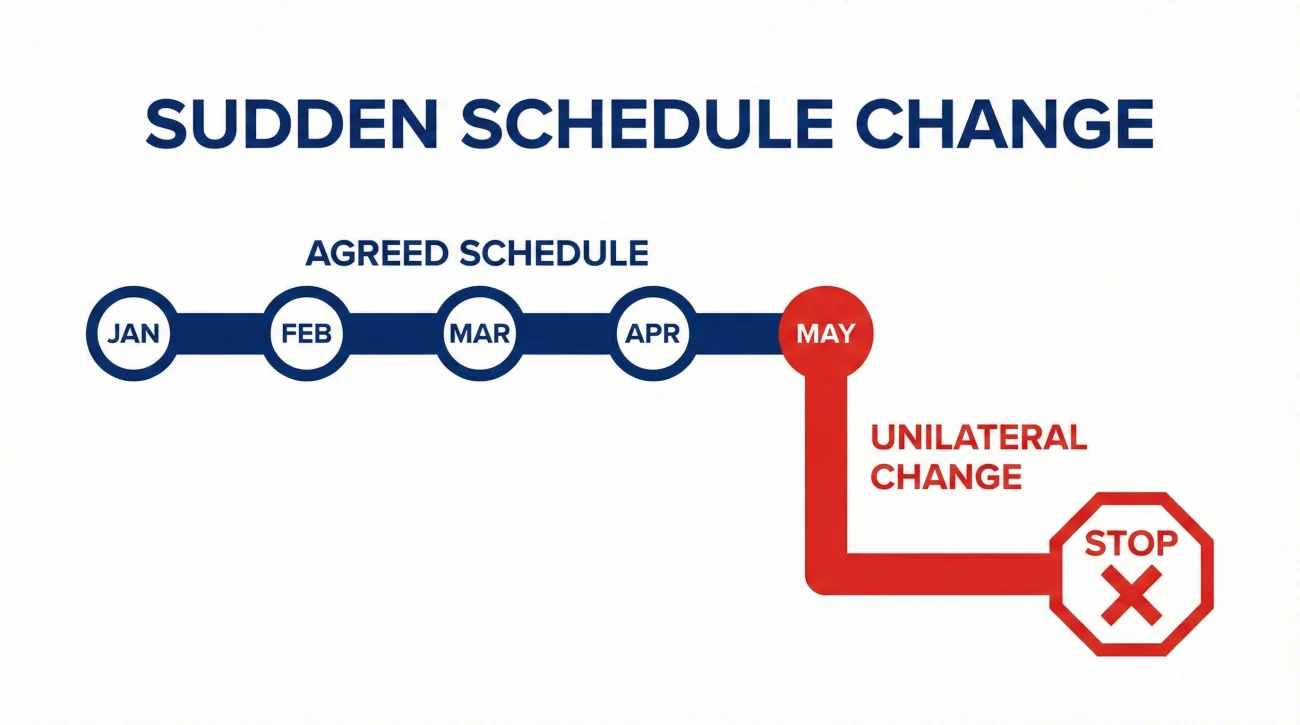
When employers change schedules significantly from what you agreed to at hiring or maintained for extended periods, your resignation carries different weight because employer actions created the conflict, not changes in your availability.
Employer-Imposed Schedule Modifications
If your employer shifts you from day to night shifts, eliminates schedule flexibility you relied on, requires new weekend work, or substantially changes hours, your hours not working out resignation should establish that employer changes created the impossibility. You accepted employment under specific schedule terms; employer’s unilateral modifications made continued employment impossible.
Effective approach: “The recent schedule change requiring night shifts is incompatible with my family obligations. When I accepted this position, the day shift schedule was explicitly discussed as part of my employment terms. The transition to night shifts makes it impossible for me to continue employment.” This positions employer’s schedule change, not your inflexibility, as the driving factor.
What Constitutes Reasonable Schedule Notice
Employers sometimes implement schedule changes with minimal notice, expecting employees to accommodate immediately. While businesses have legitimate operational needs, employees also have lives requiring planning. When schedule changes happen with inadequate notice – days rather than weeks – your resignation reflects reasonable response to unreasonable demands rather than unwillingness to be flexible.
Your letter might note timing: “The schedule change announced last Friday with Monday implementation provided insufficient time for me to arrange alternative childcare or adjust family obligations. Given this impossible timeframe and the permanent nature of the schedule change, I must resign.”
When Promised Flexibility Disappears
Some employees accept positions based on explicit flexibility promises – ability to adjust hours for school, flexible start times, or schedule accommodation for family needs. When employers eliminate this flexibility, particularly after employees arranged their lives around it, resignation reflects employer breach of employment terms rather than employee inflexibility.
Frame this clearly: “I accepted this position based on the schedule flexibility discussed during hiring, which allowed me to balance work with my educational commitments. The recent policy eliminating schedule flexibility makes it impossible to maintain both obligations, forcing me to resign.”
Schedule Conflict Templates
These templates communicate schedule impossibilities while maintaining professional relationships. For broader guidance, see our resignation letter with reason guide.
Schedule Change Response Template
Maria Rodriguez
456 Oak Street
Portland, OR 97204
March 15, 2024
David Chen
Operations Manager
Pacific Distribution Center
Dear David,
I am writing to resign from my position as Warehouse Associate, effective March 29, 2024.
The recent transition to mandatory night shifts is incompatible with my family care obligations. I have two school-age children whose care I manage in the evenings, and night shift work makes fulfilling these parental responsibilities impossible. When I accepted this position, the day shift schedule was explicitly discussed as consistent with my availability.
I’ve appreciated working at Pacific Distribution and value the opportunities I’ve had here. This resignation stems entirely from the schedule change creating insurmountable timing conflicts with my family obligations.
I will work closely with my supervisor during my remaining time to ensure proper transition of my responsibilities.
Thank you for understanding regarding these circumstances.
Sincerely,
Maria Rodriguez
This night shift resignation letter clearly establishes employer’s schedule change created the conflict rather than employee inflexibility. The specific mention of children’s care obligations provides concrete context for why night shifts don’t work. The reference to day shifts being discussed at hiring documents that employer changed terms, not employee.
Educational Commitment Template
James Thompson
892 Pine Avenue
Seattle, WA 98101
April 8, 2024
Sarah Williams
Store Manager
Northwest Retail Solutions
Dear Sarah,
I am submitting my resignation from my position as Sales Associate, effective April 22, 2024.
I have enrolled in community college courses to complete my degree, with classes scheduled during times that conflict with the position’s required availability. I attempted to arrange a course schedule compatible with work, but required courses are only offered during hours that overlap with store operating hours.
When I discussed this scheduling challenge with you last month, we explored whether schedule adjustments might accommodate my class times. I appreciate your consideration of those options. However, given that the necessary schedule modifications aren’t feasible for the store’s operational needs, I must resign to pursue my educational goals.
I’ve valued my time at Northwest Retail and the retail experience I’ve gained here. I will ensure thorough training for whoever assumes my responsibilities during my notice period.
Thank you for your understanding.
Sincerely,
James Thompson
This letter demonstrates James attempted to find solutions before resigning – arranged course schedules when possible, discussed accommodation options with his manager. The acknowledgment that operational needs legitimately prevent schedule modifications shows understanding of employer constraints while maintaining his decision prioritizes education over employment.
Explore Accommodation Before Resigning
Before submitting resignation, explore whether schedule adjustments might resolve conflicts. Many employers prove more flexible than employees assume when faced with losing valued workers to schedule issues.
Present Specific Alternatives
Rather than simply stating conflicts exist, propose concrete alternatives: “I need to finish by 3pm for childcare pickup. Would shifting to 7am-3pm rather than 9am-5pm work?” or “My classes are Tuesday/Thursday mornings. Could I work Monday/Wednesday/Friday full days plus Tuesday/Thursday afternoons?”
Specific proposals demonstrate you’ve thought through solutions rather than simply declaring unavailability. Employers often accommodate when they see employees making genuine efforts to balance obligations.
❓ FAQ
⏰ Can employers force schedule changes after hiring me?
Generally yes, unless you have employment contract specifying schedule terms. Most US employment is at-will, allowing employers to change schedules with reasonable notice. However, “reasonable” varies – significant schedule changes with minimal notice may constitute constructive discharge in some circumstances, particularly if employer knew about your availability constraints. While employers can legally change schedules, employees can legally resign over those changes. Neither party is trapped in arrangements that no longer work.
🏫 Should I tell my employer about school enrollment before registering?
Ideally yes, if you anticipate schedule conflicts. Early conversation allows exploration of accommodation options before you’ve committed to class schedules or financial obligations. However, some employers react negatively to educational pursuits, viewing them as divided loyalty. Assess your workplace culture before disclosing. If you sense your employer would pressure you not to enroll or retaliate for pursuing education, you might register first then notify, accepting that you may need to resign if accommodation proves impossible.
👶 Do childcare schedule conflicts qualify for FMLA or ADA protection?
Generally no. FMLA covers leave for your own serious health conditions or caring for family members with serious health conditions, but not routine childcare schedule conflicts. ADA requires accommodation for your disabilities, not family care logistics. Employers aren’t legally required to accommodate childcare schedules, though many do so for retention and employee satisfaction. If childcare conflict stems from child’s disability requiring specific care schedules, you might have stronger accommodation grounds – consult employment attorney about specifics.
💼 Will resigning over schedule conflicts hurt my references?
Usually not, particularly if you attempted accommodation before resigning and communicated clearly about constraints. Most employers understand that life obligations sometimes create genuine schedule incompatibilities. What damages references is poor performance, unprofessional behavior, or abandoning positions without notice – not honest communication about schedule constraints requiring resignation. Frame your departure professionally, provide adequate notice, and most employers provide neutral or positive references despite schedule-driven resignation.
🔄 Can I collect unemployment if I resign due to schedule changes?
Possibly, depending on state law and circumstances. Some states consider substantial employer-initiated schedule changes that create hardship as “good cause” for resignation qualifying for unemployment. Typically requires significant changes to hours, shifts, or days that you couldn’t reasonably accommodate and that differ substantially from hiring terms. Document the schedule change, your attempts to accommodate, and circumstances making the new schedule impossible. However, voluntary resignations often don’t qualify for unemployment even when reasons seem justified – check your state’s specific rules.
Final Thoughts

A resignation letter due to schedule conflict acknowledges that employment requires alignment between when employers need work performed and when employees can perform it. When these timings diverge – whether through your changing life circumstances or employer’s schedule modifications – the employment relationship becomes unsustainable regardless of other job qualities.
Handle schedule-driven resignations with clear communication about timing impossibilities while demonstrating you explored accommodation options before concluding resignation was necessary. Most employers understand that people have legitimate obligations beyond work that create real constraints, not mere preferences for convenient schedules.
Remember that choosing to honor commitments to family, education, or other obligations over employment convenience doesn’t reflect poorly on your work ethic – it reflects healthy priority-setting that recognizes work is one part of life, not life’s entirety. Future employers who value whole-person wellness typically respect employees who made difficult schedule-driven resignations for legitimate life obligations.
⚠️ Legal Disclaimer: The resignation templates, email samples, and professional guidance provided in this guide are for informational purposes only and do not constitute legal advice. Employment laws and contract requirements vary by jurisdiction and individual circumstances. Please review your employment agreement and consult your HR department and/or a qualified attorney to ensure compliance with applicable laws and policies.