- Resignation letter due to unfair treatment is a risk document: Keep it neutral so you do not weaken legal options or future references.
- Separate resignation from complaints: Document incidents through HR, formal channels, or legal counsel instead of the resignation letter.
- If you mention treatment at all, use legal-safe wording: Avoid legal labels and stick to neutral phrases like “Workplace treatment concerns made continued employment untenable.”
- Templates should prioritize protection: Either say nothing beyond dates and handoff, or briefly reference formal complaints already filed without details.
- Decide complaint vs quiet exit intentionally: Weigh claim strength, time and cost, and long-term career impact before choosing a path.
When Treatment Forces Departure
A resignation letter due to unfair treatment navigates treacherous territory between documenting legitimate grievances and protecting potential legal claims. You’re leaving because treatment became intolerable – discrimination, favoritism, retaliation, or practices that violated professional standards or possibly law. Yet your resignation letter isn’t the venue for detailed complaints that could compromise legal positions or create written evidence that employer attorneys use against you.
The challenge lies in deciding what to document in your resignation versus what to pursue through formal complaints or legal channels. These decisions affect whether you preserve legal claims, maintain professional dignity, and protect future employment opportunities that might require references from the organization you’re escaping.
Document Unfair Treatment Separately, Not in Resignation
Your resignation letter unfair treatment should remain professionally neutral while you document specific grievances through appropriate formal channels that protect your legal position rather than undermine it.
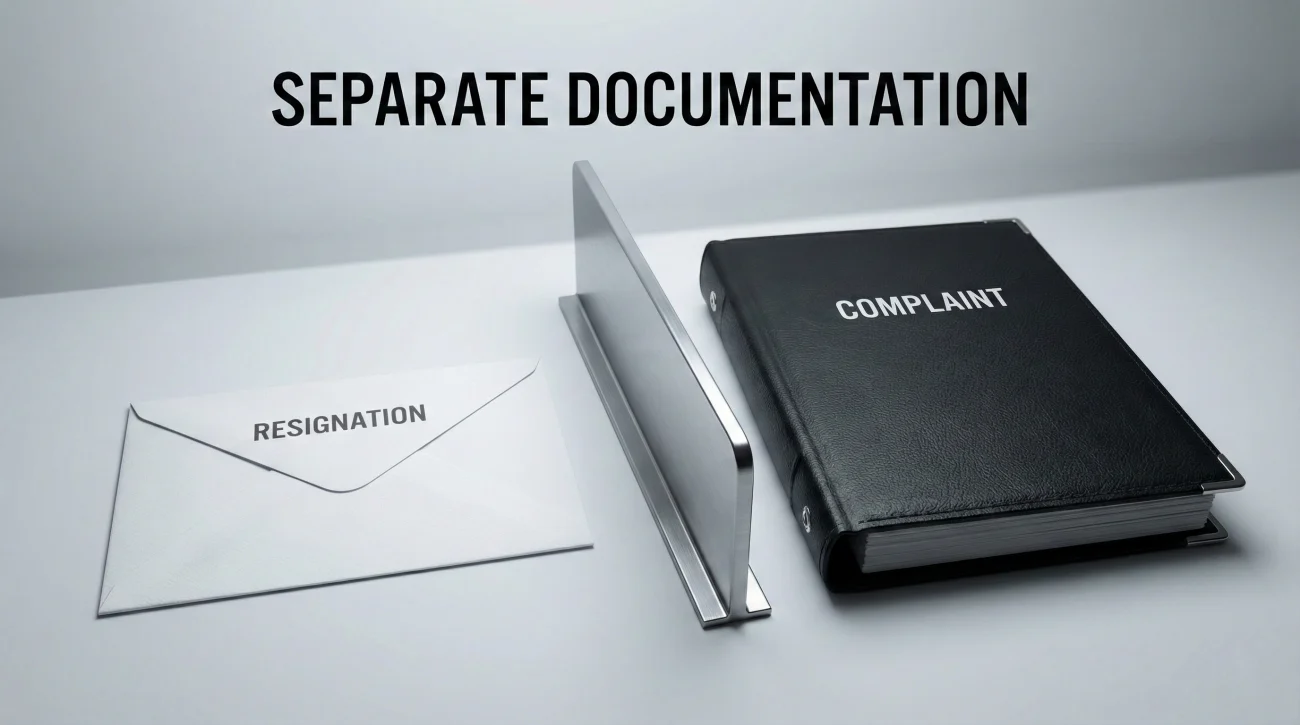
Resignation Letter ≠ Complaint Document
Resignation letters serve a specific administrative function: notifying employers of your departure date. They’re not grievance filings, discrimination complaints, or venues for detailing workplace injustices. Mixing these purposes creates problematic documentation that serves neither function well – your resignation becomes emotional complaint rather than professional notice, and your complaints become informal rather than formal legal documentation.
Keep these separate. File formal complaints through proper HR channels, EEOC processes, or legal representatives. Your resignation letter simply states you’re leaving, maintaining professional tone that preserves options rather than burning bridges or creating written evidence that complicates legal claims.
File Formal Grievances Before or Concurrent With Resignation
If you’re resigning due to discrimination, harassment, or retaliation, file formal complaints through appropriate channels before or concurrent with resignation – not through your resignation letter itself. Contact HR formally about discrimination, file EEOC charges if discrimination involved, document specific incidents through official complaint processes, or consult employment attorneys about constructive discharge claims.
These formal processes create proper legal documentation of your grievances. Your resignation letter then becomes simply the departure notice, while formal complaints establish the reasons. This separation strengthens legal claims by following proper procedures rather than mixing formal complaints with informal resignation communications.
Preserving Constructive Discharge Claims
If treatment was severe enough that resignation represents constructive discharge – conditions so intolerable that a reasonable person would feel compelled to resign – your documentation strategy becomes critical. Constructive discharge claims require evidence that employer created intolerable conditions forcing your departure, not evidence that you voluntarily quit because you disliked management.
Build this case through formal complaints filed while employed, documented requests for intervention that were ignored, emails describing problematic treatment, and attorney consultations before resigning. Your neutral resignation letter then becomes the endpoint of documented patterns showing you were forced out, not the document establishing those patterns.
Use Legal-Safe Language for Any Treatment References
If you mention treatment issues at all in your resignation letter, strategic language protects your legal position rather than compromising it. Understanding what language helps versus hurts determines whether your resignation letter supports or undermines potential claims.

Skip Legal Terminology You’re Not Qualified to Use
Don’t use legal terms like “discrimination,” “harassment,” “hostile work environment,” or “retaliation” in resignation letters unless you’re filing concurrent formal complaints using those terms properly. These words carry specific legal meanings that employment attorneys spend years learning to apply correctly. Your casual use in resignation letters gives employer defense attorneys ammunition to argue you’re mischaracterizing normal workplace conflicts as legal violations.
Instead, if you must reference treatment issues: “I’m resigning due to workplace treatment that has become untenable” or “Professional treatment concerns have made continued employment untenable.” These phrases acknowledge problems without making legal claims you might not be qualified to support.
Maintain Professional Neutrality
The safest resignation letter discrimination approach is maximum neutrality: “I am resigning effective [date]” without explaining why. This prevents creating written records that employer attorneys use against you while preserving all your options for pursuing claims through proper legal channels where you can explain circumstances with attorney guidance.
If pressed for reasons, respond verbally rather than in writing: “There have been workplace concerns that make continuing employment untenable. I’m consulting with an attorney about appropriate next steps regarding those concerns.” This acknowledges problems exist without creating problematic written documentation before you’ve received legal advice about how to frame complaints properly.
Reference Formal Complaints If Already Filed
If you’ve already filed formal HR complaints or EEOC charges, your resignation letter might reference these without detailing specifics: “As documented in my formal complaints filed on [dates], workplace treatment issues have created conditions requiring my resignation.” This establishes connection between formal complaints and resignation without repeating complaints in resignation letter itself.
This approach helps constructive discharge claims by showing resignation followed documented patterns of treatment problems rather than appearing as sudden voluntary quit. However, only reference formal complaints after consulting with employment attorney about strategic implications.
Unfair Treatment Exit Templates
These templates balance professional departure with strategic positioning for potential legal claims. For broader guidance, see our resignation letter with reason guide.
Maximum Neutrality Template
Jennifer Martinez
456 Oak Street
Portland, OR 97204
March 15, 2024
David Chen
Human Resources Director
Pacific Northwest Solutions
Dear David,
I am writing to resign from my position as Marketing Coordinator, effective March 22, 2024.
Please advise on procedures for returning company property and processing final paperwork.
Sincerely,
Jennifer Martinez
This template provides maximum legal protection by saying nothing about reasons. Jennifer has documented discrimination through formal complaints filed separately. Her resignation letter simply notifies them she’s leaving, preventing creation of written statements that employer attorneys might use to undermine her formal complaints. The brevity feels cold but serves strategic purpose when legal claims are involved.
Formal Complaint Reference Template
Michael Thompson
892 Pine Avenue
Seattle, WA 98101
April 8, 2024
Sarah Williams
Human Resources Director
Northwest Technology Group
Dear Sarah,
I am submitting my resignation from my position as Systems Engineer, effective immediately.
As documented in my formal complaints submitted to Human Resources on February 12 and March 5, 2024, workplace treatment issues have created conditions that make continued employment untenable. Despite requests for intervention documented in those complaints, the situation has not improved, requiring my departure.
I will be consulting with legal counsel regarding these matters. Please direct all future communications to me through my attorney, whose contact information I will provide separately.
Please advise on procedures for final paycheck and benefits processing.
Sincerely,
Michael Thompson
This formal grievance resignation letter references formal complaints already filed without repeating details. The mention of attorney involvement signals serious intent while maintaining professional tone. The immediate effective date suggests urgency supporting constructive discharge claims. However, this template should only be used after consulting with employment attorney about strategic implications and timing.
Deciding to Complain Formally vs Resign Quietly
Deciding whether to pursue formal complaints or simply resign quietly requires strategic thinking about your goals, resources, and realistic outcomes.
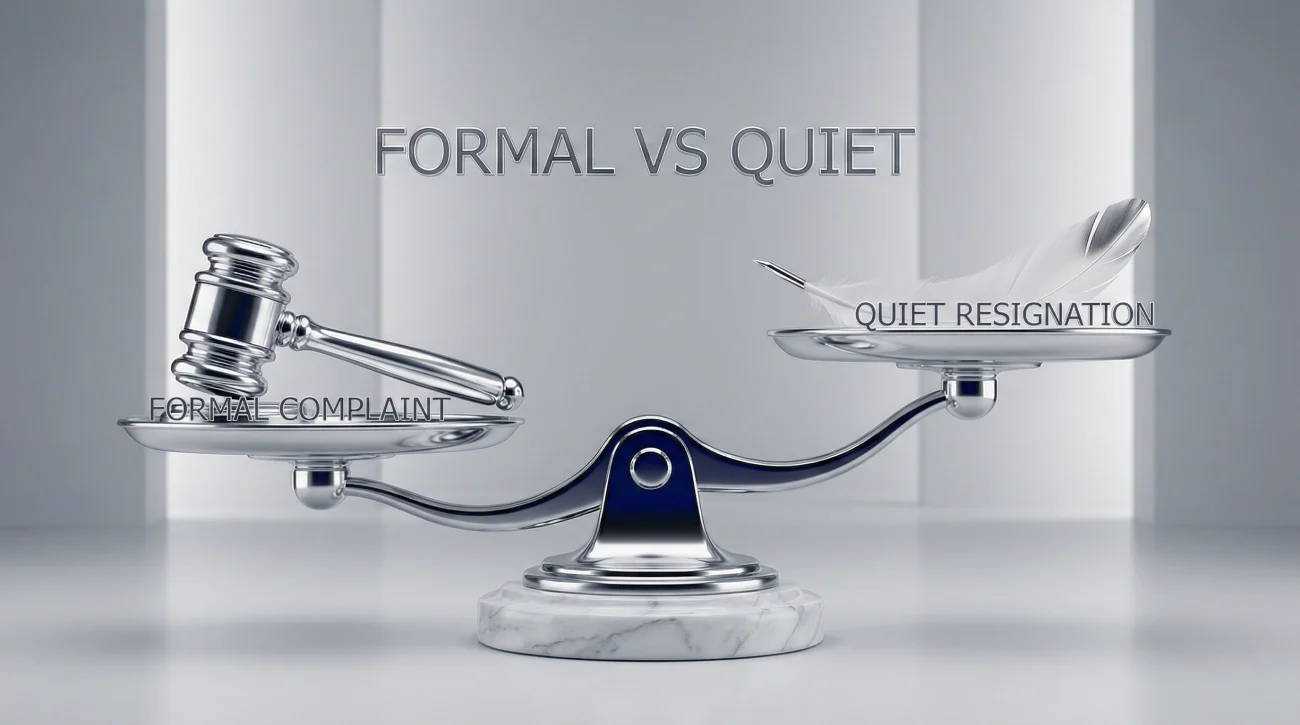
Evaluate Strength of Claims
Not all unfair treatment rises to level of legal violations. Favoritism, poor management, personality conflicts, or being treated rudely – while unpleasant – typically don’t constitute legal discrimination or harassment. Before pursuing formal complaints, consult employment attorney about whether your situation involves actual legal violations or simply bad workplace dynamics.
If attorney assessment suggests weak legal claims, quiet resignation often serves you better than formal complaints that create adversarial records without likely success. However, if clear discrimination or retaliation occurred, formal complaints protect both your rights and potentially other employees.
Consider Costs vs Benefits
Pursuing discrimination claims involves significant costs: legal fees, time investment, emotional energy, and potential impacts on future employment. These costs might be worth it for egregious violations, but might exceed benefits for situations that, while unfair, don’t warrant years of legal proceedings.
Honest assessment: Will pursuing complaints achieve meaningful outcomes worth the costs? Or will quiet departure serve you better? Neither answer is wrong – make informed decision based on your specific circumstances.
❓ FAQ
⚖️ Should I threaten to sue in my resignation letter?
Never. Threats accomplish nothing except putting employer on defensive legal footing and creating documentation of your mindset that could complicate claims. If pursuing legal action, let your attorney communicate through proper channels after you’ve resigned. Your resignation letter should remain professionally neutral. Threats make you appear vindictive rather than legitimately wronged, potentially undermining rather than supporting claims.
📋 Can I use my resignation letter as evidence in discrimination claims?
Yes, which is exactly why you should consult employment attorney before writing it. What you write becomes evidence that either supports or undermines your claims. Emotional complaints, exaggerations, or legal terms used incorrectly give defense attorneys ammunition. However, strategically drafted resignation letters – particularly those referencing formal complaints already filed – can support constructive discharge claims. Get attorney guidance on what to include, exclude, and how to phrase any treatment references.
⏰ How long do I have to file discrimination complaints after resigning?
EEOC charges must be filed within 180 days of discrimination (300 days in states with fair employment agencies). State law claims have varying deadlines, typically 1-3 years. These deadlines run from when discrimination occurred, not from resignation date. Don’t delay consulting employment attorney – waiting too long can forfeit your rights. Many attorneys offer free initial consultations to assess whether you have viable claims worth pursuing.
💼 Will discrimination claims hurt my future employment?
Potentially, depending on industry and circumstances. Some employers hesitate hiring candidates who sued former employers, viewing them as litigation risks. However, others respect employees who stood up to genuine discrimination. Most importantly, employers cannot legally retaliate against you for filing legitimate discrimination complaints. If asked about departure in interviews, frame professionally: “There were workplace concerns I addressed through appropriate channels.” You’re not obligated to disclose pending claims unless directly asked, and even then, can frame as confidential legal matter.
🤐 Can I tell coworkers why I’m really leaving?
Use caution. Everything you say could potentially be repeated, documented, or used in legal proceedings. If pursuing claims, your attorney will advise you about what communications are legally privileged versus discoverable. Generally, discussing discrimination with coworkers who might witness or testify is acceptable, but broadcasting complaints widely creates risks. If resigning without formal complaints, consider whether airing grievances serves any purpose or simply creates drama that damages your professional reputation.
Final Thoughts
A resignation letter due to unfair treatment requires more strategic thinking than emotional venting. You’re navigating intersection of professional departure, potential legal claims, and future career implications – all while likely feeling angry, hurt, or betrayed by treatment that drove your resignation. These competing interests demand careful balance between documenting legitimate grievances and protecting your legal position.
The safest approach keeps resignation letters professionally neutral while pursuing unfair treatment concerns through appropriate formal channels where you can explain circumstances with attorney guidance. Your resignation letter simply notifies employer of departure; formal complaints and legal proceedings address the treatment that forced that departure.
Most importantly, prioritize your wellbeing and future over revenge or vindication about past treatment. Sometimes quiet departure and moving forward serves you better than years of legal proceedings, regardless of how justified your grievances. Make strategic decisions about what battles to fight based on realistic outcomes and long-term career interests, not momentary anger about unfair treatment.
⚠️ Legal Disclaimer: ResignSmartly provides general informational guidance about resignation, workplace communication, notice periods, handovers, and career transitions. Content does not constitute individualized legal advice. Employment laws, contracts, workplace policies, and individual circumstances vary, so review the requirements that apply to your situation and consult an appropriate qualified professional when needed.