- Definition: Probation is a mutual evaluation period, so resigning during it is the process working as intended.
- Mindset: You are not “quitting early,” you are concluding a trial once you see the fit is wrong.
- Notice: Check your contract first, because probation notice is often shorter, and silence usually means a shorter standard still applies.
- Letter: Keep it brief, state your last day, and say the role does not align with your goals or working preferences without over-explaining.
- Reputation: Stay professional through the exit, document handover, and use what you learned to ask better questions next time.
Probation as Mutual Evaluation Period
A resignation letter during probation exercises your right to exit during the mutual evaluation period both parties agreed to at hiring. Probation exists precisely for situations like this – either party determining the employment match doesn’t work and ending arrangement with minimal notice. Yet many employees feel guilty resigning during probation, as if they’re breaking commitments or acting unprofessionally by leaving jobs they barely started.
Understanding probation’s purpose helps frame these resignations appropriately. You’re not quitting prematurely or abandoning commitments – you’re concluding trial period with assessment that this position isn’t right fit. This is exactly what probation is designed to accommodate, allowing both parties to exit with minimal complication when early assessment indicates poor match.
Probation Works Both Ways – Your Assessment Matters
Your resignation letter during probation period should confidently assert that probation serves employee assessment needs as much as employer evaluation, not apologetically suggest you’re somehow violating probation’s purpose by resigning.
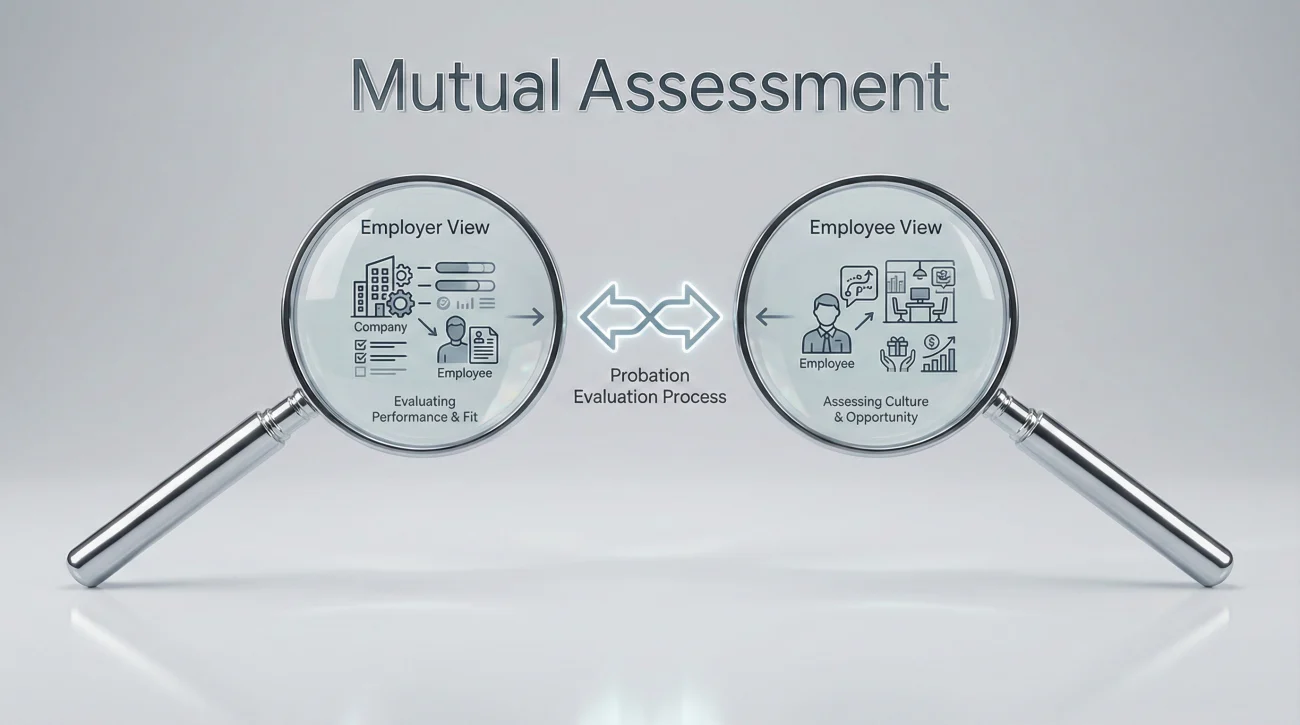
Probation Evaluates Mutual Fit
Probation periods exist to determine whether employment relationships work for both parties before significant commitments solidify. Employers evaluate whether you perform adequately, fit team culture, and meet expectations. Simultaneously, you evaluate whether work matches descriptions, culture suits your preferences, management works with your style, and role provides what you need professionally.
This symmetry means your decision that role doesn’t work is as legitimate as employer decision that you don’t work. Neither party needs extensive justification for ending employment during probation – the arrangement wasn’t working, that’s what probation discovered, and both parties move forward. This is the system functioning exactly as designed.
Early Assessment Prevents Bigger Problems
Resigning quickly during probation when you recognize poor fit prevents bigger problems later. Better to exit after two weeks than suffer through three miserable months before resigning, or worse, stay indefinitely in unsuitable roles while providing mediocre work and resenting employment. Quick probation resignations demonstrate professional judgment and respect for everyone’s time, not flightiness or poor commitment.
Frame this positively: “I’ve determined during this probation period that the role doesn’t align well with my professional goals and working preferences. Rather than continue when fit isn’t there, I’m resigning to allow both of us to find better matches.” This positions quick exit as mature assessment rather than impulsive quitting.
Release Guilt About Probation Exits
Many employees feel they owe employers full probation periods or longer notice because “they just trained me” or “they invested in hiring me.” However, probation acknowledges hiring involves risk for both parties and that some matches won’t work despite good intentions. Your employer knew this risk when offering probationary employment – it’s built into the arrangement.
Moreover, continuing unsuitable employment out of guilt serves no one. You provide mediocre work while job searching, employer invests further in employee who’s leaving anyway, and everyone wastes time pretending the match works when both parties know it doesn’t. Clean exit during probation respects everyone’s interests more than guilt-driven continuation.
Understand Notice Requirements During Probation
Notice periods during probation typically differ from standard employment, often allowing shorter notice. Understanding these requirements ensures your quitting during probation letter provides legally appropriate notice.
Review Your Employment Agreement
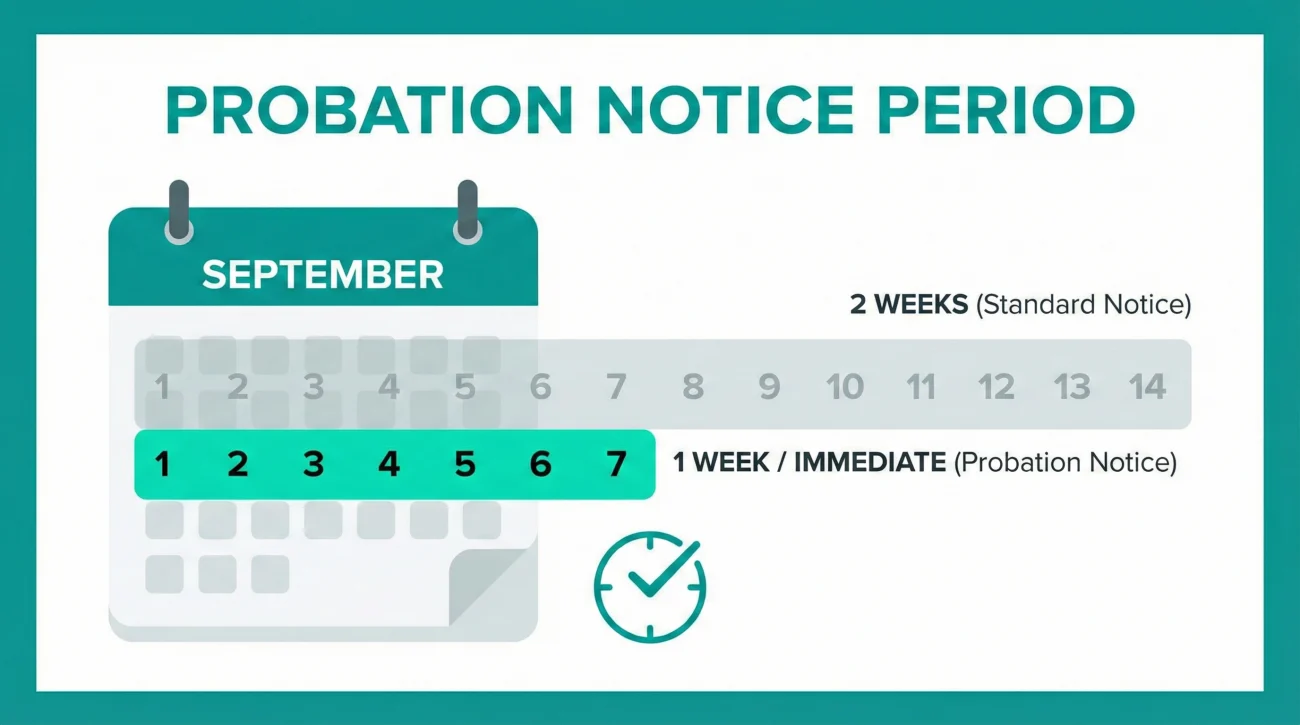
Check your offer letter or employment contract for probation-specific notice requirements. Many specify reduced notice during probation – one week instead of two, or even same-day termination rights for both parties. These contractual terms define your legal obligations.
If your contract specifies “one week notice during probation,” providing one week is completely acceptable professional behavior. You’re honoring agreed terms that both parties accepted when employment began.
When Contracts Are Silent
If your employment agreement doesn’t specify probation notice, industry standard suggests shorter notice during probation is acceptable – typically one week compared to standard two weeks. This recognizes probation’s trial nature and both parties’ reduced investment in early employment stages.
Consider context: if you’ve been there only days, one week or less might work; if you’re near probation end at three months, full two weeks shows more courtesy. Balance legal minimums against professional relationships.
Probation Period Exit Templates
These templates communicate probation conclusions professionally while acknowledging the trial period’s purpose. For broader guidance, see our resignation letter with reason guide.
Short Notice Template
Jennifer Martinez
456 Oak Street
Portland, OR 97204
March 15, 2024
David Chen
Human Resources Director
Pacific Northwest Solutions
Dear David,
I am writing to resign from my position as Marketing Coordinator, effective March 22, 2024, providing one week’s notice as specified for probationary employment in my offer letter.
During this probation period, I’ve determined that the role doesn’t align as well with my professional goals and working preferences as I’d anticipated. Rather than continue when the fit isn’t there, I believe it’s best for both parties that I resign now.
I appreciate the opportunity and wish Pacific Northwest Solutions success.
Sincerely,
Jennifer Martinez
This letter explicitly references probationary notice terms from her offer letter, establishing she’s providing contractually appropriate notice rather than cutting corners. The acknowledgment that she’s assessed fit during probation frames resignation as probation functioning as designed – she evaluated role and determined it doesn’t work. The brevity respects that minimal relationships have formed during short tenure.
Early Exit Template
Michael Thompson
892 Pine Avenue
Seattle, WA 98101
April 8, 2024
Sarah Williams
Department Manager
Northwest Technology Group
Dear Sarah,
I am submitting my resignation from my position as Systems Engineer, effective April 15, 2024.
After my first two weeks in this role, I’ve realized that the position’s technical focus and team structure don’t match my professional strengths and career direction as well as I’d hoped. The probation period has helped me recognize this mismatch early, and I believe the most professional course is to resign promptly rather than continue when I know the fit isn’t right.
I appreciate your time during the hiring and onboarding process.
Thank you for understanding.
Sincerely,
Michael Thompson
This template addresses very short tenure directly – two weeks – explaining that probation revealed mismatch quickly. The phrase “probation period has helped me recognize this mismatch early” positions probation as functioning correctly to identify poor matches before deeper commitments form. The acknowledgment of hiring and onboarding effort shows appreciation without apologizing excessively for quick exit that probation explicitly allows.
Exit Probation Without Burning Bridges
Probation resignations can be handled professionally despite short tenure, preserving relationships that might matter professionally even when employment lasted only weeks.

Maintain Professional Standards
Even when resigning after days or weeks, maintain professional behavior through departure. Complete your notice period, document any work you’ve started, respond to handoff questions professionally, and thank people who helped during brief tenure. These courtesies take minimal effort but preserve professional reputation.
Industries are smaller than they appear. The colleague you worked with for two weeks might later be hiring manager at company you’re interviewing with. Brief professional courtesy during probation exit prevents awkward future encounters.
Don’t Over-Explain Quick Exits
Resist urge to provide extensive justification. Your letter’s brief statement that role doesn’t align with goals suffices – you don’t need detailed explanations or lengthy apologies. Excessive explanation makes quick exit seem more problematic than it is, while brief professional notice treats probation resignation as normal occurrence.
❓ FAQ
⏰ How much notice should I give during probation?
Check your employment contract for specified probation notice requirements – many allow one week or less during probation. If contract is silent, one week is generally acceptable during early probation (first month), while two weeks is more appropriate near probation end. Consider your tenure: after only days, even few days’ notice might work; after several weeks, one week minimum shows professional courtesy. Balance contractual minimums against relationship preservation based on specific circumstances.
💼 Will quick probation resignation hurt future employment?
Single short probation stint rarely damages careers if explained well. Multiple rapid exits create concerning patterns. In interviews, frame probation resignation honestly: “During probation, I realized the role didn’t align with my strengths as both parties expected. Probation exists to identify these mismatches early – which it did.” This shows professional judgment rather than job-hopping tendencies. However, make next choice more carefully to avoid pattern of probation exits that suggests poor judgment in job selection or unrealistic expectations.
📝 Should I include probation job on my resume?
Depends on tenure and whether excluding it creates timeline gaps. If you worked only days or couple weeks, you might reasonably exclude it – probation represents trial period rather than real employment tenure. However, if you worked several weeks or months, excluding creates gaps requiring explanation that might be more awkward than including brief employment. When including, be prepared to explain briefly in interviews: “I accepted the position but realized during probation it wasn’t the right fit professionally, so we mutually concluded the arrangement.”
🤝 Can I negotiate staying past probation if I’m resigning?
This seems contradictory – if you’re resigning, why negotiate staying? However, if you’re resigning because probation revealed fixable issues, you might discuss: “I’ve identified concerns about the role’s focus that make me question fit. Before resigning, I wanted to discuss whether adjustments might address these concerns.” Some employers accommodate when concerns are specific and fixable. However, if you’ve already mentally checked out or accepted other offers, don’t waste everyone’s time with negotiation theater. Resign cleanly and move forward.
💰 Will I get paid for unused vacation during probation?
Depends on state law and company policy. Many probationary employees don’t accrue vacation benefits until passing probation, meaning you have no vacation time to pay out. Check your employee handbook and state regulations. If you haven’t accrued vacation yet, you’re not entitled to payout. Some companies prorate vacation for partial years, others don’t pay out until you’ve worked minimum period. Don’t expect vacation payout from probationary employment unless explicitly stated in your employment terms.
Final Thoughts

A resignation letter during probation exercises rights both parties agreed to when accepting probationary employment terms. Probation exists precisely to identify poor matches early before significant commitments solidify on either side. Your resignation during this period isn’t breaking commitments or acting unprofessionally – it’s concluding trial period with honest assessment that employment match doesn’t work.
Handle probation resignations with professional courtesy appropriate to brief tenure while releasing guilt about quick exits. You’re not obligated to suffer through unsuitable employment out of misplaced loyalty to employers who hired you on probationary basis explicitly acknowledging that some matches wouldn’t work. Clean, prompt exit during probation respects everyone’s time and interests more than guilt-driven continuation pretending the match works when both parties know it doesn’t.
Most importantly, learn from probation experiences that lead to resignation. What red flags should you have caught during interviews? What questions would have revealed these issues before accepting offers? Use these insights to make better employment choices going forward, investing more effort in due diligence that prevents accepting positions you’ll likely leave during probation. Your career benefits more from choosing carefully than from repeatedly starting and quickly leaving probationary positions.
⚠️ Legal Disclaimer: ResignSmartly provides general informational guidance about resignation, workplace communication, notice periods, handovers, and career transitions. Content does not constitute individualized legal advice. Employment laws, contracts, workplace policies, and individual circumstances vary, so review the requirements that apply to your situation and consult an appropriate qualified professional when needed.