
- Frame: Treat this exit as a career investment, not abandonment, so you leave with respect instead of guilt.
- Boomerang: Signal you want to keep the relationship and stay connected, without promising you will return.
- Clarity: State the program, full-time requirement, and a flexible timeline so expectations stay realistic.
- Timing: Plan notice around the academic calendar, and give the longest notice you realistically can.
- Execution: Offer a clean handover and documentation, then use a school-specific template that stays professional and concise.
Education as Career Investment, Not Abandonment
A resignation letter for returning to school occupies unique territory in professional departures. You’re leaving to invest in education that should enhance rather than end your career. Unlike resignations for new jobs or career changes, you’re explicitly planning to return to work – ideally with your current employer if the opportunity exists. This intention shapes how you communicate your departure and what bridges you preserve.
Educational resignations carry less finality than other departures, creating opportunities to maintain relationships that benefit you after graduation. Many organizations view education-pursuing employees positively, seeing investment in advanced degrees as ambition rather than disloyalty. How you frame this departure determines whether you leave with explicit “come back when you graduate” invitations or burned bridges that close future opportunities.
Preserving Your Path Back
The strategic goal of your resignation letter for further education is creating conditions for potential return after graduation. While you can’t guarantee you’ll want to return or that positions will exist, you can ensure your departure doesn’t close doors you might want to walk through later.
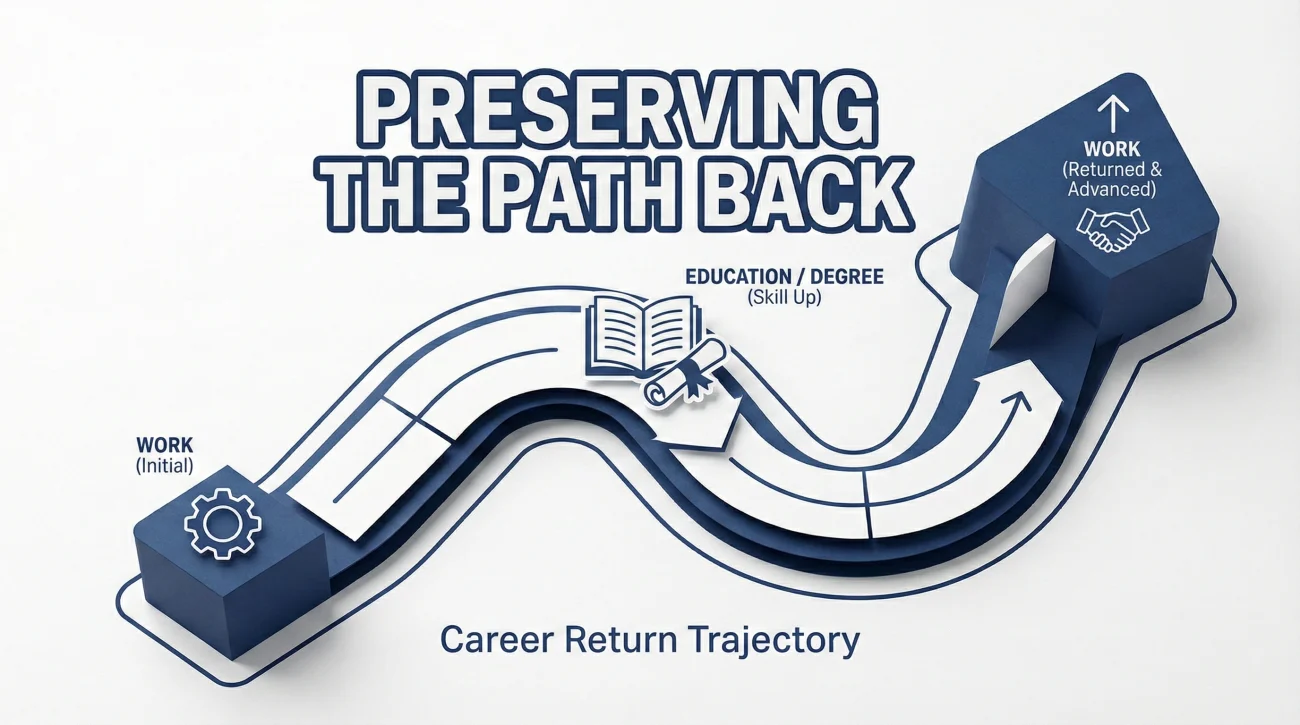
Express Interest in Future Opportunities
State your intention directly: “I hope to maintain our professional relationship and would welcome opportunities to return to [Company] after completing my degree.” This explicit interest signals you’re not abandoning the organization or industry – you’re investing in education that will make you more valuable upon return.
Many employers maintain alumni networks specifically for employees who left for educational pursuits. Some offer informal agreements about positions available after graduation. By expressing interest in returning, you position yourself to benefit from these programs and maintain active relationships with former managers who might hire you back.
Provide Educational Timeline Context
Include your anticipated graduation timeline: “I plan to complete my MBA in two years” or “The program runs through May 2026.” This information helps employers understand your absence duration and plan accordingly. It also creates natural touchpoints – managers might reach out as graduation approaches to discuss opportunities.
However, avoid overpromising about return timing. Life circumstances change, programs take longer than expected, or you might pursue opportunities elsewhere after graduation. Frame timelines as current plans rather than firm commitments: “I anticipate completing the program in two years” sounds more flexible than “I will definitely return in exactly two years.”
Commit to Maintaining Professional Connections
Offer to stay in touch during your studies: “I’d love to remain connected and would appreciate periodic updates about [Company’s] developments.” This signals genuine interest in the organization’s trajectory and maintains relationships that could benefit both parties.
Some students maintain light consulting relationships, intern during summer breaks, or collaborate on projects while pursuing degrees. Expressing openness to these arrangements creates opportunities to stay professionally engaged even while focusing primarily on education.
Clarify Full-Time Study Requirements
Your grad school resignation should clearly establish that you’re pursuing full-time education requiring departure from employment. This prevents misunderstandings about whether part-time arrangements might work.

Explain Program Requirements
Many graduate programs require full-time enrollment, particularly for programs with intensive curricula, research requirements, or assistantship opportunities. Your letter should acknowledge these requirements: “The program requires full-time enrollment and significant research commitments that make continued employment impossible.”
This helps employers understand you’re not choosing to leave – program requirements necessitate departure. Employers might feel rejected if you simply prefer school to work, but they typically understand and respect program requirements that force difficult decisions.
Educational Pursuit Templates
These templates communicate educational goals while preserving professional relationships for potential post-graduation opportunities. For broader guidance, see our resignation letter with reason guide.
Graduate School Template
Jennifer Martinez
456 Oak Street
Austin, TX 78701
March 15, 2024
David Chen
Department Manager
Southwest Analytics Group
Dear David,
I am writing to resign from my position as Data Analyst, effective April 5, 2024.
I have been accepted into the Master of Data Science program at the University of Texas, beginning in August. This two-year program requires full-time enrollment and will significantly enhance my analytical capabilities and technical expertise in machine learning and advanced statistical methods.
My time at Southwest Analytics has been invaluable in preparing me for graduate study. The real-world data challenges I’ve tackled here have clarified my educational goals and demonstrated areas where advanced training will benefit my career. I’m grateful for your mentorship and the professional development opportunities you’ve provided.
I hope to maintain our professional relationship and would welcome opportunities to return to Southwest Analytics after completing my degree in 2026. I believe the advanced skills I’ll develop will make me a stronger contributor to our team’s work.
During my remaining time, I will ensure comprehensive documentation of all analyses and models I’ve developed and provide thorough training for whoever assumes my responsibilities.
Thank you for your support and understanding regarding this educational pursuit.
Sincerely,
Jennifer Martinez
This letter explicitly expresses interest in returning after graduation while providing specific timeline context. The acknowledgment that current work prepared her for graduate school validates her employer’s investment in her development. The phrase “advanced skills I’ll develop will make me a stronger contributor” frames her education as beneficial to the organization if she returns.
Professional Development Program Template
Michael Thompson
892 Pine Avenue
Seattle, WA 98101
April 8, 2024
Sarah Williams
Human Resources Director
Pacific Northwest Medical
Dear Sarah,
I am submitting my resignation from my position as Healthcare Administrator, effective May 1, 2024.
I have been accepted into Johns Hopkins’ Executive Healthcare Management program, an intensive one-year graduate certificate program that requires full-time participation including residency requirements and extensive fieldwork. This specialized program focuses on healthcare systems leadership, which aligns directly with my long-term career goals in healthcare administration.
The operational experience and patient care coordination skills I’ve developed at Pacific Northwest Medical have been instrumental in my professional growth and positioned me well for this advanced training. I appreciate the leadership opportunities you’ve provided and the supportive environment that has encouraged my professional development.
Upon completing the program in spring 2025, I would be very interested in discussing opportunities to return to Pacific Northwest Medical in an expanded leadership capacity. I believe this specialized training will enable me to contribute at a higher level to our organization’s mission.
I will work closely with my team during the next three weeks to ensure smooth transition of all administrative responsibilities and ongoing projects.
Thank you for your understanding and support of my educational goals.
Sincerely,
Michael Thompson
This going back to college resignation letter for a professional development program explicitly mentions interest in returning “in an expanded leadership capacity” – signaling he expects to qualify for higher-level roles after completing the program. The specific mention of program duration (one year) and expected completion date (spring 2025) provides concrete timeline for potential return discussions.
Work Around Academic Calendars
Educational resignations involve timing constraints different from standard departures. Academic programs start on fixed dates, and missing start dates can delay graduation by months or full academic years.

Coordinate Around Semester Beginnings
Most graduate programs begin in August/September for fall semesters, though some offer January starts. Your resignation timing should accommodate standard notice while ensuring you can begin classes on time. Submit resignation 4-6 weeks before program start if possible.
If program starts create timing conflicts, explain the constraint: “The program begins August 28th, requiring my departure by mid-August. While I’d prefer longer notice, these academic calendar constraints limit my flexibility.”
Most employers understand educational program timing isn’t negotiable. Reasonable managers recognize that delaying program start for extra workplace notice makes no sense when education represents your future investment.
❓ FAQ
💼 Should I mention if my employer offers tuition reimbursement I’m not using?
Not necessary in resignation letters. If asked why you didn’t pursue tuition assistance, you might explain the program you’re attending doesn’t qualify, reimbursement requirements weren’t compatible with your plans, or you preferred full-time study over part-time arrangements. But these details aren’t required in resignation documentation. Focus on your educational goals rather than explaining why employer benefits didn’t meet your needs.
🎓 Can I ask for a leave of absence instead of resigning?
Worth exploring if your employer offers educational leave policies. Some organizations grant extended unpaid leave for degree pursuit with guaranteed return positions. However, most require resignation for multi-year graduate programs since holding positions open that long creates operational challenges. Discuss options with HR before submitting resignation – educational leave might be available even if not formally advertised as policy.
⏰ How much notice should I give when leaving for school?
Standard two weeks minimum, though 3-4 weeks is considerate for educational resignations since employers view them positively and you want to maintain goodwill for potential return. However, academic calendar constraints might limit flexibility. If program starts create timing pressures, explain the constraint and provide maximum notice possible. Most employers understand educational timing isn’t negotiable and appreciate whatever notice you can provide.
📚 Should I offer to intern or consult during school breaks?
Optional but can strengthen relationships if you’re genuinely interested and available. However, only offer if you’re committed to following through – unfulfilled offers damage relationships more than not offering at all. Consider waiting until you’re settled into coursework before committing to additional obligations. Many students underestimate academic demands and later regret professional commitments made before understanding program intensity.
🔄 What if I decide not to return after graduation?
Circumstances change, and employers understand graduates pursue best opportunities available, which might not be with former employers. If expressing interest in returning in your resignation letter, don’t over-promise. Use language like “I hope to explore opportunities” rather than “I will definitely return.” This preserves options while maintaining honesty. If you ultimately pursue different opportunities, brief communication explaining your decision maintains professional relationships better than simply never following up.
Final Thoughts
A resignation letter for returning to school represents investment in your future rather than rejection of your current employer. This distinction shapes how you communicate departure and what relationships you maintain. Educational pursuits generally earn respect and support from professional networks, making these resignations opportunities to strengthen rather than sever professional connections.
Handle your educational resignation with clear communication about your plans, genuine appreciation for development opportunities your current role provided, and explicit interest in maintaining relationships. These departures differ from typical resignations because they’re temporary pivots rather than permanent exits from organizations or industries. Many professionals successfully return to former employers after graduation, particularly when they handled departures professionally and maintained connections during their studies.
Remember that your education enhances rather than ends your career. Frame your departure accordingly – as strategic investment in skills that will benefit your long-term professional trajectory. Organizations that supported your development and see value in your work will often welcome your return once you’ve enhanced capabilities through advanced education.
⚠️ Legal Disclaimer: The resignation templates, email samples, and professional guidance provided in this guide are for informational purposes only and do not constitute legal advice. Employment laws and contract requirements vary by jurisdiction and individual circumstances. Please review your employment agreement and consult your HR department and/or a qualified attorney to ensure compliance with applicable laws and policies.