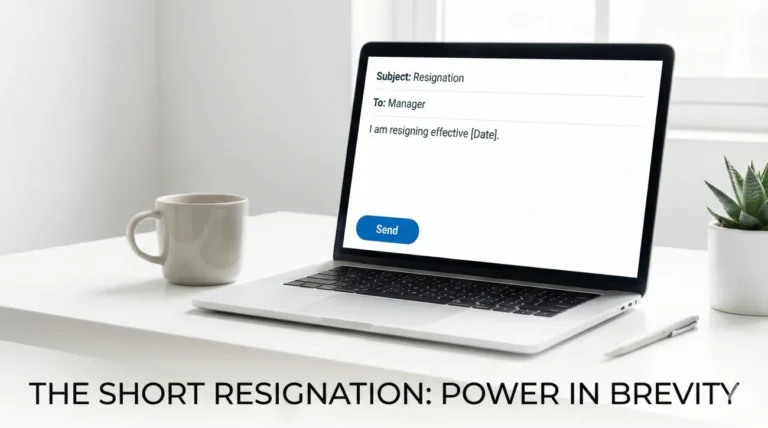
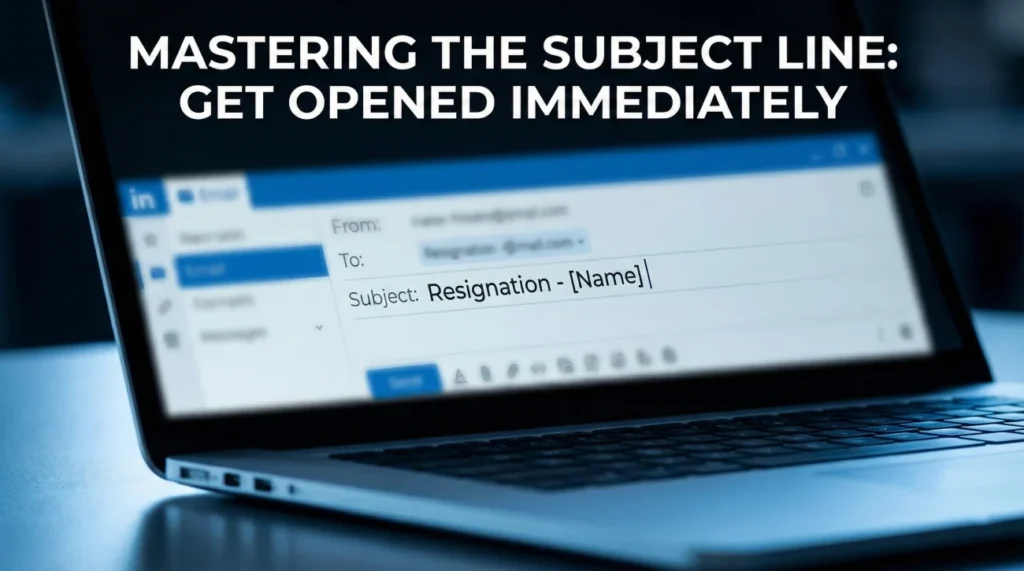
- High Stakes: Your subject line sets the emotional tone and decides whether your manager reads it as a calm HR item or a surprise crisis.
- Inbox Mechanics: Managers triage by sender + subject, and mobile often truncates around 30–40 characters, so the key word must come first.
- Best Formula: Use “Resignation” or “Notice” + Your full name, add role or last day only when it helps routing in large orgs.
- Pick The Right Tier: Use universal “gold standard” subjects for most exits, timeline or context-heavy versions for planning and big companies, and “immediate” only for true emergencies.
- Avoid Damage: Skip vague bait subjects, ALL CAPS, emotional framing, or oversharing, then match the subject with a clean, formal email body.
The Inbox Battleground: Why Your Subject Line Is High-Stakes Real Estate
In the split second it takes for a notification to flash on your manager’s phone screen, the fate of your exit strategy is decided. Your resignation email subject line is not merely a label; it is the first psychological anchor of your departure. It determines whether your manager feels respected and informed, or blindsided and confused.
Most employees treat the subject line as an afterthought, scribbling a vague “Update” or “Chat?” at the last minute. This is a tactical error. In the corporate world, ambiguity breeds anxiety. A vague subject line triggers a manager’s “fight or flight” response – “Is there a crisis? Did we lose a client? Is someone hurt?” – before they even open the email.
Conversely, a professionally crafted subject for resignation email acts as a stabilizing force. It frames the conversation as a formal business transaction rather than an emotional emergency. This comprehensive guide goes beyond basic templates; we will dissect the psychology of the inbox, the technical realities of mobile truncation, and provide you with a master list of 50+ subject lines that guarantee your resignation is processed with the gravity it deserves.
For a complete roadmap of the resignation process that follows this email, refer to our foundational guide on how to write a resignation email.
The Strategic Function: It’s More Than Just a Title
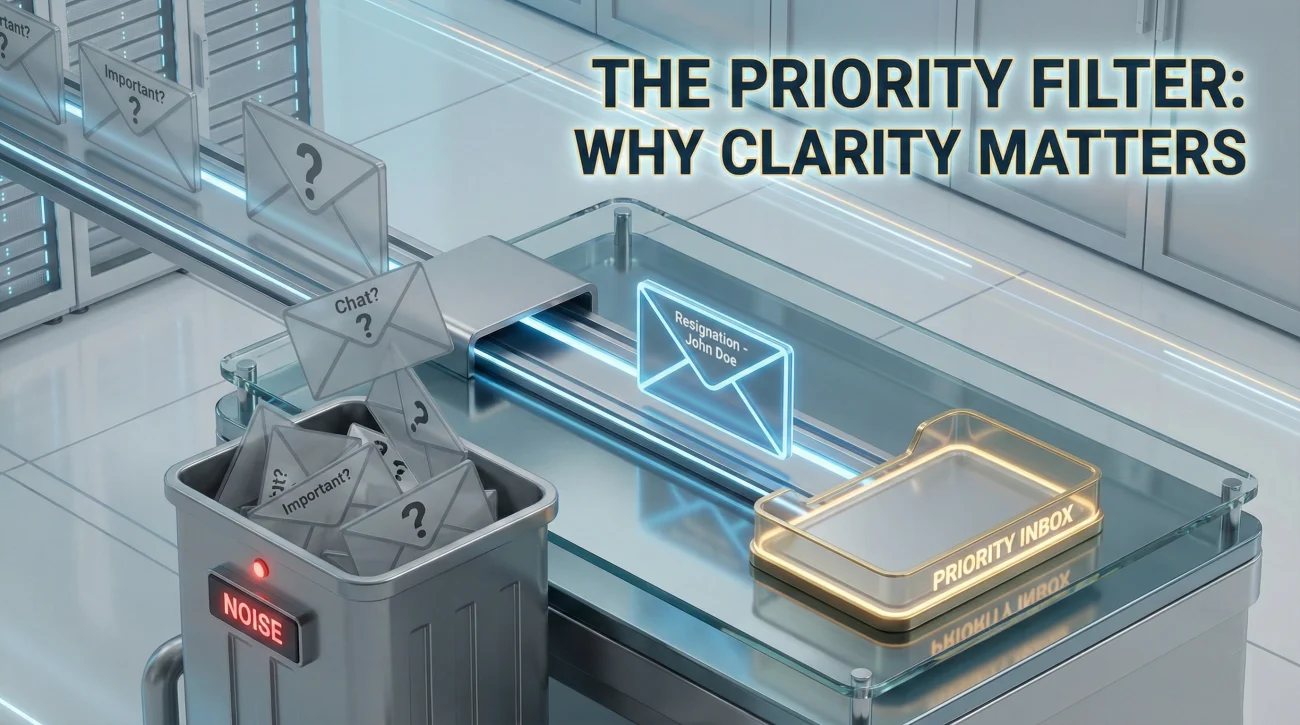
To understand why specific subject lines work, we must analyze how modern management functions. Your manager is likely drowning in hundreds of emails daily. They triage their inbox based on two factors: Sender and Subject. Your goal is to bypass their mental spam filter and trigger an immediate “Professional Priority” response.
1. The “E-Discovery” & HR Searchability Factor
Years from now, this email may need to be retrieved. Perhaps there is a dispute about your last day for a bonus payout, or maybe you applied for a “boomerang” role and HR is checking your file. If your subject line was “Hey there,” it is functionally invisible to search algorithms. A clear subject line like “Resignation – [Name]” ensures your records are accurate, protecting your future rehire eligibility and legal standing.
2. The “30-Character” Mobile Rule
More than 60% of emails are first triaged on a mobile device. Most smartphone notification centers (iOS and Android) truncate subject lines after 30-40 characters. This technical constraint dictates your syntax.
- 🛑 The Risk: If you write “Following up on our conversation about my future,” your manager sees: “Following up on our con…”. This looks like a project update and may be ignored until the evening.
- ✅ The Fix: Front-load the critical keyword. “Resignation – [Name]” puts the most important information in the first 11 characters, impossible to miss even on an Apple Watch notification.
3. Controlling the Narrative (The “Panic Gap”)
There is a psychological phenomenon in management called the “Panic Gap” – the time between reading a vague subject line and reading the actual email. If you title your email “Bad News” or “We need to talk,” your manager spends those 3 seconds imagining the worst-case scenarios (Lawsuits? Data leaks? Client fire?). By the time they realize you are just quitting, they are already in a negative emotional state. A clear subject line strips away the element of surprise and allows them to enter “HR Mode” calmly.
The Anatomy of a Perfect Resignation Subject Line
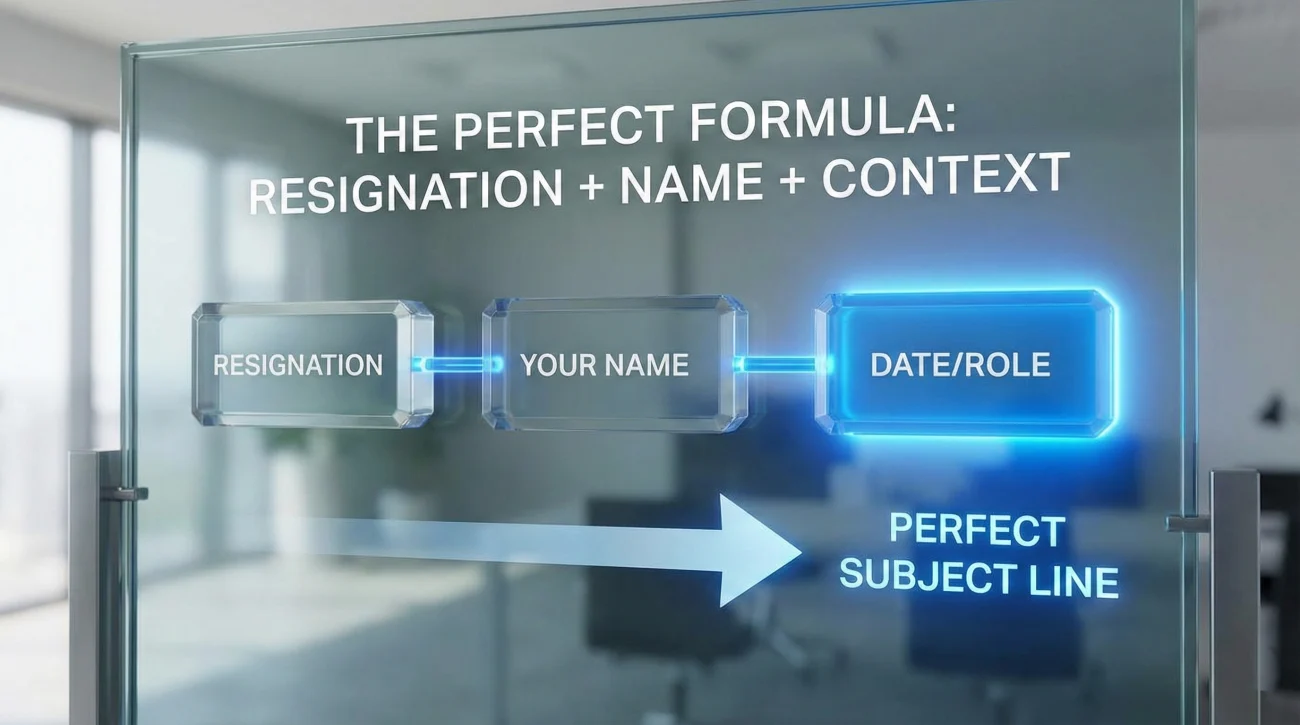
We have analyzed thousands of exit emails to distill the formula that yields the highest professional response rate. The best resignation email subject line relies on three core pillars: Clarity, Brevity, and Neutrality.
| Component | Why It Is Essential |
|---|---|
| The Subject | Must include “Resignation” or “Notice”. No synonyms like “Leaving” or “Quitting” which sound casual. |
| The Identifier | Your Full Name. Do not assume they know your email address nickname (e.g., “J.Doe@company.com”). |
| The Context (Optional) | Your Role, Department, or Last Day. Vital for large enterprises or managers with large teams. |
The Master Formula
[Action Subject] – [Your Name] – [Optional Specifics]
This formula is “Spam Filter Proof.” Vague subject lines like “Urgent” or “Important” trigger corporate firewalls and human skepticism. Specificity signals legitimacy. It creates a digital paper trail that is easy to forward to HR without the manager needing to edit the subject line for clarity.
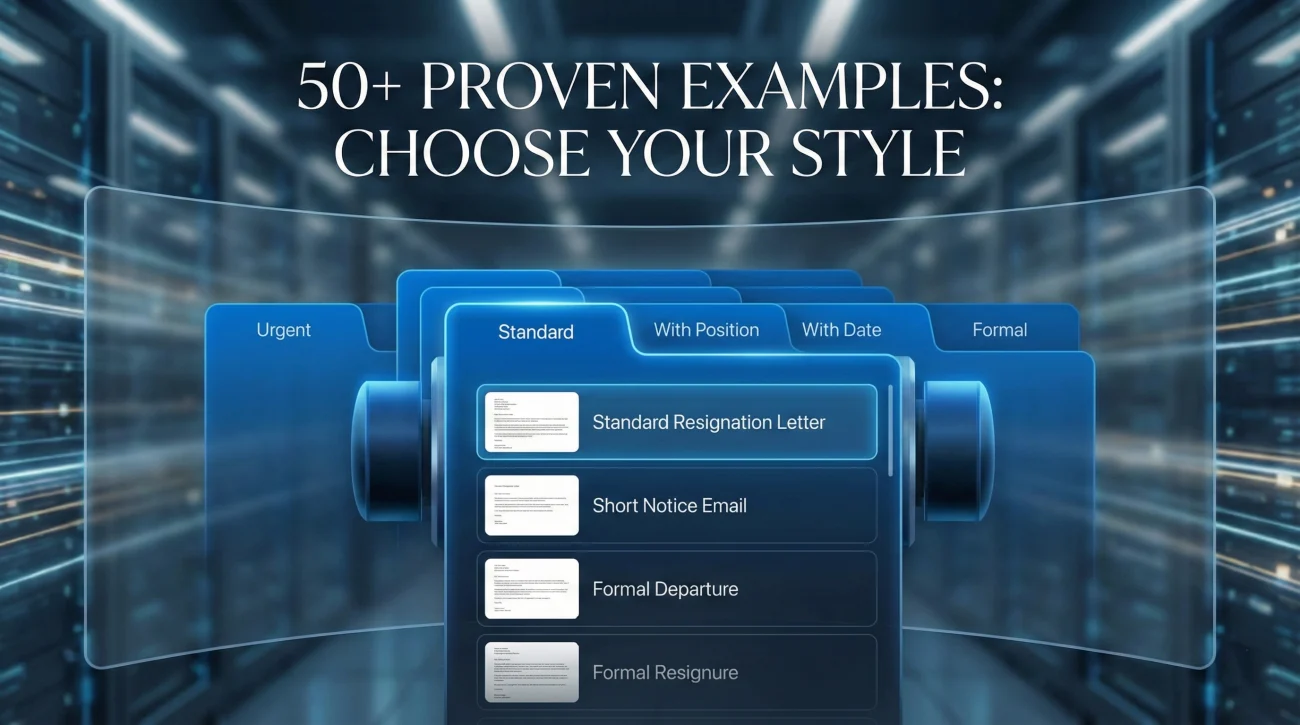
50+ Professional Subject Line Examples (Categorized)
One size does not fit all. The subject line for a 10-year veteran leaving a Fortune 500 company should differ from a freelancer ending a contract. Choose the template that best fits your specific tenure, industry culture, and relationship with your manager.
Tier 1: The “Gold Standard” (Safe for All Roles)
Use these for 95% of corporate jobs. They are formal, indisputable, and universally accepted. They work for everyone from Interns to VPs.
- ✅ Resignation – [Your Name]
- ✅ Notice of Resignation – [Your Name]
- ✅ Formal Resignation – [Your Name]
- ✅ Resignation Letter – [Your Name]
- ✅ Resignation Notification – [Your Name]
- ✅ Resignation: [Your Name]
- ✅ Letter of Resignation – [Your Name]
- ✅ Official Notice: Resignation – [Your Name]
- ✅ Resignation from [Company Name] – [Your Name]
- ✅ Employee Resignation: [Your Name]
Tier 2: The “Timeline-Focused” (For Planning)
Best when you want to emphasize that you are giving proper notice (e.g., 2 weeks or 1 month), signaling that you are not leaving them in a lurch. This reduces immediate resentment.
- ✅ Two Weeks’ Notice – [Your Name]
- ✅ Resignation – Last Day [Date]
- ✅ Resignation (Effective [Date]) – [Your Name]
- ✅ Notice of Resignation – Final Day [Date]
- ✅ Resignation – [Your Name] – Ending [Date]
- ✅ 2-Week Resignation Notice – [Your Name]
- ✅ Notice of Departure: [Your Name] – [Date]
- ✅ Resignation – Effective [Date]
- ✅ Resignation Notice (Nov 1st – Nov 15th) – [Your Name]
- ✅ Farewell & Resignation – Last Day [Date]
Tier 3: The “Context-Heavy” (For Large Companies)
Essential if you work in a massive conglomerate where your manager oversees 50+ people or if you are emailing HR directly (who may not know who you are).
- ✅ Resignation – [Your Name] – [Job Title]
- ✅ Senior Analyst Resignation – [Your Name]
- ✅ Resignation: [Your Name] (Marketing Dept)
- ✅ Resignation – Account Manager – [Your Name]
- ✅ Engineering Team Resignation – [Your Name]
- ✅ Sales Associate Resignation – [ID Number Optional]
- ✅ Resignation – [Your Name] – [Branch Location]
- ✅ HR Notice: Resignation – [Your Name]
- ✅ Resignation – [Your Name] – Project Lead
- ✅ Staff Resignation – [Your Name]
Tier 4: The “Short Notice” / Emergency
Use these only when you cannot give standard notice. The word “Immediate” alerts them to a crisis and typically bypasses standard wait times.
- ✅ Immediate Resignation – [Your Name]
- ✅ Resignation – Effective Immediately – [Your Name]
- ✅ Urgent: Resignation Notice – [Your Name]
- ✅ Emergency Resignation – [Your Name]
- ✅ Resignation Effective Today – [Your Name]
- ✅ Urgent: Immediate Departure – [Your Name]
- ✅ Personal Emergency & Resignation – [Your Name]
- ✅ Resignation – No Notice Period – [Your Name]
- ✅ Immediate Notice – [Your Name]
- ✅ Resignation (Health Reasons) – Effective Immediately
Tier 5: The “Remote/Contractor” Context
For remote workers, digital nomads, or freelancers where “returning equipment” is a primary logistical concern.
- ✅ Resignation – Remote Developer – [Your Name]
- ✅ Contract Termination – [Your Name]
- ✅ Resignation & Equipment Return – [Your Name]
- ✅ Notice of Resignation – [Your Name] (Remote)
- ✅ Ending Freelance Agreement – [Your Name]
The “Do Not Open” List: Subject Lines That Damage Reputations
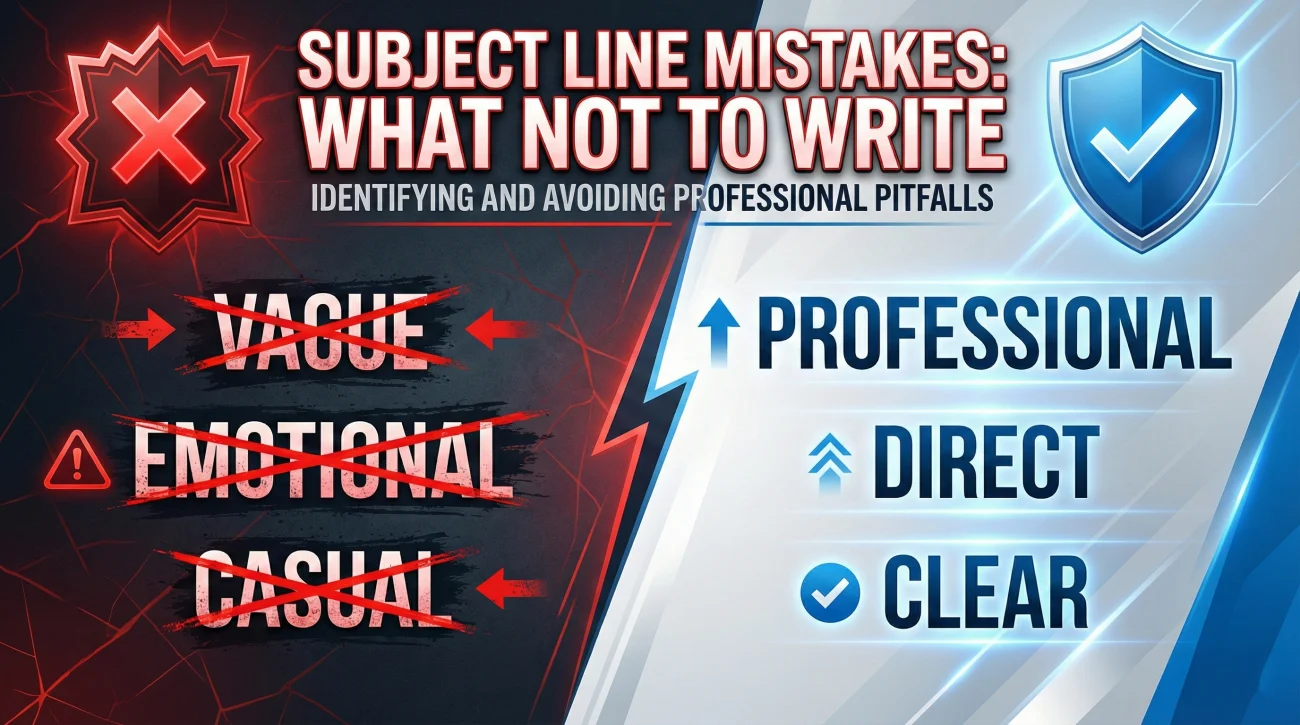
Your subject line can accidentally convey immaturity, aggression, or apathy. We have categorized the most common mistakes that make managers roll their eyes.
| The Mistake Style | The Bad Example ❌ | The Professional Fix ✅ |
|---|---|---|
| The “Bait & Switch” | “Chat?” / “Question” / “Update” | “Resignation – [Your Name]” |
| The Aggressive Shouter | “RESIGNATION” / “I QUIT” | “Resignation Notice – [Your Name]” |
| The Emotional Dumper | “So sorry about this…” / “Bad news” | “Formal Resignation – [Your Name]” |
| The Ghost | (No Subject) / “Re: Meeting” | “Notice of Resignation – [Your Name]” |
| The Over-Explainer | “Resigning because I found a better job” | “Resignation – [Your Name]” |
Why “We Need to Talk” is the Worst Option
Subject lines like “Can we chat?” or “Urgent meeting” create unnecessary anxiety. They force your manager to speculate. When they finally open the email and realize you are just resigning, their relief is often replaced with annoyance at the theatrics. Directness is a form of professional kindness.
The “Caps Lock” Trap
Writing “RESIGNATION” in all caps might seem like a way to ensure the email is seen, but in digital etiquette, it is perceived as shouting. It sets a hostile tone before the email is even read. Use Title Case (Resignation Notice) instead of ALL CAPS.
Advanced Tactics: Special Scenarios
Not every resignation is standard. Here is how to handle the subject line in tricky situations.
1. Resigning While on Leave (PTO/Maternity)
If you are not in the office, your manager might not open your email immediately, thinking it can wait until you return. You need to signal that this email requires action now despite your absence.
Subject: Resignation – [Your Name] – (Currently on Leave)
2. Resigning Directly to HR (Bypassing Manager)
If your manager is toxic or unavailable, you may need to email HR. Since HR doesn’t know you as personally, you need more identifiers.
Subject: Resignation – [Your Name] – [Employee ID if known] – [Department]
3. The “No Counter-Offer” Shield
If you want to signal that your decision is final and you do not want to be courted to stay, use the word “Final” or “Formal” to create distance.
Subject: Formal Notification of Resignation – [Your Name]
Synchronization: Matching the Subject to the Body
A professional subject line sets a high bar; your email body must meet it. Do not pair a formal subject line with a casual, lowercase message. Below is the standard “Professional Body” that aligns perfectly with any Tier 1 or Tier 2 subject line.
Subject: Resignation – [Your Name]
Dear [Manager’s Name],
I am writing to formally resign from my position as [Job Title] at [Company Name]. My final day of employment will be [Date].
I have appreciated the opportunity to work with this team. I am committed to ensuring a seamless handover of my responsibilities over the next two weeks. Please let me know how I can best support the transition.
Sincerely,
[Your Name]
[Your Phone Number]
For more variations of the email body, including templates for specific reasons, explore our resignation email examples category.
❓ FAQ: Expert Tactics for Resignation Subject Lines
📧 What if I am replying to an existing thread?
📱 Does “Sent from my iPhone” excuse a bad subject line?
🔒 Should I mark the email as “High Importance” (!)?
👥 Should I put my ID number in the subject line?
📥 What if my manager doesn’t reply?
Final Thoughts
Your resignation email subject line is the cover of your exit story. If it is messy, vague, or emotional, people will assume the content inside – and your departure itself – will be equally chaotic. If it is crisp, clear, and professional, you establish control and command respect before the email is even opened.
Do not overthink it. Boring is good. “Resignation – [Your Name]” is the unbeaten champion for a reason: it works. It is searchable, respectful, and legally sound.
For further guidance on navigating your exit, read our comprehensive pillar on how to write a resignation email or return to our homepage for more career strategy tools.
⚠️ Legal Disclaimer: ResignSmartly provides general informational guidance about resignation, workplace communication, notice periods, handovers, and career transitions. Content does not constitute individualized legal advice. Employment laws, contracts, workplace policies, and individual circumstances vary, so review the requirements that apply to your situation and consult an appropriate qualified professional when needed.