
- Set the tone with “Pull” not “Push”: Focus on the new direction you’re choosing, not what you disliked in the old role.
- Protect relationships by naming your career equity: Acknowledge the skills, mentoring, and standards you’re taking forward.
- Decide how much to disclose strategically: Transparency usually beats vagueness, but avoid details that invite debate or judgment.
- Use a scenario-fit template: Pivot job offer, entrepreneurship, back to school, or dream path, all need the same calm structure and clean handoff.
- Leave like an alumnus: Document your work like a legacy, keep confidentiality tight, and update LinkedIn without erasing your past.
Mastering the Resignation Email for Career Change
Resigning is inherently stressful. However, writing a resignation email for career change brings a unique layer of complexity. You are not just leaving a company; you are leaving an identity, a field of expertise, and often, a network of colleagues who have defined your professional life for years.
The anxiety is real. You might worry that your manager will feel their mentorship was wasted, or that your colleagues will view your pivot as an admission that you “couldn’t hack it” in your current industry. These fears often lead professionals to write vague, defensive, or overly apologetic resignation letters. This is a strategic mistake.
A well-crafted resignation does more than just give notice; it controls the narrative of your departure. It reframes your exit not as a rejection of your past, but as a necessary evolution toward your future. Whether you are leaving finance for forestry, or teaching for tech, your goal is to bridge the gap between where you have been and where you are going, preserving your reputation in the process.
In this comprehensive guide, we will dismantle the mechanics of a successful career pivot resignation. We will move beyond basic templates and explore the communication strategy required to exit with grace, ensuring your professional legacy remains intact even as you step into a completely new world.
The Strategy: Framing Your Pivot Without Burning Bridges
When you resign for a similar role at a competitor, the narrative is simple: better pay, better title, or better location. However, when you draft a resignation letter for career change, the narrative is more personal. You are essentially saying, “This entire path is no longer right for me.” If handled poorly, this can sound like a critique of the industry your boss has dedicated their life to.
The “Pull” vs. “Push” Narrative
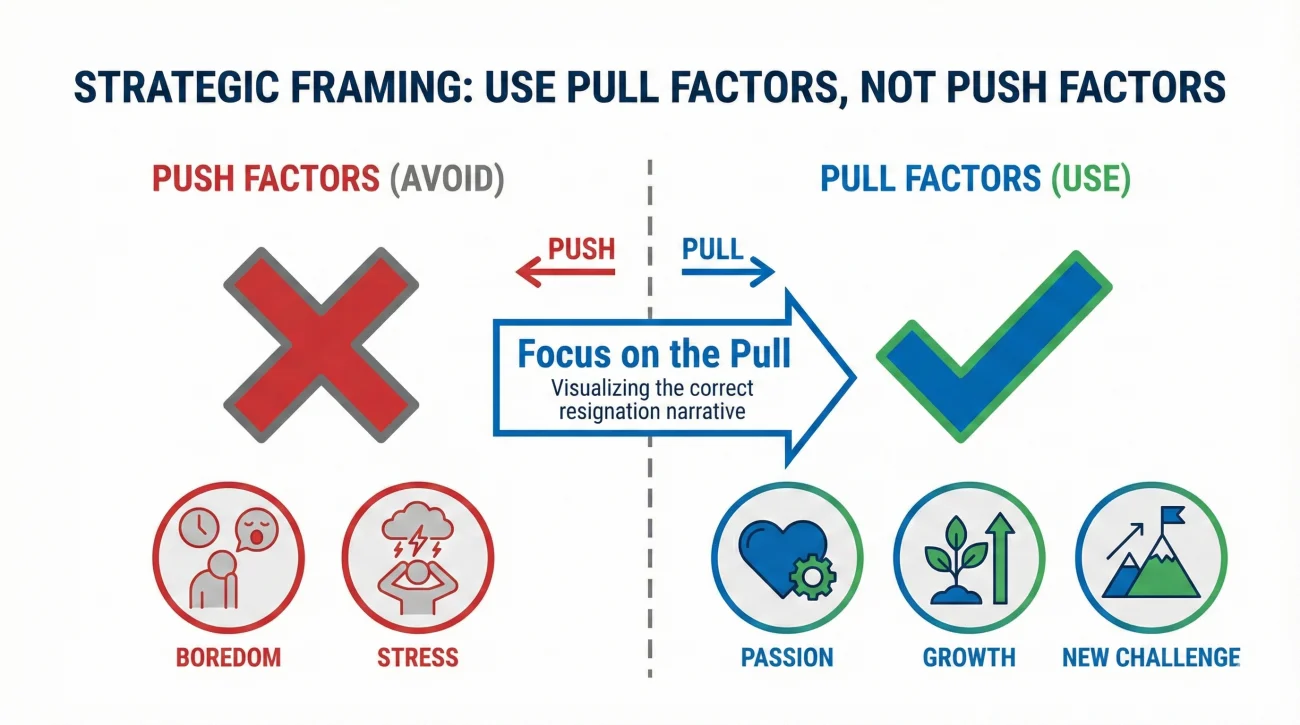
The most critical concept in resignation strategy is the distinction between “Push” and “Pull” factors.
“Push” factors are negative: you are bored, you hate the culture, or you feel stagnant. “Pull” factors are positive: you are drawn to a new passion, a new challenge, or a life-long dream. In a career pivot, you must ruthlessly eliminate all “Push” language.
- ✅ The Pull (Do This): “I have decided to pursue a long-standing passion for data science that I have been studying in my spare time.”
- ❌ The Push (Avoid This): “I have realized that sales is just too stressful and I need a break from this industry.”
By focusing entirely on the “Pull,” you make the resignation about your personal growth (which no reasonable manager can fault) rather than the shortcomings of your current role.
Acknowledging “Career Equity”
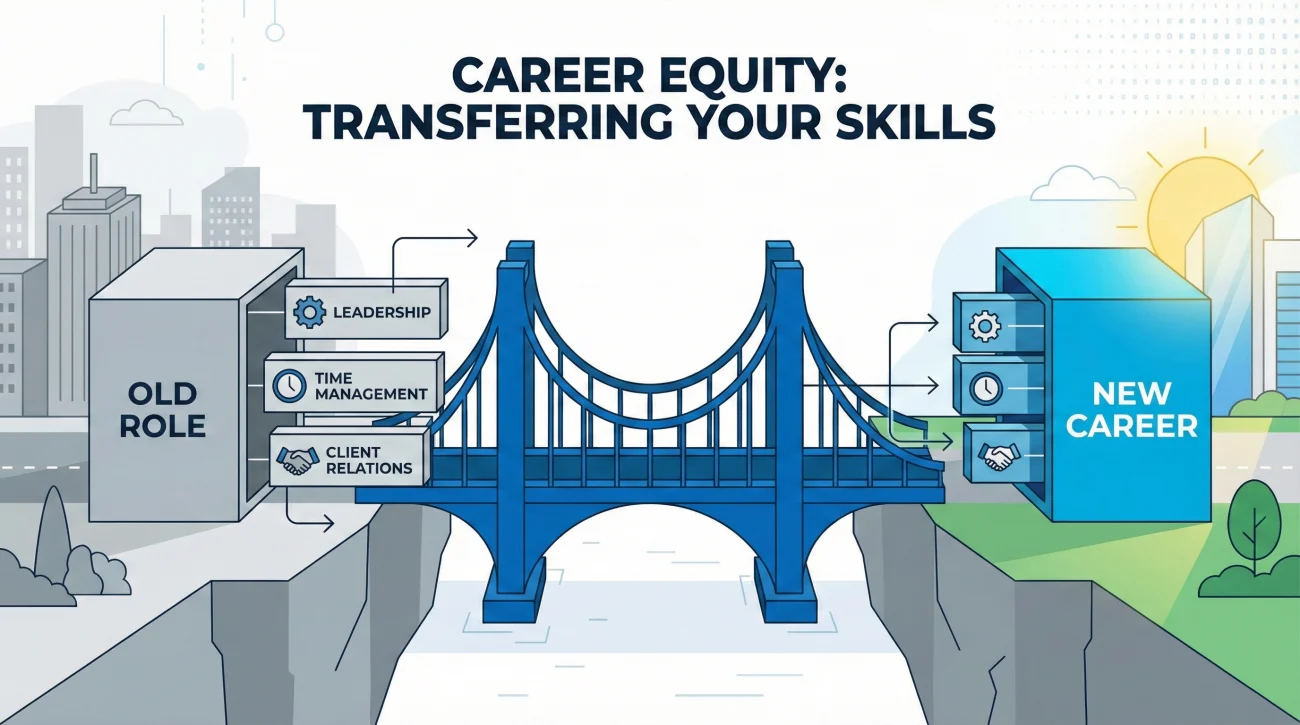
One specific fear managers have when an employee changes careers is that the training and mentorship provided were futile. To counter this, your email must acknowledge your “Career Equity” – the skills you gained here that you will take with you.
Even if you are moving from accounting to culinary arts, there is equity to acknowledge. You learned discipline, time management, or client relations. Explicitly stating, “The project management skills I learned here will be the foundation of my new business,” validates your manager’s investment in you.
Strategic Decision: Should You Disclose Your New Path?
Many professionals debate whether to reveal their new industry in the resignation letter. Unlike moving to a competitor (where discretion is often advised), a career pivot usually benefits from transparency. However, it is not a one-size-fits-all decision.
| Pros of Disclosure | Cons of Disclosure |
|---|---|
| ✅ Controls the Rumor Mill: Prevents colleagues from speculating that you were fired or are going to a direct competitor. | ❌ Invites Unsolicited Advice: Colleagues may try to “talk you out of it” or warn you about the risks of your new field. |
| ✅ Builds a Diverse Network: Your old colleagues immediately become your first contacts in a different industry. | ❌ Judgment Bias: If your new field is perceived as “less serious” (e.g., leaving law to be an influencer), you may face immediate judgment. |
| ✅ Humanizes the Exit: People generally root for someone pursuing a dream or passion. | ❌ Pressure to Succeed: If the pivot fails, returning to your old industry might feel more awkward if you made a “grand announcement.” |
The Expert Verdict: In 90% of cases, transparency is the superior strategy for a career pivot. It signals confidence and invites your current network to support your journey. Vagueness often breeds suspicion.
Resignation Email Templates for Every Pivot Scenario
Below are specialized templates tailored to the nuance of different transition types. Choose the one that best fits your specific situation, but remember to customize the bracketed information to reflect your authentic voice.

1. The “Total Industry Pivot” (The Standard)
Use this template when you are moving to a completely unrelated field but employment is immediate. This is the most common scenario for professionals making a clean break.
Subject: Resignation – [Your Name] – Career Transition
Dear [Manager’s Name],
Please accept this letter as formal notification that I am resigning from my position as [Current Job Title]. My last day will be [Your Last Date].
This was not an easy decision, as I have truly enjoyed my time at [Company Name]. However, I have decided to accept a new position in the [New Industry] sector. This move represents a significant pivot that aligns with a long-term professional goal I have been working toward for some time.
I want to express my deepest gratitude for the mentorship and opportunities I have had here. The experience I gained in [mention a specific skill, e.g., client negotiation] has been invaluable, and I fully intend to carry those standards of excellence into my new career path.
I am fully committed to ensuring a seamless handoff of my responsibilities over the next two weeks. I will have all project documentation updated and am happy to assist in training a replacement.
I hope we can stay in touch as I embark on this new chapter. You can reach me at [Personal Email] or on LinkedIn.
Sincerely,
[Your Name]
2. The “Corporate to Entrepreneurship” Pivot
Leaving a stable job to start a business requires confidence. This career pivot resignation email is specifically for entrepreneurship transitions where you are leaving the traditional employment structure entirely.
Subject: Resignation – [Your Name]
Dear [Manager’s Name],
I am writing to formally resign from my role as [Job Title] at [Company Name], effective [Date].
After much reflection, I have decided to take the leap and launch my own business in the [Field/Industry] space. Entrepreneurship has been a lifelong ambition of mine, and I feel that now is the right time to pursue this venture full-time.
I want to emphasize how much I value the business acumen and professional discipline I have learned under your leadership. My time at [Company Name] has given me the confidence and skills necessary to take this next step, and for that, I am incredibly creative.
My priority during my notice period is to ensure my current projects are left in the best possible position. I am happy to outline a transition plan for [Specific Project] specifically.
Thank you for your understanding and support.
Best regards,
[Your Name]
3. The “Returning to Education” Pivot
When resigning to attend graduate school or a bootcamp, your timeline is often fixed. This template is respectful and highlights the pursuit of knowledge.
Subject: Resignation Notice – [Your Name]
Dear [Manager’s Name],
Please accept this email as my formal resignation from the position of [Job Title], effective [Date].
I have recently been accepted into the [Name of Program] at [University/Institution] and will be returning to school full-time to pursue a new career path in [New Field]. While I am excited about this educational opportunity, it is difficult to leave a team I respect so highly.
I am grateful for the stability and growth [Company Name] has provided me. The professional standards I learned here will serve me well in my studies and future endeavors.
I will ensure all my files and pending tasks are organized and handed over before my departure. Thank you for being a part of my professional journey.
Sincerely,
[Your Name]
4. The “Passion Project” or “Dream Job” Pivot
This is for when you are leaving a high-paying or “sensible” job for something artistic, non-profit, or highly personal. It focuses on values alignment.
Subject: Resignation – [Your Name]
Dear [Manager’s Name],
I am writing to provide formal notice of my resignation from [Company Name]. My final day of work will be [Date].
As you may know, I have a deep personal interest in [Cause/Art/Field]. An opportunity has arisen for me to transition into this field full-time, and I have decided to align my career fully with this passion.
This was a difficult decision because I have truly enjoyed working with our team. I want to thank you for the supportive environment here, which allowed me to grow professionally while I determined my long-term path.
I am committed to making this transition as smooth as possible for the team. Please let me know how I can best support you during my final weeks.
Warm regards,
[Your Name]
Standard Resignation vs. Career Pivot: The Critical Differences
Understanding the nuance between a standard exit and a career pivot is vital for setting the right tone. If you treat a pivot like a standard resignation, you risk sounding cold or confusing. If you over-explain, you sound defensive.
| Feature | Standard Resignation (Same Industry) | Career Pivot Resignation (New Industry) |
|---|---|---|
| The “Why” | Often implies better pay, title, or company culture. | Implies a fundamental shift in life goals and interests. |
| Transparency | Often guarded (due to non-competes or competition). | Usually high transparency (celebratory tone). |
| Network Value | Old boss becomes a competitor. | Old boss becomes a diverse contact/client. |
| Notice Period focus | Protecting trade secrets/clients. | Transferring institutional knowledge. |
Reputation Management: The “Alumni” Mindset
When you execute a resignation due to career change, you are becoming an “alumnus” of your industry. You want to be remembered as the person who “went on to do great things in X field,” not the person who “quit because they couldn’t handle the pressure.”
To achieve this, your behavior during the notice period is just as important as the email itself.
Documentation as Legacy
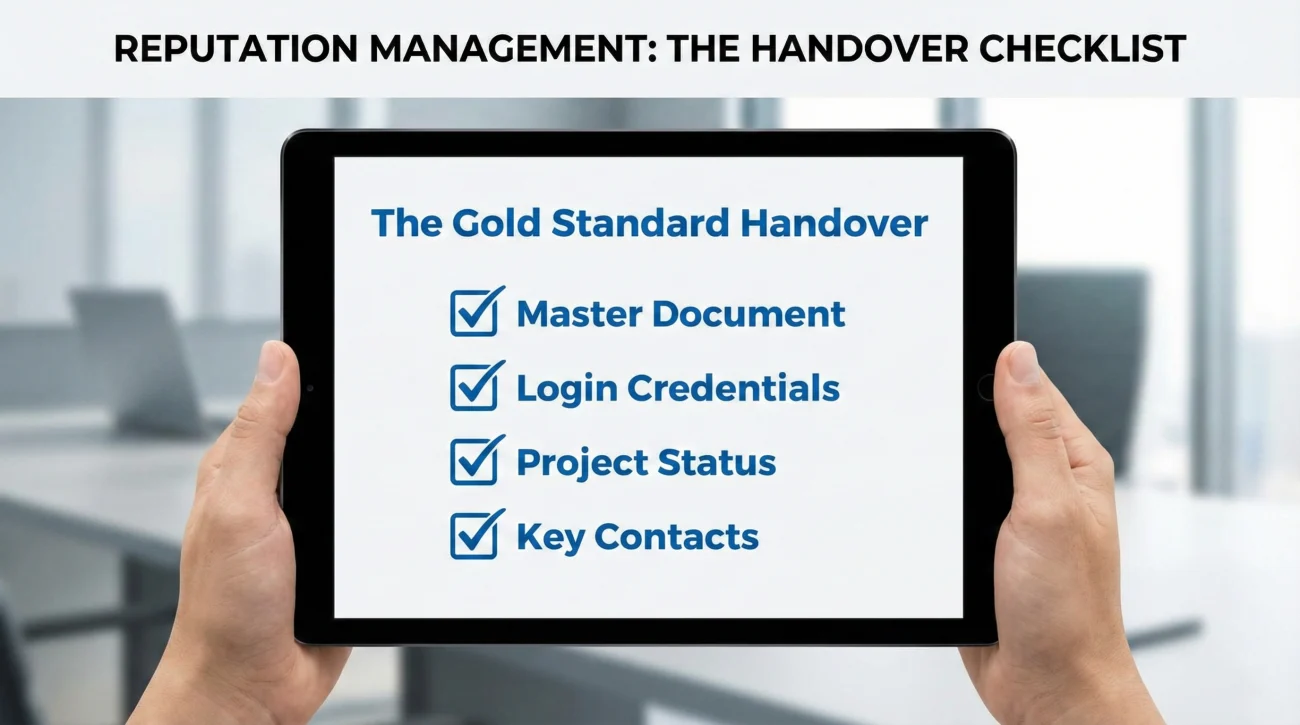
In a pivot, you are not just leaving a role; you are taking specific subject matter expertise with you that may not exist elsewhere in the team. Your replacement might be hired for your role but lack your specific industry context.
Leave behind a “Gold Standard” handover document. This should include not just what you do, but how you do it. When your former colleagues open your files six months from now and find clear, helpful instructions, your reputation is reinforced even in your absence.
The LinkedIn Transition
Once you have sent the email and the news is public, your digital presence needs to pivot as well. However, do not scrub your past. Instead, update your headline to reflect your new direction while keeping your experience visible. This shows a rich, diverse background rather than a disjointed career history.
For more insights on the mechanics of the email itself, you can refer to our pillar guide on how to write a resignation email, which covers the fundamental formatting rules that apply to all resignations.
Final Thoughts
Writing a resignation email for career change is the final act of your current professional chapter. It is easy to rush through it, focused entirely on the excitement of what comes next. However, taking the time to craft a thoughtful, strategic message pays dividends for years to come.
By framing your departure as a pursuit of growth rather than an escape from dissatisfaction, you preserve your professional relationships. You transform from an employee who quit into a colleague who evolved. The business world is smaller than it seems, and the reputation you save today may be the network you need tomorrow.
If you need more inspiration for different resignation scenarios, feel free to explore our homepage for a wider range of templates and career advice.
⚠️ Legal Disclaimer: ResignSmartly provides general informational guidance about resignation, workplace communication, notice periods, handovers, and career transitions. Content does not constitute individualized legal advice. Employment laws, contracts, workplace policies, and individual circumstances vary, so review the requirements that apply to your situation and consult an appropriate qualified professional when needed.