- Core idea: Resigning for pay is a market alignment decision, not disloyalty, and staying too long often creates a “loyalty tax.”
- Awkwardness decoded: Money talk feels taboo, but employment is a contract, if compensation no longer matches value, the deal stops working.
- How to say it: Frame it as “Better financial opportunity” or “Aligned with market value,” avoid accusatory or emotional lines that sound like a complaint.
- Pick the right template: Choose a tone that fits your relationship, Market Value, Better Opportunity, Family Factors, Total Package, Post Negotiation, or Career Advancement.
- Big risk: Counter offers are usually a trap, decline calmly, finish strong with a clean handover, and keep exit interview feedback factual and solution-focused.
The Economics of Exiting: Writing a Resignation Email Due to Low Salary
In the corporate world, there is a pervasive myth that leaving a job solely for money is “mercenary” or “disloyal.” This cultural taboo often forces professionals to draft vague resignation letters, citing “new challenges” when the real driver is simple arithmetic: you are leaving for higher pay.
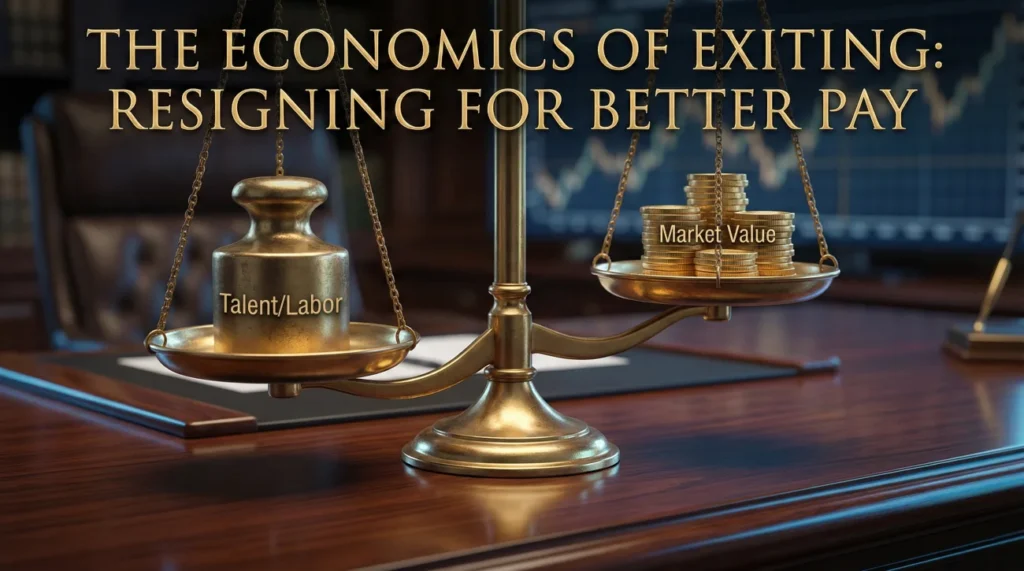
Writing a resignation email due to low salary is not just about quitting; it is a strategic business transaction. Studies show that employees who stay in the same job for more than two years get paid 50% less over their lifetime than those who switch. This is known as the “Loyalty Tax.” By resigning for better compensation, you are not being greedy; you are correcting a market inefficiency in your personal economy.
This comprehensive, deep-dive guide will teach you how to navigate the delicate intersection of money and relationships. We will provide resignation letter for better salary templates, scripts for the awkward “money talk,” and a strategic analysis of why you should almost never accept a counter-offer.
Why Salary Resignations Feel Awkward (And Why They Shouldn’t)

There is a cultural taboo around discussing money that makes salary-based resignations particularly uncomfortable. Many professionals worry that citing compensation as their reason makes them look:
- 💰 Greedy: As if caring about fair pay is somehow unprofessional.
- 🎯 Disloyal: Like money is all that matters to you (when in reality, bills matter to everyone).
- 🔥 Ungrateful: Dismissing the opportunities the company did provide.
The Reality Check: Employment is a contract: labor for capital. If the capital stops matching the value of the labor, the contract is no longer viable. Employers change vendors to save money all the time; employees act as their own vendors when they change jobs to make money.
When to Be Honest vs. Vague
Should you tell them it’s about the money? Use this decision matrix:
- Be Honest If: You have a high-trust relationship, you want to help HR benchmark salaries for your team, or you are open to a counter-offer (risky).
- Be Vague If: The culture is petty, you are leaving for a competitor, or the salary gap is so large it would be insulting to mention.
Strategic Communication: How to Say “I Need More Money”
The art of discussing compensation in your resignation comes down to strategic word choice. You want to frame the decision as a “Market Alignment” rather than a “Personal Complaint.”
✅ Power Phrases (Use These)
| Phrase | Why It Works |
|---|---|
| “Better financial opportunity” | Focuses on the gain (future), not the criticism (past). |
| “Aligns with market value” | Depersonalizes the issue – it’s about the market, not the manager. |
| “Total compensation package” | Sounds strategic – includes benefits, equity, and bonus. |
| “Family financial goals” | The ultimate trump card. No one argues with doing what’s best for your family. |
❌ Poison Phrases (Avoid These)
- ❌ “You don’t pay me enough.” (Accusatory)
- ❌ “I’m underpaid and undervalued.” (Emotional)
- ❌ “I can’t afford to live on this salary.” (Desperate)
- ❌ “My salary is a joke.” (Insulting)
6 Resignation Letter Templates for Better Salary
Choose the template that best fits your relationship with your manager. These low salary resignation letter samples bridge the gap between honesty and diplomacy.

Template 1: The “Market Value” (Data-Driven)
Best for: Analytical cultures or when you have previously requested a raise and were denied.
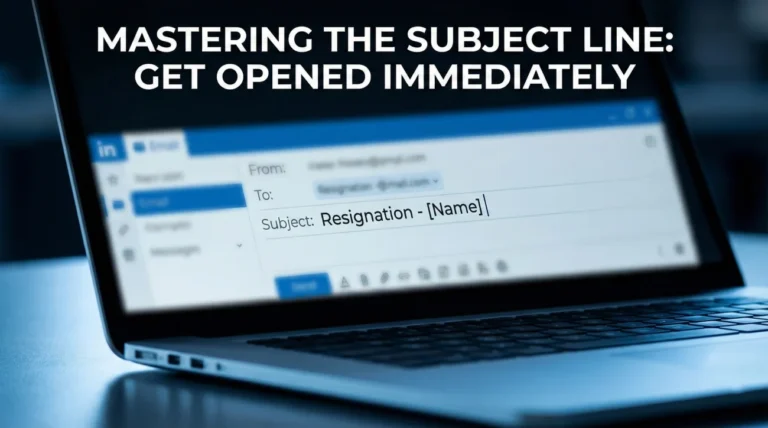
Subject: Resignation – [Your Name]
Dear [Manager’s Name],
Please accept this email as formal notification that I am resigning from my position as [Job Title], effective [Date].
This was a difficult decision, as I have truly enjoyed working with you and the team. However, after careful consideration of the current market and my professional growth, I have decided to accept a position that offers compensation more closely aligned with industry benchmarks for my experience level.
I want to thank you for the opportunities I’ve had at [Company Name]. I am committed to ensuring a smooth transition during my notice period.
Sincerely,
[Your Name]
Template 2: The “Better Opportunity” (The Safe Standard)
Best for: Most situations. It’s polite, professional, and hints at money without making it the headline.
Subject: Resignation Notice – [Your Name]
Dear [Manager’s Name],
I am writing to inform you of my resignation from [Job Title], effective [Date].
I have accepted a new opportunity that represents a significant step forward for my career and financial goals. I have valued my time at [Company Name] and am grateful for the support you have provided me.
I will do everything I can to wrap up my current projects and train my replacement before my departure.
Best regards,
[Your Name]
Template 3: The “Family Factors” (Unarguable)
Best for: Shutting down counter-arguments. Managers rarely argue with “family needs.”
Subject: Resignation – [Your Name]
Dear [Manager’s Name],
Please accept this email as my resignation from the position of [Job Title], effective [Date].
I have decided to accept a position that offers a total compensation package that is better suited to the changing financial needs of my family at this time. I have loved my time here, but this is the right decision for my household.
Thank you for your understanding and mentorship.
Sincerely,
[Your Name]
Template 4: The “Total Package” (Benefits/Equity)
Best for: When the salary is similar but the benefits/equity/bonus structure is superior.
Subject: Resignation – [Your Name]
Dear [Manager’s Name],
I am writing to resign from my position as [Job Title] at [Company Name]. My last day will be [Date].
I have accepted an offer with a comprehensive compensation and benefits package that I could not pass up. While I will miss this team, this move is necessary for my long-term financial planning.
I appreciate the opportunities I’ve had here and wish the company continued success.
Regards,
[Your Name]
Template 5: The “Post-Negotiation” (The Follow-Up)
Best for: If you recently asked for a raise and they said no. This closes the loop logically.
Subject: Resignation – [Your Name]
Dear [Manager’s Name],
Following our recent conversation regarding my compensation, I have decided to resign from my position as [Job Title], effective [Date].
As we discussed, my goal is to align my compensation with my current level of contribution and market value. Since we were unable to find a solution internally, I have decided to accept an external offer that meets these requirements.
I appreciate your transparency during our discussions and thank you for the opportunity to work here.
Sincerely,
[Your Name]
Template 6: Career Advancement (Money as Growth)
Best for: Framing the salary increase as a promotion or level-up in responsibility.
Subject: Resignation – [Your Name]
Dear [Manager’s Name],
I am resigning from my position as [Job Title] at [Company Name], with my last day being [Date].
I have been offered a senior role that represents both a significant career advancement and compensation that reflects that increased responsibility level. While I’ve grown considerably here, this new position offers the next step in my professional development.
Thank you for your mentorship. I’ll ensure all current projects are well-documented.
Best regards,
[Your Name]
The Danger Zone: The Counter-Offer Trap

When you submit a resignation letter for better salary, panic often sets in. Your boss realizes it costs $30,000 to replace you, so they offer you a $10,000 raise to stay. This is the Counter-Offer.
Do NOT Accept It. Statistics show 80% of people who accept counter-offers leave within 6 months anyway. Here is why:
- ⚠️ Trust is Broken: You are now a “flight risk.” When layoffs come, you will be first on the list because you already tried to leave.
- ⚠️ The “Band-Aid” Effect: The money changes, but the culture, the workload, and the lack of appreciation remain the same.
- ⚠️ Future Raises Die: They just gave you your “raise” for the next 3 years. You will be stagnant again immediately.
Script to Decline: “I am flattered by the counter-offer, but my decision to leave is final. I want to honor the commitment I have made to my new employer.”
Verbal Scripts: How to Say “It’s About the Money”
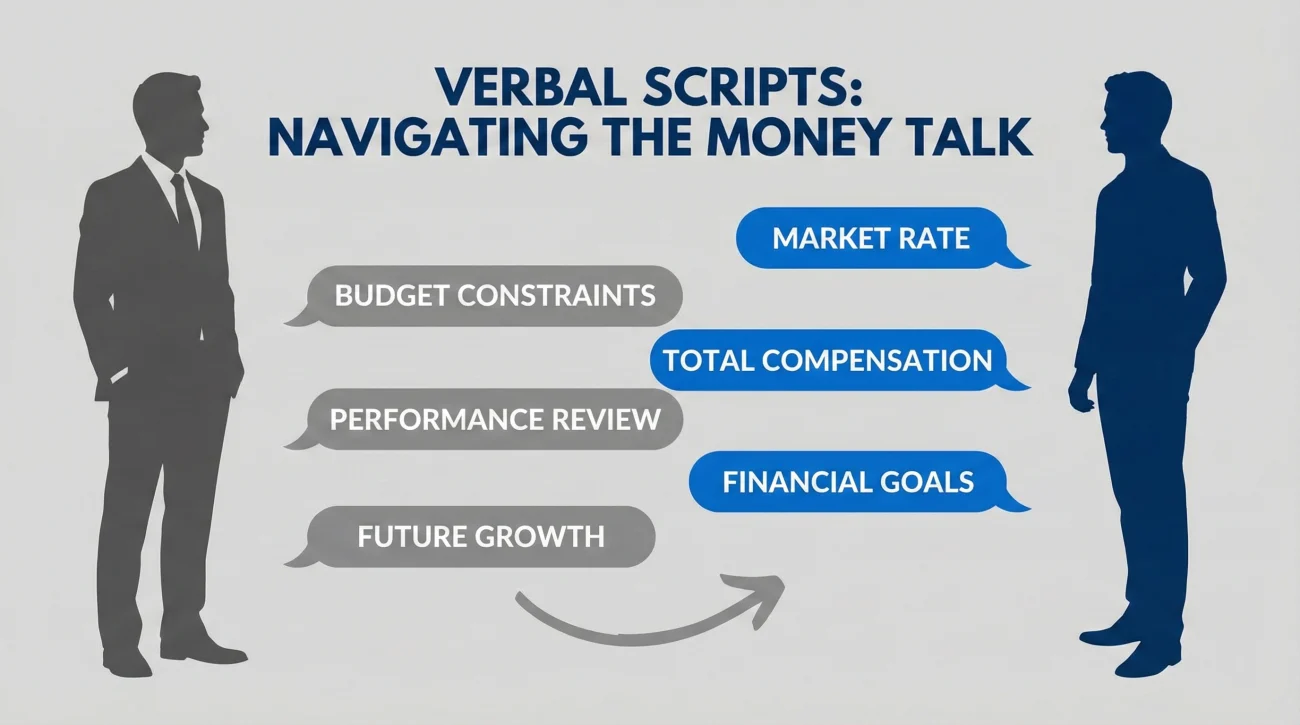
You will likely have a face-to-face meeting before or after the email. Here is how to handle the awkward questions.
Boss: “Is it just about the money? We can try to match it.”
You: “Compensation is a significant factor, yes. The new offer is roughly 30% higher, which isn’t something I expect [Current Company] to match given our budget cycles. It’s simply an opportunity I can’t say no to.”
Boss: “I thought you were happy here.”
You: “I am happy with the work and the team. But I have to make decisions based on the total picture, including my financial future. This new role accelerates that timeline for me.”
Special Case: When You Are Severely Underpaid
If you discover you’ve been underpaid by 30-40%, you might feel angry or exploited. It is crucial to process this emotion outside of your resignation.
Focus Forward
Do not use your resignation to “teach them a lesson.” Instead, frame it as a correction:
“I’ve accepted a position that offers compensation more in line with current market rates for my experience. This represents an important step forward in my career.”
Advocate in the Exit Interview
If you want to help your colleagues, the exit interview is the place to do it – dispassionately.
“Based on my research, the salary ranges for [Role] here are significantly below market. This might be affecting your ability to retain talent. I wanted to share this so you can address it for the team.”
Do’s and Don’ts Summary
| ✅ DO | ❌ DON’T |
|---|---|
| Use phrases like “Better financial opportunity” | Say “You don’t pay me enough” |
| Express gratitude for the growth/opportunities | List all the ways they failed you financially |
| Be firm when declining a counter-offer | Use an offer just to bluff for a raise (unless ready to leave) |
| Finish strong with a good handover | Slack off because “they didn’t pay enough anyway” |
❓ FAQ
💰 Is it unprofessional to say I’m leaving for money?
📊 Should I tell them my new salary?
🤝 Can I come back later (Boomerang) if I leave for money?
📝 Will this affect my reference?
Final Thoughts
Resigning due to low salary is an act of self-respect. You are trading your finite time for resources; if the exchange rate is poor, you have a duty to yourself to find a better market.
Do not let “loyalty” guilt you into financial stagnation. Write the email, be gracious, decline the counter-offer, and walk toward your worth. Your career is a business – run it like one.
For more specific scenarios, browse our resignation email examples. If you need a refresher on the basics, check our guide on how to write a resignation email, or return to the homepage.
⚠️ Legal Disclaimer: The resignation templates, email samples, and professional guidance provided in this guide are for informational purposes only and do not constitute legal advice. Employment laws and contract requirements vary by jurisdiction and individual circumstances. Please review your employment agreement and consult your HR department and/or a qualified attorney to ensure compliance with applicable laws and policies.