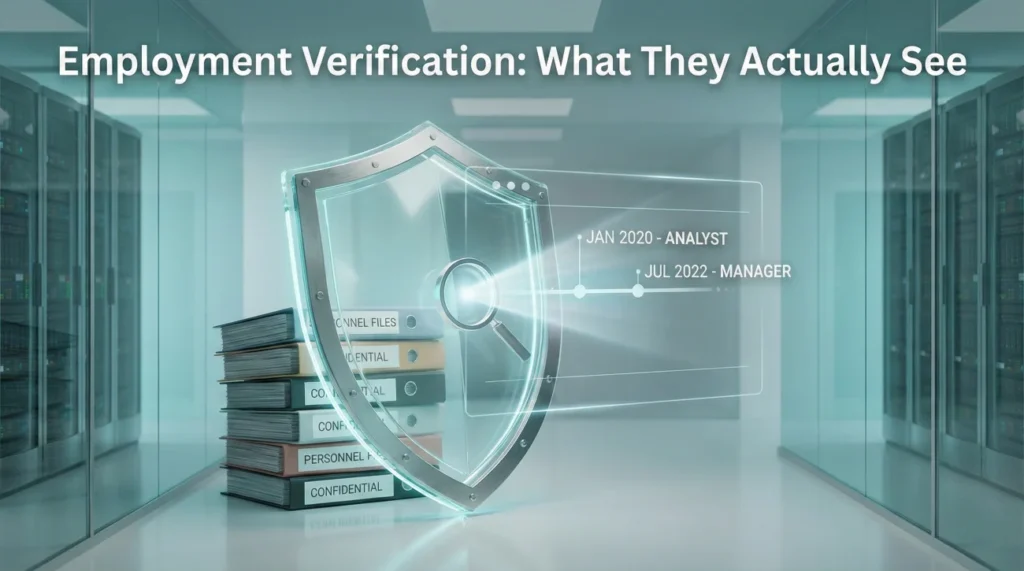
- What verification usually confirms: Employment dates, job title, employment status, sometimes location.
- Myth vs reality: Most employers avoid sharing performance or “why you left,” verification is often HR or a standardized system.
- Salary is situational: It can appear in regulated or process-heavy checks, so keep your story consistent and negotiate on market value.
- The quiet dealbreaker: “Eligible for rehire” can flag risk, so protect it with clean notice, calm last week, property return, and basic handover.
- Make it boring on purpose: Do a quick self-audit for date and title consistency, then use short HR and recruiter templates to prevent mismatches.
Understanding What an Employment Verification Check Really Reveals
If you’ve ever resigned and immediately felt a weird paranoia about your “record,” you’re not alone. People imagine a secret HR file filled with opinions, complaints, and exit drama – waiting to sabotage their next offer. In reality, most of the anxiety around an employment verification check comes from not knowing what’s actually shared, what’s guessed, and what’s confirmed.
This guide is a mythbusting map. We’ll break down what future employers typically ask, what your previous employer is likely to confirm, when salary comes into play, and how to handle the one question that quietly matters more than people realize: “Are they eligible for rehire?”
The goal isn’t to game the system. It’s to leave with clarity, protect your relationships, and keep your paperwork clean enough that verification becomes boring – in the best possible way.
What Employers Usually Ask (And Why It’s Often Boring)
Why verification exists in the first place
Employment verification is less about judging you and more about reducing risk. Companies want to confirm that a candidate’s timeline is real, that the job title roughly matches, and that there’s no obvious mismatch that would create a compliance or trust issue later.
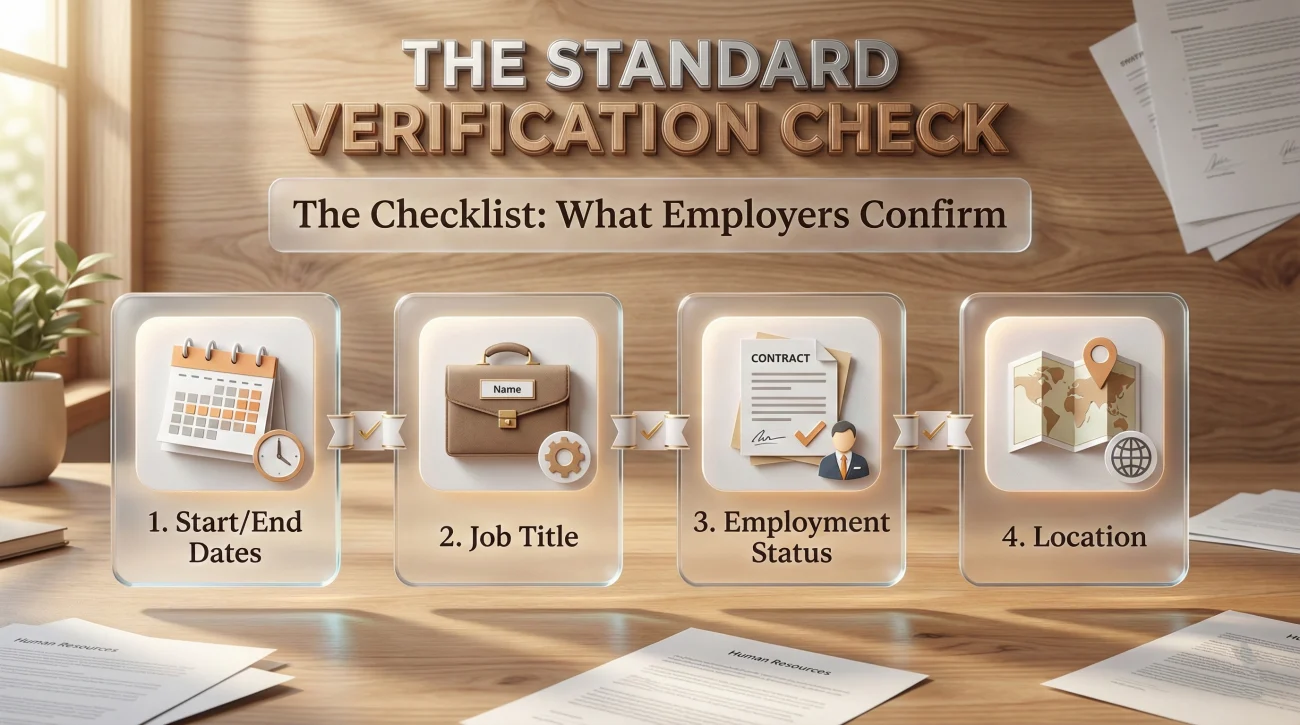
The most common fields being confirmed
- ✅ Your employment start date and end date
- ✅ Job title (sometimes department)
- ✅ Employment status (full-time, part-time, contract)
- ✅ Location (occasionally)
That’s why employment dates verification is the center of the process. It’s the easiest thing to confirm, and it’s the easiest thing to compare against a resume, LinkedIn profile, or background check report.
Myth vs. Reality: What Gets Said During Verification
Most people fear a dramatic “tell-all” phone call. In many workplaces, that simply isn’t how it’s done. Large organizations often route verification through HR, third-party systems, or standardized scripts specifically designed to limit risk and keep answers consistent.
| Myth | Reality | What you can do |
|---|---|---|
| “They’ll explain why I left.” | Many employers avoid detailed reasons and stick to neutral facts. | Keep your resignation record short and professional. |
| “They’ll share my performance review.” | Performance details are often not shared in verification calls. | Line up strong references separately for performance stories. |
| “My manager will trash me.” | In structured processes, HR handles it – not your former manager. | Know your company’s process; ask HR if unsure. |
| “They’ll confirm my salary automatically.” | Salary confirmation varies by employer, role, and region. | Assume salary could be questioned and prepare documentation if needed. |
If you’re specifically worried about what do employers say in verification check, focus on what you can control: your dates, your title, your written resignation record, and your relationships with a few people who will vouch for your work when it matters.
Salary Verification: When It Happens and Why It’s Sensitive

When salary is likely to come up
Salary verification is not a universal step in every hiring process. It tends to appear in specific contexts: roles with strict pay bands, government or regulated environments, positions requiring security clearances, or situations where a company uses a background check vendor that collects broader employment data with your authorization.
How to think about it without spiraling
Two practical truths help here. First, you can’t control every policy across every company. Second, you can control how clean and consistent your story is. If your resume reflects accurate dates and reasonable titles, the “salary question” tends to be less of a spotlight and more of a checkbox.
If you’re concerned about salary being used as leverage (“We can’t go higher because your last salary was X”), the smartest move is to keep negotiations focused on your market value, scope, and impact – then save any detailed salary history conversation for the moment it’s truly required by process, not as an opening topic.
The Quietly Most Important Question: “Eligible for Rehire?”
Why this question shows up
When employers ask whether you’re eligible for rehire, they’re often trying to measure “risk” without asking for drama. It’s a shortcut question. It doesn’t always mean you were a bad employee. Sometimes it’s purely administrative – like policy violations, job abandonment, or leaving without proper notice in a system that flags it.
How to protect your rehire status without begging
- ✅ Give clear notice in writing and confirm your last day.
- ✅ Do a basic handover that makes you easy to replace.
- ✅ Return company property cleanly and keep simple confirmations.
- ✅ Keep your last week calm – no emotional essays in writing.
If you want a practical standard for how to exit without creating unnecessary mess, use this guide as your tone and behavior checklist: this resource.
Two Templates: Confirm the Facts and Control the Narrative
The best way to stop imagining worst-case scenarios is to verify your own facts and preempt simple misunderstandings. These templates are designed to be calm, neutral, and easy for busy people to respond to.
Template 1: Email to HR asking what they confirm
Subject: Quick question about employment verification details
Hi [HR Name/Team],
I’m preparing for future employment verification checks and want to make sure my records are accurate. Can you confirm what information your team typically verifies (for example: employment dates, job title, and rehire eligibility)?
If there’s a standard process or third-party system used for verification, please let me know so I can direct requests appropriately.
Thank you,
[Your Name]
Template 2: Email to a recruiter if you anticipate a discrepancy
Subject: Quick clarification for background check consistency
Hi [Recruiter Name],
Before the verification step, I wanted to proactively clarify one detail so everything matches cleanly. My employment dates at [Company] are [Month/Year] to [Month/Year]. My resume reflects this, but I’m happy to share additional documentation if your process requires it.
I’m looking forward to keeping the background check straightforward and moving ahead smoothly.
Best regards,
[Your Name]
If you’re still drafting your resignation message and want it to be short, clear, and easy to document, follow: this step-by-step guide.
A Quick Self-Audit Before You Apply Anywhere
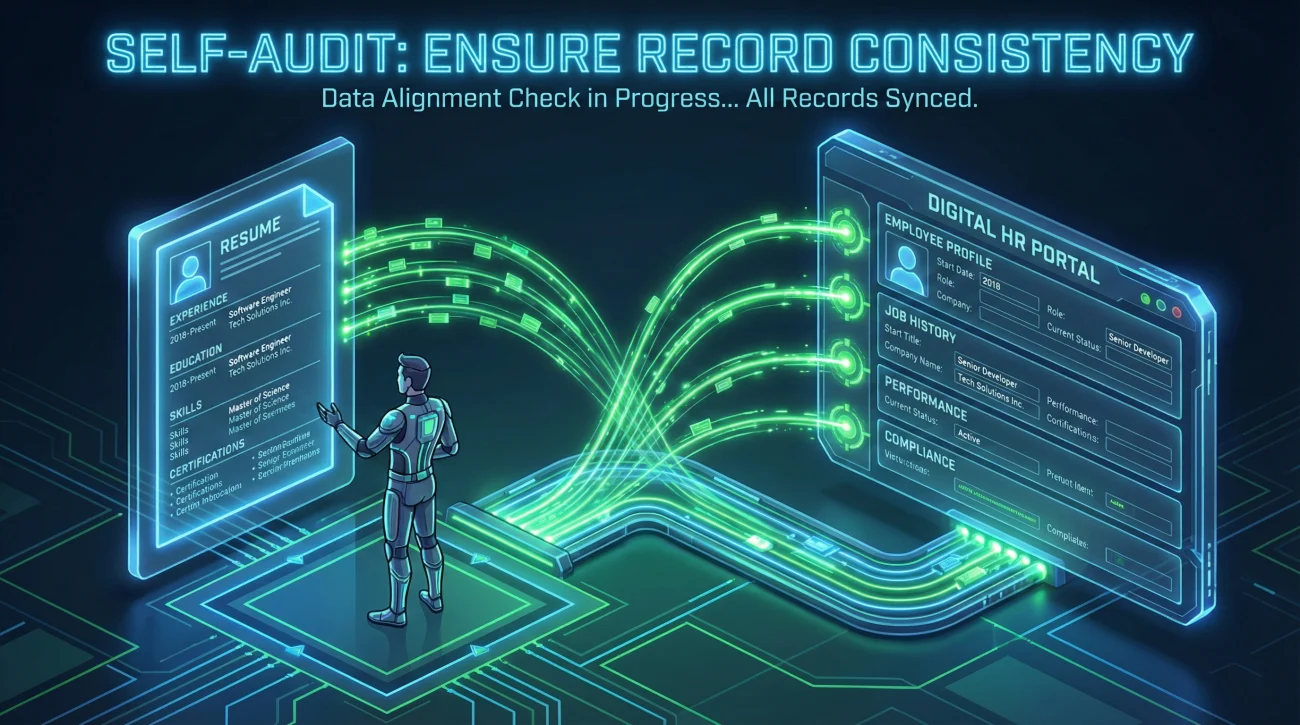
If you want verification to stay boring, do a five-minute audit before you start sending applications. The goal is to remove accidental inconsistencies – because those are the things that create unnecessary questions.
The checklist
- ✅ Make sure your resume dates match your best estimate of HR records.
- ✅ Keep job titles truthful and close to what your employer used (especially for background checks).
- ✅ If you were promoted, ensure the timeline is reasonable and consistent.
- ✅ If you were a contractor, label it clearly so “employment status” doesn’t look like a mismatch.
- ✅ Save basic documents in one place (offer letter, pay stubs, promotion letters) in case they’re needed.
This isn’t about perfection. It’s about removing easy friction, so your next employer sees you as organized and credible instead of “confusing.”
❓ FAQ
📞 Do employers usually call my manager directly?
Often, verification is routed through HR or a standardized system. If a recruiter wants a reference, that’s typically a separate step from verification and usually happens with your consent.
📅 What if my resume dates are off by a few weeks?
Small differences happen, but avoid preventable mismatches. If you’re unsure, anchor to month/year on your resume and be ready to clarify during background check questions.
💰 Will my previous employer confirm salary?
It depends on policy and process. Some employers won’t disclose it; others may confirm if you authorize a background check vendor. If your role is sensitive or regulated, be prepared for more detailed verification steps.
✅ What does “eligible for rehire” actually mean?
It’s often an administrative status, not a full performance verdict. Clean notice, basic handover, and a calm written record reduce the odds of unnecessary negative flags.
🧾 Should I request my employment records before I start job searching?
If you suspect a mismatch or you’ve had a complicated exit, it can be worth confirming what HR verifies. For most people, a quick self-audit and one HR confirmation email is enough.
Final Thoughts

Employment verification feels scary when it’s mysterious. But once you understand the usual scope – dates, title, status, and sometimes rehire eligibility – you can stop imagining a hidden “character report” and start focusing on what matters: consistency, professionalism, and a clean record.
If you do the basics well, an employment verification check becomes exactly what it should be: a quick confirmation step, not a story about you.
⚠️ Legal Disclaimer: ResignSmartly provides general informational guidance about resignation, workplace communication, notice periods, handovers, and career transitions. Content does not constitute individualized legal advice. Employment laws, contracts, workplace policies, and individual circumstances vary, so review the requirements that apply to your situation and consult an appropriate qualified professional when needed.