- Core idea: Toxic bosses follow repeatable patterns, so naming the pattern stops self-blame and helps you protect your career.
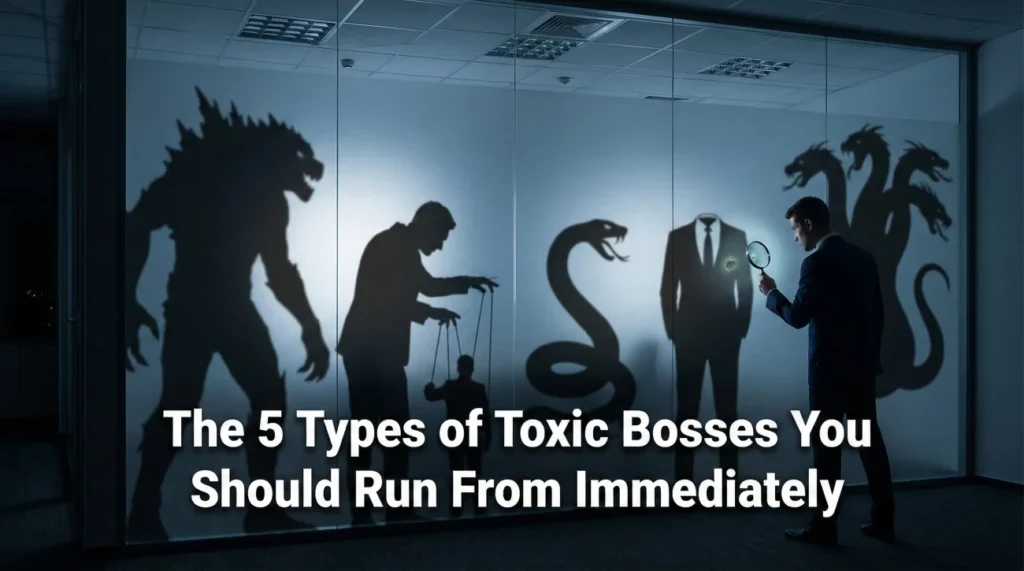
- Five types: Micromanager, Narcissist, Absentee, Credit Thief, Gaslighter.
- First moves: Use process and written clarity, like update cadence, success criteria, decision recaps, and visible ownership.
- Exit signals: Health decline, blame without clarity, blocked growth, fear of speaking up, and “fixes” that only escalate.
- Clean exit: Keep the resignation neutral, document handover essentials, stay calm in writing, and use simple templates instead of emotional explanations.
Toxic Leadership Has Patterns. Learn Them Before It Costs You
The problem with types of toxic bosses is that they rarely look “toxic” on day one. At first, it’s just a vibe. A weird comment. A sudden mood shift. A meeting that leaves you feeling smaller for no clear reason.
Over time, patterns form. And once you can name the pattern, you can stop personalizing it. You stop asking, “What’s wrong with me?” and start asking, “What’s the smartest way to protect myself?”
This guide breaks down five toxic boss types, the signs to spot them early, and how to respond without torching your reputation. Because sometimes the best career move is not a performance improvement plan. It’s an exit plan.
A Fast Map of the Five Toxic Boss Types
You don’t need a psychology degree. You need pattern recognition. Use this table as your quick “diagnostic” before you decide how much energy to invest.
| Boss type | What it feels like | Core damage | Best first move |
|---|---|---|---|
| The Micromanager | You can’t breathe without permission | Kills autonomy and confidence | Set boundaries with process |
| The Narcissist | Everything revolves around them | Steals credit, weaponizes attention | Document outcomes and keep it professional |
| The Absentee | No support, no decisions, no clarity | Leaves you exposed and blamed | Create written alignment and escalation paths |
| The Credit Thief | Your work becomes their story | Blocks growth and visibility | Build visibility without sounding defensive |
| The Gaslighter | You doubt your own memory | Erodes reality and mental safety | Keep receipts, shrink emotional exposure |
Type 1: The Micromanager
The clearest micromanaging boss signs are not “they care about quality.” It’s control disguised as support. They want updates constantly, rewrite your work instead of coaching you, and treat normal autonomy like disobedience.
How to spot them early
- They ask for status updates so often you can’t do the work.
- They require approval for tiny decisions that should be yours.
- They “fix” your work to prove they’re needed.
- They measure loyalty by how available you are.
The response that works without a fight
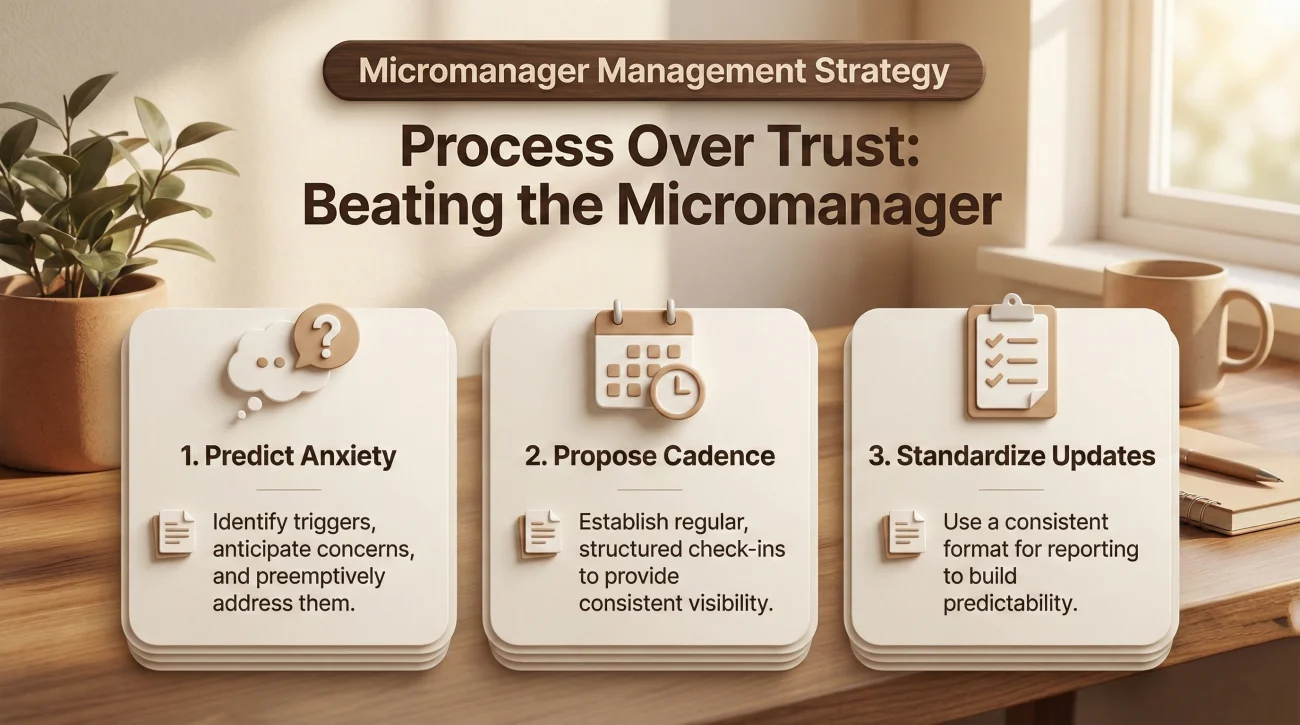
Don’t argue about trust. Build a process that limits interruption. The goal is to make their anxiety predictable and your work doable.
Subject: Weekly alignment cadence
Hi [Manager Name],
To keep execution smooth, I’d like to propose a simple cadence: a 15-minute check-in on [day/time] where I’ll share priorities, blockers, and what I need from you. I’ll also send a short written update at the end of the day on [two days per week].
This should reduce ad-hoc interruptions and make progress easier to track.
Thanks,
[Your Name]
If they refuse any structure and the control increases, that’s your signal: you’re not being managed, you’re being contained.
Type 2: The Narcissist
A narcissist boss doesn’t just want results. They want admiration. They want the room to orbit them. If you shine too much,
they feel threatened. If you struggle, they feel superior. Either way, the environment becomes emotionally unsafe.
Common patterns
- They take credit publicly and criticize privately.
- They reward loyalty over competence.
- They create “favorites” to keep the team competing.
- They punish disagreement, even respectful disagreement.
The survival strategy
Your goal is not to “win” emotionally. Your goal is to protect your record. Your goal is not to ‘win’ emotionally. Your goal is to protect your record. That doesn’t mean going mute when they take a jab at you in front of the team — a calm, controlled line in the moment (not an email) can shut it down without escalating. These comebacks for narcissistic people are built for exactly that kind of face-to-face moment. Document outcomes, communicate in writing, and keep your tone calm. Document outcomes, communicate in writing, and keep your tone calm. When you need alignment, ask questions that force clarity instead of triggering ego battles.
Subject: Confirming priorities and success criteria
Hi [Manager Name],
To make sure I’m aligned, can you confirm the top two priorities for this week and what “done” looks like for each? I’ll execute based on that and share progress in the next update.
Thanks,
[Your Name]
Type 3: The Absentee Boss
An absentee boss is not just “hands-off.” They vanish when decisions are needed, avoid conflict, and leave you holding responsibility without authority. You end up improvising leadership while being denied real support.
How it shows up
- Meetings get canceled repeatedly with no reschedule.
- You can’t get decisions, so work stalls or becomes guesswork.
- They show up only when something goes wrong.
- They say “use your judgment” and later blame your judgment.
The fix: written alignment + escalation
You protect yourself by creating a written trail: “Here’s what we’re doing unless you object by X time.” It’s not passive-aggressive. It’s operational safety.
Subject: Confirming direction for [Project]
Hi [Manager Name],
Based on our last discussion, I’m moving forward with Option B for [reason], with the goal of [outcome]. If you’d prefer a different direction, please let me know by [date/time]. Otherwise, I’ll proceed and share progress in the next update.
Thanks,
[Your Name]
Type 4: The Credit Thief
This boss doesn’t always insult you. They just quietly erase you. Your work becomes their “leadership.” Your ideas become their “vision.” And your career stalls because visibility is currency.

Red flags
- They present your work without naming you.
- They discourage you from speaking in cross-functional meetings.
- They “edit” your messages to make themselves the source.
- They frame your wins as “the team’s work” and their wins as “their leadership.”
How to reclaim visibility without sounding bitter
The cleanest move is to build visibility through process: written updates, shared docs, and clear ownership. You’re not accusing anyone. You’re making work traceable.
- Send weekly updates with your name attached to deliverables.
- Use shared documents where contributions are visible.
- In meetings, refer to your work in neutral language: “I tested X, results were Y, next step is Z.”
Type 5: The Gaslighter
Gaslighting at work is subtle. It’s not always shouting. It’s rewriting history in real time: “I never said that.” “You misunderstood.” “That’s not what happened.” Over time, you stop trusting your own memory.
How it usually looks
- They deny commitments you clearly remember.
- They contradict themselves and blame you for confusion.
- They make you feel “too sensitive” for reacting to real problems.
- They shift standards after you’ve done the work.
How to protect yourself
Keep receipts. Confirm decisions in writing. Reduce emotional exposure. And if the environment becomes unsafe, prioritize an exit strategy. This is not you being dramatic. This is you practicing dealing with toxic management like an adult: by reducing risk.
Subject: Recap of today’s decisions
Hi [Manager Name],
Sharing a quick recap to confirm alignment: We agreed on [decision 1], [decision 2], and the success criteria is [metric/definition]. Next steps are [your action] by [date], and [their action] by [date].
Thanks,
[Your Name]
When You Should Stop “Fixing It” and Start Planning Your Exit

Some bosses can be managed with boundaries and process. Some cannot. Here are the signals that it’s time to treat this like an exit problem, not a communication problem.
Exit signals
- Your health is degrading (sleep, anxiety, dread, constant tension).
- You are being blamed for missing clarity you never received.
- Your work is being used without credit and your growth is blocked.
- You feel unsafe speaking honestly, even respectfully.
- You’ve tried structured fixes and the pattern escalates.
If you decide to leave, leave clean. The point is not to “teach them a lesson.” The point is to protect your future. Keep this baseline open while you plan: this etiquette checklist.
A Clean Exit Plan That Doesn’t Hand Them Ammunition

Toxic environments often try to rewrite the story when you leave. A clean exit makes that harder. Your goal is to be simple, calm, and procedural.
What to do during your notice period
- Document your active work: owners, deadlines, links, risks.
- Keep communication short and neutral.
- Stop explaining your emotions. Start confirming logistics.
- Pick one or two allies (not the whole team) to keep references intact.
If you need a clean structure for the email itself, use: this resignation email guide.
Two Resignation Templates for Toxic Boss Situations
Different bosses trigger different emotions, but your resignation record should look the same: calm, short, and unarguable.
Template 1: Neutral resignation email (no reason)
Subject: Resignation
Hi [Manager Name],
Please accept this email as formal notice of my resignation. My last working day will be [date], in accordance with my notice period.
Between now and my last day, I will document my responsibilities, provide status notes on active work, and support a smooth handover.
Thank you,
[Your Name]
Template 2: Resignation letter format (if your company expects a “letter”)
Subject: Formal Resignation Letter
Dear [Manager Name],
Please accept this letter as formal notice of my resignation from my position as [Role]. My last working day will be [date].
I appreciate the opportunities I’ve had during my time here. I will support a smooth transition by documenting key responsibilities and assisting with the handover process before my departure.
Sincerely,
[Your Name]
If you want a ready-to-copy letter structure you can adapt fast, use:
this letter template.
❓ FAQ
🧭 How do I know if my boss is “toxic” or just strict?
Strict bosses can still be consistent, fair, and clear. Toxic bosses create patterns of fear, confusion, credit theft, or blame shifting. The key difference is whether the environment feels stable and psychologically safe over time.
📩 Should I explain the real reason I’m resigning?
Usually no. Keep your resignation record neutral. If you need to raise formal issues, do it in a separate, documented channel, not inside your resignation email.
🧾 What should I document before I resign?
Save your plan documents (role expectations), written approvals, key project updates, and decision recaps. During notice period, create a handover note with owners, deadlines, links, and risks.
🤝 Can I leave without burning bridges if the boss is abusive?
Yes – by keeping your official record short and procedural, doing a clean handover, and avoiding emotional explanations in writing. You can protect yourself without giving them an easy narrative to attack.
🚪 What if I’m too exhausted to do a “perfect” exit?
Aim for “clean,” not perfect: confirm your last day, document essentials, hand off key work, and keep communication calm. That’s enough to protect your reputation while you recover.
Final Thoughts
Toxic leadership feels personal, but it often follows predictable patterns. Once you can name the pattern, you can stop burning energy on self-blame and start making strategic moves.
The goal isn’t to diagnose anyone. The goal is to protect your career, your confidence, and your peace. When you recognize types of toxic bosses early, you don’t just survive the job. You keep your future clean while you leave.
⚠️ Legal Disclaimer: ResignSmartly provides general informational guidance about resignation, workplace communication, notice periods, handovers, and career transitions. Content does not constitute individualized legal advice. Employment laws, contracts, workplace policies, and individual circumstances vary, so review the requirements that apply to your situation and consult an appropriate qualified professional when needed.