- Strategic Power: Brevity signals confidence, reduces drama, and keeps your message “forwardable” without risk.
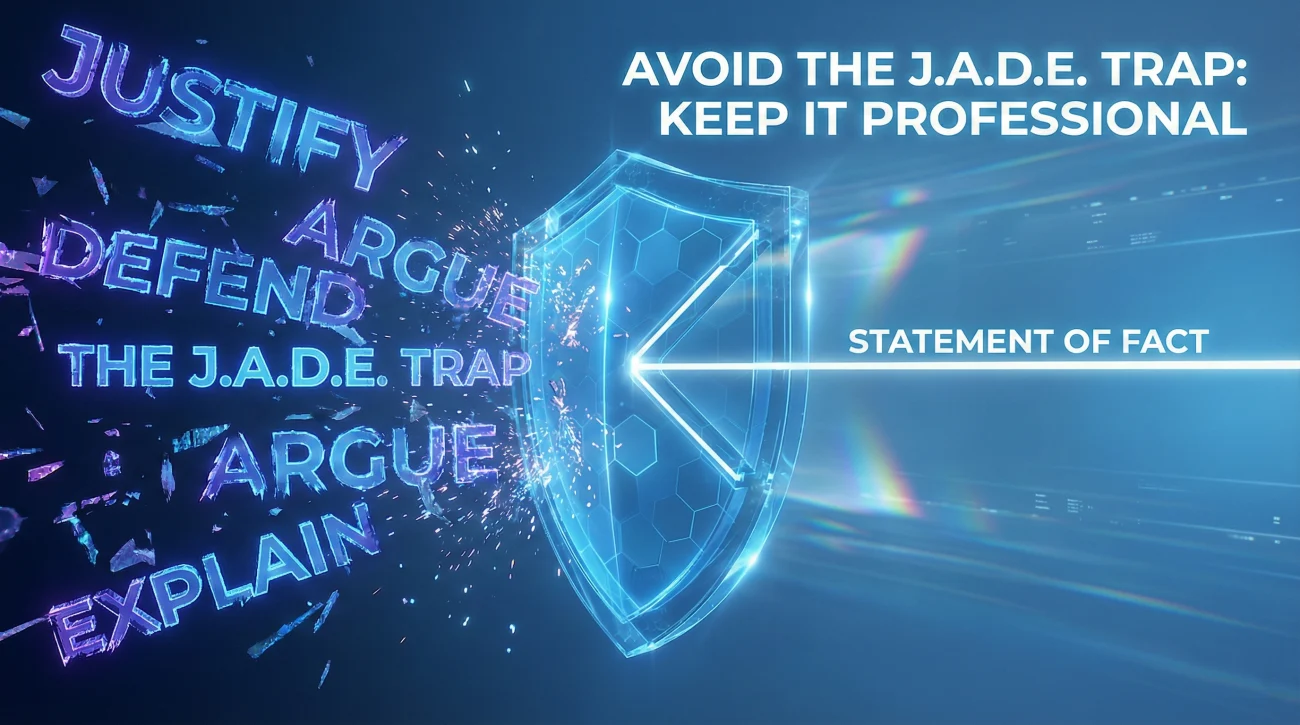
- JADE Trap: Long explanations invite arguments, defenses, and counter-offers, a short note removes negotiation hooks.
- Legal Shield: Your email is a permanent record, neutral wording protects your future narrative in toxic or high-stakes exits.
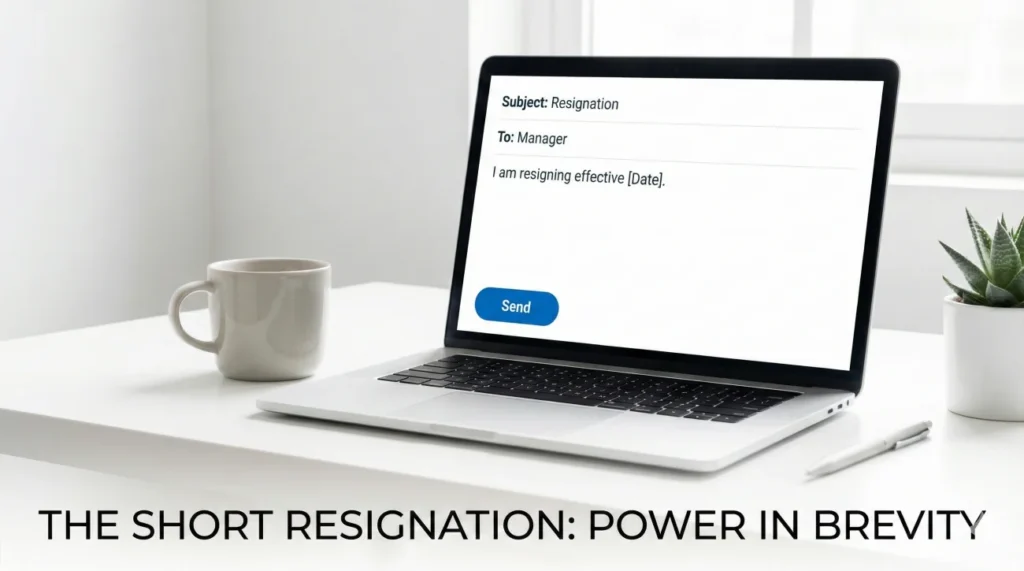
- Three Sentence Anatomy: Resignation statement, Exact last day date, Professional handover close, nothing more.
- Use Cases and Pitfalls: Best for toxic managers, counter-offer risk, short tenure, competitor moves, avoid one-liners, vague dates, and stealth subject lines.
The Strategic Power of Brevity in Resignations
There is a pervasive myth in the corporate world that a resignation email must be a heartfelt confession. We often feel compelled to write paragraphs justifying our departure, thanking everyone from the CEO to the intern, and explaining our future plans in minute detail. This impulse stems from a natural human desire to be liked and to soften the blow of “bad news.”
However, from a strategic and legal perspective, this instinct is often wrong. Writing a short resignation email is not just a stylistic choice; it is a professional power move. In high-stakes environments, brevity signals confidence, decisiveness, and emotional control.
Whether you are leaving a toxic environment and need to protect yourself legally, or simply moving to a better opportunity and want to avoid an awkward counter-offer negotiation, the “Short & Sweet” approach is your strongest ally. In this comprehensive guide, we will dismantle the guilt associated with brevity and show you exactly how to write a resignation that is surgical, professional, and unassailable.
The Psychology: Why We Over-Explain (And Why You Shouldn’t)
To master the art of the short resignation, you must first understand why it feels so uncomfortable. Psychology tells us that “over-explaining” is a trauma response or a symptom of high anxiety. When we feel guilty about “abandoning” a team or a manager, we subconsciously try to overcompensate by offering excessive information.
Avoid the “J.A.D.E.” Trap
Negotiation experts warn against a behavior pattern called J.A.D.E.: Justify, Argue, Defend, Explain. When you send a long resignation email detailing your reasons (“The commute is too long,” “I found a job with better benefits,” “I feel undervalued”), you are inadvertently opening a door for your employer to:
- Argue: “We can let you work from home to solve the commute!”
- Defend: “We actually value you highly, look at your last review.”
- Negotiate: “If it’s about money, let’s talk numbers.”
A short resignation email removes the hooks that employers use to drag you back into a negotiation you have already decided to end. By stating facts without reasons, you create a boundary that is difficult to cross.
The Legal Advantage of “Saying Nothing”
Your resignation email is not a chat; it is a permanent legal record. It will be stored in your personnel file potentially for decades. In the event of legal disputes (e.g., unpaid commissions, non-compete enforcement, or constructive discharge claims), every word you write can be scrutinized.
Protecting Your Future Narrative
If you are leaving a toxic workplace but write a long, flowery email saying, “I loved working here, this company is amazing,” you may severely damage any future legal claim you might have regarding a hostile work environment. A short, neutral email (“I resign effective immediately”) creates a “Teflon” record – nothing sticks to it, and it cannot be used to contradict your actual experiences later.
Strategic Context: When is “Short” the Best Choice?

While a heartfelt letter has its place (usually for a mentor you have worked with for 10 years), the brief resignation email is the superior choice for the following scenarios:
| Scenario | Why Brevity Wins |
|---|---|
| The Toxic Boss | Narcissistic or aggressive managers feed on emotion. Giving them zero emotional data starves the conflict and allows you to slip away quietly. |
| The Counter-Offer Risk | If you know they will throw money at you to stay (but you really want to leave), listing reasons gives them a roadmap to “solve” your problem. No reasons = No counter-arguments. |
| Short Tenure (< 1 Year) | Writing a novel after 4 months feels melodramatic and out of touch. A short note shows you understand professional norms. |
| Leaving for a Competitor | Anything you say can be used to enforce a non-compete. Keep it to “I am resigning.” Do not mention the new employer. |
| Hourly / Retail Roles | High-turnover industries value efficiency. Your manager likely has 50 other employees; they need the date for the schedule, not a story. |
The Anatomy of the Perfect Short Resignation
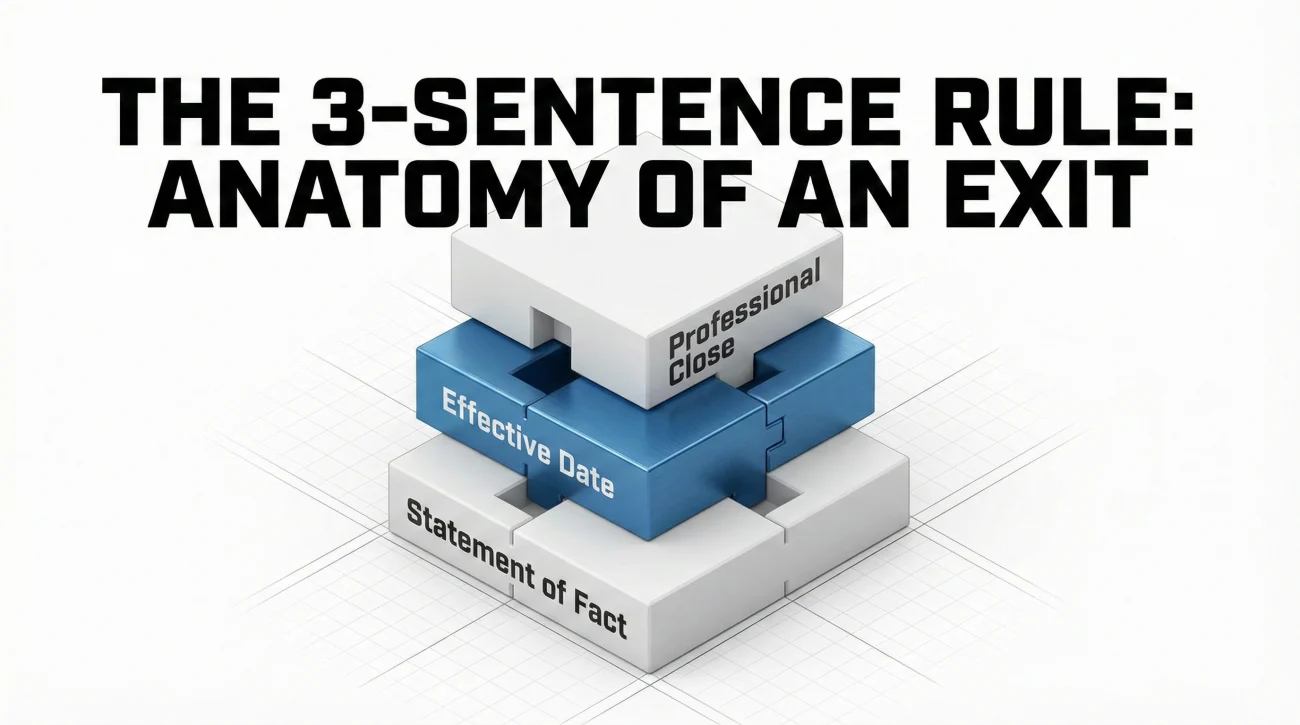
A masterfully crafted short resignation contains three non-negotiable elements. It is the “Haiku” of the corporate world – every syllable has a purpose.
1. The Statement of Fact
What to write: “I am resigning from my position as [Title].”
Why: No ambiguity. Do not say “I intend to resign” or “I am thinking of resigning.” Be absolute.
2. The Effective Date
What to write: “My final day will be [Date].”
Why: HR needs this to calculate your final paycheck, payout unused PTO (if applicable), and terminate benefits. Ambiguity here causes payroll errors.
3. The Professional Close
What to write: “I will facilitate a smooth handover during my notice period.”
Why: This one sentence protects your reputation as a “pro” without requiring you to do anything extraordinary. It signals goodwill.
⚠️What NOT to Include:
- Apologies (“I am so sorry to do this…”)
- Complaints (“Since I didn’t get the raise…”)
- Future Plans (“I’m going to work for Google…”)
- Excessive Praise (“You are the best boss ever…”) unless 100% genuine.
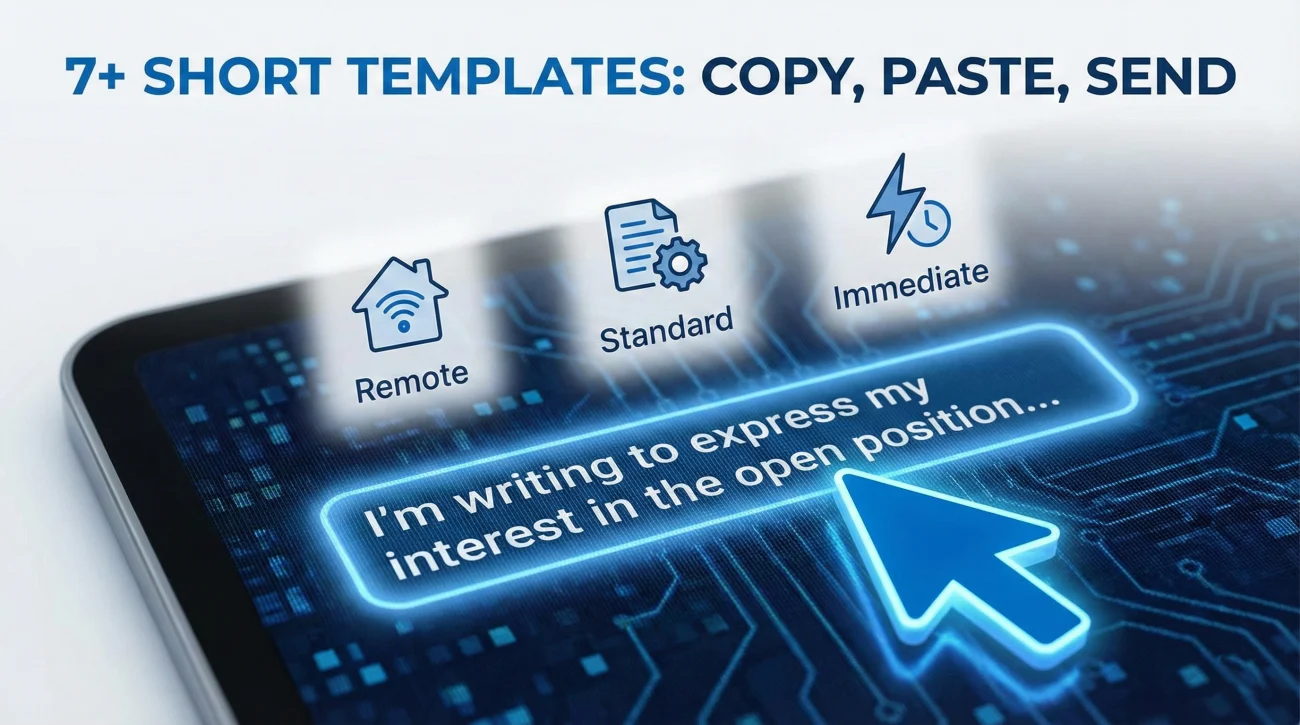
7+ Short Resignation Email Templates (Copy & Paste)
Choose the template that best fits your specific exit strategy.
1. The “Just the Facts” (Universally Safe)
Best for: 90% of office jobs, neutral relationships.
Subject: Resignation – [Your Name]
Dear [Manager’s Name],
I am writing to formally resign from my position as [Job Title] at [Company Name]. My last day of employment will be [Date].
Thank you for the opportunity to work here. I will ensure a smooth handover of my responsibilities during my notice period.
Sincerely,
[Your Name]
2. The “Grey Rock” (For Toxic Environments)
Best for: Abusive managers, hostile environments. “Grey Rocking” is a psychological technique of being uninteresting to abusive people.
Subject: Resignation – [Your Name]
Dear [Manager’s Name],
Please accept this email as formal notice of my resignation from [Company Name], effective [Date].
I will focus on completing my current tasks and returning company property before my departure.
Regards,
[Your Name]
3. The “Better Offer” (No-Negotiation)
Best for: When you want to signal “I’m gone” to prevent a counter-offer.
Subject: Resignation Notice – [Your Name]
Dear [Manager’s Name],
I am writing to resign as [Job Title], effective [Date].
I have accepted a new opportunity that aligns with my long-term career goals. I appreciate the time I have spent at [Company Name] and wish the team continued success.
Sincerely,
[Your Name]
4. The Remote Worker / Digital Nomad
Best for: WFH roles where logistics (equipment return) are the main concern.
Subject: Resignation – [Your Name]
Dear [Manager’s Name],
I am writing to resign from my remote position as [Job Title]. My last working day will be [Date].
Thank you for the flexibility and support. I will upload all my files to the shared drive by Friday and await instructions on returning my laptop.
Best,
[Your Name]
5. The “Immediate” (Safety / Emergency)
Best for: Unsafe conditions, health crises, or when you are willing to burn the bridge.
Subject: Resignation – Effective Immediately – [Your Name]
Dear [Manager’s Name],
Please accept this email as notification that I am resigning from my position as [Job Title], effective immediately today, [Date].
Regrettably, personal circumstances prevent me from providing the standard notice period. I will arrange to return company property as soon as possible.
Regards,
[Your Name]
6. The “Probation Period” Exit
Best for: Leaving within the first 90 days. Short tenure = Short email.
Subject: Resignation – [Your Name]
Dear [Manager’s Name],
I am writing to inform you that I am resigning from my position as [Job Title], effective [Date].
While I appreciate the opportunity, I have realized this role is not the right fit for my career path at this time. I will ensure my current tasks are returned to the team before I leave.
Regards,
[Your Name]
7. The Hourly / Shift Worker
Best for: Retail, Food Service, Part-time gigs.
Subject: Resignation – [Your Name]
Dear [Manager’s Name],
Please accept this email as my resignation from my position as [Role]. My final shift will be on [Date].
I appreciate the opportunity to work with the team. I will complete my scheduled shifts between now and my final date.
Best,
[Your Name]
Common Pitfalls: How “Short” Can Become “Rude”
There is a fine line between professional brevity and disrespectful curtness. Avoid these mistakes to ensure your short email is received as “efficient” rather than “angry.”
1. The “One-Liner” (Too Short)
Sending an email that just says “I quit” or “Here is my 2 weeks notice” with no salutation or sign-off is unprofessional. It implies you are impulsive or immature. Always include the “Dear [Name]” and “Sincerely [Name]” bookends.
2. Vague Timing
Never write: “My last day will be in two weeks.” HR might calculate “two weeks” differently than you (business days vs. calendar days). Always write the specific calendar date: “Friday, November 24th.”
3. The “Stealth” Subject Line
Do not title your email “Update” or “Hi.” Your manager might ignore it, delaying your notice period. Use a subject line that screams utility: “Resignation – [Your Name].”
The Aftermath: What Happens After You Hit Send?
Sending a short email often triggers a reaction. Because you gave them very little information, human curiosity kicks in. Be prepared for the immediate follow-up.
- The “Panic” Call: Your boss might call you 5 minutes later asking “Why??”. Stick to your script: “It was a difficult decision, but I’m moving to an opportunity that aligns with my long-term goals.” Rinse and repeat.
- The Counter-Offer: They might assume you are leaving for money. If you receive a counter-offer, ask for it in writing, but statistically, 80% of people who accept counter-offers leave within 6 months anyway.
- The “Walk Out”: In sales or finance, a resignation (even a polite one) can trigger immediate security escort. Have your personal files packed before you send the email.
❓ FAQ: Expert Answers
📧 Is a short resignation email considered rude?
📱 Can I just send a text message if I want to be brief?
🤝 Should I explain more in the Exit Interview?
📝 What if I want to come back someday?
Final Thoughts
Mastering the short resignation email is an exercise in boundaries. It demonstrates that you separate your personal feelings from your professional obligations. By stripping away the fluff, you protect your legal standing, preserve your mental energy, and ensure that your final impression is one of quiet confidence.
Remember: You do not owe your employer a novel. You owe them notice, a handover, and professionalism. The templates above deliver exactly that.
For more specific situations – such as writing a detailed message or choosing the right tone for your exit – explore our full library of templates in the Resignation Email Examples hub or start with the main guide How to Write a Resignation Email on our homepage.
⚠️ Legal Disclaimer: ResignSmartly provides general informational guidance about resignation, workplace communication, notice periods, handovers, and career transitions. Content does not constitute individualized legal advice. Employment laws, contracts, workplace policies, and individual circumstances vary, so review the requirements that apply to your situation and consult an appropriate qualified professional when needed.