
- Why you should reply: A goodbye reply turns a weak tie into a “dormant tie” that can pay off later through reputation and referrals.
- Reply vs Reply All: Almost never use Reply All on large lists; reply direct for anything personal, specific, or when BCC is used.
- Best structure: Acknowledge the news, add one specific anchor, wish them well in the next step, and include a clear keep-in-touch line.
- Match the relationship tier: Close friend can be warm and personal, collaborator should be warm-professional, distant peer should be brief, difficult person should be neutral and polite.
- Timing and edge cases: Reply fast before access is cut, avoid toxic positivity for layoffs, stay neutral for competitors, and if you miss the window use LinkedIn instead.
The Power of a Farewell Response
I still remember the hollow feeling of my first significant resignation. I had sent a carefully crafted farewell note to forty colleagues – people I had shared lunches, deadlines, and stress with for three years. I sat refreshing my inbox, waiting for a wave of well-wishes. I received exactly three responses. The silence was deafening. It didn’t just hurt my feelings; it made me question the professional bonds I thought I had built. Years later, I vowed never to be the “silent colleague.” When a distant peer left, I took 90 seconds to reply to a goodbye email. That tiny gesture of courtesy eventually led to a partnership deal worth six figures five years later. The lesson? The last impression you make often matters more than the first.
In the corporate world, the departure of a colleague creates a strange vacuum. It is an awkward social moment that no one quite knows how to navigate. Do you respond? Is it weird if you barely knew them? What if you hated working with them? The path of least resistance is silence. Most people simply archive the email and move on.
But from a strategic networking perspective, silence is a missed opportunity. A response to goodbye email is not just politeness; it is a low-cost, high-reward investment in your professional network. This guide goes beyond basic etiquette. We will dismantle the psychology of the farewell, the strategic value of “dormant ties,” and provide you with the exact scripts to navigate every scenario – from your work bestie to the boss you are secretly glad to see go.
The “Dormant Tie” Theory: Why You Must Respond
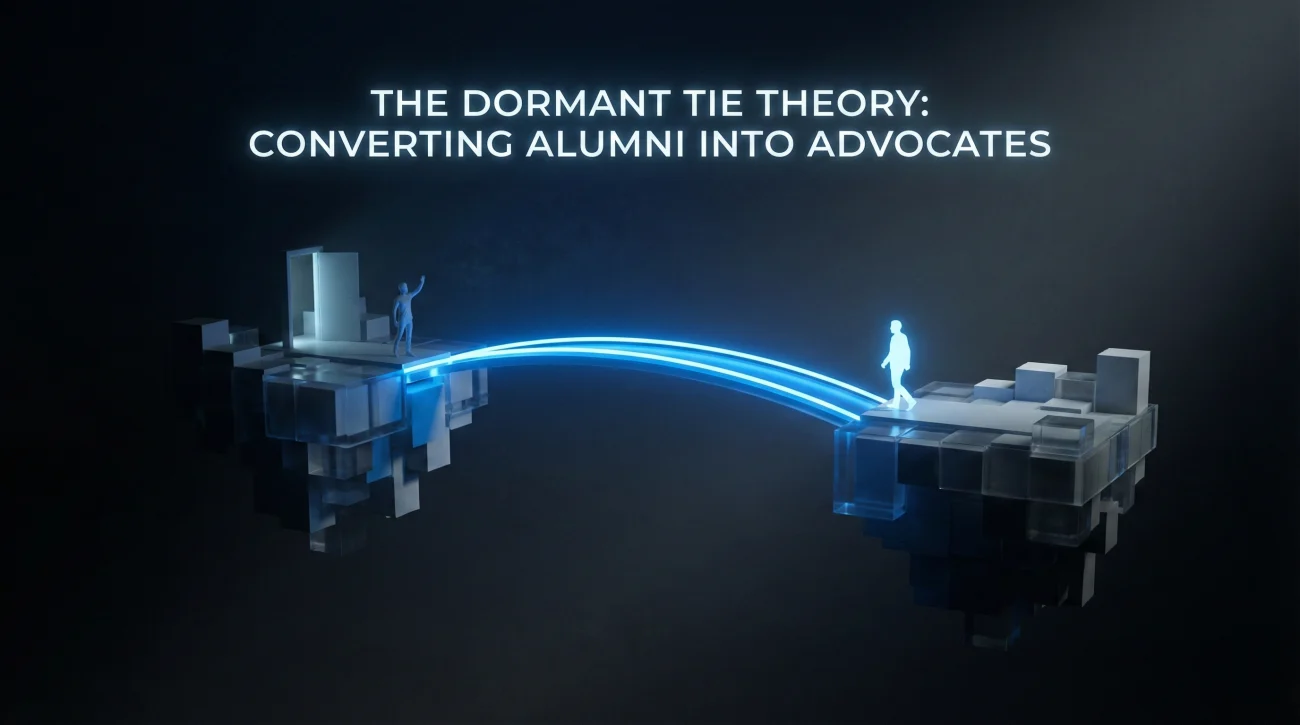
Sociologists and network scientists have long studied the concept of “weak ties” – acquaintances you don’t interact with frequently. Research shows that these weak ties are actually more likely to provide new job opportunities than your close friends, because they move in different circles and have access to different information.
When you ignore a goodbye email, you sever the tie. When you send a thoughtful farewell reply message, you convert that colleague from a “current coworker” into a “dormant tie” – someone who leaves with a positive final memory of you. This is crucial because:
- 🚀 The “Recency Effect”: Humans have a cognitive bias where we remember the most recent interaction best. A warm goodbye can override years of neutral or average interactions.
- 🌐 The “Alumni” Network: Ex-colleagues are the seeds of your future reputation in the broader industry. They are the ones who will be asked, “What was it like working with [Your Name]?” You want their answer to be colored by your final act of kindness.
- 🤝 The Low Barrier to Entry: Unlike scheduling a coffee chat or asking for a referral, a good luck email to colleague leaving takes less than two minutes. The ROI (Return on Investment) on that time is astronomically high.
The Technical Minefield: Reply vs. Reply All
Before we touch on the emotional content, we must address the most dangerous technical aspect of replying to a colleague leaving: the “Reply All” button. Misusing this function is not just annoying; it can damage your professional brand instantly.

The Cardinal Rule: Almost Never “Reply All”
If the sender has emailed a group larger than 8-10 people, “Reply All” is virtually forbidden. I have witnessed entire servers crash and reputations crumble because one person hit “Reply All” with “Best of luck!”, triggering a cascade of 50 other people doing the same, followed by angry executives demanding everyone stop.
Only “Reply All” if:
- The email is to a tiny, intimate team (under 5 people) where group cohesion is high.
- You are correcting a critical piece of information that everyone needs to know (rare in a farewell context).
Always “Reply Direct” if:
- The sender used BCC (Blind Carbon Copy). Note: Most email clients will force a direct reply here anyway, but be vigilant.
- You are sharing personal contact info.
- You are writing anything emotional or specific.
- You want to ask for a favor or a LinkedIn connection.
The Anatomy of a Perfect Farewell Response
You don’t need to write a novel. In fact, long emails to distant colleagues can feel creepy. A perfect wish you all the best email has a specific architectural structure that balances warmth with professionalism.
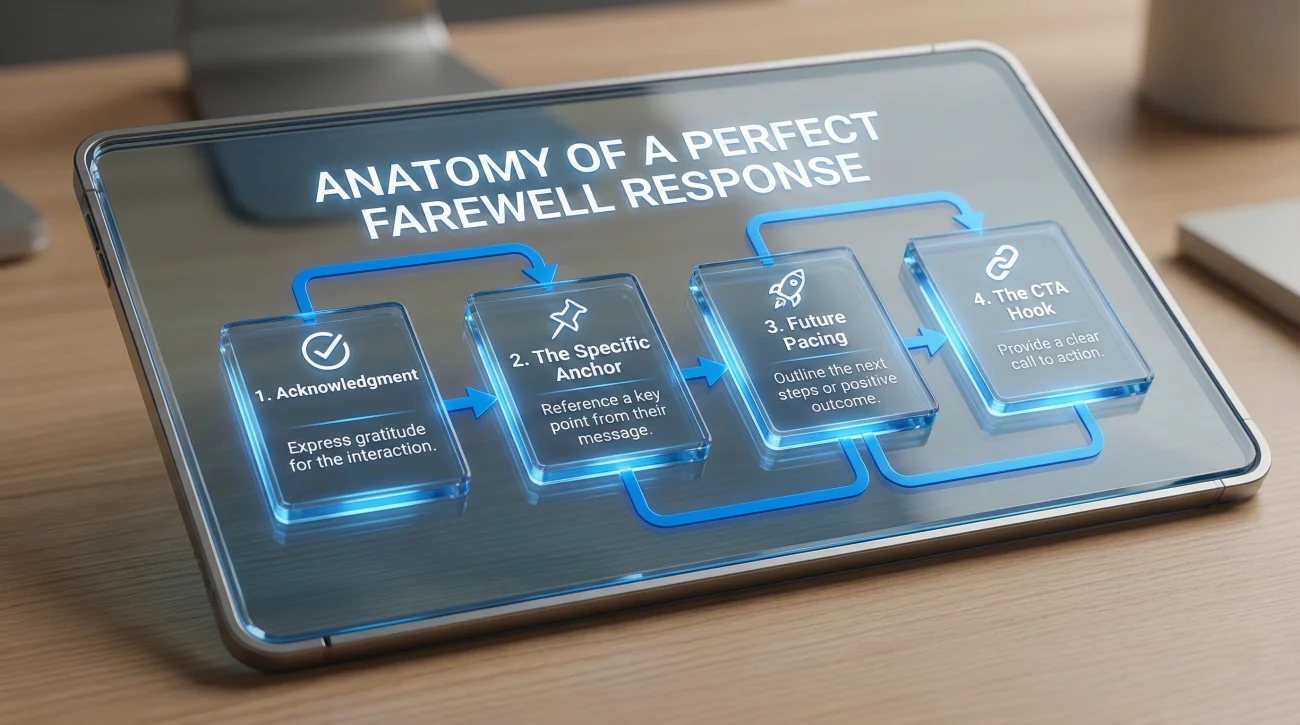
1. The Acknowledgment (The “I See You”)
Start by validating their news. Silence makes people feel invisible. Your opening line proves they were seen.
Example: “I was so sorry/excited to hear you are moving on!”
2. The “Specific” Anchor (The Secret Sauce)
Generic platitudes like “Good luck” are fine, but they are forgettable. To make your response sticky, anchor it to a specific memory, project, or trait. This proves you were paying attention.
Example: “I will never forget how you saved the Q3 presentation,” or “I’ve always admired your patience with difficult clients.”
3. Future Pacing (The Bridge)
Don’t just look back; look forward. Validate their future success. This frames you as a supporter of their growth, not just a relic of their past.
Example: “I know you’re going to crush it at [New Company].”
4. The Call to Action (The Hook)
If you want to keep the connection alive, you must invite it. Don’t leave it vague.
Example: “I’ve just sent you a request on LinkedIn – let’s definitely keep in touch.”
Scripts & Templates by Relationship Tier
One size does not fit all. Sending an emotional ballad to a colleague you met once is awkward. Sending a sterile “Best regards” to a mentor is insulting. Here is how to calibrate your response to goodbye email.
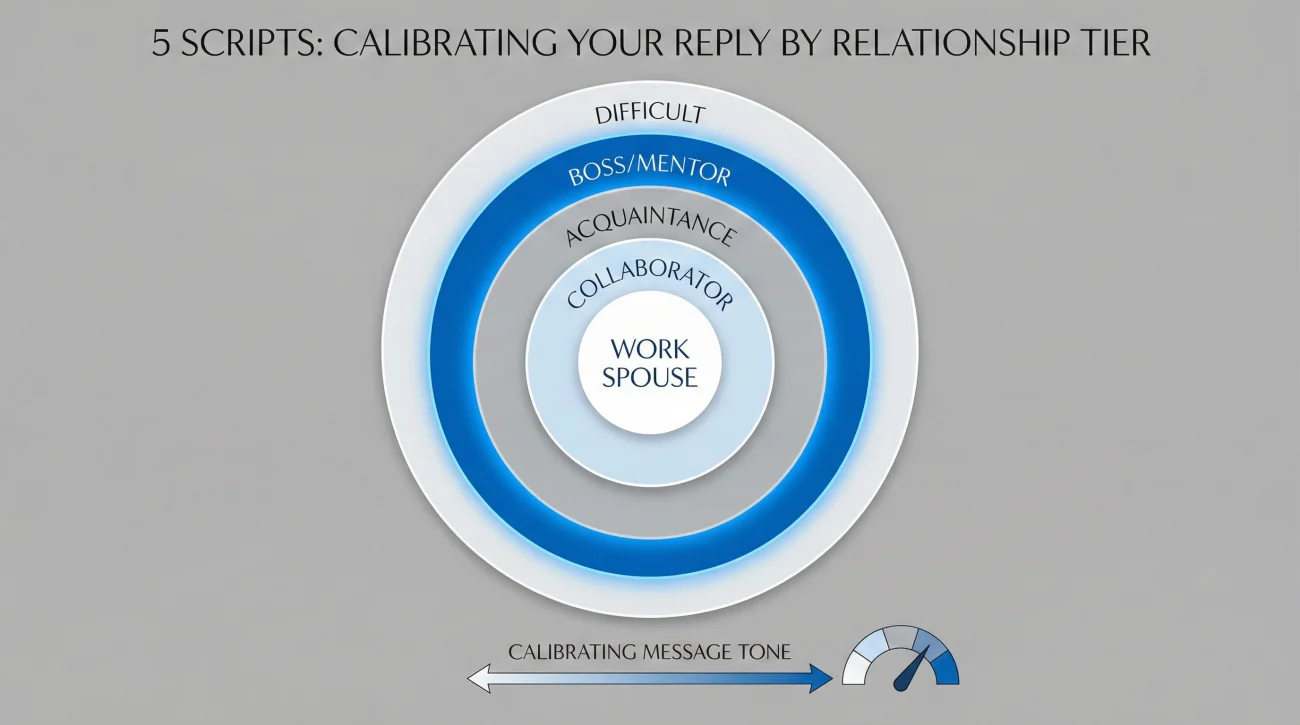
Tier 1: The “Work Spouse” / Close Friend
This is the only time you can be fully vulnerable. Professionalism takes a backseat to genuine human connection.
Subject: Re: Moving On (I’m ignoring this email 😭)
Hey [Name],
I’m replying to this purely for the paper trail, but you know I’m devastated. This place genuinely won’t be the same without our morning coffee runs and sanity checks.
I am incredibly proud of you for landing this role – you deserve it more than anyone. But don’t think for a second you’re escaping me. I’m texting you later to set up our “post-work” dinner schedule.
Go show them what you’re made of.
Love,
[Your Name]
Tier 2: The Regular Collaborator (The “Good Colleague”)
You worked together, you respected each other, but you weren’t hanging out on weekends. Aim for “Warm Professionalism.”
Subject: Re: Farewell – Best of luck!
Hi [Name],
Congratulations on the new opportunity! I was sad to see your announcement, but I’m thrilled for your next step.
I really appreciated working with you on the [Project Name] last year – your eye for detail made that launch so much smoother. It’s been a pleasure watching you work.
Please do stay in touch. I’ve connected with you on LinkedIn, and I hope our paths cross again in the industry.
Best regards,
[Your Name]
Tier 3: The Distant Acquaintance (The “Hallway Nod”)
You know their name, but that’s about it. Keep it brief. The goal here is simply to be polite and leave a good impression.
Subject: Re: Moving On
Hi [Name],
Best wishes for your next adventure! It was nice sharing an office with you, and I hope the transition goes smoothly.
Good luck!
Cheers,
[Your Name]
Tier 4: The Boss or Mentor You Admired
This requires deference and gratitude. Acknowledge their impact on your career trajectory.
Subject: Re: Thank you and farewell
Hi [Name],
Thank you for the note. I wanted to take a moment to express how much I’ve valued your leadership over the past [Number] years.
Your guidance during [Specific Challenge] taught me a lot about [Skill/Lesson], and I carry that with me daily. You’ve set a high bar for leadership.
I wish you nothing but the best in your next chapter. Please let me know if there is ever anything I can do to support you.
Sincerely,
[Your Name]
Tier 5: The “Difficult” Relationship
Perhaps you didn’t get along. Perhaps they were a bottleneck. Reply anyway. Taking the high road is the ultimate power move. It shows you are unfazed and professional.
Subject: Re: Goodbye
Hi [Name],
Thanks for the note. I wanted to wish you the best of luck in your new role. I hope the next chapter brings you success.
Best,
[Your Name]
The Critical Window: Timing Your Reply
The lifespan of a corporate email address after resignation is shockingly short. In many secure industries (Finance, Tech), IT shuts down access immediately at 5:00 PM on the last day.
- ⏰ The Golden Hour: Respond within 30 minutes of receiving the email. This guarantees they see it while sitting at their desk.
- ⚠️ The Danger Zone: Responding the next morning. There is a 50% chance their email is already deactivated or auto-forwarded to a manager (awkward!).
- ⛔ The “Too Late”: If you missed the window, do not reply to the work email. It will bounce. Instead, find them on LinkedIn and send a direct message: “Hey, I missed your final email before access was cut, but I wanted to say goodbye…” This actually shows more effort and often starts a better conversation.
❓ Frequently Asked Questions
📧 Is it rude to NOT reply to a mass goodbye email?
📱 Should I ask for their phone number in my reply?
🤔 What if I don’t know what to say?
😢 Is it okay to mention I’m sad they are leaving?
🚫 What if I accidentally hit Reply All?
The 2-Minute Investment That Lasts a Career
It is easy to be cynical about corporate pleasantries. But I challenge you to reframe the farewell reply message not as a chore, but as a ritual of respect. In a world of ghosting and transactional relationships, taking two minutes to craft a genuine, thoughtful response sets you apart.
That person walking out the door today carries a piece of your reputation with them. Ensure that piece is polished, professional, and kind. You never know when that “dormant tie” will wake up and open a door you couldn’t open yourself.
If you are the one doing the leaving, make sure your initial email invites these kinds of responses. Check out our complete goodbye email guide to craft the perfect exit message. And for more tips on managing your professional network during transitions, visit our homepage or browse our comprehensive farewell resources.
⚠️ Legal Disclaimer: ResignSmartly provides general informational guidance about resignation, workplace communication, notice periods, handovers, and career transitions. Content does not constitute individualized legal advice. Employment laws, contracts, workplace policies, and individual circumstances vary, so review the requirements that apply to your situation and consult an appropriate qualified professional when needed.