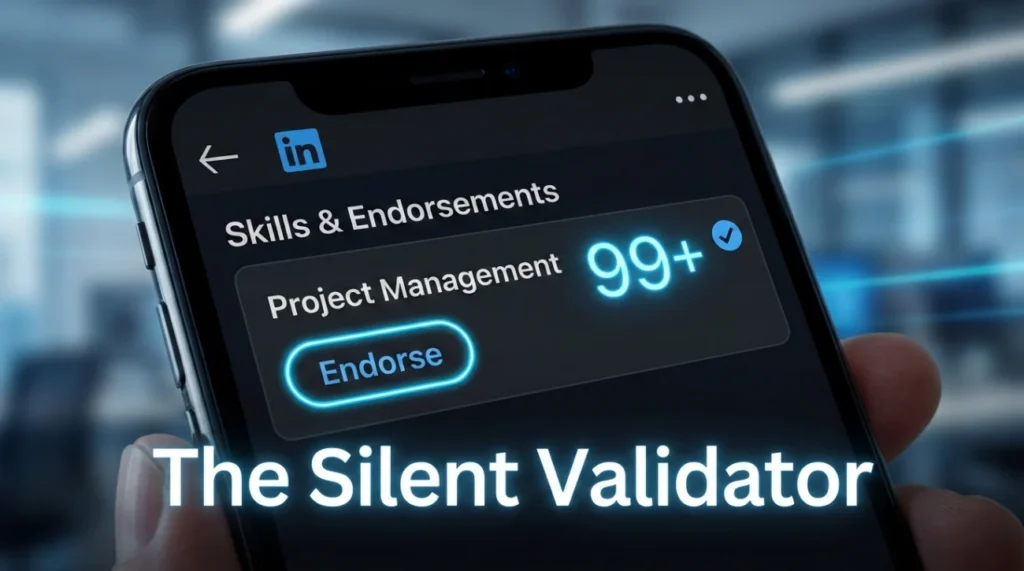
- Silent Validator: Skill endorsements act as fast social proof when recruiters skim your Skills section.
- Friction Advantage: A one click endorsement scales, so you can build credible volume faster than written recommendations.
- Boomerang Method: Endorse 10 to 20 real colleagues first after pinning your top 3 skills, reciprocity brings endorsements back.
- When You Must Ask: Use a low pressure “profile update” request or a gentle nudge that names specific skills and shared context.
- Quality Plus SEO: Curate 15 to 20 relevant skills, hide bad endorsements, and improve your visibility in LinkedIn recruiter search.
The “Silent Validator”: Making Your Profile Work While You Sleep
Imagine a recruiter lands on your LinkedIn profile at 2:00 AM. They are tired. They have scanned 50 resumes today. They scroll past your summary, glance at your experience, and arrive at the “Skills” section. What do they see?
Do they see a ghost town – a list of generic skills like “Microsoft Word” with zero validation? Or do they see a thriving ecosystem of social proof, where “Project Management” has 45 endorsements and “Python” has 30?
That number next to a skill is not just a vanity metric. It is a psychological trigger. It tells the recruiter’s brain: “Other people have vouched for this. This is real.”
This is the power of endorse skills on linkedin. It is the lowest-friction form of professional recommendation available, yet most professionals completely ignore it. They chase the elusive, time-consuming written Reference Letter (which is valuable, yes) but neglect the “low-hanging fruit” that validates their expertise instantly.
In this comprehensive guide, we are going to explore the “Lazy Reference” strategy. “Lazy” not because it lacks value, but because it leverages the path of least resistance to build massive professional credibility. We will teach you how to use the law of reciprocity to turn one click into a career asset.
The Psychology of Friction: Why Endorsements Win
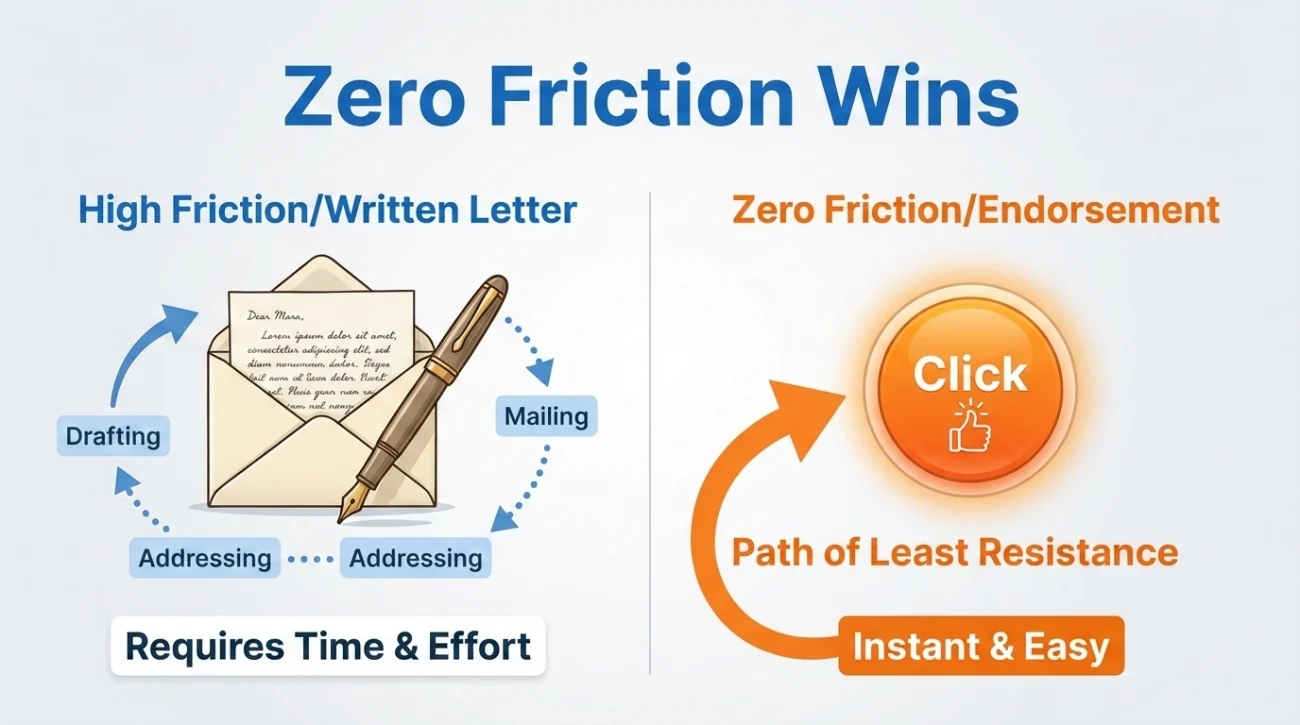
Why do we love endorsements? Because human beings are inherently lazy, but we also want to be helpful. Asking someone to write a 3-paragraph letter is a “High Friction” request. It requires time, thought, and emotional labor. Asking someone to click a button is a “Zero Friction” request.
This creates a unique opportunity for scale.
Because the barrier to entry is so low, you can accumulate volume. You cannot ask 50 people for a detailed letter. You can get 50 people to endorse a skill. And in the world of online algorithms (like LinkedIn’s search engine) and human heuristics, volume matters.
The “Social Proof” Hierarchy
- Level 1: Self-Proclaimed Skills. You list “Leadership” on your profile. (Credibility: Low. Anyone can type a word).
- Level 2: Endorsed Skills. 20 colleagues click “Yes” on Leadership. (Credibility: Medium-High. The crowd agrees with you).
- Level 3: Written Recommendations. A boss writes a story about your leadership. (Credibility: Very High, but rare).
Your goal is to dominate Level 2 to support Level 3. When a recruiter sees high endorsement numbers, it validates the claims made in Level 1 and Level 3.
The “Boomerang Method”: How to Get Without Asking
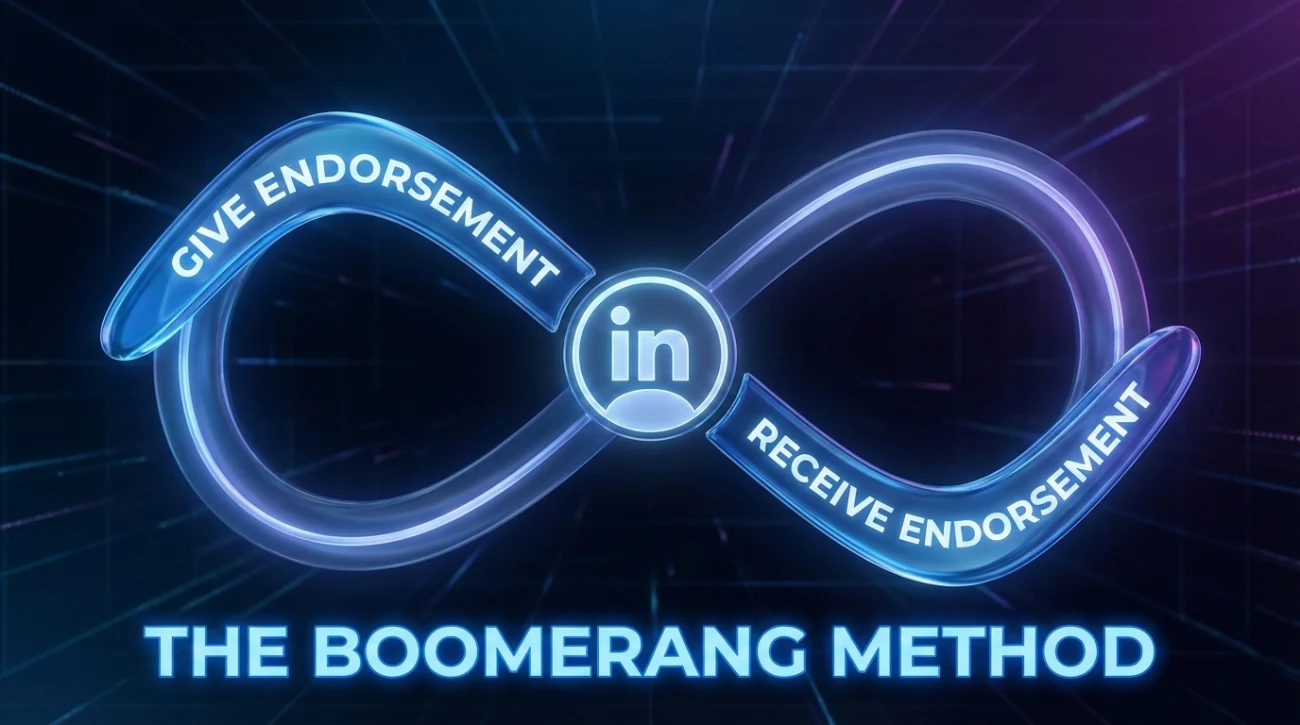
The single most effective way to get endorsements is not to beg for them. It is to give them.
This relies on the psychological principle of Reciprocity. When you do something nice for someone (like validating their skills publicly), they feel a subconscious urge to balance the scales. They want to return the favor.
The 5-Step Execution Plan
Step 1: The Audit. Before you start, clean up your own house. Go to your Skills section. Delete anything irrelevant (e.g., “Data Entry” if you are applying for VP roles). Pin your top 3 most strategic skills to the top. These are the ones people will see first and are most likely to endorse.
Step 2: The Target List. Identify 10-20 colleagues (current or former) whom you genuinely respect. Do not pick random strangers; pick people whose opinion matters.
Step 3: The “Drive-By” Endorsement. Go to their profiles. Scroll down. Endorse skills on LinkedIn that you have actually witnessed. If you saw them code, endorse “Java.” If you saw them lead, endorse “Management.” Do 3-5 endorsements per person. Be generous but honest.
Step 4: The Wait. LinkedIn will send them a notification: “Marcus Chen endorsed you for Strategic Planning.” This is a dopamine hit. They will click on the notification, which takes them… directly to your profile.
Step 5: The Return. Since they are now on your profile, looking at your skills, and feeling grateful, they are highly likely to click “Endorse” on your top skills. You didn’t even have to ask.
The Master Scripts: When You Need to Ask
Sometimes, the passive “Boomerang Method” isn’t fast enough. Maybe you are applying for a job that requires “Agile Methodology” and you have zero endorsements for it. You need to be direct.
However, “Please endorse me” sounds desperate. Use these scripts to make it sound professional.
Scenario 1: The “Update” Approach (Low Pressure)
Context: You just refreshed your profile and want some activity on specific new skills.
Subject: Quick LinkedIn favor?
Hi Sarah,
Hope you’re doing well! I’m currently doing some spring cleaning on my LinkedIn profile to better reflect my shift into Product Management.
I’ve updated my skills section. If you have a second, would you mind taking a look and endorsing any skills (like “Roadmapping” or “User Research”) that you feel I demonstrated when we worked together on Project X?
I’ve just gone ahead and endorsed you for “Strategic Planning” – I always admired how you handled that during Q3.
Thanks a ton,
Marcus
Scenario 2: The “I Did It First” Nudge
Context: You endorsed them 3 days ago, and they didn’t reciprocate. A gentle nudge to remind them.
Subject: Catching up / LinkedIn
Hi David,
I was just browsing LinkedIn and saw your recent promotion – congrats! It reminded me of your killer work on the analytics dashboard last year, so I popped over and endorsed you for “Data Visualization.” Well deserved.
If you have a moment, I’d appreciate a quick endorsement on my profile for “Python” or “Back-end Dev” if you think I earned it during our time together. No worries if you’re swamped!
Best,
Marcus
Quality Control: Not All Endorsements Are Good
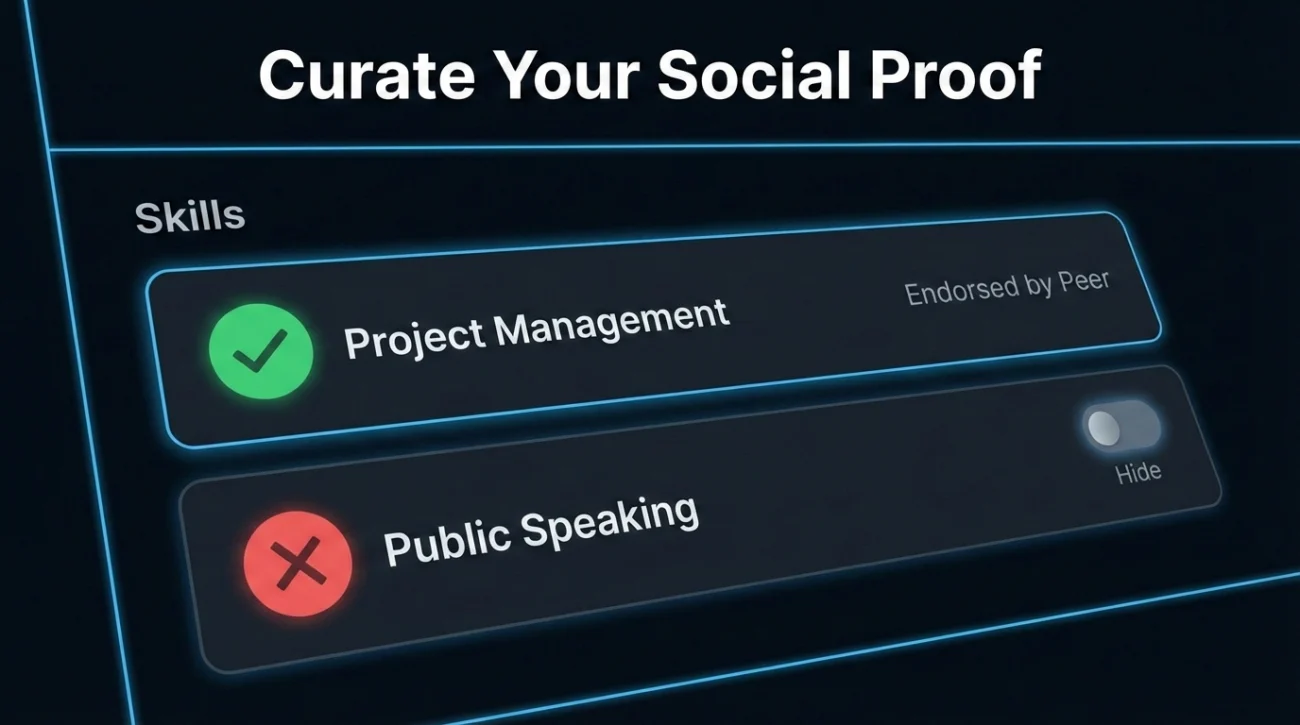
There is a trap here. Quantity is good, but quality is critical. If you are a Senior Architect, and your Mom (who knows nothing about architecture) endorses you for “Building Design,” it actually looks bad. It looks like you are gaming the system.
The Relevance Rule: An endorsement only counts if it comes from someone qualified to judge that skill. LinkedIn actually highlights this. It will say: “Endorsed by Sarah, who is highly skilled at this.” This carries double the weight.
How to Clean Up “Bad” Endorsements
Did you know you can hide endorsements? If a random person endorses you for a skill you don’t want to be known for (e.g., “Customer Service” when you are trying to be a “Director of Strategy”), hide it.
- Go to your Skills section.
- Click the pencil icon (Edit).
- Select the skill.
- Toggle “Visible” to off for specific people or the skill entirely.
Curate your social proof. It should tell a coherent story, not be a random collection of clicks.
The Algorithmic Benefit: SEO for Your Career
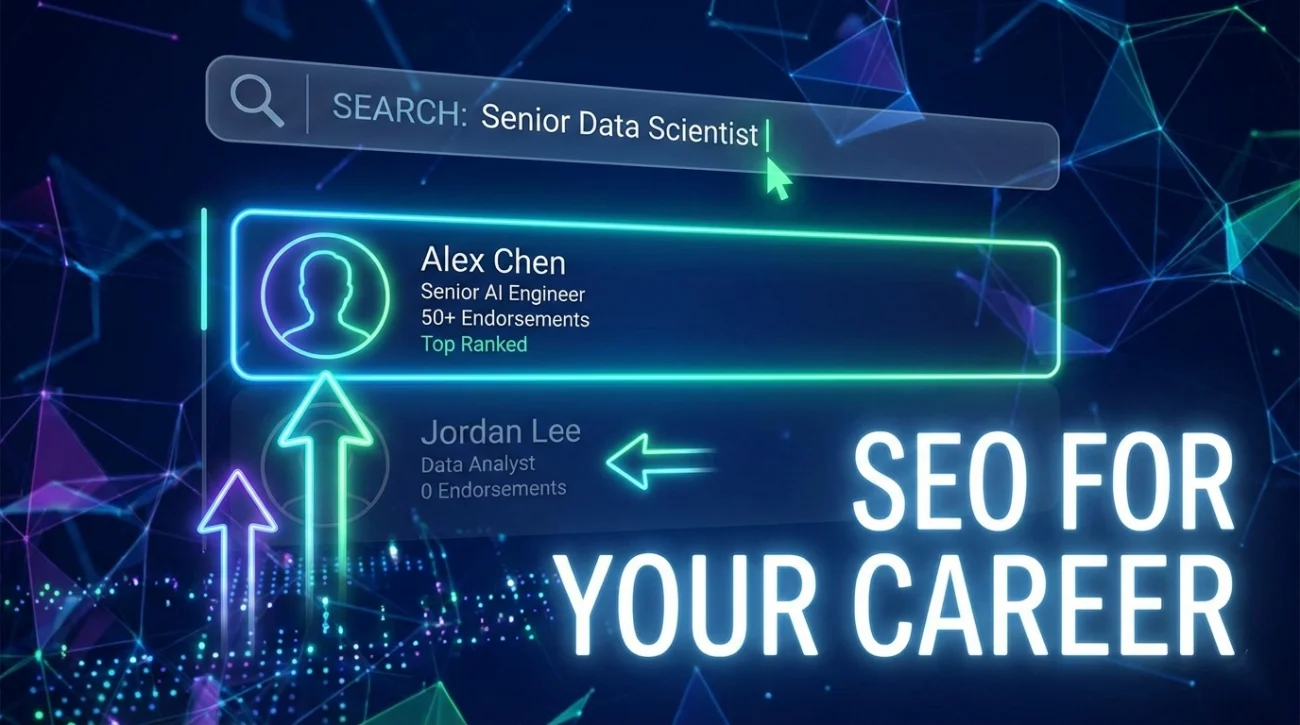
Why does this matter? LinkedIn is a search engine. Recruiters pay thousands of dollars for “LinkedIn Recruiter” licenses to search for candidates.
When a recruiter searches for “Project Manager with Agile,” the algorithm has to decide who to show first.
- Candidate A: Lists “Agile” on profile. 0 Endorsements.
- Candidate B: Lists “Agile” on profile. 42 Endorsements (including from other Project Managers).
Candidate B is far more likely to win in that search context. The algorithm trusts the crowd. By proactively building your linkedin skill endorsement bank, you are essentially doing SEO (Search Engine Optimization) for your career. You are making yourself more findable.
❓ FAQ: Mastering the Mechanics
🔢 How many skills should I list?
Aim for 15-20 highly relevant skills. LinkedIn allows 50, but listing 50 dilutes your brand. If you list “Microsoft Word,” “Email,” and “Typing,” you look junior. Focus on high-value, hard skills (e.g., “Financial Modeling,” “React.js”) and key soft skills (e.g., “Crisis Communications”).
🤝 Is it okay to endorse someone I haven’t worked with?
Generally, avoid this. It dilutes the integrity of the platform. However, if you have read their articles, seen them speak at a conference, or follow their work closely, you can endorse them for “Public Speaking” or “Thought Leadership.” But don’t endorse a stranger for “Coding” if you’ve never seen their code.
📅 How often should I do this?
Treat it like hygiene. Once a month, spend 15 minutes engaging in endorsing colleague on linkedin activities. Pick 5 people. Endorse them. It keeps your network warm and keeps a steady trickle of traffic coming back to your profile.
🚫 What if I endorse them and they don’t endorse back?
Let it go. Do not follow up asking “Why didn’t you endorse me?” That is petty. You did a nice thing. You added value to their profile. That is enough. The “Boomerang Method” relies on averages – not everyone will return the favor, but many will.
Final Thoughts: The “Compound Interest” of Credibility
Skill endorsements are the “penny stocks” of your professional reputation. One penny isn’t worth much. But if you collect them consistently over 5 or 10 years, you end up with a massive portfolio of wealth.
A profile with 99+ endorsements on core skills is an intimidatingly strong asset. It signals longevity, consistency, and community respect. And the best part? It costs you $0 and about 15 minutes a month.
So, open a new tab right now. Go to LinkedIn. Find 3 people you respect. And give them a little boost. It’s the easiest investment you will make all year.
For more strategies on building a bulletproof professional brand, check out our guides on career management and networking strategies.
⚠️ Legal Disclaimer: The resignation templates, email samples, and professional guidance provided in this guide are for informational purposes only and do not constitute legal advice. Employment laws and contract requirements vary by jurisdiction and individual circumstances. Please review your employment agreement and consult your HR department and/or a qualified attorney to ensure compliance with applicable laws and policies.