
- Purpose: An emotional goodbye email gives closure, honors real bonds, and leaves a human final impression.
- Vulnerability Audit: Use tenure, team culture, and relationship depth to decide how personal your tone should be.
- Core Framework: Write in Gratitude, Growth, Future order so it stays sincere without rambling or oversharing.
- Template Map: Pick the scenario that fits, then send one group note plus a few 1:1 messages for the people who mattered most.
- Safety Rails: Avoid trauma dumping, romantic hints, dramatic vows, or money talk, and send near the end of your last day to reduce awkwardness.
The Delicate Art of Writing an Emotional Goodbye Email: When “Best Regards” Isn’t Enough
I still remember the emotional goodbye email that made half our department cry at their desks. It wasn’t written by the CEO or a high-profile manager. It was written by Sarah, a project coordinator who had been with us for nine years – longer than some people’s marriages. Her farewell wasn’t dramatic or overly sentimental. It was simply honest. She wrote about the relationships that shaped her, the “work family” that supported her through personal losses, and the sheer difficulty of closing a chapter that defined a decade of her life. Three people called in sick the next day simply because they couldn’t handle the emotion of her empty desk.
Not every workplace goodbye needs deep emotion. In fact, most don’t. But when you are leaving a team that has become your second family, a standard “Best Regards” feels woefully inadequate. It feels like a betrayal of the depth you shared. It renders years of shared struggles and triumphs into a transactional footnote.
However, navigating this is tricky. The corporate world often conflates “professionalism” with “stoicism.” We are taught to check our feelings at the door. So, how do you write a touching goodbye email that honors these deep bonds without crossing the line into unprofessional oversharing? How do you say “I love you guys” in “business casual”? This deep-dive guide explores the psychology of the “heartfelt exit,” helping you strike the perfect balance between vulnerability and professional grace.
The Psychology of Departure: Why It Hurts (And Why That’s Okay)
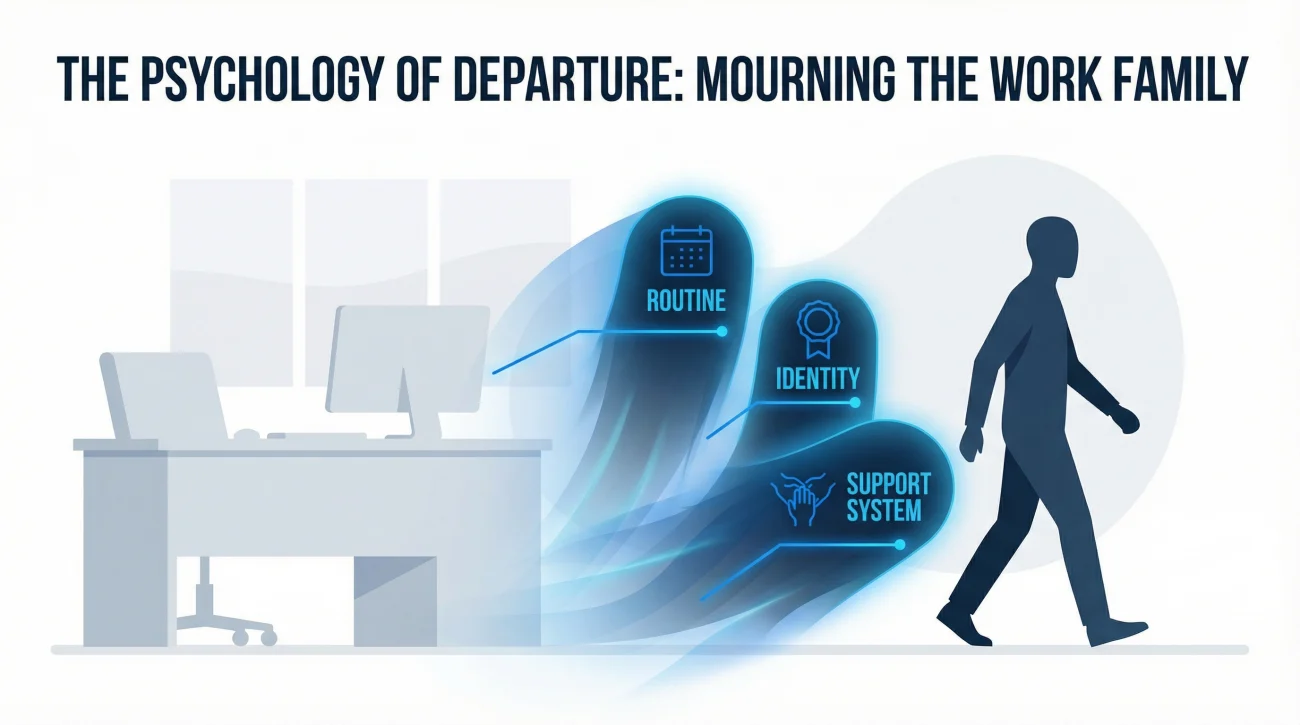
Leaving a job where you were deeply embedded is a form of grief. Psychologists often refer to this as “disenfranchised grief” – a loss that isn’t openly acknowledged or socially sanctioned. You aren’t supposed to mourn a job; you are supposed to be “excited for the next chapter.”
But the reality is different. You aren’t just leaving a paycheck. You are leaving:
- Your Routine: The daily rhythms that grounded you.
- Your Identity: The version of “you” that existed in that specific office context.
- Your Support System: The people who knew exactly how you took your coffee and exactly why the Q3 report stressed you out.
An emotional goodbye email to colleagues serves a critical psychological function: it provides closure. It allows you to externalize this grief, acknowledge the loss, and transform it into gratitude. By articulating what you will miss, you give yourself permission to move forward.
The “Vulnerability Audit”: When is Emotion Appropriate?
Before you pour your heart into a sincere goodbye email, you must perform what I call a “Vulnerability Audit.” Not every job warrants tears. Sending a deeply emotional letter after an 8-month stint can read as dramatic or insincere. You need to earn the right to be emotional through time and connection.

Factor 1: The Weight of Tenure
Time creates depth. There is an enormous difference between leaving after two years versus leaving after seven. If you have been somewhere for 5+ years, you have likely witnessed colleagues’ life milestones – weddings, births, divorces, and losses. You have built institutional memory. In this context, an emotional goodbye email to colleagues isn’t excessive; it is proportional. You are a fixture of the institution, and your departure leaves a visible hole.
Factor 2: The Emotional Culture
Read the room. I have consulted for engineering firms where “feelings” were a foreign language, and therapy practices where crying at a farewell was mandatory. Ask yourself:
- Does your team discuss personal lives openly?
- Have you seen other leaders show vulnerability?
- Is “psychological safety” a lived value here?
If the culture is stoic, your emotional email should be more restrained. If the culture is expressive, you have permission to be more effusive.
Factor 3: Relationship Quality
Tenure isn’t everything. I’ve seen people stay ten years and remain strangers. Ask yourself: Will you actively miss these specific humans, or just the routine? If the answer is “the humans,” then a personal farewell letter to colleagues is justified. If you have a “work spouse” or a mentor who changed your career trajectory, you owe them more than a generic template.
The “Gratitude-Growth-Future” Framework
The danger of emotional writing is rambling. When we are emotional, we tend to over-explain. To keep your heartfelt goodbye letter to coworkers focused and professional, structure it around three pillars. This prevents you from trauma-dumping or getting lost in nostalgia.
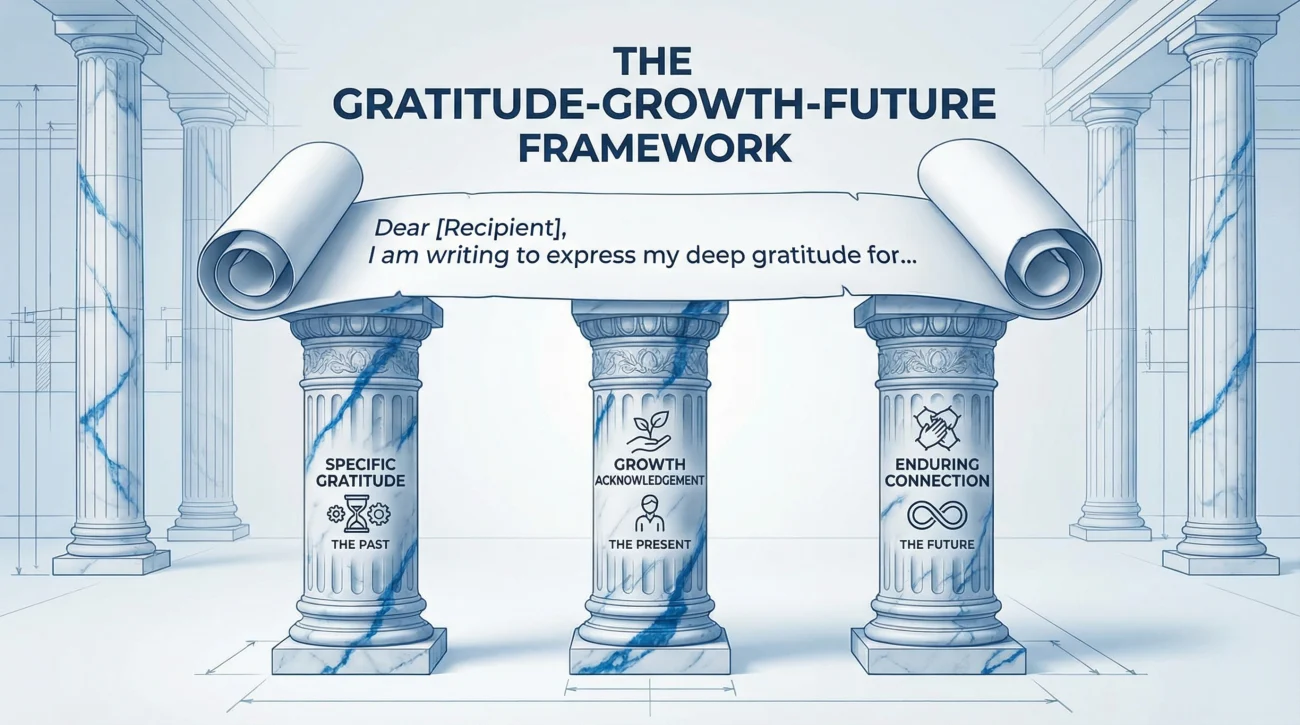
Pillar 1: Specific Gratitude (The Past)
Don’t just say “thanks for everything.” Anchor your gratitude in reality. Specificity breeds emotion. Mention the specific times they supported you. Did they cover for you when you were sick? Did they mentor you when you were a novice?
Example: “Thank you for believing in me before I believed in myself. Your mentorship during the Q3 crisis didn’t just save the project; it shaped my entire leadership style.”
Pillar 2: Acknowledging Growth (The Present)
Vulnerability works best when framed as growth. Explain how the team changed you. This flatters them (they caused the growth) and shows your humility. It says: “I am a better person because I knew you.”
Example: “I arrived here as a nervous graduate, and I leave as a confident manager. That transformation is entirely due to the patience and wisdom of this room.”
Pillar 3: Enduring Connection (The Future)
Emotion implies attachment. Confirm that the attachment doesn’t end with the employment contract. Validate that the relationship transcends the payroll. Make a concrete promise to stay in touch (and mean it).
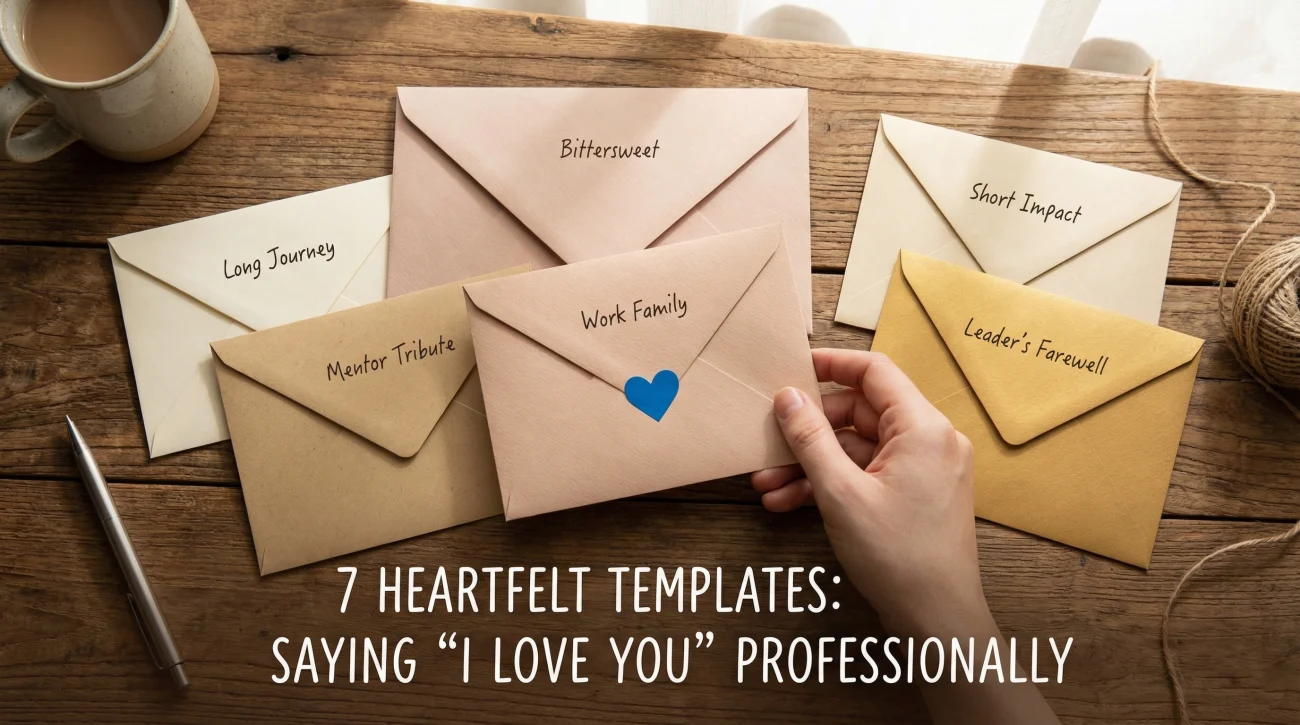
7 Heartfelt Goodbye Email Templates (Analyzed & Expanded)
These templates range from “warmly professional” to “deeply personal.” I have added notes on why they work so you can adapt them effectively.
1. The “Long Journey” (For 5+ Years Tenure)
Best for: Veterans of the company who are closing a major life chapter.
Subject: The hardest goodbye – [Your Name]
Dear Friends and Colleagues,
Today marks the end of a [Number]-year journey that has profoundly shaped who I am, both professionally and personally.
As I pack up my desk, I am overwhelmed not by the work we did, but by the life we shared. I arrived here as [Starting Role], full of enthusiasm but lacking experience. I leave today with a career I am proud of, built on the foundation of your mentorship and support.
To this team: You have been my second family. You celebrated my wins, supported me through losses, and made even the most impossible deadlines feel like adventures. I will miss our morning coffees, our debate over [Office Inside Joke], and the genuine care that permeates this office.
Leaving is incredibly difficult, but I take comfort in knowing that while I am leaving the company, I am not leaving you. These relationships are too important to me to let fade.
Please stay in my life:
Personal Email: [Email]
LinkedIn: [Link]
With love and gratitude,
[Your Name]
Why this works: It acknowledges the “Before” (enthusiastic novice) and “After” (proud professional) of your journey, attributing the success to the team.
2. The “Mentor Tribute” (Focus on Leadership)
Best for: Someone leaving a boss or senior team that heavily invested in them.
Subject: Thank you for shaping my career
Hi Team,
They say you don’t leave companies; you leave people. In my case, leaving these people is the hardest part of this transition.
I want to write a special note of thanks to the leadership and seniors of this department. You didn’t just manage me; you taught me. You showed me that excellence and kindness are not mutually exclusive. The lessons I learned in [Room/Project Name] will be the playbook I use for the rest of my career.
Thank you for investing in me when I had nothing to offer but curiosity.
I am moving on to [New Role], but I will always look back on this time as my formative years.
Stay in touch,
[Your Name]
Why this works: It validates the leaders’ efforts. Leaders rarely get thanked for “teaching,” only for “managing.” This stands out.
3. The “Work Family” (Deeply Personal)
Best for: Small, tight-knit teams (startups, agencies) where boundaries are thin.
Subject: Not goodbye, just “See you at Happy Hour”
To my work family,
I’m writing this with a heavy heart.
We’ve been through it all – the late nights, the impossible launches, and the celebrations that followed. Somewhere along the way, you stopped being “coworkers” and became my closest friends. The thought of not seeing your faces every morning is a reality I’m not quite ready to accept.
Thank you for making this place feel like home. Thank you for the laughter that saved my sanity and the support that saved my career.
I’m leaving the building, but I’m not leaving the group chat. You’re stuck with me.
Love you guys,
[Your Name]
Why this works: It uses casual, intimate language (“work family”, “stuck with me”) that reflects the reality of close-knit teams.
4. The “Bittersweet Transition”
Best for: Leaving for a dream job but feeling sad about leaving the current team.
Subject: Mixed emotions and a fond farewell
Hi Everyone,
I am writing this with a mix of excitement and sadness. While I am thrilled to pursue a new opportunity at [New Company], I am heartbroken to leave this incredible team.
It is rare to find a workplace where the talent is matched only by the kindness of the people. I have been spoiled by the culture here, and I know I am leaving behind something special.
Thank you for making it so hard to say goodbye. That is the best compliment I can pay to this organization.
Warmly,
[Your Name]
Why this works: It admits conflict (excitement vs. sadness). The line “Thank you for making it so hard to say goodbye” is a powerful compliment.
5. The “Short but Meaningful”
Best for: Shorter tenure (1-2 years) but high-impact relationships.
Subject: A heartfelt thank you
Hi Team,
Although my time here hasn’t been long, the impact you’ve had on me has been massive.
I’ve learned more in these past [Number] months than I have in years elsewhere. Thank you for welcoming me so warmly and for the genuine collaboration. I really value the connections I’ve made here and hope to keep them alive.
Let’s keep connected on LinkedIn:
[Link]
Best,
[Your Name]
6. The “Personal Impact” (Individual Focus)
Best for: Sending 1-on-1 to specific people (not a mass email). This is where the real tears happen.
Subject: Thinking of you before I leave
Hi [Name],
Before I send my general goodbye email, I wanted to send a personal note to you.
I wanted to specifically thank you for [mention specific moment/quality]. Working alongside you was a highlight of my time here. Your [trait, e.g., patience/humor] made the tough days manageable. Do you remember when [Shared Memory]? That meant the world to me.
I genuinely value our friendship and want to make sure we grab coffee once the dust settles.
My personal cell is [Number]. Text me anytime.
Warmly,
[Your Name]
7. The Leader’s Farewell (Manager to Team)
Best for: Managers leaving a team they built or led.
Subject: It has been the privilege of my career to lead you
Team,
Leadership is rarely about the leader; it is about the team. And you have been an extraordinary team.
Watching you grow, overcome challenges, and support one another has been the greatest privilege of my career. You have taught me more about resilience and creativity than I ever taught you.
I am leaving, but I will always be your biggest cheerleader from the sidelines. I know you will continue to achieve great things.
My door remains open to you, always.
[Your Name]
The “Oversharing” Trap: What NOT To Include
Even in a sincere goodbye email, professional boundaries protect you. Avoid crossing these lines, which can turn a touching moment into an awkward HR situation.
| Category | What to Avoid | Better Approach |
|---|---|---|
| ❌ Trauma Dumping | “This job saved me from my crippling depression and divorce.” | “This team gave me purpose and support during a tough personal year.” |
| ❌ Romantic/Crush | “I’ll miss your beautiful smile, Sarah. I always liked you.” | “I’ll miss your positive energy and optimism, Sarah.” |
| ❌ Dramatic Oaths | “I will never find a team like this again. Nothing will compare.” | “This team has set a very high bar for my future.” |
| ❌ Financials | “I’m sad to leave but I really needed the raise.” | “I’m moving to a new opportunity for professional growth.” |
Handling the “Vulnerability Hangover”
Sending an emotional email can leave you feeling exposed – what researcher Brené Brown calls a “vulnerability hangover.” You might wake up the next day thinking, “Did I say too much? Was that too cheesy? Are they laughing at me?”
My professional advice: Don’t panic. In a corporate world starved for authenticity, your genuine emotion likely landed as a breath of fresh air. People respect courage. If you spoke from the heart with kindness, you have nothing to regret. You simply showed them that they mattered.
Furthermore, this vulnerability is a strategic asset. People remember how you made them feel. By leaving on an emotional high note, you cement your legacy as a human being, not just a worker. That is the ultimate networking hack.
❓ Frequently Asked Questions (FAQ)
😢 Is it unprofessional to cry when saying goodbye?
No, it is human. If you tear up, it shows you care. However, full-blown sobbing can be distressing for others in a professional setting. If you feel overwhelmed, excuse yourself for a moment to collect your thoughts. In your email, it’s fine to admit, “I’m getting a bit emotional writing this,” as it validates the sentiment without burdening the reader.
💌 Should I mention personal hardships the team helped me through?
You can allude to them without going into gritty detail. Instead of saying, “Thanks for supporting me through my messy divorce,” say, “Thank you for your incredible support during my difficult personal time last year.” Those who know, know. Those who don’t, understand the sentiment.
👥 Group email vs. Individual emails?
Do both. The group email sets the public narrative and ensures no one feels left out. The individual emails (Template #6) cement the personal alliances and allow for deeper specificity. The real magic happens in the 1-on-1 notes.
⏱️ When is the best time to send an emotional email?
Send it towards the end of your last day (around 3 PM). Sending it too early in the morning can make the rest of the day awkward as people struggle to process the emotion while trying to work. Give them time to read it, reply, and then head home.
Final Thoughts: Honor the Chapter
An emotional goodbye email is more than a notification; it is an act of closure. It honors the shared history and validates the effort everyone put into the relationship.
Don’t be afraid to let your guard down one last time. As you move on, these are the moments people will remember – not the spreadsheets you updated, but the way you made them feel when you left. You are closing a book, but you are ensuring the characters remain in your sequel.
If you need help with the logistical side of leaving, ensure you check our guide on resignation etiquette or browse our handover templates to ensure your work is covered while you focus on the farewells. For a complete library of exit strategies, visit our ultimate goodbye email guide.
⚠️ Legal Disclaimer: ResignSmartly provides general informational guidance about resignation, workplace communication, notice periods, handovers, and career transitions. Content does not constitute individualized legal advice. Employment laws, contracts, workplace policies, and individual circumstances vary, so review the requirements that apply to your situation and consult an appropriate qualified professional when needed.