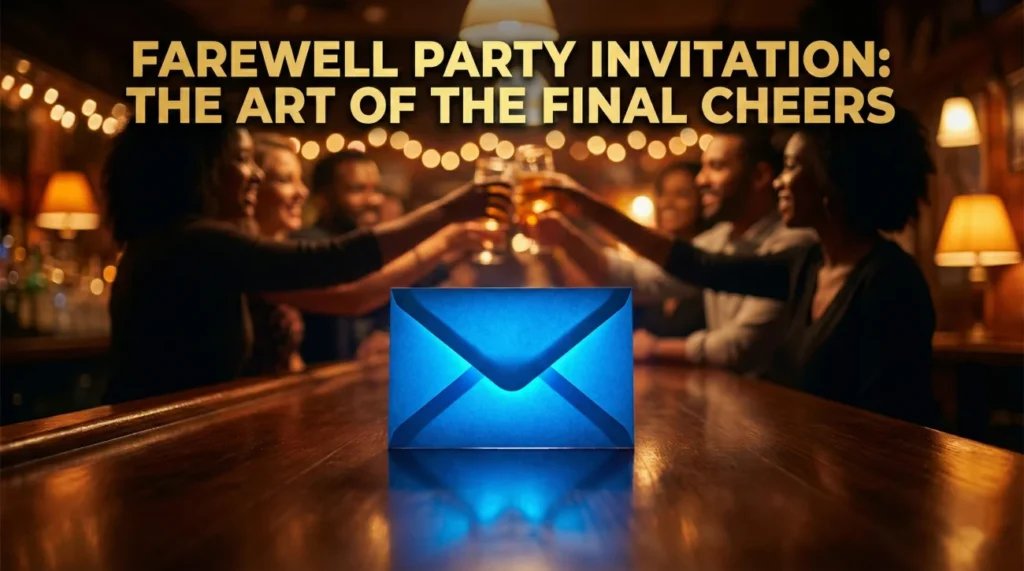
- Why invites matter: Clarity prevents the “empty room” problem and gives people closure outside office awkwardness.
- Mindset shift: You are not “celebrating yourself,” you are hosting a final team moment and making it easy to show up.
- Three details decide turnout: When, Where, Wallet, state them early or people quietly skip.
- Pick the right format: Casual drinks, team lunch, formal office reception, virtual toast, or last-minute pivot, match the vibe to the group.
- Channel strategy: Calendar invite for headcount, email for reach, Slack/Teams for reminders, use all three for best attendance.
The Fear of the Empty Room: Why Invites Matter
I once received a farewell party invitation that was a masterclass in failure. It simply said: “Drinks next week?” No location. No time. No indication of who was paying. The result was a logistical disaster where three people showed up at three different times, the guest of honor ended up eating nachos alone, and everyone else felt guilty for missing it. Conversely, I’ve seen a simple, clear Outlook invite pack a dive bar with 40 people on a rainy Tuesday.
Organizing your own going-away party presents a unique psychological hurdle. It feels narcissistic to say, “Come celebrate me.” But in reality, your colleagues want closure. They want a designated time and space to wish you well without the constraints of the office. If you don’t organize it, it likely won’t happen.
This guide is not just about writing an invite; it is about designing an experience. We will cover the delicate etiquette of the “Dutch Treat” (paying for oneself), the strategy of timing to maximize attendance, and provide you with farewell party email invite templates that guarantee a full house, not an empty room.
The Host Mindset: Re-framing the “Narcissism”
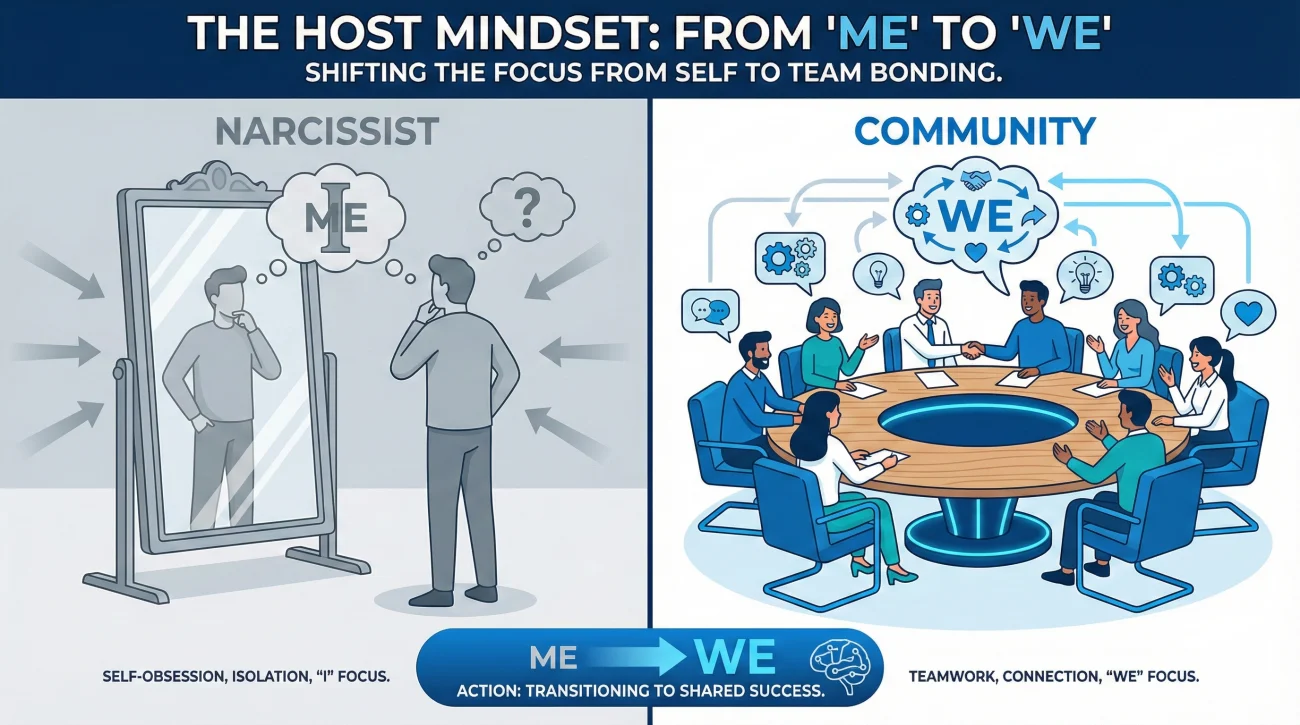
The biggest barrier to a great send-off is the fear of looking self-absorbed. “Is it weird to throw my own party?” The short answer is: No. In modern corporate culture, unless you are a retiring CEO, HR isn’t planning a gala for you. You are the event planner.
To do this with grace, you must reframe the event. You aren’t throwing a party for yourself; you are facilitating a gathering for the team. You are the excuse for them to bond.
| The Narcissistic Frame (Avoid) | The Community Frame (Adopt) |
|---|---|
| “Come celebrate my time here!” | “I’d love to get the team together one last time.” |
| “I’m having a party at [Bar].” | “I’ll be at [Bar] if anyone wants to grab a drink.” |
| “Gifts are welcome.” | “No gifts, just good conversation.” |
The “Who Pays?” Matrix and Critical Logistics
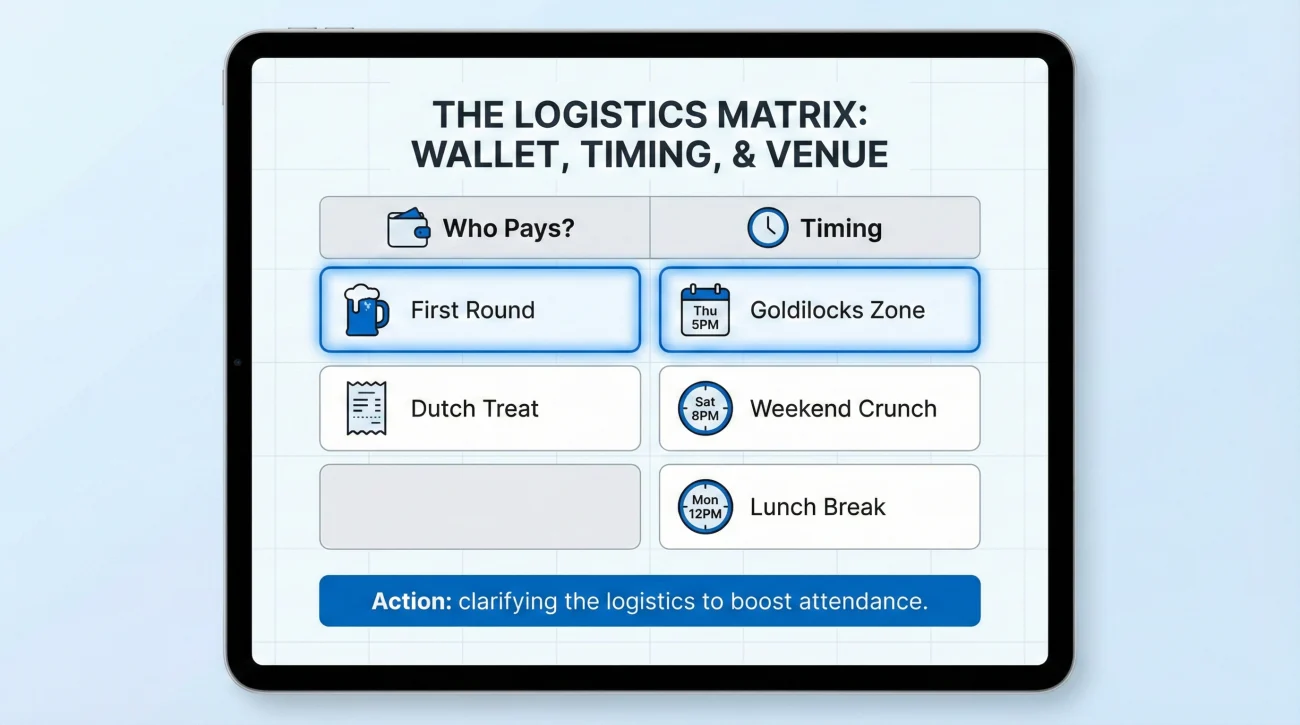
Ambiguity is the enemy of attendance. If a guest has to guess about the bill or the location, they will likely “have a conflict.” Your going away party invitation must answer the three “W’s” immediately: When, Where, and Wallet.
1. The Wallet: Addressing the Elephant in the Room
This is the most anxiety-inducing part for guests. If you don’t clarify, people assume you are treating (which can get expensive) or they fear an awkward bill-splitting moment.
- 💸 The “First Round” Rule (The Classy Middle Ground): “First round is on me!” This shows generosity without bankrupting you. It signals that you are the host, but respects your budget.
- 🧾 The “Dutch Treat” (Pay Your Own Way): Perfectly acceptable for casual drinks. Phrase it as: “Happy Hour prices apply!” or “Cash bar available.” This signals low pressure.
- 🏢 The “Company Tab” (The Jackpot): If your manager approves expensing it, state it clearly: “Drinks and appetizers provided.” This doubles attendance instantly because “Free Food” is the most powerful motivator in corporate life.
2. The Timing Strategy: Avoiding the “Ghost Town” Slot
When you schedule your goodbye drinks invitation determines who shows up.
- The Goldilocks Zone: Thursday, 5:00 PM – 7:00 PM. (Friday evenings are for personal lives; Mondays are for recovery; Tuesdays/Wednesdays are work-heavy).
- The “Lame Duck” Window: Schedule the event 2-3 days before your actual last day. If you do it on your very last day, you will be too stressed with handovers, exit interviews, and returning IT equipment to actually enjoy it.
Master Templates for Every Scenario
Copy and paste these templates, but ensure you customize the details in brackets. Each template is calibrated for a specific “vibe.”
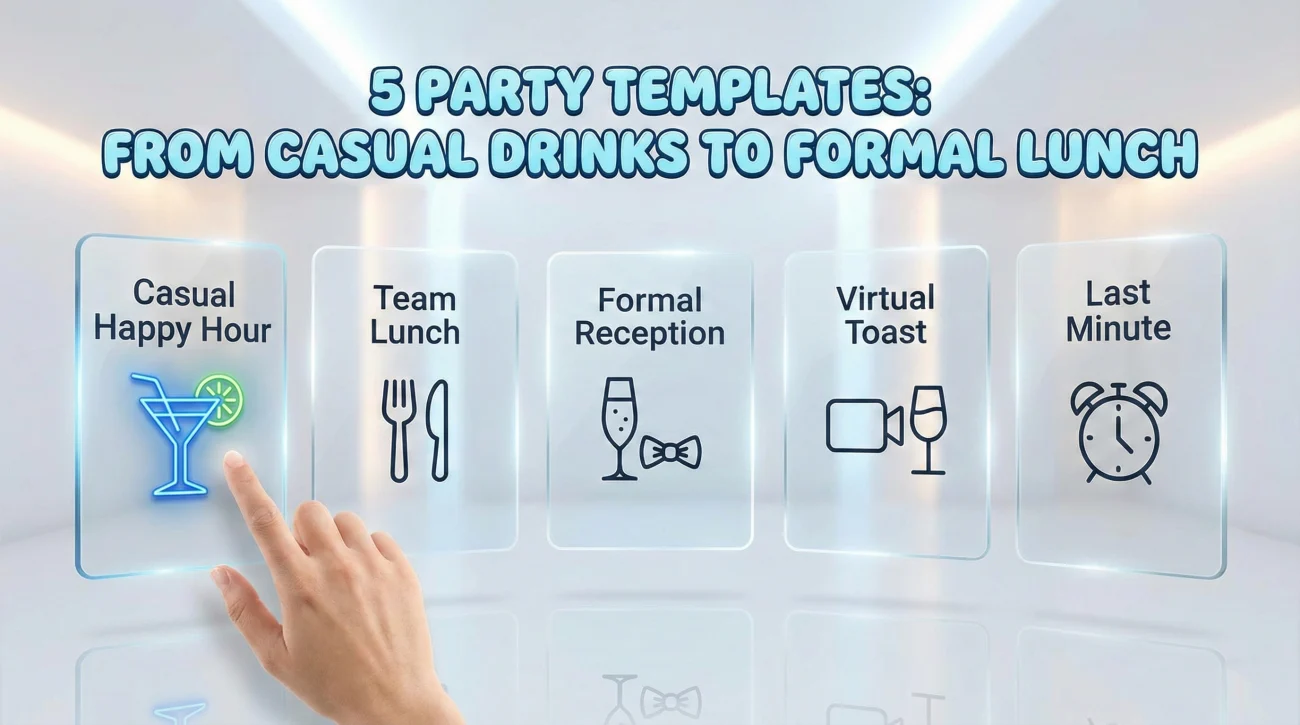
1. The “Casual Happy Hour” (Low Pressure / High Turnout)
Best for: A peer-group gathering at a local bar. The vibe is “drop by if you can.” This puts zero pressure on people to stay long.
Subject: Farewell Drinks! 🍻
Hi everyone,
As you know, my last day with [Company] is coming up this Thursday.
I’d love to see you all outside the office before I head out. I’ll be setting up shop at [Bar Name] starting at 5:00 PM this Thursday, [Date].
The Plan:
📍 Where: [Link to Bar Location] (They have great nachos!)
🕔 When: 5:00 PM onwards
🍺 Details: First round is on me!
No formal RSVP needed – just drop by for a drink or a chat if you’re around. Even if you can only stay for 10 minutes, I’d love to say goodbye.
Hope to see you there!
Best,
[Your Name]
2. The “Team Lunch” (Structured & Intimate)
Best for: Farewell lunch invitation email for your immediate team. Usually implies you (or the boss) are paying. This ensures quality time with close colleagues.
Subject: Farewell Lunch @ [Restaurant Name]
Hi Team,
I can’t believe my time here is coming to a close. Before I go, I’d love to get the whole crew together for one last meal (where we don’t talk about spreadsheets).
Please join me for lunch at [Restaurant Name] on [Date] at [Time]. It would mean a lot to have everyone there to celebrate the work we’ve done together.
Please accept the calendar invite so I can finalize the reservation count by [Date].
Looking forward to it!
Cheers,
[Your Name]
3. The “Formal Office Party” (Company Sponsored)
Best for: Office leaving party invite sent by a manager or admin on your behalf. This is official, often during work hours.
Subject: Farewell Reception for [Your Name]
Hi Everyone,
Please join us in bidding farewell to [Your Name] as they move on to their next adventure.
We will be hosting a reception in the [Break Room/Conference Hall] to thank [Your Name] for [Number] years of service and contributions to the [Department] team.
Details:
📅 Date: [Date]
🕒 Time: 3:00 PM – 4:30 PM
🍰 Provided: Cake and light refreshments
We hope to see you there to wish [Your Name] the best!
Best regards,
[Manager/Admin Name]
4. The “Virtual Toast” (Remote/Hybrid Teams)
Best for: Distributed teams where meeting in person isn’t an option. Keep it short (30 mins max) to avoid “Zoom Fatigue.”
Subject: Virtual Coffee / Farewell Toast ☕
Hi Team,
Since we can’t all be at the same bar, I’m bringing the party to Zoom.
I’ll be hopping on this link [Zoom Link] on [Date] at [Time]. Bring your coffee, tea, or beverage of choice.
No agenda, no work talk – just a chance to say a proper goodbye and share a few laughs before I sign off.
Hope to see your faces there!
[Your Name]
5. The “Last Minute” Pivot (Short Notice)
Best for: When you forgot to plan, or decided spontaneously. Keep it extremely low pressure.
Subject: Impromptu Goodbye Drinks tonight?
Hey everyone,
I know this is incredibly last minute, but since today is my last day, a few of us are heading to [Bar Name] around 5:30 PM.
If you are free and want to grab a drink, come join us! If you have plans, absolutely no worries – I’ll catch you on LinkedIn.
Cheers,
[Your Name]
Channel Strategy: Email vs. Calendar vs. Slack
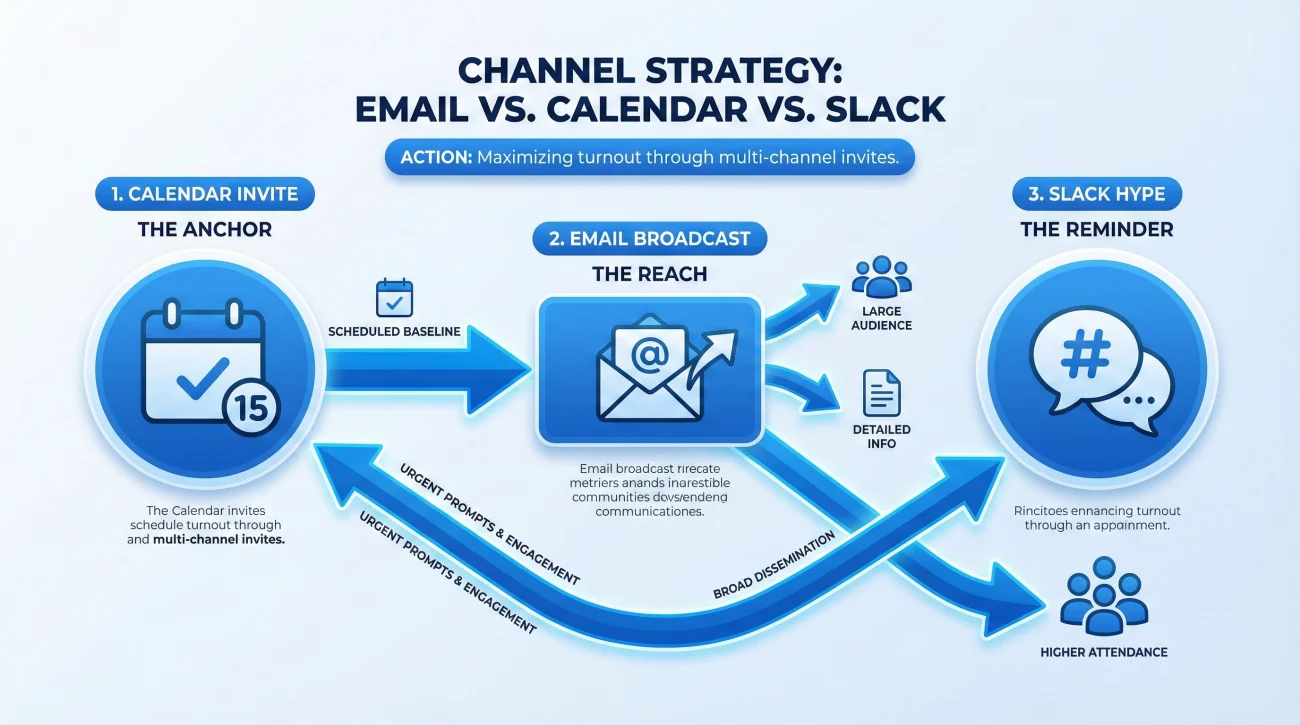
Where you post the invitation matters as much as what you say. You need to interrupt the noise.
- 📅 The Calendar Invite (The Gold Standard): This is the only way to get a headcount. People live by their calendars. Send an invite with the details in the description. If they click “Accept,” they are 90% likely to show. Pro Tip: Set a reminder notification 1 hour before the event.
- 📧 The Email Broadcast: Use this for larger groups or “All Staff” announcements. Include the Calendar link inside the email (“Click here to add to calendar”).
- 💬 Slack / Teams Channel: Use this for the “Hype” and Reminders. Post the initial invite, then post a “Heading to the bar in 10 mins!” reminder on the day of. Do not use Slack as the only invite method – it gets buried in the feed within minutes.
❓ Frequently Asked Questions
😟 What if nobody shows up?
This is the ultimate fear (The “Empty Birthday Party” Syndrome). To mitigate this:
1) Secure a “Wingman”: Ask a work bestie to promise to be there 15 minutes early. This ensures you are never standing alone.
2) Pick a venue you like: Choose a place where, even if it’s just 3 people, you enjoy the food/drink.
3) Remember the context: People are busy; low turnout is rarely personal.
💰 Do I have to pay for everyone?
💌 Should I invite my boss?
⏰ When should I send the invite?
The Sweet Spot: 1 week in advance.
Too Early (>2 weeks): People forget or plans change.
Too Late (<2 days): People already have plans.
Send a reminder on the morning of the event via Slack/Teams.
The Final Cheers
Organizing your own farewell party invitation is not an act of vanity; it is an act of community building. It gives your colleagues permission to stop working and acknowledge the relationship you’ve built. It provides closure.
Be clear, be gracious, and don’t stress about the numbers. Whether it’s three people or thirty, the clinking of glasses marks the end of a chapter and the start of your legacy.
Once the party is planned, ensure your desk is clean and your files are handed over. Check our professional resignation processes for a checklist. For more templates on exit communications, browse our comprehensive farewell resources. To master the art of the exit, read our complete goodbye email guide.
⚠️ Legal Disclaimer: ResignSmartly provides general informational guidance about resignation, workplace communication, notice periods, handovers, and career transitions. Content does not constitute individualized legal advice. Employment laws, contracts, workplace policies, and individual circumstances vary, so review the requirements that apply to your situation and consult an appropriate qualified professional when needed.