- Strategic Angle: Treat this as a relationship pivot, your boss becomes a future peer, advocate, or hiring gate, so the message is career insurance.
- Timing: Send it when they can actually absorb it, usually 2–3 days before their final day, not a rushed note at 4:55 PM.
- Specific Impact Framework: Replace platitudes with one or two concrete moments that prove they mattered, a shield moment, a push, or a human moment.
- Templates By Context: Use different scripts for mentor, short note, emotional goodbye, forced exit, retirement, or complicated relationships without sounding bitter.
- Medium Matters: Email is fast, a handwritten card is kept, and a short toast works if you stick to tight structure and safe, specific gratitude.
The Underrated Power of the Strategic Goodbye
I still remember the silence in the breakroom the day my first mentor, Sarah, announced she was leaving. She wasn’t just a manager; she was the reason I hadn’t quit six months prior. I went home that night staring at a blinking cursor, trying to write a farewell message to boss that didn’t sound like a generic Hallmark card. I wrote, deleted, and rewrote. How do you summarize three years of career-saving guidance into an email? In the end, I learned that the most memorable goodbyes aren’t about poetic flair – they are about specific gratitude.
When a manager departs, the office dynamic shifts instantly. You are in the unique position of staying behind while the person who held the keys to your daily work life moves on. This creates a psychological friction: you want to be professional, perhaps you feel a bit of relief (let’s be honest, not all bosses are Sarah), or maybe you are genuinely heartbroken.
Regardless of the emotion, your written goodbye is a strategic career move. It is the final impression you stamp on a professional relationship that will likely outlast their tenure at your current company. I have analyzed thousands of workplace exits, and the pattern is clear: generic messages are deleted; specific, thoughtful messages build a network for life. This guide serves as a deep dive into crafting that perfect message.
The Strategy Behind the “Reverse Goodbye”
Most career advice focuses on what to say when you quit. But knowing exactly what to say to boss leaving is a different skill set entirely. The power dynamic is in flux. They are stepping out of the hierarchy, but they are stepping into the wider industry as a potential peer, advocate, or future employer.
Why This Email Weighs More Than You Think
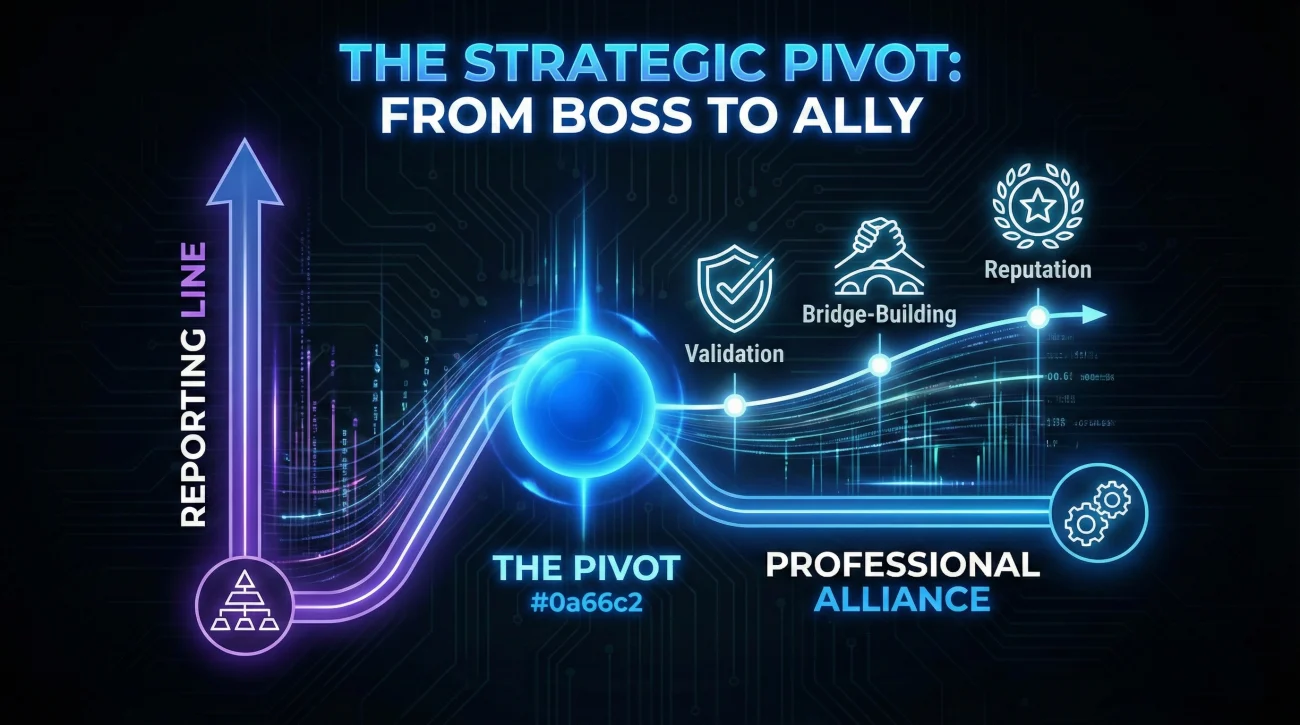
Think of this message not as a “goodbye,” but as a “relationship pivot.” Your manager is about to have a new network, new budget, and new hiring needs. By crafting a thoughtful farewell letter to manager leaving, you are effectively reserving a seat at their future table.
There are three distinct layers to a strategic farewell:
- 🎯 Validation: Managers often leave wondering if they actually made a difference. Your specific feedback validates their effort.
- 🌉 Bridge-Building: You are converting a reporting relationship into a professional alliance.
- 🛡️ Reputation Management: How you handle a departure – especially a sudden or rocky one – says more about your character than it does about theirs.
| Feature | Generic Goodbye | Strategic Farewell |
|---|---|---|
| Memorability | Low (Forgotten in 24 hours) | High (Remembered for years) |
| Content Focus | “Best of luck” (Future only) | “Thank you for X” (Past impact + Future) |
| Network Effect | Neutral | Active (Opens doors) |
Overcoming the “Lame Duck” Awkwardness
When a boss announces their resignation, they enter a “lame duck” period. Authority wanes, and the team often feels unsettled. Writing a goodbye message to boss leaving during this window can feel awkward. Do you send it now? Do you wait for the last day? The hesitation often leads to procrastination, resulting in a rushed, generic “Good luck!” email sent at 4:55 PM on their last Friday.
The strategy here is intentionality. You want your message to land when they have the mental bandwidth to process it – typically 2-3 days before their final exit. This shows you planned ahead, rather than reacting to a calendar reminder.
Deconstructing the Perfect Farewell Message
Writing a goodbye message to boss leaving requires a delicate balance. You don’t want to sound sycophantic (sucking up), but you also don’t want to sound cold. Through my coaching, I’ve developed a “Specific Impact Framework” that solves this problem.
The Rule of Specificity
The human brain is wired to ignore platitudes. “Thanks for everything” is white noise. However, “Thanks for defending my budget proposal in Q3” is a hook. It proves you were paying attention.
When drafting your message, dig for these “Gold Nuggets”:
- The “Shield” Moment: A time they protected the team from corporate chaos.
- The “Push”: A time they forced you out of your comfort zone, and you grew because of it.
- The “Human” Moment: A time they supported you during a personal crisis or burnout.
| Pros of Specificity | Cons of Being Generic |
|---|---|
| ✅ Shows high emotional intelligence | ❌ Sounds like an AI-generated template |
| ✅ Reinforces the skills they taught you | ❌ Misses the chance to solidify a connection |
| ✅ Makes the manager feel truly seen | ❌ Risks appearing indifferent or bitter |
Core Templates: Professional & Direct
These templates are designed for the standard, healthy manager-employee relationship. Use these when you want to write a solid farewell letter to manager leaving that respects boundaries but delivers warmth. We will break down why these work.
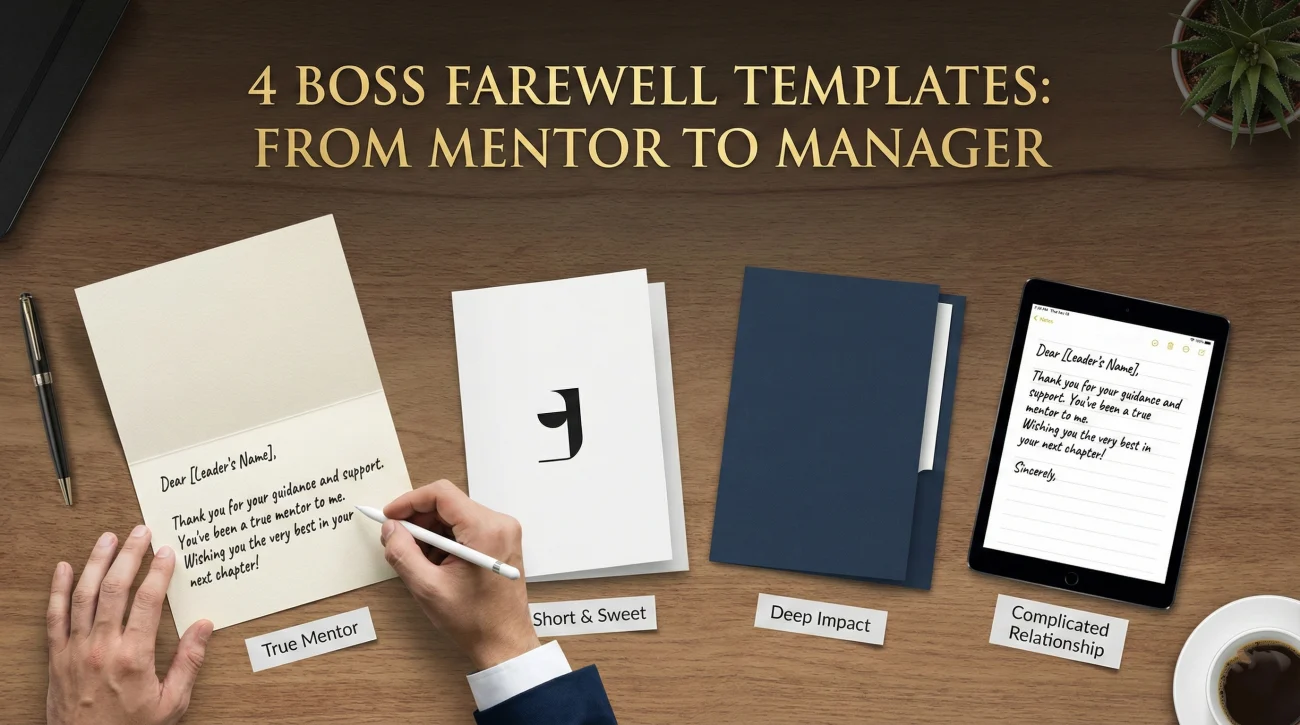
The “True Mentor” Email
Use this when your boss actively shaped your career path. This is the “high value” email.
Subject: Thank you / Keeping in touch
Hi [Manager Name],
Before you wrap up your final week, I wanted to send a note to express my genuine gratitude for your leadership over the last [Number] years.
I was reflecting yesterday on [Specific Project]. I honestly don’t think I would have navigated that client negotiation without your coaching on stakeholder management. That specific piece of advice regarding [Specific Detail] is something I use almost daily now.
Thank you for betting on me when I first started in this role. Your mentorship has shaped my professional standard, and I’m going to miss having your guidance in our weekly 1:1s.
I am thrilled to see what you accomplish at [New Company]. They are incredibly lucky to have you.
Let’s absolutely stay connected. I’d love to grab coffee in a month or two once you’ve settled in to hear about the new world.
Best regards,
[Your Name]
The “Short & Sweet” Note (Digital or Card)
Sometimes brevity is power. If you are writing a physical card or a quick Slack message, these farewell wishes for boss hit the mark without dragging on. The goal here is “punchy impact.”
Hi [Manager Name],
It has been a privilege working with you. I’ve truly appreciated your transparency and the way you advocated for our team during the [Year] restructure. That kind of leadership is rare.
Wishing you nothing but success in your next chapter. Please don’t be a stranger!
Cheers,
[Your Name]
Advanced Scenarios: Tricky Contexts
Not every departure is a happy promotion. Sometimes managers leave under complex circumstances. Here is how to handle the nuances of what to say to boss leaving in less-than-perfect situations.
Scenario 1: The Layoff or Forced Exit
If your manager was let go (or “mutually parted ways”), the situation is sensitive. Avoid “congratulations.” Focus on their past impact, not their future (which might be uncertain).
Subject: Thank you
Hi [Name],
I wanted to send a quick note to say how much I’ve appreciated working with you. Your guidance on the [Project] was invaluable to me, and I’ve always admired your ability to [Skill/Trait].
I’d love to stay in touch and support you however I can. Let’s connect on LinkedIn.
Best,
[Your Name]
Scenario 2: The Retirement
Retirement isn’t just a new job; it’s a life event. Acknowledge their legacy.
Subject: Congratulations on a remarkable career
Hi [Name],
Wishing you the absolute best as you head into retirement! You have built such an incredible legacy here – especially [mention a team culture or system they built].
I hope your days are filled with [Hobby they mentioned] and relaxation. You’ve earned it.
Warmly,
[Your Name]
Scenario 3: The “Complicated” Relationship
Burning bridges is a rookie mistake. You still need to send a goodbye message to boss leaving to maintain professionalism. The key here is to focus on the opportunity, not the person.
Subject: Best wishes
Hi [Manager Name],
As you move on to your new role, I wanted to wish you the best of luck.
I appreciate the opportunity to have worked on the [Project Name] under your supervision. It was a valuable learning experience that taught me a lot about [Industry/Skill].
Hope the transition to [New Company] goes smoothly.
Best,
[Your Name]
Medium Matters: Email, Card, or Speech?
The medium is the message. How you deliver your farewell wishes for boss changes how it is perceived.
The Handwritten Card
In a digital world, ink on paper is a luxury. If you want your message to be kept (literally, in a drawer for years), write it by hand. This is perfect for high-impact relationships. A card says, “I took time to sit down and write this.” It carries weight that a copy-pasted email cannot match.
The Public Toast
If you are asked to speak at a happy hour, anxiety can run high. Stick to the “Rule of Three” to keep it tight and professional:
- One professional accomplishment of theirs (The Professional).
- One funny (safe) anecdote or human quality (The Personal).
- One wish for the future (The Future).
Example: “I admire how Dave handled Q4 stress (Professional), I’ll miss his terrible coffee puns (Personal), and I know he’s going to crush it at Google (Future).”
The “After-Care”: LinkedIn & Recommendations
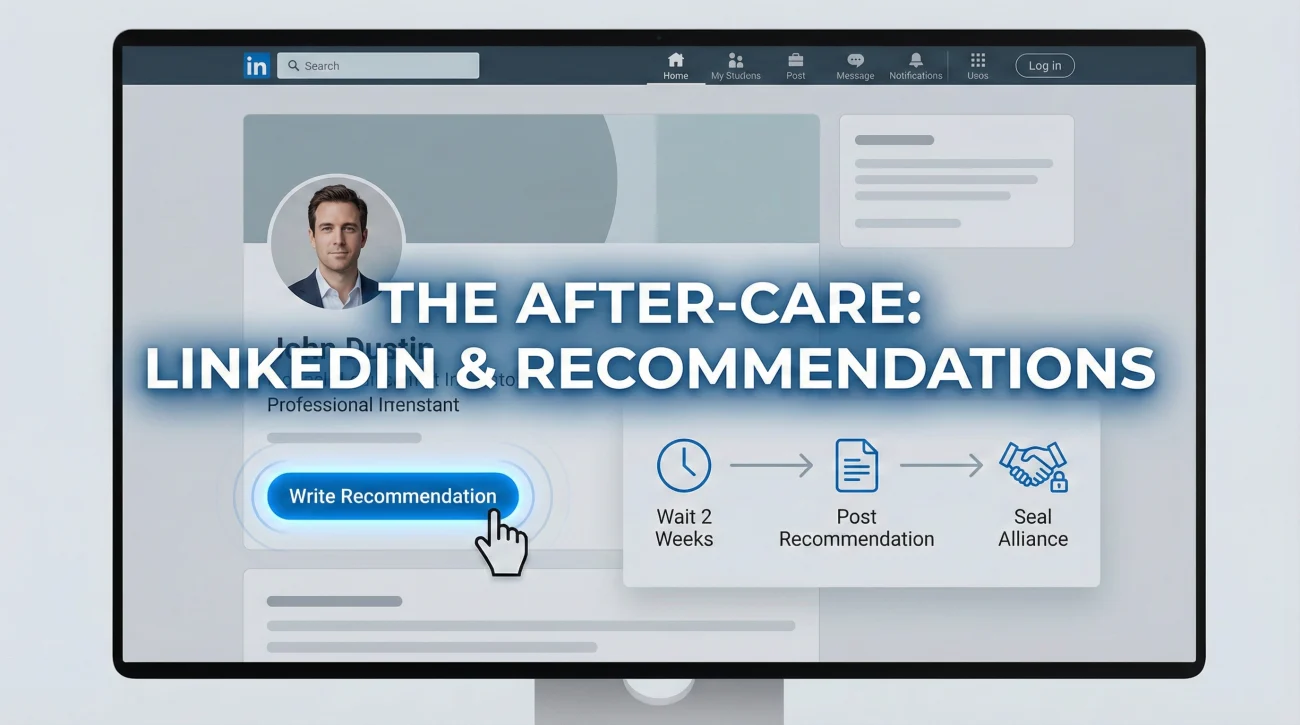
The email is just the start. The real value comes from the digital footprint you leave. Giving a public recommendation is a powerful way to seal the alliance.
When to write it: Wait about 2 weeks after they have left. This pops up as a notification when they are settling into their new role, reminding them of your support.
What to write: Focus on their management style. Future recruiters for you will look at what you wrote about your boss to see what kind of employee you are (supportive, articulate, team-oriented).
LinkedIn Recommendation Template:
“I had the privilege of reporting to [Name] for [Number] years. Rare is the manager who can balance business KPIs with genuine empathy for their team. [Name] was instrumental in [Specific Win]. Any organization would be lucky to have their leadership. Highly recommended.”
7 Deadly Sins of Farewell Emails
I have seen many well-intentioned messages go wrong. Avoid these common pitfalls to ensure your farewell letter to manager leaving lands safely.
- ❌ The “Passive-Aggressive” Note: “Thanks for everything, even the stressful deadlines.” (Leave the negativity out).
- ❌ The “Over-Ask”: Asking for a raise or a job at their new company in the goodbye email. (Too transactional).
- ❌ The “Novel”: Writing 1,000 words. (They are busy packing; keep it readable).
- ❌ The “Group Reply-All”: Replying to their mass goodbye email with a personal story. (Send a separate direct email).
- ❌ The “Premature Send”: Sending the goodbye before they have officially announced it. (Huge breach of trust).
- ❌ The “Empty Promise”: “Let’s get lunch every week!” (Be realistic; say “Let’s catch up in a few months”).
- ❌ The “Casual Slide”: Sending a goodbye only via text/Slack/Teams. (Always back it up with an email or card for permanence).
❓ Frequently Asked Questions
📅 When is the exact best time to send the farewell email?
Timing is everything. Send your farewell message to boss about 1-2 days before their last day. If you send it too early (weeks in advance), it feels premature and they are still in “work mode.” If you send it at 5 PM on their last Friday, it might get buried in the chaos of IT handing over laptops and badge returns. Aim for a quiet moment mid-week (Wednesday or Thursday morning) where they have time to read, digest, and potentially reply.
🎁 Should I give my boss a parting gift?
Gifting “up” (giving to a superior) is generally tricky in corporate etiquette, but a farewell is a rare exception. However, keep it modest. A handwritten card is often more valuable than a physical object. If you do buy something, aim for consumable (nice coffee beans, a bottle of wine if appropriate) or sentimental (a framed team photo). Avoid expensive items that create awkward obligation or look like a bribe.
🤐 What if I truly hated working for them? Do I still write?
If the relationship was toxic, silence is an option, but a brief, neutral email is the safer, “high road” choice. It prevents them from thinking you are bitter and protects your reputation. Stick to the “Complicated Goodbye” template above. Focus on the fact that you are staying and they are leaving – that alone is a victory worth being polite about. Never put anything negative in writing that could be forwarded.
📱 Is it okay to connect on social media (Instagram/Facebook) immediately?
LinkedIn is mandatory and immediate – do it now while you are still top of mind. For personal platforms like Instagram, Facebook, or TikTok, wait until they are officially out of the building. Once the power dynamic of “manager/subordinate” is dissolved, you can transition to “friend,” but let the professional dust settle first. Read the room; if you weren’t close friends at work, stick to LinkedIn.
✍️ How long should a farewell letter be?
For an email, aim for 150-200 words. This is the sweet spot: long enough to include specific details (the “Gold Nuggets”), but short enough to be respected. For a handwritten card, keep it under 50 words due to physical space. If you find yourself writing a novel, ask for a 15-minute coffee chat instead to say those things in person.
Final Thoughts: The Long Game
Writing a farewell message to boss feels like a closing chapter, but in the grand scheme of your career, it is actually an opening scene for a new relationship. The person packing up their desk today could be the person referring you for a Director role five years from now, or the client you need to pitch to next quarter.
Don’t let the awkwardness of the “reverse goodbye” silence you. Be specific, be professional, and above all, be human. A well-crafted goodbye is an investment that pays dividends in reputation capital. It transforms a transaction (“you were my boss”) into a connection (“we are professionals in the same field”).
If you are looking for more guidance on handling office transitions, you might find our guide on goodbye and handover emails helpful for broader contexts. Or, if you are planning your own exit strategy soon, review our ultimate goodbye email guide to ensure you leave as gracefully as your manager did.
⚠️ Legal Disclaimer: ResignSmartly provides general informational guidance about resignation, workplace communication, notice periods, handovers, and career transitions. Content does not constitute individualized legal advice. Employment laws, contracts, workplace policies, and individual circumstances vary, so review the requirements that apply to your situation and consult an appropriate qualified professional when needed.