- Main idea: A funny goodbye email can make you memorable and keep your network warm, but it is high-risk if the tone is wrong.
- Room check first: Humor works best in casual cultures, with enough tenure, and on a small “safe list” rather than a company-wide blast.
- Use safe frameworks: Self-deprecation, shared team pain points, and broad pop-culture references keep jokes friendly and low-drama.
- Write it like a pro: Keep it short, warm, and clear on logistics, then choose a template vibe that matches your team.
- Avoid disasters: No bitter “truth jokes,” no inside-joke spam, no sarcasm, and if it flops, pivot to sincere gratitude without over-explaining.
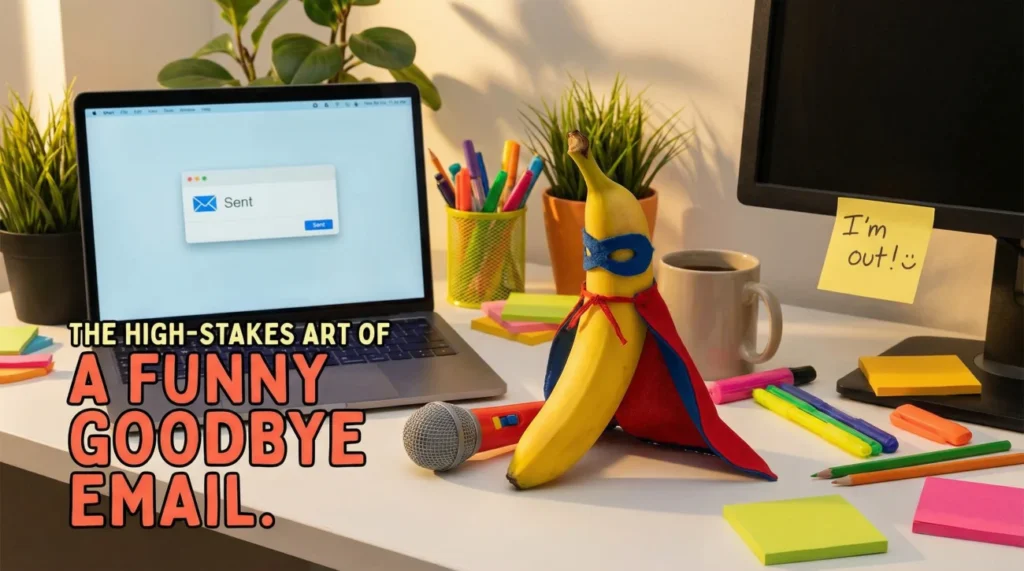
The High-Stakes Art of a Funny Goodbye Email: Why Wit Wins (When Done Right)
I still remember the most legendary exit I ever witnessed in my fifteen years of HR consulting. It wasn’t a tearful speech, a fancy retirement party, or a formal handshake. It was a funny goodbye email that hit the inbox at 3:15 PM on a rainy Friday. The departing developer, let’s call him Dave, didn’t just say goodbye. He wrote a passionate, three-paragraph “breakup letter” to the office coffee machine, detailing their toxic, caffeine-fueled romance, their heated arguments (mostly about temperature), and their eventual drift apart. The entire floor erupted in laughter. The tension of his departure evaporated instantly. Three years later, people still quote lines from that email.
But for every Dave, I have seen a dozen disasters. I once saw a junior marketing associate try a witty farewell email filled with obscure inside jokes that the senior partners didn’t understand. Instead of laughter, it was met with confused silence, awkward glances, and a frantic call from HR regarding “unprofessional conduct.” The line between being a legend and being a liability is thinner than you think.
Humor is a high-risk, high-reward strategy. According to the psychological “Peak-End Rule,” people judge an experience largely based on how they felt at its peak and at its end. Your exit is that “End.” When done right, a funny goodbye email to colleagues humanizes you, cements your legacy as someone great to work with, and ensures your network remains warm. When done wrong, it can burn bridges faster than a matchstick. This deep-dive guide is your safety net. We will explore the psychology of humor, how to inject wit without sacrificing professionalism, and provide robust templates to ensure your humorous goodbye letter to coworkers lands the punchline perfectly.
The Psychology of the Exit: Why Humor Matters
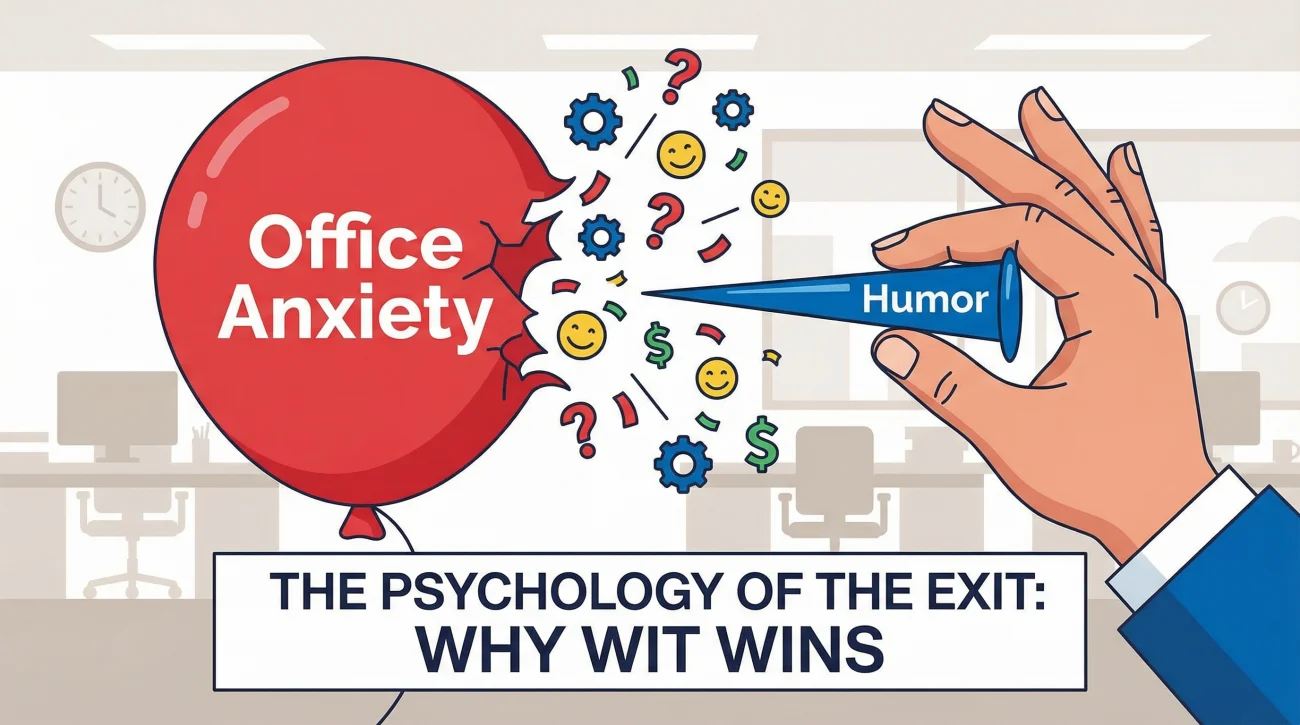
Why do we even bother trying to be funny when leaving a job? It’s not just about attention. In the corporate world, “professionalism” often translates to “emotional distance.” We spend years wearing a mask of competence. A funny leaving email is a strategic act of unmasking. It says, “I am confident enough in my work to not take myself too seriously.”
However, humor serves a dual purpose:
- Tension Release: Departures are inherently awkward. Colleagues worry about workload redistribution or losing a friend. Humor punctures this balloon of anxiety.
- Memorability: Information delivered with emotion (in this case, joy/amusement) is retained significantly longer than dry facts. If you want to be remembered for networking purposes, being the “funny one” is a powerful hook.
Step 1: The “Room Read” – Assessing Your Audience
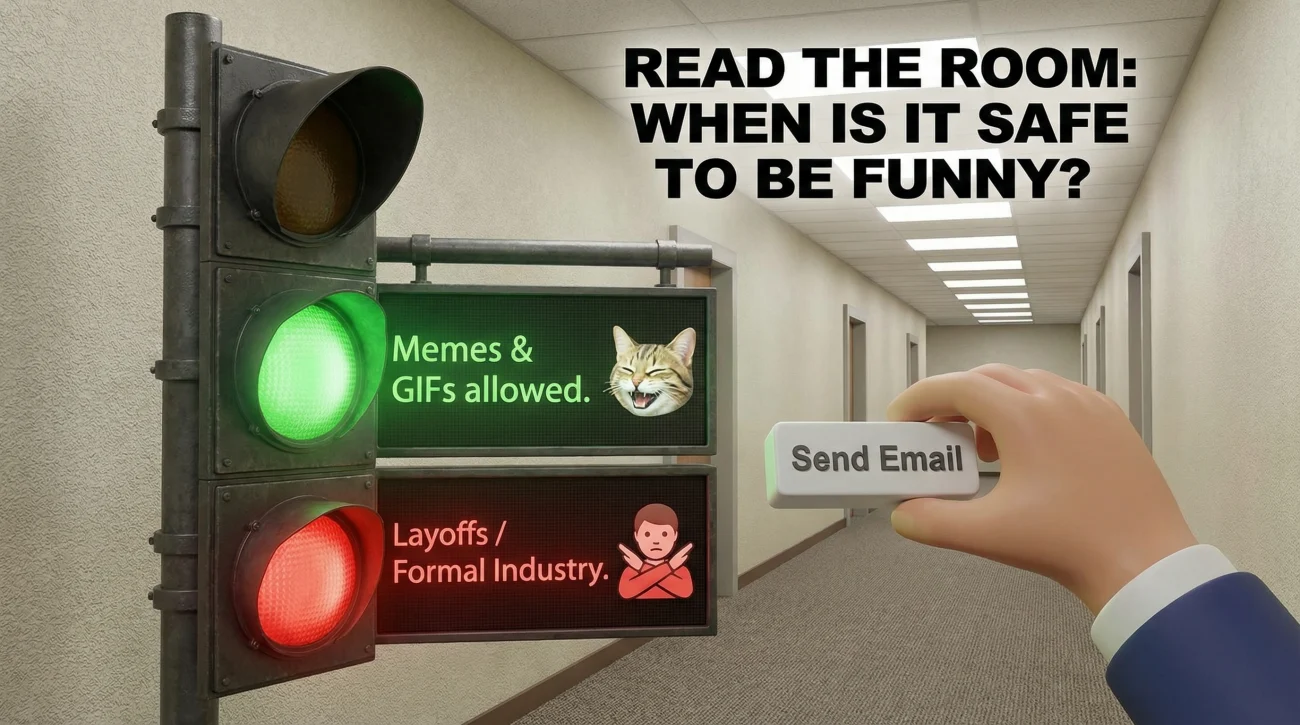
Before you draft a single joke, you must audit your environment. In the world of professional communication, context is the undisputed king of comedy. I often tell my clients: “Read the room before you rock the boat.” A creative goodbye email that kills at a nimble tech startup might be viewed as career suicide at a white-shoe law firm.
To determine if your workplace is a comedy club or a courtroom, you need to look beyond the surface. It’s not just about whether people laugh; it’s about what they laugh at and who is allowed to joke.
Signs You Have a Green Light
You are likely safe to proceed with humor if your environment meets these specific criteria:
- Digital Body Language: GIFs, memes, and emojis are common currency in your team’s Slack channels or Teams chats. If your CEO uses a “party parrot” emoji, you have license to be playful.
- Leadership Tone: Leadership regularly uses self-deprecating humor in town halls or all-hands meetings. If the boss doesn’t take themselves too seriously, the culture usually follows suit.
- Tenure Trust: You have a tenure of at least 6-12 months. Humor relies on familiarity. A joke from a “stranger” (someone new) often lands as awkward or disrespectful. You need to have earned the “social capital” to spend it on a joke.
- Audience Segmentation: You are sending this to a “Safe List” (close peers, your immediate squad) rather than a massive BCC to the entire organization. The wider the net, the safer the humor must be.
The “No-Fly” Zones for Humor
Even if you are the office comedian, do not attempt a funny leaving email under these conditions. The risk of being “tone-deaf” is too high:
- The “Survivor” Guilt Scenario: You are leaving during a period of layoffs, restructuring, or budget cuts. Making jokes while others are fearing for their jobs is not witty; it is cruel.
- High-Stakes Industries: Your industry is highly regulated or conservative (e.g., Defense, Banking, Healthcare, Government). In these fields, professionalism is often synonymous with seriousness. A joke here can be seen as a lack of discipline.
- The Stranger Danger: You don’t actually know the recipients (e.g., a massive email to 500+ people). Without a personal connection, humor is easily misinterpreted as unprofessionalism.
The “Work Bestie” Litmus Test
If you are still unsure, use this fail-safe method: Draft your email and send it to your most honest work friend – the one who will tell you if you have spinach in your teeth. Ask them simply: “Does this sound funny, or do I sound bitter?” If they hesitate for even a second, delete the joke and go with a standard farewell.
3 Safe Frameworks for Workplace Comedy
Funny doesn’t mean random. The best humor follows a structure. Through my experience helping clients draft these, I’ve identified three “safe harbors” where you can be funny without crossing the line into offensive territory.
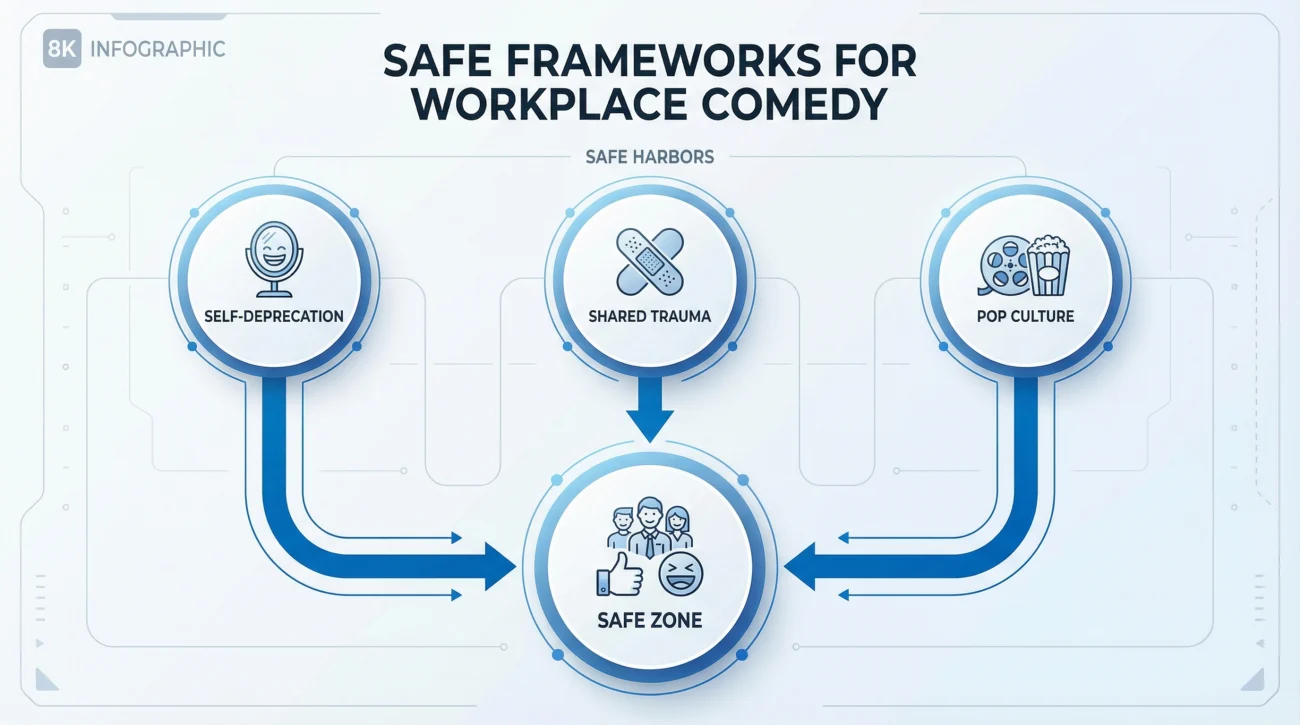
1. Self-Deprecation (The Safest Bet)
Making fun of yourself is almost always safe. It shows confidence, self-awareness, and humility. Target your known quirks: your coffee addiction, your battle with the printer, your loud typing, or your inability to keep plants alive.
Example: “I am leaving to pursue a new opportunity, largely because the office plants have filed a formal complaint about my neglect. I promise to treat my new ferns with more respect.”
👉 Why it works: It lowers your status slightly, making you more relatable and less threatening. It invites colleagues to laugh with you, not at you.
2. The “Shared Trauma” Bond
Every team has battle scars. Reference a difficult project, a bizarre office quirk, or a “disaster” that everyone suffered through together. This builds camaraderie through shared survival.
Example: “I will miss many things about this team, but I will not miss the 4-hour budget meetings where the AC was broken and we all melted into our chairs.”
👉 Why it works: It triggers an “us vs. the world” mentality. It reminds them that you were in the trenches with them.
3. The Pop Culture Bridge
Using a universally understood reference (like The Office, Star Wars, or a trending meme) serves as a shorthand for connection. A goodbye meme email concept can work wonders if the reference is broad enough.
👉 Why it works: It taps into shared cultural knowledge, making the email feel like a conversation rather than a broadcast.
7 Funny Goodbye Email Templates (Categorized & Analyzed)
These templates are designed to balance wit with warmth. I have categorized them so you can choose the “vibe” that fits your personal brand.
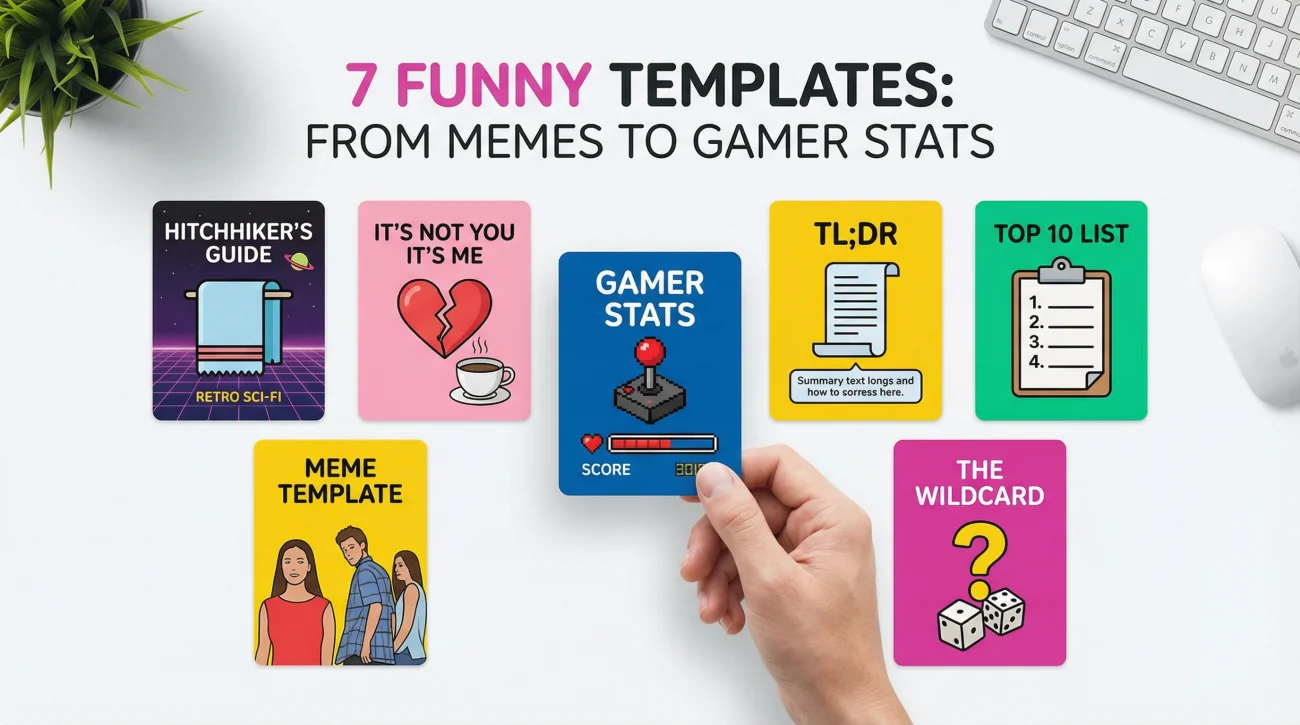
1. The Pop Culture Classic (The Hitchhiker’s Guide)
Best for: Tech teams, creative agencies, or geek-culture environments.
Subject: So Long, and Thanks for All the Fish 🐬
Hi Team,
Like the dolphins in Hitchhiker’s Guide to the Galaxy, I am departing for another dimension (also known as [New Company Name]).
The last [Number] years have been an absolute adventure. We’ve fought bugs, conquered deadlines, and consumed enough caffeine to power a small city. I have learned more from you all than I ever expected – mostly about [mention a funny work topic, e.g., how to fix the printer with a paperclip].
Don’t Panic. I am not disappearing from the universe. Let’s stay connected:
LinkedIn: [Link]
Personal Email: [Email]
May your towels always be handy,
[Your Name]
Why this works: It’s a classic “nerd culture” reference that signals “I’m one of you.” It’s lighthearted but conveys a clear message.
2. The “It’s Not You, It’s Me” Breakup Letter
Best for: Close-knit teams where you have strong emotional bonds.
Subject: We need to talk… (It’s not you, it’s me)
Dear [Department Name],
I think we should see other people.
Okay, jokes aside – I am writing to let you know that today is my last day. We have had a great run, and honestly, you have spoiled me. The standard for my next team is incredibly high because of you.
I will genuinely miss our [mention specific routine, e.g., Friday donut runs] and the way we rallied together during [Project X].
Please keep in touch (I promise not to be a jealous ex):
LinkedIn: [Link]
Email: [Email]
Yours professionally,
[Your Name]
Why this works: It takes a cliché trope (the breakup) and twists it to pay a compliment (“you spoiled me”). It’s affectionate without being sappy.
3. The “Gamer / RPG” Stats Update
Best for: Developers, designers, gamers, and data analysts.
Subject: Level Complete: [Your Name] is logging off
Hi Everyone,
ACHIEVEMENT UNLOCKED: Completed [Company Name] Campaign.
Stats Summary:
- Tickets Resolved: 1,400+
- Coffees Consumed: Uncountable
- Meetings Survived: Barely
- Friends Made: The best loot of all
I am moving on to a new server (new job), but I want to thank you for being the best co-op partners a player could ask for. Good Game (GG), everyone.
Find me in the lobby here:
[LinkedIn Link]
Cheers,
[Your Name]
Why this works: It gamifies the experience. It allows you to humble-brag (mentioning tickets resolved) while being funny.
4. The “Top 5 Things I Won’t Miss” (The Switcheroo)
Best for: Teams that bond over complaining about minor office annoyances.
Subject: 5 Things I absolutely won’t miss…
Hi Team,
As I head out, I made a list of things I won’t miss about this place:
- I won’t miss… the commute (okay, that one is real).
- I won’t miss… the smell of microwaved fish in the breakroom.
- I won’t miss… pretending to understand [Industry Acronym] in meetings.
But here is what I WILL miss:
I will miss the incredible support from this team. I will miss the laughter in the breakroom (despite the fish smell). And I will miss working alongside people who are genuinely brilliant at what they do.
Thank you for making the hard work fun.
Stay in touch:
[LinkedIn Link]
Best,
[Your Name]
Why this works: It uses the “bait and switch” technique. The reader expects a rant but gets a compliment. It creates a nice emotional release.
5. The “TL;DR” (Too Long; Didn’t Read)
Best for: Fast-paced environments, startups, or Gen Z/Millennial heavy teams.
Subject: TL;DR – I’m out ✌️
Hi everyone,
The Headline: Today is my last day.
The Context: I’m moving to a new adventure, but I’ll miss this crew tons.
The Ask: Let’s stay friends on LinkedIn so I can like your posts and validate your career achievements.
The Link: [Insert LinkedIn URL]
The Feeling: Gratitude. Big time.
Thanks for everything,
[Your Name]
Why this works: It respects people’s time. It shows you understand the modern “skimming” culture of reading emails.
6. The Remote/Zoom Exit
Best for: Distributed teams who live on video calls.
Subject: Leaving the Zoom Call (Permanently)
Hi Team,
I am finally doing it. I am clicking “Leave Meeting” for the last time.
It has been a pleasure to be a square on your screen for the past [Number] years. Thank you for tolerating my background noise, my “You’re on mute” moments, and my cat’s occasional cameo appearances.
Even though we were miles apart, I felt closer to this team than many I’ve shared an office with. You made the remote life feel connected.
Let’s stay connected IRL (In Real LinkedIn):
[LinkedIn Link]
Best,
[Your Name]
Why this works: It leans into the specific, shared awkwardness of remote work. It feels very current and relatable.
7. The “Sheriff Leaving Town” (Manager Version)
Best for: Managers who want to leave on a lighter note without losing authority.
Subject: Turning in my badge (and laptop)
Team,
The rumors are true. I am hanging up my hat.
Leading this team has been the best job I’ve ever had – mostly because you all made it so easy. Thank you for laughing at my dad jokes in the stand-ups and for only rolling your eyes when my camera was off.
In all seriousness, I am incredibly proud of what you’ve built. You don’t need me anymore, which means I did my job.
Keep crushing it.
[LinkedIn Link]
Best,
[Your Name]
Why this works: It balances the “Dad Joke” energy of a manager with genuine pride in the team’s independence.
Comedy Killers: What Never To Do
I have analyzed why certain emails fail. It usually comes down to crossing a line you didn’t see. Avoid these traps to ensure your humorous goodbye letter to coworkers doesn’t become an HR incident.
| The Mistake | Why It Fails |
|---|---|
| ❌ The “Truth” Joke “I’m off to a place that pays actual money!” | It’s not a joke; it’s passive-aggressive resentment masked as humor. It makes you look bitter and unprofessional. |
| ❌ The Inside Joke Blast “Remember the incident in Vegas? LOL.” | If you send this to the whole company, 90% of people will be confused and suspicious. Exclusion is the enemy of good farewells. |
| ❌ The “I’m Free” Vibe “Finally escaping prison!” | Insulting the company insults the people who are staying behind. You are calling them “prisoners.” Not cool. |
| ❌ The Over-Caffeinated Novel (500 words of ramblings) | Comedy requires brevity. If your email is longer than the company newsletter, you’ve lost the room. |
Crisis Management: What If the Joke Flops?
Even the best comedians bomb sometimes. If you send your email and get… silence, or worse, a confused reply from your boss, don’t panic.
- Do NOT Over-Explain: Do not send a follow-up email explaining the joke. That makes it worse.
- The Pivot: If someone replies confused, simply say: “Just my clumsy way of saying I’m going to miss you all! In all seriousness, thank you for everything.” Pivot immediately back to sincerity.
- Let It Go: Most awkward emails are forgotten in 48 hours. Do not dwell on it. Pack your box and move on.
❓ Frequently Asked Questions (FAQ)
Humor is subjective, so questions often arise about where the line is. Here is what I advise my clients.
🤔 Can I use a meme in my goodbye email?
Yes, a goodbye meme email can be fantastic, but keep it “Safe for Work” (SFW). Avoid anything political, edgy, or dark. Stick to classics like “This is Fine” dog (if you’re joking about workload) or a simple “Mic Drop” GIF. Ensure the image file size is small so it doesn’t crash inboxes or look broken on mobile.
👔 Should I send a funny email to my boss?
Proceed with caution. I recommend a “mullet strategy”: Business in the front, party in the back. Send a formal, gracious email to your boss first to ensure professional closure. Then, feel free to be more casual with your peers. Your boss needs to know you are professional until the very last second.
📝 How long should a funny email be?
Brevity is the soul of wit. A long, rambling comedic email usually falls flat. Keep it under 150 words. The shorter the joke, the harder it lands. Think of it like a Twitter/X post – punchy and memorable.
🚫 Is sarcasm ever okay?
Almost never in written form. Without tone of voice or facial expressions, sarcasm often reads as anger or arrogance. “Thanks for all the late nights” can be read as a genuine thank you OR a bitter complaint. Don’t risk it.
📧 Can I use emojis in the subject line?
Yes! In a casual or creative workplace, an emoji in the subject line (like 👋, 🚀, or 😢) signals immediately that this is a personal, friendly note and not a formal corporate memo. It increases open rates.
Final Thoughts: Leave Them Smiling
The goal of a funny goodbye email isn’t to get a Netflix comedy special; it’s to be remembered fondly. In a sea of generic “Best regards” and “Future endeavors,” a spark of personality makes you unforgettable. It transforms a transactional departure into a human moment.
When you press send, you want your colleagues to smile, not cringe. Use the templates above, trust your gut, and when in doubt, choose kindness over comedy. A warm smile is always better than a forced laugh.
If you are still mapping out your exit strategy, make sure you have the basics covered first. Review our guide on resigning professionally or check out our collection of handover templates. For a complete overview of the departure process, our pillar guide on goodbye emails is your essential resource. Finish strong, and leave them laughing.
⚠️ Legal Disclaimer: ResignSmartly provides general informational guidance about resignation, workplace communication, notice periods, handovers, and career transitions. Content does not constitute individualized legal advice. Employment laws, contracts, workplace policies, and individual circumstances vary, so review the requirements that apply to your situation and consult an appropriate qualified professional when needed.