- Leadership exits have ripple effects: Your goodbye can trigger fear, rumors, and even resignations if it signals instability.
- Narrative control is the job: Stabilize confidence in the business, endorse the successor, and elevate the team’s wins over your own.
- Word choice changes the signal: Swap soft language for certainty and “transition” framing so the message sounds calm and in command.
- Executives need a cascade plan: Tell board and HR first, then direct reports, then key stakeholders, then broadcast at the right moment.
- Most leaders sabotage the exit three ways: Humble-bragging, disappearing after the email, or apologizing in a way that feeds anxiety.
The Ripple Effect of Leadership Departures
I once consulted for a mid-sized tech firm where a beloved VP of Sales decided to leave. She was tired and burnt out, so she wrote a senior farewell email that was honest – too honest. She talked about needing a break, the stress of the last year, and how she couldn’t wait to “disconnect.” While her intention was to be authentic, the impact was catastrophic. The sales team interpreted her fatigue as a lack of faith in the product. Within six weeks, three of her top revenue generators resigned. Her departure didn’t just leave a vacancy; it created a retention crisis.
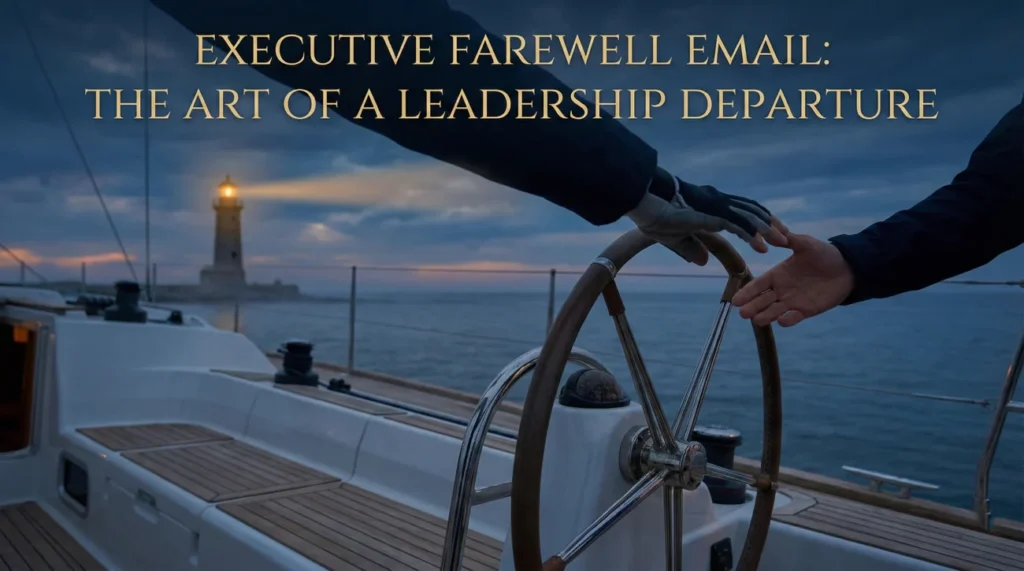
This is the burden of leadership: even your goodbye is a strategic act. When an individual contributor leaves, it is a logistical change. When a leader leaves, it is an emotional and cultural seismic shift. The organization looks to your executive farewell email for signals. Are we safe? Is the ship sinking? Is the new captain capable?
In this guide, we will dissect the unique architecture of a leadership exit. We will move beyond standard pleasantries to craft a leadership departure email that protects morale, cements your legacy, and sets your successor up for an immediate win.
The Strategy of the Exit: Controlling the Narrative
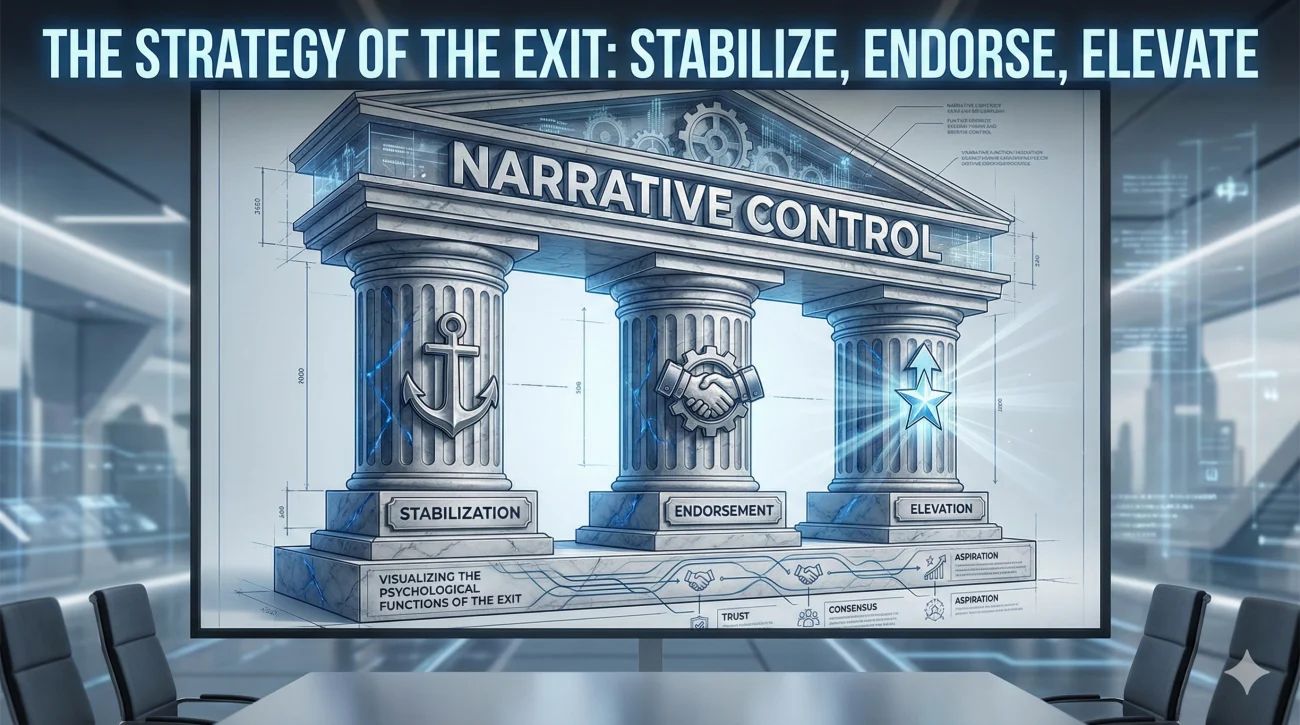
As an executive, your primary responsibility during an exit is “Narrative Control.” In the absence of clear communication, your team will invent their own stories – usually fear-based ones. Your email must serve three specific psychological functions:
- ⚓ Stabilization: You must explicitly state that the ship is sturdy. Reiterate the strength of the strategy or the health of the financials. Never express doubt in the future of the firm.
- 🤝 Endorsement: You cannot just hand over the keys; you must publicly endorse the new driver. Your team trusts you; transfer that trust to your successor.
- 🌟 Elevation: A director farewell message should not list your achievements. It should list the team’s achievements under your guidance. This empowers them to carry on without you.
The Vocabulary of Command: Words that Build Confidence
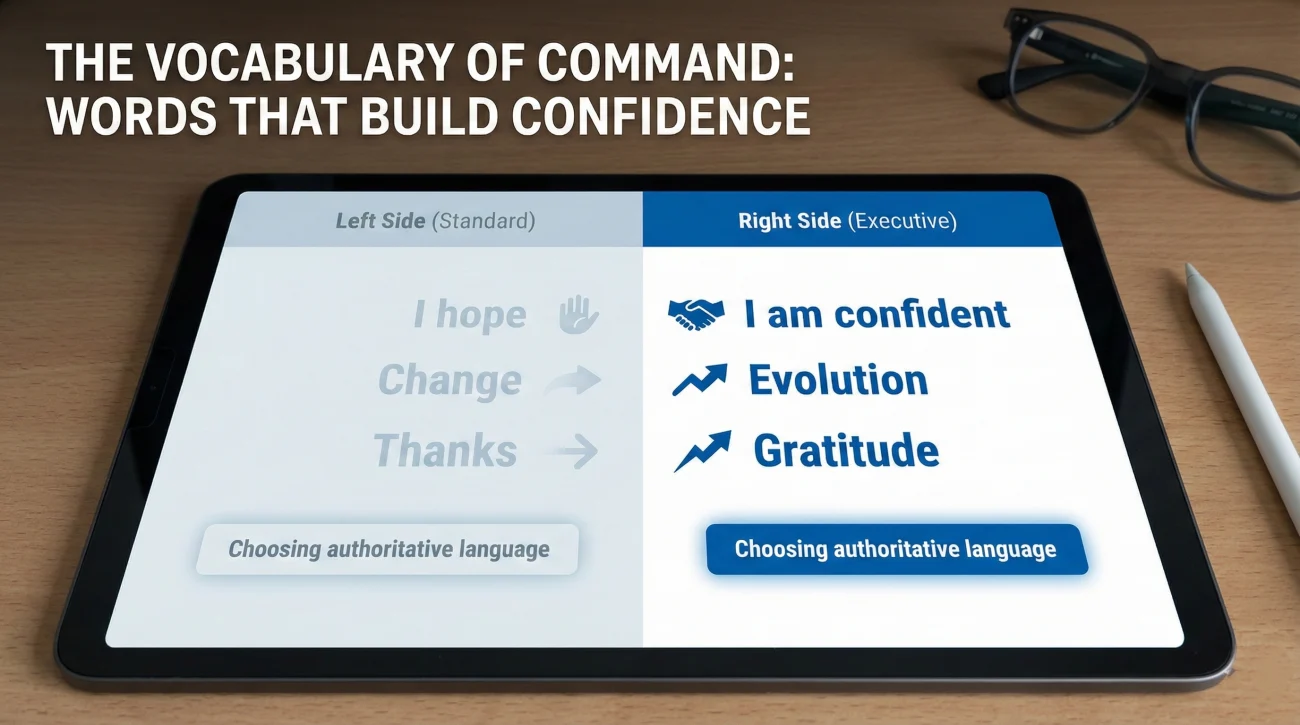
Leaders speak differently. To write a senior farewell email that sounds authoritative, you must swap passive language for active, vision-based vocabulary.
| Standard Word (Avoid) | Executive Word (Adopt) | Why? |
|---|---|---|
| “I think/I hope” | “I am confident” / “I have no doubt” | Leaders deal in certainty, not wishful thinking. |
| “Thanks for help” | “Gratitude for your dedication/partnership” | Elevates the contribution of your staff. |
| “Change” | “Evolution” / “Next Chapter” / “Transition” | Reframes disruption as natural growth. |
| “Good luck” | “Continued success” | Implies they are already successful and don’t need luck. |
The Difference Between a Manager’s and a Leader’s Goodbye
The higher you climb, the less your email is about “you.” Compare the distinct shifts in tone and focus required for a manager leaving email to team versus a C-Suite broadcast.
| Component | Individual Contributor Exit | Executive Leadership Exit |
|---|---|---|
| Primary Goal | Networking & Contact Info | Organizational Stability & Legacy |
| Tone | Personal, Nostalgic, Casual | Authoritative, Grateful, Forward-Looking |
| Successor Mention | Optional / Logistical | Mandatory / Strategic Endorsement |
| Future Plans | “I’m excited for my new job!” | “I’m moving to a new chapter.” (Vague is better) |
Executive Templates: Leading Until the Last Word
These templates are calibrated for authority. They minimize personal “I” statements in favor of collective “We” statements.

1. The CEO / President Departure (The Visionary Exit)
Best for: CEO farewell letter to employees. This must be a masterclass in gratitude and confidence.
Subject: A Message of Gratitude and Confidence – [Your Name]
Team,
I am writing to share that [Date] will be my final day as CEO of [Company Name]. After [Number] years of leading this extraordinary organization, I have decided the time is right to pass the torch to the next generation of leadership.
When I reflect on my tenure, I don’t think about the metrics or the product launches. I think about the culture of resilience we built together. We navigated [mention a crisis or challenge], expanded into [New Market], and redefined what it means to be a leader in the [Industry] space. These achievements belong to you.
The Board and I have worked closely to select [Successor Name] as your new CEO. [He/She] brings a depth of experience in [Skillset] that is exactly what [Company Name] needs for its next phase of growth. I have spent the last month working with [Successor Name], and I am inspired by their vision for the future.
I leave with a full heart and unshakeable confidence in this team. The foundation is strong. The strategy is sound. And the talent in this company is second to none.
Thank you for the privilege of leading you.
With deep respect,
[Your Name]
CEO
2. The Director / VP Departure (The Strategic Handover)
Best for: Department heads ensuring their division remains focused. This is a classic senior farewell email.
Subject: Transitioning Leadership of the [Department] Team
Hi Team,
I am writing to let you know that I will be transitioning out of my role as VP of [Department] effective [Date].
Leading this department has been the highlight of my career. Together, we transformed [Department Function] from a support role into a strategic driver of the business. We hit our Q4 targets against the odds and launched [Project Name] seamlessly. I want you to know how proud I am of the rigorous standard of excellence you hold yourselves to every day.
I am thrilled to announce that [Successor Name] will be stepping up to lead the department. As many of you know, [Successor Name] has been instrumental in our recent wins. There is no one better equipped to guide this team to the next level.
My request to you is simple: Give [Successor Name] the same trust, dedication, and candor you have always given me. The work you do is critical to [Company Name]’s success, and I will be cheering for your continued wins from the sidelines.
Thank you for everything.
Best regards,
[Your Name]
VP, [Department]
3. The Founder / Chairman Transition (Passing the Torch)
Best for: Founders stepping back from daily operations but remaining involved. This requires managing emotional attachment.
Subject: The Next Chapter for [Company Name]
Team,
Twenty years ago, I started this company in a garage with nothing but an idea. Today, looking at the global organization we have become, I am humbled by what we have built.
It is with great pride that I announce my transition from CEO to Executive Chairman, effective [Date].
This company has grown beyond the vision of one person. It is now a thriving ecosystem powered by your talent. To reach our next ambitious goals, we need fresh leadership with new energy. That is why I am excited to welcome [Successor Name] to lead the daily operations.
I am not saying goodbye. I will continue to serve on the Board and support the strategic vision. But I am stepping back to let you all step up.
Thank you for believing in the vision.
With gratitude,
[Your Name]
Founder & Chairman
4. The “Personal Reasons” Departure (Dignified & Private)
Best for: Leaders leaving for health, family, or personal reasons. Prioritizes privacy while stopping rumors.
Subject: Stepping Down as [Title]
Dear Colleagues,
I am writing to share that I have made the difficult decision to step down from my role as [Title], effective [Date], to focus on personal and family matters.
This was not a decision I made lightly, but it is the right one for me at this time. I want to express my deepest appreciation for the support I have received from the Board and the Leadership Team during this transition.
I am incredibly proud of the resilience this team has shown. The business is in a strong position, and I have full confidence in [Interim Leader/Successor] to guide the ship forward.
Thank you for the privilege of working alongside you.
Sincerely,
[Your Name]
5. The Interim Leader Sign-Off (Mission Accomplished)
Best for: Temporary leaders handing back control to a permanent hire.
Subject: Welcoming [New CEO] / Signing Off
Team,
Six months ago, I was asked to step in as Interim [Title] with a specific mission: to stabilize operations and prepare the ground for future growth. Thanks to your hard work, I can proudly say: Mission Accomplished.
As I hand the reins to [Permanent Leader Name] next week, I do so knowing that this department is stronger, faster, and more focused than ever.
Thank you for trusting me during this period of transition. It has been an honor to serve as your steward.
Onward,
[Your Name]
The 30-Day Exit Strategy: A Communication Timeline
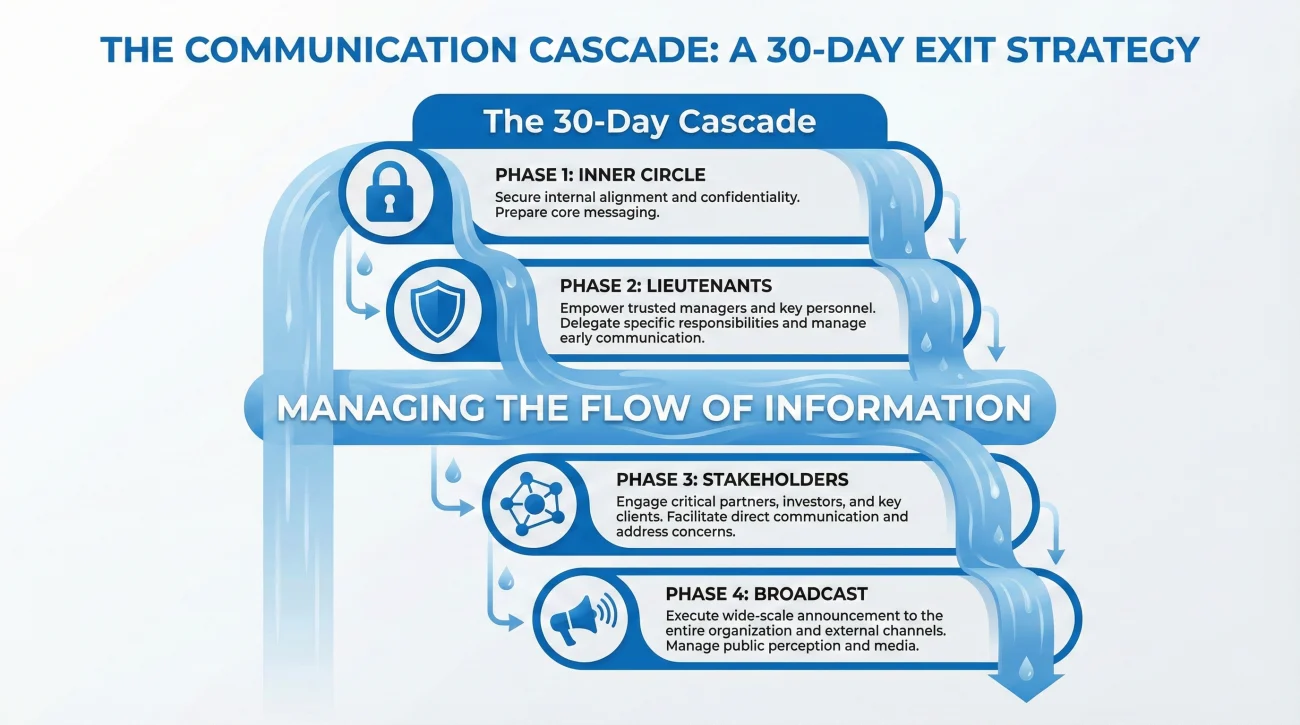
A director farewell message sent too early or to the wrong list can cause chaos. Executives follow a “Cascade” strategy to ensure information flows logically.
- 🛑 Day 1-14: The Inner Circle (Silent Phase): Notify your Board, CEO, and HR. Finalize the succession plan. No rumors should leak.
- 🔒 Day 15-20: The Lieutenants (Confidential Phase): Notify your direct reports verbally. Do not let them find out via email. This creates betrayal.
- ⚠️ Day 21-25: Key Stakeholders (Strategic Phase): Notify peers, cross-functional partners, and key clients personally (phone or video call).
- 📢 Day 26-28: The Broadcast (Public Phase): Send the executive farewell email to the wider organization. This is the public record.
- 👋 Day 29-30: The Handoff (Logistical Phase): Update LinkedIn, notify vendors, and final 1:1s with the successor.
Three Ways Leaders Sabotage Their Exit
1. The “Humble Brag” Victory Lap
“I’m leaving to join Amazon as a Senior Director!”
Why it fails: It frames your current company as a “stepping stone” and makes your team feel “left behind.” Keep your destination vague (“a new opportunity”) unless you are retiring.
2. The “Checked Out” Commander
Sending the email and then disappearing for three days. Leadership requires presence until the final hour. Your team needs to see you working on the transition, not packing boxes.
3. The “Apology Tour”
“I’m sorry to leave you right before the busy season.”
Why it fails: Leaders don’t apologize for career growth. It projects guilt and validates their anxiety. Instead, project confidence: “I know you are ready for the busy season.”
❓ Frequently Asked Questions
📧 Should I use “Reply All” or create a new thread?
🤝 How much should I praise my successor?
😢 Can I show emotion?
📱 Should I give my personal cell number?
Your Legacy is Sealed in the Goodbye
People may forget the quarterly targets you hit or the budget meetings you led. But they will never forget how you made them feel when you left. A thoughtful, strategic executive farewell email is the final seal on your reputation.
It tells the team: “I valued you. I believe in you. You are going to be fine.” That is the ultimate act of leadership.
If you are coordinating a wider exit strategy, review our professional resignation processes. For specific templates on other scenarios, check our comprehensive farewell resources. For the complete playbook, visit our ultimate goodbye email guide.
⚠️ Legal Disclaimer: ResignSmartly provides general informational guidance about resignation, workplace communication, notice periods, handovers, and career transitions. Content does not constitute individualized legal advice. Employment laws, contracts, workplace policies, and individual circumstances vary, so review the requirements that apply to your situation and consult an appropriate qualified professional when needed.