- Core goal: Be professional, precise, and concise so you protect pay, rehire status, and your reputation in a high-turnover environment.
- Why it is tricky: KPI burnout, fast scheduling, and BPO training bonds can turn a sloppy resignation into deductions or penalties.
- Notice reality: Many call centers accept 1 to 2 weeks, but quitting on the spot can trigger “Do Not Rehire” and PTO payout issues.
- Best email structure: State resignation and last day, keep the reason neutral, confirm you will finish scheduled shifts, and name equipment return.
- Exit logistics: Secure your records, return assets with proof, avoid last-week behavior issues, and choose the template that matches your scenario.
The Art of the Strategic Exit in High-Volume Roles
In the corporate world, resignations are often treated as solemn, strategic maneuvers involving weeks of handover meetings and knowledge transfer. In the high-velocity world of customer service – whether in a bustling call center, a remote support queue, or a high-stakes BPO environment – the rules are fundamentally different. Here, speed, precision, and logistical clarity are the currencies of a professional exit.
Writing a customer service resignation email does not require a novel-length explanation or deep emotional disclosure. In an industry defined by high turnover (often exceeding 40% annually) and standardized training cycles, your goal is to be professional, precise, and concise. However, “concise” does not mean “careless.” A poorly handled resignation can still trigger financial penalties (in BPO contracts), forfeit bonuses, or result in a “Do Not Rehire” status that haunts background checks.
This comprehensive guide cuts through the fluff. We will explore how to draft a call center resignation email that respects the fast-paced nature of the job, navigate the complex legalities of BPO resignation email protocols (including the dreaded “training bond”), and provide you with field-tested scripts that allow you to sign off with your reputation – and your final paycheck – intact.
Why Customer Service Resignations Are Uniquely Complex
To write the perfect resignation, you must first deconstruct the environment you are leaving. Customer support roles operate under a unique set of unwritten rules that differ vastly from standard office jobs. Understanding these dynamics will help you overcome the guilt often associated with quitting.
1. The “Revolving Door” Business Model
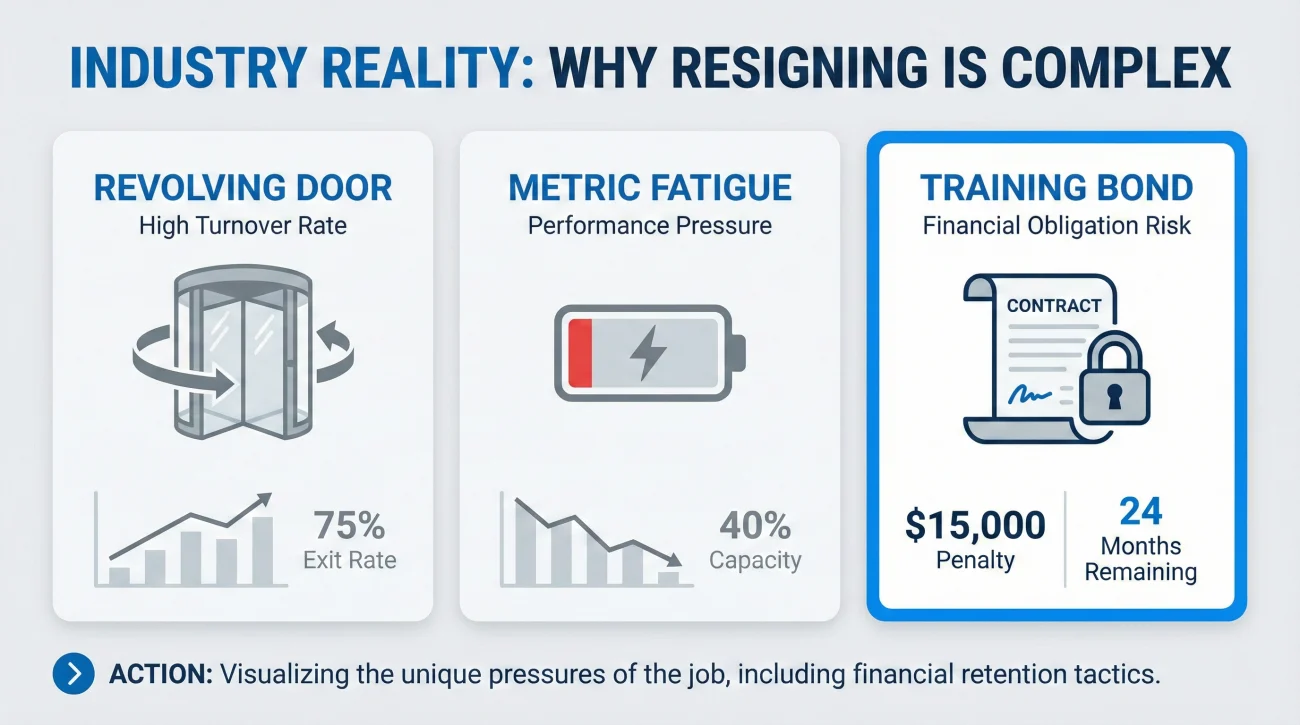
Contact centers are built with attrition in mind. Workforce management teams calculate “shrinkage” (time lost to breaks, sick days, and resignation) into their hiring plans months in advance. When you send a quitting customer service email, you aren’t shocking the system; you are a data point in a predictable business cycle.
Key Takeaway: Do not over-apologize. You are not “abandoning the team”; you are exercising your right to employment mobility in a high-churn sector.
2. The “Metric Fatigue” Factor
Many agents leave due to “Metric Fatigue” – the burnout caused by constant surveillance of KPIs like AHT (Average Handle Time), CSAT (Customer Satisfaction), and Adherence. While it is tempting to cite this stress as your reason (“I can’t take the monitoring anymore”), your resignation letter is a permanent HR document.
Strategy: Save the venting for the exit interview or your friends. In writing, frame your departure as a pull towards a new opportunity, not a push away from the stress.
3. The “Training Bond” Trap (BPO Specific)
In the Business Process Outsourcing (BPO) sector, resignation isn’t just administrative; it’s financial. Many contracts include clauses requiring you to repay training costs if you leave before a certain date (e.g., 6 months or 1 year).
Warning: Sending a bpo resignation email without checking your contract could cost you hundreds of dollars deducted from your final settlement.
Notice Periods: Corporate vs. Call Center Reality
One of the most common questions is: “Do I really need to give two weeks’ notice?” The answer depends on your role, your contract, and your future plans.
| Scenario | Standard Corporate Rule | Customer Service Reality |
|---|---|---|
| Standard Notice | 2 Weeks to 1 Month | 1 to 2 Weeks (often 1 week is accepted due to fast training cycles) |
| Handover Work | Extensive project handoffs | Minimal (Just finish your scheduled shifts) |
| Impact of Leaving | Projects stall, clients panic | Calls are simply routed to the next available agent |
| Consequence of “Immediate” Exit | Severe reputation damage | “Do Not Rehire” flag (but rarely affects other industries) |
The Risks of “Quitting on the Spot”
In customer service, “job abandonment” (walking out mid-shift or quitting without notice) is common but risky. While you likely won’t be sued (unless under a specific contract), you will almost certainly be marked as ineligible for rehire. This matters if you are a student or seasonal worker who might need a backup job later. Furthermore, many companies have policies that forfeit payout of accrued vacation time if proper notice isn’t given.
Master Templates: Professional Scripts for Every Scenario
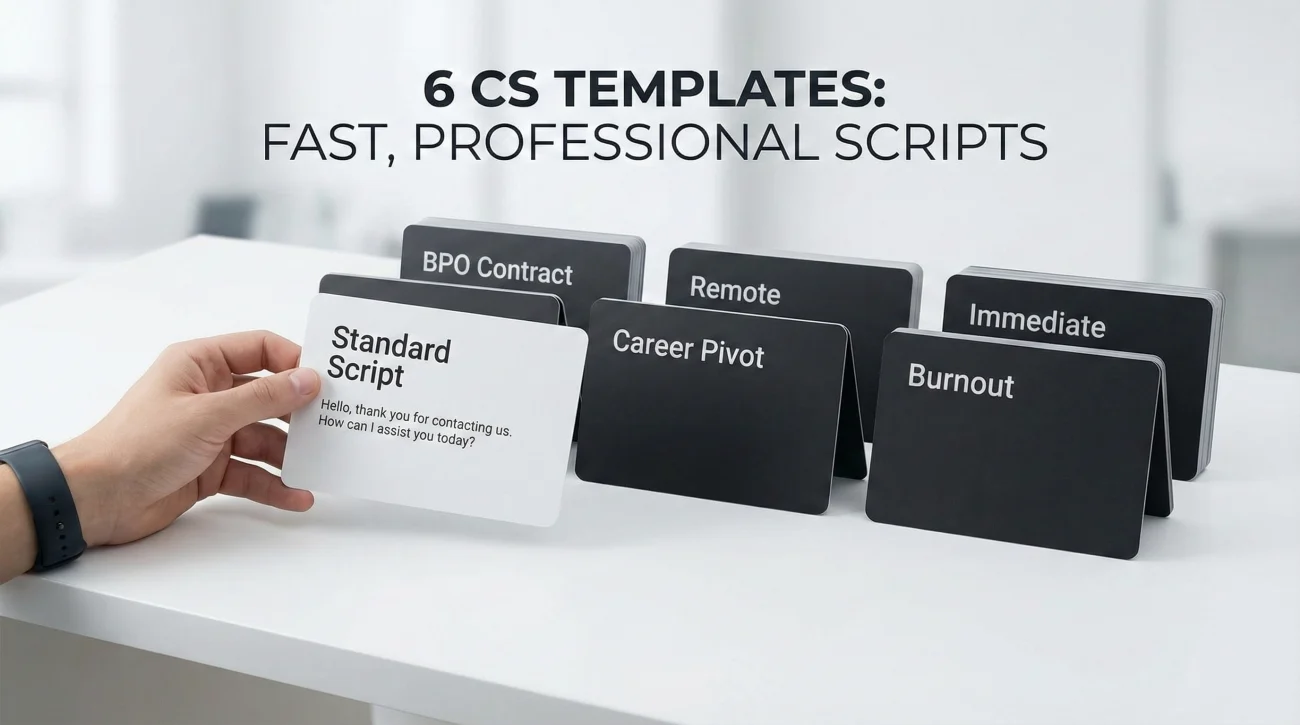
Choose the template that best matches your situation. Remember: in customer service, brevity is a virtue. Managers want to know when you are leaving so they can update the schedule.
Scenario 1: The Standard Departure (Best for Most Agents)
This is the “vanilla” option. It works for 90% of situations, whether you are a support agent resignation email sender or a retail rep. It keeps bridges intact.
Subject: Resignation – [Your Name] – [Employee ID]
Hi [Supervisor Name],
Please accept this email as formal notification that I am resigning from my position as [Job Title], effective [Last Date].
I have accepted a new opportunity that aligns with my long-term career goals. I want to thank you for the training and support I received during my time with the team. I have learned a great deal about [mention a soft skill, e.g., communication/problem-solving] here.
I will complete my scheduled shifts through [Last Date] and will return my [headset/badge/laptop] on my final day.
Best regards,
[Your Name]
[Phone Number]
Scenario 2: The Career Pivot (Leaving for a “Real” Job)
If you are leaving the support desk for a role in your field of study (e.g., IT, Marketing, Healthcare), say so. It highlights that you aren’t quitting the job out of malice; you are graduating from it.
Subject: Resignation – [Your Name]
Dear [Manager Name],
I am writing to resign from my role as [Customer Service Representative], with my final day being [Date].
I have recently been offered a position in [New Industry/Field] that allows me to utilize my degree in [Subject]. While I am excited for this next step, I am grateful for the resilience and communication skills I honed here at [Company Name].
I will ensure I maintain my performance metrics through my final shift to help the team meet our monthly goals.
Thank you for the opportunity.
Sincerely,
[Your Name]
Scenario 3: Leaving Due to Stress/Metrics (Diplomatic)
When the call volume, angry customers, or micromanagement becomes too much, use this call center resignation email. It hints at the issue (“fit”) without being negative or accusatory.
Subject: Resignation Notice – [Your Name]
Hi [Supervisor Name],
Please accept my resignation from the [Job Title] position, effective [Date].
After careful consideration, I have decided to move on to a role that is a better fit for my professional strengths and working style. While the fast-paced nature of this environment has taught me a lot about efficiency, I feel it is time for me to pursue a different direction.
I appreciate the opportunity to have worked with this team and wish you all the best during the upcoming busy season.
Regards,
[Your Name]
Scenario 4: The BPO/Contract Resignation (Strict Protocol)
Use this when you work for an outsourcing agency. It explicitly references adherence to contract terms to avoid penalties.
Subject: Formal Resignation – [Your Name] – [Account/Process Name]
Dear [Team Leader Name],
I am submitting my formal resignation from the [Process Name] team at [BPO Company Name], effective [Date].
In accordance with the notice period clause in my employment contract, I am providing the required [Number] days of notice. I understand this timeline is necessary for workforce planning and am committed to maintaining my AHT and quality scores during this transition.
Please provide instructions regarding the clearance process and asset return (ID badge, locker key, headset) so I can ensure a smooth exit on my last day.
Respectfully,
[Your Name]
[Employee ID]
Scenario 5: The Remote/Work-From-Home Resignation
Remote roles have unique logistics regarding equipment return. Address this upfront to avoid having your final paycheck withheld (where legal) or delayed.
Subject: Resignation – [Your Name] – [Remote Agent]
Hi [Supervisor Name],
Please accept this email as my resignation from the Remote Customer Support position, effective [Date].
I have decided to pursue an opportunity that [brief reason, e.g., offers a different schedule]. I have enjoyed working with the remote team and appreciate the support you provided.
Regarding Equipment Return:
Please send me the shipping labels and instructions for returning the company-issued laptop, monitor, and headset. I will have everything packed and ready to ship on my final day.
Best,
[Your Name]
Scenario 6: Immediate Exit (Short Notice)
Sometimes, a new job starts Monday, or you simply cannot take another call. This burns bridges, but if you must do it, do it politely.
Subject: Immediate Resignation – [Your Name]
Dear [Manager Name],
Please accept this email as notification that I am resigning from my position, effective immediately [or effective tomorrow, Date].
Due to unforeseen personal circumstances [or an immediate job offer that I cannot decline], I am unable to provide the standard notice period. I sincerely apologize for the inconvenience this may cause the scheduling team.
I will arrange to drop off my equipment at the front desk by [Time/Date].
Sincerely,
[Your Name]
The Exit Logistics: Leaving Without Loose Ends
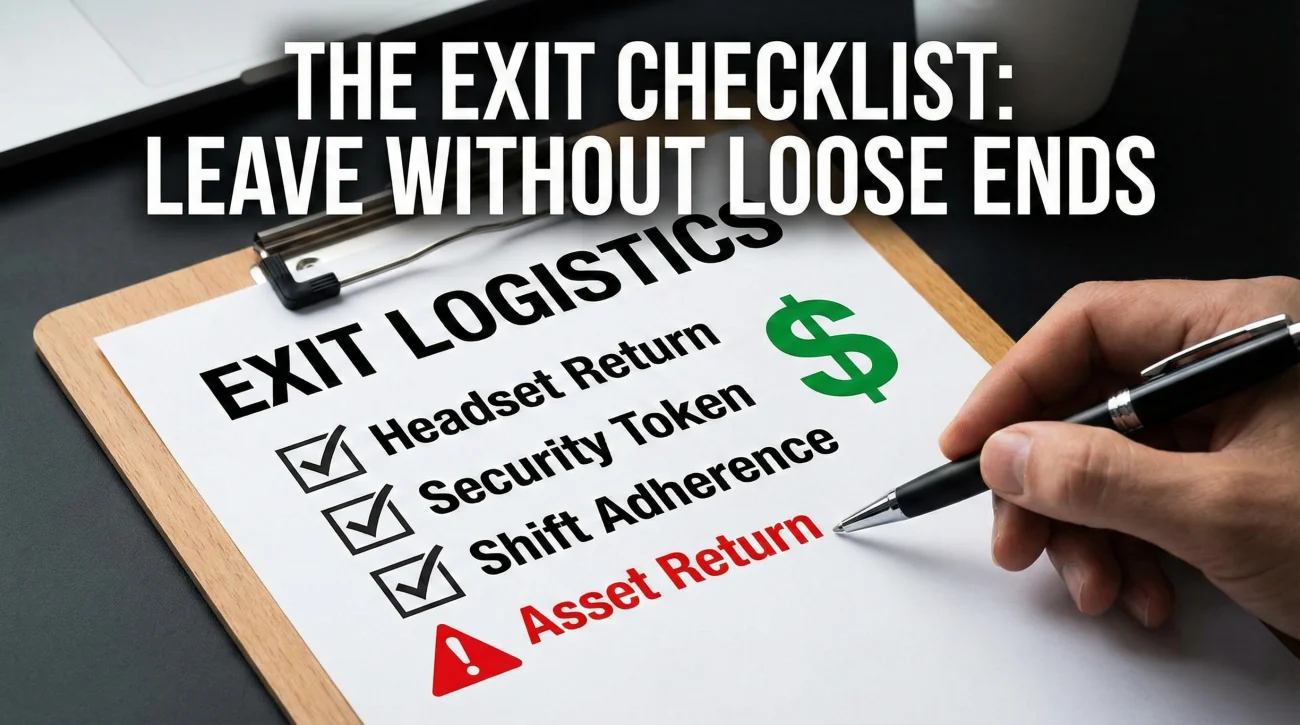
In customer service, the “exit interview” is often less important than the “asset return.” Messing up the logistics can delay your final pay. Follow this checklist:
- 🎧 Asset Return (Crucial): Headsets, security tokens (YubiKeys), laptops, and ID badges.
- On-site: Get a signed receipt from IT or HR when you hand them in. Do not just leave them on your desk.
- Remote: Take photos of the equipment in the box before you seal it. Keep the tracking number of the return shipment.
- 📅 Shift Adherence: If you work your notice period, show up. “Call avoidance” (hanging up on customers) or skipping shifts in your last week can lead to “termination for cause” on your record instead of “voluntary resignation.”
- 📄 Download Paystubs: You may lose access to the employee portal (Workday, ADP, etc.) immediately upon termination. Download your W-2s, paystubs, and performance reviews before you send your resignation email.
- 💰 Check Bonus Payouts: Most sales or performance bonuses require you to be “employed and in good standing” on the payout date. If the bonus pays out on the 15th, and you resign on the 14th, you will likely lose it. Check the fine print.
❓ Expanded FAQ: Tough Questions Answered
📋 Do I really need to give 2 weeks’ notice in a call center?
🤐 Should I tell my manager I’m quitting because of the rude customers?
📉 Can I just stop showing up (Ghosting)?
📞 Can I leave a voicemail to resign?
🔄 Can I come back if I change my mind?
Final Thoughts

Leaving a customer service job is a rite of passage for millions of professionals. Whether it was a summer gig, a stepping stone, or a multi-year tenure, you have developed resilience, patience, and communication skills that are valuable in any market. Do not let the stress of the exit overshadow the skills you gained.
Don’t overthink your exit. Write a clean customer service resignation email, finish your shifts strong, return your equipment properly, and move forward to your next chapter with confidence.
For more specific templates on leaving jobs, check our guide on resignation email examples or read our detailed breakdown on how to write a resignation email. For other career transition advice, visit the homepage.
⚠️ Legal Disclaimer: ResignSmartly provides general informational guidance about resignation, workplace communication, notice periods, handovers, and career transitions. Content does not constitute individualized legal advice. Employment laws, contracts, workplace policies, and individual circumstances vary, so review the requirements that apply to your situation and consult an appropriate qualified professional when needed.